


Battery TIC Market Size and Forecast
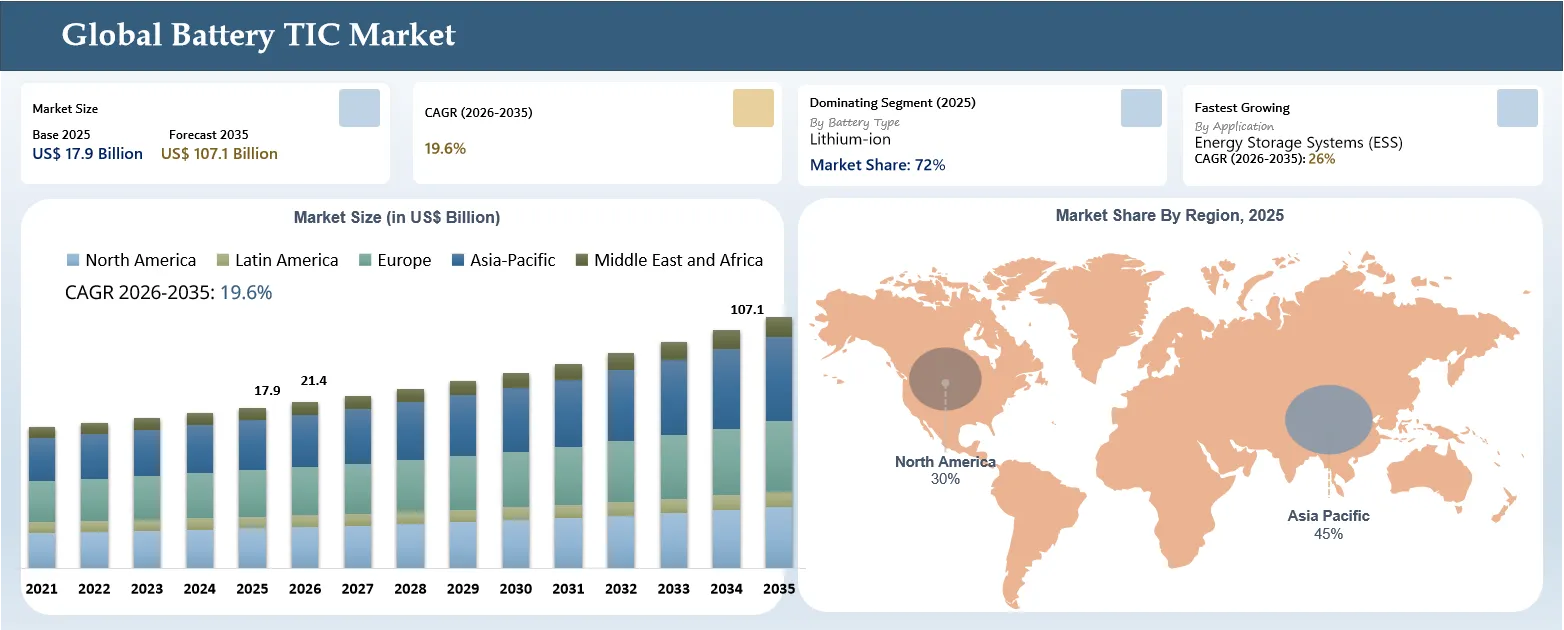
The global Battery TIC market size US$ 17.9 billion in 2025 and is forecasted to reach US$ 107.1 billion by 2035, growing with a CAGR of 19.6% during the forecast period 2026-2035, due to an increasing rate of market expansion because of the widespread use of electric vehicles, energy storage systems, and batteries requiring extensive validation for performance, safety, and regulatory compliance. It is important for battery TIC services to evaluate the durability, temperature stability, electrical performance, lifecycle efficiency, and compliance with international standards related to batteries in the entire battery supply chain. There has been an increase in demand for battery TIC services because of the rising complexities in the lithium-ion, solid-state, and next-generation battery chemistries. The increasing number of regulations and requirements, like battery safety standards, traceability requirements, and sustainability guidelines, has contributed to the increased use of TIC services. Some companies offering battery testing include TÜV SÜD, Intertek Group, and Bureau Veritas. They are offering testing services because of the rising demand for battery TIC services around the world. Some factors restraining the growth of the market include the requirement of high investments in testing infrastructure, changing battery standards, and complex next-generation battery evaluation technology.
Battery TIC Market Key Takeaways
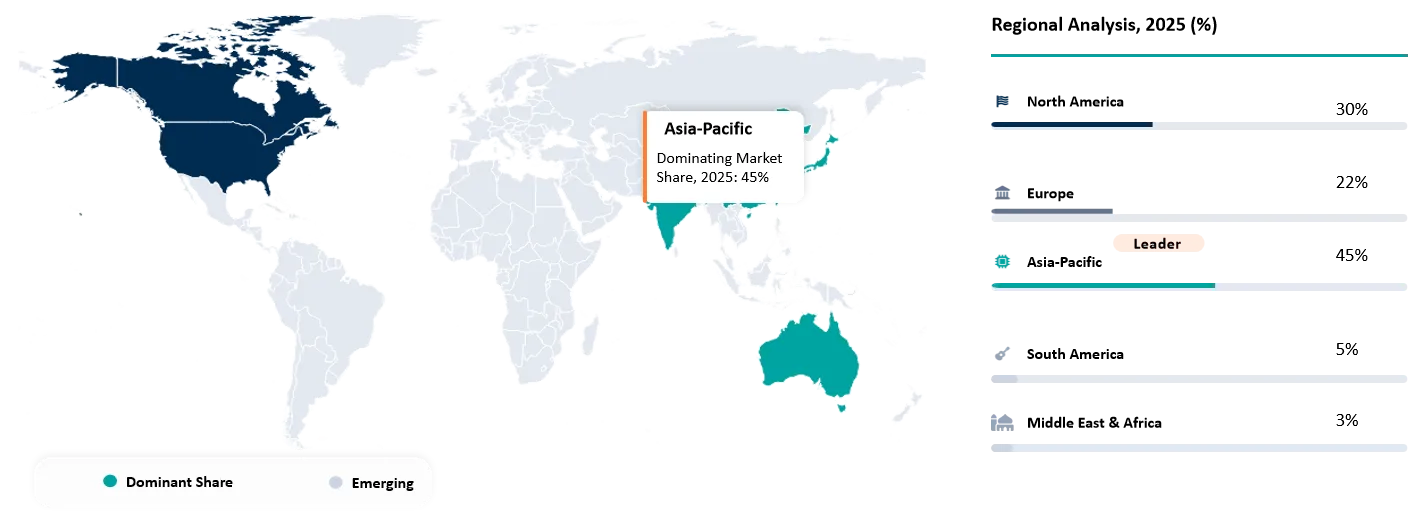
- Asia-Pacific continues to dominate as the largest regional market accounting for 45% market share by 2025 due to the presence of major battery manufacturing, production of electric vehicles, and certification testing labs, whereas North America will witness highest CAGR of 22.1% between 2026 and 2035.
- Lithium-ion batteries are the leading technology, holding a market share of around 72% in 2025 due to their application in electric vehicles, energy storage, and consumer electronics.
- The Indian government will allocate up to $1.92 billion (₹18,100 crore) in capital through the local ACC PLI Scheme. This government capital will be used to develop an indigenous battery manufacturing capacity of 50 GWh.
- Strict battery safety standards and environmental regulations in international markets have a leading share of 30% growth impact on market development. In addition to that, high-energy-density design issues and the necessity to test for thermal runaway make up for 26% growth impact.
Battery TIC Market Industry Trends and Strategic Insight
- The increased adoption of high-energy-density batteries has necessitated stringent safety assessment, such as thermal propagation testing, overcharging, short circuiting, and mechanical abuse testing, as the regulations are becoming increasingly more stringent for EVs and stationary storage.
- Battery traceability mandates are pushing TIC service providers from mere safety testing towards digital verification systems that check authenticity, carbon emissions, and lifecycle data through mining, manufacturing, and recycling processes.
- AI, machine learning, and predictive analytics are being incorporated into TIC organizations to improve their degradation forecasting, anomaly detection, and test efficiency capabilities, while the digital platforms provide real-time monitoring that reduces validation time and improves failure prediction accuracy.
- Expanding renewable energy generation and grid stabilization is increasing the demand for TIC services specific to ESS, which include long-term cycle, environmental ruggedness, fire safety, and grid interface testing
Battery TIC Market Scope
| Metrics | Details | |
| 2025 Market Size | US$ 17.9 Billion | |
| 2035 Projected Market Size | US$ 107.1 Billion | |
| CAGR (2026-2035) | 19.6% | |
| Largest Market | Asia-Pacific | |
| Fastest Growing Market | North America | |
| By Service Type | Testing, Inspection, Certification | |
| By Battery Type | Lithium-ion, Lead-acid, Nickel-based, Sodium-ion, Solid-state, Flow Battery, Others | |
| By Application | Electric Vehicles, Consumer Electronics, Energy Storage Systems, Industrial Equipment, Medical Devices, Aerospace & Defense, Marine, Others | |
| By Region | North America | U.S., Canada, Mexico |
| Europe | Germany, UK, France, Spain, Italy, Poland | |
| Asia-Pacific | China, India, Japan, Australia, South Korea, Indonesia, Malaysia | |
| Latin America | Brazil, Argentina | |
| Middle East and Africa | UAE, Saudi Arabia, South Africa, Israel, Turkiye | |
| Report Insights Covered | Competitive Landscape Analysis, Company Profile Analysis, Market Size, Share, Growth | |
Battery TIC Market Disruption Analysis
Shift Toward Next-Generation Battery Chemistries Reshaping Battery TIC Frameworks
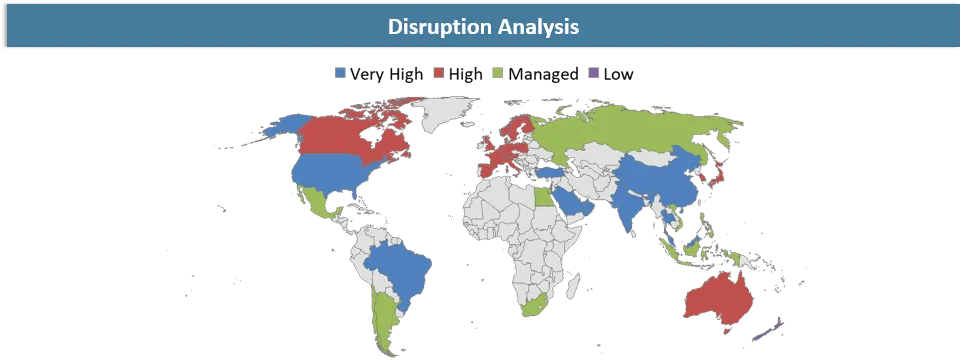
The Disruption in the Battery TIC Market is mainly caused by the shift towards next-generation battery technology from conventional lithium-ion batteries to the new battery technology generation, such as solid-state batteries, lithium metal batteries, sodium-ion batteries, and high-nickel batteries. New battery technology poses challenges to the conventional battery testing methods due to its new material properties and energy density, among others. The growing trend towards commercialization of advanced batteries is challenging the existing TIC system by demanding new testing expertise with regard to thermal stability, electrolyte compatibility, interface degradation, mechanical safety, and longevity tests. In addition, solid-state batteries call for novel testing techniques, as there are different failure mechanisms associated with solid electrolytes as opposed to lithium-ion batteries with a liquid electrolyte. According to the U.S. Department of Energy – Battery Manufacturing and Recycling Initiatives, substantial investments have been made into research and manufacturing of advanced batteries, increasing the need for upgraded testing laboratories and certification capabilities.
The disruption will cause a competition in which companies with knowledge about new battery chemistries and compliance structures are placed in a good position to gain more and more business from battery producers, auto industry companies, and storage developers. According to the National Renewable Energy Laboratory (NREL) - Battery Research and Testing Activities, a complete characterization of advanced batteries is required due to the new chemistries that arise and long-term reliability issues.
Battery TIC Market BCG Matrix: Company Evaluation
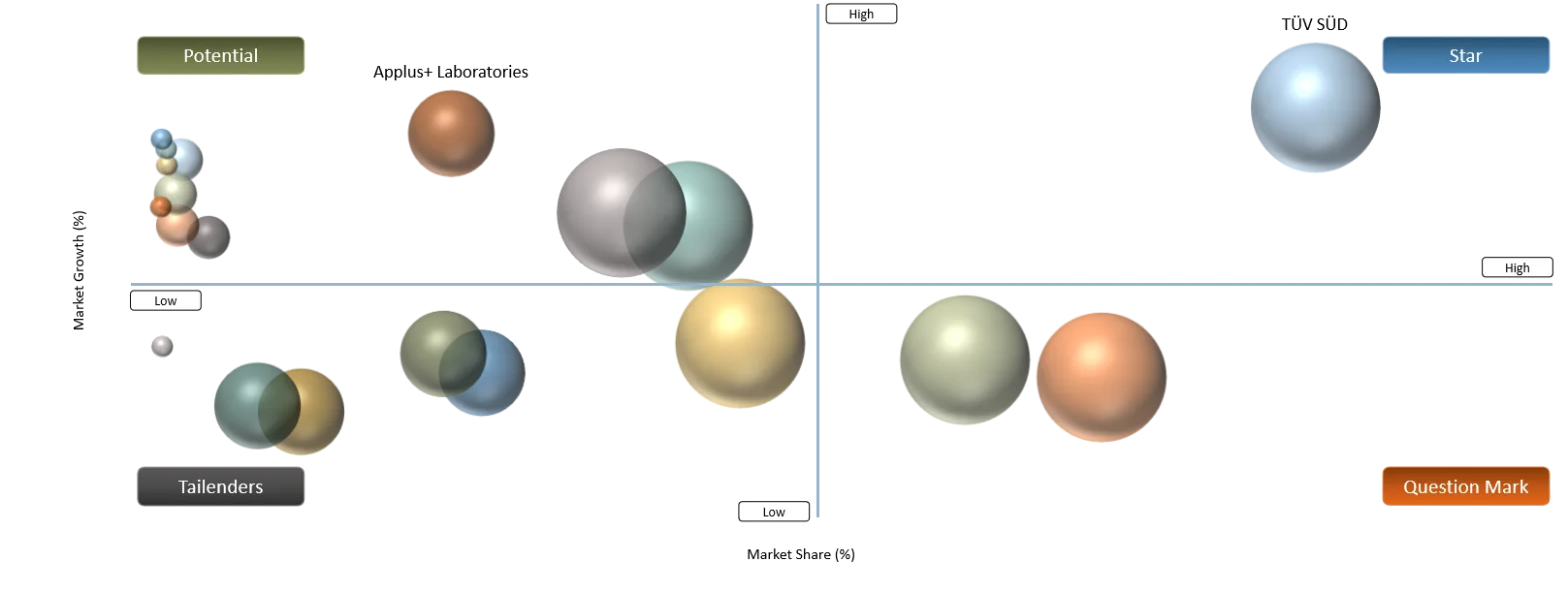
Star players such as TÜV SÜD, SGS, Intertek Group, and UL Solutions are included in this segment due to their dominant positions in battery testing, inspection, and certification, with a well-developed network of laboratories, regulatory knowledge, and long-established relations with automotive OEMs, battery manufacturers, and energy storage companies. Companies have already incorporated advanced testing facilities such as thermal runaway testing, EV battery certification, lifecycle assessment, and compliance testing. Question Marks include Bureau Veritas, DEKRA, Element Materials Technology, and Eurofins Scientific, as they are continuously enhancing their battery TIC capabilities; however, they are functioning in an extremely competitive market where there are already some existing global certification players. They are making continuous investments in EV batteries, material testing services, and energy storage systems.
Potentials include Applus+ Laboratories, DNV, Kiwa, and HORIBA due to the growing demand for testing and certification of batteries, as well as energy storage facilities and measurements. All of these firms have strong technological expertise in testing automotive parts, renewable energy systems, electrochemical analysis, and laboratory services, but they all have smaller battery TIC portfolios globally. Tailenders such as TÜV Rheinland are included since, while it has an established global certification brand, it struggles in its battery TIC business due to stiff competition from more established companies that offer battery TIC solutions.
Battery TIC Market Dynamics
Driver Impact Analysis
| Driver | Market Growth Impact (%) | Demand Concentration | Impacted Use Case | Strategic Impact |
Strict international battery safety standards and environmental regulations are increasing the need for third-party testing and certification. | 30% | Very High | Safety certification, UN 38.3 transportation testing, IEC/UL compliance testing, battery passport verification, lifecycle assessment, environmental compliance | Accelerates adoption of accredited third-party TIC services, increases mandatory certification activities, strengthens regulatory compliance, and reduces product recall and market-entry risks. |
Increased investment in battery R&D and extended life cycle is increasing the demand for more sophisticated test solutions. | 25% | High | Advanced battery characterization, degradation analysis, electrochemical testing, accelerated lifecycle testing, validation of next-generation battery chemistries | Expands demand for high-value analytical testing, supports commercialization of advanced batteries, and encourages investment in specialized testing laboratories and digital validation platforms. |
Designs of high- energy-density batteries have brought more worries regarding heating and thermal runaway, forcing companies to ensure safety by performing abuse testing. | 26% | Very High | Thermal runaway testing, crush testing, nail penetration, overcharge, short-circuit, vibration, fire propagation, mechanical abuse testing | Increases investment in specialized battery safety laboratories, strengthens adoption of abuse-testing protocols, and improves battery reliability while reducing operational and regulatory risks. |
The rise of battery recycling and second-life applications, driven by circular economy initiatives, is creating new opportunities for TIC services. | 18% | Medium to High | State-of-health (SoH) assessment, residual capacity testing, second-life qualification, recycling verification, battery passport validation, material traceability | Creates new revenue streams beyond conventional certification by expanding TIC services into battery lifecycle management, sustainability verification, and circular economy compliance. |
Strict international battery safety standards and environmental regulations are increasing the need for third-party testing and certification
The tightening of the global regulations governing battery safety and compliance with environmental laws is another important factor that has been driving the growth of Battery Testing, Inspection & Certification (TIC) services. The government bodies have increased their regulations concerning battery safety to accommodate the increased use of lithium-ion batteries in applications like electric vehicles, energy storage solutions, and consumer electronic devices. There is now an increased requirement on manufacturers to provide evidence that the battery products meet international standards such as UN 38.3, IEC 62133, UL 9540A, UL 1973, ISO 12405, and IEC 62619. Apart from that, the new European Union Battery Regulation (EU) 2023/1542 now requires battery products to adhere to standards concerning sustainability, carbon footprint, recycled material contents, due diligence, and digital battery passports.
For example, in January 2026, the State Administration for Market Regulation (SAMR) and Standardization Administration of China (SAC) in China introduced the GB 38031-2025 battery safety standard, mandating that electric vehicle batteries must not catch fire or explode for at least 120 minutes following thermal runaway and pass stricter impact and fast-charging safety testing prior to 1 July 2026 when the standard will become effective, thus raising the need for third-party battery testing, inspection, and certification services.
Restraint Impact Analysis
| Restraint | Market Growth (%) | Primary Impact Area | Impacted Use Case | Strategic Impact |
Limited availability of specialized battery testing laboratories is causing capacity constraints and certification lead times. | 8% | Laboratory infrastructure and certification capacity | EV battery qualification, ESS certification, transportation testing, lifecycle validation | Extends product commercialization timelines, increases testing backlogs, and encourages investment in new accredited battery testing facilities. |
Large battery makers and automotive OEMs are establishing their own testing facilities in order to expedite the process and reduce their dependence on third-party companies. | 7% | Third-party TIC service outsourcing | Development-stage battery validation, prototype testing, battery pack verification, R&D testing | Reduces outsourcing volumes for non-mandatory testing, intensifies competition for TIC providers, and shifts independent laboratories toward high-value regulatory certification and specialized safety testing. |
Grid-scale EES uses batteries coupled to power electronics, heat sinks, etc., making it necessary for multi-disciplinary validation, which in turn increases test time and certification costs while requiring sophisticated laboratory capabilities. | 6% | Energy storage system (ESS) validation and integrated system testing
| Utility-scale ESS certification, grid integration testing, fire safety validation, thermal management assessment | Increases project costs and certification timelines while driving demand for integrated testing facilities with multidisciplinary engineering expertise. |
Battery manufacturers usually do not want to share details of their battery chemistry and design with outside laboratories because of IP issues; thus, some validations may be less likely to be outsourced to independent TIC providers. | 5% | Intellectual property protection and confidential product development | Cell chemistry validation, prototype battery evaluation, advanced material characterization, pre-commercial testing | Limits third-party participation during early-stage battery development, increases in-house validation activities, and shifts external TIC providers toward independent certification, compliance, and final qualification services. |
Large battery makers and automotive OEMs are establishing their own testing facilities in order to expedite the process and reduce their dependence on third-party companies
The increasing tendency among battery companies and automotive OEMs to set up separate testing and validation facilities is becoming one of the main constraints in the Battery Testing, Inspection, and Certification (TIC) Market. With batteries now becoming an important competitive advantage, there is a rising inclination towards setting up specialized labs that can perform testing related to cell characterization, battery packs testing, thermal runaway analysis, lifecycle assessment, and BMS testing within companies. This helps the manufacturers in reducing their development cycle time, ensuring confidentiality of the proprietary technology, and being less dependent on third-party testing firms in the pre-certification stage. In fact, even Mahindra & Mahindra - Battery & Cell Research Lab had spent more than ₹300 crore on setting up battery and passive safety labs for testing of battery cells, modules, and packs internally.
For example, in 2025, Hyundai Motor Group, a South Korea-based automotive company, inaugurated a special battery research and testing lab for in-house testing of EV and hybrid vehicle batteries, resulting in the faster development of batteries, improvement in the quality of batteries, and a reduction in dependence on third parties for testing and certification of the batteries.
Battery TIC Market Segmentation Analysis
The global Battery TIC market is segmented based on service type, battery type, application, and region.
Widespread Deployment of Lithium-Ion Batteries Across Electric Mobility and Energy Storage Driving Dominance in the Battery TIC Market
The lithium-ion battery product type is the leading revenue-generating segment in the Battery Testing, Inspection, and Certification (TIC) Market, with a market share of 72% in 2025, as the use of the product type is prevalent in EVs, BESS, consumer electronic devices, industrial machinery, and aerospace applications. With increased manufacturing of lithium-ion batteries, there has been a considerable rise in demand for independent testing facilities that would include the evaluation of electrical performance, thermal stability, abuse testing, transportation safety testing, lifecycle testing, and certifications. As per the International Energy Agency (IEA), the total demand for batteries went past 1 TWh in 2024, witnessing a growth rate of more than 25% on a yearly basis. The report also suggests that over 85% of the battery demand is still met by lithium-ion products. The supremacy of lithium-ion batteries is further justified by consistent investments in the global capacity for battery manufacturing, along with the development of new chemistries of lithium-ion, like Lithium Iron Phosphate (LFP) and Nickel Manganese Cobalt (NMC).
The battery companies and automobile Original Equipment Manufacturers (OEMs) need complete TIC services in order to meet the standards set by different nations, such as UN 38.3, IEC 62133, UL 1973, UL 2580, and ISO 12405. It is this fast growth that has increased the demand for battery TIC services, thus making lithium-ion batteries the highest revenue-generating battery category in the global Battery TIC Market.
Battery TIC Market Geographical Penetration
Rapid Commercialization and Advanced Packaging Capacity Expansion in Asia-Pacific Region
Asia-Pacific is the dominant region for the Battery Testing, Inspection, and Certification (TIC) Market with a market share of 45% in 2025, as it holds most of the battery manufacturing capacity, electric vehicle manufacturing, and investments in the battery supply chain operations in China, Japan, South Korea, and India. The region is home to some of the largest battery cell producers as well as participants in the EV supply chain, and thus, continuous need for testing, inspection, transportation certification, and regulatory compliance services. As per the report by the International Energy Agency (IEA), the global battery manufacturing capacity was above 3 TWh where the major capacity in the Asia-Pacific. The growth of gigafactories and battery exports has led to the high demand for TIC services for UN 38.3 transportation testing, IEC safety certification, lifecycle verification, and battery performance qualification.
For instance, in March 2026, TÜV NORD, an international provider of testing, inspection, and certification (TIC), extended its testing facility for batteries in Jakarta, Indonesia, in order to increase capacity of testing of batteries, electrical devices, and household appliances as well as testing for lithium battery transport in accordance with UN 38.3, thus improving its testing and certification services in line with the rising demands from Asia-Pacific Region.
China Battery TIC Market Trends
China dominates the Asia-Pacific Battery Testing, Inspection & Certification (TIC) Market due to its unique battery manufacturing environment, large-scale manufacture of electric vehicles, and battery safety & quality compliance standards. It houses the world’s largest manufacturers of lithium-ion batteries and electric vehicle value chain leading to continuous requirements for battery testing, transport certification, thermal safety validation, life cycle assessment, and regulatory compliance. As per the IEA – Global EV Outlook 2025 report, in 2025, China held nearly 70% market share of the world’s electric vehicle manufacturing and about 80% lithium-ion battery cell manufacturing capacity.
For instance, in August 2025, Huali Technology, a China-based company that offers smart testing solutions, partnered with Changchun Automotive Test Center and SGS to set up two joint labs in Shanghai to form a world-class testing and certification center for automobiles. The motive behind this alliance was the necessity to develop a smart driving test system according to national standards and to offer certification services to new energy vehicle firms of China venturing abroad.
India Battery TIC Market Outlook
India is becoming the leading fast-growing country in the Asia-Pacific region Battery Testing, Inspection, and Certification (TIC) Market due to the fast-growing local battery manufacturing industry, increased electric vehicles (EV) usage, and government policies to promote the local advanced chemistry cells (ACC) manufacturing. The local battery manufacturing supply chain is being developed thanks to the significant investments in the gigafactory sector, EV manufacturing, and battery components manufacturing, thus, requiring a significant amount of independent testing, inspection, transportation certification, and regulatory compliance services. As per India Brand Equity Foundation (IBEF) – Electric Vehicle Industry in India, the Indian government is going to invest up to $1.92 billion (₹18,100 crore) under ACC PLI Scheme to set up 50 GWh of local battery manufacturing, and additional private investments keep increasing the capacity in 2025–2026.
For instance, in September 2025, the National Test House (NTH), an India-based government testing and certification agency under the Department of Consumer Affairs, launched an innovative Electric Vehicle (EV) Testing facility at its Alipore Regional Laboratory in Kolkata in order to carry out international testing and certification of EV batteries and components.
Battery TIC Market Competitive Landscape
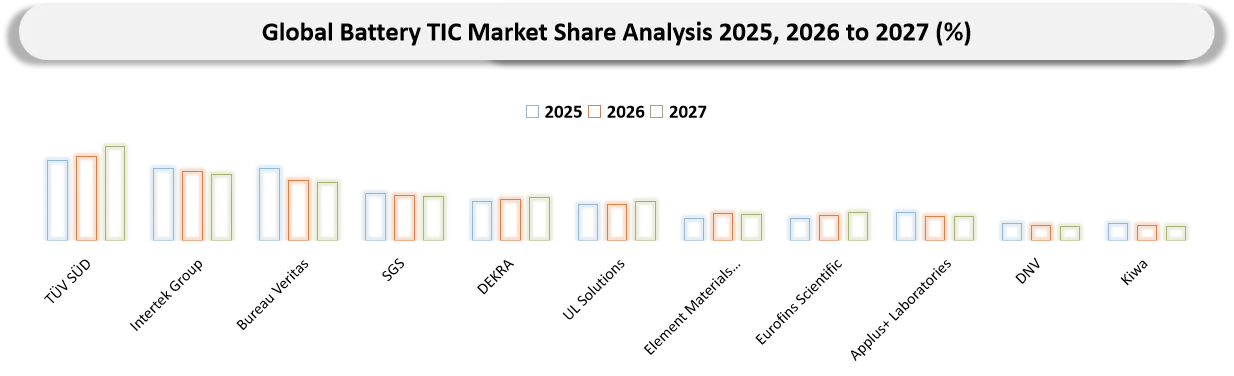
- The market features three major categories of participants: world TIC providers for batteries, specialist battery testing and certification services companies, and engineering & analytical testing firms. Companies such as TÜV SÜD, SGS, Intertek Group, Bureau Veritas, and UL Solutions are market leaders in Battery TIC globally thanks to large network of laboratories, deep regulatory experience, and collaborations with automakers, battery makers, and energy storage systems producers. Companies like DEKRA, Applus+ Laboratories, Element Materials Technology, and TÜV Rheinland have expertise in the field of advanced EV battery validation and testing, including environmental simulation, abuse testing, and transportation testing. Firms such as DNV, Kiwa, Eurofins Scientific, and HORIBA are experts in the sphere of battery energy storage certification, analytical testing, electrochemical characterization, and advanced battery performance testing.
- Key players include TÜV SÜD, Intertek Group, Bureau Veritas, SGS, DEKRA, UL Solutions, Element Materials Technology, Eurofins Scientific, Applus+ Laboratories, DNV, Kiwa, HORIBA, and TUV Rheinland.
Battery TIC Market Recent Developments
- August 2026 – Battery Energy Storage System TIC demand gains momentum
The BESS Testing, Inspection and Certification (TIC) market is seeing increased demand driven by stricter battery safety requirements, thermal-runaway testing, fire-risk assessment, grid-code compliance and lifecycle assurance. Sodium-ion batteries are emerging as a particularly fast-growing testing segment. - July 2026 – SGS highlights new lithium-ion battery certification requirements in China
SGS reported that power banks, lithium-ion batteries and battery packs certified under older Chinese implementation rules will need corresponding testing and inspection under updated requirements, with certificate conversion required by April 2027. - April 2026 – India strengthens rated-capacity verification for lithium-ion batteries
India introduced a compliance framework requiring verification of the rated or declared capacity of covered secondary lithium-ion cells and batteries, creating additional testing and certification requirements for manufacturers and existing licensees. - 2026 – Intertek expands battery and energy-storage TIC capabilities
Intertek continues providing integrated testing and certification services covering battery safety, performance, environmental resilience and global market-access requirements, including UL 9540, UL 9540A, UL 1973, IEC 62619 and other standards for energy-storage systems. - 2026 – UL Solutions strengthens battery safety and BESS certification services
UL Solutions continues expanding testing and certification capabilities for battery cells, modules, packs and energy-storage systems, including performance, reliability, thermal-runaway and fire-propagation assessments under standards such as UL 9540, UL 9540A and UL 1973. - February 2026 – SACA introduces new EV and battery inspection credentials
The Smart Automation Certification Alliance introduced pilot credentials covering lithium-ion battery fundamentals, EV/battery precision inspection, battery manufacturing systems, maintenance and production quality, supporting the development of specialized battery testing and inspection skills. - 2026 – Intertek expands second-life battery testing and certification
Intertek is supporting the growing second-life battery ecosystem with testing, certification and evaluation services for repurposed, remanufactured and refurbished batteries, including assessment against UL 1974 requirements for safety and performance. - 2026 – Battery TIC providers increase focus on performance validation and failure analysis
Testing providers are expanding beyond basic compliance toward efficiency testing, capacity and cycle-life validation, battery teardown, prototype evaluation, performance benchmarking, quality assurance and failure analysis to help manufacturers improve battery reliability and substantiate performance claims.
Key Procurement Priorities and Buyer Evaluation Criteria
- The procurement process is becoming more and more reliant on the fast-changing developments in the field of battery technology, which includes the emergence of solid-state batteries, LFP batteries, sodium-ion batteries, battery energy storage systems (BESS), and electric vehicle battery systems. Consumers opt to work with testing and inspection (TIC) companies that have the technical capability to test batteries for characterization, thermal runaway, battery passport authenticity, BMS cybersecurity, and various international regulations like UN 38.3, IEC, UL, ISO, and EU Battery Regulation.
- The selection criteria of TIC providers by buyers include laboratory accreditation, technical competence, turnaround time, international testing network, electronic reporting, accuracy of testing, consistency of the test results, and proficiency in validation of batteries used in electric vehicles, power storage systems, consumer electronics, aerospace industry, and industries at large. Integrated testing of the materials from their raw state to the end of life cycle has become an essential procurement parameter.
- Moreover, procurement departments also look at the ability of their suppliers to offer capabilities to develop the batteries of the future using electrochemical analysis, environmental and abuse testing, lifecycle validation, sustainability assessment, carbon foot printing, recycled content analysis, and battery traceability services. Those companies that provide digital compliance management, battery passports, predictive analytics, and full regulatory support are becoming more popular choices among battery manufacturers and OEMs.
Why Choose DataM?
- Technological Innovations: Considers new developments in battery testing, inspection, and certification technologies, such as the development of artificial intelligence-powered testing systems, automated battery validation solutions, digital certification, non-destructive testing (NDT), X-ray and CT testing, and real-time battery diagnostics for more effective and accurate testing of batteries.
- Product Performance & Market Positioning: Identifies and analyzes how TIC firms compete based on their strengths in testing accuracy, certification services, laboratory accreditation, regulatory know-how, turnaround times, and the ability to accommodate different battery chemistry types.
- Real-World Evidence: Provides information about the implementation of battery TIC services at battery manufacturing sites, electric vehicle OEMs, battery cell makers, energy storage projects, and consumer electronics producers, which include the following advantages: increased product safety, faster approval processes, higher quality assurance, and lower risk of product failures.
- Market Updates & Industry Changes: Highlights the milestones achieved, such as growth of battery testing facilities, adoption of safety testing procedures, battery regulatory compliance measures, partnerships between certification authorities and battery producers, and investment in test equipment in North America, Europe, and Asia-Pacific regions.
- Competitive Strategies: Evaluates ways in which leading companies enhance their market share via network expansion of laboratories, deployment of digital testing platforms, acquisitions, alliances with automobile OEMs and battery makers, enhanced accreditations, and the development of niche testing services for advanced battery technologies.
- Pricing & Market Access: Elaborates on the differentials in pricing that result from the breadth of testing, standards for certification, chemical composition of batteries, difficulty level of testing, and regulatory requirements, while evaluating access to the market via accredited laboratories, third-party TIC firms, regulators, and certification networks around the world.
- Market Entry & Expansion: Discusses growth opportunities that will come from increased production of electric vehicles (EV), increased safety standards for batteries, increased use of energy storage systems, and the worldwide need for battery certification, while at the same time discussing strategies including regional expansion of laboratories, regulatory knowledge, digital solutions for testing, and partnerships.
Target Audience
- Battery Cell Manufacturers
- Battery Module and Battery Pack Manufacturers
- Electric Vehicle (EV) OEMs
- Commercial Vehicle and Electric Bus Manufacturers
- Battery Energy Storage System (BESS) Developers and Integrators
- Consumer Electronics Manufacturers
- Battery Recycling and Second-Life Battery Companies





























































