


Global Industrial Control Systems (ICS) Security Market Size and Forecast
The Industrial Control Systems (ICS) Security Market will reach US$ 8,137.18 million in 2026, up from US$ 7,131.00 million in 2025, and is projected to reach US$ 27,903.73 million by 2035, registering strong growth at a CAGR of 14.11% during the forecast period from 2026 to 2035.
The global industrial control systems (ICS) security market is expanding rapidly as industries throughout the world update their processes and integrate digital technology into critical infrastructure. ICS settings, such as Supervisory Control and Data Acquisition (SCADA) systems, Distributed Control Systems (DCS) and Programmable Logic Controllers (PLCs), were formerly isolated, but their greater accessibility to company IT and cloud platforms has made them vulnerable to cyber attacks. The growing convergence of IT and OT (Operational Technology) is creating a significant need for robust security solutions spanning from intrusion detection and anomaly monitoring to secure remote access and sophisticated threat intelligence
In recent years, several high-profile instances have demonstrated industrial network vulnerabilities. Attacks on power grids, oil and gas facilities and manufacturing units have highlighted the risk of interruption to critical services and even national security. In response, governments and regulatory organizations in North America, Europe and Asia-Pacific have implemented stronger cybersecurity frameworks and standards, including the NIST Cybersecurity Framework, the EU's NIS2 Directive and IEC 62443. The rules compel critical infrastructure operators to invest extensively in ICS security technologies and managed services, with many incorporating artificial intelligence, machine learning and zero-trust architectures to improve resilience.
The ICS security market is likely to gain demand from rapid digitalization, the implementation of Industry 4.0 initiatives and the increased deployment of Industrial Internet of Things (IIoT) devices. The investment impetus is obvious, with both private-sector operators and state institutions prioritizing ICS security as a strategic pillar to maintain operational continuity and national security.
Key Takeaways
- Asia-Pacific accounts for approximately 38-40% of the global market, driven by rapid industrial automation, smart manufacturing initiatives, and increasing cybersecurity investments across critical infrastructure.
- Network security solutions contribute nearly 35-40% of total market revenue, owing to the growing need to protect industrial networks, SCADA systems, and connected OT environments.
- Energy & utilities account for over 30% of total end-user demand, supported by rising cyber threats targeting power grids, oil & gas facilities, and water treatment infrastructure.
- More than 70% of industrial organizations are increasing cybersecurity investments to secure Operational Technology (OT) environments against ransomware, advanced persistent threats (APTs), and supply chain attacks.
- AI-powered threat detection and behavioral analytics solutions are witnessing annual adoption growth exceeding 20%, enabling real-time anomaly detection and faster incident response.
- Zero Trust security architecture is becoming a strategic priority for industrial enterprises to protect interconnected IT and OT environments from evolving cyber risks.
- Cloud-based ICS security platforms are experiencing double-digit growth, driven by remote monitoring, predictive threat intelligence, and centralized security management.
- Manufacturing remains one of the fastest-growing application sectors, fueled by Industry 4.0 adoption, Industrial IoT (IIoT) deployment, and digital factory initiatives.
- Growing regulatory compliance requirements, increasing cyberattacks on critical infrastructure, and accelerated digital transformation are expected to drive sustained long-term market growth.
Industrial Control Systems (ICS) Security Market Scope
| Metrics | Details | |
| CAGR | 14.11% | |
| Market Size Available for Years | 2025-2035 | |
| Estimation Forecast Period | 2026-2035 | |
| Revenue Units | Value (US$ Mn) | |
| Security Type | Endpoint Security, End-User Security, Network Security, Database Security | |
| Component | Solutions, Services | |
| End-User | Automotive and Transportation, IT & Telecom, Energy & Utilities, Healthcare, Manufacturing, Retail and Others | |
| Regions Covered | North America, Europe, Asia-Pacific, South America, and the Middle East & Africa | |
Industrial Control Systems (ICS) Security Market Key Market Trends & Insights
- Asia-Pacific is the largest ICS market, supported by China’s 70,000+ smart factories and Japan’s 60% adoption of ICS-enabled smart manufacturing, making the region the global hub for industrial modernization.
- North America is the fastest-growing region, with the US DOE and CISA driving large-scale ICS integration in utilities, oil & gas, and critical infrastructure modernization projects.
- A major impacting insight is the rising prioritization of ICS cybersecurity, as ENISA reported in 2024 that over 60% of European operators faced supply chain-related ICS risks, pushing governments to enforce stricter compliance and accelerate adoption of secure ICS frameworks.
AI-Powered Threat Detection
AI and machine learning are becoming increasingly important in OT security because industrial environments generate large quantities of network and operational telemetry.
AI-based systems can establish behavioral baselines and identify deviations involving communication patterns, device behavior, network traffic or operational processes.
DataM estimates that AI-powered threat detection and behavioral-analytics solutions are experiencing annual adoption growth exceeding 20%, reflecting the increasing use of intelligent monitoring technologies in industrial environments.
The market opportunity is shifting from simple signature-based detection toward behavior-based detection capable of identifying previously unknown or unusual activity.
Zero-Trust OT Security
Zero Trust is becoming increasingly relevant as industrial organizations connect more users, devices and networks.
Instead of assuming that devices inside an industrial network are trusted, zero-trust approaches continuously evaluate identity, access privileges, device status and communication requirements.
This is particularly important for environments involving remote workers, third-party maintenance providers, cloud applications and distributed industrial assets.
Secure Remote Access
Industrial organizations increasingly require remote access for maintenance, troubleshooting and operational monitoring.
The market is therefore seeing greater demand for secure remote-access platforms incorporating identity verification, privileged access, session recording, policy enforcement and network segmentation.
Cloud-Based OT Security
Cloud-based security platforms are gaining traction because they allow organizations to centralize monitoring across geographically distributed industrial facilities.
DataM identifies double-digit growth in cloud-based ICS security platforms, driven by remote monitoring, centralized security management and threat-intelligence capabilities.
However, cloud adoption in OT environments remains more complex than in conventional IT because organizations must consider latency, availability, safety, data sovereignty and operational continuity.
Industrial IoT Security
The growing number of connected industrial sensors and edge devices is expanding the ICS attack surface.
Organizations increasingly require device discovery, asset inventory, vulnerability assessment, firmware monitoring and network-behavior analysis for IIoT environments.
Supply-Chain Security
ICS environments depend on equipment, software, firmware and services supplied by numerous vendors.
Compromise of a software update, third-party connection or vendor account can potentially provide attackers with access to industrial environments.
This is increasing interest in software bills of materials, supplier risk assessments, secure development practices, vendor access controls and continuous monitoring.
Secure-by-Design Industrial Equipment
Security is increasingly being incorporated during the design and development of industrial products instead of being added after deployment.
This trend is particularly relevant to PLCs, industrial gateways, remote-access products, engineering software and industrial network equipment.
5G and Industrial Connectivity
5G is creating opportunities for low-latency industrial connectivity, but it also introduces additional security considerations.
Recent 2026 research on 5G-connected ICS environments found that degraded wireless conditions can affect detection mechanisms and increase risks associated with eavesdropping and jamming, highlighting the need to evaluate cybersecurity alongside connectivity performance.
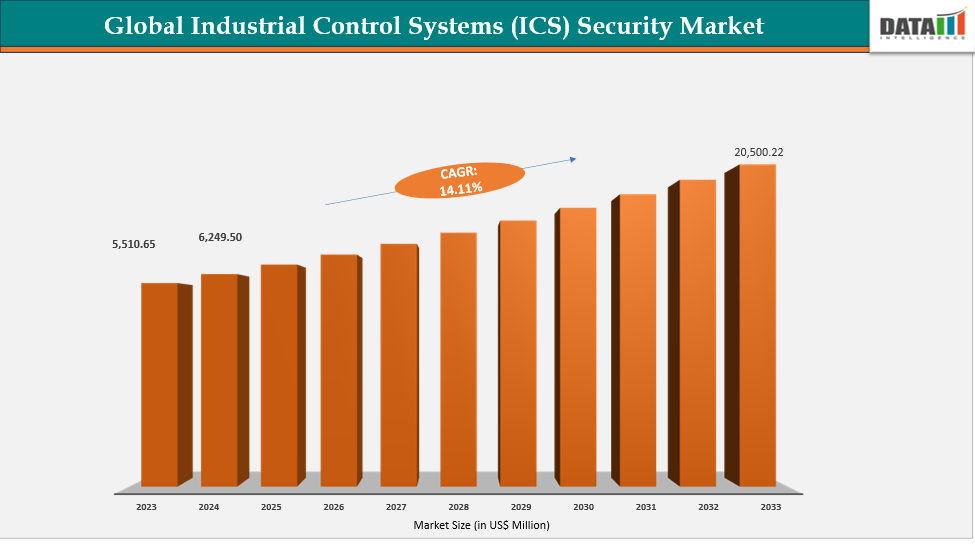
Industrial Control Systems (ICS) Security Market Dynamics
Driver: Rapid Adoption of Smart Manufacturing and Industry 4.0 Initiatives Enhancing ICS Integration
Rapid adoption of smart manufacturing and Industry 4.0 initiatives is driving growth in the Global Industrial Control Systems (ICS) Security Market, as industries increasingly automate and digitize operations. According to Germany’s Federal Ministry for Economic Affairs and Climate Action (BMWK), over 50% of manufacturers adopted Industry 4.0 solutions by 2023, heavily reliant on ICS platforms for process control and monitoring. In China, the Ministry of Industry and Information Technology (MIIT) reported over 70,000 digital workshops and smart factories established by 2024, each integrating ICS-driven automation. These initiatives highlight how government-backed modernization programs are accelerating ICS deployment across global manufacturing and critical infrastructure sectors.
Restraint: Rising Vulnerability of ICS to Cybersecurity Threats and Operational Disruptions
Rising vulnerability to cyberattacks is restraining the growth of the Global Industrial Control Systems (ICS) Security Market, as critical infrastructure faces heightened risks. The US Cybersecurity and Infrastructure Security Agency (CISA) reported that in 2023, ICS-targeted incidents increased by over 20%, particularly in energy and water sectors, disrupting essential operations. Similarly, the European Union Agency for Cybersecurity (ENISA) highlighted that more than 60% of industrial operators reported supply chain-related ICS cyber risks in 2024, underscoring the growing challenge of ensuring resilient and secure system operations.
For more details on this report, Request for Sample
Industrial Control Systems (ICS) Security Market Segmentation Analysis
The Global Industrial Control Systems (ICS) Security Market is segmented based on component, security type, end-user, and region.
Component: Solutions segment is estimated to have 42.7% of the industrial control systems (ICS) market share.
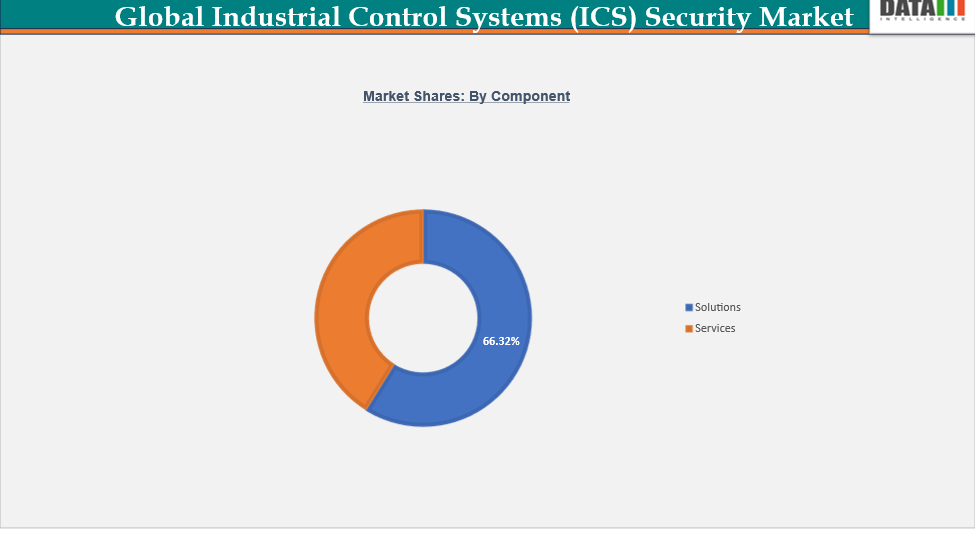
The Solutions segment, estimated to account for the largest share of the industrial control systems (ICS) market, is driven by widespread adoption of advanced automation and digital platforms in critical industries. In Japan, the Ministry of Economy, Trade and Industry (METI) reported in 2023 that more than 60% of manufacturers have deployed ICS-integrated smart factory solutions, reflecting the heavy reliance on software-driven control and monitoring platforms.
In the US, the Department of Energy’s 2024 Grid Modernization Initiative highlighted that over two-thirds of utilities are integrating advanced ICS solutions into their operations to improve grid resilience and reduce downtime. Similarly, China’s Ministry of Industry and Information Technology (MIIT) noted that digital workshop initiatives have scaled to more than 70,000 facilities by mid-2024, powered largely by ICS solutions that integrate automation, monitoring, and cybersecurity.
The growth of the Solutions segment is further reinforced by increasing government-backed cybersecurity standards and smart manufacturing incentives worldwide. The European Union Agency for Cybersecurity (ENISA) in 2024 mandated enhanced ICS security frameworks for operators of essential services, driving adoption of advanced ICS solutions across energy and industrial sectors. Meanwhile, South Korea’s Manufacturing Innovation 3.0 program has facilitated the deployment of ICS-driven automation solutions in over 20,000 small- and medium-scale factories, underscoring the reliance on ICS platforms for industrial efficiency and resilience. With governments prioritizing resilient supply chains, energy transition, and industrial modernization, the Solutions segment remains the cornerstone of global ICS adoption.
Industrial Control Systems (ICS) Security Market Geographical Analysis
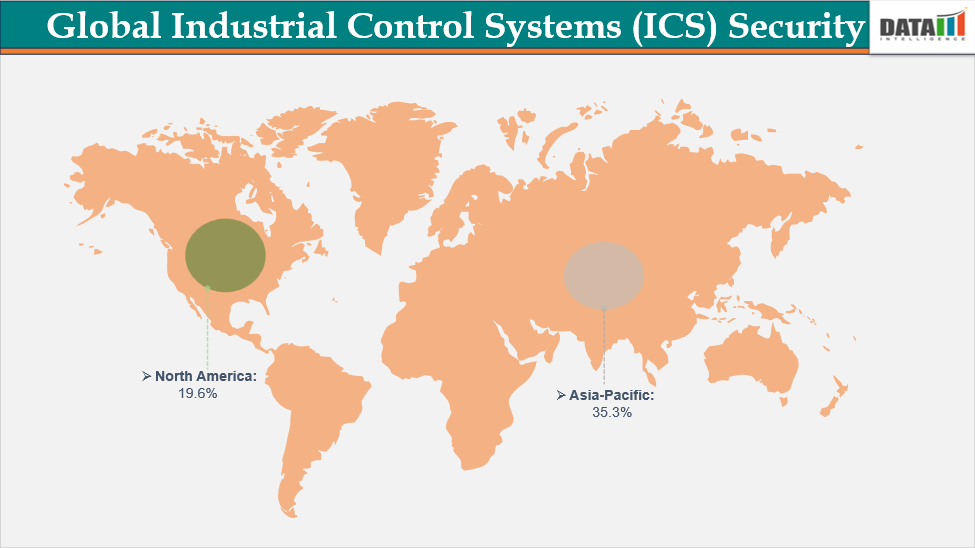
The Asia-Pacific industrial control systems (ICS) market was valued at 35.3% market share in 2024
The Asia-Pacific ICS cybersecurity market is entering a strong growth phase from 2024 to 2026, fueled by industrial modernization and regulatory action. China’s Ministry of Industry and Information Technology announced a strategy in February 2024 to secure more than 45,000 industrial enterprises and neutralize major cyber risks by the end of 2026. Similarly, New Zealand’s Reserve Bank introduced new cyber-incident reporting standards in 2024, signaling rising oversight for critical systems across the region.
Escalating cyber threats are reshaping operational technology (OT) security priorities. Attacks such as the Midnight Blizzard intrusion reported by Microsoft in 2024 highlight how sophisticated actors exploit remote-access gaps and identity weaknesses. Asia-Pacific operators are increasingly adopting zero-trust frameworks, segmentation, and advanced identity management to protect industrial assets and minimize operational disruptions.
Capacity-building initiatives are expanding cybersecurity skills and collaboration. For instance, Japan’s METI and ICSCoE, with US and EU partners, hosted the JP-US-EU ICS Cybersecurity Week in November 2024, focusing on supply chain resilience, AI-driven attack simulations, and incident response for Indo-Pacific participants.
Technology alliances are also transforming ICS security. For instance, in May 2025, Honeywell partnered with Nutanix to integrate its Experion PKS with Nutanix’s hybrid-cloud platform, creating a modern, secure infrastructure for industrial control systems. Scheduled for the second half of 2025, the solution is designed for energy, manufacturing, chemical, and pharmaceutical operations across Asia-Pacific, enabling scalable, resilient, and cost-efficient environments for critical control applications.
The North America Industrial Control Systems (ICS) market was valued at 19.6% market share in 2024
North America, while smaller in absolute volume compared to Asia-Pacific, is the fastest-growing ICS market due to heightened investment in cybersecurity and modernization of legacy systems. The US Department of Energy noted in 2024 that over 65% of utilities are deploying ICS-based digital control systems to improve energy grid resilience under the Grid Modernization Initiative.
Similarly, the US Cybersecurity and Infrastructure Security Agency (CISA) highlighted that ICS cybersecurity incidents in North America increased by 35% year-on-year in 2023, prompting accelerated adoption of secure and modern ICS platforms across energy, manufacturing, and transportation. In Canada, Infrastructure Canada’s funding of USD 1.5 billion toward smart industrial automation in 2024 further underlines the region’s rapid momentum.
Industrial Control Systems (ICS) Security Market Regulatory Landscape
The regulatory environment is becoming one of the most important market drivers because governments increasingly classify industrial cybersecurity as a critical-infrastructure and national-resilience issue.
NIST SP 800-82
NIST's SP 800-82 Revision 3 provides cybersecurity guidance specifically for operational technology environments, including industrial control systems.
The guidance addresses the distinctive requirements of OT environments where security measures must be balanced against safety, reliability, performance and availability.
IEC 62443
The IEC 62443 family provides an important industrial cybersecurity framework covering industrial automation and control systems.
Its approach emphasizes risk assessment, defense in depth, zones and conduits, security levels and security throughout the industrial system lifecycle.
The standard is increasingly relevant to equipment manufacturers, system integrators and industrial operators seeking structured cybersecurity programs.
NIS2 - European Union
The EU's NIS2 framework strengthens cybersecurity obligations for organizations operating in critical and important sectors.
Its broader scope and requirements around risk management, incident reporting, governance and supply-chain security are increasing pressure on industrial organizations to strengthen cybersecurity capabilities.
Critical Infrastructure Protection
Energy, water, transportation, manufacturing and other critical sectors are increasingly subject to cybersecurity requirements at national and regional levels.
The result is increasing demand for solutions that can provide continuous monitoring, incident detection, vulnerability management and documented compliance.
Secure-by-Design
Governments and cybersecurity agencies are increasingly encouraging manufacturers to incorporate cybersecurity into products from the design stage.
For ICS manufacturers, this can influence product development, software updates, authentication, vulnerability disclosure, secure configuration and lifecycle support.
Industrial Control Systems (ICS) Security Market Value Chain Analysis
Hardware and Industrial Equipment Suppliers
The upstream value chain includes suppliers of PLCs, RTUs, sensors, HMIs, industrial switches, gateways, controllers and other OT hardware.
Security increasingly needs to be incorporated into these products from the initial design stage.
ICS and Automation Vendors
Industrial automation companies provide control systems, SCADA platforms, DCS technologies, PLCs and related industrial infrastructure.
These vendors are increasingly integrating cybersecurity directly into automation products.
Cybersecurity Technology Providers
Security companies provide firewalls, intrusion detection, endpoint protection, vulnerability management, network monitoring, threat intelligence, identity management and OT-security platforms.
Software and AI Providers
AI and analytics providers support behavioral detection, anomaly identification, predictive security analytics and automated incident prioritization.
System Integrators
Integrators connect security technologies with existing industrial environments while ensuring that cybersecurity controls do not disrupt production processes.
This is particularly important for legacy systems.
Managed Security Providers
Managed service providers monitor OT environments continuously and provide detection, response and security-management capabilities.
This model can be attractive for organizations that do not have sufficient internal OT cybersecurity expertise.
Industrial Operators
The downstream customers include:
- Energy companies
- Utilities
- Oil and gas companies
- Manufacturing companies
- Automotive manufacturers
- Chemical companies
- Mining companies
- Water utilities
- Transportation operators
- Healthcare organizations
- Telecommunications companies
Industrial Control Systems (ICS) Security Market Competitive Landscape
The Global Industrial Control Systems (ICS) Security Market features several prominent players, ABB, Cisco Systems, Inc., Check Point Software Technologies Ltd, Fortinet, Inc., Honeywell International Inc., IBM, AO Kaspersky Lab, Microsoft, Siemens, and Nozomi Networks Inc.
Among these, Cisco Systems, Inc. plays a leading role in strengthening supply chain cybersecurity. The company offers end-to-end zero-trust architecture, threat intelligence, and advanced network protection solutions tailored to critical industries. Cisco collaborates with US federal agencies to secure vendor ecosystems against ransomware and state-backed attacks, with initiatives under the Department of Homeland Security’s supply chain risk management programs. Its global presence ensures resilient cybersecurity frameworks across finance, manufacturing, and defense supply chains.
Recent Development in Industrial Control Systems (ICS) Security Market
- June 2026 - Honeywell International Inc.: Expanded its OT Cybersecurity Suite with advanced threat detection and protection capabilities for industrial control systems.
- June 2026 - Fortinet, Inc.: Introduced enhanced OT security solutions to strengthen cyber resilience across critical industrial infrastructure.
- May 2026 - Cisco Systems, Inc.: Launched new Industrial IoT security capabilities to improve visibility and protection for connected operational technology environments.
- May 2026 - Nozomi Networks Inc.: Expanded its AI-powered OT and ICS cybersecurity platform with enhanced threat detection and asset intelligence features.
- April 2026 - Microsoft: Enhanced Microsoft Defender for IoT with new capabilities for securing industrial control systems and critical infrastructure.
- April 2026 - Siemens: Expanded its industrial cybersecurity portfolio with advanced security solutions for digital manufacturing and critical infrastructure.
- March 2026 - ABB: Introduced upgraded cybersecurity services and digital solutions to improve the protection of industrial automation systems.
- March 2026 - Check Point Software Technologies Ltd.: Launched advanced AI-driven cybersecurity solutions to strengthen OT and industrial network protection.
Target Audience
The report is strategically developed for stakeholders operating across the global industrial cybersecurity, operational technology, critical infrastructure, and intelligent manufacturing ecosystem. It provides actionable market intelligence for ICS security solution providers, industrial automation companies, manufacturing organizations, energy and utilities operators, transportation infrastructure providers, cloud technology companies, and cybersecurity developers seeking to strengthen their competitive positioning within rapidly evolving industrial markets. Furthermore, regulatory organizations, academic institutions, investment firms, government agencies, and strategic business leaders can utilize the report to evaluate emerging technological innovations, commercialization trends, cybersecurity developments, and future growth opportunities shaping the Industrial Control Systems Security Market through 2035.
Why Choose DataM?
- DataM delivers comprehensive strategic intelligence on the Industrial Control Systems Security Market by combining deep technological analysis with actionable commercialization insights across the global operational technology cybersecurity ecosystem.
- Technological Innovations: DataM explores advancements across artificial intelligence-enabled threat intelligence platforms, Zero Trust security architectures, industrial intrusion detection systems, cloud-connected OT security frameworks, Industrial Internet of Things (IIoT) cybersecurity solutions, and intelligent incident response technologies that are enabling industrial organizations worldwide to improve operational resilience and cybersecurity capabilities across critical infrastructure environments.
- Product Performance & Market Positioning: The report evaluates how leading market participants deliver ICS security solutions based on critical performance parameters such as real-time threat detection capabilities, network visibility functionalities, compliance management frameworks, operational scalability, deployment flexibility, intelligent analytics capabilities, and secure remote access technologies, highlighting how vendors differentiate through technological innovation and cybersecurity excellence across industrial environments.
- Real-World Evidence: DataM highlights the adoption of industrial cybersecurity technologies across manufacturing facilities, power generation infrastructures, oil and gas operations, transportation systems, and smart industrial environments worldwide, demonstrating measurable benefits including improved operational continuity, reduced cybersecurity risks, enhanced regulatory compliance capabilities, accelerated incident response times, and strengthened industrial resilience across mission-critical operational ecosystems.
- Market Updates & Industry Changes: The report tracks key developments including strategic cybersecurity investments, regulatory framework implementations, advancements in intelligent OT security technologies, expansion of industrial cybersecurity capabilities, and regional initiatives supporting critical infrastructure modernization programs across North America, Europe, and Asia-Pacific.
- Competitive Strategies: DataM analyzes how leading organizations expand through artificial intelligence innovations, strategic collaborations, intelligent threat intelligence platforms, cloud-enabled cybersecurity capabilities, product portfolio diversification initiatives, and regional commercialization programs designed to address increasing demand for critical infrastructure protection and industrial digital transformation technologies worldwide.
- Pricing & Market Access: The report explains pricing variations based on deployment models, cybersecurity functionalities, intelligent analytics capabilities, compliance requirements, operational complexities, and managed security service offerings, along with market access opportunities through cybersecurity providers, industrial automation companies, cloud technology organizations, and strategic system integration partnerships supporting global commercialization initiatives.
- Market Entry & Expansion: DataM identifies attractive growth opportunities driven by increasing cyber threats targeting industrial environments, accelerating Industry 4.0 adoption initiatives, critical infrastructure modernization programs, and demand for intelligent operational technology security solutions globally. The report further outlines strategic approaches involving regional expansion initiatives, technology differentiation strategies, customized cybersecurity frameworks, and collaborative commercialization models designed to support successful market entry and long-term business expansion across emerging and established industrial cybersecurity markets.
The Global Industrial Control Systems (ICS) Security Market report delivers a detailed analysis with 62 key tables, more than 54 visually impactful figures, and 230 pages of expert insights, providing a complete view of the market landscape.
Suggestions for Related Report
For more related reports, please click here



























































