


Energy Transition Market Overview
The Energy Transition Market is estimated to reach USD 2.36 Trillion in 2026 and is projected to grow to USD 7.20 Trillion by 2035, registering strong growth at a CAGR of 13.59% during the forecast period from 2026 to 2035. This momentum comes from the world’s push towards cleaner, low-carbon energy solutions solar, wind, batteries, and hydrogen that not only cut emissions but also improve efficiency. Strong government policies, net-zero pledges, and rapid innovation are making renewable power, electrification, and sustainable fuels more accessible, driving the shift to a greener global economy.
Key Takeaways
- The market is expected to generate nearly US$ 4.84 trillion in incremental revenue opportunities between 2026 and 2035, highlighting the massive scale of global investments directed toward decarbonization and clean energy infrastructure.
- Renewable energy accounts for approximately 42.6% of the market share, making it the largest segment as governments and corporations accelerate investments in solar, wind, hydro, and other clean power technologies.
- North America captured around 35.7% of the global market share, supported by strong policy incentives, large-scale renewable energy deployment, energy storage investments, and corporate sustainability initiatives.
- Solar and wind energy continue to dominate new power generation capacity additions globally, reinforcing their position as the primary drivers of the energy transition.
- Electrification of transportation, industrial processes, and buildings is becoming one of the most significant growth catalysts, driving long-term demand for renewable electricity and energy infrastructure.
- Global investments in battery energy storage systems are accelerating as utilities seek solutions to enhance grid stability and integrate larger volumes of renewable energy.
- Green hydrogen is emerging as one of the fastest-growing segments, attracting substantial investments for industrial decarbonization, sustainable transportation, and clean fuel production.
- Smart grid technologies and digital energy management platforms are gaining widespread adoption as utilities modernize aging infrastructure and improve energy efficiency.
- Corporate net-zero commitments are becoming a major market driver, encouraging investments in renewable power procurement, carbon reduction technologies, and sustainable energy solutions.
- Carbon capture, utilization, and storage (CCUS) technologies are gaining momentum as industries seek practical pathways to reduce emissions from hard-to-abate sectors.
- Increasing energy security concerns are encouraging nations to diversify their energy mix and reduce dependence on imported fossil fuels through domestic renewable energy development.
- Artificial intelligence and advanced analytics are transforming energy systems by enabling predictive maintenance, real-time optimization, demand forecasting, and intelligent grid management.
- Emerging economies are expected to account for a significant share of future market expansion due to growing energy demand, rapid urbanization, and increasing clean energy investments.
- Sustainability-linked financing, green bonds, and climate-focused investment funds are becoming critical sources of capital for energy transition projects worldwide.
Analyst Viewpoint
The Energy Transition Market is undergoing a historic transformation as governments, corporations, utilities, and financial institutions accelerate efforts to reduce carbon emissions and build sustainable energy systems. The transition is no longer limited to renewable power generation; it now encompasses electrification, energy storage, hydrogen production, carbon management, digital energy technologies, and smart infrastructure development.
Rapid technological advancements and declining costs of renewable energy technologies are improving project economics and accelerating adoption worldwide. At the same time, growing concerns regarding climate change, energy security, and fossil fuel dependence are encouraging large-scale investments in clean energy solutions.
Over the forecast period, the market is expected to be driven by increasing renewable energy capacity additions, expansion of energy storage infrastructure, electrification of transportation and industry, and growing investments in next-generation energy technologies. Organizations that successfully position themselves within these emerging value chains are expected to capture significant long-term growth opportunities.
Market Size and Future Outlook
2026 Market Size: USD 2.36 Trillion
2035 Projected Market Size: USD 7.20 Trillion
CAGR (2026-2035): 13.59%
Largest Market: Asia-Pacific
Fastest Market: North America
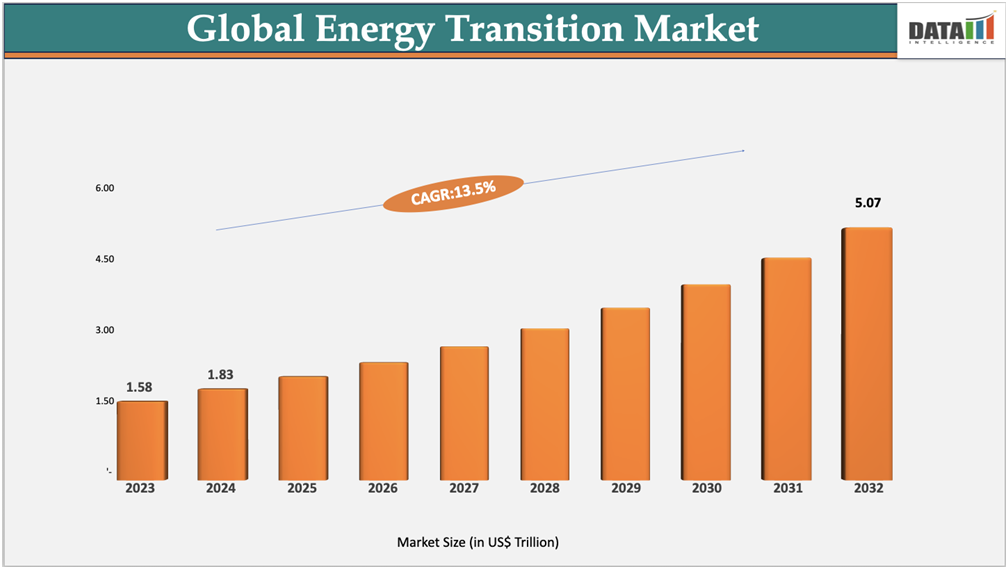
Source : DataM Intelligence Email : [email protected]
Energy Transition Market Scope
Metrics | Details |
|---|---|
By Technology | Renewable Energy, Energy Storage, Hydrogen & Alternative Fuels, Carbon Management, Electrification & Digitalization, Others |
By Application | Power Generation, Transportation, Industrial, Residential & Commercial, Oil & Gas Transition |
By End-User | Utilities & Power Producers, Industrial & Manufacturing Companies, Commercial & Residential Consumers, Transportation & Mobility Providers, Oil & Gas Companies transitioning |
By Region | North America, South America, Europe, Asia-Pacific, the Middle East, and Africa |
Report Insights Covered | Competitive Landscape Analysis, Company Profile Analysis, Market Size, Share, Growth |
Latest Industry Intelligence & Future Growth Catalysts (2026)
AI Is Revolutionizing Energy Management
Artificial intelligence is increasingly being integrated into energy systems to optimize power generation, forecast electricity demand, improve grid reliability, and maximize renewable energy efficiency.
Energy Storage Is Becoming a Strategic Priority
Large-scale battery storage deployments are accelerating globally as utilities and grid operators seek solutions to manage renewable intermittency and improve energy resilience.
Green Hydrogen Is Entering Commercial Deployment
Hydrogen is emerging as a critical decarbonization solution for industries where direct electrification remains challenging, including steel manufacturing, chemicals, aviation, and maritime transportation.
Electrification Continues to Expand
The electrification of transportation, industrial processes, and building infrastructure is creating substantial demand for renewable electricity and supporting technologies.
Smart Grids Are Transforming Power Networks
Utilities are investing heavily in smart grid infrastructure to improve efficiency, enhance reliability, and accommodate increasing renewable energy penetration.
Carbon Management Technologies Gain Momentum
Carbon capture, utilization, and storage technologies are attracting increasing investments as industries pursue net-zero emissions targets.
Corporate Sustainability Commitments Drive Demand
Organizations across industries are increasing renewable energy procurement and investing in clean technologies to achieve long-term sustainability goals.
Energy Transition Market Dynamics
Rising Demand from Renewable Energy & Clean Technology Sector
The renewable energy and clean technology sector is a major driver of the energy transition market, as governments and industries focus on reducing carbon emissions and meeting global net-zero targets. According to the IEA, global clean energy investments are projected to exceed USD 2 trillion in 2024, reflecting the growing emphasis on renewable power, energy storage, and grid modernization. The adoption of solar, wind, and battery technologies is accelerating, driven by technological advancements, policy incentives, and corporate sustainability initiatives.
To address this surging demand, companies are introducing innovative solutions and high-efficiency technologies. For instance, in 2024-2025, leading firms such as Siemens Energy and NextEra Energy expanded their portfolios with advanced grid integration systems and high-capacity energy storage solutions, enhancing the reliability and efficiency of renewable energy deployment. As countries and corporations continue prioritizing sustainable energy infrastructure, such innovations are expected to propel investments and accelerate the global energy transition, particularly in regions like Asia-Pacific, North America, and Europe.
Energy Transition Market Segmentation Analysis
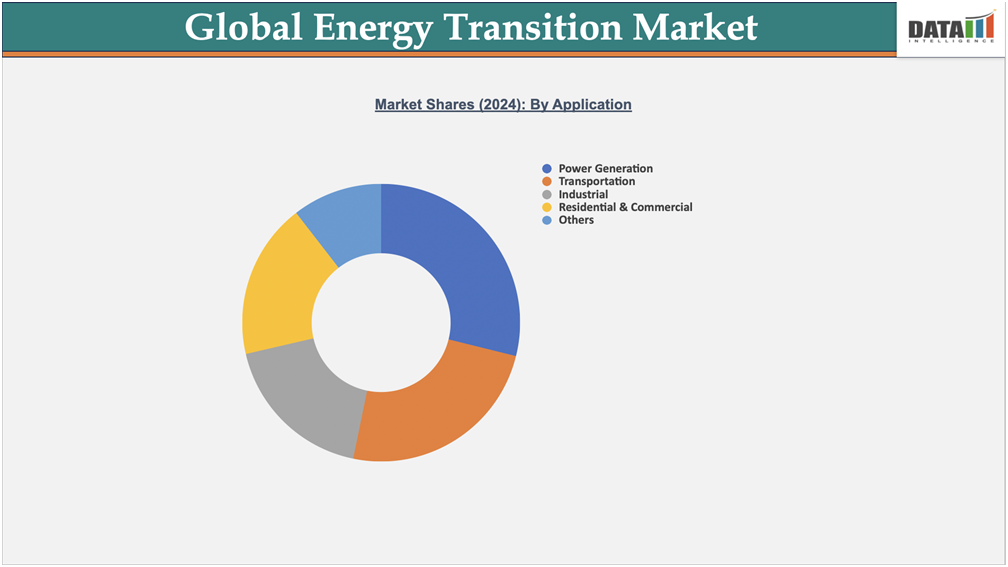
The global energy transition market is segmented based on technology, application, end-user, and region.
Growing Deployment of Solar Energy Systems Drives the Solar Power Segment
The Solar Power segment is expected to hold a significant share of the global renewable energy storage market, driven by the rapid expansion of utility-scale solar farms and distributed rooftop photovoltaic (PV) installations worldwide. As solar power generation is inherently intermittent, energy storage systems play a crucial role in balancing electricity supply and demand, improving grid stability, and enabling greater integration of renewable energy into national power systems. Government incentives, declining solar module costs, and increasing investments in clean energy infrastructure continue to strengthen the adoption of solar-coupled storage solutions across both developed and emerging economies.
The growing industry focus is reflected in continuous investments and project deployments worldwide. Utilities, independent power producers, and renewable energy developers are increasingly integrating battery energy storage systems (BESS) with solar projects to enhance energy reliability, optimize power dispatch, and support grid flexibility. These developments reinforce the importance of solar power as a primary application area for renewable energy storage technologies.
Increasing Adoption of Battery Energy Storage Systems Accelerates the Battery Storage Segment
The Battery Storage segment is anticipated to witness the fastest growth during the forecast period, supported by rapid technological advancements, declining battery costs, and the growing need for flexible energy storage solutions. Battery energy storage systems enable efficient integration of renewable energy sources by storing excess electricity during periods of high generation and supplying power during peak demand or low renewable output. Their fast response time, scalability, and compatibility with both grid-scale and behind-the-meter applications make them the preferred technology across residential, commercial, and utility sectors.
Industry participants are significantly expanding manufacturing capacity and investing in next-generation battery technologies to improve energy density, safety, lifecycle performance, and cost efficiency. Increasing deployment of large-scale battery storage projects alongside renewable power plants, coupled with supportive government policies promoting energy transition and grid modernization, continues to strengthen the long-term growth prospects of the battery storage segment within the global renewable energy storage market.
For more details on this report - Request for Sample
Energy Transition Market Geographical Penetration
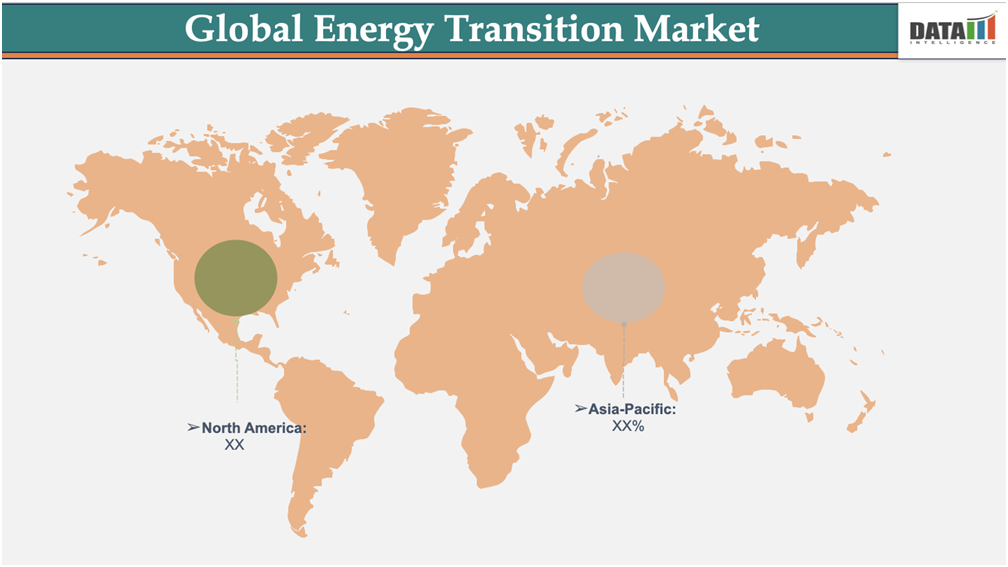
Asia-Pacific Leads the Energy Transition Market Driven by Industrial Growth and Infrastructure
The Asia-Pacific region dominates the global energy transition market, fueled by rapid industrialization and urbanization in countries such as China, India, and Japan. Rising demand from the construction, automotive, and industrial sectors is driving the adoption of renewable energy, energy storage, and smart grid technologies across the region.
Government initiatives promoting large-scale infrastructure development, including highways, metro networks, and smart city projects, are accelerating the deployment of clean energy solutions. Innovations in renewable energy technologies, grid modernization, and energy efficiency improvements are enhancing system performance and sustainability. Combined with competitive manufacturing capabilities and abundant resources, the Asia-Pacific is expected to maintain its leading position in the global energy transition market in the coming years.
India Energy Transition Market Outlook
India’s energy transition market is experiencing robust growth, driven by infrastructure expansion and increasing energy demand from urban and industrial sectors. Government programs, including major investments in highways, metro systems, and the Smart Cities Mission, which has completed 7,555 of 8,067 projects worth USD 1,510 billion as of May 2025, are boosting renewable energy adoption and modern energy systems. Domestic innovation in renewable technologies, energy storage, and grid management is further supporting market growth. With steady economic expansion and rapid industrialization, India’s energy transition market outlook remains highly promising.
China Energy Transition Market Trends
China continues to be a global leader in energy transition, investing heavily in renewable energy, energy storage, and smart grid technologies. Strong domestic demand from the industrial, automotive, and urban sectors continues to drive market expansion. Ongoing government-led infrastructure initiatives and technological advancements are accelerating the deployment of clean energy solutions, ensuring China’s energy transition market remains robust and poised for steady growth in the coming years.
North America Leading the Charge in the Energy Transition
North America is emerging as one of the fastest-growing regions in the energy transition market, driven by increasing demand from the automotive, aerospace, and construction sectors. The region benefits from advanced industrial infrastructure, cutting-edge technologies, and strategic investments in renewable energy and sustainable infrastructure projects. The push toward electrification, clean mobility, and decarbonized industrial operations is accelerating the adoption of renewable power and energy-efficient systems. As governments and private players collaborate on clean energy initiatives, North America is solidifying its position as a global hub for green innovation and energy transition growth.
US Energy Transition Market Insights
In the United States, the energy transition market continues to grow steadily, supported by strong industrial and infrastructure demand. Sectors such as automotive, aerospace, and construction are increasingly prioritizing clean energy solutions, including renewable power generation, energy storage systems, and modernized grid infrastructure. Technological advancements are enhancing efficiency, flexibility, and reliability across energy networks, allowing renewable integration to scale faster. With strong domestic production and policy support, the US market is well-positioned to maintain robust growth, while simultaneously advancing national goals for emissions reduction and sustainable development.
Canada Energy Transition Industry Growth
Canada’s energy transition industry is accelerating, supported by clean energy investments of nearly USD 35 billion in 2025. The Oneida Energy Storage Project in Ontario, a 250-MW battery facility, is enhancing renewable integration and grid stability. The federal government has also committed CAD 16 million to renewable energy, carbon capture, and grid modernization projects in the Maritimes. In parallel, construction began on Canada’s first small modular nuclear reactor in Ontario, part of a broader plan to build four by 2030. These initiatives highlight Canada’s growing role in advancing clean power and decarbonization.
Energy Transition Market Opportunities and Investment Hotspots
The Energy Transition Market presents significant opportunities across renewable energy generation, energy storage systems, hydrogen infrastructure, smart grid technologies, electric vehicle charging networks, and carbon management solutions.
Renewable energy projects continue to attract substantial investment due to favorable economics and strong policy support. Solar and wind energy remain among the most attractive opportunities, supported by increasing global electricity demand and decarbonization targets.
Battery storage is emerging as a critical growth area, enabling reliable renewable energy integration and enhancing grid flexibility. Similarly, hydrogen infrastructure investments are accelerating as governments and industries pursue low-carbon fuel alternatives.
Digital energy management platforms, AI-powered optimization systems, distributed energy resources, and advanced transmission infrastructure are also expected to generate significant investment activity over the forecast period.
Energy Transition Market Sustainability Analysis
The energy transition market is increasingly embracing sustainability, driven by the push for low-carbon technologies and renewable energy adoption. Companies are investing heavily in clean energy generation, energy storage, and smart grid solutions to reduce greenhouse gas emissions. Sustainable practices, including responsible sourcing of materials and adherence to environmental regulations, are becoming standard across the sector. Lightweight and efficient energy solutions contribute to lower operational emissions in power, industrial, and mobility sectors, indirectly reducing overall carbon footprints. Overall, the market is evolving toward a more sustainable, innovation-led energy ecosystem, where technological advancement, efficiency, and responsible practices go hand in hand with global decarbonization goals.
Energy Transition Market Competitive Landscape

The global energy transition market is dominated by a mix of leading innovators and specialized technology players. NextEra Energy, Enel Green Power, and Iberdrola are at the forefront, collectively holding a significant share, leveraging expertise in renewable generation, storage solutions, and large-scale project execution.
A second tier, including Siemens Gamesa, Ørsted, and Total Energies, focuses on regional and sector-specific solutions, particularly in Europe and Asia-Pacific, and is steadily expanding its global footprint. The rest of the market is more fragmented, with companies like Bright mark, Tesla, and Vestas offering niche solutions in energy storage, electrification, and wind technologies.
Energy Transition Market Key Players
Brightmark, Enel Green Power, Iberdrola, NextEra Energy, Ørsted A/S, Siemens Gamesa, Tesla, TotalEnergies, Vestas, General Electric.
Key Developments of the Energy Transition Market
- June 2026 - NextEra Energy and Enel Green Power expanding renewable energy capacity
NextEra Energy and Enel Green Power accelerated investments in large-scale solar, wind, and energy storage projects to support decarbonization goals and growing global electricity demand. - May 2026 - Ørsted and Iberdrola strengthening offshore wind developments
Ørsted and Iberdrola advanced offshore wind projects and grid integration initiatives, focusing on increasing clean energy generation capacity and supporting national energy transition targets. - April 2026 - Siemens Gamesa enhancing wind turbine technology and efficiency
Siemens Gamesa Renewable Energy introduced advancements in turbine design, digital monitoring, and operational efficiency aimed at improving renewable energy output and reducing lifecycle costs. - April-June 2026 - Growing investments in electrification, storage, and clean energy infrastructure
Companies such as TotalEnergies and Tesla expanded investments in battery energy storage systems, electric mobility infrastructure, and integrated renewable energy solutions to accelerate the transition toward low-carbon energy systems.
Why Choose DataM?
Data-Driven Insights: Dive into detailed analyses with granular insights such as pricing, market shares, and value chain evaluations, enriched by interviews with industry leaders and disruptors.
Post-Purchase Support and Expert Analyst Consultations: As a valued client, you gain direct access to our expert analysts for personalized advice and strategic guidance, tailored to your specific needs and challenges.
White Papers and Case Studies: Benefit quarterly from our in-depth studies related to your purchased titles, tailored to refine your operational and marketing strategies for maximum impact.
Annual Updates on Purchased Reports: As an existing customer, you enjoy the privilege of yearly updates to your reports, ensuring you stay abreast of the latest market insights and technological advancements. Terms and conditions apply.
Specialized Focus on Emerging Markets: DataM differentiates itself by delivering in-depth, specialized insights specifically for emerging markets, rather than offering generalized geographic overviews. This approach equips our clients with a nuanced understanding and actionable intelligence that are essential for navigating and succeeding in high-growth regions.
Value of DataM Reports: Our reports offer specialized insights tailored to the latest trends and specific business inquiries. This personalized approach provides a deeper, strategic perspective, ensuring you receive the precise information necessary to make informed decisions. These insights complement and go beyond what is typically available in generic databases.
Who Should Purchase This Report and Why?
Energy companies, utilities, renewable energy developers, infrastructure investors, equipment manufacturers, technology providers, government agencies, policy makers, financial institutions, private equity firms, and sustainability consultants should consider this report.
The report helps stakeholders identify emerging investment opportunities, assess market risks, understand regulatory developments, benchmark competitive strategies, evaluate technology adoption trends, and develop long-term growth plans within the rapidly evolving global energy landscape.
Target Audience
Manufacturers/ Buyers
Industry Investors/Investment Bankers
Research Professionals
Emerging Companies



























































