


AI-Driven Diabetic Retinopathy Screening Market Size & Growth
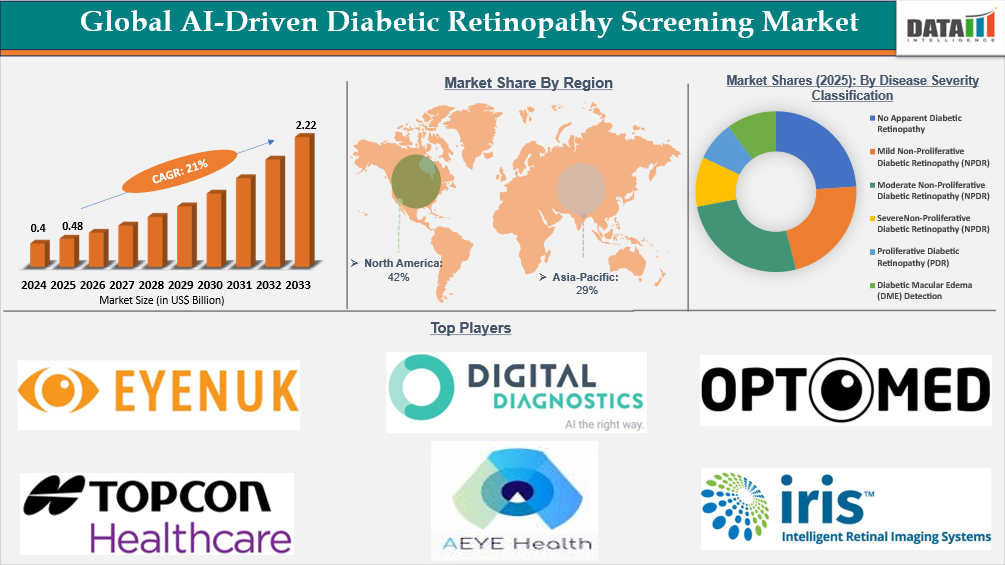
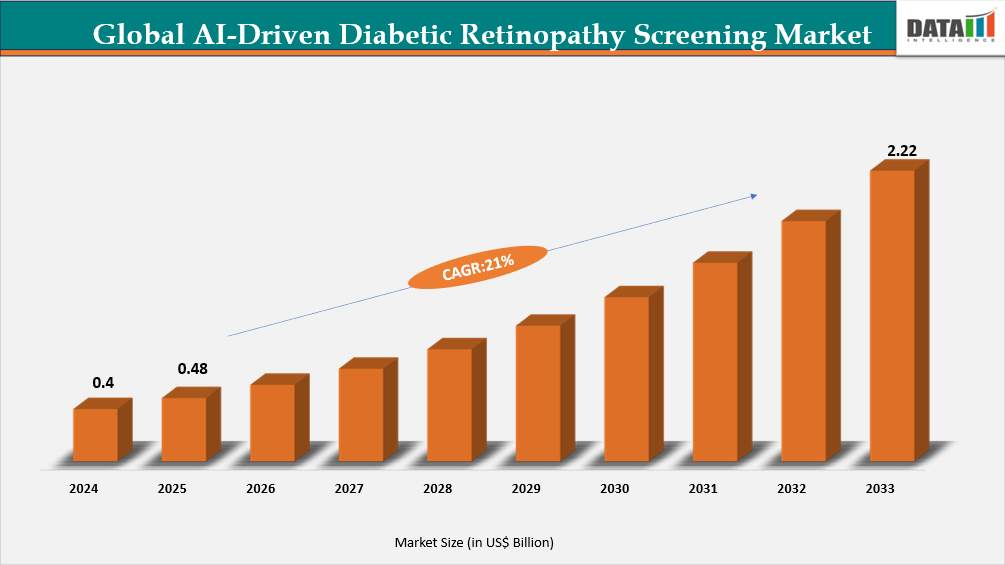
The global AI-driven diabetic retinopathy screening market reached US$0.4 Billion in 2024, rising to US$0.48 Billion in 2025 and is expected to reach US$2.22 Billion by 2033, growing at a CAGR of 21% from 2026 to 2033.
As advancing global AI driven diabetic retinopathy screening options are clinically validated responses to increasing incidence rates of diabetes that cause the risk of life-altering retinal diseases; diabetic retinopathy is a progressive microvascular complication; early detection is required to avoid permanent losses in vision; artificial intelligence based screening systems using deep learning models with fundus or other retinal imaging types have been validated using multiple independent studies indicating that their diagnostic performance is demanding as good as that of a human expert grader; multiple large validation studies have demonstrated that pooled sensitivities (i.e., true positive rates) exceed 90% and pooled specificities (i.e. true negative rates) approach 85-90%, when detecting referable diabetic retinopathy, support their use as tools for population based screenings.
AI-assisted screening for DR (diabetic retinopathy) is improving the ability to provide service by being more efficient in getting people screened rapidly and delivering the results back to them. It is ultimately going to make it more feasible for patients to receive quality screening at an affordable price. In addition, these AI-enabled screening solutions are helping to reduce variability between graders and reducing the need for ophthalmologists, which further promotes access. Providers will have a broader range of remote service delivery capabilities through teleophthalmology using these types of innovative solutions; which can allow for improved remote screening, rapid triage, and improved referrals. There is already evidence from many clinical validations using various ethnic and image populations that these AI solutions can be effectively incorporated into ongoing clinical use due to their established acceptance.
Key elements driving the overall market for DR screening include the increasing prevalence of diabetes, the increasing number of people requiring access to low-cost screening solutions, and the increasing acceptance of AI diagnostics in traditional clinical pathways.
Global AI-Driven Diabetic Retinopathy Screening Industry Trends and Strategic Insights
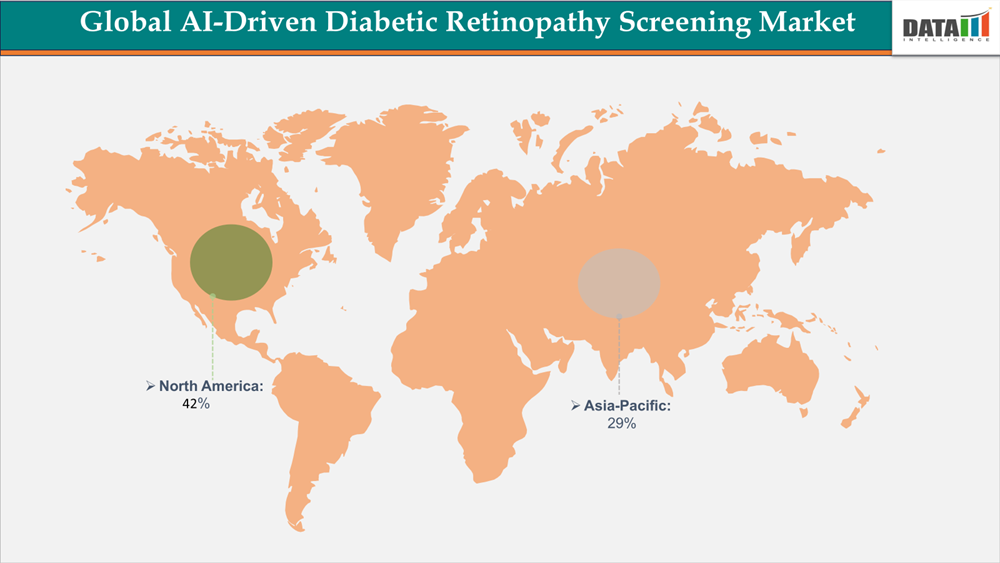
- With the largest revenue share of roughly 42% in 2025, North America dominates the global market for AI-driven diabetic retinopathy screening. This market is driven by early regulatory approvals, sophisticated healthcare infrastructure, and the broad use of autonomous AI screening solutions in primary care and teleophthalmology programs.
- In 2025, autonomous and fully automated AI screening solutions will lead the market by technology type and earn the largest revenue share because of their capacity to provide quick, standardized, and affordable diabetic retinopathy detection, allowing for widespread population screening and lowering reliance on specialized graders.
Global AI-Driven Diabetic Retinopathy Screening Market Size and Future Outlook
- 2025 Market Size: US$0.48 Billion
- 2033 Projected Market Size: US$2.22 Billion
- CAGR (2026–2033): 21%
- Dominating Market: North America
Fastest Growing Market: Asia-Pacific
Source : DataM Intelligence Email : datamintelligence.com
For More Detailed information Request for Sample
AI-Driven Diabetic Retinopathy Screening Market Dynamics
Advancements in AI Technology
Progress made in artificial intelligence (AI) specifically, advancements in deep learning as well as improvements in computer vision are helping to make diabetic retinopathy (DR) screening systems more precise and reliable than ever before. Today’s state-of-the-art artificial intelligence (AI) algorithms can quickly analyze retinal fundus images for the presence of early signs of DR with high levels of accuracy (both sensitivity and specificity), frequently matching the performance of experienced specialists. As there is a continuing process for each of these AI algorithms to learn from large and diverse datasets of image files that contain subtle abnormalities in the retina, they are able to produce consistent screening results over time.
In addition, with the introduction of cloud-based AI, edge computing and increased interoperability of fundus cameras and electronic medical record systems, it is now possible to perform real-time analysis of retina images and deploy AI for diabetic retinopathy screening on a scalable basis in various health care delivery settings including primary care, teleophthalmology, and community health screenings. These advances enable less reliance on ophthalmologists, reduce the cost of DR screening, and facilitate early detection of diabetes-related visual impairment by making AI-based DR screening more affordable and accessible to everyone in the world.
Data Privacy and Cybersecurity Concerns
AI-based systems that screen for diabetic retinopathy require large amounts of sensitive patient information (e.g., retinal images, other related health data) to analyze and improve their models. By storing, sending, and analyzing this information (particularly in the case of cloud-based AI solutions), there are large risks regarding unauthorized access to patient data, data breaches, and misuse of individual patient health information. Any breach of patient information leads to a loss of trust by patients and exposes health facilities to liability/legal and financial problems.
Furthermore, adhering to strict regulations for data protection (such as HIPAA, GDPR, etc.) increases the complexity of the implementation of AI solutions since they must also ensure compliance with the many laws regarding securing patient data, encrypting/anonymizing the data, and establishing robust security systems (i.e., strong cybersecurity infrastructure). All of these add to the cost of implementing the screening systems and can slow down the adoption of these systems within the healthcare systems, especially those that operate with limited resources. Therefore, privacy and cybersecurity issues are significant constraints on the broad implementation of AI-based systems for screening diabetic retinopathy.
AI-Driven Diabetic Retinopathy Screening Market Segmentation Analysis
The Global AI-Driven Diabetic Retinopathy Screening Market is segmented based component, screening modality, disease severity classification, imaging technology, end user, deployment mode, clinical workflow integration, AI technology, application, patient demographics, regulatory & validation status and region.
Moderate Non-Proliferative Diabetic Retinopathy (NPDR)
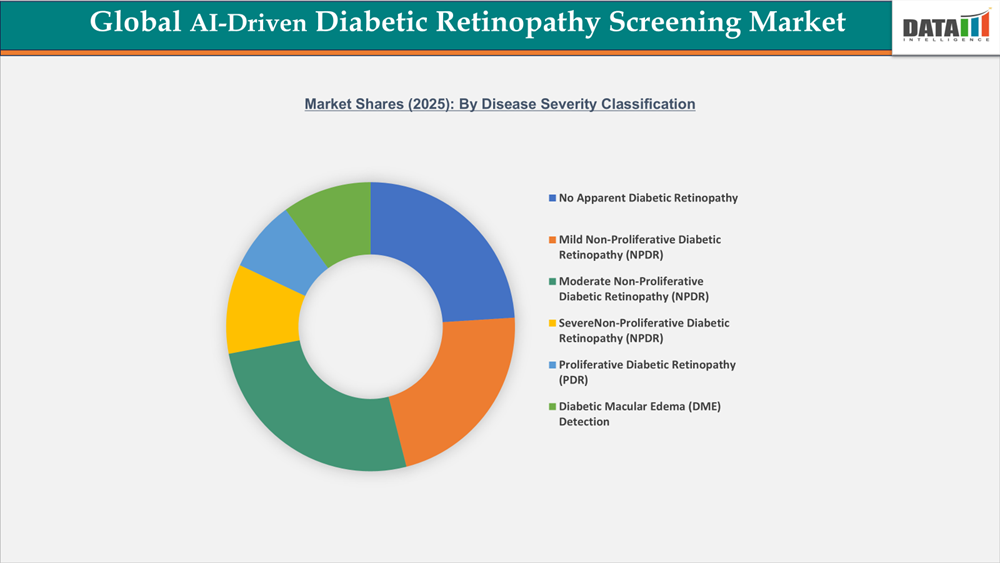
Moderate NPDR is the most significant in theoretical classification of severity of disease for the Global AI -Driven Screening Market for Diabetic Retinopathy. Moderate NPDR marks the clinical milestone between routine follow-up of patients to referral to specialists; therefore, this represents the focal point of AI -based screening programs. Since a large percentage of the diabetic population is diagnosed when at Moderate NPDR, the prevalence of significant amounts of screening volume and demand for automated solutions will consistently exist. AI algorithms have been developed and tested to accurately classify Moderate NPDR, which will provide reliable identification of cases that need an early intervention to prevent progressive disease. Therefore, the relationship between identifying Moderate NPDR and achieving screening objectives and related care pathways is a major driver for adoption and growth of this market segment.
AI-Driven Diabetic Retinopathy Screening Market Geographical Penetration
Largest Market:
Demand for Global AI-Driven Diabetic Retinopathy Screening Market in North America
There is a large demand in North America for diabetic retinopathy (DR) which is an AI based technology, to help with screening for DR because of the large and growing number of individuals diagnosed with DR and the large numbers of individuals being diagnosed with diabetes in total on the rise in North America, as well as the growing trend toward early diagnosis and preventive care. Current estimates show that approximately 26.4% of people with diabetes in the US have DR (roughly 9.6 million adults) and therefore, there exists a continuing clinical need for scalable DR screening solutions. An estimated one third of all adults in North America and the Caribbean have DR (one of the highest rates worldwide). Therefore, there is substantial demand for effective DR screening programs given this heavy disease burden coupled with the availability of well-developed healthcare systems, increasing telehealth and digital diagnostic uptake in North America, and the increasing integration of AI (artificial intelligence) technologies into daily workflow processes associated with evaluating and diagnosing individuals with ocular disorders. All these factors create significant demand for AI-based DR screening systems in the North America.
U.S. Global AI-Driven Diabetic Retinopathy Screening Market Outlook
The American market for Artificial Intelligence (AI) technology used for screening for Diabetic Retinopathy (DR) has a very strong clinical development potential but yet, a relatively low clinical adoption rate in the world. Identify AI technologies used in DR screening that have received regulatory agency clearance (by the FDA) utilize an autonomous AI approach. These technologies include the LumineticsCore™, EyeArt™, and other similar platforms. Collectively, these products have shown to have strong diagnostic capabilities when utilized in both primary care environments and when utilized in eye exam environments, as evidenced by published data from multiple clinical studies confirming their performance with a sensitivity ranging from 87%-100% (and specificity of 91% or greater), thereby demonstrating their overall reliability in detection of referable DR in diverse clinical settings. While these clinical performance criteria are very positive, the number of diabetic patients treated with AI-DIAB screenings does remain modest at this time, with the largest estimate being that fewer than 5%of eligible patients have had an AI-assisted DR screening as part of their routine care, thereby indicating the low rate of overall integration into clinical workflows and overall clinical acceptance of AI-based DR screening technology. New initiatives to create increased integration of AI tools into primary care clinical workflows, integration with Electronic Health Record (EHR) systems, and increased access to DR screenings from Federally Qualified Health Centers (FQHCs) are being structured and implemented with the goal of improving access to DR screenings and increasing DR screening rates for at-risk disparities within the patient population. With ongoing validation of AI technologies and streamlined clinical implementation using clinical practice protocols and better engagement of the individual clinician will help increase the expansion of AI-DIAB screening within the USA.
Canada Global AI-Driven Diabetic Retinopathy Screening Market Trends
Canada has increasing interest in the AI-powered diabetes eye screening market. According to ResearchGate, about 30% to 33% of diabetic patients in Canada have diabetic retinopathy, which indicates the need for screening on a national level. Various studies published in peer-reviewed journals have demonstrated high rates of detection using AI-diabetic retinopathy systems. Many of these studies were done within Canada's health care system, where clinical assessments of AI-based diabetic retinopathy systems have shown that these devices have high sensitivity for both detecting referable diabetic retinopathy and diabetic macular edema. Therefore, they are likely ideal candidates for use in routine screening programs. Overall, these results are part of a broader trend to use AI in tele-ophthalmology and diabetes care systems throughout Canada, to enhance the effectiveness and accessibility of screening services.
Fastest Growing Market:
Asia-Pacific Records the Fastest Growth in the Global AI-Driven Diabetic Retinopathy Screening Market
The Asia-Pacific region is currently becoming the fastest-growing region globally for the AI-based diabetic retinopathy screening market. The rapid growth in people with diabetes, digitalization of healthcare in the region, and increased demand for the screening of eye care have contributed to the current state of this market in Asia-Pacific. Currently, Asia-Pacific has one of the highest rates of diabetes in the world, which results in a higher number of people who have a high probability of developing diabetic retinopathy. As a result, there is a greater need for scalable, automated solutions that will provide screening to large numbers of patients. In addition to the current rate of adoption of AI-based technologies, there is also a significant increase in the number of healthcare providers investing in telemedicine and AI-enabled diagnostics to address the scarcity of eye care professionals to help bridge the gap in access to screening services in both urban and rural areas. In addition, supportive government initiatives and investments made into the healthcare infrastructure by governments are increasing the use of AI-based screening solutions in the region, which has established the Asia-Pacific region as the fastest-growing market in the world for diabetic retinopathy screening technologies.
India Global AI-Driven Diabetic Retinopathy Screening Market Insights
With a large number of people living with diabetes in India, the AI-driven diabetic retinopathy screening market has strong growth potential. AI helps provide fast, affordable, and effective eye screening, making early detection more accessible across the country. In addition, as public acknowledgement and awareness of diabetic retinopathy continue to grow, there is an increasing need for scalable screening options outside of traditional ophthalmology office settings.
The growing adoption of artificial intelligence (AI)-based diabetic eye disease screening technologies in India reflects the need for healthcare providers to find ways to address limited resources available to them (e.g., limited number of retinal specialists and limited access to eye care facilities) due to high demand for these types of services. By incorporating AI-enabled diabetic retinopathy screening tools into primary care clinics and teleophthalmology programs, healthcare providers will be able to identify diabetic eye disease at earlier stages, better prioritize patients who are at high risk, and reduce the burden on referral centers throughout the country.
Through government support for collaborations in digital health and investments by private companies in telemedicine and in multiple forms of health technology, interest in automated diabetic retinopathy screening continues to grow. As healthcare providers and policymakers emphasize and focus more on preventing eye disease and managing population health, India is well-positioned to capture a significant share of the global market for AI-based diabetic retinopathy screening technologies.
China Global AI-Driven Diabetic Retinopathy Screening Market Industry Growth
The rapid growth of China's AI-backed diabetic retinopathy screening industry is largely a consequence of the enormous population of diabetics with a high prevalence (22-32%) of DR among that population. As DR prevalence statistics range as high as 28.8% based on various audit and survey methods, it is critically important to conduct regular screenings. The results of numerous studies have demonstrated that AI-based screening technologies performed exceedingly well in large community DR screening programs, effectively using deep-learning algorithms to identify referable patients, and reducing manual grading duties of health care professionals by nearly 60%. Moreover, as the Chinese government continues its effort to promote the use of AI in diabetes care, physician demand for AI-based screening technologies will continue to drive expanded growth within this industry while supporting China's expansion of early detection and preventative eye health care initiatives.
AI-Driven Diabetic Retinopathy Screening Market Competitive Landscape
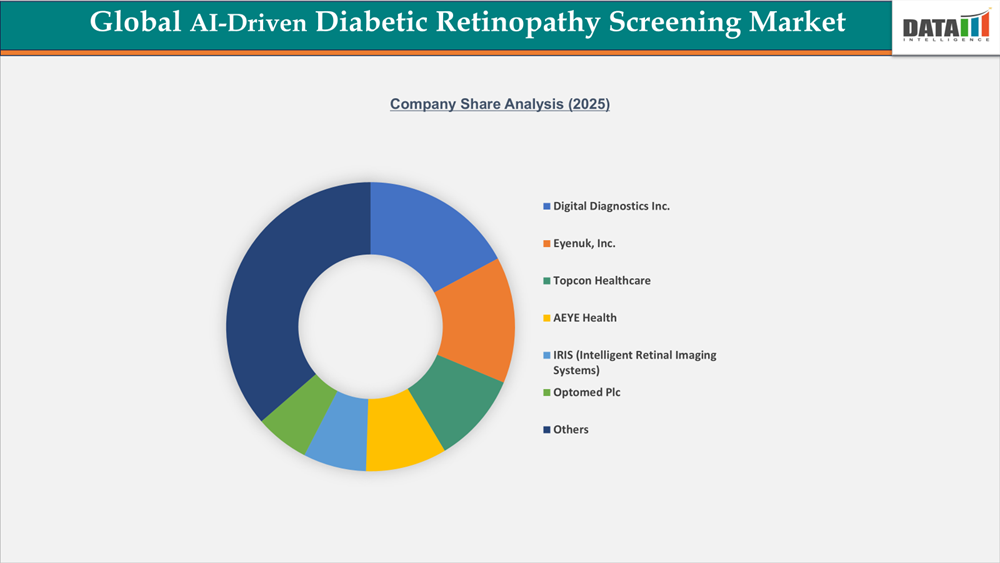
The global market for AI-powered diabetic retinopathy screening is highly competitive and focused on technology. Market leaders like Eyenuk, Inc., Digital Diagnostics Inc., and AEYE Health are innovating the market through clinically validated and regulatory cleared AI solutions. All of these companies are working on creating scalable automated systems to detect diabetic retinopathy and support early diagnosis via primary care and at the population level (i.e., large public health screenings).
There are also several noteworthy companies such as Optomed Plc, IRIS (Intelligent Retinal Imaging Systems), and Topcon Healthcare, that contribute to the competition in the market through the combination of their AI software, retinal imaging hardware, and teleophthalmology platforms. The competitive dynamics of the marketplace are changing all the time based on the development of new AI algorithms, obtaining of regulatory approvals, ability to demonstrate clinical effectiveness, and establishment of a strategic collaboration with other organizations. Because of these factors, companies have to continually upgrade the accuracy and precision of their systems while also expanding their reach and integrating their solutions into the daily clinical workflow.
Key Developments in AI-Driven Diabetic Retinopathy Screening Market
- June 2026 – Eyenuk expands autonomous AI eye screening platform
Eyenuk strengthened its EyeArt® AI Eye Screening System by expanding enterprise deployment, AI-driven retinal image analysis, and predictive ophthalmic biomarkers to improve early diabetic retinopathy detection and streamline screening in primary care settings. - May 2026 – Digital Diagnostics advances autonomous diabetic retinopathy screening
Digital Diagnostics continued expanding adoption of its autonomous AI retinal screening platform, enhancing integration with healthcare providers and primary care workflows to improve early detection of diabetic retinopathy and reduce unnecessary specialist referrals. - April 2026 – AEYE Health strengthens portable AI retinal screening solutions
AEYE Health expanded its FDA-cleared autonomous AI platform by enhancing compatibility with handheld and tabletop retinal cameras, enabling rapid diabetic retinopathy screening across primary care clinics, pharmacies, and community healthcare settings. - March 2026 – Eyenuk advances AI-powered diabetic eye disease detection
Eyenuk continued enhancing its autonomous AI screening technology with improved real-world clinical performance and broader deployment initiatives, supporting scalable diabetic retinopathy screening programs for healthcare systems. - February 2026 – Digital Diagnostics expands AI-enabled ophthalmology workflows
Digital Diagnostics strengthened its autonomous diagnostic platform by improving AI-supported retinal image interpretation and clinical workflow integration, helping healthcare providers deliver faster diabetic retinopathy screening and referral decisions.
What Sets This Global AI-Driven Diabetic Retinopathy Screening Market Intelligence Report Apart
- Latest Data & Forecasts – Providing complete and latest market intelligence that includes forecasted information until 2033, and detailed reports on global demand for each of the software, hardware and service components, by screening type (i.e. autonomous versus semi-autonomous), deployment type (e.g. cloud-based versus on-premise) and by end users; and includes extensive market data for each of the North American, European, Asia Pacific, Latin America and Middle-East and Africa regions.
- Regulatory Intelligence – Delivers comprehensive analysis of worldwide rules regulating AI based medical equipment/delivery of healthcare services, including FDA; EMA; NMPA; PMDA; and CDSCO pathways. Covers specifics regarding clearance and approval processes; clinical validation requirements; data privacy regulations; and post-market surveillance responsibilities.
- Competitive Benchmarking – In comparing AI solution providers and imaging firms working in the diabetic retinopathy screening ecosystem based on algorithm accuracy, clinical validation, deployment scale, geographic reach, pricing models, and strategic partnerships against each other systemically.
- Geographic & Emerging Market Coverage – This report includes regional breakdowns of diabetes and diabetic retinopathy, as well as information on diabetes screening implementation, healthcare infrastructure preparedness, and reimbursement status; all focusing on regions with the potential for significant growth, such as those located in the Asia/Pacific, Latin America and the Middle-East and Africa.
- Actionable Strategies & Cost Dynamics – Analyses strategic insights about the various commercialization models; payment/ reimbursement models; combining with private sector primary healthcare; and telehealth; analyzing the cost/ value of each, as well as level of sustainability, from multiple perspectives such as clinicians, digital health experts, regulatory specialists, and health decision makers.



























































