


AI and Digital Health Platforms Accelerate Transformation in Obesity Care Delivery
The healthcare industry is undergoing a rapid transformation driven by artificial intelligence (AI), digital health platforms, and remote patient monitoring systems, particularly in the management of obesity and metabolic disorders.
As obesity rates continue to rise globally, healthcare providers are increasingly adopting data-driven, patient-centric care models that combine wearable technologies, mobile health applications, and AI-powered analytics to enable real-time health tracking and intervention.
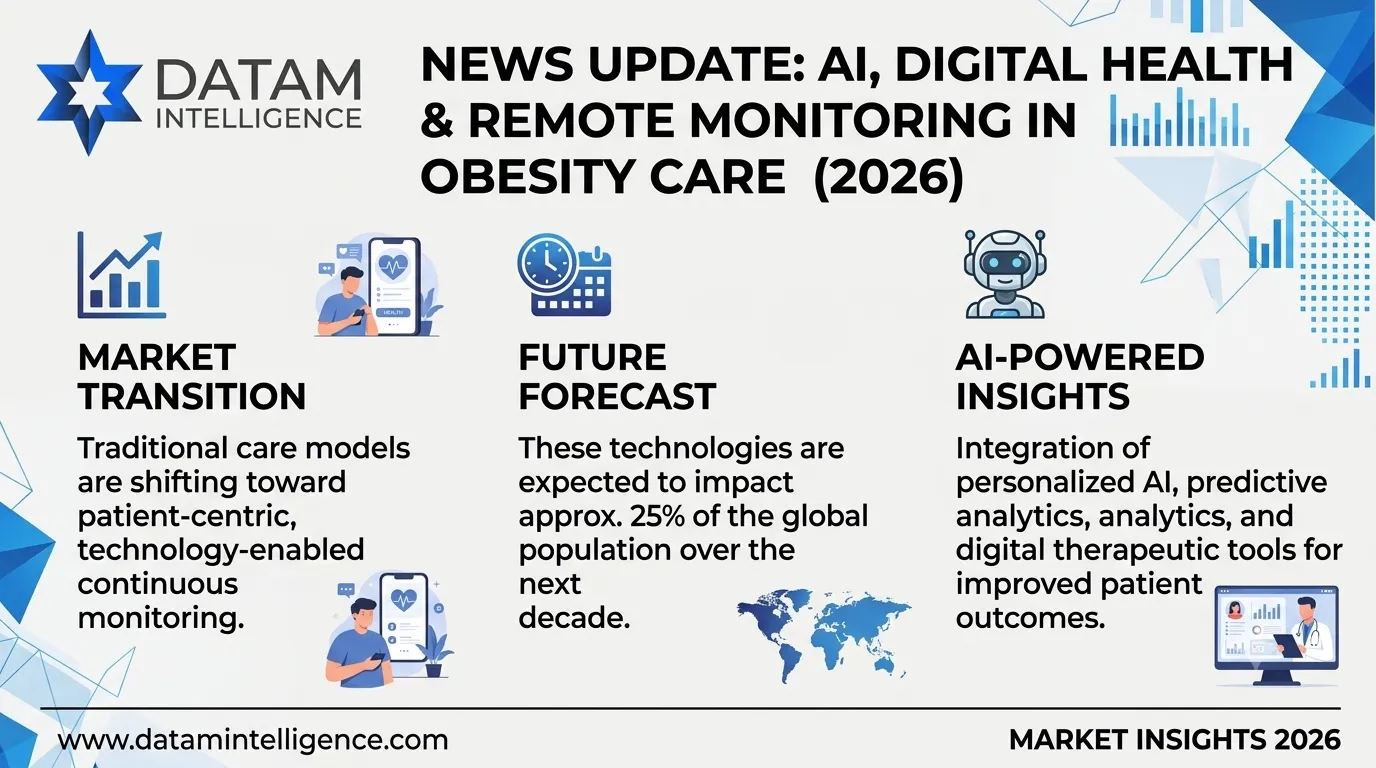
Shift Toward Remote and Continuous Care Models
Traditional episodic healthcare delivery is being replaced by continuous, remote monitoring ecosystems, where patient data is collected through:
- Smart wearable devices
- Mobile health applications
- IoT-enabled medical sensors
- AI-driven behavioral tracking systems
These technologies enable clinicians to monitor weight trends, physical activity, dietary patterns, and metabolic signals in real time, significantly improving early intervention capabilities.
Role of AI in Obesity Management
Artificial intelligence is emerging as a core engine in obesity care delivery by enabling:
- Predictive risk modeling for metabolic disorders
- Personalized nutrition and fitness recommendations
- Behavioral pattern recognition
- Automated patient engagement via AI chat systems
AI-based systems are increasingly being used to identify high-risk patients before complications arise, allowing healthcare providers to shift from reactive treatment to preventive healthcare models.
Growth of Digital Therapeutics and Smart Health Ecosystems
Digital therapeutics market platforms are becoming a key component of obesity management strategies. These systems integrate:
- Cognitive behavioral therapy modules
- Gamified lifestyle coaching
- Real-time feedback loops
- Remote physician-patient communication
The convergence of telemedicine, AI analytics, and wearable health tracking is creating a new ecosystem of scalable obesity care solutions.
Market Implications and Industry Outlook
The global digital health market is witnessing strong investment momentum, driven by:
- Rising prevalence of obesity and diabetes
- Increased adoption of telehealth services
- Demand for cost-efficient healthcare delivery
- Expansion of AI-enabled healthcare startups
Healthcare executives and investors are increasingly focusing on AI-powered remote monitoring platforms as a scalable solution for chronic disease management.
Challenges and Considerations
Despite the rapid advancement of AI-enabled digital health solutions, several critical challenges continue to hinder large-scale adoption and seamless implementation across obesity care ecosystems.
Key concerns include data privacy and cybersecurity risks, as the increasing volume of sensitive patient health data collected through connected devices and digital platforms raises the potential for breaches and unauthorized access.
In addition, unequal access to digital healthcare tools remains a significant barrier, particularly in underserved and low-resource regions where infrastructure limitations restrict the effective deployment of remote monitoring technologies.
Another major challenge lies in the integration of modern digital health solutions with existing legacy healthcare systems, which are often fragmented and not designed to support real-time data exchange or AI-driven workflows.
Furthermore, regulatory compliance across multiple regions adds complexity, as healthcare providers and technology developers must navigate diverse legal frameworks governing data protection, medical device approval, and telehealth services.
Addressing these challenges is essential to unlocking the full potential of AI-driven obesity care models and enabling their widespread, sustainable adoption across global healthcare systems.
Future Outlook
The future of obesity care delivery is expected to be increasingly shaped by the convergence of artificial intelligence, connected health ecosystems, and precision medicine approaches. As healthcare systems transition from reactive treatment models to proactive and preventive care frameworks, technology-driven solutions will play a pivotal role in improving clinical outcomes, patient engagement, and long-term disease management.
Key Transformational Directions
- AI-Powered Predictive Healthcare Systems
Advanced AI algorithms will increasingly enable early risk detection for obesity-related complications such as diabetes, cardiovascular disease, and metabolic syndrome. By leveraging large-scale patient datasets, these systems will support clinicians in making proactive, data-driven intervention decisions, ultimately shifting care from treatment to prevention. - Fully Integrated Remote Monitoring Platforms
The next generation of healthcare infrastructure will be defined by seamless integration of wearable devices, IoT-enabled sensors, and cloud-based analytics platforms. These systems will allow continuous tracking of patient health metrics such as weight trends, activity levels, glucose monitoring, and sleep patterns, enabling real-time clinical visibility outside traditional healthcare settings. - Personalized Digital Therapeutics Ecosystems
Digital therapeutics will evolve into highly individualized care pathways that combine behavioral science, AI-driven recommendations, and patient-specific health data. These ecosystems will deliver tailored nutrition plans, exercise regimens, and cognitive behavioral interventions designed to improve adherence and long-term lifestyle modification outcomes. - Real-Time Patient–Clinician Feedback Loops
Future care models will emphasize continuous communication between patients and healthcare providers through AI-enabled platforms. Real-time alerts, automated progress tracking, and instant feedback mechanisms will improve treatment responsiveness, enhance patient engagement, and support dynamic adjustment of care plans.
Strategic Outlook
As healthcare continues its shift toward precision medicine, preventive care, and value-based outcomes, digital health technologies are expected to become foundational to obesity management strategies. The integration of AI, remote monitoring, and personalized therapeutics will not only enhance clinical decision-making but also significantly improve long-term patient adherence, reduce healthcare costs, and enable scalable care delivery across diverse populations.
Target Audience
This analysis is designed for a diverse group of stakeholders operating across the healthcare, technology, and investment ecosystems, each playing a critical role in the advancement and adoption of AI-driven obesity care solutions.
- Healthcare Executives & Decision-Makers (C-Level)
Senior healthcare leaders focused on strategic transformation, operational efficiency, and digital health integration. This segment is primarily interested in scalable care models, cost optimization, and improved patient outcomes through AI-enabled healthcare systems. - Digital Health Startups & Founders
Innovators and entrepreneurs developing next-generation health technologies, including AI-powered platforms, remote monitoring tools, and digital therapeutics. Their focus lies in product innovation, market fit, and rapid scalability within competitive healthcare markets. - MedTech Investors & Venture Capital Firms (VCs)
Investment professionals evaluating high-growth opportunities in digital health, AI healthcare infrastructure, and chronic disease management solutions. This audience prioritizes market potential, technological differentiation, and long-term value creation. - AI Healthcare Researchers
Academic and industry researchers specializing in machine learning, clinical data science, and healthcare analytics. Their interest centers on algorithm development, predictive modeling, and evidence-based validation of AI applications in obesity care. - Public Health Policymakers
Government and regulatory stakeholders responsible for shaping healthcare policy, digital health adoption frameworks, and population health strategies. This group focuses on accessibility, regulatory compliance, and equitable healthcare delivery. - Pharmaceutical Innovation Teams
R&D and strategy teams within pharmaceutical organizations exploring digital health integration, personalized medicine, and AI-driven treatment pathways to enhance drug efficacy and patient engagement in chronic disease management.
News source: https://www.ndtv.com/health/family-health/role-of-digital-health-ai-and-remote-monitoring-in-obesity-care-delivery-11699004