


Nuclear Medicine Radioisotopes Market Moves Into a Supply Chain Buildout Phase
Why the US$ 450 million Ac 225 facility in Philadelphia matters for targeted alpha therapy, radioligand therapy and precision oncology.
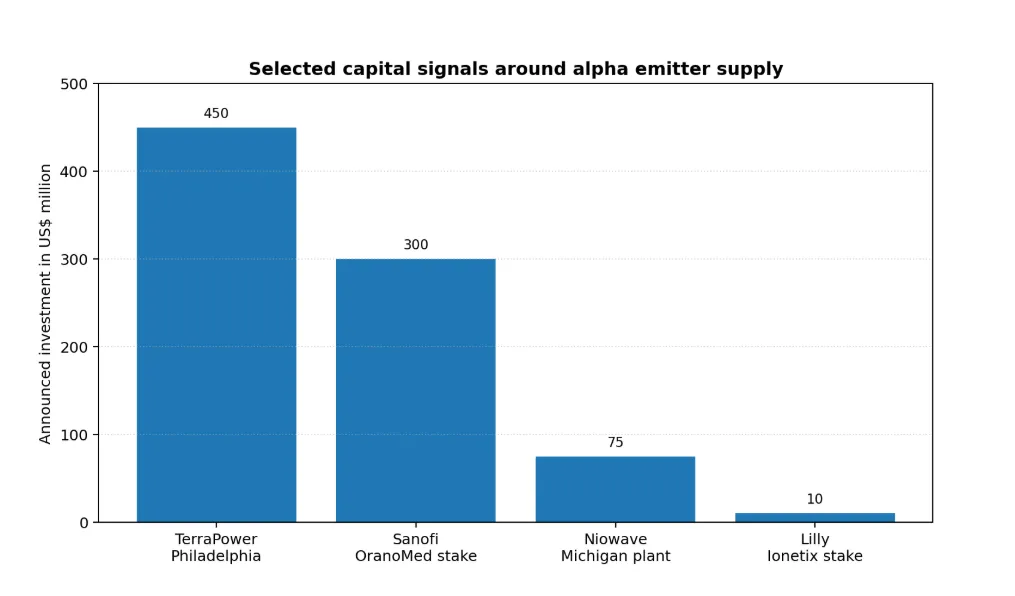
The Nuclear Medicine Radioisotopes Market is entering a new investment phase as radiopharmaceutical developers, isotope producers and hospital networks prepare for the next generation of targeted cancer therapies. The clearest signal is TerraPower Isotopes decision to build a US$ 450 million actinium 225 manufacturing facility in Philadelphia, a project designed to address one of the most important constraints in targeted alpha therapy.
The Bellwether Laboratory will be a 250,000 square foot current Good Manufacturing Practice facility in South Philadelphia. TerraPower Isotopes says the new site, combined with its expanding Everett, Washington capability, will increase global Ac 225 production capacity twentyfold and support clinical development of precision oncology therapies. Production is expected to begin in 2029, with around 225 permanent jobs and about 500 construction jobs tied to the project.
The facility also gives the market a symbolic story. A former refinery site is being converted into life sciences and advanced manufacturing infrastructure. That shift captures the broader market transition now underway. Radiopharmaceuticals are moving from specialized nuclear medicine into a strategic oncology platform where isotope access, manufacturing reliability and clinical capacity are becoming commercial advantages.
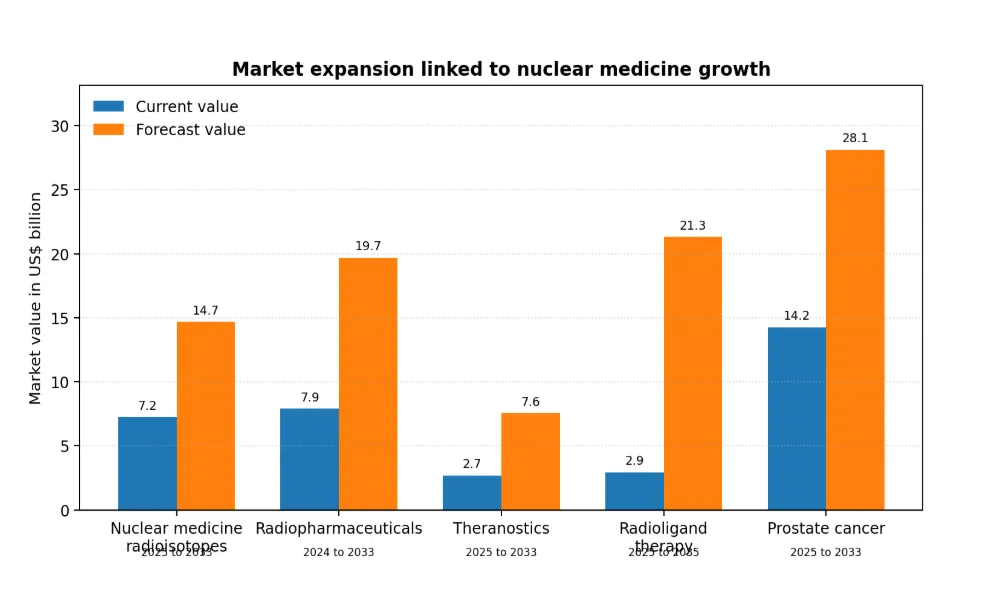
Download the DataM Intelligence Nuclear Medicine Radioisotopes Market report for detailed market sizing, segmentation insights, competitive analysis, and future projections, including a forecasted market growth from US$ 7.25 billion in 2025 to US$ 16.14 billion by 2035.
Why Ac 225 Supply Is Becoming a Strategic Bottleneck
Actinium 225 is attracting attention because it is an alpha emitting radioisotope with a roughly 10 day half life. In targeted alpha therapy, Ac 225 can be attached to molecules designed to seek out cancer cells. The therapy approach aims to deliver high energy radiation over a short path length, which can damage tumor cells while limiting exposure to nearby healthy tissue.
The scientific appeal is clear, although the supply chain has lagged behind the clinical ambition. Ac 225 has historically been difficult to produce at reliable scale and developers have had to manage limited supply while moving drug candidates through early and later stage trials. This is why isotope production is no longer a back office manufacturing issue. It is becoming a front line strategic factor for radiopharmaceutical companies.
Other companies are also expanding supply. Cardinal Health said in 2026 that it had quadrupled weekly Ac 225 output since announcing routine production at global scale. NorthStar Medical Radioisotopes has reported routine commercial scale production of non carrier added Ac 225 using electron accelerator technology. Niowave has also signed a long term Ac 225 supply agreement with Novartis and has started construction on a US$ 75 million facility in Michigan.
The Market Has Moved Beyond Nuclear Medicine Imaging Alone
For decades, nuclear medicine was commonly associated with diagnostic imaging and established isotopes used in PET and SPECT workflows. That market remains important, but the growth story is increasingly shifting toward therapeutic radiopharmaceuticals and theranostic platforms.
DataM Intelligence estimates that the Global Radiopharmaceuticals Market will grow from US$ 7.91 billion in 2024 to US$ 19.69 billion by 2033. Its theranostics market forecast is even faster, rising from US$ 2.69 billion in 2025 to US$ 7.56 billion by 2033. The Radioligand Therapy Market is projected to move from US$ 2.94 billion in 2025 to US$ 21.30 billion by 2035, showing how quickly targeted radiopharmaceutical oncology is becoming a strategic drug development category.
Ready to explore the future of radiopharmaceuticals? Download the DataM Intelligence Radiopharmaceuticals Market report for exclusive insights into market valuation, competitive strategies, emerging therapies, and long-term growth prospects.
Why Big Pharma Is Paying Attention to Radioisotope Control
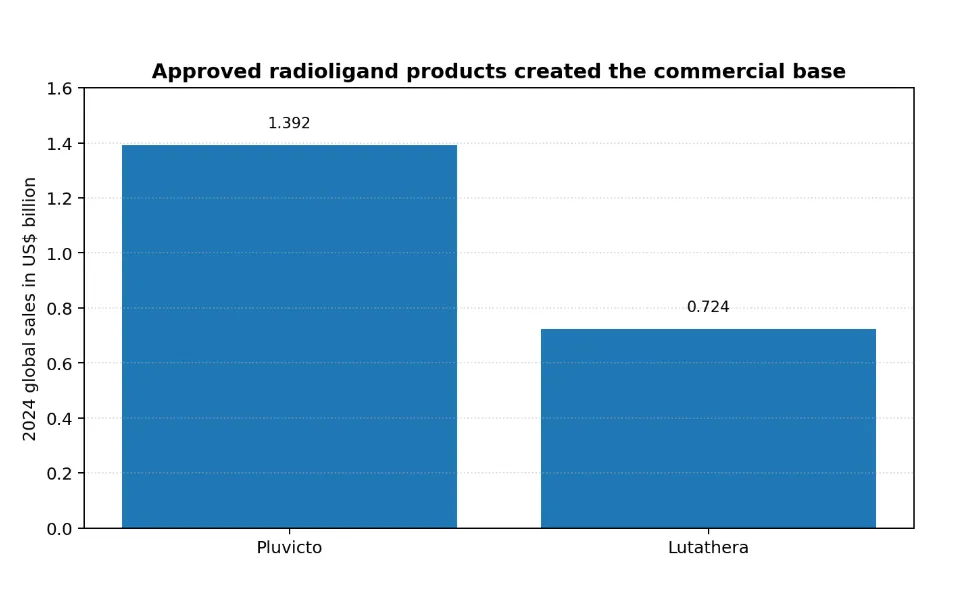
The commercial base for radioligand therapy has already been proven by approved products. Pluvicto generated about US$ 1.39 billion in 2024 global sales, while Lutathera generated about US$ 724 million. Those numbers show that radiopharmaceuticals can become meaningful oncology products when clinical evidence, manufacturing capability and treatment center access come together.
That is why large pharmaceutical companies are building deeper positions in the space. Novartis already has a leading franchise. Bristol Myers Squibb acquired RayzeBio. AstraZeneca acquired Fusion Pharmaceuticals. Eli Lilly has made radiopharmaceutical investments and isotope supply moves. These transactions show that the market is being shaped by drug candidates and by the isotope infrastructure needed to manufacture them consistently.
Download the DataM Intelligence Radioligand Therapy Market report for comprehensive insights into market growth, adoption trends, competitive developments, and the transition from established Lu-177 therapies to next-generation radioisotope-based treatment platforms.
Philadelphia Shows How Radioisotope Manufacturing Is Becoming Industrial Infrastructure
The TerraPower facility matters because it combines four capabilities that radiopharmaceutical developers need at the same time. The first is isotope supply. The second is current Good Manufacturing Practice production. The third is proximity to life sciences talent and clinical research networks. The fourth is access to infrastructure that can support specialized handling, logistics and scale.
Philadelphia was selected after a broad site search that reportedly covered more than 350 potential locations and 49 visits across eight metropolitan areas. That site selection process highlights how demanding the new radioisotope supply chain has become. These facilities require nuclear handling expertise, pharmaceutical quality systems, specialized engineering and reliable distribution pathways.
Bellwether Laboratory Snapshot
| Metric | Reported value |
| Investment value | US$ 450 million |
| Facility size | 250,000 square feet |
| Production start target | 2029 |
| Capacity impact | Twentyfold Ac 225 production expansion across Philadelphia and Everett |
| Permanent jobs | About 225 |
| Construction jobs | About 500 |
The Bottleneck Is Spreading Across the Value Chain
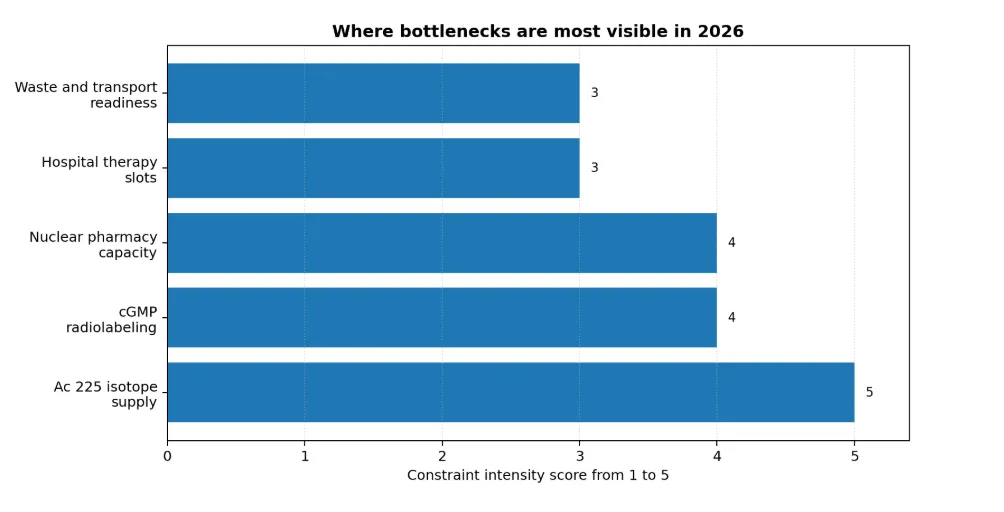
The Ac 225 supply constraint is the most visible pressure point, but it is only one part of the nuclear medicine buildout challenge. The full value chain also depends on radiolabeling capacity, radiopharmacy distribution, trained clinical staff, treatment room availability, dosimetry workflows and radioactive waste handling.
This creates a market where several supplier groups can benefit. Isotope producers gain pricing power when demand outpaces qualified supply. Radiopharmaceutical developers gain an advantage if they secure long term isotope access. Contract manufacturing organizations and nuclear pharmacies gain relevance as clinical trials expand. Hospitals and oncology networks gain strategic value when they can offer therapy access at scale.
The Global Race Is About Supply Security and Clinical Access
North America currently leads many radiopharmaceutical and nuclear medicine segments because of advanced healthcare infrastructure, strong oncology research and established reimbursement pathways. DataM Intelligence also identifies Asia Pacific as a fast growing region for nuclear medicine radioisotopes and theranostics, supported by rising cancer prevalence and expanding healthcare infrastructure.
Europe remains important because of its nuclear science base, isotope production expertise and strong clinical networks. Companies such as Eckert and Ziegler are scaling Ac 225 production in Europe, while OranoMed is developing alpha emitter capabilities around lead 212. This global activity shows that radioisotope supply is becoming a strategic healthcare infrastructure issue with international manufacturing relevance.
Unlock valuable market intelligence with the DataM Intelligence Theranostics Market report, featuring detailed insights on market size, segmentation, emerging treatment pathways, and the growing impact of precision medicine in healthcare.
Who Stands to Benefit as the Market Scales
The first beneficiaries are isotope producers that can provide reliable cGMP material for clinical and commercial use. TerraPower, NorthStar, Cardinal Health and Niowave are positioned around this supply challenge through different production routes and distribution strategies.
The second group includes radiopharmaceutical developers with strong isotope access and scalable manufacturing plans. Companies advancing Ac 225 based or other alpha emitting therapies will have a better chance of moving from trial enrollment to commercial launch if they can secure isotope supply before pivotal demand arrives.
The third group includes nuclear medicine treatment networks that need hot cells, shielding, dose preparation and clinical workflow software. As more therapies reach approval, these clinical assets could become a larger part of the market opportunity.
The fourth group includes specialized logistics providers and equipment suppliers. Packaging, route planning, compliance systems and quality testing will become more valuable as isotope volumes rise and treatment networks scale.
For the oncology patient pool connected to PSMA targeted treatment pathways, review the DataM Intelligence Prostate Cancer Drugs Market report which forecasts growth from US$ 14.25 billion in 2025 to US$ 28.10 billion by 2033.
Where the Nuclear Medicine Radioisotopes Market Is Headed
The next phase of the nuclear medicine radioisotopes market will be shaped by capacity, quality and access. Isotope production must expand, but expanded supply also needs to meet pharmaceutical quality requirements. Radiopharmaceutical developers will need supply agreements that support clinical trials and future commercial volumes. Hospitals will need more therapy slots and more trained teams.
The market direction is clear. Nuclear medicine is becoming a manufacturing intensive oncology platform. The companies that control reliable isotopes, qualified production, radiolabeling capacity and clinical access will hold the strongest position as targeted alpha therapy moves closer to broader adoption.
The TerraPower Philadelphia facility is important because it directly addresses one of the market’s hardest constraints. If the project delivers planned capacity in 2029, it could help shift Ac 225 from scarce research material toward a more scalable clinical and commercial input. That would support more trials, broader pharma investment and faster movement toward next generation cancer therapies.
For broader oncology growth and targeted treatment demand, see the DataM Intelligence Targeted Therapy Market report which tracks demand for precision oncology approaches across cancer types.