


Theranostics Market Size
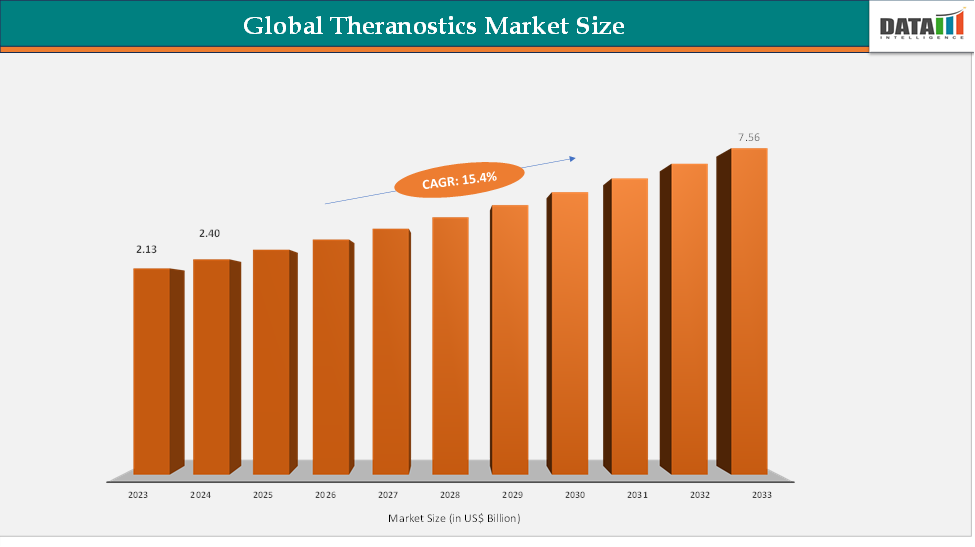
The Theranostics Market reached US$ 2.69 billion in 2025 and is expected to reach US$ 7.56 billion in 2033, growing at a CAGR of 15.4% during the forecast period (2026–2033).
The theranostics market is experiencing robust growth, driven by the rising prevalence of cancer and other chronic diseases, the growing demand for personalized medicine, and advancements in molecular imaging and targeted therapies. Integration of diagnostics and therapeutics is enabling precise disease characterization, optimized treatment planning, and improved patient outcomes. Technological innovations, including novel radioisotopes, AI-powered imaging, and nanomedicine-based delivery systems, are further expanding clinical applications and accelerating adoption.
Theranostics Market Key Market Trends & Insights
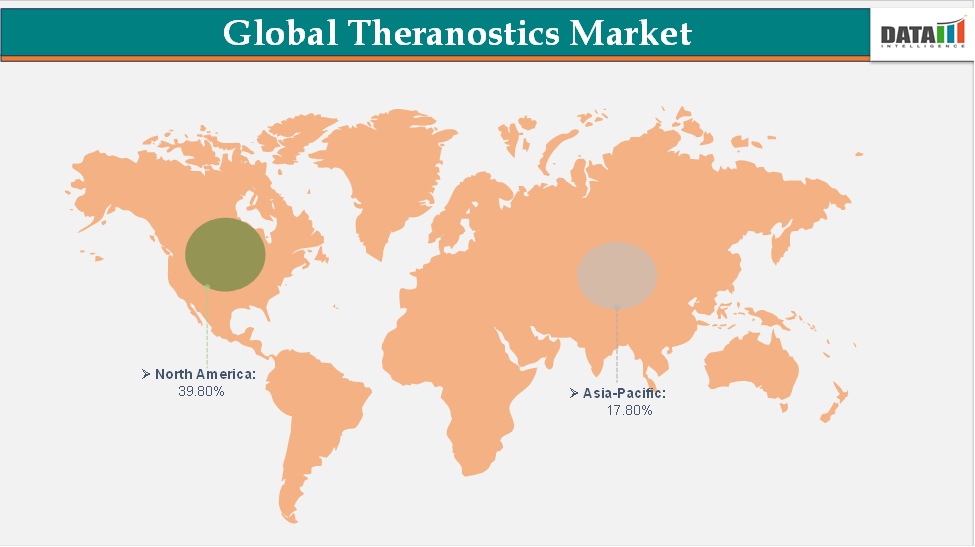
North America accounted for approximately 39.8% of the global theranostics market and is expected to maintain its leading position throughout the forecast period. This dominance is supported by a strong presence of advanced healthcare infrastructure, high adoption of precision medicine, significant investment in oncology research, and the availability of cutting-edge diagnostic and therapeutic technologies.
Asia-Pacific is projected to be the fastest-growing region, fueled by rising cancer prevalence, increasing demand for personalized treatment, expanding access to nuclear medicine facilities, and government initiatives supporting healthcare modernization in countries like China, India, and South Korea.
Theranostics Market Size & Forecast
- 2025 Market Size: US$ 2.69 billion in 2025
2033 Projected Market Size: US$ 7.56 Billion
CAGR (2025–2033): 15.4%
North America: Largest market in 2025
Asia Pacific: Fastest-growing market
Theranostics Market Key Takeaways
- Theranostics is becoming a precision-medicine growth engine. The market is expanding as healthcare providers increasingly combine diagnostic testing with targeted therapies to improve treatment selection, patient stratification and clinical outcomes.
- Oncology remains the core application area. Theranostic approaches are gaining strong traction in cancer care, particularly where molecular biomarkers can identify eligible patients and guide targeted or radioligand-based treatment.
- Radiopharmaceutical theranostics is accelerating market opportunities. The integration of diagnostic imaging and therapeutic radionuclides is supporting the development of personalized treatment pathways for cancers with specific molecular targets.
- Molecular diagnostics and imaging are critical to theranostic workflows. Advances in PET, SPECT, biomarker testing, companion diagnostics and molecular imaging are improving target identification, disease characterization and therapy monitoring.
- Companion diagnostics are becoming strategically important. The ability to identify patients most likely to respond to a specific therapy is strengthening demand for biomarker-driven testing and supporting more personalized treatment decisions.
- Pharmaceutical and biotechnology investment is reshaping the competitive landscape. Growing development activity around targeted therapies, radioligand therapeutics, molecular biomarkers and precision diagnostics is creating new partnerships, licensing opportunities and pipeline expansion.
- Asia-Pacific is emerging as an important growth market. Expanding healthcare infrastructure, increasing adoption of advanced diagnostics, rising cancer burden and greater investment in precision medicine are creating significant opportunities across the region.
- Regulatory and reimbursement considerations remain critical. Successful commercialization depends on clinical evidence, regulatory approvals, manufacturing capabilities, isotope availability and reimbursement pathways for both diagnostic and therapeutic components.
- Isotope supply and manufacturing capacity are becoming strategic priorities. The growth of radiotheranostics is increasing the importance of reliable radionuclide production, specialized manufacturing, logistics and supply-chain infrastructure.
- The market is moving toward integrated precision-care models. Combining diagnostics, molecular targeting, imaging and therapy into a single treatment strategy is positioning theranostics as an increasingly important component of personalized healthcare.
Theranostics Market Scope
| Metrics | Details | |
| CAGR | 15.4% | |
| Market Size Available for Years | 2025-2033 | |
| Estimation Forecast Period | 2026-2033 | |
| Segments Covered | Imaging Techniques | PET, SPECT |
| Radioisotopes | Technetium-99, Gallium-68, Lutetium (Lu) 177, Iodine-131, Zirconium-89, Y-90, Others | |
| Application | Prostate Cancer, Bone Metastasis | |
| Regions Covered | North America, Europe, Asia-Pacific, South America, and the Middle East & Africa | |
Explore the Future of the Theranostics Market
Get a comprehensive sample report covering Theranostics market trends, technological advancements, competitive landscape, application insights, and growth opportunities. Request your sample today to understand the key factors shaping the future of personalized diagnosis and targeted therapy.
Theranostics Market Dynamics
Driver: Rising Prevalence of Cancer and Chronic Diseases
The rising prevalence of cancer and chronic diseases is a major factor expected to drive the growth of the theranostics market. With cancer cases steadily increasing worldwide, there is a pressing need for more precise, targeted, and effective treatment options. Theranostics offers a unique advantage by combining diagnostic imaging and therapeutic intervention into a single platform, enabling accurate tumor detection, real-time monitoring, and tailored treatment strategies for individual patients. Beyond oncology, the growing burden of chronic conditions such as cardiovascular and neurological disorders further expands the potential applications of theranostics. As healthcare systems shift toward personalized and value-based care, the ability of theranostics to improve treatment efficacy, minimize side effects, and enhance patient outcomes positions it as a critical solution to address the rising global disease burden.
Restraint: High Cost of Theranostic Procedures
The high cost of theranostic procedures is anticipated to act as a significant restraint on the growth of the theranostics market. These treatments often involve advanced imaging technologies, specialized radiopharmaceuticals, and personalized therapeutic approaches, all of which substantially increase overall healthcare expenditure.
Global Theranostics Market Segment Analysis
The global theranostics market is segmented by imaging techniques, radioisotopes, application, and region.
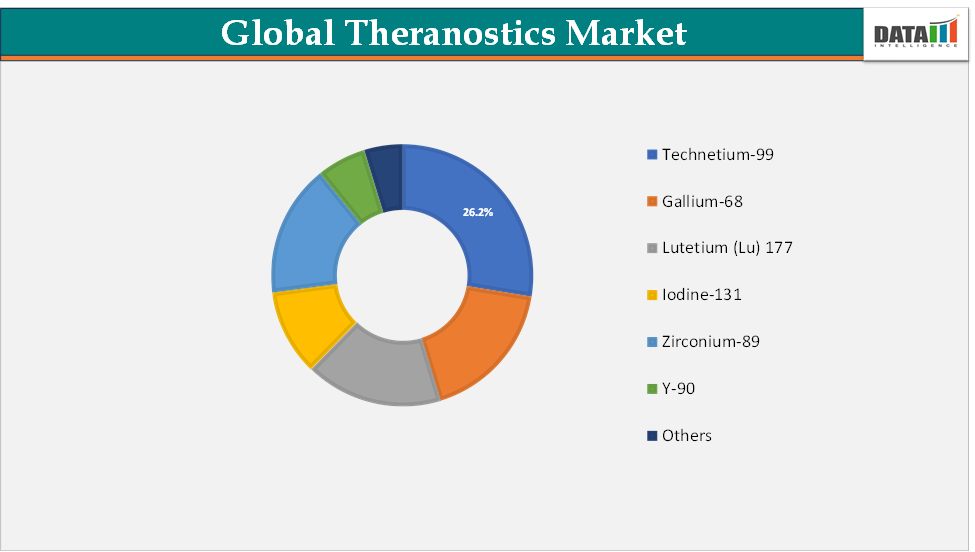
Radioisotopes-The technetium-99 segment is estimated to have 47.6% of the theranostics market share.
The technetium-99 (Tc-99m) segment holds a dominant position in the theranostics market, primarily due to its widespread use in nuclear medicine for both diagnostic imaging and therapeutic applications. Tc-99m is favored for its optimal physical properties, including a short half-life that minimizes radiation exposure, and its ability to produce high-quality imaging results across a variety of conditions such as cancer, cardiovascular diseases, and neurological disorders.
Its versatility, cost-effectiveness, and compatibility with existing imaging infrastructure have made it the most commonly used radioisotope globally, accounting for the majority of diagnostic nuclear medicine procedures. Furthermore, the well-established supply chain, strong clinical validation, and ongoing research into expanding its applications continue to reinforce Tc-99m’s leadership in the theranostics market.
Theranostics Market Geographical Analysis
The North America theranostics market was valued at 39.80% market share in 2025
North America is dominant in the theranostics market, accounting for the largest revenue share, supported by its advanced healthcare infrastructure, early adoption of precision medicine, and strong focus on oncology research. The region benefits from a high prevalence of cancer and chronic diseases, driving demand for innovative diagnostic and therapeutic solutions.
Well-established nuclear medicine facilities, widespread availability of advanced imaging technologies, and favorable reimbursement frameworks further enhance the adoption of theranostic approaches. In addition, significant investments from pharmaceutical companies, active collaborations between research institutions and healthcare providers, and a supportive regulatory environment continue to accelerate clinical trials and commercialization of novel theranostic agents. These factors collectively position North America as the leading market, with sustained growth expected throughout the forecast period.
The Asia-Pacific theranostics market was valued at 17.8% market share in 2025
Asia-Pacific is emerging as the fastest-growing region in the theranostics market, driven by a combination of rising cancer incidence, increasing adoption of personalized medicine, and expanding access to advanced healthcare technologies. Rapid urbanization and improved economic conditions have boosted healthcare spending, while governments across countries like China, India, South Korea, and Japan are actively investing in nuclear medicine infrastructure and research programs. Growing collaborations between local and global pharmaceutical companies, along with the establishment of specialized research hubs, are accelerating the development and availability of theranostic solutions in the region.
Theranostics Market Competitive Landscape
The major players in the theranostics market include GE HealthCare, Siemens Medical Solutions USA, Inc., SDS Lifesciences Pvt. Ltd., NMR, among others.
Theranostics Market Recent Developments
- July 2026 – GE HealthCare and Mayo Clinic advance personalized theranostics research
GE HealthCare and Mayo Clinic launched the MI-BET research collaboration to investigate imaging- and data-informed approaches for personalized radioligand therapy in advanced prostate cancer. The initiative aims to improve treatment selection and expand individualized theranostics pathways. - July 2026 – Radiopharm Theranostics reports positive Phase 2b results for RAD101
Radiopharm Theranostics reported positive Phase 2b results for RAD101, an ^18F-labeled imaging agent targeting FASN for suspected recurrent brain metastases. The study achieved 93% concordance with MRI across evaluable lesions, supporting plans to advance RAD101 toward a U.S. Phase 3 pivotal trial. - July 2026 – Radiopharm Theranostics demonstrates clinical activity with RAD204
Radiopharm Theranostics reported a confirmed durable partial response in its Phase 1 trial of RAD204, a PD-L1-targeted lutetium-177 nanobody radiotherapeutic for advanced solid tumors following immunotherapy. The company reported no dose-limiting toxicities across the evaluated cohorts, highlighting continued progress in targeted radioligand therapies. - June 2026 – Telix and United Imaging establish strategic theranostics collaboration
Telix Pharmaceuticals and United Imaging Healthcare announced a strategic research collaboration to evaluate integrated theranostics solutions combining molecular imaging products with advanced scanner platforms, software, connectivity and AI capabilities. The initial focus includes Telix’s TLX101-Px imaging product in the U.S. - June 2026 – GE HealthCare expands nuclear medicine and theranostics capabilities
GE HealthCare showcased new imaging, radiopharmaceutical and AI-enabled workflow technologies at SNMMI 2026, targeting improved access to nuclear medicine and greater efficiency across precision-care pathways. The company highlighted the growing adoption of theranostics and increasing demand for radiopharmaceutical infrastructure. - April 2026 – Radiopharm Theranostics and Siemens Healthineers strengthen RAD101 supply infrastructure
Radiopharm Theranostics signed an agreement with Siemens Healthineers to radiolabel and distribute ^18F-RAD101 in the U.S. The partnership is intended to support supply requirements for the planned Phase 3 registrational program following encouraging Phase 2b imaging results. - April 2026 – Radiopharm Theranostics advances HER2-targeted radioligand therapy
Radiopharm Theranostics received a positive Data Safety Monitoring Committee recommendation to advance 177Lu-RAD202 to the next dose level in its Phase 1 HEAT trial for HER2-positive advanced solid tumors. The program demonstrated tumor uptake and a favorable safety profile in the initial dose cohort. - March 2026 – Radiopharm Theranostics initiates first-in-human RAD402 study
Radiopharm Theranostics dosed the first patient in a Phase 1 trial of RAD402 for advanced prostate cancer. The investigational therapy targets KLK3 using terbium-161, representing an emerging approach to targeted radiotherapy and theranostic treatment strategies. - January 2026 – Radiopharm Theranostics expands its Radiopharm Ventures ownership
Radiopharm Theranostics increased its ownership of Radiopharm Ventures, its joint venture with MD Anderson Cancer Center, to 87.5%. The venture's pipeline includes Betabart, a B7H3-targeting radiopharmaceutical that received FDA IND clearance for a Phase 1 therapeutic trial in solid tumors.
Key Procurement Priorities and Buyer Evaluation Criteria
- The procurement decision-making process in the theranostics market is being shaped by the growing adoption of personalized medicine, increasing demand for precision oncology, advances in molecular imaging, and the need for targeted therapies that can improve treatment selection and patient outcomes. Buyers are increasingly seeking integrated theranostic solutions that combine diagnostic imaging, biomarker identification, patient stratification, and targeted therapeutic capabilities.
- Buyers evaluate factors such as diagnostic accuracy, imaging sensitivity, target specificity, therapeutic efficacy, safety profile, radiopharmaceutical quality, dosimetry capabilities, and clinical validation when selecting theranostic technologies and solution providers for oncology and other precision medicine applications.
- The buyer considers radiopharmaceutical development capabilities, molecular targeting technologies, imaging and therapy compatibility, companion diagnostic capabilities, data analytics, clinical workflow integration, and scalability while choosing technology partners for hospitals, specialty clinics, pharmaceutical companies, and research institutions.
- Procurement decisions are also influenced by regulatory compliance, manufacturing quality, supply reliability, and commercialization readiness, with buyers evaluating suppliers based on GMP compliance, radiopharmaceutical production capabilities, quality-control systems, regulatory approvals, and the ability to maintain reliable isotope and therapeutic agent supply chains.
Why Choose DataM?
- Technological Innovations: Explores advancements in theranostic technologies, including targeted radiopharmaceuticals, radioligand therapies, molecular imaging agents, companion diagnostics, biomarker-based patient selection, and precision medicine platforms, highlighting how these innovations improve disease detection, patient stratification, treatment targeting, and therapeutic monitoring.
- Product Performance & Market Positioning: Evaluates how different players deliver theranostic solutions based on critical parameters such as diagnostic sensitivity, target specificity, therapeutic efficacy, safety, imaging performance, dosimetry, treatment response, and clinical applicability, highlighting how leading companies differentiate through integrated diagnostic and therapeutic platforms.
- Real-World Evidence: Highlights the adoption of theranostic approaches across oncology centers, hospitals, pharmaceutical research organizations, and specialty healthcare facilities, demonstrating benefits such as personalized treatment selection, improved patient monitoring, targeted therapy delivery, reduced exposure to ineffective treatments, and enhanced clinical decision-making.
- Market Updates & Industry Changes: Tracks key developments such as new radiopharmaceutical launches, clinical trial advancements, regulatory approvals, pipeline expansion, strategic partnerships, licensing agreements, manufacturing investments, and theranostic platform development across North America, Europe, and Asia-Pacific.
- Competitive Strategies: Analyzes how leading companies expand through product innovation, strategic collaborations, mergers and acquisitions, licensing agreements, clinical development, radiopharmaceutical manufacturing expansion, and partnerships with healthcare providers to strengthen their positions in the rapidly evolving precision medicine and theranostics landscape.
- Pricing & Market Access: Explains pricing variations based on diagnostic and therapeutic agents, isotope requirements, treatment complexity, manufacturing processes, clinical application, dosage requirements, and healthcare delivery models, along with market access through hospitals, specialty clinics, pharmaceutical companies, diagnostic providers, radiopharmaceutical manufacturers, and research institutions.
- Market Entry & Expansion: Identifies growth opportunities driven by increasing adoption of personalized medicine, rising cancer incidence, advances in molecular imaging, expanding radioligand therapy pipelines, improved biomarker identification, and growing investment in precision oncology, while outlining strategies such as regional manufacturing expansion, clinical partnerships, technology differentiation, regulatory approvals, and targeted therapy development.
Target Audience
- Pharmaceutical & Biopharmaceutical Companies
- Theranostic Platform Developers
- Radiopharmaceutical Manufacturers
- Molecular Imaging & Diagnostic Companies
- Biotechnology & Precision Medicine Companies
- Hospitals & Comprehensive Cancer Centers
- Nuclear Medicine & Oncology Centers
- Clinical Research Organizations (CROs)
- Diagnostic Imaging & Companion Diagnostic Providers
- Research Institutes & Academic Medical Centers
- Healthcare Investors & Strategic Partners
- Regulatory & Healthcare Technology Stakeholders



























































