


Platelet Rich Plasma Market Size & Growth
Regenerative medicine is becoming increasingly relevant in orthopedics, sports medicine, wound care, dermatology and aesthetic procedures as patients and physicians look for treatment options that can reduce recovery time and avoid more invasive interventions. Platelet rich plasma, or PRP, fits this shift because it uses a patient’s own blood platelets to support tissue repair, pain management and healing across clinical and cosmetic applications.
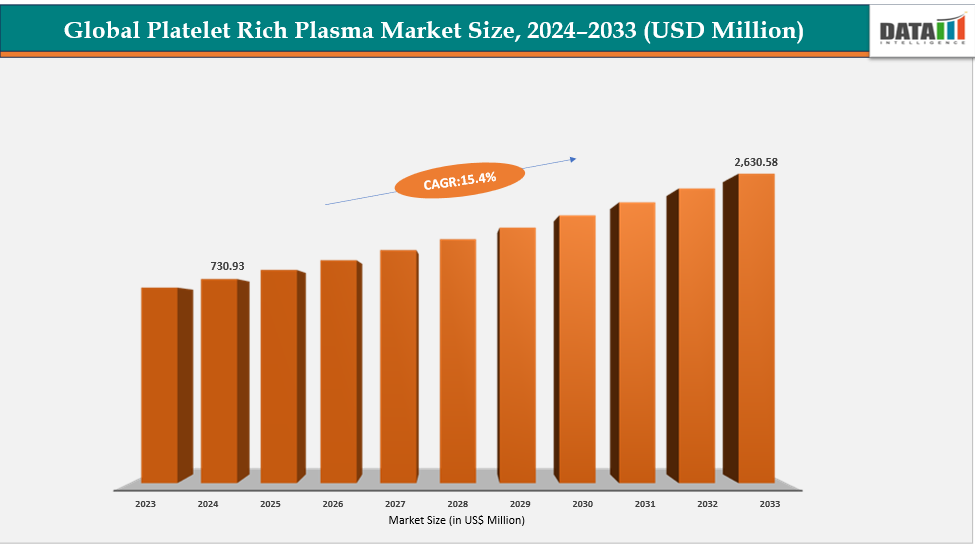
Platelet Rich Plasma Market is valued at US$ 843.49 million in 2025 and is projected to reach US$ 3,503.19 million by 2035, growing at a CAGR of 15.4% during 2026–2035.
The market matters now because musculoskeletal disorders, sports injuries, osteoarthritis, tendon injuries, ligament damage, joint degeneration, hair loss treatments and cosmetic rejuvenation are expanding the clinical and commercial use base for PRP. For healthcare providers, PRP offers a minimally invasive treatment pathway. For investors and device companies, the opportunity lies in standardized preparation systems, clinic adoption, regenerative medicine platforms and physician-friendly kits that improve consistency and treatment confidence.
Key Takeaways
- The Platelet Rich Plasma Market is projected to rise from US$843.49 million in 2025 to US$3,503.19 million by 2035, supported by widening adoption in regenerative and minimally invasive care.
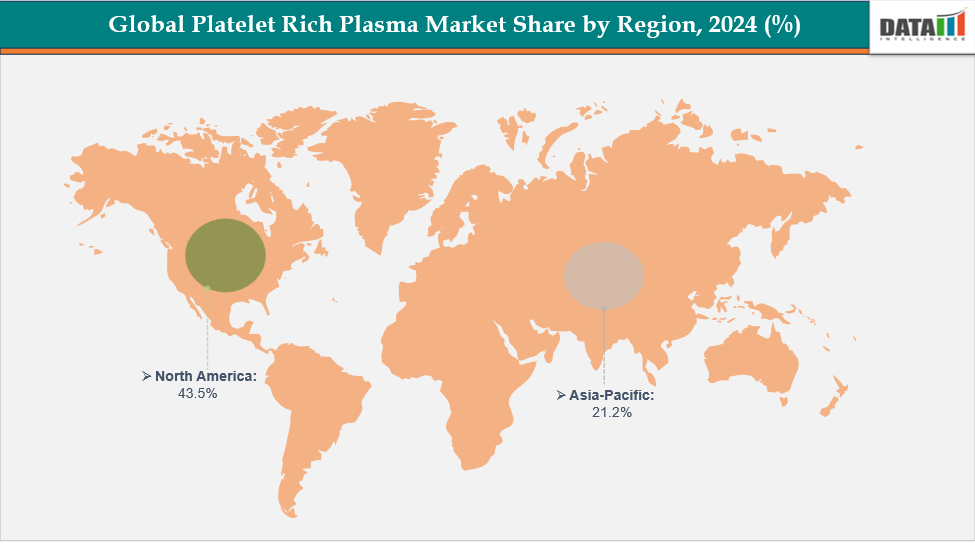
- North America led the Platelet Rich Plasma Market Share with 43.5% in 2024, representing approximately US$317.95 million.
- Europe held 34.5% share in 2024, equal to approximately US$252.17 million, supported by orthopedic, aesthetic and regenerative medicine adoption.
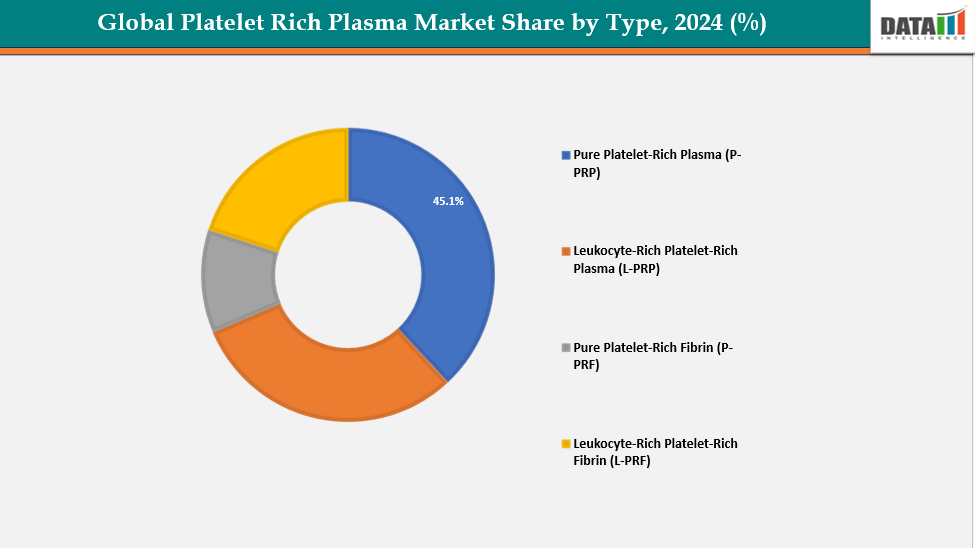
- Pure platelet-rich plasma, or P-PRP, was the leading type segment with 45.1% share in 2024, equal to approximately US$329.65 million.
- Orthopedics and sports medicine accounted for 41.1% share in 2024, equal to approximately US$300.41 million, making it the most commercially important application area in the available dataset.
- Lack of standardization in PRP preparation and composition remains the main adoption barrier because it can lead to inconsistent clinical outcomes and uneven physician confidence.
- Companies such as Arthrex, EmCyte, Zimmer Biomet, Dr. PRP USA, Regen Lab, Apex Biologix and Celling Biosciences are competing through PRP preparation systems, kits and regenerative medicine solutions.
Market Scope
| Report Attribute | Details |
| Market Size in 2025 | US$843.49 million |
| Market Size by 2035 | US$3,503.19 million |
| CAGR | 15.40% |
| Historic Years | 2023 to 2024 |
| Base Year | 2025 |
| Forecast Period | 2026 to 2035 |
| Segments Covered | Type, Origin, Application, End User and Region |
| Leading Region | North America |
| Fastest Growing Region | Asia Pacific |
Market Dynamics
Musculoskeletal Disorders and Sports Injuries Are Expanding Clinical Use
One of the strongest drivers of Platelet Rich Plasma Market Growth is the increasing prevalence of musculoskeletal disorders and sports-related injuries. Conditions such as osteoarthritis, tendonitis, ligament injuries, chronic joint pain and joint degeneration are becoming more common due to aging populations, active lifestyles and higher participation in recreational and professional sports.
PRP therapy is gaining traction because it is positioned as a non-surgical regenerative option that can support natural healing and reduce recovery time. Athletes and physically active patients use PRP for chronic tendon injuries, rotator cuff tears, Achilles tendon injuries and knee osteoarthritis. This makes sports medicine clinics, orthopedic practices and rehabilitation centers important adoption points.
Minimally Invasive Regenerative Treatments Are Influencing Patient Demand
Patients are increasingly interested in treatment options that reduce downtime, avoid major surgery and use biologically based healing mechanisms. PRP therapies use autologous platelets, which can reduce the risk of allergic reactions and infection compared with some non-autologous approaches. This clinical positioning supports adoption across orthopedics, aesthetics, dermatology and wound healing.
The market is also supported by physician interest in therapies that can fit outpatient and clinic-based care models. PRP procedures can create commercial value for clinics because they align with patient demand for regenerative and minimally invasive care while supporting procedural revenue.
Standardization Remains the Main Market Restraint
The lack of standardization in PRP preparation and composition is a major barrier to broader adoption. Different systems may produce PRP with varying platelet concentration, leukocyte content and activation characteristics. This can result in inconsistent outcomes across patients, physicians and clinical settings.
For payers, regulators and clinicians, inconsistent preparation can limit confidence and slow reimbursement expansion. For device manufacturers, this restraint creates a clear strategic requirement: systems must improve reproducibility, ease of use, quality control and clinical workflow consistency.
Market Opportunities
The strongest opportunity for PRP companies is in standardized preparation systems that reduce variability and improve physician confidence. Clinics want PRP kits and centrifuge systems that are simple, reliable, fast and suitable for repeated use across orthopedics, dermatology, hair restoration and wound care.
Orthopedic and sports medicine providers represent a high-value customer group because PRP directly addresses tendon injuries, ligament damage, osteoarthritis and joint pain. Aesthetic clinics and dermatology centers are also attractive because P-PRP is used in facial rejuvenation, skin texture improvement and alopecia treatment.
For investors, the opportunity is not limited to PRP kits. It includes regenerative medicine platforms, physician training, clinic networks, disposable consumables, centrifuges, combination systems and evidence-backed product lines. Companies that can connect clinical usability with documented outcomes and regulatory readiness are likely to have stronger commercial positioning.
Economic and Investment Analysis
The economic case for PRP is connected to outpatient care, shorter recovery times, reduced dependence on surgery in selected cases and rising demand for elective aesthetic procedures. Clinics can integrate PRP into orthopedic, sports medicine and cosmetic service lines, creating recurring revenue through procedure volume and consumable usage.
Investment trends are focused on preparation systems, high-quality PRP kits, bone marrow concentrate kits, centrifuges and adipose tissue processing systems. Product portfolios that serve multiple regenerative medicine use cases can improve customer retention and increase average clinic spending.
The ROI outlook is strongest where clinics can achieve consistent preparation quality, predictable outcomes and high patient acceptance. Economic risks include limited reimbursement in some applications, variability in clinical evidence, price sensitivity among patients and the need for physician education. Scenario risk is higher in markets where regulatory rules or payer coverage remain unclear.
Segmentation Analysis
The Platelet Rich Plasma Market Report is segmented by Type, by Origin, by Application, by End User, and by Region - Share, Trends, and Forecast to 2035.
Pure Platelet-Rich Plasma Leads by Type
Pure platelet-rich plasma, or P-PRP, led the type segment with 45.1% share in 2024. Based on the 2024 market value, this represents approximately US$329.65 million. P-PRP contains a high concentration of platelets with minimal leukocytes, which can reduce inflammatory response and make it useful for soft tissue healing, skin rejuvenation and hair restoration.
Its business value is strongest in dermatology, cosmetic medicine and orthopedics because it supports tissue repair, collagen synthesis and regenerative procedures. In aesthetics, P-PRP is widely used for facial rejuvenation and alopecia treatment because it offers a biologically based approach without the same risk profile as more invasive procedures.
Orthopedics and Sports Medicine Remain the Core Application Area
Orthopedics and sports medicine accounted for 41.1% of the Platelet Rich Plasma Market Share in 2024, equal to approximately US$300.41 million. This segment is commercially important because PRP is increasingly used for tendon injuries, ligament tears, osteoarthritis, chronic joint pain and post-injury recovery.
The segment benefits from clinical demand among athletes, active adults and aging patients. Sports medicine clinics and rehabilitation centers use PRP to support faster return to activity and reduce complications associated with more invasive treatments. Through 2035, growth will depend on physician acceptance, clinical evidence, patient awareness and consistent preparation protocols.
Aesthetics, Dermatology and Wound Healing Add Growth Diversity
Aesthetic and dermatology applications are expanding because PRP is used for skin rejuvenation, hair restoration and scar-related treatments. The clinical study conducted at Vardhman Mahavir Medical College and Safdarjung Hospital from April 2023 to October 2024 showed that intraoperative autologous PRP injections before closure in thyroidectomy patients improved wound healing and reduced visible scarring compared with standard suturing alone.
This type of evidence supports broader interest in wound healing and cosmetic outcomes. For device companies, the opportunity is to create kits and systems that can support both clinical and aesthetic workflows.
Regional Analysis
North America Leads the Platelet Rich Plasma Market
North America dominated the global Platelet Rich Plasma Market with 43.5% share in 2024, equal to approximately US$317.95 million. The region benefits from advanced healthcare infrastructure, strong adoption of regenerative therapies, high awareness among physicians and patients, and broad use of PRP in orthopedics, sports medicine and cosmetic procedures.
The United States is the key country market in the region. Growth is supported by musculoskeletal disorder prevalence, sports participation, demand for minimally invasive cosmetic procedures and clinical use in hospitals, clinics and sports medicine centers. The region also benefits from a strong regulatory framework for autologous therapies, which supports safe use of PRP systems.
Canada is expected to remain relevant through orthopedic care, sports medicine and aesthetic procedures, although country-level market values are not disclosed in the dataset.
Europe Holds a Strong Second Position
Europe accounted for 34.5% of the global market in 2024, equal to approximately US$252.17 million. Demand is supported by aesthetic healthcare, orthopedic treatment, chronic wound care, geriatric population trends and growing clinical acceptance of regenerative therapies.
Germany, France and the UK are important markets because they have established dermatology and orthopedic centers using PRP for soft tissue injuries, cosmetic procedures and chronic wounds. The UK benefits from healthcare expenditure, clinical research and early adoption of regenerative technologies, particularly in orthopedics and sports medicine.
Asia Pacific Is the Fastest-Growing Region
Asia Pacific is identified as the fastest-growing region, with a source-stated CAGR of 8.1% over the forecast period. Growth is supported by rising awareness of regenerative medicine, expanding healthcare infrastructure, increasing demand for cosmetic treatments and rising use of minimally invasive procedures in countries such as China, India and South Korea.
Japan is an important country market due to its aging population, rising osteoarthritis burden and advanced healthcare system supporting regenerative therapies. PRP is increasingly used in orthopedic centers and aesthetic clinics for joint pain management, wound healing and cosmetic dermatology.
Country-level market sizes are not disclosed, so the country outlook is based on adoption drivers and clinical demand indicators available in the dataset.
Regulatory and Policy Analysis
PRP is closely tied to rules governing autologous therapies, clinical use of blood-derived products, device approvals, preparation kits and physician-administered procedures. Regulatory clarity is important because PRP systems must support safety, sterility and reliable preparation standards.
FDA clearance and clinical-use approval are important differentiators in the U.S. market. In markets where reimbursement is limited or PRP use varies by application, adoption may depend more heavily on out-of-pocket patient demand, physician confidence and clinic-level evidence.
Expected regulatory focus is likely to center on preparation consistency, product claims, clinical evidence and device quality standards. Companies that can support physicians with compliant systems, clear protocols and consistent preparation quality will be better positioned.
Competitive Landscape and Vendor Positioning
The platelet rich plasma market includes Arthrex, Inc., EmCyte Corporation, Zimmer Biomet Holdings, Inc., Dr. PRP USA LLC, Regen Lab SA, Apex Biologix, Celling Biosciences and other regenerative medicine solution providers.
Arthrex plays a significant role through advanced PRP preparation systems such as the ACP Double-Syringe System and Angel System. These products are used across orthopedics, sports medicine and cosmetic procedures for efficient and standardized PRP preparation.
Competitive advantage is shaped by preparation consistency, platelet capture efficiency, ease of use, clinical workflow fit, physician training, product breadth and regulatory readiness. Companies with broader regenerative medicine platforms, including PRP kits, centrifuges, bone marrow concentrate systems and adipose tissue processing products, may be better placed to serve multi-specialty clinics.
Recent Developments
- June 2026 – Arthrex expands biologics portfolio for regenerative medicine
Arthrex enhanced its regenerative medicine portfolio by expanding platelet-rich plasma (PRP) preparation systems and biologics solutions for orthopedic, sports medicine, and soft tissue repair applications, improving workflow efficiency and treatment consistency. - June 2026 – Regen Lab advances PRP technologies for aesthetic and orthopedic applications
Regen Lab strengthened its PRP platform by introducing enhanced blood separation technologies and optimized PRP preparation protocols to improve platelet recovery, treatment reproducibility, and clinical outcomes in regenerative medicine. - May 2026 – Zimmer Biomet expands regenerative solutions portfolio
Zimmer Biomet enhanced its biologics and regenerative medicine offerings by expanding technologies that support orthopedic tissue repair and sports medicine procedures, reinforcing its position in PRP-assisted musculoskeletal treatments. - April 2026 – EmCyte Corporation advances next-generation PRP systems
EmCyte introduced enhancements to its PRP preparation technologies with improved platelet concentration efficiency, closed-system processing, and standardized protocols for orthopedic, aesthetic, and pain management procedures. - March 2026 – Apex Biologix strengthens regenerative medicine solutions
Apex Biologix expanded its biologics portfolio by enhancing PRP preparation systems and physician support programs, enabling broader adoption of autologous regenerative therapies across orthopedic and sports medicine practices. - February 2026 – Celling Biosciences enhances automated PRP processing technologies
Celling Biosciences advanced its automated blood processing platform with improved centrifugation workflows and standardized platelet isolation technologies designed to optimize regenerative medicine procedures and clinical efficiency.
Strategic Insights and Analyst Perspective
The Platelet Rich Plasma Market Analysis indicates that future growth will depend on three commercial priorities: stronger clinical confidence, better preparation standardization and wider clinic adoption. Orthopedics and sports medicine remain the anchor segments, but aesthetics, dermatology and wound healing broaden the market’s revenue base.
Manufacturers should focus on systems that reduce variability and fit easily into clinic workflows. Investors should track companies with recurring consumable revenue, multi-application regenerative portfolios and regulatory-cleared products. Clinics should evaluate PRP systems based on preparation quality, ease of use, platelet capture performance, patient demand and procedure economics.
Risk mitigation will be essential. Vendors and providers must manage inconsistent clinical outcomes, reimbursement limitations, regulatory scrutiny and competition from other regenerative therapies. The companies that can support clinical evidence, reproducible preparation and physician adoption are likely to gain stronger market share through 2035.
Report Benefits
This Platelet Rich Plasma Market Report helps medical device manufacturers identify high-growth PRP applications and product development priorities. Investors can evaluate regenerative medicine opportunities across orthopedics, sports medicine, aesthetics and wound healing. Suppliers can assess demand for centrifuges, PRP kits and consumables. Procurement teams can compare system reliability, clinical workflow fit and regulatory positioning. Strategy teams can use the report to benchmark regional demand, segment performance, company positioning and market risks.
Target Audience
- PRP (Platelet-Rich Plasma) system manufacturers
- Regenerative medicine companies
- Orthopedic clinics
- Sports medicine centers
- Aesthetic clinics
- Dermatology practices
- Hospitals and healthcare systems
- Ambulatory Surgery Centers (ASCs)
- Medical device suppliers
- Centrifuge manufacturers
- Investors in regenerative medicine and medical devices sector
- Private equity firms
- Venture capital firms
- Procurement heads
- Product managers
- Clinical strategy teams
- Healthcare consultants




























































