


Blood Platelets Market Size & Growth
Platelet availability is becoming a critical operating issue for hospitals, oncology centers, trauma units and blood banks as demand increases across hematology, surgery, cancer care and regenerative medicine. Blood platelets are essential for clotting support in patients with low platelet counts, bleeding disorders, chemotherapy-induced thrombocytopenia, trauma-related bleeding and complex surgical procedures. At the same time, platelet-rich plasma therapies are expanding the market’s relevance beyond transfusion medicine into orthopedics, dermatology, dentistry and cosmetic procedures.
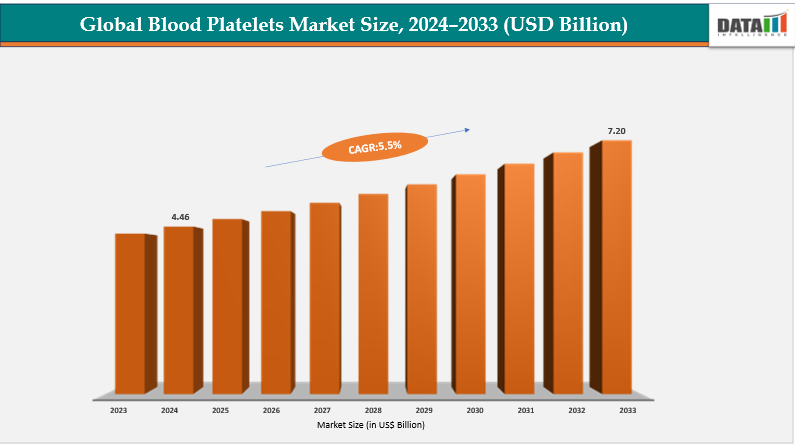
Blood Platelets Market is valued at US$ 4.71 billion in 2025 and is projected to reach US$ 8.04 billion by 2035, growing at a CAGR of 5.5% during 2026–2035.
The market matters now because platelet demand is supported by two forces at the same time. The first is clinical necessity, especially in cancer, leukemia, lymphoma, aplastic anemia, immune thrombocytopenia and hemophilia-related care. The second is therapeutic expansion, led by PRP and regenerative medicine applications. For healthcare executives, the strategic question is no longer only how to secure platelet supply. It is also how to invest in safer collection systems, storage technologies, pathogen-reduction solutions, platelet diagnostics and high-value platelet-based therapies.
Key Takeaways
- The Blood Platelets Market reached US$4.46 billion in 2024 and is recalculated at US$4.71 billion in 2025, reflecting sustained clinical demand from transfusion medicine and platelet-based therapies.
- The Blood Platelets Market 2035 forecast is recalculated at US$8.04 billion, supported by a 5.5% CAGR.
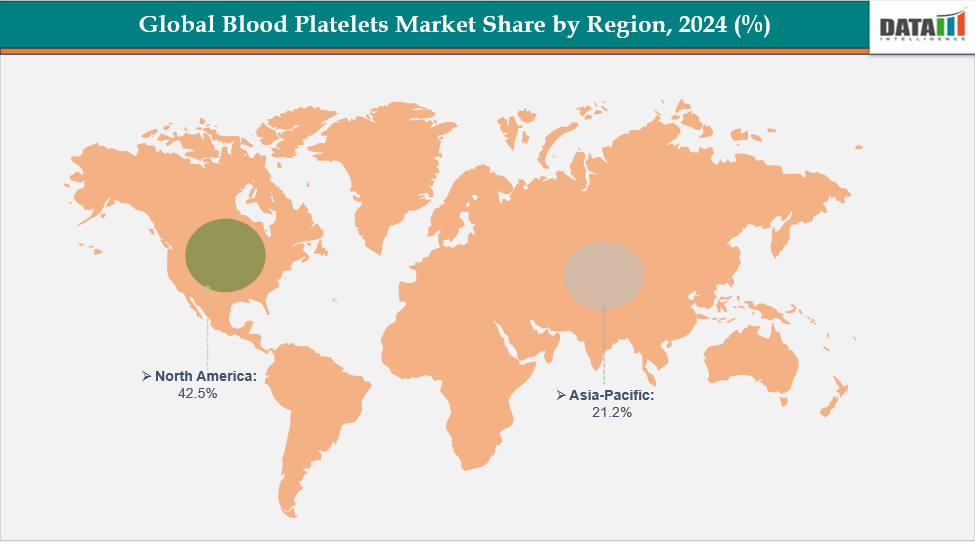
- North America led the global Blood Platelets Market Share with 42.5% in 2024, supported by advanced healthcare infrastructure, blood donation networks and adoption of platelet safety technologies.
- Europe accounted for 34.5% share in 2024, supported by organized blood banking systems, donor recruitment programs and clinical use of platelet therapies.
- Asia-Pacific is the fastest-growing region, with an expected CAGR of 8.1%, supported by rising surgical procedures, improved healthcare access and PRP therapy adoption.
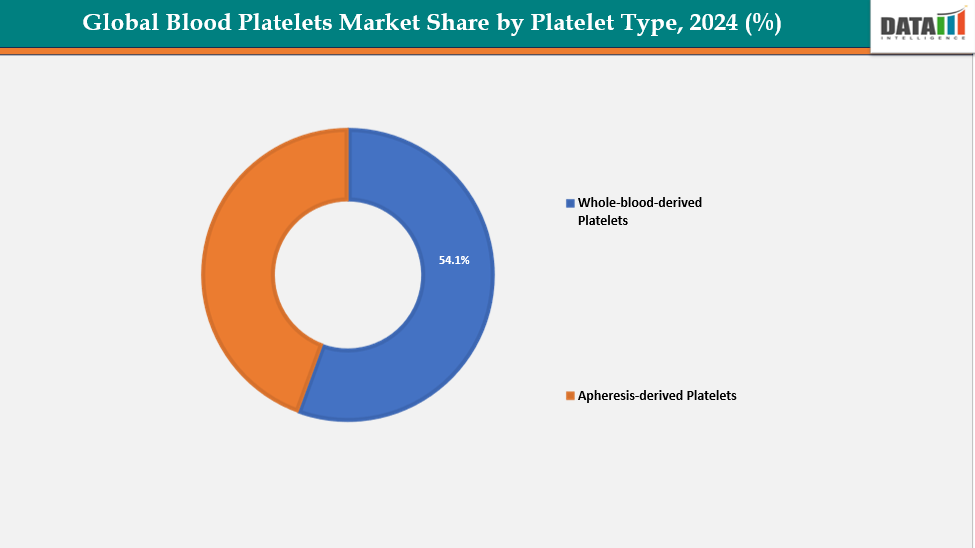
- Whole-blood-derived platelets led the platelet type category with 54.1% revenue share in 2024, supported by availability, cost efficiency and use in routine and emergency transfusions.
- Donor shortage remains a major constraint because platelets have a short shelf life of only five to seven days, requiring continuous collection and distribution discipline.
Market Scope
| Report Attribute | Details |
| Market Size in 2025 | US$4.71 billion |
| Market Size by 2035 | US$8.04 billion |
| CAGR | 5.50% |
| Historic Years | 2023 to 2024 |
| Base Year | 2025 |
| Forecast Period | 2026 to 2035 |
| Segments Covered | Platelet Type, Application, End User and Region |
| Leading Region | North America |
| Fastest Growing Region | Asia-Pacific |
Clinical Demand Drivers and Market Constraints
Blood Disorder Burden Is Increasing Platelet Utilization
The rising prevalence of blood disorders is a core driver of Blood Platelets Market Growth. Conditions such as leukemia, lymphoma, aplastic anemia and immune thrombocytopenia can lead to critically low platelet counts, making platelet transfusion an essential part of treatment. Patients undergoing chemotherapy for leukemia often experience treatment-induced thrombocytopenia, which weakens clotting ability and increases the need for regular platelet support.
PRP and Regenerative Medicine Expand the Commercial Use Case
Platelet-rich plasma therapy is adding a higher-growth clinical and commercial dimension to the Blood Platelets Market. PRP uses concentrated platelets to support tissue repair and healing, making it increasingly relevant in orthopedics, dermatology, dentistry and cosmetic procedures. Its appeal is linked to minimally invasive treatment preferences, rising patient awareness and greater physician adoption in regenerative medicine.
For product managers and healthcare investors, PRP creates opportunities beyond traditional transfusion demand. Companies that can deliver reliable platelet preparation systems, platelet-derived products and standardized clinical workflows may benefit from growing use in elective and outpatient procedures. However, commercial success will depend on clinical consistency, treatment credibility, reimbursement conditions and provider adoption.
Donor Shortage Limits Supply Flexibility
The most important restraint in the Blood Platelets Market Report is the shortage of blood donors. Platelets have a shelf life of only five to seven days, which creates constant pressure on collection, testing, storage and distribution systems. Declining donation rates, donor eligibility restrictions, lifestyle-related health issues, seasonal variation, emergencies and pandemics can all disrupt platelet availability.
This creates a direct operational risk for hospitals. Shortages can delay cancer treatment, trauma care, surgeries and management of patients with severe thrombocytopenia. In some markets, supply gaps can also increase reliance on expensive substitutes or imported blood products. Blood centers and healthcare systems therefore need stronger donor engagement, improved platelet storage, automated collection and inventory management strategies.
Market Opportunities
Blood banks and hospitals have a clear opportunity to invest in automated platelet collection systems, improved storage solutions and pathogen-reduction technologies. These technologies can improve product safety, reduce contamination risk and strengthen supply reliability. For procurement teams, the business case is linked to better inventory confidence, lower wastage and fewer disruptions in critical care settings.
Regenerative medicine and PRP providers represent another attractive opportunity area. Orthopedic clinics, dermatology centers, dental practices and aesthetic medicine providers are expanding the use of platelet-based procedures. Suppliers that offer standardized PRP preparation systems, reliable platelet concentrates and training-led commercialization models can improve adoption among outpatient providers.
Diagnostic companies also have room to expand. Platelet function testing is important for monitoring platelet activity, assessing antiplatelet therapy and supporting clinical decision-making. Companies such as Aggredyne Inc. are positioned in this area with rapid platelet aggregation analysis systems that support use across hospitals, physician offices and reference laboratories.
Economic and Investment Analysis
Healthcare spending, oncology treatment volumes, surgical procedures and regenerative medicine adoption are the main economic factors influencing the blood platelets market. Demand is relatively resilient because platelet transfusions are clinically necessary in several acute and chronic care settings. However, the economics of platelet supply are challenging due to short shelf life, collection costs, testing requirements and distribution complexity.
Capital expenditure opportunities are strongest in blood bank automation, platelet collection equipment, pathogen-reduction systems, storage technologies, platelet diagnostics and PRP preparation systems. Hospitals and blood centers are likely to prioritize investments that improve safety, reduce wastage and increase supply reliability.
ROI depends on three commercial outcomes: better platelet availability, fewer delayed procedures and higher-value therapeutic use. In PRP and regenerative medicine, profitability is tied to outpatient adoption, procedure volume and treatment standardization. Economic risks include donor shortages, reimbursement uncertainty, high storage and logistics costs, and unequal access to advanced blood banking technologies in lower-resource healthcare systems.
Segmentation Analysis
The Blood Platelets Market is segmented by Platelet Type (Whole-blood-derived Platelets, Apheresis Platelets and other platelet products), by Application (Hemophilia, thrombocytopenia, oncology, surgical procedures, trauma care, regenerative medicine and PRP therapies), by End User (Hospitals, blood banks, ambulatory surgical centers, specialty clinics, diagnostic laboratories and research institutions), and by Region - Share, Trends, and Forecast to 2035.
Whole-Blood-Derived Platelets Remain the Leading Platelet Type
Whole-blood-derived platelets led the platelet type category with 54.1% revenue share in 2024. Their leadership is supported by broad availability, cost-effectiveness and established use in routine and emergency transfusions. These platelets are collected from whole blood donations, making them especially important in regions where access to apheresis collection technology is limited.
Hospitals and blood centers rely on whole-blood-derived platelets for trauma care, surgical bleeding and thrombocytopenia management. Growth through 2035 will be supported by blood donation drives, improved separation systems, stronger storage practices and expanding transfusion services.
Hemophilia Represents a High-Value Application Area
The hemophilia application segment accounted for 46.1% of the Blood Platelets Market Share in 2024. Demand is supported by the need to manage bleeding disorders and support patients during surgery, injury or bleeding episodes. Platelet transfusions and platelet-derived products can help improve bleeding control in specific clinical contexts.
The segment is also supported by increasing diagnosis rates, awareness of blood component therapy and improved access to platelet concentrates. Future growth will depend on treatment availability, government initiatives, plasma-derived therapy access and ongoing research into recombinant and gene-based platelet substitutes.
Regenerative Medicine and PRP Add Growth Optionality
PRP therapies are gaining use in orthopedics, dermatology, dentistry and cosmetic procedures. These applications are commercially attractive because they are often procedure-led, outpatient-oriented and linked to patient demand for minimally invasive care. The segment still requires stronger standardization and clinical consistency, but its expansion adds a meaningful growth layer to the broader platelet ecosystem.
Geographical Analysis
North America Leads the Blood Platelets Market
North America dominated the global Blood Platelets Market with 42.5% revenue share in 2024. The region benefits from advanced healthcare infrastructure, established blood donation systems, high awareness of platelet transfusion and adoption of platelet storage and pathogen-reduction technologies.
The United States is the region’s most important market. Demand is supported by blood cancers, thrombocytopenia, chronic disease burden, surgical procedures and a growing geriatric population. The country also benefits from investment in platelet diagnostics, advanced blood products and PRP therapies. For vendors, the U.S. offers strong opportunities in hospitals, oncology centers, blood banks, diagnostics and regenerative medicine clinics.
Canada contributes through organized healthcare delivery, transfusion services and demand for advanced blood products. However, supply stability and donor availability remain important operational challenges across the region.
Europe Holds a Strong Second Position
The region benefits from organized blood banking systems, government-backed donor recruitment efforts and rising awareness of platelet-based therapies in clinical and regenerative medicine settings. Automated platelet collection and storage systems are improving supply quality and efficiency.
Germany is a leading European market due to its advanced medical infrastructure, strong healthcare standards and focus on hematology research. Rising cases of hematological cancers and cardiovascular disorders support platelet transfusion demand, while reimbursement support for blood products helps sustain market access. The region is also relevant for regenerative medicine collaborations, including platelet-derived raw materials used in advanced cell therapy development.
Asia-Pacific Is the Fastest-Growing Region
Asia-Pacific is the fastest-growing region, with an expected CAGR of 8.1%. Growth is supported by rising blood-related disorders, increasing surgical procedures, wider healthcare access and improving blood donation awareness. Countries in the region are also seeing growing adoption of PRP therapy in regenerative medicine and cosmetic applications.
Japan is an important market due to its aging population and higher susceptibility to hematological and cardiovascular disorders. Government support for advanced blood therapies and increasing use of PRP in regenerative and cosmetic applications are supporting demand. Other Asia-Pacific markets are expected to benefit from improving hospital infrastructure, expanding transfusion services and greater investment in blood banking systems.
Country-Level Market Analysis
The United States remains the most strategically important country market because of its large patient base, blood cancer burden, advanced hospital infrastructure and strong adoption of platelet diagnostics and PRP therapies. Growth is supported by oncology care, trauma care, surgery and hematology treatment. The main barrier is platelet supply stability due to short shelf life and donor dependence.
Germany is a key European market, supported by hematology research, high clinical standards and structured reimbursement for blood products. It also has a role in advanced regenerative medicine supply chains through companies developing platelet-derived materials.
Japan is a high-growth, high-maturity market within Asia-Pacific. Aging demographics, advanced healthcare access and adoption of regenerative medicine support platelet demand. The development of artificial blood substitute technologies also indicates the country’s broader focus on addressing future blood supply constraints.
Regulatory and Policy Analysis
Blood platelets operate within a highly regulated healthcare environment. Regulatory priorities include donor eligibility, blood screening, collection quality, storage conditions, pathogen reduction, product traceability, transfusion safety and clinical use of platelet-based products. These rules directly influence operating costs, blood bank procedures and vendor qualification.
Government initiatives around donor recruitment and treatment accessibility support market growth, especially in Europe and Asia-Pacific. Reimbursement policies for blood products also influence hospital adoption and patient access. In regenerative medicine and PRP, regulatory pathways and clinical standards are important because platelet-based therapies must demonstrate safety, consistency and appropriate medical use.
Expected regulatory focus through 2035 is likely to center on safer blood products, better pathogen control, stronger supply chain traceability and clearer standards for platelet-derived therapies.
Competitive Landscape
The Blood Platelets Market includes Aggredyne Inc., Sysmex Corporation, Haemochrom Diagnostics GmbH, Eurobio Scientific, LABiTec Labor BioMedical Technologies GmbH, Arteriocyte Medical Systems, Inc., Biomet, Inc. and EmCyte Corporation, among others.
Competition is shaped by platelet diagnostics, platelet preparation systems, PRP therapy platforms, blood testing solutions and regenerative medicine capabilities. Aggredyne Inc. is positioned in platelet function diagnostics through its AggreGuide A-100 system, which provides rapid platelet aggregation analysis from a small blood sample. This supports clinical decisions in hospitals, physician offices and reference laboratories.
Sysmex Corporation has relevance through diagnostic capabilities and hematology testing. EmCyte Corporation, Biomet and Arteriocyte Medical Systems are linked to PRP and platelet-based regenerative applications. Eurobio Scientific, Haemochrom Diagnostics and LABiTec Labor BioMedical Technologies support the broader diagnostic and biomedical technology ecosystem.
Companies positioned well in this market will be those that connect clinical reliability with usability, regulatory compliance and workflow efficiency. In transfusion medicine, safety and availability matter most. In PRP and regenerative medicine, standardization, physician confidence and procedure-level value will shape adoption.
Recent Developments
- May 2026 – Sysmex Corporation launches next-generation XR-Series hematology solution
Sysmex America introduced its next-generation XR-Series™ Hematology Solution, expanding advanced blood cell and platelet analysis capabilities with improved workflow automation, higher throughput, and enhanced laboratory efficiency for clinical diagnostics. - April 2026 – Eurobio Scientific expands specialized hematology and transfusion diagnostics portfolio
Eurobio Scientific strengthened its in-vitro diagnostics portfolio through expanded distribution and commercialization of specialized hematology and transfusion testing solutions, supporting improved blood platelet analysis and laboratory diagnostics. - March 2026 – EmCyte Corporation advances platelet-rich plasma (PRP) technologies
EmCyte enhanced its blood platelet processing platform with improved PRP preparation technologies, optimized platelet concentration protocols, and standardized processing workflows for orthopedic, sports medicine, and regenerative medicine applications. - March 2026 – Aggredyne Inc. advances platelet function testing technologies
Aggredyne continued expanding its platelet function testing platform by enhancing rapid platelet aggregation analysis technologies that support point-of-care assessment of platelet activity and antiplatelet therapy monitoring. - February 2026 – Haemochrom Diagnostica GmbH strengthens hemostasis diagnostics portfolio
Haemochrom expanded its coagulation and platelet function diagnostics offerings by introducing enhanced laboratory solutions for platelet aggregation testing, coagulation analysis, and hemostasis monitoring.
Impact Analysis
Supply Chain and Donor Availability Impact
The blood platelets market is highly exposed to donor availability because platelet products cannot be stored for long periods. The five-to-seven-day shelf life makes inventory planning more complex than many other blood products. Any disruption in donation volumes, donor eligibility, seasonal collection, emergencies or pandemic conditions can quickly affect hospital supply.
Technology Impact
Automated platelet collection, pathogen-reduction systems, storage improvements and platelet diagnostics are improving market reliability. These technologies help healthcare systems reduce safety risk, improve product quality and support faster clinical decisions. For suppliers, technology-led differentiation is becoming more important as hospitals and blood centers evaluate both safety and operating efficiency.
Strategic Insights and Analyst Perspective
The Blood Platelets Market Analysis indicates a steady healthcare market supported by clinical necessity, donor-dependent supply and expanding therapeutic applications. Hospitals and blood centers should prioritize resilient platelet sourcing, donor engagement, inventory planning and safety technologies. Investors should track companies active in platelet diagnostics, PRP systems, pathogen-reduction technologies and regenerative medicine materials.
Manufacturers and suppliers should focus on reliability, quality, shelf-life management and workflow integration. In PRP and regenerative medicine, commercial growth will depend on standardization and physician trust. In transfusion medicine, the winning value proposition will center on safety, supply assurance and compatibility with hospital workflows.
The most important risk to manage is supply imbalance. Demand can rise due to cancer care, surgery and trauma needs, while supply remains constrained by donor availability and short shelf life. Companies that help reduce this imbalance will hold strong strategic value through 2035.
Report Benefits
This Blood Platelets Market Report helps healthcare companies, blood banks and investors understand market size, growth outlook, regional share, application demand and competitive positioning. Manufacturers can use it to evaluate platelet product opportunities and technology priorities. Investors can assess the commercial role of diagnostics, PRP therapies and regenerative medicine. Procurement teams can benchmark supply risks, storage needs and vendor capabilities. Strategy teams can identify regional growth opportunities, adoption barriers and long-term market drivers.
Target Audience
- Blood banks
- Hospitals and healthcare systems
- Transfusion medicine providers
- Platelet product manufacturers
- PRP (Platelet-Rich Plasma) system suppliers
- Diagnostic companies
- Hematology laboratories
- Regenerative medicine companies
- Biotechnology firms
- Healthcare investors
- Private equity firms
- Procurement heads
- Clinical operations leaders
- Product managers
- Strategy and planning teams
- Regulatory consultants





























































