


Global PI3K Inhibitor Drug Class Market Overview
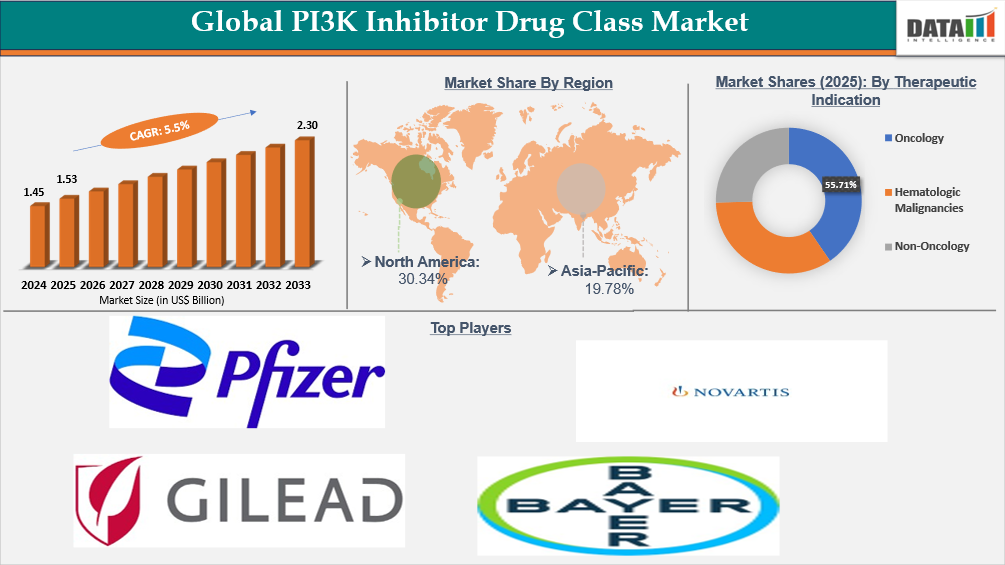
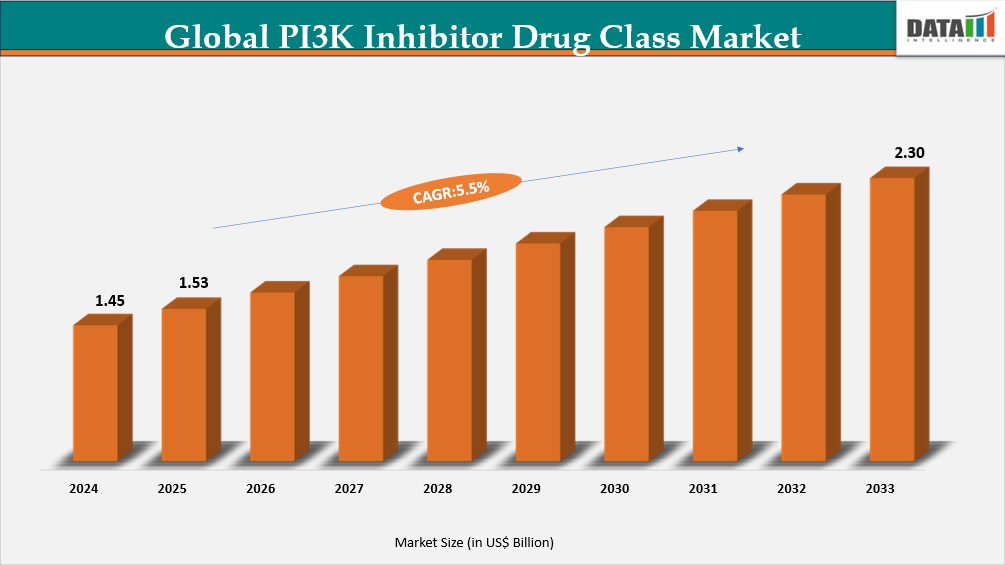
The global PI3K inhibitor drug class market reached US$1.45 Billion in 2024, rising to US$1.53 Billion in 2025 and is expected to reach US$2.3 Billion by 2033, growing at a CAGR of 5.5% from 2026 to 2033.
The PI3K inhibitor drug class market is expanding as targeted therapies gain traction in oncology due to the high prevalence of PI3K pathway alterations across diverse cancers. Large genomic profiling studies have shown that PI3K pathway aberrations occur in about 70% of patients with endometrial, breast, colorectal, cervical, and other solid tumors, with PIK3CA mutations specifically present in ~31% of breast cancers and ~29% of cervical cancers, underscoring the widespread molecular relevance of this pathway in tumor biology. These genetic insights reinforce the clinical rationale for targeting PI3K signaling across multiple indications where traditional chemotherapy offers limited benefit.
Demand is further supported by precision medicine approaches that integrate molecular diagnostic testing to identify patients most likely to benefit from PI3K inhibition. Next-generation sequencing and other genomic assays have revealed PIK3CA mutations in approximately 9.2% of a large cohort of metastatic solid tumors, highlighting a substantial subgroup of patients eligible for PI3K-targeted therapy based on tumor biology. As oncology care increasingly emphasizes biomarker-driven treatment selection, this has elevated the importance of PI3K inhibitors as part of standard care in hormone receptor-positive breast cancer and other mutation-defined populations, driving sustained utilization and market growth.
PI3K Inhibitor Drug Class Industry Trends and Strategic Insights
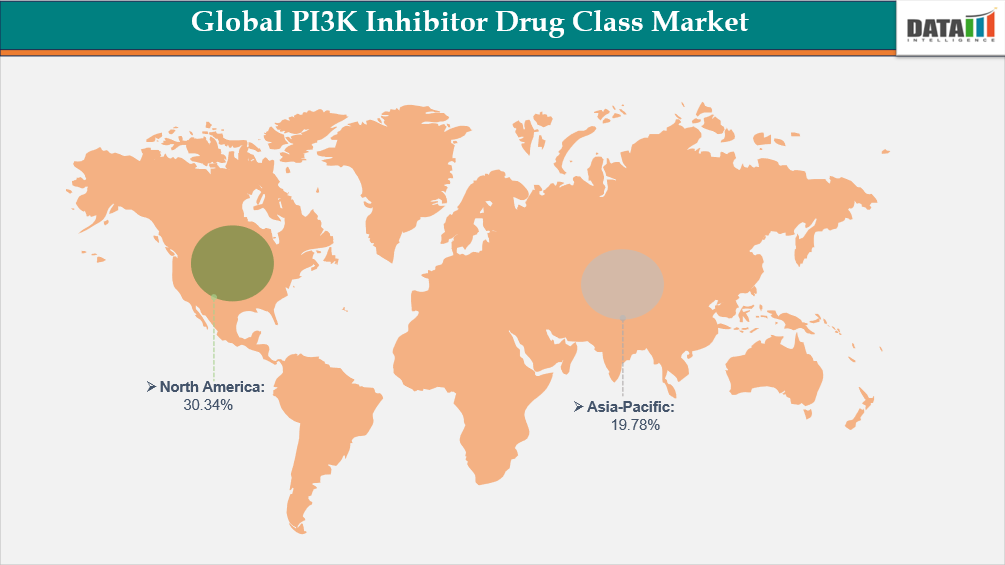
- North America leads the global PI3K inhibitor drug class market, capturing the largest revenue share of 30.34% in 2025.
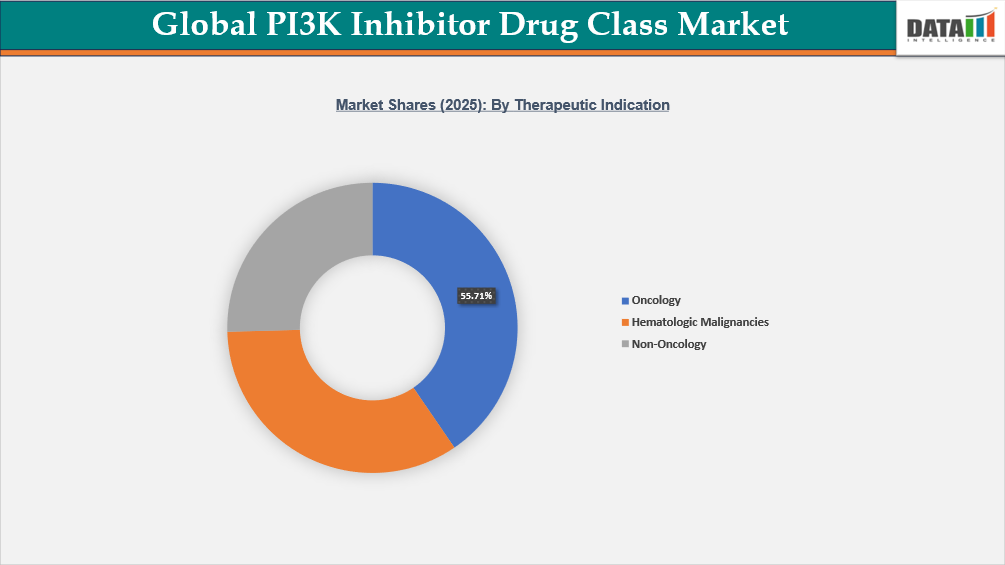
- By therapeutic indication segment, oncology led the global PI3K inhibitor drug class market, capturing the largest revenue share of 55.71% in 2025.
Global PI3K Inhibitor Drug Class Market Size and Future Outlook
- 2025 Market Size: US$1.53 Billion
- 2033 Projected Market Size: US$2.3 Billion
- CAGR (2026–2033): 5.5%
- Dominating Market: North America
- Fastest Growing Market: Asia-Pacific
For More Detailed information Request for Sample
Market Dynamics
Precision-Oncology Pull from PIK3CA Mutation Testing
Precision oncology is increasingly directing therapeutic decisions toward PIK3CA mutation status, significantly boosting demand for PI3K inhibitors in targeted cancer treatment. Large genomic analyses from programs such as the 100,000 Genomes Project show that PIK3CA is one of the most frequently altered oncogenes across cancer types, with mutations present in approximately 19.8% of tumors in a pan-cancer cohort, particularly in breast, endometrial, and colorectal cancers. This high prevalence creates a substantial population eligible for PI3K inhibitor therapy based on molecular alteration rather than histology alone.
Clinical utility of PIK3CA mutation testing further reinforces market demand, as the presence of these mutations can guide effective use of targeted inhibitors. For example, real-world next-generation sequencing (NGS) studies report that 9.2% of patients with metastatic solid tumors carry PIK3CA mutations, with colorectal cancer cohorts showing mutation rates around 19–21%, highlighting broad applicability beyond breast cancer. Testing enables clinicians to tailor therapy regimens, optimize patient outcomes, and avoid ineffective treatments, thereby embedding PI3K inhibitors into precision-medicine pathways and supporting sustained growth of the drug class.
Segmentation Analysis
The global PI3K inhibitor drug class market is segmented based on product, target selectivity, therapeutic indication, route of administration, line of therapy, therapy strategy, patient demographics, development/pipeline stage, patient selection, distribution channel and region.
Oncology Therapeutic Indications Drive Sustained Demand for PI3K Inhibitor Drug Class
The oncology therapeutic indication segment drives the majority of demand for PI3K inhibitors because the PI3K pathway is one of the most frequently mutated signaling networks in cancer, especially in hematologic and solid tumors. According to the American Association for Cancer Research (AACR), PIK3CA gene mutations occur in ~36% of breast cancers, ~10% of colorectal cancers, and ~7% of endometrial cancers, making PI3K inhibition a targeted approach across multiple high-prevalence tumor types. This molecular prevalence has positioned PI3K inhibitors as critical components of precision oncology, particularly for patients whose tumors are driven by these actionable mutations.
The clinical impact of PI3K pathway dysregulation extends beyond incidence to treatment outcomes and unmet therapeutic needs. Data published by the European Society for Medical Oncology (ESMO) indicate that patients with PIK3CA-mutant cancers have distinct survival and response profiles compared to non-mutant cohorts, reinforcing the need for tailored therapeutic interventions.
Moreover, global oncology burden projections from the World Health Organization estimate increases in specific PIK3CA-associated cancers, including an anticipated rise in breast cancer prevalence to ~3 million new cases annually by 2030, underscoring the expanding target population for PI3K inhibitor therapy. These factors collectively sustain strong demand within oncology indications as clinicians adopt molecularly guided treatment strategies and regulatory bodies prioritize approvals for genotype-driven agents.
Geographical Penetration
Largest Market:
Demand for PI3K Inhibitor Drug Class Market in North America
North America remains the dominant region for PI3K inhibitor adoption due to one of the highest cancer survivor populations and advanced oncology care systems globally. According to the U.S. National Cancer Institute’s SEER program, as of January 1, 2025, an estimated 18.6 million people in the United States were alive despite a previous cancer diagnosis, with projections rising to over 22 million by 2035, reflecting long-term treatment and survivorship needs that support targeted therapy use. This large cancer survivor base, combined with early adoption of precision medicines, contributes to strong PI3K inhibitor demand.
North America’s leadership is also driven by robust molecular diagnostics integration and favorable healthcare infrastructure that enables widespread testing for actionable biomarkers such as PIK3CA mutations. The region has the largest share of PIK3CA mutation testing activity, reflecting high clinical uptake of personalized oncology approaches. Government and registry data show that comprehensive cancer surveillance coupled with expanding treatment access encourages clinicians to incorporate targeted therapies like PI3K inhibitors into clinical practice. Public health focus on tailored cancer care continues to reinforce growth of the PI3K inhibitor segment across key indications.
U.S. PI3K Inhibitor Drug Class Market Outlook
In the United States, demand for PI3K inhibitors is underpinned by broad cancer prevalence and clinical guideline support for precision oncology. National cancer surveillance data show that cancers such as breast, lung, and colorectal comprise significant incident and prevalent populations eligible for PI3K-targeted strategies through companion diagnostics and mutation-guided treatment pathways. SEER data estimate millions of individuals living with or beyond cancer diagnoses, a population that increasingly receives targeted therapies over the long term. These trends, supported by strong regulatory frameworks and reimbursement policies for molecular testing and targeted drugs, help position the U.S. as the largest and most established PI3K inhibitor market globally.
Canada PI3K Inhibitor Drug Class Market Trends
In Canada, oncology therapeutic demand is also rising as cancer prevalence grows and healthcare systems expand access to advanced diagnostics and targeted therapies. According to the Canadian Cancer Statistics 2022 report, over 1.5 million Canadians were living with or beyond a cancer diagnosis, with significant burdens from common tumors such as breast, prostate, and colorectal cancers. This expanding cancer population increases demand for precision medicines, including PI3K inhibitors where indicated by molecular profiles. Provincial cancer registries and public health initiatives are helping to improve early detection and treatment integration, further supporting growth of PI3K-targeted therapies in the Canadian oncology landscape.
Fastest Growing Market:
Asia-Pacific Records the Fastest Growth in the PI3K Inhibitor Drug Class Market
Asia-Pacific is experiencing rapid expansion in demand for targeted cancer therapies like PI3K inhibitors due to a substantial and growing cancer burden across the region. According to WHO GLOBOCAN 2022 data, Asia accounted for nearly 9.83 million new cancer cases and 5.46 million cancer deaths, representing a significant share of the global incidence and mortality burden. These high case numbers, combined with expanding healthcare infrastructure and increased access to precision oncology diagnostics, are strengthening the region’s uptake of targeted treatments that address molecular pathways such as PI3K.
Furthermore, aging populations and rising lifestyle-associated cancer risks in countries like China, India, Japan, and South Korea are driving earlier diagnosis and increased therapeutic intervention. Governments across Asia-Pacific are investing in cancer control programs, screening initiatives, and reimbursement schemes that facilitate adoption of advanced therapies, thereby increasing the demand for PI3K inhibitors and other targeted agents as part of modern oncologic care pathways.
India PI3K Inhibitor Drug Class Market Insights
In India, the demand for PI3K inhibitors is underpinned by a rapidly increasing cancer burden, with India ranking among the top countries globally for new cancer cases. According to GLOBOCAN 2022 and Indian national cancer registry data, cancer incidence in India has grown significantly, with projections showing continued increases as the population ages and life expectancy rises. This escalating burden has intensified the need for advanced targeted therapies and precision medicines, including PI3K inhibitors, especially as clinicians adopt global clinical protocols in oncology practice.
Government initiatives to strengthen diagnostic capacity, expand cancer care infrastructure, and improve treatment access are further enhancing the market for innovative oncology drugs in India. Enhanced registry coverage and public awareness campaigns are also helping drive early detection and treatment uptake.
China PI3K Inhibitor Drug Class Market Industry Growth
China’s oncology landscape is shaped by one of the highest national cancer burdens in the world, with approximately 4.8 million new cancer cases and over 2.5 million cancer deaths recorded in 2022. The rising incidence and mortality rates across major cancer types such as lung, colorectal, and breast cancers are increasing demand for advanced targeted therapies, including PI3K inhibitors, as part of comprehensive treatment strategies.
The Chinese government has implemented national cancer prevention and early-detection programs and expanded public healthcare insurance coverage, which are improving access to modern oncology drugs and supporting greater adoption of targeted therapies. As a result, China is positioned as a key growth driver in the Asia-Pacific oncology market, with strong clinical use of precision medicines and a growing pipeline of locally developed and internationally partnered targeted agents.
Competitive Landscape
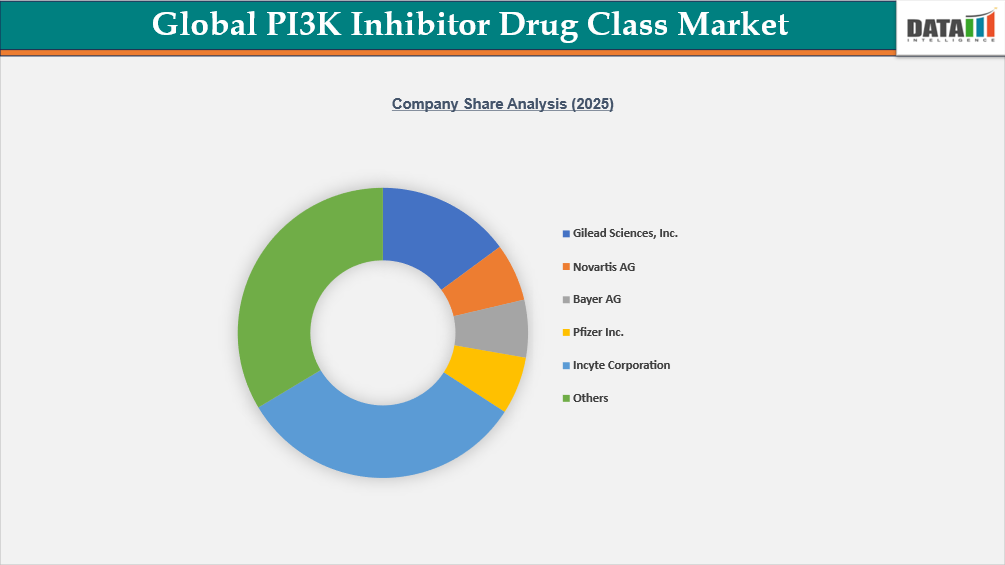
The competitive landscape of the Global PI3K Inhibitor Drug Class Market features strong participation from both large diversified pharmaceutical firms and specialized oncology innovators. Gilead Sciences, Inc. leads with its PI3K inhibitors targeting hematologic malignancies, supported by robust clinical data and strategic lifecycle management. Novartis AG and Bayer AG bring broad oncology portfolios that include PI3K inhibitors paired with complementary targeted therapies, enhancing regimen flexibility and treatment sequencing. Pfizer Inc. leverages its global reach and deep R&D capabilities to advance PI3K programs across multiple tumor types, while Incyte Corporation focuses on niche oncology indications and combination strategies to differentiate its assets. Other players contribute through emerging pipeline candidates and regional formulations, intensifying competition on efficacy, safety, and market access as firms pursue label expansions, combination trials, and real-world evidence to capture share in this dynamic targeted therapy segment.
Key Developments
- In July 2024, iOnctura has expanded its PI3K inhibitor program by advancing roginolisib into non-small cell lung cancer (NSCLC), supported by recent financing and new clinical collaborations. The Swiss biopharma will evaluate roginolisib in a Phase II trial in combination with GSK’s PD-1 inhibitor Jemperli, targeting NSCLC patients resistant to first-line checkpoint inhibitors. The study aims to assess whether PI3Kδ modulation can enhance anti-tumour immune responses and overcome treatment resistance without adding significant toxicity.
- In October 2023, Adlai Nortye Ltd., in collaboration with AI-driven diagnostics company Nucleai, presented new findings demonstrating the use of digital pathology and AI-based biomarker analysis to predict patient response to Buparlisib plus paclitaxel in metastatic head and neck squamous cell carcinoma (SCCHN). The study highlighted how AI-structured analysis of H&E images can identify spatial biomarkers linked to improved clinical outcomes. Buparlisib, a pan-PI3K inhibitor, is currently being evaluated in a global Phase III trial for metastatic SCCHN, reinforcing its potential role in precision oncology strategies.
What Sets This Global PI3K Inhibitor Drug Class Market Intelligence Report Apart
- Latest Data & Forecasts – Comprehensive and up-to-date market intelligence with forecasts through 2033, covering global demand by key segmentation, with region-wise analysis across North America, Europe, Asia-Pacific, South America, and the Middle East & Africa.
- Regulatory Intelligence – In-depth assessment of global pharmaceutical regulatory frameworks impacting market development and commercialization, including FDA, EMA, NMPA, PMDA, and CDSCO requirements, clinical trial pathways, labeling standards, patent exclusivity, and post-marketing surveillance.
- Competitive Benchmarking – Structured benchmarking of leading innovator and generic manufacturers based on product portfolios, pipeline strength, geographic reach, pricing strategies, clinical differentiation, and partnerships in the market.
- Geographic & Emerging Market Coverage – Regional analysis highlighting key impacting factors, with special focus on growth opportunities in Asia-Pacific, Latin America, and Middle Eastern markets.
- Actionable Strategies & Cost Dynamics – Strategic insights into lifecycle management, generic entry risks, combination therapy positioning, pricing pressures, and manufacturing cost structures, supported by expert perspectives from various specialists, regulatory advisors, and pharmaceutical executives.





























































