


Introduction
Healthcare systems worldwide are facing an unprecedented workforce crisis. Rising patient volumes, aging populations, increasing chronic disease prevalence, clinician burnout, and persistent staffing shortages are placing immense pressure on hospitals and healthcare providers. Healthcare organizations are being forced to find innovative ways to maintain quality care while controlling operational costs and improving efficiency.
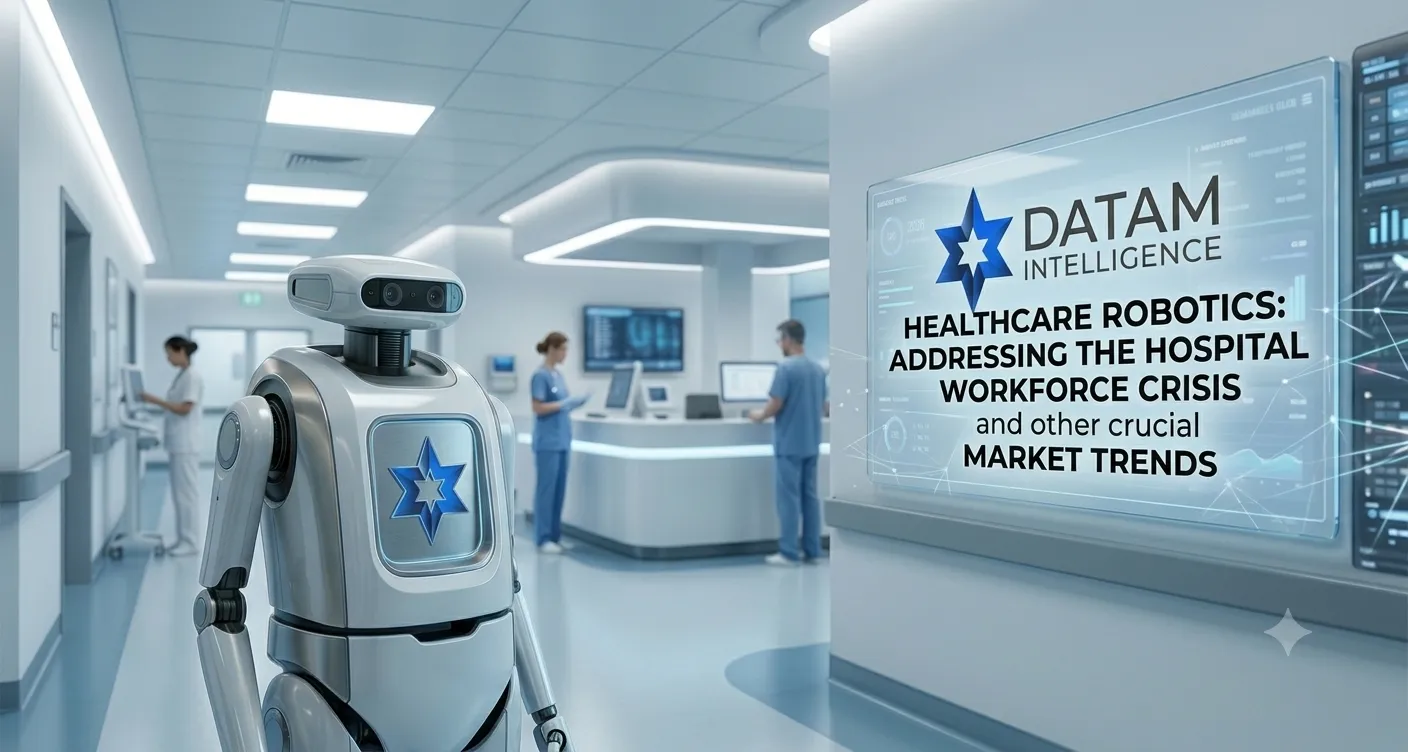
One technology increasingly viewed as a strategic solution is healthcare robotics. From robotic-assisted surgery and rehabilitation systems to autonomous hospital delivery robots and pharmacy automation platforms, healthcare robotics is transforming how care is delivered and how hospitals operate.
Healthcare providers are no longer evaluating robotics solely as advanced medical equipment. Instead, they are increasingly viewing robotic systems as workforce augmentation technologies capable of reducing administrative burdens, optimizing workflows, improving patient outcomes, and enabling healthcare professionals to focus on higher-value clinical activities. Industry analysts note that labor shortages and operational efficiency have become major investment drivers across healthcare robotics applications.
According to DataM Intelligence, the global Healthcare Robotics Systems Market is projected to grow from US$ 14.53 billion in 2025 to US$ 72.11 billion by 2035, reflecting strong demand for automation technologies across healthcare settings.
Gain Actionable Insights into the $72 Billion Healthcare Robotics Opportunity
Make data-driven investment and business decisions with comprehensive insights into market size, growth forecasts, AI-driven innovations, key players, and evolving healthcare robotics adoption trends.
Download the Healthcare Robotics Systems Market Report: Unlock Growth Opportunities Through 2035
What Is Healthcare Robotics?
Healthcare robotics refers to robotic systems and intelligent automation technologies designed to assist healthcare professionals, patients, and healthcare facilities in performing clinical, operational, and administrative tasks.
Common categories include:
- Surgical Robots
- Rehabilitation Robots
- Hospital Logistics Robots
- Pharmacy Automation Robots
- Disinfection Robots
- Patient Assistance Robots
- Telepresence and Remote Care Robots
These systems help healthcare organizations improve efficiency, reduce human error, increase procedural precision, and optimize workforce utilization.
Why Is the Hospital Workforce Crisis Getting Worse?
Healthcare workforce shortages have become a global concern. Several factors are contributing to the challenge:
Aging Population
The growing elderly population requires more frequent medical interventions, long-term care services, rehabilitation support, and chronic disease management.
Burnout Among Healthcare Professionals
Healthcare workers continue to face heavy workloads, administrative burdens, and emotional stress. Burnout has become one of the leading causes of workforce attrition.
Rising Patient Demand
Healthcare utilization continues to increase across hospitals, outpatient facilities, and specialty care centers, creating greater pressure on existing staff.
Shortage of Skilled Professionals
Many regions face shortages of nurses, pharmacists, technicians, and specialized clinicians. Healthcare providers are increasingly exploring automation technologies to fill operational gaps.
As a result, hospitals are seeking scalable technologies capable of supporting staff without compromising patient care quality.
How Healthcare Robotics Is Addressing Workforce Challenges
1. Automating Repetitive Non-Clinical Tasks
One of the most immediate benefits of healthcare robotics is reducing time spent on repetitive operational activities.
Hospital logistics robots can transport:
- Medications
- Laboratory samples
- Medical supplies
- Equipment
- Documentation
By automating these routine tasks, healthcare workers can dedicate more time to direct patient care.
Several hospitals have already deployed autonomous delivery robots that perform thousands of daily transportation tasks while reducing staff workload.
2. Enhancing Surgical Efficiency
Robotic-assisted surgical systems enable greater precision, smaller incisions, reduced complications, and faster recovery times.
Benefits include:
- Improved procedural accuracy
- Reduced surgeon fatigue
- Enhanced visualization
- Better patient outcomes
- Increased operating room efficiency
Demand for minimally invasive procedures continues to be one of the strongest growth drivers for healthcare robotics adoption.
3. Transforming Rehabilitation Services
Rehabilitation robots support patients recovering from:
- Stroke
- Orthopedic injuries
- Neurological disorders
- Mobility impairments
These systems provide consistent therapy sessions while helping rehabilitation centers address therapist shortages.
As healthcare systems seek scalable rehabilitation solutions, robotic rehabilitation technologies are expected to experience substantial adoption growth.
4. Improving Pharmacy Operations
Pharmacy automation robots assist with:
- Medication dispensing
- Prescription verification
- Inventory management
- Drug storage optimization
Automation reduces medication errors while improving pharmacy efficiency and compliance.
Healthcare facilities are increasingly integrating robotics into pharmacy workflows to improve operational performance and patient safety.
5. Supporting Infection Prevention
The COVID-19 pandemic accelerated interest in automated disinfection technologies.
Disinfection robots help healthcare facilities:
- Reduce contamination risks
- Improve cleaning consistency
- Protect healthcare workers
- Support infection control protocols
Hospitals continue to invest in these solutions as part of broader patient safety initiatives.
Emerging Technologies Reshaping Healthcare Robotics
Artificial Intelligence Integration
AI is enabling healthcare robots to become increasingly intelligent and autonomous.
Capabilities now include:
- Predictive analytics
- Workflow optimization
- Computer vision
- Autonomous navigation
- Clinical decision support
AI-powered robotics can improve operational efficiency while adapting to dynamic healthcare environments. Research indicates that future healthcare robots may leverage advanced language models and multimodal interactions to support clinicians and patients more effectively.
Explore AI in Healthcare Market strategic analysis report.
Robotics-as-a-Service (RaaS)
Traditionally, healthcare robotics required significant capital investments.
The emergence of Robotics-as-a-Service allows healthcare organizations to:
- Reduce upfront costs
- Scale deployments gradually
- Access ongoing maintenance support
- Improve return on investment
Flexible business models are expanding access to robotic technologies across healthcare facilities of different sizes.
Smart Hospital Ecosystems
Modern healthcare robotics increasingly integrates with:
- Electronic Health Records (EHRs)
- Hospital Information Systems
- Supply Chain Platforms
- Digital Health Infrastructure
This integration enables end-to-end workflow automation and supports the development of smart hospitals. Industry analysis suggests that workflow integration and operational accountability are becoming more important purchasing criteria than hardware specifications alone.
Key Challenges Limiting Adoption
Despite strong growth potential, healthcare robotics adoption faces several challenges.
High Initial Investment
Many robotic systems require significant upfront investment, making adoption difficult for smaller healthcare facilities.
Integration Complexity
Healthcare organizations must integrate robotics with existing infrastructure, software platforms, and clinical workflows.
Regulatory and Governance Requirements
As robotic systems become more autonomous and AI-enabled, regulatory frameworks continue evolving. Governance, safety, and accountability remain critical considerations for healthcare providers.
Workforce Acceptance
Successful implementation requires clinician training, organizational change management, and trust in robotic systems.
Importantly, healthcare robotics is generally viewed as augmenting human workers rather than replacing them. The primary goal is enabling healthcare professionals to focus on patient-centered activities while automation handles repetitive tasks.
Regional Outlook: Where Is Growth Happening?
North America
North America remains the largest healthcare robotics market due to:
- Advanced healthcare infrastructure
- High healthcare spending
- Early technology adoption
- Strong presence of robotics manufacturers
Asia-Pacific
Asia-Pacific is expected to experience the fastest growth.
Countries such as:
- China
- Japan
- South Korea
- India
are investing heavily in healthcare modernization, hospital automation, and robotics innovation. DataM Intelligence identifies Asia-Pacific as the fastest-growing region in the healthcare robotics ecosystem.
Future Opportunities for Investors and Industry Stakeholders
Several factors are expected to accelerate market expansion through 2035:
- Increasing hospital automation initiatives
- Growing demand for minimally invasive surgery
- Rising labor shortages
- Aging populations
- Expansion of AI-enabled robotics
- Growth of smart healthcare infrastructure
- Greater adoption of Robotics-as-a-Service models
Healthcare robotics is evolving from a niche medical technology segment into a core component of healthcare transformation strategies worldwide. Investors, technology providers, healthcare organizations, and policymakers are increasingly recognizing robotics as a critical enabler of future healthcare delivery.
Conclusion
Healthcare robotics is not a complete replacement for healthcare professionals, but it is becoming one of the most effective tools for addressing workforce shortages, improving operational efficiency, and enhancing patient care outcomes.
As hospitals face growing pressure to do more with limited resources, robotic technologies are helping bridge workforce gaps while supporting clinicians in delivering higher-quality care. From surgical robotics and rehabilitation systems to pharmacy automation and autonomous logistics platforms, robotics is reshaping the future of healthcare.
Organizations that strategically invest in healthcare automation today will be better positioned to meet rising patient demand, improve operational resilience, and compete in an increasingly technology-driven healthcare landscape.
About the Healthcare Robotics Systems Market Report
DataM Intelligence's Healthcare Robotics Systems Market report provides comprehensive analysis of market size, growth forecasts, competitive landscape, technology trends, investment opportunities, regional insights, and strategic developments shaping the future of healthcare robotics through 2035.
Request a sample for Healthcare Robotics System Market report to explore detailed market forecasts, company profiles, technology assessments, and emerging growth opportunities in the global healthcare robotics industry.