


SIM-Based Applet Market Overview
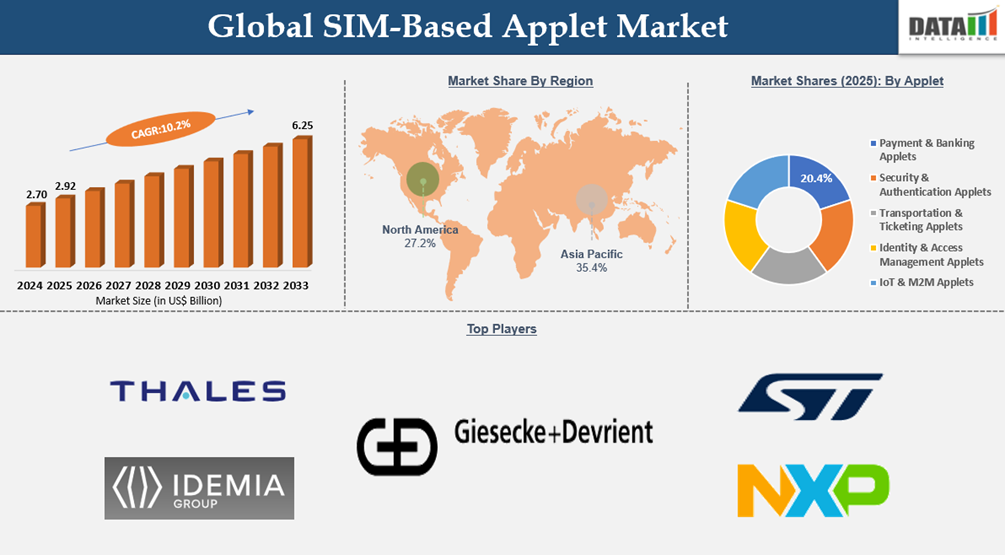
The global SIM-based applet market reached US$ 2.92 billion in 2025 and is expected to reach US$ 6.25 billion by 2033, growing with a CAGR of 10.2% during the forecast period 2026-2033. Mobile payments are on the rise as a high demand for online payment options grows with growing numbers of users across the globe. An increasing number of homes and cars are also connected to the internet. Consumers want to have protection against fraudulent transactions or activities, as some businesses now use mobile payments as part of their day-to-day operations. Telecommunications companies are working to grow their customer base with new products and services on the mobile device platform, often providing banking services or ticketless transportation. As a consequence of all these changes, the mobile payment industry continues to grow. Financial services are also becoming a major part of our everyday life, and as such, telecommunications will continue to be a catalyst for the changes we continue to see now and into the future.
The government is also a large factor in the driving of digital financial inclusion projects, which heavily rely on SIM-based security infrastructure. For example, India's JAM Trinity (Jan Dhan-Aadhaar-Mobile) has connected more than 480 million previously unbanked citizens to formal financial services with SIM applets providing secure authentication as the backbone of this initiative. Other parts of the world, such as Southeast Asia, Africa, and Latin America are also implementing similar programs which are creating new demand for Applet enabled SIM cards which will provide access to multiple services on one card, making Mobile Devices the New Wallet for Millions of people.
SIM-Based Applet Industry Trends and Strategic Insights
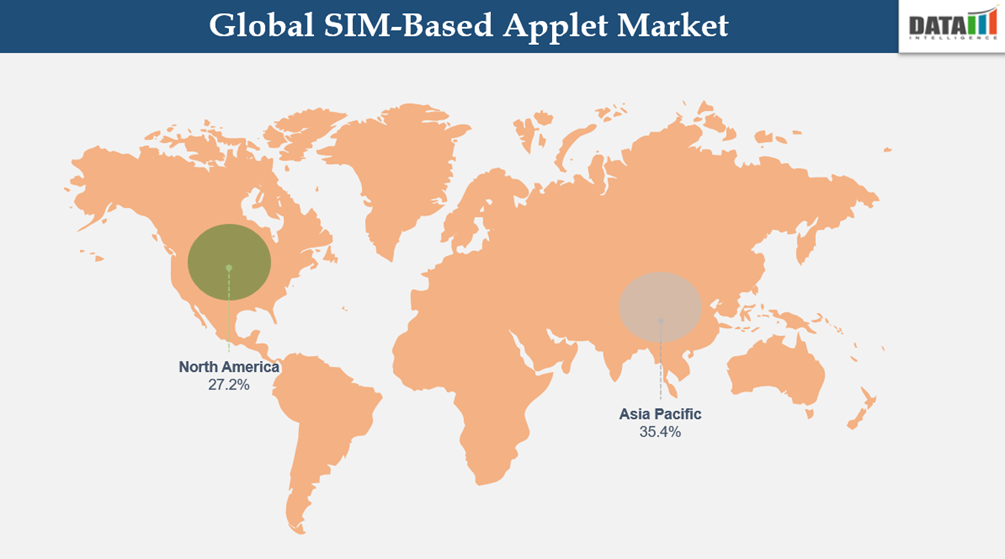
- With over 70% of adults in Southeast Asia remaining unbanked or underbanked, SIM-based applets have emerged as a secure solution for delivering financial services to basic mobile phones without the need for physical bank branches; consequently, the Asia-Pacific region dominated the market in 2025, capturing the largest revenue share at 35.4%.
- SIM applets offer superior privacy over software-only apps by storing payment 'tokens' rather than raw card data. Driven by the growth of contactless payments, this sector is expected to dominate the market with a 20.4% share in 2025.
Global SIM-Based Applet Market Size and Future Outlook
- 2025 Market Size: US$ 2.92 billion
- 2033 Projected Market Size: US$ 6.25 billion
- CAGR (2026-2033): 10.2%
- Largest Market: Asia-Pacific
- Fastest Market: North America
SIM-Based Applet Market Scope
| Metrics | Details | |
| By Applet | Payment & Banking Applets, Security & Authentication Applets, Transportation & Ticketing Applets, Identity & Access Management Applets, IoT & M2M Applets | |
| By Technology | Java Card-Based Applets, MULTOS-Based Applets, Global Platform-Compliant Applets, Proprietary Platform Applets | |
| By SIM Form | Traditional SIM Cards, Embedded SIM (eSIM), Integrated SIM (iSIM) | |
| By Deployment | Over-The-Air (OTA) Deployment (Non-RSP), GSMA-Compliant Remote SIM Provisioning (RSP) | |
| By Application | Financial Services, Telecommunications, Government & Public Sector, Healthcare, Retail & Commerce, Transportation & Logistics | |
| By End-User | Individual Consumers, Enterprises, Government & Public Sector Organizations, Educational Institutions, Healthcare Organizations, Mobile Network Operators (MNOs), Digital Service Providers / Platform Providers | |
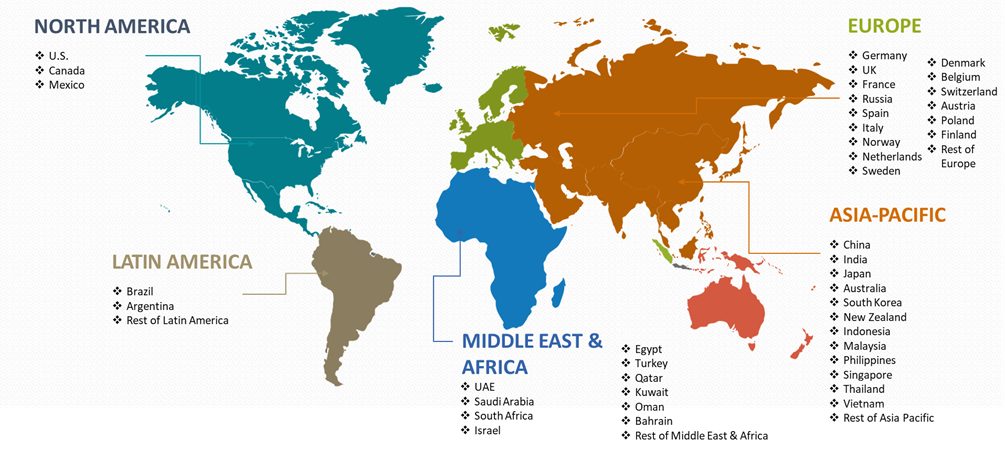
| By Region | North America | U.S., Canada, Mexico |
| Europe | Germany, UK, France, Spain, Italy, Norway, Netherlands, Sweden, Denmark, Belgium, Switzerland, Austria, Poland, Finland | |
| Asia-Pacific | China, India, Japan, Australia, South Korea, New Zealand, Indonesia, Malaysia, Philippines, Singapore, Thailand, Vietnam | |
| Latin America | Brazil, Argentina | |
| Middle East and Africa | UAE, Saudi Arabia, South Africa, Israel, Egypt, Turkey, Qatar, Kuwait, Oman, Bahrain | |
| Report Insights Covered | Competitive Landscape Analysis, Company Profile Analysis, Market Size, Market Share, Market Growth | |
For More Detailed information Request for Sample
Key Takeaways
- Asia-Pacific accounted for a significant share of the SIM Based Applet Market in 2025 and is expected to witness the fastest growth through the forecast period. Rapid expansion of mobile payments, government-backed digital identity programs, and increasing adoption of secure mobile services across China, India, Japan, and Southeast Asia are driving demand for SIM-based applications.
- North America remains a major market due to strong adoption of secure authentication, mobile banking, telecom value-added services, and enterprise security solutions. Telecom operators are increasingly leveraging SIM applets for subscriber authentication, IoT connectivity management, and secure digital service delivery.
- The growing deployment of eSIM and iSIM technologies is transforming the market landscape. Telecom operators and device manufacturers are integrating advanced SIM applets to support remote provisioning, secure credential storage, mobile payments, and connected device management.
- Financial institutions are increasingly utilizing SIM-based applets to strengthen mobile banking security, digital wallets, tokenization, and two-factor authentication. The increasing threat of cyberattacks and identity fraud is accelerating investment in SIM-level security applications.
- The expansion of IoT ecosystems is creating substantial opportunities for SIM applet providers. Connected vehicles, smart meters, industrial IoT devices, healthcare monitoring systems, and asset-tracking solutions require secure applet-based authentication and device management capabilities.
- Governments worldwide are promoting digital identity initiatives, secure citizen services, and mobile-based authentication frameworks. SIM applets play a critical role in enabling secure access to e-government services, digital signatures, and identity verification platforms.
- Telecom operators are evolving from traditional connectivity providers to digital service enablers. SIM applets are increasingly being used to deliver mobile commerce, loyalty programs, transit ticketing, subscriber management, and value-added digital services directly through secure SIM environments.
- Security remains the primary competitive differentiator in the market. Vendors are focusing on advanced encryption technologies, over-the-air (OTA) applet management, secure element integration, and compliance with global standards to address growing cybersecurity requirements.
SIM-Based Applet Market Dynamics
Rising Adoption of Mobile Payment Ecosystems
The SIM-based applet market is really taking off because of how fast mobile payment platformsre spreading. People want safe ways to pay for things without using cash or credit cards. In China the amount of money being paid through payments is incredibly high it was around US$ 69 trillion in 2023. While these platforms primarily use app-based solutions, telecom carriers are increasingly integrating SIM applets to add an extra security layer for authentication and fraud prevention, especially in rural areas where smartphone penetration lags but feature phones remain common.
India's Unified Payments Interface (UPI) recorded 11.4 billion transactions in December 2023, totaling US$ 200 billion in value, as per the National Payments Corporation of India. While UPI primarily operates through apps, telecom providers are exploring SIM applet integration for offline transactions and enhanced security protocols, particularly for government welfare disbursements and small merchant payments in areas with spotty connectivity.
Security Concerns Around Legacy Infrastructure
A significant challenge facing the global SIM-based applet market is the vulnerability of older SIM card architectures to sophisticated cyber attacks and SIM swapping fraud. Despite advancements in encryption and authentication protocols, legacy 2G and 3G networks still in use across developing regions present weak points that hackers can exploit to intercept communications or clone credentials. The FBI reported over 2,500 SIM swap fraud complaints in the U.S. in 2023, resulting in losses exceeding US$ 72 million, highlighting how criminals target mobile-based financial services.
The security gap is a problem. It makes financial institutions and big companies think about using SIM applets on a large scale. Banks are worried that if the telecom layer is not secure it will affect the money they have spent on security. People who use these services are also scared because they have heard about security breaches.
The phone companies have to think about spending this money because they are not sure if they will get enough money back from it. The security gap and the cost of updating are issues, for SIM applets. Regulatory fragmentation adds another layer of complexity, as different countries enforce varying security standards for mobile financial services, making it tough for solution providers to develop universal platforms.
SIM-Based Applet Market Segment Analysis
The global SIM-based applet market is segmented based on the machine, automation level, ink type, substrate material, end-user and region.
Banking and Finance Segment Leads Market Share
The banking and finance industry is big on SIM-Based Applet applications. In fact, this industry will make up 38 percent of the global market revenue in 2024. When it comes to contactless payments financial institutions like the idea of storing credentials, so they do not just rely on the phone’s security. They also like using SIM applets for mobile banking authentication. Some big banks in Europe, Asia and Africa have started using SIM-based payment cards. These cards let people buy things by tapping their phones.
In 2023, Standard Chartered Bank started using SIM-based payment systems in nine markets. This means that people can use USSD codes and STK menus to buy things on simple phones that are not smartphones. Because of this 2.3 million people who did not have phones, or a reliable internet connection, can now use financial services more easily. Standard Chartered Banks strategy has really helped these people who were not able to use services before. Standard Chartered Banks new system is making a difference, for people who use Standard Chartered Banks services. In a similar vein, banks in Pakistan and Bangladesh have joined forces with telecom providers to integrate applets that handle remittances, bill payments, and microloans, forming whole financial ecosystems that rely on SIM infrastructure.
Transportation and Ticketing Applications Gain Traction
The need to make public transit systems better around the world and to make cities smarter is helping the transportation and ticketing segment for SIM-based applets to grow. They are using a way to collect fares without touching anything, which means people do not need to carry special transit cards. Instead, they can use SIM applets that are stored on their phones. This new way of collecting fares is being used in cities like Singapore and São Paulo. SIM-based applets are making it easier for people to travel. The transportation and ticketing segment for SIM-based applets is getting bigger because of this. In 2023, Transport for London (TfL) handled over 3.2 billion contactless trips, with a growing percentage of those trips coming from mobile devices that used NFC-enabled SIM cards instead of actual Oyster cards.
The commuter rail system in Mumbai is really busy. Mumbai is trying out a way to buy tickets using special cards called SIM cards. This means that the 7.5 million people who take the train every day can just touch their phones to the gate when they get on, and the money for their ticket will come out of their account automatically. This will make it easier for people to get on the train. There will be less crowding at the ticket counter. The people in charge will also know more about how people are traveling, which is a good thing. Similar trials are being conducted in Lagos, Manila, and Jakarta, where collaborations between mobile network operators and transport authorities are bringing outdated transit infrastructure up to date digitally.
Why SIM Based Applet Market Matters in 2026
The global telecommunications and digital services ecosystem is undergoing a significant transformation driven by secure mobile connectivity, digital identity management, and value-added mobile applications.
SIM-based applets are becoming increasingly important as mobile network operators, financial institutions, governments, and enterprises seek secure, scalable, and remotely manageable solutions for authentication, payments, IoT connectivity, and digital services delivery.
Several macroeconomic and technological factors are driving market growth:
- Growing demand for secure mobile payment applications
- Expansion of eSIM and remote SIM provisioning technologies
- Increasing deployment of IoT and connected devices
- Growing cybersecurity concerns across mobile networks
- Government-led digital transformation initiatives
- Increasing demand for secure authentication and access control
- Expansion of 5G networks and connected ecosystems
- Growth of machine-to-machine (M2M) communications
- Increasing use of SIM-based services in transportation, healthcare, and smart city projects
Analyst View
DataM Intelligence Analyst Perspective
The SIM-based applet market is evolving from traditional telecom applications into a critical component of secure digital ecosystems supporting payments, identity management, IoT connectivity, and next-generation mobile services.
The long-term success of the SIM-based applet market will depend on:
- Continued adoption of eSIM technology
- Advancements in mobile security standards
- Growth of digital identity programs
- Expansion of IoT and M2M deployments
- Regulatory support for secure authentication frameworks
- Integration with mobile payment ecosystems
- Enhanced OTA management capabilities
- Strategic partnerships between telecom operators, fintech firms, and technology providers
- Scalability across 5G and future network architectures
- Consumer trust in mobile security and privacy
Europe and North America continue to lead in digital identity initiatives and mobile security innovation, while Asia-Pacific dominates subscriber growth and large-scale mobile service deployments. China, India, Japan, and South Korea are driving adoption through 5G expansion, fintech innovation, smart city programs, and connected device ecosystems.
SIM-Based Applet Market Geographical Penetration
Asia-Pacific Dominates Global Market Share
The largest share of the global SIM-Based Applet market is held by the Asia-Pacific region. The leadership is a result of the region's aggressive digital transformation initiatives in both developed and emerging economies, as well as its enormous mobile subscriber base, which exceeds 3 billion users. In 2023, the three main Chinese carriers China Mobile, China Telecom, and China Unicom collectively installed more than 500 million SIM cards with embedded applets, supporting everything from health code verification systems required during pandemic response measures to subway passes.
Telecom companies are positioning SIM applets as the safe basis for mobile wallet services, which are rapidly expanding in Southeast Asian markets like Indonesia, Thailand, and Vietnam. In 2023, GoPay and OVO in Indonesia processed transactions totaling US$58 billion, with a growing reliance on SIM-level security for authentication. With a history of mobile money that dates to the early days of GCash, the Philippines is still expanding SIM-based services beyond simple payments to include government services, investments, and insurance.
India SIM-Based Applet Market Outlook
The rapid growth of the SIM-Based Applet Market in India can be attributed to large amounts of mobile subscribers (more than 1.15 billion), and the government’s drive to create a digitized population through various governmental digital programs. The Reserve Bank of India encouraging digital payments, and increased competition from telecom operators passing on cost reductions to their customers has matured the opportunity for SIM applet use. Operators, such as Reliance Jio and Bharti Airtel have launched NFC SIM cards supporting contactless payments that will appeal to the 400 million smartphone users in India who prefer all-in-one carrier integrated solutions than having to download a separate payment application altogether.
China SIM-Based Applet Market Trends
With over 48% of total SIM-based applet share in the region, China is the dominant SIM-based applet user in all of Asia-Pacific. As such, China’s Super SIM cards (with up to 128GB of added storage and processing power) are being used for dozens of applet-based applications at once (from transit passes to digital yuan wallets). By mid-2024, China Mobile had over 80 million Super SIM card subscribers using their SIM cards to store everything from payment credentials to COVID-19 health codes.
North America Focuses on Premium Security Solutions
In North America, wide-ranging uses of SIM card capabilities exist due to well-established financial systems and the prevalence of credit cards within the market. Although SIM cards are capable of being used instead of credit cards for everyday purchases, most current deployments have specific applications, with many organizations using SIM cards for secure remote access to their corporate networks. As of 2023, over 15,000 companies have deployed carrier-based identity solutions that utilize SIM cards to authenticate their employees. In addition,
The US Department of Defense and various other intelligence agencies are utilizing SIM cards as a part of their Common Access Card (CAC) functionality on mobile devices, which provides employees access to certain classified systems from their mobile devices. While military/govt usage does not represent a very large volume, it has produced a premium price point and has been an impetus for continued developments in secure tamper resistant SIM technology. The Canadian banking industry has been researching SIM card-based payment options; however, entrenched players within the payments space and the fact that many consumers prefer to use their devices as wallets (ex: Apple Pay) has limited the effectiveness of many of these payment systems.
U.S. SIM-Based Applet Market Insights
North America's demand for SIM-based applets is largely driven by enterprise and government sectors, rather than consumer payments, with the U.S. accounting for most SIM-based applet use. AT&T, Verizon and T-Mobile have launched SIM applet platforms to help businesses support secure authentication and enable IoT connectivity through their respective networks. Additionally, there are over 400 million active wireless subscriptions in the United States, creating a potentially large number of customers; however, consumers typically use the payment methods offered by device manufacturers (e.g., Apple Pay, Google Pay) instead of those offered by their carriers.
Canada SIM-Based Applet Industry Growth
Although Canada has a smaller SIM-based application market than the United States, it is growing steadily because of financial inclusion programs and initiatives to connect rural areas. Through working with financial institutions, Rogers, Bell and Telus have tested SIM-based payments for Indigenous peoples living in remote areas without traditional banking. By the end of 2023, these programs will have provided approximately 150,000 individual users in Northern Territories and coastal communities with access to government benefits and local merchants via SIM-based payment-enabled mobile devices.
Sustainability Analysis
The SIM applet market continues to connect with sustainability and as an industry we're dealing with many billions of SIM cards, causing large amounts of electronic waste and the carbon emissions associated with developing secure chips. The largest companies in this industry are working to move towards biodegradable card bodies and reduce the amount of plastic used in their cards, removing as much of the carbon footprint they produce as possible.
Some are even using recycled PVC as the basis for their products which reduces carbon emissions by as much as 40% compared to virgin materials. IDEMIA launched a new card that is 100% made from recycled materials and FSC certified in March of 2024 specifically targeting companies that want to reach their corporate sustainability goals.
SIM-Based Applet Market Competitive Landscape
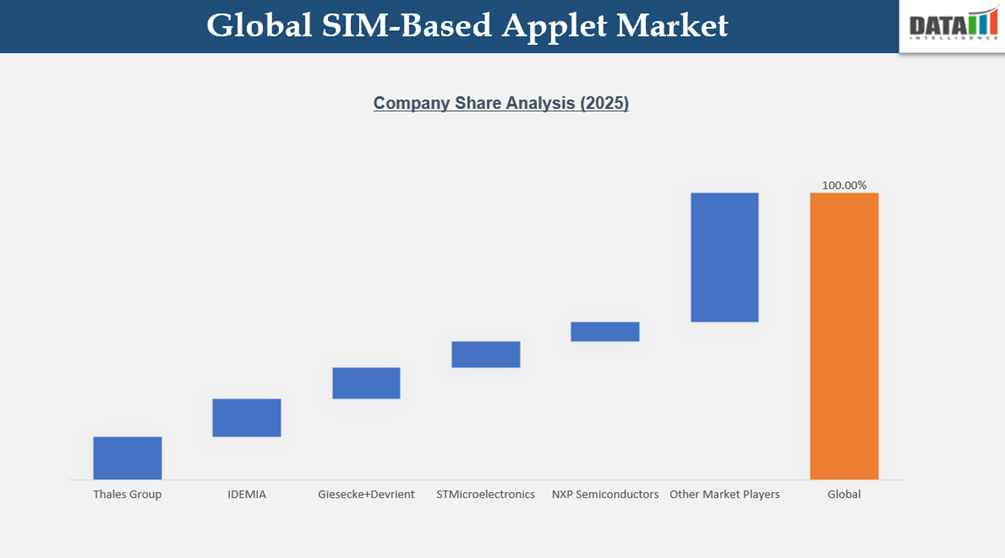
- The global SIM-based applet market features a competitive landscape dominated by specialized security technology providers and major telecom equipment manufacturers. These companies compete with security features, applet capacity, and over-the-air management capabilities.
- Key players include Thales Group (Gemalto), IDEMIA, Giesecke+Devrient (G+D), STMicroelectronics, NXP Semiconductors, Infineon Technologies, Valid, Watchdata Technologies, Eastcompeace Technology, Samsung Electronics, and Kona I Co. Ltd.
- Companies differentiate themselves by offering advanced encryption, support for multiple applet frameworks (JavaCard, MULTOS, GlobalPlatform), and seamless integration with carrier billing systems.
- Strategic investments in quantum-resistant cryptography, eSIM technology, and IoT connectivity are becoming critical as the market faces competition from device-based secure elements and cloud authentication methods.
SIM-Based Applet Market Key Developments
- In February 2026, STMicroelectronics (one of the world’s largest semiconductor companies) completed the purchase of the MEMS sensor business from NXP. This means STMicroelectronics can now combine its SIM hardware, which is called ST4SIM, with special programs that use advanced sensors. These sensors are really good for making cars safer and for making sure autonomous vehicles have IDs. The ST4SIM hardware from STMicroelectronics is a part of this. The MEMS sensor business from NXP is also important, for STMicroelectronics.
- In January 2026, Thales (global leader in high-tech solutions) bought CloudSIM Solutions. This company provides cloud based eSIM and RSP platforms. Thales did this to make its subscription management more secure. It also wants to help telecom operators with their transformation. Telecom operators are changing the way they work. Thales wants to support them with CloudSIM Solutions. Thales is using CloudSIM Solutions to make its subscription management even better for telecom operators.
- In December 2025, G+D (pioneer in smart card technology and German based company) bought SecureConnect eSIM Technologies. This company is really good at making sure different systems work together. G+D did this to make SIM applets that support operators and can be used for roaming. They also want to use these applets for "Born Connected" industrial IoT devices that need to be connected to the internet all the time. This will help G+D with the development of these SIM applets, for industrial IoT devices.
- In November 2025, IDEMIA (France based company) worked with eSIM Go to create a system for eSIM provisioning that can be used in over 190 countries. This system is special because it helps travel and fintech brands like IDEMIA and eSIM Go give their customers SIM applets and connectivity. The goal of this system is to make it easy, for travel and fintech brands to offer these services to their customers.
- In July 2025, NXP (leader in secure connectivity solutions for the automotive and industrial markets) collaborated with major European MNOs to deploy Post-Quantum Cryptography (PQC) applets on their latest 5G Secure Elements, protecting SIM-to-network communications against future quantum computer threats.
SIM Based Applet Market Investment & Funding Analysis
Global investments in SIM-based digital services, mobile identity management, secure authentication, and telecom value-added services continue to grow significantly.
Major funding areas include:
- SIM-based authentication solutions
- Mobile banking and payment applets
- eSIM and remote SIM provisioning technologies
- Telecom security platforms
- Digital identity management systems
- IoT SIM application development
- Mobile subscriber management solutions
- Secure over-the-air (OTA) provisioning platforms
Strategic Recommendations
For Telecom Operators
- Expand value-added SIM-based service offerings
- Invest in secure OTA management platforms
- Strengthen partnerships with fintech and digital service providers
- Accelerate eSIM and digital identity deployments
For Investors
- Focus on secure mobile authentication technologies
- Monitor growth in digital identity ecosystems
- Evaluate opportunities in IoT connectivity solutions
- Track telecom digital transformation initiatives
For Governments
- Support digital identity infrastructure development
- Strengthen cybersecurity regulations for mobile services
- Encourage financial inclusion through mobile technologies
- Promote secure telecom ecosystem modernization
Why Buy This SIM Based Applet Report?
This report helps organizations:
- Understand evolving SIM application trends
- Identify high-growth investment opportunities
- Benchmark competitors effectively
- Analyze regulatory and security developments
- Optimize market entry strategies
- Evaluate emerging telecom technologies
- Assess regional growth opportunities
- Track digital identity and mobile service innovations
What's Included in the SIM Based Applet Report?
The report provides:
- Market size and forecast analysis
- Regional growth outlook
- Competitive intelligence
- Technology benchmarking
- Pricing analysis
- Regulatory assessment
- Supply chain insights
- Market share analysis
- Investment landscape analysis
- Strategic recommendations
- Emerging trends analysis
- Company profiling
Who Should Buy This Report?
This SIM Based Applet report is ideal for:
- Telecom operators
- SIM card manufacturers
- Mobile network providers
- Digital identity solution providers
- Fintech companies
- Cybersecurity firms
- IoT solution providers
- Technology investors
- Government agencies
- Mobile payment providers
- Market intelligence teams
- Enterprise mobility solution providers
Key Benefits for Stakeholders
Gain actionable market intelligence:
- Understand future mobile connectivity trends
- Analyze telecom digital transformation strategies
- Evaluate secure authentication innovations
- Identify strategic growth opportunities
- Benchmark market competitors
- Improve investment decision-making
- Assess emerging eSIM and IoT opportunities
- Monitor evolving regulatory and security landscapes
Why Choose DataM?
- Data-Driven Insights: Dive into detailed analyses with granular insights such as pricing, market shares and value chain evaluations, enriched by interviews with industry leaders and disruptors.
- Post-Purchase Support and Expert Analyst Consultations: As a valued client, gain direct access to our expert analysts for personalized advice and strategic guidance, tailored to your specific needs and challenges.
- White Papers and Case Studies: Benefit quarterly from our in-depth studies related to your purchased titles, tailored to refine your operational and marketing strategies for maximum impact.
- Annual Updates on Purchased Reports: As an existing customer, enjoy the privilege of annual updates to your reports, ensuring you stay abreast of the latest market insights and technological advancements. Terms and conditions apply.
- Specialized Focus on Emerging Markets: DataM differentiates itself by delivering in-depth, specialized insights specifically for emerging markets, rather than offering generalized geographic overviews. This approach equips our clients with a nuanced understanding and actionable intelligence that are essential for navigating and succeeding in high-growth regions.
- Value of DataM Reports: Our reports offer specialized insights tailored to the latest trends and specific business inquiries. This personalized approach provides a deeper, strategic perspective, ensuring you receive the precise information necessary to make informed decisions. These insights complement and go beyond what is typically available in generic databases.
Target Audience 2026
- Manufacturers/ Buyers
- Industry Investors/Investment Bankers
- Research Professionals
- Emerging Companies



























































