


Digital Payment Market Size and Overview
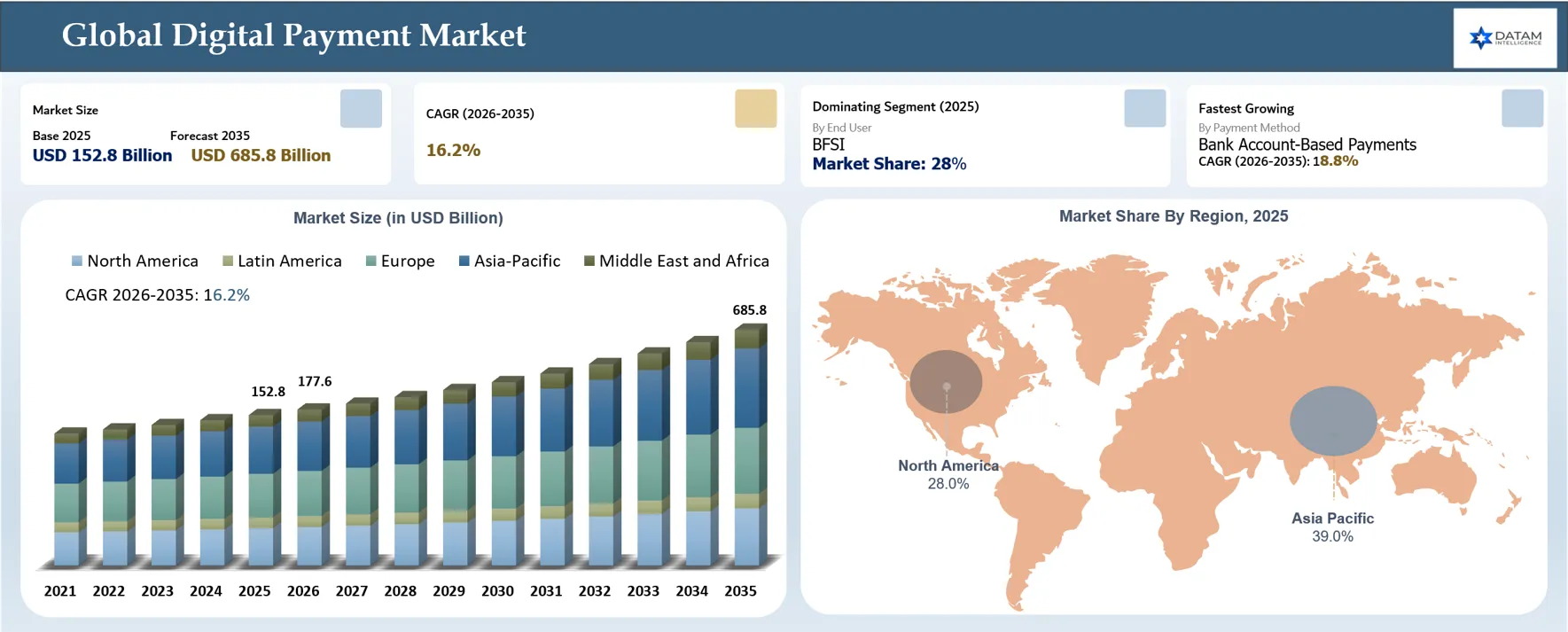
The global digital payment market was valued at US$152.8 billion in 2025 and is projected to reach US$685.8 billion by 2035, growing at a CAGR of 16.2% during 2026–2035. The global digital payment market is driven by the rapid adoption of smartphones and internet connectivity, growing e-commerce and digital commerce, increasing use of mobile wallets and contactless payments, expansion of real-time and account-to-account payment systems, and rising demand for faster, convenient, and secure transactions.
The expansion of fintech platforms and mobile-based financial services is accelerating the adoption of digital payments across emerging and developed economies. According to the IMF, digital transactions in emerging and developing economies increased from 55 transactions per adult in 2017 to 251 transactions in 2024. Meanwhile, GSMA reported that mobile-money services processed approximately 108 billion transactions worth more than $1.68 trillion in 2024, with transaction volume increasing 20% year over year. By 2025, mobile-money transaction value exceeded $2 trillion, while registered accounts reached 2.3 billion, demonstrating the increasing integration of fintech platforms into everyday digital payment activity.
Government Investment in Digital Identity and Next-Generation Payment Infrastructure in Europe
Governments and organizations are building up the digital payment system through regulations and developing secure digital identification and payments technologies. This effort is contributing to faster, seamless and secure digital payments across the region. In October 2025, the European Commission allocated more than US$230.5 million towards digital technology projects under the Digital Europe Programme, with around US$17.0 million specifically for the development of the European Digital Identity Wallet. The digital identity system will be used to authenticate and digitally onboard the users, including in the payment environment.
Governments and financial institutions are gradually increasing their investments in the digital-payment system as well as new forms of payments that would enhance the efficiency and effectiveness of transactions through enhanced speed, interoperability, security, and accessibility. For instance, in July 2026, the European Central Bank chose 36 payment service providers for the testing of the digital euro in its pilot program after receiving over 50 applications from banks and other payment service providers. The pilot testing program which is set to start in the last half of 2027 would take 12 months.
Digital Payment Market Key Takeaways
- Asia Pacific held the largest regional market share, accounting for approximately 39% of the global digital payment market in 2025, supported by widespread smartphone adoption, rapid expansion of digital wallets, real-time payment infrastructure, QR-code payments, and account-to-account payment systems. North America accounted for approximately 28% of the market in 2025, supported by high card penetration, established payment networks, widespread digital banking, growing contactless payments, and increasing adoption of mobile and account-to-account payment solutions.
- Digital wallet payments dominated the global digital payment market in 2025, supported by the widespread use of mobile wallets for e-commerce, in-store purchases, peer-to-peer transfers, and digital services. The segment is benefiting from increasing smartphone penetration, one-click checkout, QR-code payments, contactless transactions, and integration of wallets with banking and fintech platforms. According to Worldpay digital wallets accounted for 56% of global e-commerce transaction value and 33% of in-person transaction value in 2025.
- Bank Account-Based Payments are expected to be the fastest-growing payment method, with an estimated 18.8% CAGR during 2025–2035, driven by the rapid expansion of real-time account-to-account payment infrastructure, lower transaction costs, faster settlement, and growing merchant acceptance.
Digital Payment Market Industry Trends and Strategic Insight
- Integration of real-time payments, digital wallets, and account-to-account systems is becoming a key area of digital payment development as consumers and businesses increasingly demand faster and more convenient transactions. Payment providers and financial institutions are expanding instant payment infrastructure, QR-based payments, digital wallets, and account-to-account payment solutions to enable real-time transfers across retail, e-commerce, bill payments, and business transactions.
- Expansion of cross-border digital payments and remittance infrastructure is increasing as international commerce, overseas employment, and digital services generate greater demand for faster and more accessible international money transfers. Banks, fintech companies, and payment networks are developing solutions that connect bank accounts, wallets, cards, and other payment endpoints while improving transaction speed, transparency, foreign-exchange processing, and settlement efficiency.
- Advancement of payment security, digital identity, and biometric authentication is increasing as higher digital transaction volumes create greater requirements for secure customer authentication and fraud prevention. Payment providers are deploying artificial intelligence-based fraud monitoring, tokenization, biometric authentication, digital identity, and stronger verification technologies to protect transactions while maintaining convenient payment experiences.
Digital Payment Market Scope
| Metrics | Details | |
| 2025 Market Size | USD 152.8 Billion | |
| 2035 Projected Market Size | USD 685.8 Billion | |
| CAGR (2026-2035) | 16.2% | |
| Largest Market | Asia-Pacific | |
| Fastest Growing Market | Asia-Pacific | |
| By Payment Method | Card Payments, Bank Account-Based Payments, Digital Wallet Payments, Mobile Money Payments, and Other Digital Payment Methods | |
| By Transaction Type | Consumer-to-Business (C2B), Business-to-Business (B2B), Business-to-Consumer (B2C), Consumer-to-Consumer (C2C), Business-to-Government (B2G), Government-to-Citizen (G2C), and Government-to-Business (G2B) | |
| By Payment Mode | Online Payments and In-Store Payments | |
| By Enterprise Size | Large Enterprises, Small & Medium Enterprises (SMEs), and Micro Enterprises | |
| By End User | Retail & E-commerce, Banking & Financial Services, Healthcare, Travel & Hospitality, Telecommunications, Government & Public Sector, Education, Utilities, Transportation & Logistics, and Others | |
| By Region | North America | U.S., Canada, Mexico |
| Europe | Germany, United Kingdom, France, Italy, Spain, Netherlands, Switzerland, Sweden, Norway, Denmark, Belgium, Poland, Austria, Ireland, Portugal, Greece, Finland, and Rest of Europe. | |
| Asia-Pacific | China, Japan, India, South Korea, Australia, New Zealand, Singapore, Malaysia, Thailand, Indonesia, Vietnam, Philippines, Taiwan, and Rest of Asia Pacific. | |
| Latin America | Brazil, Argentina, Rest of Latin America | |
| Middle East and Africa | UAE, Saudi Arabia, South Africa, Israel, Türkiye, Rest of Middle East and Africa | |
| Report Insights Covered | Competitive Landscape Analysis, Company Profile Analysis, Market Size, Share, Growth | |
Digital Payment Market Disruption Analysis
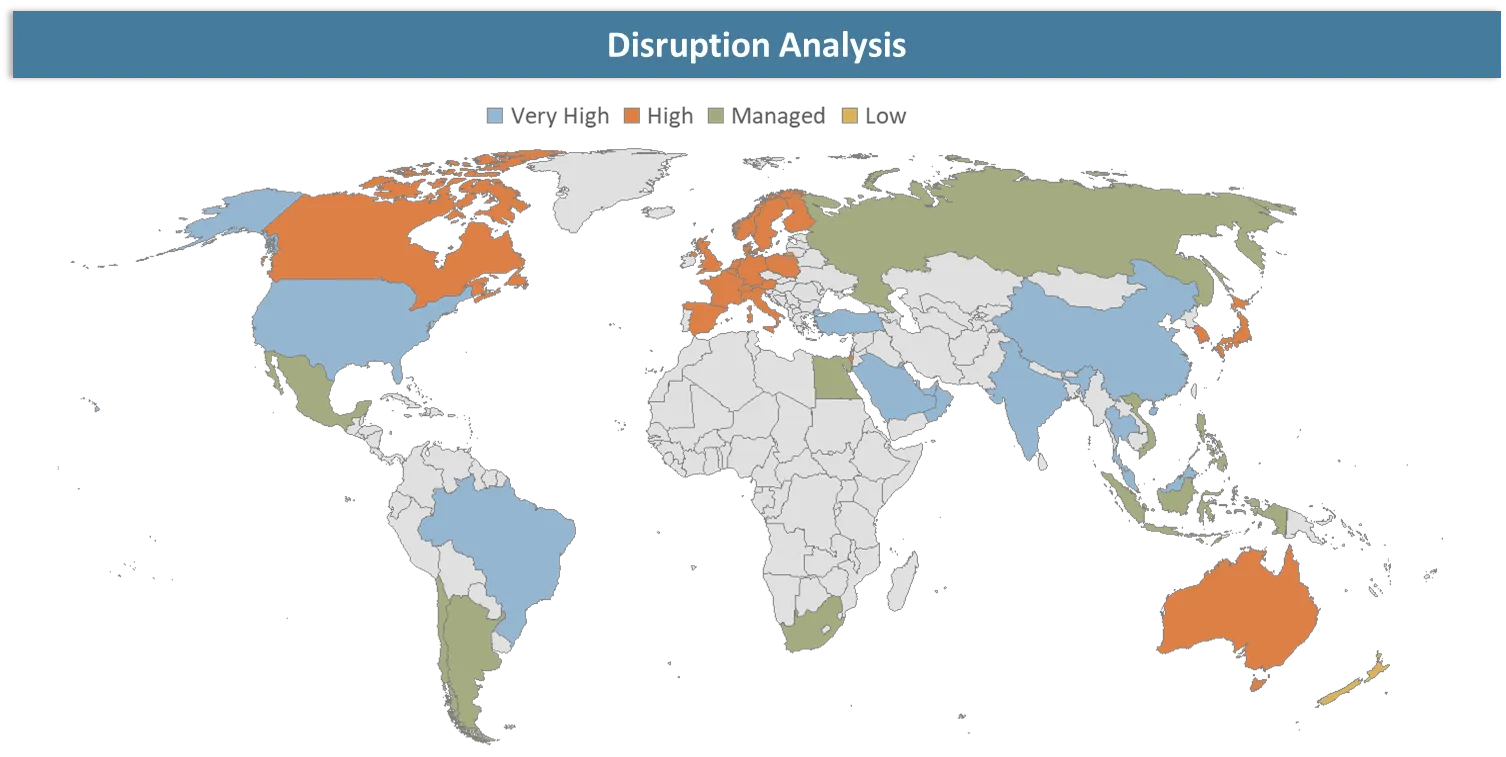
Real-Time Payments, Digital Wallets, and Cross-Border Payment Innovation Reshaping the Market
The global digital payment market is undergoing significant change as consumers, businesses, banks, fintech companies, and governments increasingly shift from cash and traditional payment methods toward real-time, mobile, and account-based digital transactions. The market is being reshaped by digital wallets, instant account-to-account payments, QR-code payments, contactless technologies, AI-based fraud detection, digital identity, and integrated payment platforms. These developments are enabling faster transaction processing, greater payment convenience, improved accessibility, and broader acceptance across retail, e-commerce, banking, government, and other sectors.
However, cybersecurity threats, fraud, regulatory requirements, fragmented payment infrastructure, interoperability challenges, and dependence on reliable digital connectivity can hinder adoption, particularly across emerging markets and cross-border payment corridors. At the same time, the integration of real-time payment systems, digital wallets, and cross-border payment networks is creating new payment models and changing how consumers and businesses transfer, receive, and manage money globally.
Digital Payment Market BCG Matrix: Company Evaluation

Stripe, Inc., Adyen N.V., PayPal Holdings, Inc., Visa Inc., Mastercard Incorporated, Fiserv, Inc., Global Payments Inc. (Worldpay), Ant Group (Alipay), and Block, Inc. (Square) can be classified as Star competitors due to their strong positions across digital payment acceptance, payment processing, merchant acquiring, digital wallets, card networks, and cross-border payment services. These companies have extensive merchant and consumer reach, established payment infrastructure, broad geographic coverage, and capabilities spanning online payments, in-store payments, digital wallets, payment processing, and other digital payment services.
Checkout.com, Worldline S.A., PayU, Amazon Pay (Amazon.com Inc.), Google Pay (Alphabet Inc.), and Apple Pay (Apple Inc.) can be categorized as established competitors, supported by their strong positions in online payments, digital wallets, payment acceptance, merchant services, and consumer payment ecosystems. While these companies have significant capabilities and established customer bases, their exposure to the broader digital payments market differs, with some primarily focused on specific payment services, platforms, regions, or technology ecosystems.
Razorpay Payments Private Limited, Airwallex Ltd., Payoneer Inc., and Paytm (One97 Communications Limited) can be positioned as high-growth or opportunity players, supported by their expanding capabilities in online payments, cross-border payments, business payments, payment infrastructure, and digital financial services. These companies have opportunities to expand their market presence through increasing e-commerce adoption, international business payments, SME digitization, and the continued shift toward digital payment methods across emerging and developed markets.
Digital Payment Market Dynamics
Driver Impact Analysis
| Driver | Market Growth Impact (%) | Demand Concentration | Impacted Payment Areas | Strategic Impact |
Rapid Adoption of Real-Time and Account-to-Account Payments | 30% | Strong demand across Asia-Pacific, Europe, and Latin America, particularly in markets with rapidly expanding instant-payment infrastructure such as India, Brazil, Singapore, Thailand, and Europe. | UPI, Pix, Faster Payments, SEPA Instant, FedNow, PromptPay, PayNow, instant bank transfers, QR payments | Accelerates the shift from traditional payment methods toward direct, instant bank-account payments, increasing transaction frequency and expanding digital payment acceptance among consumers and businesses. |
Growing E-commerce and Digital Commerce Adoption | 25% | High concentration in Asia-Pacific, North America, and Europe, with continued expansion across Latin America and the Middle East as online retail penetration increases. | Online checkout, digital wallets, card payments, account-to-account payments, payment gateways, mobile commerce | Expands the number of digital transactions and encourages merchants to integrate multiple payment methods, one-click checkout, saved credentials, QR payments, and alternative payment options. |
| Increasing Smartphone and Mobile Payment Adoption | 20% | Particularly strong across Asia-Pacific, with rapid adoption also across Latin America, the Middle East, Africa, and other mobile-first markets. | Mobile wallets, mobile banking, QR payments, NFC/contactless payments, mobile money, in-app payments | Enables consumers to make payments directly through smartphones, expanding digital payment access and increasing adoption among consumers and small merchants. |
Expansion of Cross-Border Digital Payments and Remittances | 15% | Strong demand across Asia-Pacific, North America, Europe, and Middle East–Africa corridors, supported by international commerce, migrant remittances, and global businesses. | Cross-border payments, international transfers, digital remittances, merchant payments, B2B payments | Encourages payment providers and financial institutions to develop faster, lower-cost, and more integrated international payment services, expanding digital payment volumes across markets. |
Government-Led Digital Payment Infrastructure and Financial Inclusion | 10% | Strong activity across Asia-Pacific, Latin America, Africa, and the Middle East, where governments and central banks are developing national payment infrastructure and promoting cashless transactions. | National payment systems, government payments, digital public services, financial inclusion, QR payments, instant payments | Supports large-scale adoption by expanding payment infrastructure, connecting banks and payment providers, and bringing previously underserved consumers and businesses into the formal digital payment ecosystem. |
Rising Cross-Border Payment Volumes Driven by Global Trade and Remittances
Expansion of cross-border digital payments and remittances is among the driver of the global digital payment market as international commerce, overseas employment, digital services, and global business activity increase the need to transfer money across countries quickly and conveniently. The scale of remittances alone provides a strong demand base, the World Bank estimated that remittance flows to low- and middle-income countries reached US$685 billion in 2024, up 5.8% from 2023 and exceeding the combined value of foreign direct investment and official development assistance.
The expansion of digital cross-border payment solutions is strengthening connectivity between consumers, businesses, and financial institutions across international markets. For instance, in November 2025, FNB, in collaboration with Mastercard, launched Globba, enabling customers in South Africa to make cross-border payments to more than 120 countries through the FNB and RMB Private Banking apps.
Restraint Impact Analysis
| Restraint | Market Growth Impact (%) | Demand Concentration | Impacted Use Case | Strategic Impact |
Cybersecurity Threats and Fraudulent Digital Transactions | 30% | Strong impact across Asia-Pacific, North America, and Europe, where digital payment transaction volumes and connected payment platforms are highest. | Online payments, digital wallets, mobile banking, card payments, account-to-account payments, cross-border payments | Rising payment fraud, phishing, account takeovers, identity theft, and cyberattacks require greater investment in fraud detection, authentication, encryption, and transaction monitoring, increasing operating costs for payment providers and financial institutions. |
Fragmented Payment Infrastructure and Lack of Interoperability | 25% | Significant impact across emerging markets and cross-border payment corridors where different payment networks, banking systems, regulatory frameworks, and payment standards operate simultaneously. | Cross-border payments, digital wallets, bank transfers, merchant payments, QR payments, mobile money | Incompatible payment systems can make transactions more complex and limit seamless movement of funds between providers and countries, increasing integration costs and slowing adoption of unified digital payment solutions. |
Regulatory Compliance and Data-Protection Requirements | 20% | High impact in North America and Europe, with increasing influence across Asia-Pacific, Latin America, and the Middle East as governments strengthen digital-payment regulations. | Digital banking, payment processing, cross-border payments, digital wallets, KYC/AML services | Payment providers must invest in KYC, AML, data protection, transaction monitoring, licensing, and reporting systems, increasing compliance costs and creating barriers for smaller payment companies. |
Dependence on Internet, Mobile Networks, and Digital Infrastructure | 15% | Greater impact across developing economies in Asia-Pacific, Latin America, Africa, and the Middle East, particularly in rural and underserved areas with inconsistent connectivity. | Mobile payments, digital wallets, QR payments, mobile money, online payments | Network outages, limited broadband access, smartphone availability, and unreliable digital infrastructure can interrupt transactions and restrict digital-payment adoption among consumers and small businesses. |
Low Digital Payment Adoption and Consumer Trust in Certain Markets | 10% | Stronger impact in cash-dependent economies across parts of Asia-Pacific, Latin America, Africa, and the Middle East, particularly among unbanked and older populations. | Retail payments, mobile payments, digital wallets, merchant payments, remittances | Preference for cash, limited digital literacy, concerns about fraud and privacy, and lack of familiarity with digital payment platforms can slow migration from cash-based transactions and limit merchant acceptance. |
Rising Fraud and Cybersecurity Risks in Digital Payment Transactions
The rising number of digital transactions is also exposing individuals to more cases of payment fraud, phishing, account takeovers, and other forms of cyber-attacks. Consumer can be reluctant to make use of digital payment methods in case they are concerned about any unauthorized transactions and security of their financial data. According to Federal Trade Commission, consumers lost more than $12.5 billion to frauds in the United States in 2024, which was a 25% increase compared to 2023, where such frauds as investments, imposters and online purchases were among the leading ones.
Digital Payment Market Segment Analysis
The global digital payment market is segmented based on payment method, transaction type, payment mode, enterprise size, end user and region.
Growing Integration of Digital Payments Across Banking Services
Banking & financial services is the leading end-user vertical, supported by the large number of transactions performed by digital banking, real-time payment systems, card networks, electronic fund transfer, and cross-border payment platforms. Banks and financial institutions also facilitate customers make digital payments in retail, government, utility, healthcare, and many other verticals, thus having a wide presence in the broader digital payment system.
Financial institutions are expanding the role of banks in digital payments, strengthening their position across domestic transactions, tax payments, merchant payments, and cross-border payment services. For instance, in March 2026, DBS Bank India introduced a direct tax payment facility, allowing individuals and businesses can directly make payments towards Income Tax, Advance Tax, GST liabilities, TDS, others, from their bank accounts through its online banking services. Similarly, in November 2025, DBS and Ant International have enhanced their strategic alliance to enable the development of cross-border payment solutions, digitization, and financial technology solutions. As per the agreement, customers of DBS PayLah! can use Alipay+ QR codes for making payments at more than 150 million merchants in over 100 countries.
Digital Payment Market Geographical Penetration
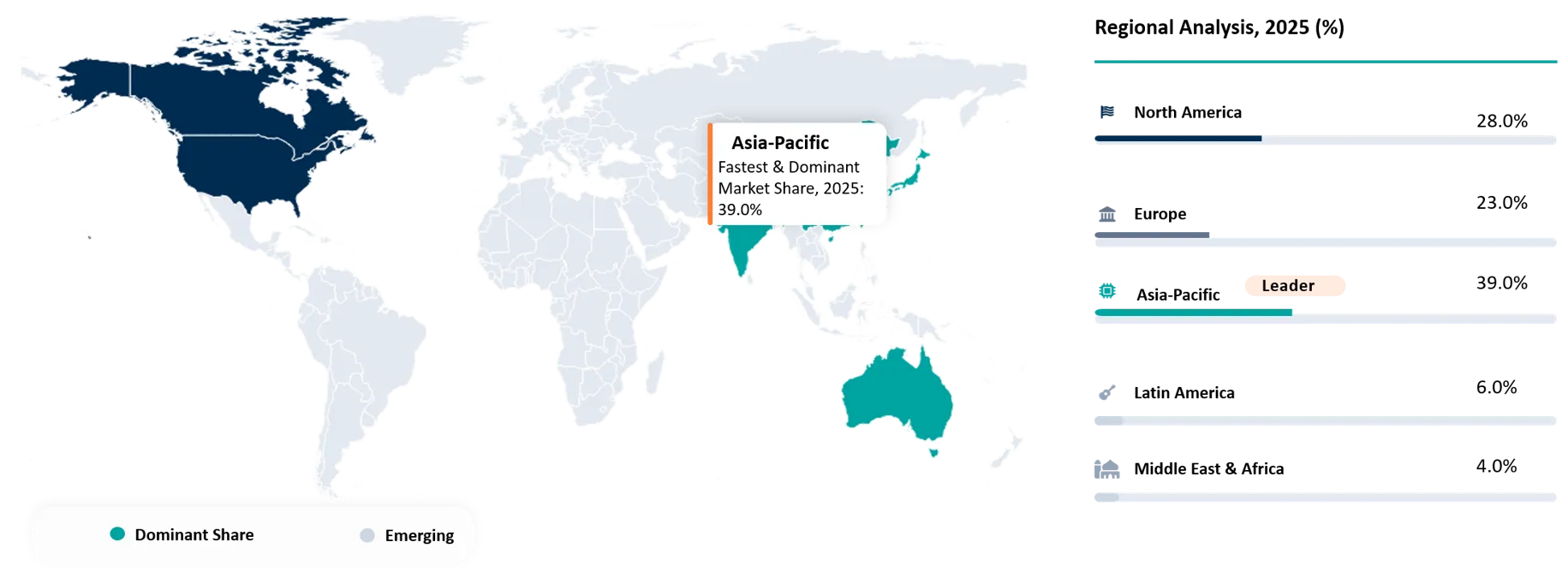
Rapid Adoption of Mobile and Contactless Digital Payments in North America
The North American digital payment market is supported by high card penetration, widespread smartphone adoption, established fintech ecosystems and the rapid expansion of mobile, contactless and account-to-account payments. The U.S. and Canada are increasingly shifting everyday transactions toward digital channels, while financial institutions and payment networks continue to introduce faster and more integrated payment solutions. In 2024, The Bank of Canada reported that mobile payments represented almost 5% of point-of-sale transactions, nearly doubling from 2023 to 2024, while contactless card payments accounted for about half of all point-of-sale transactions.
The strong growth in mobile and digital-wallet transactions is further increasing the use of electronic payment methods for both in-store and online purchases. In 2025, Interac processed 7 billion Interac Debit transactions, 1.6 billion Interac e-Transfer transactions and 1.8 billion Interac Debit-on-mobile transactions. Interac also reported 14% year-over-year growth in Interac Debit e-Commerce transactions through digital wallets, reflecting increasing use of mobile and digital payment channels in Canada.
Increasing Adoption of Integrated Digital and Faster Payment Solutions in the U.S.
The U.S. digital payment market is supported by high card penetration, widespread smartphone usage, established fintech platforms and growing adoption of mobile and remote payments. The continued shift from cash and paper-based payments toward cards, mobile devices and account-to-account transactions is supporting the expansion of digital payment services. According to the Federal Reserve's 2026 Diary of Consumer Payment Choice, U.S. consumers made an average of 47 payments per month in 2025, including 16 credit-card payments, 15 debit-card payments and 6 cash payments.
The growing use of digital payment systems and faster modes of payments by U.S. businesses is driving banks to develop an integrated system that uses several modes of payments. For instance, in July 2026, U.S. Bank launched Enhanced Payments, a digital payment solution for small businesses that integrates ACH, wire transfers, and instant payments into its online banking platform. The system allows for same day ACH transactions, international wires, and fast payments, all while reducing costs through low transaction fees and a $25 per month subscription fee.
Rapid Adoption of Mobile Wallets and Real-Time Payments in Asia Pacific
The Asia Pacific digital payment market is supported by the rapid adoption of mobile wallets, real-time payment systems, QR-code payments and account-to-account transactions across major economies, advancements in biometric authentication, artificial intelligence, contactless technologies and payment security. In 2025, digital wallets accounted for 77% of e-commerce transaction value and 63% of point-of-sale spending across Asia Pacific, while countries such as India, Thailand and the Philippines recorded strong growth in real-time and QR-based payments.
Expansion of Mobile Payment Adoption and Cross-Border Digital Yuan Infrastructure in China
The growth of digital payment market in China has been facilitated through the high number of smartphone users and wide acceptance of QR code technology and mobile payment systems provided by companies like Alipay and WeChat Pay. The inclusion of mobile payments in transport, retail, catering services, among others, will further promote the use of digital payments. According to People's Bank of China in 2025, mobile payment transactions reached approximately 210 billion, with transaction value exceeding US$119.3 trillion, reflecting the large scale of mobile-based payment activity in the country.
The development of digital yuan-based cross-border payment infrastructure is expanding the use of digital payment channels beyond domestic transactions in China. For instance, in June 2026, China’s digital yuan operation centre signed agreements with 26 financial institutions in Shanghai to expand cross-border payments through the Cross-border e-CNY Transfer Services (CBETS) platform. The platform supports 24/7 digital payment links with foreign central banks and overseas financial institutions, aiming to provide faster, lower-cost and more efficient cross-border settlement in yuan.
Accelerating Cashless Payment Adoption and Biometric Payment Innovation in Japan
The digital payment industry in Japan has been boosted by the quick change from cash to credit cards and electronic money/QR/code payments supported by the government policies for adopting cashless payments. Cashless payments accounted for 58.0% in Japan in 2025, which was equal to about US$1.08 trillion, compared to 42.8% in 2024. While, credit card payments amounted to about US$897.3 billion and code payments accounted for US$110.7 billion in 2025 showing the increasing contribution of both traditional and newer digital payment channels.
Furthermore, advances in biometric authentication are enabling payment providers in Japan to develop card- and smartphone-free payment experiences. For instance, in September 2026, NEC and SoftBank Payment Service launched a face biometrics payment pilot, combining NEC’s Bio-IDiom technology with SoftBank’s PayCAS platform. The pilot, running through November 2026, is expected to process more than 1,000 transactions, enabling customers to pay by facial authentication without using a card or smartphone.
Digital Payment Market Competitive Landscape
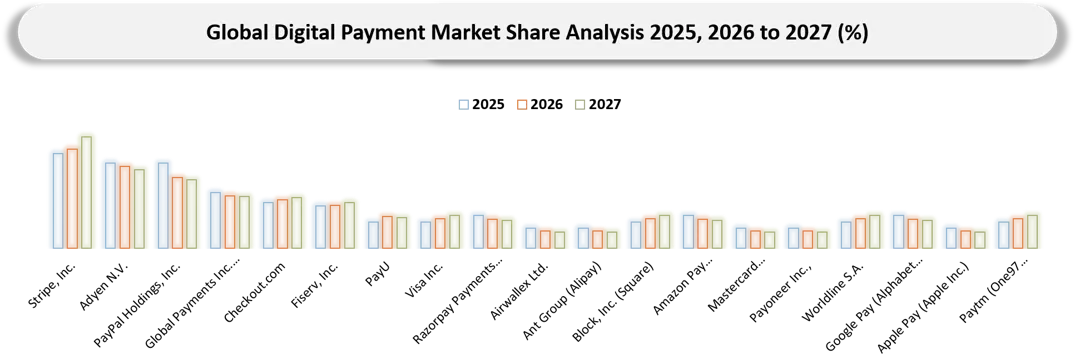
- The global digital payment market is characterized by payment technology companies, payment processors, card networks, digital wallet providers, fintech platforms, and embedded payment companies offering solutions across online payments, in-store payments, digital wallets, account-to-account transfers, cross-border payments, merchant acquiring, and payment processing. Stripe, Inc., Adyen N.V., PayPal Holdings, Inc., Visa Inc., Mastercard Incorporated, Fiserv, Inc., Block, Inc., and Ant Group are among the notable players. Competition is primarily focused on payment processing capabilities, transaction speed, digital wallet integration, fraud prevention, cross-border payments, merchant services, payment orchestration, and expansion of real-time payment capabilities.
- Stripe, Adyen, PayPal, Worldpay, Checkout.com, Fiserv, PayU, Visa, Razorpay, Airwallex, Ant Group, Block, Amazon Pay, Mastercard, Payoneer, Worldline, Google Pay, Apple Pay, and Paytm compete through combinations of payment processing, merchant acquiring, digital wallets, payment gateways, card networks, cross-border payment services, and embedded financial solutions. Companies are strengthening their positions through technology partnerships, expansion into new markets, integration with e-commerce platforms, development of fraud and risk-management capabilities, and support for multiple payment methods and currencies.
- Stripe, Inc. (United States), Adyen N.V. (Netherlands), PayPal Holdings, Inc. (United States), Global Payments Inc. (Worldpay) (United States), Checkout.com (United Kingdom), Fiserv, Inc. (United States), PayU (Netherlands), Visa Inc. (United States), Razorpay Payments Private Limited (India), Airwallex Ltd. (Australia), Ant Group (China), Block, Inc. (United States), Amazon Pay (United States), Mastercard Incorporated (United States), Payoneer Inc. (United States), Worldline S.A. (France), Google Pay (United States), Apple Pay (United States), and Paytm (India) are among the key companies operating in the global digital payment market.
Key Developments
- July 2026: U.S. Bank launched Enhanced Payments, a digital payment solution for small businesses that integrates ACH, wire transfers, and instant payments into its online banking platform. The system allows for same day ACH transactions, international wires, and fast payments, all while reducing costs through low transaction fees and a $25 per month subscription fee.
- September 2026: NEC and SoftBank Payment Service launched a face biometrics payment pilot, combining NEC’s Bio-IDiom technology with SoftBank’s PayCAS platform. The pilot, running through November 2026, is expected to process more than 1,000 transactions, enabling customers to pay by facial authentication without using a card or smartphone.
- November 2025: FNB, in collaboration with Mastercard, launched Globba, enabling customers in South Africa to make cross-border payments to more than 120 countries through the FNB and RMB Private Banking apps.
- September 2026: The Maldives Monetary Authority (MMA) and Tieto Banktech launched cross-border real-time payments between the Maldives and India by connecting the Maldives’ national instant payment system, Favara, with India’s Unified Payments Interface (UPI). The integration enables individuals in the Maldives to make real-time payments to beneficiaries in India, with transactions initiated in Maldivian Rufiyaa (MVR) and credited in Indian Rupees (INR).
Key Procurement Priorities and Buyer Evaluation Criteria
- Consumer prioritize secure and integrated digital payment solutions that support online payments, in-store transactions, digital wallets, account-to-account payments, recurring payments, cross-border transactions, and multiple payment methods through a unified platform.
- Evaluation is based on criteria such as transaction processing speed, payment security, fraud prevention, reliability, interoperability, scalability, API capabilities, mobile compatibility, payment-method coverage, currency support, and integration with existing banking, e-commerce, ERP, and point-of-sale systems.
- Consumer consider factors including transaction fees, setup and integration costs, operating expenses, settlement timelines, foreign-exchange costs, chargeback costs, system uptime, implementation time, technical support, and long-term platform scalability.
- Preference is given to providers with proven transaction-processing capabilities, broad geographic coverage, strong merchant and banking integrations, advanced fraud-management systems, real-time payment capabilities, flexible APIs, and support for multiple payment methods and currencies.
- Banks, financial institutions, merchants, e-commerce companies, enterprises, government organizations, and fintech platforms particularly prioritize providers with strong security and regulatory compliance, reliable transaction processing, extensive payment network connectivity, transparent pricing, responsive technical support, and the ability to handle growing transaction volumes across domestic and cross-border markets.
Why Choose DataM?
- Technological Innovations: Explores advancements in digital payment technologies, including real-time payments, digital wallets, account-to-account payments, QR-code payments, contactless payments, tokenization, artificial intelligence, biometric authentication, payment APIs, and cloud-based payment infrastructure. The analysis examines how these technologies improve transaction speed, security, accessibility, interoperability, and payment experiences across consumer and business applications.
- Solution Performance & Market Positioning: Evaluates how digital payment solutions compete based on transaction processing speed, security, fraud prevention, reliability, scalability, interoperability, payment-method coverage, geographic reach, API capabilities, settlement efficiency, and integration with banking, e-commerce, point-of-sale, and enterprise systems.
- Real-World Evidence: Highlights the deployment of digital payment solutions across banks, financial institutions, merchants, e-commerce platforms, government agencies, fintech companies, and payment networks, providing evidence of adoption across mobile wallets, real-time payments, QR payments, digital banking, merchant payments, and cross-border transactions.
- Market Updates & Industry Changes: Tracks key developments such as payment platform launches, real-time payment system expansions, digital wallet rollouts, cross-border payment partnerships, digital identity initiatives, payment infrastructure investments, new fraud-prevention technologies, biometric payment pilots, and regulatory developments across North America, Europe, Asia Pacific, Latin America, and the Middle East & Africa.
- Competitive Strategies: Analyzes how leading companies expand through payment technology launches, strategic partnerships, banking integrations, acquisitions, merchant onboarding, payment-network expansion, cross-border connectivity, embedded payment solutions, digital wallet development, and investments in artificial intelligence, fraud prevention, and real-time payment infrastructure.
- Pricing & Market Access: Explains variations in digital payment costs based on transaction volume, payment method, transaction type, geographic coverage, currency conversion, cross-border processing, merchant acquiring, fraud and chargeback management, integration requirements, and settlement services, while assessing market access through banks, fintech platforms, payment gateways, card networks, e-commerce platforms, mobile applications, and direct merchant integrations.
- Market Entry & Expansion: Identifies growth opportunities driven by increasing e-commerce adoption, smartphone penetration, financial inclusion, real-time payment infrastructure, cross-border commerce, digital banking, and the shift from cash to electronic payments. The analysis also outlines strategies such as partnerships with banks and fintech companies, localized payment-method integration, merchant onboarding, regulatory approvals, cross-border payment corridors, digital wallet expansion, and entry into high-growth emerging markets.
Target Audience 2026
- Banks, Financial Institutions, and Payment Service Providers
- Fintech Companies and Digital Payment Platforms
- Payment Networks, Processors, and Acquiring Companies
- Digital Wallet Providers and Mobile Payment Platforms
- E-commerce Companies, Online Marketplaces, and Retailers
- Large Enterprises and Corporate Treasury Departments
- Small and Medium Enterprises (SMEs) and Micro Merchants
- Telecommunications Operators and Mobile Money Providers
- Government Agencies, Central Banks, and Digital Payment Authorities
- Cross-Border Payment and Remittance Service Providers
- Payment Technology, API, and Embedded Finance Providers
- Fraud Prevention, Cybersecurity, Digital Identity, and Authentication Providers
- Investors, Financial Institutions, and Private Equity Firms
- Research Institutions, Universities, and Financial Technology Organizations



























































