


PD-L1 Testing and Therapeutics Market Size and Overview
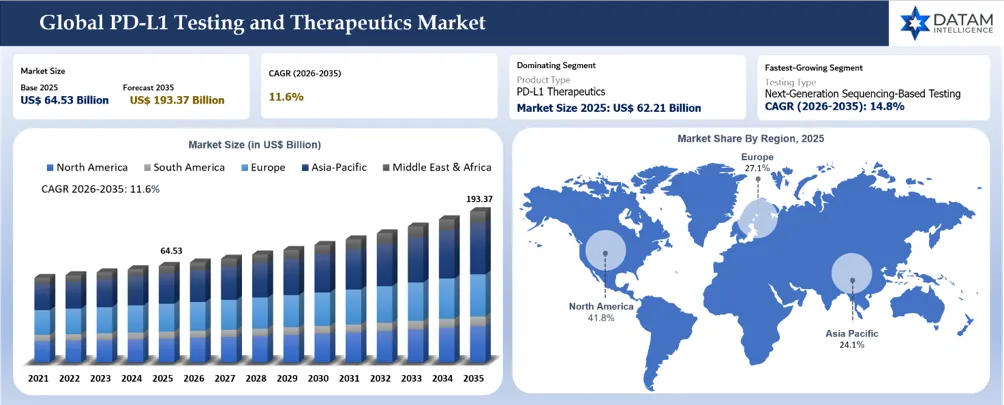
The global PD-L1 testing and therapeutics market reached US$64.53 billion in 2025 and is expected to reach US$193.37 billion by 2035, growing with a CAGR of 11.6% during the forecast period 2026-2035.
Growth is being shaped by the movement of PD-1 and PD-L1 inhibitors from previously treated metastatic disease into first-line, neoadjuvant, adjuvant and maintenance settings. KEYTRUDA, OPDIVO, TECENTRIQ, IMFINZI, LIBTAYO, JEMPERLI and TEVIMBRA are expanding treatment options across lung, gastric, bladder, head and neck, breast, endometrial and other cancers. Longer treatment duration and broader indication coverage are increasing therapeutic revenues while embedding PD-L1 testing earlier within oncology care pathways.
Companion diagnostics represent a strategically important market enabler. Assays such as 22C3, 28-8, SP142 and SP263 support patient selection through tumour proportion score, combined positive score and immune-cell scoring. However, discordance among antibody clones, staining platforms and indication-specific thresholds complicates assay interchangeability. Competitive advantage increasingly depends on diagnostic sensitivity, laboratory availability, turnaround time, regulatory alignment and integration with broader biomarker assessment covering MSI, dMMR, TMB and genomic alterations.
The next value-creation cycle will centre on PD-1 and VEGF bispecific antibodies, dual-checkpoint inhibitors, ADC combinations, subcutaneous formulations and digitally supported pathology workflows. Sustainable leadership will require clinically meaningful survival improvements, manageable immune-related toxicity and reproducible patient identification. Companies coordinating drug development with companion diagnostics, laboratory training, reimbursement evidence and multinational commercialization will be best positioned to influence treatment sequencing and capture premium market value.
PD-L1 Testing and Therapeutics Market Key Takeaways
- Sustained Market Expansion Through 2035: The global PD-L1 testing and therapeutics market was valued at US$64.53 billion in 2025 and is projected to reach US$193.37 billion by 2035, registering a CAGR of 11.6% during 2026-2035.
- PD-L1 Therapeutics Maintain Market Leadership: PD-L1 therapeutics represented an estimated US$62.21 billion in 2025, supported by the extensive use of KEYTRUDA, OPDIVO, TECENTRIQ, IMFINZI, LIBTAYO and JEMPERLI across first-line, perioperative, maintenance and metastatic treatment settings.
- NGS-Based Testing Emerges as the Primary Growth Engine: Next-generation sequencing-based testing is expected to register the fastest CAGR of approximately 14.8% through 2035, driven by the transition from single-marker assessment toward comprehensive profiling of PD-L1-related expression, TMB, MSI, dMMR and actionable genomic alterations.
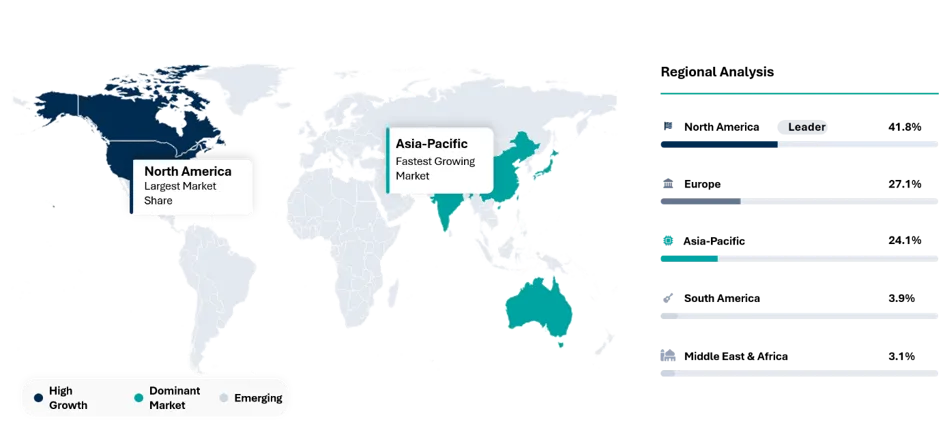
- North America Maintains Regional Dominance: North America accounted for an estimated 41.8% of the global market in 2025, equivalent to approximately US$26.97 billion, supported by established reimbursement, extensive FDA-approved indications, high checkpoint-inhibitor utilization and widespread companion-diagnostic testing.
- Integrated Biomarker and Therapeutic Strategies Reshape Competition: Future leadership will depend on earlier-line indication expansion, standardized companion diagnostics, subcutaneous formulations and differentiated combinations involving ADCs, anti-VEGF agents and bispecific antibodies. Companies demonstrating durable survival benefits, reproducible patient selection and broad commercial access will be best positioned to capture market share.
PD-L1 Testing and Therapeutics Market Scope
| Metrics | Details | |
| 2025 Market Size | US$64.53 Billion | |
| 2035 Projected Market Size | US$193.37 Billion | |
| CAGR (2026-2035) | 11.6% | |
| Largest Market | North America | |
| Fastest Growing Market | Asia-Pacific | |
| By Product Type | PD-L1 Therapeutics, PD-L1 Testing (Diagnostics) | |
| By Testing Type | Immunohistochemistry (IHC), Next-Generation Sequencing (NGS) | |
| By Indication | Non-Small Cell Lung Cancer, Triple-Negative Breast Cancer, Head and Neck Squamous Cell Carcinoma, Esophageal Squamous Cell Carcinoma, Others | |
| By End-user | Hospitals, Cancer Specialty Clinics, Diagnostic Laboratories, Others | |
| By Region | North America | U.S., Canada, Mexico |
| Europe | Germany, UK, France, Spain, Italy, Poland | |
| Asia-Pacific | China, India, Japan, Australia, South Korea, Indonesia, Malaysia, Singapore, Vietnam, Thailand, Philippines, Taiwan | |
| South America | Brazil, Argentina | |
| Middle East and Africa | Israel, Saudi Arabia, UAE, Turkiye, South Africa, Nigeria | |
| Report Insights Covered | Competitive Landscape Analysis, Company Profile Analysis, Market Size, Share, Growth | |
PD-L1 Testing and Therapeutics Market White Space & Investment Opportunities
- Assay Harmonization and Cross-Platform Standardization: Invest in standardized reference materials, cross-assay calibration and digital scoring solutions that reduce discordance among 22C3, 28-8, SP142 and SP263 assays. Harmonizing tumour proportion score, combined positive score and immune-cell scoring could improve treatment eligibility decisions and enable laboratories to consolidate workflows.
- Predictive Testing Beyond Standalone PD-L1 Expression: Develop integrated biomarker panels combining PD-L1 with MSI, dMMR, TMB, immune-gene signatures, tumour-infiltrating lymphocytes and actionable genomic alterations. Multi-parameter models could distinguish likely responders from patients who require chemotherapy, targeted therapy or combination immunotherapy.
- Therapies for PD-L1-Low and PD-L1-Negative Tumours: Advance regimens capable of generating responses in tumours with limited baseline immune activation. PD-1 and VEGF bispecific antibodies, dual-checkpoint inhibitors, ADC combinations, cancer vaccines and innate-immune agonists could expand the addressable population beyond PD-L1-high disease.
- Overcoming Primary Resistance and Acquired Treatment Failure: Invest in biomarker-guided therapies addressing T-cell exhaustion, antigen-presentation loss, immunosuppressive myeloid cells and alternative checkpoints such as LAG-3, TIGIT and TIM-3. Longitudinal tissue and circulating-tumour-DNA monitoring could identify resistance earlier and support adaptive treatment selection.
- Subcutaneous and Lower-Burden Treatment Delivery: Develop subcutaneous formulations, extended dosing intervals and fixed-dose combinations that reduce infusion-chair utilization and hospital administration costs. Differentiation will depend on maintaining comparable efficacy and safety while improving patient convenience and oncology-centre capacity.
- Decentralized Testing and Outcome-Based Reimbursement: Expand automated IHC, telepathology, external quality-assurance programs and specialist training across underserved markets. Linking reimbursement to validated biomarker selection, durable response, treatment discontinuation and avoided hospitalization could improve access while strengthening the economic case for premium checkpoint inhibitors and companion diagnostics.
PD-L1 Testing and Therapeutics Market Buyer Decision-Making Criteria
Major Buyer Decision-Making Criteria:
- Overall Survival and Durability of Response
- Progression-Free Survival and Objective Response Rate
- Effectiveness by Cancer Type, Disease Stage and Treatment Line
- Clinical Performance across PD-L1-High, PD-L1-Low and PD-L1-Negative Populations
- Suitability for Monotherapy, Chemotherapy and Biomarker-Directed Combination Regimens
- PD-L1 Testing Eligibility Based on TPS, CPS or Immune-Cell Scoring
- Assay Sensitivity, Specificity and Interobserver Reproducibility
- Compatibility with 22C3, 28-8, SP142, SP263 and Automated IHC Platforms
- Tissue Requirements, Sample Failure Rate and Testing Turnaround Time
- Safety, Immune-Related Toxicity and Long-Term Clinical Evidence
- Effectiveness in Previously Treated and Checkpoint-Inhibitor-Resistant Patients
- Route of Administration, Dosing Frequency and Treatment Burden
- Hospitalization, Monitoring and Adverse-Event Management Requirements
- Pricing, Reimbursement and Total Treatment and Testing Cost
- Regulatory Approval, Companion-Diagnostic Status and Guideline Positioning
- Laboratory Infrastructure, Pathologist Training and Quality-Assurance Requirements
- Physician Experience, Real-World Evidence and Treatment-Pathway Integration
- Manufacturing Reliability, Geographic Availability and Patient-Support Services
PD-L1 Testing and Therapeutics Market BCG Matrix: Company Evaluation
STAR
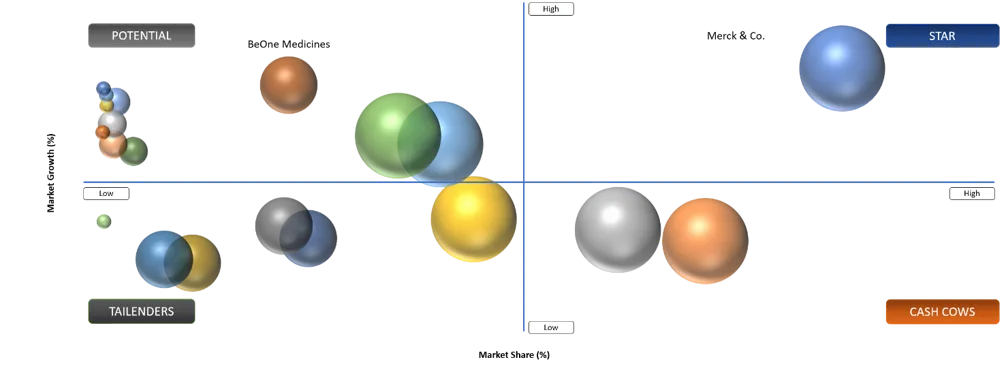
Merck & Co., Bristol Myers Squibb, Roche, AstraZeneca and Agilent Technologies are positioned in the Star category based on their approved PD-1/PD-L1 portfolios, companion-diagnostic capabilities, extensive indication coverage and established oncology commercialization networks. Merck leads through KEYTRUDA and its associated PD-L1 IHC 22C3 pharmDx testing ecosystem, while Bristol Myers Squibb competes through OPDIVO across multiple solid-tumour indications. Roche combines TECENTRIQ with VENTANA PD-L1 SP142 and SP263 assays, creating an integrated therapeutic and diagnostic position. AstraZeneca maintains a strong presence through IMFINZI, particularly across lung, biliary tract, bladder and endometrial cancers.
Agilent holds strategic importance through the PD-L1 IHC 22C3 pharmDx and 28-8 pharmDx companion-diagnostic assays. Future Star leadership will depend on new indication approvals, subcutaneous formulations, earlier-line treatment expansion, assay harmonization and clinically differentiated combination regimens. Companies integrating therapeutic development with standardized biomarker testing, digital pathology and broad laboratory access are expected to retain the strongest competitive positions.
POTENTIAL
BeOne Medicines, Akeso, Shanghai Junshi Biosciences, Jiangsu Hengrui Pharmaceuticals, Innovent Biologics, Shanghai Henlius Biotech and Leica Biosystems are positioned in the Potential category because of expanding checkpoint-inhibitor portfolios, differentiated bispecific antibodies, increasing international development and growing diagnostic capabilities. BeOne is expanding TEVIMBRA internationally, while Junshi, Hengrui, Innovent and Henlius are advancing toripalimab, camrelizumab, sintilimab and serplulimab across additional indications and geographic markets.
Akeso has particularly strong upside through ivonescimab, a PD-1/VEGF bispecific antibody, and cadonilimab, a PD-1/CTLA-4 bispecific antibody, which could alter established treatment sequencing. Leica Biosystems has growth potential through automated IHC platforms, PD-L1 antibodies and integrated digital-pathology workflows. Progression toward the Star category will depend on successful multinational Phase III trials, regulatory approvals in the United States and Europe, manufacturing scalability, companion-diagnostic alignment, competitive reimbursement and evidence of superior survival or safety outcomes versus established PD-1/PD-L1 therapies.
PD-L1 Testing and Therapeutics Market Dynamics
Driver Impact Analysis
| Driver | Market Growth Impact (%) | Demand Concentration | Impacted Use Case | Strategic Impact |
Expansion of PD-1 and PD-L1 Inhibitors into Earlier Treatment Lines and Perioperative Care | 31.5% | High across the United States, Europe, Japan and China | Neoadjuvant, adjuvant, first-line and maintenance treatment across lung, gastric, head and neck, bladder and endometrial cancers | Earlier-line approvals materially expand treatment duration and eligible patient volumes while increasing routine PD-L1 testing before therapy initiation. |
Companion-Diagnostic Requirements for Biomarker-Defined Treatment Eligibility | 26.1% | Highest in regulated oncology markets with established molecular-pathology infrastructure | PD-L1 tumour proportion score, combined positive score and immune-cell scoring for therapy selection | Label-linked testing directs recurring demand toward validated assays such as 22C3, 28-8, SP142 and SP263 and strengthens commercial alignment between drug manufacturers and diagnostic companies. |
Increasing Use of PD-1 and PD-L1 Combination Regimens across Difficult-to-Treat Tumours | 23.9% | Strongest across major oncology centres and clinical-trial networks | Checkpoint inhibitors combined with chemotherapy, targeted therapy, ADCs, anti-VEGF agents and bispecific antibodies | Combination regimens extend checkpoint inhibition into lower-expression and treatment-resistant populations, increasing therapeutic utilization beyond conventional high-PD-L1 monotherapy segments. |
Rapid Commercialization of Lower-Cost Checkpoint Inhibitors in China and Emerging Oncology Markets | 19.5% | Concentrated in China, with increasing expansion across Asia, Latin America and the Middle East | Locally advanced and metastatic lung, gastric, liver, oesophageal and nasopharyngeal cancers | Camrelizumab, sintilimab, toripalimab, serplulimab and tislelizumab are increasing price competition, widening patient access and creating opportunities for localized PD-L1 testing and laboratory partnerships. |
Driver: Expansion of PD-1 and PD-L1 Inhibitors into Earlier Treatment Lines and Perioperative Care
PD-1 and PD-L1 inhibitors are moving beyond previously treated metastatic disease into first-line, neoadjuvant, adjuvant and maintenance settings across lung, breast, gastric, bladder, head and neck, endometrial and other cancers. This transition materially enlarges the treatment-eligible population because therapy is initiated earlier, when patient fitness is generally stronger and treatment duration can be longer. Approvals for checkpoint inhibitors before and after surgery are also embedding immunotherapy into multidisciplinary care pathways involving oncologists, surgeons, radiation specialists and pathologists.
Earlier use simultaneously increases demand for standardized PD-L1 testing to determine eligibility, select regimens and support reimbursement. Laboratories must provide reliable tumour proportion score, combined positive score or immune-cell assessment using indication-linked assays such as 22C3, 28-8, SP142 and SP263. Commercial advantage will increasingly favour companies that coordinate regulatory submissions, companion-diagnostic availability, laboratory training and payer evidence. However, growth will depend on demonstrating event-free and overall-survival benefits sufficient to justify treatment costs and immune-related toxicity in potentially curable patients.
Restraint Impact Analysis
| Restraint | Drag on Market Growth (%) | Primary Impact Area | Impacted Use Case | Strategic Impact |
Discordance among PD-L1 Antibody Clones, Scoring Algorithms and Positivity Thresholds | 29.1% | Diagnostic standardization and treatment eligibility | 22C3, 28-8, SP142 and SP263 assays using tumour proportion score, combined positive score or immune-cell scoring | Assay-specific cut-offs can classify the same specimen differently, complicating cross-platform substitution, laboratory validation and consistent treatment selection. |
Limited Predictive Precision of PD-L1 as a Standalone Biomarker | 27.4% | Patient stratification and clinical outcomes | Selection of patients for PD-1 or PD-L1 monotherapy and combination regimens | Responses among PD-L1-negative patients and non-response among PD-L1-high patients weaken biomarker confidence and encourage adoption of broader panels incorporating TMB, MSI, dMMR and genomic signatures. |
High Therapy Costs, Testing Reimbursement Gaps and Uneven Pathology Infrastructure | 24.4% | Affordability and geographic access | Routine PD-L1 testing and prolonged checkpoint-inhibitor treatment in emerging markets | Inconsistent reimbursement, limited automated IHC capacity and specialist-pathologist shortages delay testing, restrict treatment initiation and concentrate demand in major oncology centres. |
Immune-Related Toxicity, Primary Resistance and Acquired Treatment Failure | 20.7% | Treatment persistence and addressable population | Earlier-line, perioperative and long-duration checkpoint-inhibitor therapy | Severe immune-mediated events and uncertain benefit after resistance limit treatment continuation, increase monitoring costs and strengthen demand for alternative targeted or biomarker-guided regimens. |
Restraint: Discordance among PD-L1 Antibody Clones, Scoring Algorithms and Positivity Thresholds
PD-L1 testing remains constrained by clinically meaningful variability among antibody clones, staining platforms, scoring algorithms and indication-specific positivity thresholds. Assays such as 22C3, 28-8, SP142 and SP263 may differ in analytical sensitivity and their assessment of tumour cells or tumour-associated immune cells. Laboratories must also apply tumour proportion score, combined positive score or immune-cell scoring depending on the cancer, therapeutic label and regulatory jurisdiction. These differences can produce inconsistent classifications from comparable specimens and complicate treatment eligibility decisions.
The lack of complete assay interchangeability increases validation expenditure, pathologist-training requirements, quality-control obligations and laboratory turnaround times. Smaller laboratories may be unable to maintain multiple platforms and indication-specific workflows, concentrating testing within specialized centres and delaying therapeutic initiation. For pharmaceutical and diagnostic companies, discordance limits the scalability of a single companion-diagnostic strategy and increases the cost of parallel regulatory submissions. Market expansion will therefore depend on cross-assay harmonization, standardized interpretation, external quality-assurance programs and validated digital-pathology algorithms that reduce observer variability.
PD-L1 Testing and Therapeutics Market Geographical Penetration
U.S. PD-L1 Testing and Therapeutics Market Landscape
The U.S. represents the leading commercial and regulatory market for PD-L1 testing and checkpoint-inhibitor therapeutics, supported by high oncology expenditure, broad insurance coverage and rapid adoption of biomarker-directed treatment. The National Cancer Institute estimated 2,041,910 new cancer diagnoses and 618,120 cancer deaths in 2025, sustaining a large population requiring therapy selection across lung, gastric, bladder, head and neck, breast and endometrial cancers. PD-1 and PD-L1 inhibitors are increasingly moving from previously treated metastatic disease into first-line, neoadjuvant, adjuvant and maintenance settings, extending treatment duration and embedding biomarker assessment earlier in clinical pathways.
Competitive activity is concentrated around KEYTRUDA, OPDIVO, TECENTRIQ, IMFINZI, LIBTAYO and JEMPERLI, supported by FDA-linked companion diagnostics and centralized laboratory networks. In July 2026, Agilent received FDA approval expanding the PD-L1 IHC 28-8 pharmDx assay’s use in identifying eligible OPDIVO patients. Meanwhile, GSK’s August 2026 Priority Review for JEMPERLI in dMMR/MSI-H locally advanced rectal cancer demonstrates continued movement toward organ-preserving, biomarker-defined care. Market differentiation increasingly depends on earlier-line approvals, assay availability, scoring reproducibility, reimbursement and real-world evidence supporting durable clinical benefit.
Japan PD-L1 Testing and Therapeutics Market Outlook
Japan represents a strategically important PD-L1 testing and therapeutics market because of its ageing population, substantial incidence of lung, gastric, oesophageal and other immunotherapy-responsive cancers, and universal health-insurance system. In 2025, approximately 36.2 million people, or 29.4% of Japan’s population, were aged 65 years or older, sustaining demand for oncology diagnosis and systemic treatment. PD-L1 testing is embedded within major cancer-centre workflows through assays including 22C3, 28-8 and SP263, with therapeutic selection influenced by tumour proportion score, combined positive score, cancer type and treatment line. Statistics Bureau of Japan
Competition is led by MSD, Bristol Myers Squibb and Ono Pharmaceutical, Chugai and Roche, AstraZeneca and GSK across pembrolizumab, nivolumab, atezolizumab, durvalumab and dostarlimab portfolios. Growth through 2035 will be supported by perioperative immunotherapy, first-line combinations and expansion into gastric, oesophageal and biliary tract cancers. However, national price revisions, cost-effectiveness scrutiny, pathologist shortages and assay-specific scoring requirements may constrain revenues. Commercial success will depend on securing PMDA approval, reimbursement alignment, companion-diagnostic availability and Japanese patient evidence supporting durable benefit and manageable immune-related toxicity.
PD-L1 Testing and Therapeutics Market Competitive Landscape
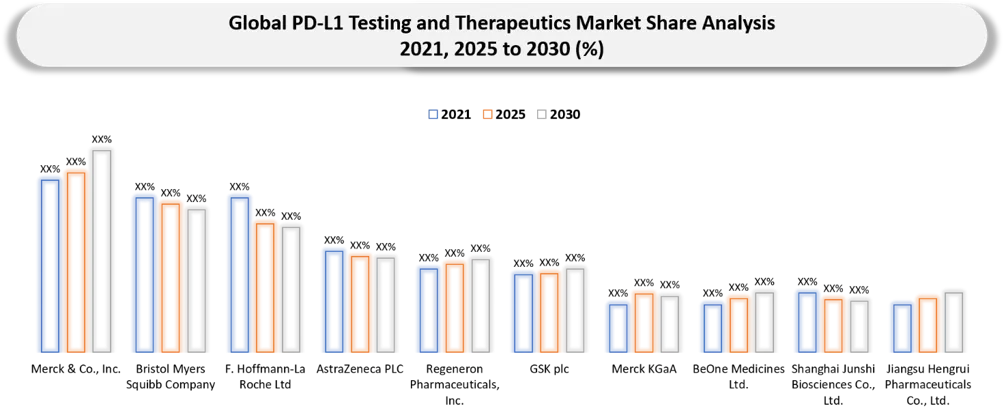
- The global PD-L1 testing and therapeutics market is characterized by strong integration between immunotherapy manufacturers, companion-diagnostic developers and clinical laboratories. Merck & Co., Bristol Myers Squibb, Roche, AstraZeneca, Regeneron and GSK lead the therapeutic landscape through established PD-1 or PD-L1 inhibitors supported by extensive indication-expansion programs. Competition increasingly extends beyond monotherapy toward chemotherapy combinations, dual-checkpoint approaches, antibody-drug conjugate combinations and bispecific antibodies. BeOne Medicines, Junshi Biosciences, Hengrui Pharmaceuticals, Innovent Biologics, Henlius and Akeso are intensifying competition through broader geographic commercialization, competitive pricing and differentiated assets such as PD-1/VEGF and PD-1/CTLA-4 bispecific antibodies.
- Within testing, Agilent and Roche maintain strategically important positions through therapy-linked PD-L1 immunohistochemistry assays, while Leica Biosystems, Thermo Fisher Scientific, Bio-Rad and Cell Signaling Technology support pathology and research workflows. Labcorp and NeoGenomics strengthen downstream access through centralized biomarker-testing services. Competitive differentiation depends on assay sensitivity, scoring algorithms, tumor indication coverage, platform compatibility, turnaround time and regulatory status. The market’s principal challenge remains variability among antibody clones, staining platforms and tumour proportion or combined positive scoring systems, creating demand for assay harmonization, digital pathology and reproducible patient-selection workflows.
Key Companies of PD-L1 Testing and Therapeutics Market
- Merck & Co., Inc. (United States)
- Bristol Myers Squibb Company (United States)
- F. Hoffmann-La Roche Ltd (Switzerland)
- AstraZeneca PLC (United Kingdom)
- Regeneron Pharmaceuticals, Inc. (United States)
- GSK plc (United Kingdom)
- Merck KGaA (Germany)
- BeOne Medicines Ltd. (Switzerland)
- Shanghai Junshi Biosciences Co., Ltd. (China)
- Jiangsu Hengrui Pharmaceuticals Co., Ltd. (China)
- Innovent Biologics, Inc. (China)
- Shanghai Henlius Biotech, Inc. (China)
- Akeso, Inc. (China)
- Agilent Technologies, Inc. (United States)
- Leica Biosystems Nussloch GmbH (Germany)
- Thermo Fisher Scientific Inc. (United States)
- Bio-Rad Laboratories, Inc. (United States)
- Cell Signaling Technology, Inc. (United States)
- Labcorp (United States)
- NeoGenomics Laboratories, Inc. (United States)
PD-L1 Testing and Therapeutics Market Recent Developments
- September 2026: Summit Therapeutics and Akeso reported that ivonescimab achieved a statistically significant and clinically meaningful overall-survival improvement over pembrolizumab in the Phase III HARMONi-2 trial involving patients with PD-L1-positive advanced non-small cell lung cancer.
- August 2026: The U.S. FDA approved BeOne Medicines’ TEVIMBRA-based combination regimen for first-line treatment of HER2-positive locally advanced or metastatic gastric and gastroesophageal-junction adenocarcinoma, expanding the role of PD-1 blockade in HER2-directed treatment pathways.
- August 2026: The U.S. FDA accepted GSK’s supplemental Biologics License Application for JEMPERLI for previously untreated stage II and III dMMR/MSI-H locally advanced rectal cancer under Priority Review. The application is supported by the 154-patient AZUR-1 study and has a February 2027 PDUFA action date.
- July 2026: Agilent Technologies received U.S. FDA approval for an expanded indication of its PD-L1 IHC 28-8 pharmDx assay. The companion diagnostic identifies patients whose tumours express PD-L1 and who may be eligible for treatment with OPDIVO or an OPDIVO-based regimen.
- July 2026: Summit Therapeutics reported that Western patients receiving ivonescimab plus chemotherapy in the Phase III HARMONi-6 study achieved an overall-survival hazard ratio of 0.76, consistent with outcomes among Asian patients and supporting the therapy’s global development strategy.
What DATAM Uniquely Provides
- In-depth segmentation of the PD-L1 testing and therapeutics market by product type, testing method, antibody clone, scoring algorithm, cancer indication, disease stage, therapeutic class, treatment regimen, treatment line, route of administration, sample type, end user and region.
- Competitive analysis of leading PD-L1 testing and therapeutics companies covering overall survival, progression-free survival, objective response, response durability, immune-related toxicity, mechanism of action, biomarker positioning, assay performance, dosing convenience, pipeline maturity and commercialization strategy.
- Comprehensive assessment of diagnosed, tested and treatment-eligible populations across PD-L1-high, PD-L1-low and PD-L1-negative disease; early-stage, locally advanced and metastatic settings; treatment-naïve, previously treated and checkpoint-inhibitor-resistant patients; and populations defined by TPS, CPS, immune-cell scoring, MSI, dMMR and TMB status.
- Actionable intelligence on therapeutic and diagnostic pricing, reimbursement, regulatory pathways, companion-diagnostic requirements, assay interchangeability, testing turnaround time, treatment-response assessment, therapy sequencing, patient-support programs, laboratory-access barriers, licensing activity, strategic partnerships and investment opportunities.
- Analyst forecasts highlighting high-growth therapeutic classes, commercially attractive cancer indications, regional expansion opportunities and emerging competitive threats across PD-1 inhibitors, PD-L1 inhibitors, PD-1 and VEGF bispecific antibodies, dual-checkpoint inhibitors, ADC combinations, subcutaneous formulations, immunohistochemistry assays, NGS-based profiling and AI-enabled digital-pathology solutions.




























































