


Hyper Personalized Medicine Market Size
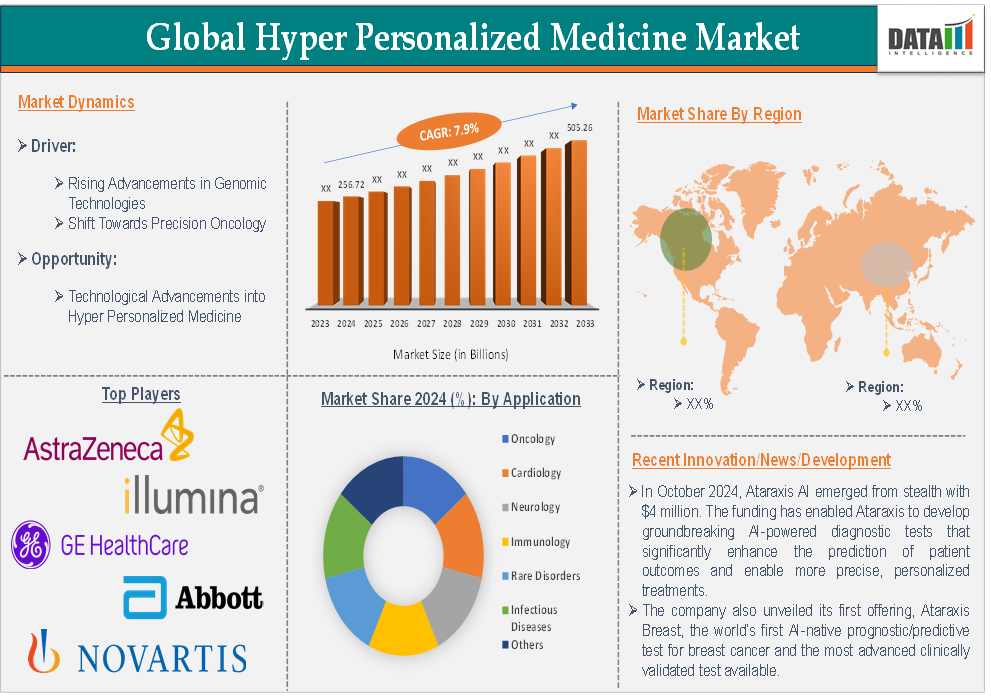
The Hyper Personalized Medicine Market will reach US$ 298.88 billion in 2026, up from US$ 277.00 billion in 2025, and is projected to reach US$ 593.90 billion by 2035, registering steady growth at a CAGR of 7.9% during the forecast period from 2026 to 2035.
Hyper personalized medicine is an advanced healthcare approach that tailors medical treatment and preventive strategies to individual patients based on their unique biological, genetic, environmental and lifestyle factors. It goes beyond traditional medical practices by utilizing cutting-edge technologies like genomics, proteomics, metabolomics and bioinformatics to offer treatments that are highly specific to the molecular and cellular characteristics of each patient. This approach is revolutionizing healthcare by improving outcomes, reducing side effects and enabling preventive measures based on predictive insights.
The demand for hyper personalized medicine is rapidly expanding. For instance, according to the Personalized Medicine Coalition (PMC), With the approval of 17 new personalized medicines in 2021, personalized medicines, account for more than a quarter of the new drugs the agency has approved in, the past seven years. This figure represents a sharp increase. Just a decade ago, personalized medicines accounted for less than 10 percent of the new therapies approved each year. In Future, this market is set to transform healthcare delivery by integrating advanced technologies with precise, patient-centered care models, ensuring better outcomes and efficiency.
Hyper Personalized Medicine Market Executive Summary
Gain instant access to market forecasts, precision healthcare trends, AI-driven innovations, treatment personalization insights, regional opportunities, and competitive intelligence. Request your free sample today and discover the opportunities shaping the future of hyper-personalized medicine.
Key Takeaways
- North America accounts for approximately 42-46% of the global market share, driven by advanced genomics research, precision medicine initiatives, and substantial investments in AI-enabled healthcare technologies.
- Therapeutics contribute over 50% of total market revenue, owing to increasing adoption of targeted therapies, cell and gene therapies, and personalized treatment approaches.
- Oncology applications account for nearly 40% of market demand, supported by rising prevalence of cancer and growing utilization of biomarker-based treatment strategies.
- Hospitals and specialty care centers collectively represent more than 55% of end-user adoption, leveraging hyper personalized medicine solutions to improve treatment outcomes and patient-centric care delivery.
- AI-powered clinical decision support systems and bioinformatics platforms are witnessing annual adoption growth exceeding 18%, enabling faster diagnosis, predictive analytics, and individualized treatment planning.
- Genomics-based personalized therapies are experiencing adoption growth of over 20% annually, driven by advances in next-generation sequencing technologies and precision diagnostics.
- Asia-Pacific is expected to register the fastest market growth, supported by increasing healthcare investments, expanding biotechnology capabilities, and government-led precision medicine programs.
- Strategic collaborations among pharmaceutical companies, biotechnology firms, healthcare providers, and technology developers are accelerating commercialization and innovation globally.
- Growing investments in precision medicine platforms, multi-omics technologies, AI-enabled healthcare solutions, and personalized therapeutics are expected to drive long-term market expansion.
Hyper Personalized Medicine Market Dynamics: Drivers & Restraints
Hyper Personalized Medicine Market Rising Advancements in Genomic Technologies
Rising advancements in genomic technologies are significantly driving the growth of the hyper personalized medicine market and are expected to drive the market over the forecast period. Technologies like Next-Generation Sequencing (NGS) have drastically reduced the cost and time needed for genome sequencing. According to the J. Craig Venter Institute, the cost of sequencing a human genome has dropped from over USD 100 million in 2001 to less than USD 1,000 today and takes only a few hours, making personalized medicine more accessible to a broader population.
Major market players are focussing on the development of hyper personalized medicine approaches, which further fueling the market growth. For instance, in March 2024, Nucleus Genomics, the next-generation genetic testing and analysis company, launched its DNA analysis product to bring the benefits of personalized medicine to everyone. Nucleus combined the power of whole-genome sequencing with innovative genomic analyses, ushering in a new era of personalized medicine for the public.
CRISPR gene-editing technology is enabling the development of personalized therapies by directly targeting the genetic causes of diseases. Companies are using CRISPR to explore treatments for genetic disorders such as sickle cell anemia and muscular dystrophy, offering highly personalized and potentially curative treatments.
For instance, in May 2024, Researchers at Columbia University College of Dental Medicine developed an exosome-based platform, "safeEXO-Cas," that significantly enhances the delivery of CRISPR/Cas9 genome editing components to specific cells and tissues. The potential of this innovative platform is to revolutionize gene therapy and precision medicine.
Hyper Personalized Medicine Market Complexity of Data Integration
The complexity of data integration is expected to hamper the growth of the hyper personalized medicine market. This issue primarily arises from the integration of vast and varied datasets, which include genomic, proteomic, clinical and environmental data. These challenges impact the ability to efficiently develop personalized treatment plans, slowing the adoption of hyper personalized medicine.
Personalized medicine requires the integration of large-scale data from different sources like electronic health records (EHRs), genomic sequencing, medical imaging and real-time monitoring devices. These data types are often siloed across systems and lack standardization, making it difficult to draw comprehensive insights. For instance, genomic data might be stored in one system, while clinical data is in another, and patient health records are stored in yet another platform. This lack of uniformity complicates the creation of a cohesive, actionable profile for individual patients.
Healthcare systems across different regions often use incompatible technologies, leading to poor interoperability between electronic health systems. For instance, a report by the American Health Information Management Association (AHIMA) indicates that 80% of healthcare organizations in the US experience data integration issues, which directly affects the efficiency of personalized treatments.
Hyper Personalized Medicine Market Trends and Insights
AI-Powered Personalized Healthcare
Artificial intelligence is becoming an important technology for interpreting the large and complex datasets generated by hyper-personalized medicine. AI algorithms can combine genomic information with clinical records, imaging, laboratory results, and patient characteristics to identify patterns that may not be easily detected through conventional analysis.
The increasing integration of AI into precision diagnostics is creating opportunities for individualized disease-risk prediction, treatment-response assessment, biomarker identification, and clinical decision support.
Expansion of Multi-Omics
Hyper-personalized medicine is moving beyond genomics toward integrated multi-omics approaches involving genomics, transcriptomics, proteomics, and metabolomics.
This approach provides a broader understanding of disease biology by examining multiple molecular layers simultaneously. It can help researchers identify biomarkers, understand disease mechanisms, and develop more precise treatment strategies.
The global Multiomics Market is itself projected by DataM Intelligence to expand from US$3.25 billion in 2024 to US$33.25 billion by 2033, demonstrating the rapid development of technologies that support increasingly detailed biological profiling.
Personalized Oncology
Oncology remains one of the most important application areas because cancer is highly heterogeneous. Patients with the same cancer type can have substantially different molecular characteristics and treatment responses.
Tumor sequencing, genomic profiling, biomarker testing, liquid biopsy, and companion diagnostics are allowing clinicians to identify specific mutations and molecular characteristics that can guide targeted treatment decisions.
The scale of the opportunity is substantial: global cancer incidence is projected to increase from approximately 20 million new cases in 2022 to nearly 30 million annually by 2040.
Growth of Pharmacogenomics
Pharmacogenomics is becoming increasingly relevant as healthcare providers seek to understand how genetic differences influence drug metabolism, efficacy, and adverse reactions.
Genetic information can help identify patients who may respond better to particular therapies or require modified dosing. Greater adoption of pharmacogenomic testing could therefore strengthen the transition from standardized treatment protocols toward individualized medication strategies.
Personalized Cell and Gene Therapies
Cell and gene therapies are extending personalization from treatment selection to the development of therapies that directly address individual molecular or genetic abnormalities.
This trend is particularly significant for rare genetic disorders and certain cancers, where conventional treatments may not adequately address the underlying disease mechanism.
Digital Patient Monitoring
Wearables, connected medical devices, remote monitoring platforms, and digital biomarkers are creating continuous streams of patient-specific health information.
When these data are combined with genomic and clinical information, healthcare providers can potentially monitor how individual patients respond to treatments and modify interventions as patient conditions change.
Hyper Personalized Medicine Market Segment Analysis
The global hyper personalized medicine market is segmented based on product type, technology, application and region.
Application:
The oncology from application segment is expected to dominate the hyper personalized medicine market
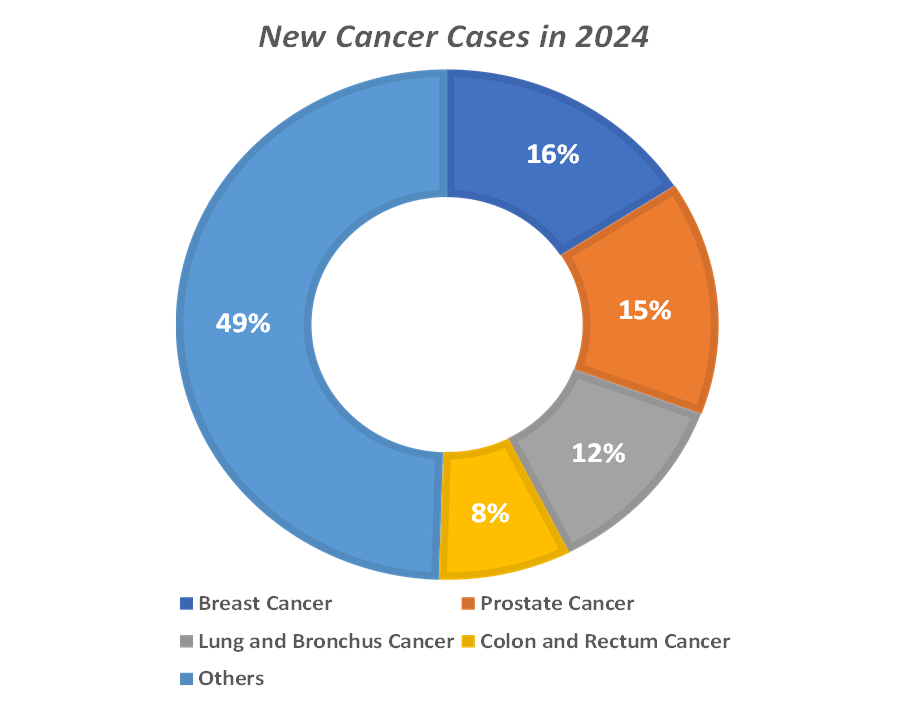
Cancer is one of the most prevalent diseases worldwide. The increasing prevalence directly increases the demand for effective treatments, particularly in the face of diverse tumor types, this has accelerated the shift toward personalized oncology. This hyper personalized approaches in oncology allow for targeting specific mutations in tumors, offering better outcomes and reducing side effects compared to traditional treatments.
For instance, according to the National Institute of Health, cancer is among the leading causes of death worldwide. In 2022, there were almost 20 million new cases and 9.7 million cancer-related deaths worldwide. By 2040, the number of new cancer cases per year is expected to rise to 29.9 million and the number of cancer-related deaths to 15.3 million. According to the International Agency for Research on Cancer, in 2025, cancer incidence cases are projected to reach 21.3 million, and in 2030, the cases are estimated to reach 24.1 million.
The use of genomic profiling in oncology allows for identifying genetic mutations that drive cancer progression, enabling more accurate diagnoses and targeted treatments. Technologies like Next-Generation Sequencing (NGS) are extensively used to analyze tumor genomes. For instance, FoundationOne by Foundation Medicine offers comprehensive genomic profiling of solid tumors to identify actionable mutations, guiding the selection of targeted therapies.
Hyper Personalized Medicine Market Geographical Analysis
North America is expected to hold a significant position in the hyper personalized medicine market
North America, particularly the United States is a global leader in biomedical research, accounting for approximately 60% of the world's total healthcare R&D spending. Significant funding is provided for the development of precision medicine technologies, including genomic profiling, bioinformatics and digital health solutions.
North America benefits from a robust regulatory environment, particularly through organizations like the FDA (Food and Drug Administration) in the United States. The FDA has approved several personalized therapies such as CAR-T cell treatments such as Kymriah for leukemia and checkpoint inhibitors such as Keytruda for various cancers. These approvals drive market growth by providing a clear pathway for the development and commercialization of hyper personalized medicines.
North America leads the adoption of advanced technologies like artificial intelligence (AI), which are pivotal in the development of personalized medicine. For instance, in October 2024, Ataraxis AI emerged from stealth with $4 million. The funding has enabled Ataraxis to develop groundbreaking AI-powered diagnostic tests that significantly enhance the prediction of patient outcomes and enable more precise, personalized treatments. The company also unveiled its first offering, Ataraxis Breast, the world’s first AI-native prognostic/predictive test for breast cancer and the most advanced clinically validated test available.
Hyper Personalized Medicine Market Value Chain Analysis
The value chain begins with patient data generation, including genomic sequencing, molecular diagnostics, laboratory testing, imaging, electronic health records, wearable devices, and clinical assessments.
The next stage involves data processing and integration, where bioinformatics platforms, AI systems, cloud infrastructure, and data-management technologies transform fragmented information into usable datasets.
This is followed by biomarker identification and patient stratification, allowing healthcare providers and pharmaceutical companies to identify disease characteristics, treatment-response patterns, and potential therapeutic targets.
The therapeutic development stage includes targeted medicines, personalized cell and gene therapies, companion diagnostics, and individualized treatment strategies.
Hospitals, diagnostic laboratories, specialty clinics, and healthcare providers then implement these personalized approaches.
The final stage involves continuous patient monitoring and treatment optimization, where real-world clinical information can be used to refine treatment decisions and improve long-term outcomes.
Hyper Personalized Medicine Market Major Global Players
The major global players in the hyper personalized medicine market are AstraZeneca PLC, GE HealthCare, Illumina, Inc., Novartis AG, Precision Biologics., Abbott Laboratories, ASURAGEN, INC., F. Hoffmann-La Roche Ltd., Achilles Therapeutics plc, QIAGEN N.V. and among others.
Recent Developments in Hyper Personalized Medicine Market
- June 2026: GE HealthCare expanded its AI-enabled precision diagnostics portfolio by enhancing imaging and digital health solutions designed to support personalized treatment planning and patient-specific care pathways.
- June 2026: Illumina, Inc. strengthened its next-generation sequencing capabilities through continued investments in multiomics technologies, enabling more precise genomic profiling for personalized medicine applications.
- May 2026: AstraZeneca PLC advanced its precision medicine strategy by expanding biomarker-driven clinical research programs focused on developing targeted therapies across oncology and rare disease indications.
- May 2026: Novartis AG continued investing in radioligand therapies and precision medicine platforms to deliver individualized treatment approaches for patients with complex diseases.
- April 2026: F. Hoffmann-La Roche Ltd. enhanced its personalized healthcare portfolio by integrating advanced companion diagnostics and digital health technologies to improve treatment selection and clinical outcomes.
- April 2026: QIAGEN N.V. expanded its precision diagnostics offerings through the development of advanced molecular testing solutions that support individualized therapeutic decision-making.
- March 2026: Abbott Laboratories strengthened its portfolio of molecular diagnostics and digital healthcare technologies aimed at improving patient stratification and personalized treatment monitoring.
- March 2026: ASURAGEN, INC. continued advancing genetic testing solutions that enable the identification of disease-specific biomarkers for precision medicine applications.
- February 2026: Achilles Therapeutics plc progressed its research efforts in personalized cell therapies targeting patient-specific tumor neoantigens for oncology applications.
Hyper Personalized Medicine Market Scope
| Metrics | Details | |
| CAGR | 7.9% | |
| Market Size Available for Years | 2022-2035 | |
| Estimation Forecast Period | 2026-2035 | |
| Revenue Units | Value (US$ Bn) | |
| Segments Covered | Product Type | Therapeutics, Diagnostics and Software Solutions |
| Technology | Genomics, Proteomics, Bioinformatics, Artificial Intelligence (AI) and Others | |
| Application | Oncology, Cardiology, Neurology, Immunology, Rare Disorders, Infectious Diseases and Others | |
| Regions Covered | North America, Europe, Asia-Pacific, Latin America, and Middle East & Africa | |
Who Should Buy This Report?
This report is designed for pharmaceutical companies, biotechnology firms, precision medicine solution providers, healthcare technology companies, hospitals and specialty clinics, diagnostic laboratories, contract research organizations (CROs), academic and research institutions, government healthcare agencies, health insurance providers, digital health companies, institutional investors, private equity firms, healthcare consultants, and market intelligence organizations. It provides valuable insights for stakeholders seeking to identify growth opportunities, strengthen precision healthcare strategies, evaluate investment prospects, and make informed business decisions across the hyper personalized medicine ecosystem.
Why Should You Buy This Report?
This report provides comprehensive market size estimates and forecasts through 2035, helping organizations identify high-growth opportunities across personalized therapeutics, companion diagnostics, multi-omics technologies, and AI-enabled healthcare solutions. It delivers detailed analysis of market drivers, restraints, opportunities, and challenges, along with regional and country-level trends supporting strategic planning. The report offers competitive intelligence covering company strategies, partnerships, acquisitions, product innovations, funding initiatives, and regulatory developments. It also analyzes emerging technologies including next-generation sequencing, artificial intelligence, bioinformatics platforms, digital biomarkers, and personalized treatment systems. Additionally, it supports investment planning, business expansion, competitive benchmarking, and market entry strategies while helping organizations capitalize on the rapidly evolving global hyper personalized medicine industry.
The global hyper personalized medicine market report delivers a detailed analysis with 62 key tables, more than 58 visually impactful figures and 159 pages of expert insights, providing a complete view of the market landscape.
Target Audience 2026
- Manufacturers: Pharmaceutical, Medical Device, Biotech Companies, Contract Manufacturers, Distributors, Hospitals.
- Regulatory & Policy: Compliance Officers, Government, Health Economists, Market Access Specialists.
- Technology & Innovation: AI/Robotics Providers, R&D Professionals, Clinical Trial Managers, Pharmacovigilance Experts.
- Investors: Healthcare Investors, Venture Fund Investors, Pharma Marketing & Sales.
- Consulting & Advisory: Healthcare Consultants, Industry Associations, Analysts.
- Supply Chain: Distribution and Supply Chain Managers.
- Consumers & Advocacy: Patients, Advocacy Groups, Insurance Companies.
- Academic & Research: Academic Institutions.





























































