


Proteomics Market Size and Overview
The global Proteomics market reached an estimated US$ 38.40 billion in 2025 and is expected to reach US$ 133.80 billion by 2035, growing with a CAGR of 13.3% during the forecast period 2026-2035. Growth is supported by expanding precision medicine, greater use of proteomics in drug discovery, population-scale biobank programs, faster mass-spectrometry platforms and affinity assays capable of measuring thousands of proteins across large cohorts.
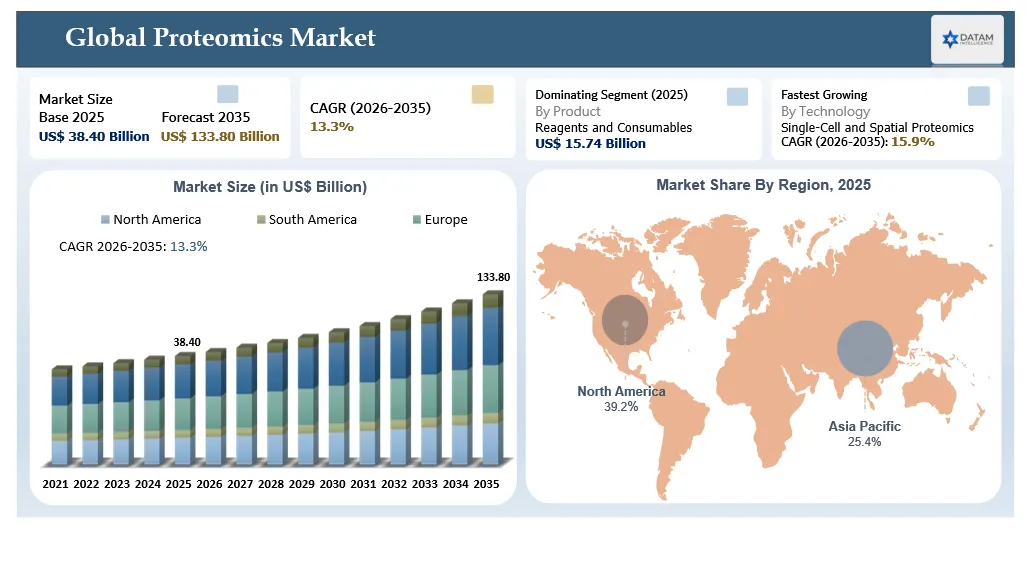
Proteomics is moving from specialist research laboratories into integrated discovery and translational workflows. Mass spectrometry remains the broadest discovery technology because it can identify, quantify and characterize proteins and proteoforms without requiring a preselected antibody panel. Affinity-based technologies are expanding quickly through high-multiplex plasma studies, longitudinal cohorts and pharmaceutical biomarker programs. The fastest commercial growth is occurring where platforms combine high sample throughput, standardized workflows and scalable data analysis.
North America leads through pharmaceutical R&D, major instrument vendors, advanced core laboratories and large population studies. Asia-Pacific is expected to grow fastest as China, Japan, South Korea, Singapore, India and Australia expand biobanks, precision medicine programs, contract research and local instrument access.
| Metric | Value |
| 2025 Market Size | US$ 38.40 Billion |
| 2035 Market Size | US$ 133.80 Billion |
| CAGR 2026-2035 | 13.3% |
| Largest Region | North America |
| Fastest-Growing Region | Asia-Pacific |
| Largest Product Segment | Reagents and Consumables |
| Fastest-Growing Approach | Single-Cell and Spatial Proteomics |
Proteomics Market Key Takeaways
- Reagents and consumables represent the largest recurring revenue pool because every instrument or assay placement generates continuing demand for sample preparation, chromatography, labeling, affinity reagents and quality-control materials.
- Mass spectrometry remains the leading technology for unbiased discovery, while affinity-based assays are scaling rapidly in population studies and plasma biomarker programs.
- Drug discovery and development is the largest application because proteomics supports target identification, mechanism-of-action analysis, pharmacodynamic biomarkers, safety assessment and patient stratification.
- Pharmaceutical and biotechnology companies are the largest end-user segment, supported by growing use of proteomic evidence in translational research and clinical trials.
- Single-cell, spatial and top-down proteomics are high-growth segments because they capture heterogeneity, tissue context and proteoform-level biology that bulk workflows can miss.
Proteomics Industry Trends and Strategic Insights
- Population-scale proteomics is moving beyond pilot studies into national biobanks and pharmaceutical consortia that analyze hundreds of thousands of samples.
- High-throughput mass spectrometry is converging with affinity assays, enabling complementary discovery, validation and longitudinal monitoring.
- Data-independent acquisition, ion mobility and automated sample preparation are improving depth and reproducibility while increasing samples per day.
- AI is becoming integral to peptide identification, de novo sequencing, spectral prediction, quality control, biomarker modeling and multiomics integration.
- Clinical translation depends increasingly on standardization, reference materials, cross-platform comparability and evidence that biomarkers improve patient management.
Proteomics Market Scope
| Metrics | Details |
| 2025 Market Size | US$ 38.40 Billion |
| 2035 Projected Market Size | US$ 133.80 Billion |
| CAGR | 13.3% |
| Largest Market | North America |
| Fastest Growing Market | Asia-Pacific |
| By Product and Service | Instruments, Reagents and Consumables, Software, Services |
| By Technology | Mass Spectrometry, Protein Microarrays, Electrophoresis, Chromatography, Affinity-Based Proteomics, X-Ray Crystallography, NMR, SPR and Others |
| By Proteomics Approach | Bottom-Up, Top-Down, Targeted, Affinity-Based, Single-Cell, Spatial and Proteogenomics |
| By Workflow | Sample Preparation, Separation and Enrichment, Detection and Quantification, Bioinformatics, Validation |
| By Sample Type | Blood/Plasma/Serum, Tissue/FFPE, Cells, Urine/Other Biofluids, Microbial/Plant |
| By Application | Drug Discovery, Clinical Diagnostics, Biomarker Discovery, Precision Medicine, Biopharma Characterization, Agriculture/Food and Other Research |
| By End User | Pharma/Biotech, Academic, Hospitals/Diagnostics, CROs, Biobanks/Government and Others |
| By Distribution Channel | Direct Sales, Specialty Distributors, Online Channels, Service and Platform Partnerships |
Why does this report matter in 2026?
The year 2026 is a pivotal period for Proteomics because the market is moving from technology demonstration toward population-scale and clinically connected deployment. Large biobank projects are linking protein measurements to longitudinal health records, while pharmaceutical companies are using proteomics to improve target selection and reduce late-stage failure. New mass-spectrometry platforms are increasing throughput and depth, and affinity technologies are expanding the number of proteins measured from small sample volumes.
The report matters because commercial opportunity varies sharply by workflow. Discovery mass spectrometry, high-multiplex affinity profiling, targeted validation, spatial imaging, single-cell analysis and regulated diagnostics have different pricing, purchasing cycles, data requirements and competitive structures. The report separates these markets so users can evaluate realistic demand, customer needs and barriers to adoption.
Proteomics Market White Space & Investment Opportunities
- Standardized plasma proteomics workflows that combine depletion, enrichment and high-throughput mass spectrometry.
- Single-cell and low-input proteomics with lower sample loss, higher throughput and improved quantification.
- Spatial proteomics platforms integrating protein imaging with morphology and transcriptomics.
- Clinical-grade protein panels for oncology, neurology, cardiovascular disease, immune disorders and metabolic disease.
- AI-native software for proteoform analysis, causal biomarker modeling and cross-platform harmonization.
- Regional proteomics service hubs in Asia-Pacific, the Middle East and Latin America.
Proteomics Future Market Transformation
The market will transform from instrument-centered purchasing toward integrated platforms combining sample preparation, measurement, software, databases and interpretation. Laboratories will increasingly select workflows based on total cost per interpretable sample, reproducibility and compatibility with clinical or multiomics data. Discovery and validation will also become more connected, with mass spectrometry, proximity assays, aptamer panels and immunoassays used in complementary stages.
Proteomics will become a routine layer in drug development. Companies will use protein signatures to prioritize targets, segment patients, monitor pharmacology and identify resistance. Population studies will provide reference ranges and disease trajectories, supporting earlier detection and prevention. Clinical adoption will remain selective, but high-value panels with strong evidence and clear care pathways will create substantial recurring assay revenue.
Proteomics Market Buyer Decision-Making Criteria
Buyers compare depth of coverage, dynamic range, throughput, sample volume, reproducibility, missing-value rates, multiplexing, flexibility, workflow time and cost per sample. Mass-spectrometry buyers also evaluate resolution, sensitivity, acquisition speed, ion mobility, uptime, service support and software compatibility. Affinity-platform buyers assess specificity, cross-reactivity, panel content, batch consistency and the ability to scale across large cohorts.
Clinical and biopharma buyers place additional weight on validation, quality systems, longitudinal consistency, regulatory support and data traceability. Vendors with application laboratories, training, robust service networks and validated workflows have a strong advantage because proteomics performance depends on the full workflow rather than a single instrument specification.
Proteomics Market Economic & Investment Analysis
Proteomics economics are increasingly driven by recurring consumables and data services. Instrument placements generate columns, reagents, sample-preparation kits, affinity panels, calibration materials and software subscriptions. Large cohort projects can create multi-year revenue visibility, while clinical panels can support repeat testing. However, customer acquisition can be costly because workflows require validation, staff training and data integration.
Investment is concentrated in scalable assays, high-throughput mass spectrometry, single-molecule detection, spatial biology and AI. Investors should distinguish between attractive scientific performance and a repeatable commercial workflow. Key metrics include cost per sample, throughput, failure rates, reagent gross margin, installed-base productivity, service capacity, customer concentration and the time required to move from early access to routine use.
Proteomics Investment Trends in the Market
- Large instrument vendors are investing in integrated mass-spectrometry and affinity portfolios.
- Biobank collaborations are becoming strategic routes to demonstrate population-scale utility.
- Capital is flowing toward single-cell, single-molecule and spatial proteomics platforms.
- Software acquisitions are increasing as vendors seek AI, proteoform analysis and workflow automation capabilities.
- Pharma partnerships increasingly combine platform access with biomarker discovery, validation and companion-diagnostic development.
Strategic Indicators for the Proteomics Market
High Regulation Impact
Research-use workflows face limited direct regulation, but clinical assays, laboratory-developed tests, companion diagnostics and data handling are subject to substantial quality and regulatory requirements. Clinical translation requires analytical validation, defined intended use, reproducibility, reference ranges and evidence of clinical utility.
High Investment Activity
Investment is high across instruments, affinity assays, spatial biology, single-cell analysis and AI. Large acquisitions and strategic partnerships show that proteomics is becoming a core layer of multiomics and precision medicine.
Supply Chain Disruption
High-end mass spectrometers rely on specialized electronics, vacuum systems, lasers, detectors and precision components. Consumables also depend on chromatography media, antibodies, oligonucleotides and microfluidics. Long lead times and service-part shortages can delay laboratory deployment.
Pricing Volatility
Instrument prices are relatively stable but can vary through configurations, service packages and regional currency movements. Reagent and assay pricing is influenced by panel size, sample volume and contract commitments. Large cohorts negotiate substantial discounts.
Procurement Pressure
Buyers increasingly demand lower cost per sample, higher uptime, transparent service terms and interoperability. Core laboratories need flexible platforms that can support diverse projects, while biopharma buyers prefer standardized workflows and predictable turnaround.
New Technology Adoption
DIA, ion mobility, proximity assays, aptamer panels, single-cell workflows, spatial imaging and AI are expanding rapidly. Adoption depends on proof that new methods improve depth, throughput, reproducibility or clinical relevance.
Regional Expansion Opportunity
Asia-Pacific has strong growth potential through biobanks, pharma R&D, local service laboratories and precision-health programs. The Middle East is investing in genomics and population health, creating opportunities for integrated proteomics.
Government Policy Support
National biobanks, cancer programs, rare-disease initiatives and precision-health strategies support proteomics infrastructure. Public funding can reduce early adoption risk and create reference datasets.
Pricing Intelligence
Premium platforms justify pricing through deeper coverage, higher throughput or lower sample requirements. The most important measure is total cost per usable, interpretable sample including sample preparation, instrument time, software and labor.
AI Impact Analysis of Proteomics Market
AI is becoming central to spectrum interpretation, de novo peptide sequencing, retention-time prediction, protein inference, quality control and missing-value handling. Foundation models can learn reusable representations from mass spectra and improve downstream tasks where labeled data are limited. In population studies, machine learning can integrate protein measurements with genetics, imaging, clinical records and outcomes to identify risk signatures and therapeutic targets.
Commercial value will depend on transparent validation and workflow integration. Vendors that embed AI into acquisition, instrument tuning and result interpretation can reduce the expertise required for advanced proteomics. However, models must be robust across instruments, laboratories, populations and sample types. Data governance, explainability and version control will become important in clinical and regulated environments.
Disruption Analysis of Proteomics Market
Affinity-based platforms are disrupting traditional proteomics by enabling thousands of proteins to be measured across very large cohorts with small sample volumes and standardized workflows. High-throughput mass spectrometry is responding with deeper unbiased discovery, faster acquisition and improved plasma workflows. The market is therefore moving toward complementary platform use rather than a single dominant method.
Single-cell, spatial and top-down proteomics are also changing the competitive landscape. These approaches capture heterogeneity, tissue context and proteoforms that conventional bulk bottom-up workflows cannot fully resolve. Their commercial challenge is to convert scientific differentiation into robust throughput, reproducibility and accessible analysis.
Proteomics Market BCG Matrix: Company Evaluation
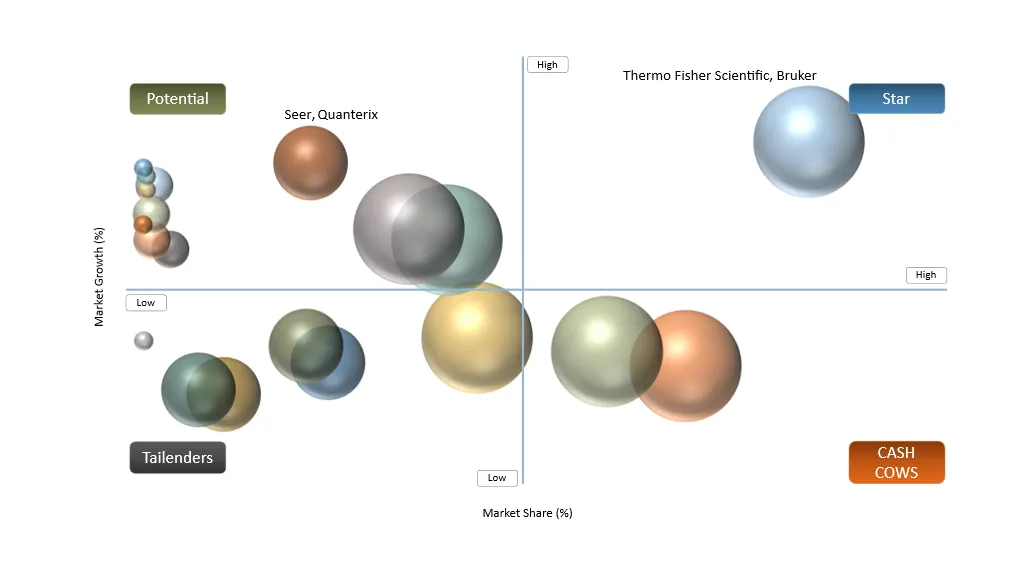
STAR
Thermo Fisher Scientific, Bruker, Danaher, Agilent and Waters are positioned as Stars because they combine broad installed bases, recurring consumables, global service and strong innovation in mass spectrometry, chromatography, affinity technologies and software. Illumina is also moving into this category through its proteomics strategy and SomaLogic acquisition.
POTENTIAL
Seer, Quanterix, Nautilus Biotechnology, Quantum-Si, Biognosys, Evosep and other emerging platforms represent Potential players. Their position depends on scaling sample throughput, lowering cost, building reproducibility and securing pharmaceutical or clinical adoption.
Proteomics Market Dynamics
Driver Impact Analysis
| Driver | Market Growth Impact | Demand Concentration | Impacted Use Case | Strategic Impact |
Precision medicine and biomarker-driven R&D | High | Pharma, biobanks and clinical research | Target discovery, patient stratification | Expands demand for discovery and validation workflows |
Higher throughput and proteome depth | High | Mass-spectrometry core labs | Large cohort and translational studies | Improves cost per sample and broadens adoption |
| Population-scale biobanks | Medium-High | North America, Europe and Asia-Pacific | Longitudinal biomarker studies | Creates large recurring assay contracts |
| Single-cell and spatial biology | Medium-High | Oncology and immunology | Cell-state and tissue-context analysis | Creates new premium instrument and reagent categories |
Driver: Expansion of Precision Medicine and Biomarker-Driven Drug Development
Proteomics provides a functional view of disease biology that complements genomics and transcriptomics. Pharmaceutical companies use protein data to validate targets, identify pathway activation, monitor drug response and select patients. As development programs become more biomarker-driven, demand rises for discovery platforms, targeted assays and scalable validation across clinical samples.
Restraint Impact Analysis
| Restraint | Drag on Market Growth | Primary Impact Area | Impacted Use Case | Strategic Impact |
| High instrument and workflow cost | High | Laboratory budgets | Advanced mass spectrometry and spatial systems | Encourages shared cores and service outsourcing |
| Data complexity and skills shortage | High | Bioinformatics | Large-scale discovery and multiomics | Increases demand for integrated software and services |
| Standardization and reproducibility gaps | Medium-High | Clinical translation | Cross-site biomarker validation | Delays regulated adoption |
| Dynamic range and sample complexity | Medium | Plasma and tissue workflows | Low-abundance biomarker discovery | Drives enrichment, depletion and affinity innovation |
Restraint: High Cost and Workflow Complexity
Advanced proteomics requires expensive instruments, specialized sample preparation, experienced operators and substantial computing. The full cost includes service contracts, chromatography, reagents, data storage and analysis. Smaller laboratories may delay purchases or rely on core facilities and CROs. Vendors must simplify workflows and demonstrate reliable cost per usable sample to expand beyond expert centers.
Proteomics Market Segmentation Analysis
The global Proteomics market is segmented by Product and Service, Technology, Proteomics Approach, Workflow, Sample Type, Application, End User, Distribution Channel and region.
By Product and Service
Reagents and Consumables Will Retain the Largest Revenue Share
Recurring demand for sample-preparation kits, chromatography columns, labels, antibodies, oligonucleotide reagents, affinity panels and quality-control materials makes consumables the largest revenue pool. Instruments remain strategically important because they establish the installed base. Software and services will grow faster as data volumes increase and laboratories outsource specialized analysis.
By Technology
Mass Spectrometry Will Remain the Largest Technology Segment
Mass spectrometry leads because it supports unbiased discovery, quantification, post-translational modification analysis, proteoform characterization and biopharmaceutical characterization. Affinity-based proteomics is expected to grow rapidly through population studies and biomarker validation. Protein microarrays and electrophoresis remain relevant in specific research and clinical workflows.
By Proteomics Approach
Single-Cell and Spatial Proteomics Will Record the Fastest Growth
Bottom-up proteomics remains the dominant approach, but single-cell and spatial methods will grow fastest as researchers seek cell-type resolution and tissue context. Top-down proteomics is gaining strategic importance for proteoform analysis, while targeted methods support biomarker validation and clinical translation.
By Workflow
Detection and Quantification Will Remain the Largest Workflow Segment
High-value instruments and assays are concentrated in detection and quantification. Sample preparation is a major recurring opportunity because reproducibility often depends on digestion, depletion, enrichment and automation. Data processing will gain share as AI and cloud analytics become central to large studies.
By Sample Type
Blood, Plasma and Serum Will Lead Commercial Demand
Blood-based samples dominate large cohorts because they are accessible, longitudinal and relevant to systemic disease. Their extreme dynamic range creates demand for depletion, enrichment and high-sensitivity platforms. Tissue and FFPE samples remain critical in oncology and pathology, while single-cell workflows increase the value of low-input cell samples.
By Application
Drug Discovery and Development Will Remain the Largest Application
Pharma and biotech use proteomics across target identification, mechanism studies, toxicology, pharmacodynamics and patient selection. Biomarker discovery and precision medicine will record strong growth. Clinical diagnostics will expand selectively where protein panels demonstrate analytical validity and clear clinical utility.
By End User
Pharmaceutical and Biotechnology Companies Will Remain the Largest Buyers
Biopharma companies have the strongest ability to fund advanced platforms and large studies. Academic institutes remain essential for innovation and early adoption. CROs and service laboratories will gain share as customers seek access without buying instruments.
By Distribution Channel
Direct Sales Will Continue to Lead
Complex instruments and enterprise assay platforms require consultative selling, installation, training and service, making direct sales dominant. Distributors are important in emerging markets and for routine consumables. Platform partnerships will become more important for biobank and pharmaceutical programs.
Proteomics Market Geographical Penetration
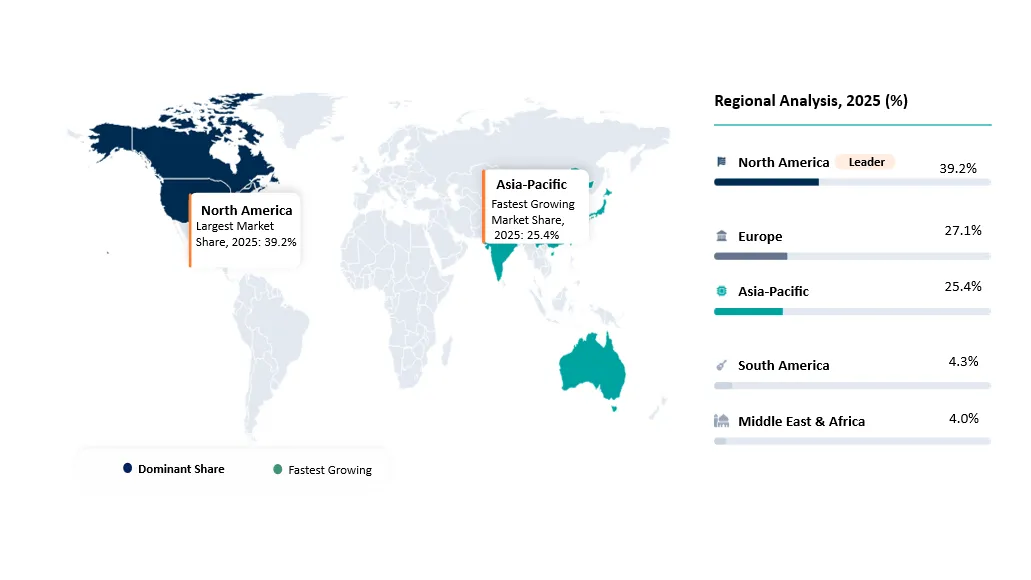
| Region | 2025 Share | Strategic Position |
| North America | 39.2% | Largest market through biopharma R&D, major vendors, biobanks and advanced cores |
| Europe | 27.1% | Strong population cohorts, academic networks and translational research |
| Asia-Pacific | 25.4% | Fastest growth through precision health, local R&D and biobank investment |
| South America | 4.3% | Emerging academic and clinical service demand |
| Middle East and Africa | 4.0% | Growth through national genomics and precision-health programs |
U.S. Proteomics Market Landscape
The U.S. is the largest national market through pharmaceutical R&D, NIH-funded research, major instrument vendors, biobanks and advanced clinical laboratories. Demand spans discovery mass spectrometry, affinity profiling, spatial biology and biomarker services. The market benefits from strong venture funding and a dense network of core facilities.
Germany Proteomics Market Outlook
Germany has strong academic proteomics centers, pharmaceutical research and instrument adoption. The country contributes to large European cohorts and precision-medicine programs. Demand is particularly strong for high-resolution mass spectrometry, biopharmaceutical characterization and translational oncology.
UK Proteomics Market Trends
The UK is strategically important because UK Biobank is supporting one of the largest population proteomics programs. Academic institutes, pharmaceutical partners and national health datasets create a strong environment for biomarker discovery and longitudinal validation.
Japan Proteomics Market Outlook
Japan has a mature life-science tools market, strong instrument manufacturing and high-quality pharmaceutical research. Opportunities are strongest in precision oncology, aging, biopharmaceutical analysis and high-end mass spectrometry.
China Proteomics Market Trends
China is expanding academic research, biopharma R&D, clinical cohorts and local service laboratories. Domestic instrument development and government investment can lower access barriers. High-end imported systems remain important for advanced discovery and quality-sensitive workflows.
India Proteomics Market Outlook
India is an emerging market supported by biopharma, CROs, academic centers and growing precision-medicine activity. Service laboratories and shared core facilities are important because capital budgets remain constrained. Opportunity is strongest in clinical research, biosimilars, infectious disease and agricultural proteomics.
Proteomics Market Competitive Landscape
- Thermo Fisher Scientific, Bruker, Danaher, Agilent and Waters lead the instrument and workflow ecosystem through strong installed bases, global service and broad consumable portfolios.
- Illumina is expanding into proteomics through SomaLogic and NGS-enabled affinity assays, creating closer convergence between genomics and proteomics.
- Competition is shifting from instrument specifications toward complete workflows, including sample preparation, automation, software, databases and application support.
- Emerging companies compete through single-molecule detection, nanoparticle enrichment, digital immunoassays, spatial biology and AI-enabled analysis.
- Large cohort contracts and pharmaceutical collaborations are strategically important because they validate scalability and create reference datasets.
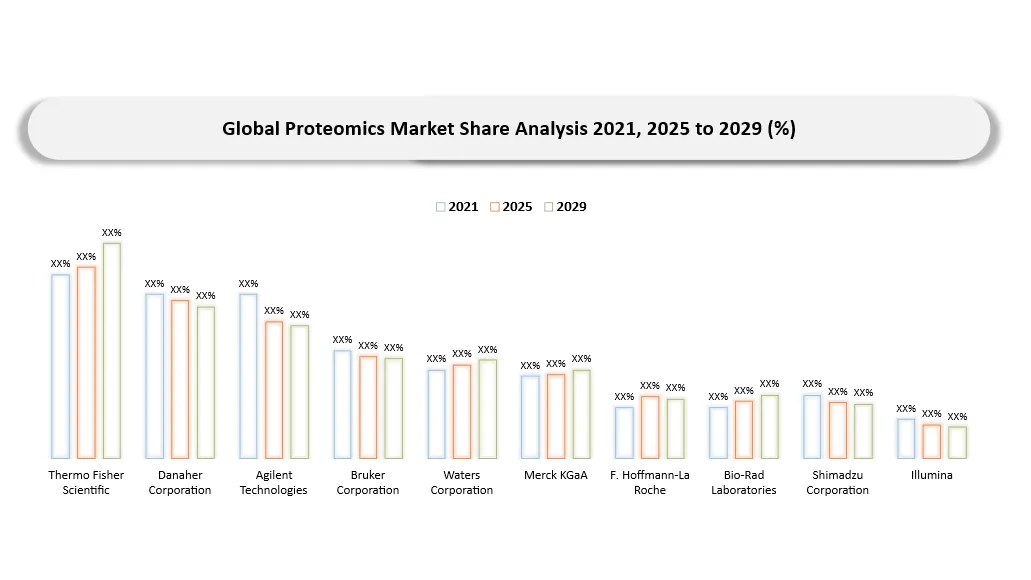
Key Companies
- Thermo Fisher Scientific
- Bruker Corporation
- Danaher Corporation
- Agilent Technologies
- Waters Corporation
- Illumina
- Bio-Rad Laboratories
- Standard BioTools
- Quanterix Corporation
- Seer, Inc.
- Nautilus Biotechnology
- Quantum-Si
- Shimadzu Corporation
- JEOL Ltd.
- Merck KGaA
- F. Hoffmann-La Roche
- Biognosys
- Evosep
- PreOmics
- SCIEX
Proteomics Market Major Pain Points
- High capital cost of advanced mass spectrometry and spatial platforms.
- Complex sample preparation and susceptibility to batch effects.
- Need for skilled operators and bioinformatics specialists.
- Limited cross-platform comparability and standardization.
- Extreme dynamic range in plasma and other biofluids.
- Difficulty translating discovery biomarkers into validated clinical assays.
- Large data-storage and computing requirements.
- Long procurement, installation and qualification cycles.
Proteomics Market Recent Developments
- June 2026: Bruker announced major 4D proteomics advances, including timsUltra AIP workflows exceeding 10,000 proteins in cell lines and more than 6,500 proteins at 500 samples per day, alongside top-down proteoform and AI software developments.
- May 2026: Thermo Fisher Scientific introduced next-generation Orbitrap platforms and highlighted integration of mass spectrometry, Olink proteomics and AI-enabled analytics.
- April 2026: Thermo Fisher Scientific and PRECISE-SG100K announced an integrated population-scale proteomics strategy combining Olink, Orbitrap Astral and Seer technologies.
- January 2025: Thermo Fisher Scientific announced that Olink Explore was selected for the UK Biobank Pharma Proteomics Project to analyze more than 5,400 proteins across up to 600,000 samples.
- June 2025: Illumina announced an agreement to acquire SomaLogic assets for US$ 350 million upfront plus milestone payments, expanding its NGS-enabled proteomics strategy.
Analyst View / Opinion on Proteomics Market
- Proteomics is entering a sustained expansion phase as protein measurements become a routine complement to genomic data in research and drug development.
- Mass spectrometry will retain the largest technology position, while affinity assays will lead population-scale plasma studies and single-cell or spatial methods will create premium growth categories.
- The strongest vendors will connect discovery, validation and clinical translation rather than selling isolated instruments or panels.
- Recurring consumables, software and services will become more important as the installed base expands and large cohort studies mature.
- Clinical adoption will depend on standardization, reproducibility and evidence that protein signatures change treatment decisions or improve outcomes.
Proteomics Market Target Audience
| INDUSTRY | WHO SHOULD BUY THIS REPORT? | REASON TO BUY THIS REPORT |
| Pharmaceuticals and Biotechnology | Discovery leaders, translational teams, clinical development and business development | Assess platform selection, biomarker strategy, outsourcing and partnership opportunities. |
| Academic and Research Institutes | Core facilities, principal investigators and research administrators | Evaluate technology trends, funding priorities and workflow requirements. |
| Hospitals and Diagnostics | Pathology leaders, laboratory directors and precision-medicine teams | Understand clinical translation, validation and diagnostic opportunities. |
| CROs and Service Laboratories | Proteomics service providers, bioanalytical CROs and central labs | Identify demand, capacity needs and high-growth service segments. |
| Instrument and Reagent Suppliers | Product managers, strategy teams and distributors | Benchmark competition, regional demand and recurring revenue opportunities. |
| Biobanks and Government Programs | Population-health leaders and public research agencies | Plan large cohort proteomics, data infrastructure and vendor partnerships. |
| Investment and Consulting | Investors, private equity, strategy consultants and corporate development | Assess market growth, M&A, platform risk and commercialization readiness. |
Why Choose DATAM?
- Data-driven insights combining market sizing, installed-base analysis, assay volumes, pricing, workflow economics and customer interviews.
- Post-purchase analyst consultations for platform selection, market entry, partnership identification and competitive benchmarking.
- Annual updates covering product launches, acquisitions, biobank programs, regulatory developments and emerging technologies.
- Specialized focus on emerging markets and country-level research infrastructure.
- Actionable analysis connecting technology performance with purchasing behavior, recurring revenue and clinical translation.
What DATAM Uniquely Provides
- Ten-year forecasts across product, technology, approach, workflow, sample type, application, end user, channel and region.
- Competitive analysis spanning mass spectrometry, affinity assays, single-cell, spatial, single-molecule and software platforms.
- Buyer-focused assessment of throughput, depth, reproducibility, cost per sample, service and data requirements.
- Country-level analysis linking research funding, biopharma R&D, biobanks and laboratory infrastructure.
- Strategic recommendations for partnerships, service expansion, product positioning and market entry.





























































