


AI Protein Design Market Overview
Market growth is driven by the rapid integration of artificial intelligence into protein engineering, biologics discovery, and computational drug development. AI-based platforms enable researchers to design novel protein sequences, predict protein folding, and optimize molecular interactions more efficiently than traditional experimental approaches.
A major factor supporting this growth is the increasing availability of biological data and AI-powered protein modeling tools. For instance, the AlphaFold Protein Structure Database provides open access to more than 200 million predicted protein structures, significantly accelerating protein modeling and design research worldwide. The database has already been used by over three million researchers across more than 190 countries, highlighting the global expansion of AI-enabled biomolecular research.
Furthermore, the rising demand for faster drug discovery and the expanding biologics pipeline are strengthening the adoption of AI protein design technologies across pharmaceutical and biotechnology companies. Advances in machine learning algorithms, high performance computing infrastructure, and large-scale biological datasets are improving the accuracy of protein structure prediction and biomolecular modeling. As a result, AI protein design platforms are becoming increasingly important for therapeutic protein engineering, enzyme optimization, and next-generation biologics development.
Market Scope
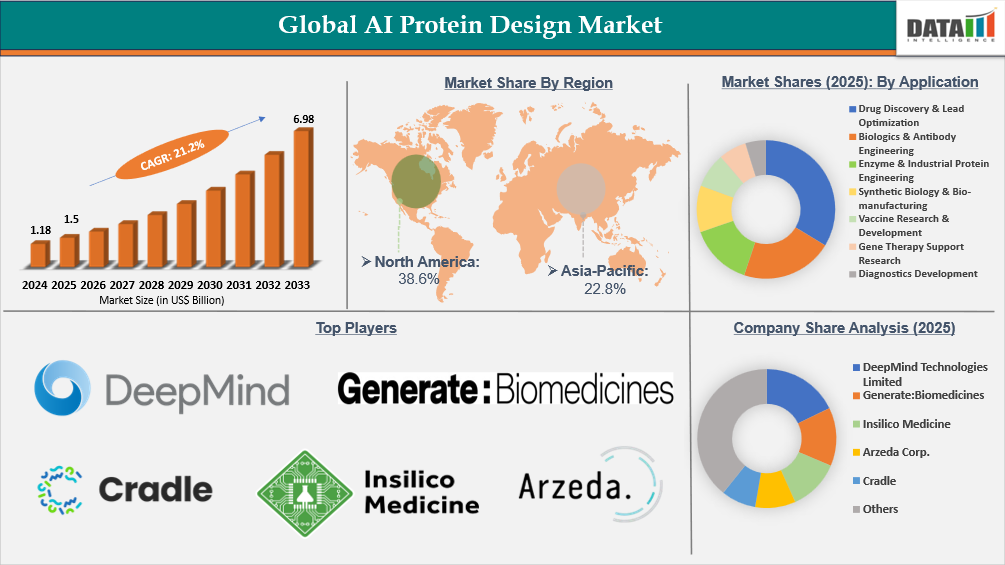
| Metric | Details |
| Market Size (2025) | USD 1.50 Billion |
| Market Size (2035) | USD 9.50 Billion |
| CAGR | 21.20% |
| Historic Years | 2023–2024 |
| Base Year | 2025 |
| Forecast Period | 2026–2035 |
| Segments Covered | Technology, Application, End User, Deployment Type, Protein Type, Workflow Stage, Region |
| Leading Region | North America |
| Fastest Growing Region | Asia-Pacific |
For More Detailed Information Request for Sample
Key Takeaways
- The AI Protein Design Market growth at 21.2% CAGR signals one of the fastest-expanding segments within computational biology.
- Drug discovery and lead optimization hold 33.7% market share, making it the primary commercial application.
- North America accounts for 38.6% of global market share, supported by strong biotech and AI ecosystems.
- AI platforms can reduce early-stage drug discovery timelines by up to 40–60%, directly impacting R&D ROI.
- Open-access datasets such as 200+ million protein structures are accelerating model training and adoption globally.
- Competitive differentiation is shifting toward data quality, model accuracy, and wet-lab validation capabilities.
Market Dynamics
Rising Demand for Faster Biologics and Therapeutic Discovery
The rising demand for faster biologics and therapeutic discovery is a key driver of the global AI protein design market. Traditional biologics development is often time-intensive, requiring repeated rounds of protein screening, optimization, and laboratory validation. AI protein design platforms help accelerate this process by enabling researchers to computationally generate and evaluate large numbers of protein candidates, reducing early-stage discovery time and improving development efficiency. This allows companies to identify promising lead molecules more quickly and allocate laboratory resources more effectively. It also supports faster progression from target identification to preclinical development.
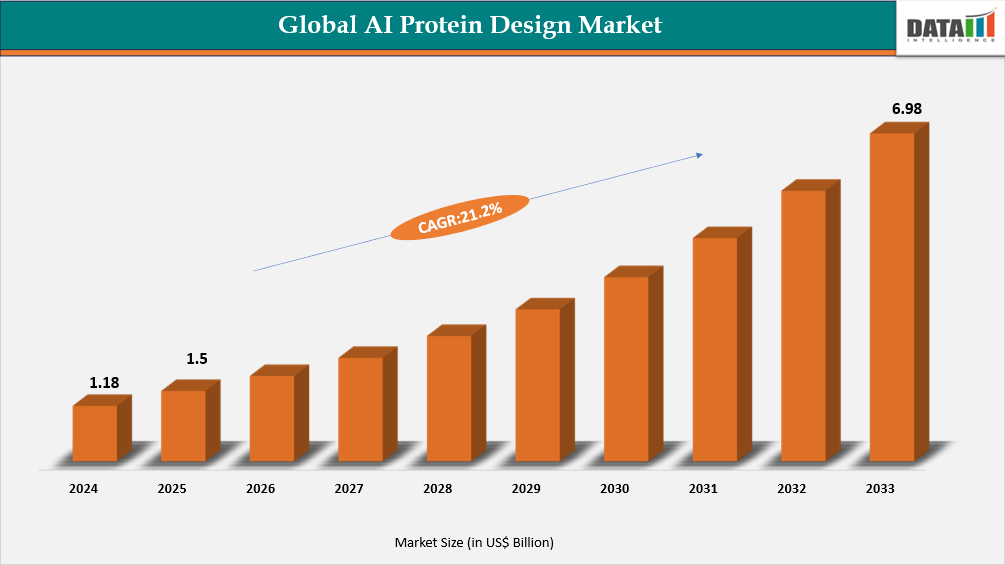
This demand is becoming more critical as biologics account for a growing share of the pharmaceutical pipeline. Industry estimates indicate that conventional drug development can take over 10 years and cost more than US$2 billion, while AI-enabled discovery tools can reduce early research timelines by up to 40–60% in certain workflows. As pharmaceutical and biotechnology companies seek faster and more cost-effective ways to develop antibodies, enzymes, and novel therapeutics, the adoption of AI-driven protein design platforms continues to grow. The technology is also helping improve candidate quality by predicting stability, binding affinity, and functionality earlier in the discovery process. As a result, AI protein design is becoming an increasingly valuable tool for improving R&D productivity and shortening innovation cycles.
Segmentation Analysis
The global AI Protein Design market is segmented based on technology, application, end user, deployment type, protein type, workflow stage, and region.
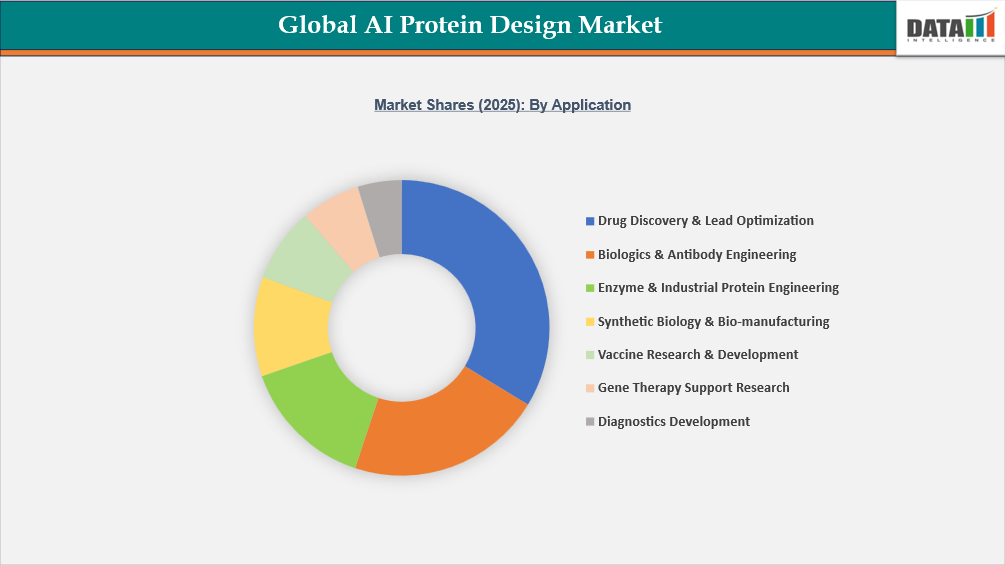
Drug Discovery & Lead Optimization Emerges as the Leading Application Segment in the Global AI Protein Design Market
The drug discovery & lead optimization segment represents the largest and most influential application area in the global AI protein design market, accounting for approximately 33.7% of the total market share. This dominance is driven by the increasing adoption of artificial intelligence to accelerate early-stage therapeutic discovery, where AI models are used to predict protein structures, design novel protein sequences, and optimize binding interactions with target molecules. Compared with conventional discovery workflows that rely heavily on trial-and-error laboratory experimentation, AI-driven protein design enables rapid in-silico screening of thousands of protein variants, significantly reducing development timelines and research costs.
Pharmaceutical and biotechnology companies are increasingly integrating AI protein design tools into their drug discovery pipelines to enhance lead identification and optimization processes. These technologies help improve candidate properties such as binding affinity, stability, specificity, and developability before experimental validation. With biologics and protein-based therapeutics representing a growing share of the global drug development pipeline, the demand for computational protein engineering platforms continues to increase. As a result, drug discovery & lead optimization remains the most commercially impactful segment within the AI protein design ecosystem, supported by strong R&D investments, strategic collaborations between AI firms and biopharma companies, and the ongoing need to accelerate innovation in complex therapeutic development.
Geographical Penetration
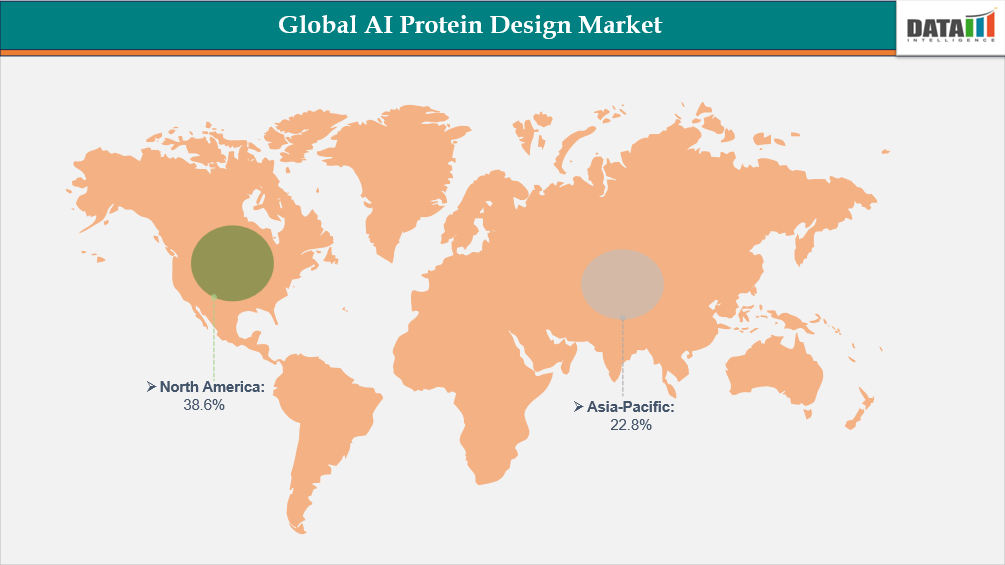
Largest Market:
North America Emerges as the Largest Regional Market for AI Protein Design
North America holds the largest share in the global AI protein design market, driven by the strong presence of leading biotechnology companies, AI-native drug discovery firms, advanced research institutions, and a well-established pharmaceutical innovation ecosystem. The region benefits from high adoption of artificial intelligence in biologics discovery, protein engineering, and therapeutic development, particularly across the United States, where major investments in computational biology, cloud infrastructure, and precision medicine continue to accelerate market demand.
Demand in North America is further supported by rising collaborations between biotech companies, academic research centers, and pharmaceutical manufacturers focused on accelerating drug discovery and lead optimization through AI-enabled protein modeling. The availability of venture capital funding, favorable innovation infrastructure, and early adoption of generative AI platforms strengthen the region’s leadership position. As a result, North America continues to serve as the primary revenue-generating market for AI protein design, supported by strong R&D spending and rapid commercialization of next-generation protein engineering technologies.
U.S. AI Protein Design Market Outlook
The U.S. represents the most advanced market for AI protein design, driven by the strong convergence of artificial intelligence, biotechnology, and pharmaceutical innovation. The country hosts a high concentration of AI-driven biotech companies, leading pharmaceutical firms, and research institutions that are actively using computational protein engineering to accelerate biologics discovery and therapeutic development. Demand is further strengthened by institutional support, highlighted by the U.S. National Science Foundation’s nearly US$32 million investment announced in 2025 to advance AI-driven protein design research and expand its applications across the U.S. bioeconomy.
The U.S. market also benefits from a well-developed innovation ecosystem supported by venture capital funding, academic-industry collaboration, and access to advanced cloud and high-performance computing infrastructure. These advantages enable companies to scale protein modeling, generative design, and lead optimization workflows more efficiently. As a result, the U.S. continues to serve as a major hub for platform development, partnership activity, and commercialization in the global AI protein design market.
Canada AI Protein Design Market Trends
Canada is emerging as a growing market for AI protein design, supported by its strong AI research base and expanding biotechnology ecosystem. The country is seeing increased use of computational approaches in protein modeling, biologics research, and early-stage therapeutic discovery, driven by rising demand for faster and more efficient drug development tools.
A key trend in Canada is the increasing integration of AI into translational research and precision-focused biologics development. Strong academic collaboration, digital research infrastructure, and growing alignment between AI and life sciences are expected to support continued market growth in the coming years. In addition, expanding investments in biotechnology innovation and research initiatives are further strengthening the adoption of AI-driven protein engineering tools. These developments position Canada as an emerging contributor to the broader North American AI protein design landscape.
Fastest Growing Market:
Asia-Pacific Records the Fastest Growth in the AI Protein Design Market
Asia-Pacific is expected to record the fastest growth in the AI protein design market, driven by expanding biotechnology capabilities, rising pharmaceutical R&D activity, and increasing adoption of artificial intelligence across life sciences research. Countries such as China, Japan, South Korea, India, and Singapore are strengthening their presence in computational biology, biologics development, and precision medicine, creating favorable conditions for AI-driven protein engineering platforms.
A key growth driver in Asia-Pacific is the increasing focus on accelerating therapeutic innovation while reducing development timelines and research costs. Research institutions, biotechnology companies, and pharmaceutical manufacturers across the region are adopting AI-enabled tools for protein modeling, candidate optimization, and biologics discovery to improve R&D efficiency. In addition, supportive government initiatives, expanding biotech startup activity, and rising collaboration between academia and industry are further contributing to market expansion.
India AI Protein Design Market Insights
India’s AI protein design market is still at an early stage, but the outlook is improving as the country strengthens its capabilities in computational biology, biomolecular research, and AI-enabled drug discovery. A key market signal is the government-backed push to establish “Bio-AI Mulankur” hubs under the BioE3 policy, with focus areas including biomolecular design, synthetic biology, and genomics diagnostics. This is particularly relevant for AI protein design, as it supports the use of AI and computation in designing novel proteins, enzymes, and other biomolecules for biomedical and biotechnological applications.
India is also evolving into a research-led hub for computational drug discovery and biologics engineering, supported by stronger academic collaboration, biotechnology programs, and translational research initiatives. These developments are expected to increase the adoption of AI-based protein modeling, therapeutic design, and early-stage discovery tools, positioning India as an emerging growth market within the Asia-Pacific AI protein design landscape.
China AI Protein Design Market Industry Growth
China is emerging as a high-growth market for AI protein design, supported by the rapid expansion of its biotechnology sector, rising pharmaceutical R&D activity, and increasing use of artificial intelligence in life sciences research. The country is strengthening its capabilities in computational biology, biologics development, and protein modeling, creating a favorable environment for AI-driven protein engineering platforms.
A key growth factor is the increasing adoption of AI-based tools in drug discovery workflows, where they are used to improve protein structure prediction, therapeutic candidate design, and lead optimization. In addition, strong research infrastructure, growing biotech innovation, and continued investment in advanced healthcare technologies are supporting wider adoption of AI protein design solutions. As a result, China is becoming one of the most important growth markets for AI protein design in the Asia-Pacific region.
Competitive Landscape
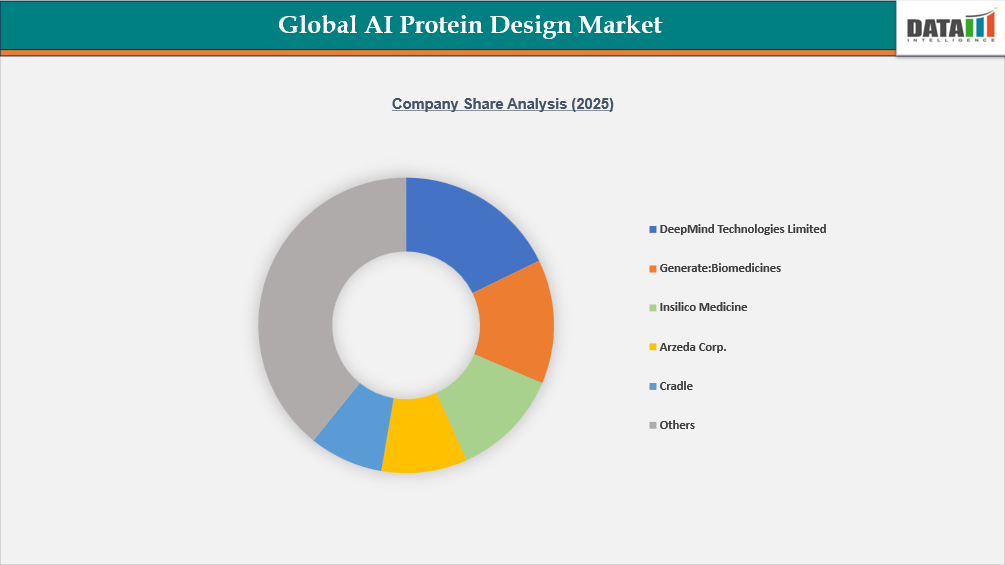
The global AI protein design market in 2025 is highly competitive and innovation-focused, with competition driven by advances in generative biology, de novo protein engineering, and computational drug discovery. The market includes leading technology driven participants such as DeepMind Technologies Limited, Generate:Biomedicines, Insilico Medicine, Arzeda Corp., Cradle, Profluent, A-Alpha Bio, Inc., Schrödinger, Inc., DenovAI Biotech, and Synbio Technologies. Companies are competing based on AI model performance, proprietary biological datasets, protein generation accuracy, binding prediction capability, wet-lab integration, and the speed of candidate optimization.
While DeepMind has significantly influenced the scientific foundation of the market through landmark protein modeling advances, specialized firms such as Generate:Biomedicines, Arzeda, Cradle, Profluent, and DenovAI Biotech are pushing commercialization opportunities in therapeutic and industrial protein design. Meanwhile, Schrödinger and Synbio Technologies support the market through computational design services and downstream synthesis and validation capabilities. As a result, the market is evolving as a collaborative yet competitive ecosystem where platform scalability, experimental validation, and commercial translation remain the key differentiators.
Recent Developments
In June 2026, DeepMind (Alphabet Inc.) expanded its AI-driven protein design capabilities with advanced models for predicting protein structures and functions with higher accuracy. The innovation focuses on accelerating drug discovery and biological research. This supports scientific advancements.
In May 2026, NVIDIA Corporation introduced new AI frameworks and accelerated computing platforms for protein modeling and molecular simulations. The development improves computational efficiency and scalability. This benefits biotech and pharmaceutical research.
In April 2026, Insilico Medicine, Inc. launched advanced AI-based protein design platforms for identifying novel therapeutic targets and molecules. The development enhances drug discovery speed and precision. This supports pharmaceutical innovation.
In March 2026, Schrödinger, Inc. strengthened its computational platform with AI-powered tools for protein engineering and molecular design. The innovation focuses on predictive modeling and simulation accuracy. This supports research efficiency.
What Sets This Global AI Protein Design Market Intelligence Report Apart
- Latest Data & Forecasts – Comprehensive and up-to-date market intelligence with forecasts through 2033, covering global demand by technology, application, end user, deployment type, protein type, and workflow stage, with region-wise analysis across North America, Europe, Asia-Pacific, Latin America, and the Middle East & Africa.
- Regulatory Intelligence – In-depth assessment of evolving regulatory frameworks impacting AI-designed proteins, biologics, and computationally enabled therapeutic development, including FDA, EMA, NMPA, PMDA, and CDSCO perspectives on validation, preclinical development, clinical translation, data integrity, and post-market compliance.
- Competitive Benchmarking – Structured benchmarking of leading AI protein design platform companies, generative biology innovators, and computational biotech players based on platform capabilities, pipeline strength, partnership activity, technological differentiation, geographic reach, and commercialization strategies.
- Geographic & Emerging Market Coverage – Regional analysis highlighting biotech ecosystem maturity, AI infrastructure readiness, research funding trends, biologics innovation clusters, and adoption potential, with special focus on growth opportunities in Asia-Pacific, Europe, and North America, as well as emerging innovation hubs.
- Actionable Strategies & Cost Dynamics – Strategic insights into platform licensing models, partnership and co-development opportunities, wet-lab validation costs, compute infrastructure requirements, model scalability, and commercialization pathways, supported by expert perspectives from protein engineering specialists, biotech executives, and computational biology stakeholders.
Target Audience
- Pharmaceutical companies focused on biologics, antibody development, and next-generation therapeutics
- Biotechnology firms engaged in protein engineering, synthetic biology, and enzyme design
- AI-driven drug discovery companies developing computational biology and generative protein platforms
- Contract research organizations (CROs) supporting early-stage discovery and preclinical validation
- Academic research institutions specializing in molecular biology, bioinformatics, and structural biology
- Government and public research agencies funding biomolecular and AI-driven life sciences innovation
- Venture capital and private equity firms investing in AI biotech and computational drug discovery startups
- Cloud computing and high-performance computing providers supporting large-scale protein modeling workloads
- Healthcare innovation hubs and incubators accelerating translational research and biotech commercialization
- Regulatory and clinical research stakeholders involved in validation, approval, and safety of AI-designed therapeutics




























































