


Global Energy & Infrastructure Update
China has achieved a major milestone in alternative fuel transportation after completing its first field trial for moving fuel methanol through an existing long-distance refined oil pipeline system. The development represents a potential shift in how methanol-based fuels can be stored, transported, and integrated into future energy networks.
The pilot project was conducted across China’s northwestern regions of Gansu and Shaanxi, where fuel methanol was transported through an operational refined oil pipeline after evaluating pipeline compatibility, safety requirements, and infrastructure modifications. Around 1,000 cubic meters of methanol were delivered in two batches through a controlled pipeline transportation process.
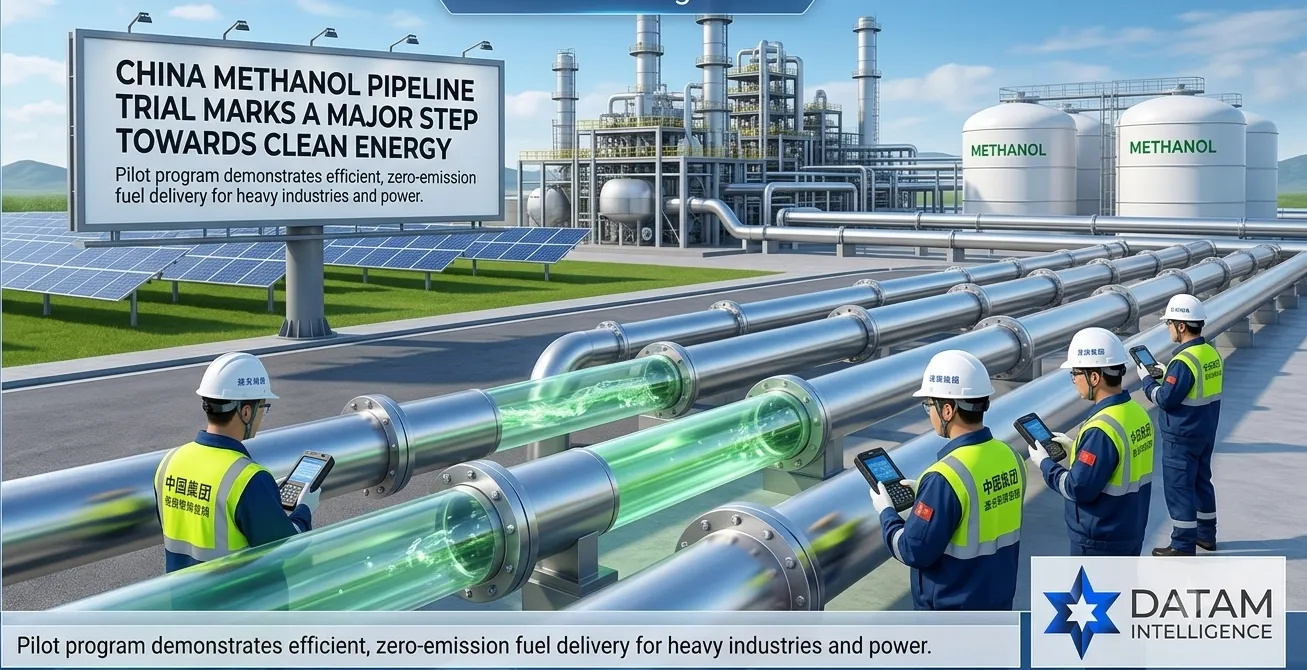
Methanol Pipeline Transport: A New Opportunity for Energy Infrastructure
Methanol has gained increasing attention as an alternative fuel due to its potential applications in transportation, industrial energy systems, marine fuels, and chemical manufacturing. However, large-scale adoption has historically been challenged by transportation and storage infrastructure limitations.
The successful pipeline trial demonstrates that existing energy infrastructure could potentially support methanol distribution with targeted technical upgrades. This could reduce the need for completely new transportation networks and improve supply chain efficiency.
Impact on Global Methanol Market Growth
The development could create new opportunities across the global methanol ecosystem, including:
- Expansion of methanol fuel distribution networks
- Increased investment in pipeline compatibility technologies
- Growth of clean fuel logistics solutions
- Improved regional energy security
- Greater adoption of alternative fuels in industrial applications
As countries accelerate energy transition strategies, methanol is emerging as a potential low-carbon fuel option, particularly when produced from renewable sources such as biomass, captured carbon, and green hydrogen.
Make Data-Driven Decisions with Methanol Market Intelligence
Access strategic market insights designed for business leaders, investors, and industry professionals. The Methanol Market Report provides in-depth analysis of market dynamics, growth opportunities, competitive positioning, and future trends influencing global methanol demand.
Industry Implications for Energy Companies and Investors
For energy companies, infrastructure operators, and investors, methanol transportation technology represents a potential growth area within the broader clean energy transition market.
Future developments in pipeline-based methanol transport may influence investment decisions across:
- Renewable methanol production facilities
- Fuel distribution infrastructure
- Energy storage systems
- Low-carbon transportation solutions
The advancement also highlights the growing importance of adaptable energy infrastructure capable of supporting multiple fuel types.
Analyst View: Methanol Infrastructure Could Become a Strategic Energy Asset
The evolution of methanol transportation infrastructure reflects a broader industry trend toward flexible and diversified energy systems. Companies that develop scalable methanol production, transportation, and storage capabilities may gain competitive advantages as demand increases for cleaner fuel alternatives.
The successful pipeline trial provides an important reference point for future methanol infrastructure projects worldwide and may encourage additional research into integrating alternative fuels into existing energy networks.
What is the significance of China’s methanol pipeline transport trial?
China’s methanol pipeline transport trial demonstrates the technical feasibility of using existing fuel pipeline infrastructure for large-scale methanol distribution. The project could help reduce logistics costs, improve supply chain efficiency, and support future growth of methanol as an alternative fuel.
Why is methanol considered an important clean energy fuel?
Methanol is considered an alternative energy carrier because it can be produced from multiple sources, including renewable feedstocks and green hydrogen. It has applications in transportation, industrial processes, and energy storage.
Market Intelligence Perspective
According to industry analysis, infrastructure readiness is becoming a critical factor in accelerating alternative fuel adoption. Methanol transportation innovation represents a convergence of energy technology, infrastructure modernization, and decarbonization strategies.
For market participants, monitoring developments in:
- Methanol production capacity
- Renewable methanol investments
- Pipeline adaptation technologies
- Alternative fuel regulations
will be essential for identifying emerging opportunities in the global energy transition landscape.
News source: https://www.globaltimes.cn/page/202607/1365774.shtml