


Ethanol Market Overview
North America and particularly United States, is a major driver of global demand for ethanol. With their strong economic growth in recent years, they have quickly become the world's leading hub for finance, trade, and industry.
Ethanol can be extracted from natural sources like plant material and agricultural by-products. The process of creating ethanol from these resources is much less energy-intensive than other sources of energy, making it a much more sustainable option over the long term. In addition, ethanol has a much lower carbon footprint than fossil fuels, which means that it does not produce as many harmful emissions into the atmosphere when it is burned, making it an environmentally friendly choice.
Ethanol became such a popular choice due to its ability to be directly converted into liquid fuels, which can then be used to meet transportation energy needs. The ethanol industry and other biofuel industries are quickly becoming more and more popular and because of this factor, the ethanol market is on continuous growth.
Furthermore, advanced filtration methods are now being used to remove and reduce contaminants from ethanol, resulting in a higher quality product which further includes the installation of new filtration systems, such as ultrafiltration and nanofiltration. UF and NF systems use different membrane materials to separate molecules of different sizes, allowing for a more thorough purification of the ethanol.
The global ethanol market has seen constant growth in recent years due to the increased demand from the transportation sector. Particular growth in the transportation sector is due to its efficient combustion and low carbon emissions relative to traditional gasoline and diesel fuels. Another advantage includes potential price savings to consumers because it is typically cheaper than other fuels.
Furthermore, microbial fuel cells are the major development in this sector which has several benefits as they can be used to produce renewable energy from agricultural waste and wastewater, such as corn stalks, sugarcane bagasse, and brewery wastewater, which makes them an attractive alternative to traditional fuel sources such as oil and gas.
Key Takeaways
- Increasing offshore oil & gas exploration activities are emerging as a key industry trend, with operators focusing on deepwater and ultra-deepwater developments to enhance energy production and optimize offshore field operations.
- North America maintains a leading position due to substantial offshore drilling activities in the Gulf of Mexico, advanced maritime infrastructure, and continuous investments in offshore energy projects.
- Asia-Pacific is projected to record the fastest growth as rising offshore exploration activities, increasing energy demand, and expanding investments in offshore oil & gas developments continue to support market expansion across major economies.
- Growing investments in offshore wind energy projects are becoming a major factor supporting the demand for offshore support vessels, particularly for installation, maintenance, and logistics operations.
- Adoption of digital fleet management systems, predictive maintenance technologies, automation solutions, and real-time vessel monitoring platforms is increasing demand for technologically advanced offshore support vessels capable of improving operational efficiency and safety.
- Industry participants are increasingly evaluating investments based on vessel efficiency, environmental compliance, fuel optimization capabilities, operational flexibility, and advanced navigation technologies rather than relying solely on fleet expansion strategies.
- Rising demand for offshore energy production, increasing deepwater exploration activities, and expanding renewable offshore infrastructure projects are creating significant opportunities for offshore support vessel operators, shipbuilders, and maritime service providers globally.
Ethanol Market Scope
| Metrics | Details |
| CAGR | 4.92% |
| Size Available for Years | 2024-2033 |
| Forecast Period | 2026-2033 |
| Data Availability | Value (US$) |
| Segments Covered | Feedstock, Generation, Fuel Type, End-User and Region |
| Regions Covered | North America, Europe, Asia-Pacific, South America and Middle East & Africa |
| Fastest Growing Region | Asia-Pacific |
| Largest Region | Asia-Pacific |
| Report Insights Covered | Competitive Landscape Analysis, Company Profile Analysis, Market Size, Share, Growth, Demand, Recent Developments, Mergers and Acquisitions, New Product Launches, Growth Strategies, Revenue Analysis, Porter’s Analysis, Pricing Analysis, Regulatory Analysis, Supply-Chain Analysis and Other key Insights. |
For more details on this report - Request for Sample
Ethanol Market Dynamics
Government Support and Shifting Market Trends are Accelerating Market Growth
The global ethanol market is witnessing accelerated growth, largely driven by proactive government support and evolving market trends. In India, the government is actively promoting ethanol blending in petrol through the National Policy on Biofuels 2018, amended in 2022, which advanced the 20% blending target from 2030 to the Ethanol Supply Year (ESY) 2025–26. This regulatory push has created a favorable environment for ethanol production and investment, signaling strong policy backing for renewable fuels.
Under the Ethanol Blended Petrol (EBP) Programme, Public Sector Oil Marketing Companies (OMCs) have made significant progress in blending ethanol with petrol. By July 31, 2025, the average blending rate reached 19.05%, with July itself achieving 19.93%, highlighting the tangible impact of government initiatives. To meet the 20% target, authorities are implementing measures to expand feedstock availability, boost production capacities, and strengthen supply chains, ensuring a reliable foundation for sustained ethanol adoption.
Shifting market trends further reinforce this growth. Rising environmental awareness, stringent emission regulations, and the global push for cleaner fuels are prompting both consumers and industries to adopt ethanol at an accelerated pace. Innovations like ArcelorMittal’s Steelanol plant in Gent, Belgium, which converts carbon-rich steel gases into ethanol using LanzaTech’s carbon biorecycling technology, exemplify how technological advances are complementing policy support to scale production sustainably.
As demand grows, the integration of advanced production technologies, strong government incentives, and market-driven adoption is creating a synergistic effect that propels the ethanol industry forward. These factors collectively enhance investment opportunities, expand infrastructure, and drive global ethanol production, positioning the market for continued growth and contributing to broader renewable energy goals worldwide.
Benefits Of Ethanol As Renewable Gasoline
Ethanol is becoming increasingly popular as a reliable source of renewable gasoline in the modern world. Its renewable and clean burning properties, as well as its abundance in the environment, are the major reasons for its popularity in the market. The main advantages of using ethanol as a source of renewable gasoline are related to its renewable nature and the positive environmental impacts it can have. The most prominent benefit is that ethanol is a renewable resource, so it can reduce our dependence on finite fossil fuel.
Ethanol is gaining popularity as a renewable fuel option due to its environmental benefits. It produces fewer carbon and nitrogen oxide emissions than traditional gasoline, making it a cleaner burning alternative. Its renewable source materials are sustainable and have a lesser environmental impact than petroleum-based fuels. So many industries have implemented initiatives to promote the use of ethanol as a renewable fuel source.
Also, So many government subsidies and initiatives are there to promote biofuel production such as the loan guarantee program created by U.S. Department of Energy to help fund the development, construction, and retrofitting of commercial-scale biorefineries that produce advanced biofuels.
Growing Demand For A Clean Burning Fuel
Ethanol as a renewable biofuel market is emerging and gaining popularity which proves it is a major part of the automotive industry. The constant increasing demand for better fuel efficiency and reduced emissions has led to an increasing demand from consumers for more efficient and clean burning fuel sources. As a result, the market for ethanol and renewable biofuels has grown dramatically in past years. Ethanol is becoming more popular with consumers as an affordable and clean burning fuel option.
The demand for environmentally friendly fuel sources is increasing because of several factors, including the rising cost of conventional fuels, environmental concerns about emissions, and governmental and state incentives for the use of renewable energy sources. In Brazil, the government increased tax prices on using petroleum-based fuels than it does for using ethanol-based fuels. Because of this a significant increase in the demand for ethanol-based gasoline is being reflected and helped to fuel a growth in the ethanol market.
Fluctuating Prices Of Commodities Are Affecting The Market Growth
The ethanol market is witnessing considerable price changes across major countries, which are caused by a complex interaction of factors. To discuss the key region customers, here is how they are dealing with the effects of variable costs.
Early in 2024, the North American market saw an increase in production expenses, mostly due to rising corn prices, which are the key feedstock for ethanol production. Furthermore, rising energy costs, notably for natural gas used in the ethanol production process, have increased the production costs.
Seasonal variables, such as the summer driving season, have also played an important impact, with increased gasoline usage driving up demand for ethanol, which is combined with gasoline. Regulatory influences, such as prospective increases in Renewable Fuel Standard (RFS) blending requirements, have increased ethanol consumption.
The APAC ethanol market saw an upward pricing trend, owing to a combination of reasons, in 2024. The key catalysts were the growing demand for ethanol blending in gasoline as a result of regulatory regulations, more industrial applications and higher global crude oil costs, which promoted ethanol as a viable alternative. Furthermore, supply-side obstacles, such as logistical interruptions and higher freight costs, worsened the supply-demand gap. Raw material price increases, particularly in corn and sugarcane, added to the rising production costs, pushing ethanol prices upward.
Ethanol Market Segmentation Analysis
The global ethanol market is segmented based on the potential of feedstock, generation, fuel type, end-user, and region.
BY END-USER
Ethanol plays a significant role in the agriculture industry through its use in pesticides and herbicides. Its benefits include improved formulation efficacy, cost-effective feed resources and support for sustainable practices. Continued advancements and adoption of ethanol-based solutions are expected to enhance its contributions to agriculture further. For instance, in July 2024, the US Department of Energy plans to invest US$36 million in developing technologies to reduce emissions from synthetic nitrogen fertilizers used in growing corn and sorghum for ethanol production. Agriculture is responsible for approximately 11% of US greenhouse gas emissions, with nitrous oxide emissions from nitrogen fertilizers contributing to about half of this figure. This investment reflects a commitment to addressing agricultural greenhouse gas emissions.
Ethanol is used as a plant growth regulator (a ripener) to improve the penetration of pesticides into plant tissues or the pest exoskeleton, leading to better control and reduced need for multiple applications. Additionally, isopropanol also used in combination with other pesticide active ingredients to kill fleas, ticks and other household insects, driving demand for the use of ethanol in the agriculture industry.
Moreover, Ethanol's use in agriculture is widespread, with applications in both developed and developing regions. Its role in enhancing crop protection and animal nutrition is recognized globally, contributing to agricultural productivity and sustainability. For instance, in July 2024, CF Industries Holdings Inc., (US) collaborated with POET LLC (US) to pilot the use of low-carbon ammonia fertilizer to reduce the carbon intensity of corn production and ethanol. Demand for ethanol with a lower carbon intensity is expected to increase significantly to meet low-carbon fuel standards.
Ethanol Market Regional Analysis
North America Ethanol Market
North America remains one of the largest ethanol-producing and consuming regions globally due to strong renewable fuel policies, abundant agricultural feedstock availability, and established biofuel infrastructure.
The United States leads the regional market through extensive corn-based ethanol production supported by the Renewable Fuel Standard (RFS), growing demand for low-carbon fuels, and ongoing investments in production efficiency and carbon reduction technologies.
Major demand-generating sectors include:
Transportation Fuels
Fuel Blending Operations
Chemical Manufacturing
Industrial Solvents
Power Generation Applications
Sustainable Aviation Fuel Development
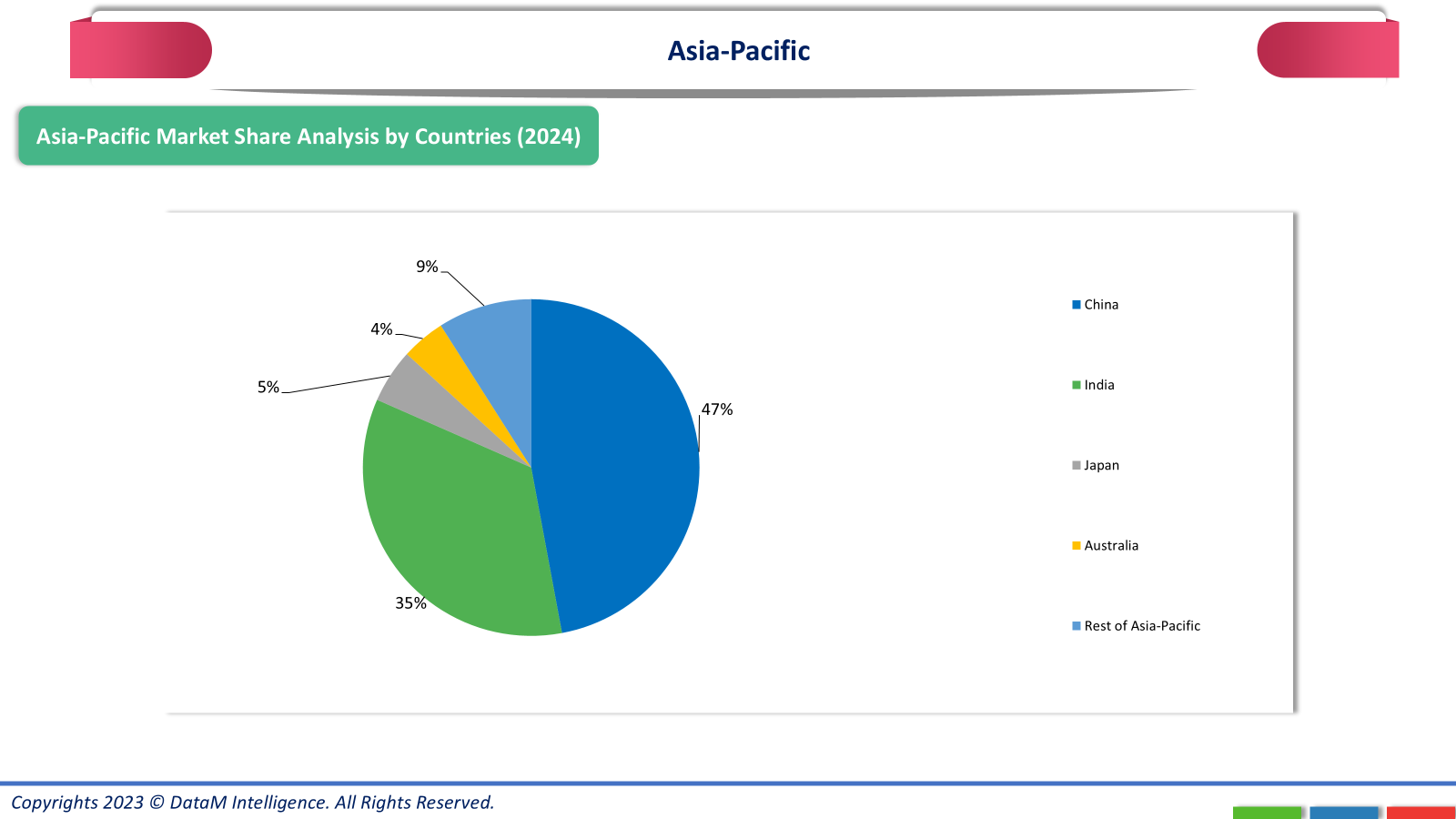
Asia-Pacific Ethanol Market
Asia-Pacific is expected to witness strong growth during the forecast period due to rising energy demand, increasing fuel consumption, and government initiatives promoting biofuel adoption.
China continues expanding ethanol utilization through fuel blending programs and renewable energy initiatives aimed at reducing dependence on fossil fuels and improving air quality.
India is emerging as a major growth opportunity due to:
Ethanol blending program expansion
Sugarcane-based ethanol production growth
Government support for energy self-sufficiency
Investments in grain-based ethanol facilities
Rising demand for cleaner transportation fuels
Japan, South Korea, Thailand, and other Southeast Asian countries continue exploring advanced biofuels and low-carbon transportation strategies to strengthen energy security and sustainability objectives.
Europe Ethanol Market
Europe is experiencing steady market growth supported by ambitious climate targets, renewable energy directives, and decarbonization initiatives across transportation and industrial sectors.
Germany, France, the United Kingdom, Spain, and the Netherlands remain key contributors due to growing demand for renewable fuels and increasing investments in advanced biofuel technologies.
The region is increasingly focusing on:
Advanced and cellulosic ethanol production
Sustainable transportation fuels
Carbon reduction strategies
Circular bioeconomy development
Renewable fuel infrastructure expansion
These initiatives continue to support ethanol adoption across transportation, industrial, and energy applications.
Latin America Ethanol Market
Latin America remains a strategically important ethanol-producing region due to favorable agricultural conditions and a long-established biofuel industry.
Countries such as Brazil, Argentina, and Colombia continue expanding ethanol production and consumption through supportive fuel blending policies and investments in agricultural productivity.
Growing demand for renewable transportation fuels, energy diversification, and carbon reduction initiatives is expected to support future market growth throughout the region.
Middle East & Africa Ethanol Market
The Middle East & Africa region is gradually increasing its participation in the ethanol market as governments pursue energy diversification, renewable energy development, and sustainability initiatives.
Countries including South Africa, the United Arab Emirates, and Saudi Arabia are exploring biofuel opportunities as part of broader efforts to reduce emissions and strengthen renewable energy portfolios.
Ethanol Market Companies
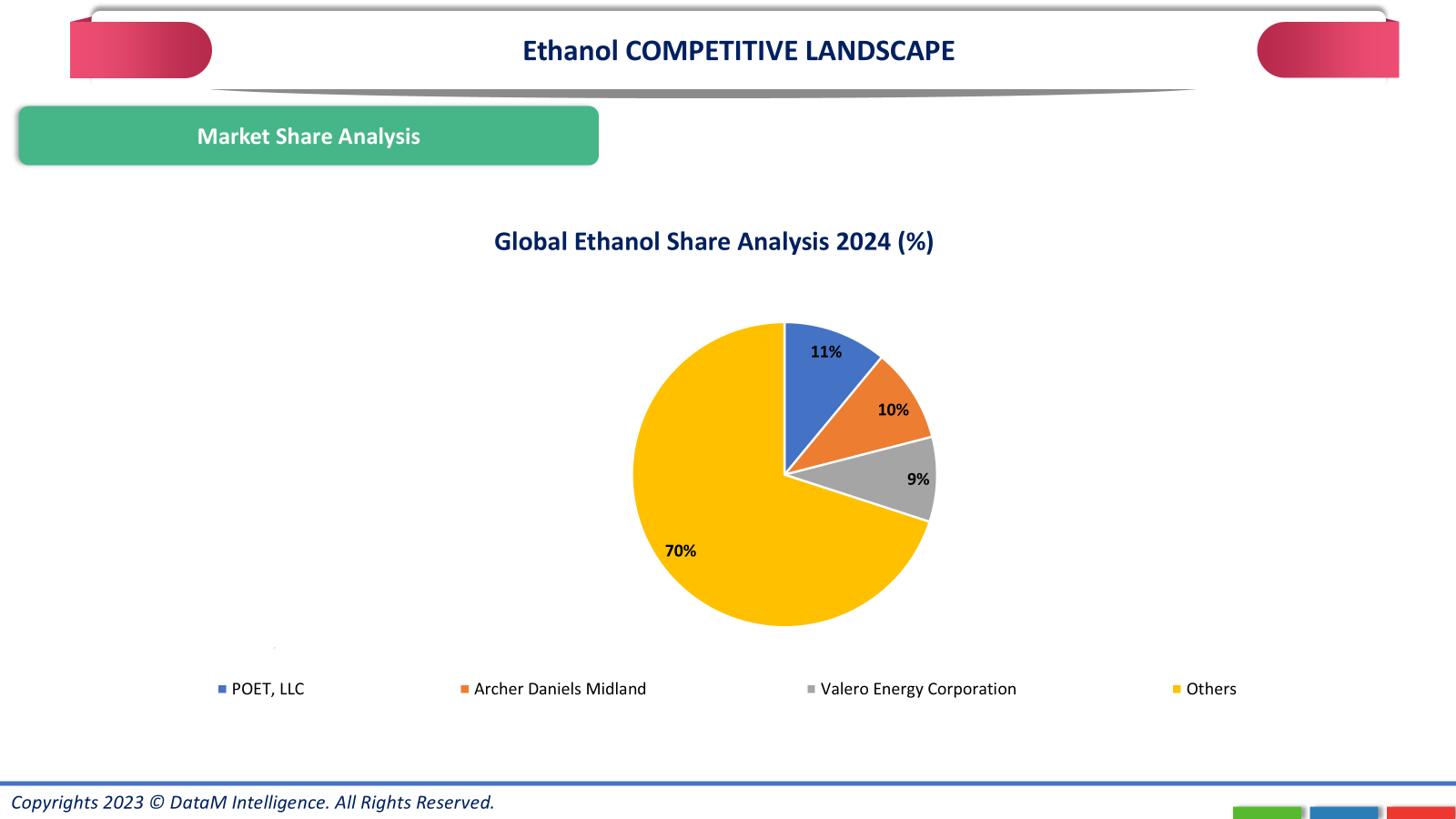
The major global players in the market include Valero Energy Corporation, Archer Daniels Midland Company, POET, LLC, Valero Energy Corporation, Green Plains Inc., Raízen S.A., Tereos SCA, CropEnergies AG, Alto Ingredients, Inc., The Andersons, Inc. and Greenfield Global Inc.
Key Developments of the Ethanol Market
- May 2026: Government of India / Oil Marketing Companies launched E85 fuel (85% ethanol blend) at dedicated retail outlets, accompanied by the rollout of flex-fuel vehicle infrastructure. The initiative represents one of the world's largest commercial deployments of high-ethanol transportation fuel and is designed to accelerate biofuel adoption and reduce fossil-fuel dependence.
- April 2026: Government of India proposed regulatory amendments permitting broader use of E85 and E100 fuels in vehicles. The policy advancement supports next-generation ethanol mobility technologies and encourages automakers to expand flex-fuel vehicle development programs.
- March 2026: Indian ethanol producers and distillers reported major feedstock diversification, with maize emerging as the leading ethanol source. The shift reflects technological improvements in grain-based ethanol production and strengthens supply-chain resilience beyond traditional sugarcane-based manufacturing.
- February 2026: India's fuel sector advanced nationwide implementation of E20 gasoline, supported by upgraded refining, blending, and distribution systems. The move marked a significant technological milestone in scaling higher ethanol-blended fuels across a major transportation market.
- January 2026: Brazilian biofuel companies, including Be8 and industry partners, accelerated investment in alternative-feedstock ethanol technologies utilizing wheat, barley, sweet potatoes, food waste, and other biomass sources. These developments expanded second-generation and non-traditional ethanol production pathways.
Archer Daniels Midland Company
- DM is a global player in human and animal nutrition and the world’s premier agricultural origination and processing company.
- The company plays a key role in transforming these raw materials into a broad portfolio of ingredients used in food, beverages, supplements and industrial products. ADM is also a significant player in the biofuel industry, particularly ethanol, leveraging its integrated assets and expertise in fermentation and processing.
- With a strong focus on sustainability, innovation and digital agriculture, ADM continues to invest in clean energy solutions, plant-based proteins and specialty ingredients to meet evolving consumer and industry demands.
- Its global footprint spans over 190 countries, supported by advanced logistics, storage and processing infrastructure.
Why Purchase the Report?
- To visualize the global ethanol market segmentation based on the feedstock, generation, fuel type, end-user and region, as well as understand key commercial assets and players.
- Identify commercial opportunities by analyzing trends and co-Development.
- Excel data sheet with numerous data points of ethanol market-level with all segments.
- The PDF report consists of a comprehensive analysis after exhaustive qualitative interviews and an in-depth study.
- Product mapping is available in Excel consisting of key products of all the major players.
The Global Ethanol Market report would provide approximately 68 tables, 70 figures, and 213 Pages.
Target Audience
- Government policy makers
- Alcohol manufacturers
- Renewable fuel producers
- Automotive manufacturers





























































