


Pharma Patent Cliff 2030: Which Therapeutic Areas Face the Biggest Revenue Losses?
Patent expiries are shifting capital toward replacement franchises, biosimilars and late stage pipeline assets
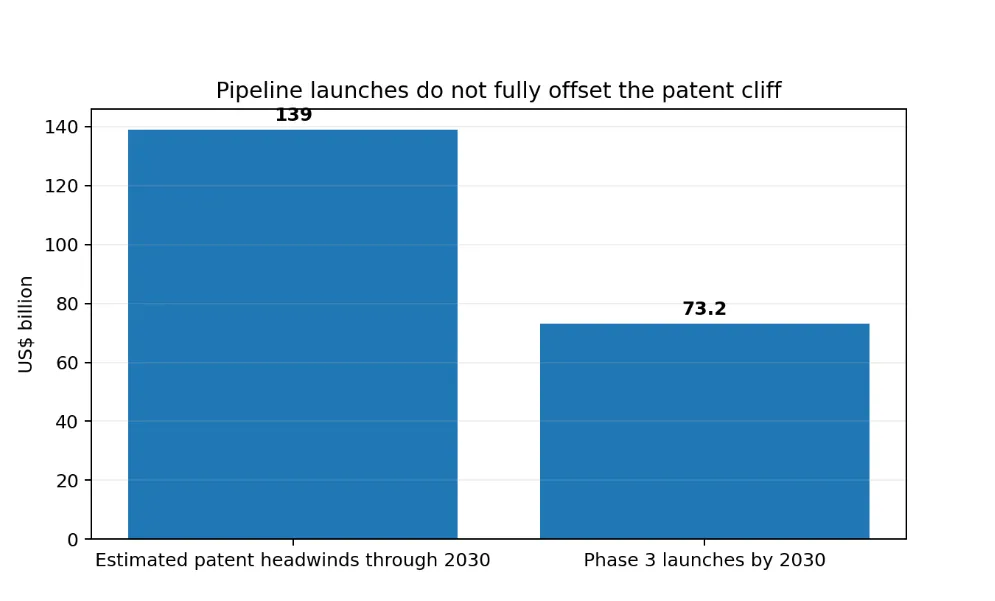
2026 market signal. Morningstar estimates roughly US$139 billion in biopharma revenue headwinds from expiring patents through 2030. Deloitte has separately estimated that Phase 3 launches could generate about US$73.2 billion by 2030, leaving a meaningful replacement gap for companies with concentrated blockbuster exposure.
Oncology Faces the Largest Absolute Revenue Replacement Challenge
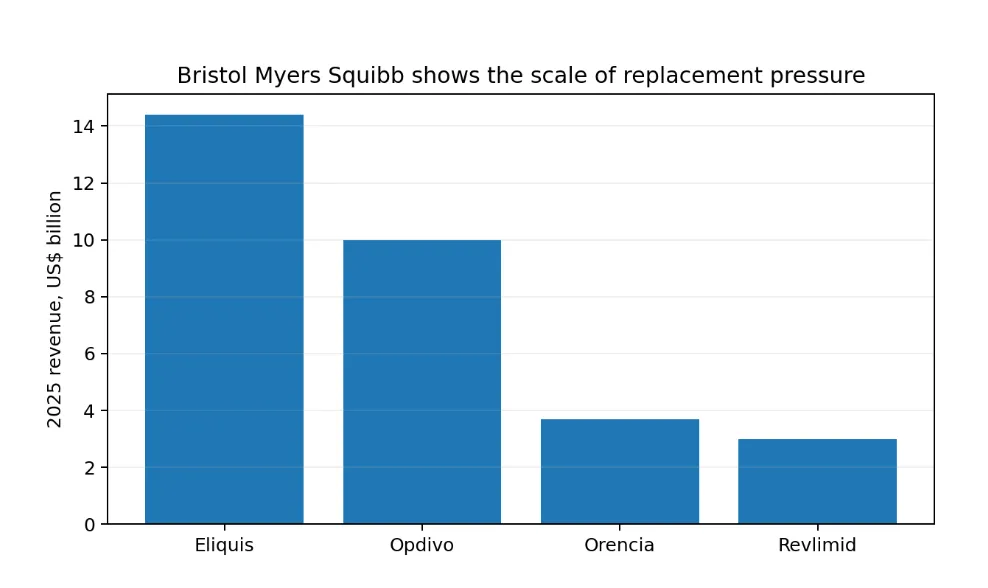
Oncology is likely to carry the largest absolute revenue replacement burden because several of the industry’s biggest products are concentrated in cancer care. Merck’s Keytruda remains the clearest example. The product generated more than US$30 billion in 2025 revenue and remains central to Merck’s growth profile, while Bristol Myers Squibb reported US$10.0 billion in 2025 Opdivo revenue. These products have broad indications, deep physician familiarity and strong reimbursement positions, which makes the eventual transition to biosimilar competition financially important even when lifecycle management extends parts of the franchise.
The pressure extends beyond checkpoint inhibitors. Pfizer reported US$4.12 billion of Ibrance revenue in 2025 and US$2.19 billion from Xtandi, while Bristol Myers Squibb still generated US$3.0 billion from Revlimid despite ongoing generic erosion. The scale of these franchises means oncology replacement plans need multiple growth assets rather than one successor product. Pharmaceutical companies are responding through antibody drug conjugates, radioligand therapies, precision oncology and next generation immunotherapy combinations, with acquisition activity increasingly focused on assets that can reach the market before major exclusivity losses accelerate.
Explore the related DataM Intelligence report on biologic competition and oncology exposure in the Biosimilars Market.
Cardiovascular Medicine Has Fewer Blockbusters but Very High Concentration Risk
Cardiovascular medicine faces a different form of patent cliff risk. The market has fewer mega blockbusters than oncology, but several large franchises are highly concentrated. Eliquis illustrates the issue. Bristol Myers Squibb reported US$14.4 billion of worldwide Eliquis revenue in 2025, making it the company’s largest product. That scale creates significant replacement pressure as generic competition approaches and payer leverage increases.
The commercial challenge is amplified because anticoagulants are used in large chronic populations. Once generic competition becomes established, price erosion can be faster than companies can replace lost revenue through smaller specialty launches. This pushes cardiovascular companies toward differentiated heart failure therapies, cardiomyopathy drugs, lipid lowering medicines and cardiometabolic products that can support large chronic patient populations. It also explains why obesity and metabolic disease pipelines are strategically relevant to companies facing cardiovascular exposure, since GLP 1 therapies increasingly span weight management, diabetes and cardiovascular risk reduction.
For market context on the replacement opportunity, see DataM Intelligence’s Cardiovascular Therapeutics Drugs Market.
Immunology Shows How Successful Replacement Franchises Can Defend the Patent Cliff
Immunology provides the clearest example of what successful revenue replacement can look like. AbbVie entered the Humira biosimilar cycle with one of the largest patent cliffs in pharmaceutical history. By 2025, Humira revenue had fallen sharply under biosimilar pressure, yet Skyrizi and Rinvoq had become the company’s primary immunology growth engines. AbbVie reported 50% growth for Skyrizi and 39% growth for Rinvoq in 2025, demonstrating how a company can protect an established therapeutic franchise by migrating physicians and patients toward differentiated next generation products before the legacy brand declines further.
Johnson & Johnson faces a related transition with Stelara. The company disclosed that Stelara represented about 6.5% of total 2025 revenue while biosimilar launches were already creating pressure. The company is relying on newer immunology assets such as Tremfya to absorb part of the decline. This pattern is likely to repeat across immunology as more biologics approach loss of exclusivity. Companies with established commercial relationships and strong follow on products should be better positioned, while companies with narrow portfolios may need external licensing or acquisitions to protect revenue.
The Revenue Gap Explains Why Business Development Is Accelerating
The patent cliff is increasingly shaping capital allocation across the pharmaceutical industry. Morningstar estimates around US$139 billion in patent related revenue headwinds through 2030. Deloitte has estimated that Phase 3 launches could contribute roughly US$73.2 billion in new revenue by 2030, which suggests that late stage pipelines alone may not replace the full amount at risk. This gap is one reason licensing deals, acquisitions and co development partnerships remain central to portfolio strategy in 2026.
The highest value targets are increasingly late stage assets with clear clinical differentiation, specialist physician overlap and the potential to launch before major revenue losses peak. Oncology remains a major acquisition area, while immunology and obesity have become increasingly important. The most attractive transactions compress development timelines and add a new platform that can expand across multiple indications. This is why companies are paying large premiums for clinical stage assets that can support revenue within a defined horizon.
Track one of the strongest new replacement engines through DataM Intelligence’s Obesity Therapeutics Market.
Biosimilars Turn Patent Loss Into a Parallel Growth Market
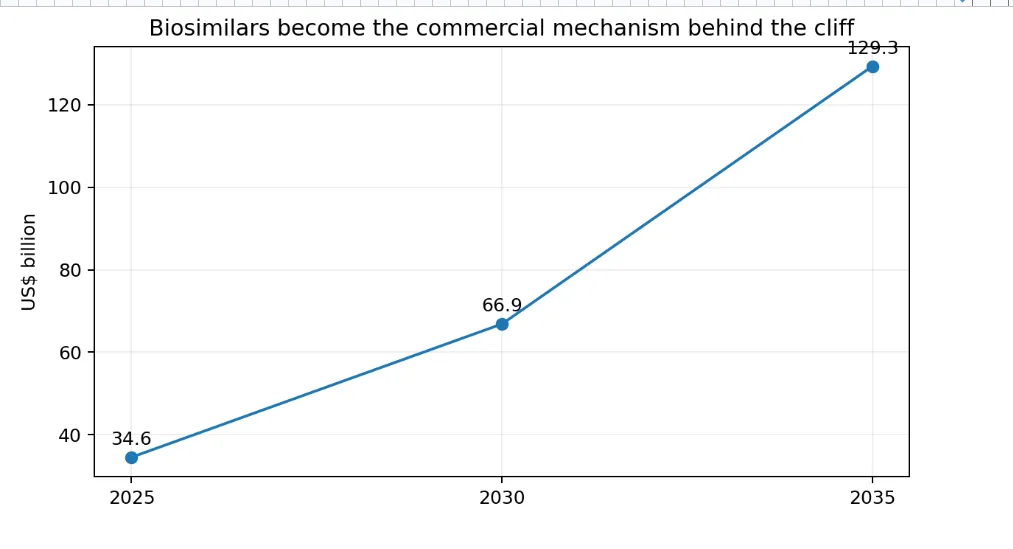
The next patent cliff also creates a major growth cycle for biosimilar manufacturers, contract manufacturers and healthcare systems. DataM Intelligence values the global Biosimilars Market at US$34.57 billion in 2025 and projects it to reach US$129.29 billion by 2035. Oncology accounted for 55.71% of biosimilar revenue in 2025, which reinforces the concentration of upcoming opportunity around high value biologics used in cancer care.
This creates a two sided market transition. Originator companies need replacement products that preserve revenue and physician relationships, while biosimilar manufacturers need efficient development, manufacturing scale and payer access. The commercial winners will depend on launch timing, manufacturing reliability, tender access and the ability to drive switching in markets where physician adoption remains cautious. The patent cliff therefore reallocates value across the healthcare system rather than simply removing it from branded pharmaceutical companies.
Obesity and Next Generation Immunology Are Becoming the Main Replacement Engines
The strategic contrast between mature patent exposed franchises and new therapeutic growth markets is becoming sharper. Obesity has emerged as one of the strongest sources of new pharmaceutical value. DataM Intelligence expects the global obesity therapeutics market to reach US$63.75 billion by 2033, supported by GLP 1 adoption and broader cardiometabolic use. New oral therapies could expand access further, with the Oral Obesity Drugs Market projected to reach US$58.91 billion by 2035.
For companies facing patent expiries, these markets offer the scale required to offset large losses. The most resilient portfolios will combine mature cash generating brands with fast growing therapeutic platforms that have multiple indication pathways. Oncology companies will need new targeted and immune based franchises, immunology companies will need next generation biologics and oral therapies, while cardiovascular companies may increasingly depend on cardiometabolic innovation. Revenue replacement therefore becomes a portfolio construction problem rather than a single product launch problem.
Explore the long term expansion of oral metabolic therapies in DataM Intelligence’s Oral Obesity Drugs Market.
Which Therapeutic Areas Face the Greatest Pressure Through 2030?
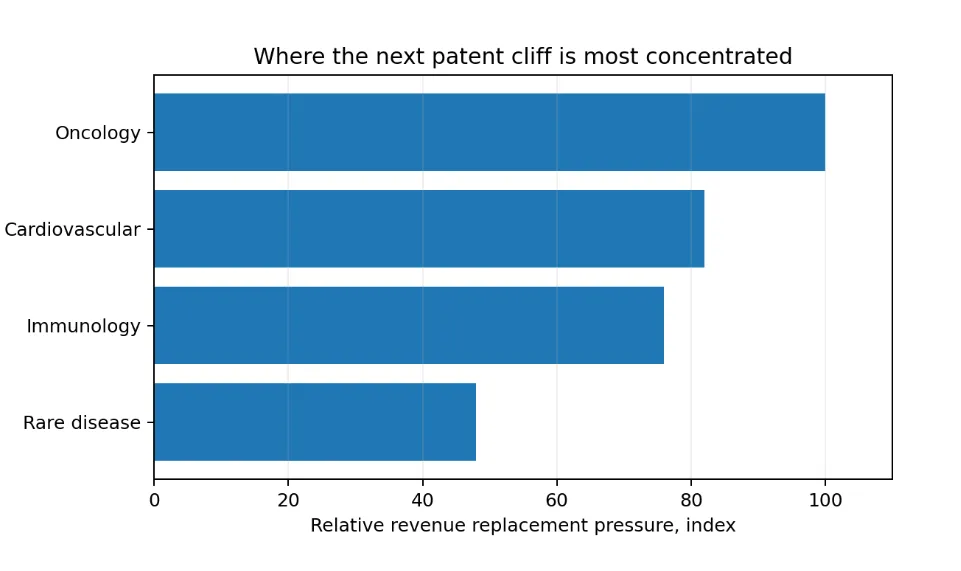
Oncology faces the highest absolute pressure because the category contains several of the world’s largest biologic franchises. Cardiovascular medicine carries high concentration risk because a small number of large chronic therapies account for significant revenue. Immunology has major biologic exposure, although companies that have already built replacement franchises have shown that the transition can be managed. Rare disease and specialty medicine face more product specific cliffs, with smaller absolute revenue pools but potentially greater company level concentration when one product dominates a smaller portfolio.
The next phase of the patent cliff will therefore reward companies that started replacement planning early. Pipeline depth, commercial adjacency, lifecycle management and external business development will determine whether exclusivity loss becomes a temporary earnings problem or a structural growth problem. The strongest companies will be those that can replace one aging blockbuster with several new growth platforms before generic or biosimilar competition reaches full scale.