


Sleep Supplements Market Size & Forecast
The global Sleep Supplements market reached an estimated US$ 8.74 billion in 2025 and is expected to reach US$ 17.96 billion by 2035, growing at a CAGR of 7.5% during 2026-2035. The category is expanding as consumers treat sleep quality as a central component of mental health, metabolic health, productivity and healthy aging. Demand is supported by persistent stress, irregular work schedules, screen exposure, travel, menopause-related sleep disruption and growing awareness of the connection between sleep and daytime performance.
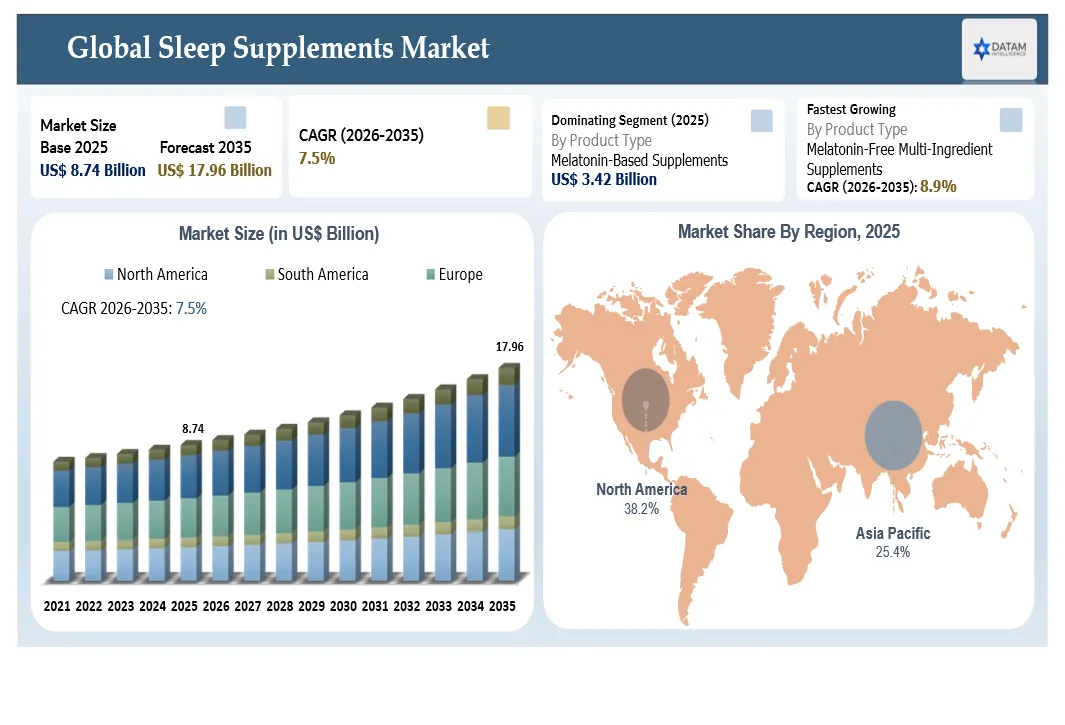
Melatonin remains the largest ingredient-led segment because it is widely recognized, inexpensive and available across mass retail, pharmacy and online channels. Growth is shifting toward lower-dose melatonin, extended-release formats and melatonin-free formulations based on magnesium, L-theanine, glycine, saffron, ashwagandha, valerian and other calming ingredients. Brands are also moving from single-purpose pills toward nighttime routines that combine relaxation, hydration, recovery and sleep tracking.
North America leads the market through high supplement penetration, broad e-commerce access and rapid product innovation. Europe benefits from established botanical traditions and pharmacy retail, while Asia-Pacific is expected to grow fastest as urban stress, digital commerce and premium wellness spending increase. Competition is fragmented across global supplement groups, specialist sleep brands, women’s health companies, sports-nutrition firms and digitally native subscription platforms.
Sleep Supplements Market Overview
| Metric | Value |
| 2025 Market Size | US$ 8.74 Billion |
| 2035 Market Size | US$ 17.96 Billion |
| CAGR, 2026-2035 | 7.5% |
| Largest Region | North America, 38.2% |
| Fastest-Growing Region | Asia-Pacific |
| Largest Product Segment | Melatonin-Based Supplements |
| Fastest-Growing Product Segment | Melatonin-Free Multi-Ingredient Supplements |
Sleep Supplements Market Key Takeaways
- Melatonin-based products retain the largest share, while melatonin-free blends are growing faster as consumers seek gentler, non-groggy and nightly-use alternatives.
- Gummies remain a major mass-market format, while powders and drink mixes are gaining momentum through nighttime ritual, hydration and recovery positioning.
- Magnesium has become a highly visible ingredient, although scientific evidence for insomnia remains limited and quality differentiation is becoming commercially important.
- E-commerce and direct subscriptions are reshaping discovery, education, bundling and repeat purchase, while pharmacies retain an important trust advantage.
- Women’s life-stage sleep support, particularly perimenopause and menopause, is emerging as a differentiated high-value segment.
- Clinically studied branded ingredients, transparent dosing and third-party testing are becoming more important as scrutiny of supplement claims increases.
- Wearable-linked personalization creates an opportunity to connect supplement use with measured sleep duration, resting heart rate, recovery and routine adherence.
- Long-term leadership will depend on credible evidence, safe dosing, claims discipline, strong consumer experience and the ability to manage ingredient and channel complexity.
Sleep Supplements Industry Trends and Strategic Insights
- The market is moving from one-ingredient sleep aids toward multi-pathway formulas addressing relaxation, sleep onset, night waking and next-day recovery.
- Melatonin-free positioning is expanding through magnesium, saffron, ashwagandha, L-theanine, glycine and botanical combinations.
- Nighttime powders, mocktails and functional beverages are creating new usage occasions beyond capsules and gummies.
- Personalization is increasing through age, sex, stress level, chronotype, travel pattern, shift work and wearable-derived sleep data.
- Brands are investing in clinical substantiation and branded ingredients to support premium pricing and retailer acceptance.
- Sleep is increasingly connected with sports recovery, women’s health, healthy aging, beauty, mental wellness and metabolic health.
Sleep Supplements Market Scope
| Metrics | Details |
| 2025 Market Size | US$ 8.74 Billion |
| 2035 Projected Market Size | US$ 17.96 Billion |
| CAGR, 2026-2035 | 7.5% |
| Largest Market | North America |
| Fastest-Growing Market | Asia-Pacific |
| By Product Type | Melatonin-based, melatonin-free blends, mineral and amino acid formulas, botanical formulas, functional beverages, personalized stacks |
| By Ingredient | Melatonin, magnesium, amino acids, botanicals, adaptogens, vitamins, minerals and functional ingredients |
| By Dosage Form | Capsules, tablets, gummies, powders, liquids, shots, drops and teas |
| By Sleep Need | Onset, maintenance, relaxation, circadian support, recovery and women’s life-stage support |
| By Consumer Group | Adults, older adults, women, athletes, shift workers and travelers |
| By Distribution Channel | E-commerce, pharmacy, mass retail, specialty stores and practitioner channels |
| Report Insights | Market size, share, growth, competition, company profiles in TOC and country-level opportunity |
Why does this report matter in 2026?
The year 2026 is a pivotal point for sleep supplements because the category is broadening beyond traditional melatonin gummies and tablets. New launches are emphasizing magnesium, ashwagandha, saffron, and other melatonin-free ingredients, while brands are building products for menopause-related sleep disruption, athletes, frequent travelers, and consumers who want a nightly relaxation ritual. This expansion creates new revenue pools but also raises the importance of formulation quality, dose transparency and evidence.
The report matters because sleep supplements are purchased for different problems. Difficulty falling asleep, repeated waking, stress, jet lag and hormone-related sleep disruption do not have identical consumer needs. The study separates these use cases and evaluates how product format, ingredient strategy, dosing and channel influence adoption. It also examines the boundary between general wellness claims and treatment-oriented language, which is critical for regulatory compliance and retailer acceptance.
Strategic decisions made in 2026 around clinical investment, branded ingredients, women’s health, digital personalization and pharmacy partnerships will shape competitive position through the remainder of the decade. The category is large enough to attract major consumer-health companies but fragmented enough for specialist brands to create defensible niches. This report supports portfolio prioritization, product development, market entry, acquisition screening and channel expansion.
Sleep Supplements Market White Space & Investment Opportunities
- Melatonin-free formulas for nightly use create white space among consumers concerned about tolerance, vivid dreams, morning grogginess or hormone-based positioning.
- Women’s life-stage products can target menopause-related night waking, temperature disruption, stress and recovery through focused formulations and education.
- Low-dose and extended-release melatonin products can differentiate from high-dose mass-market offerings through dose discipline and circadian positioning.
- Functional sleep beverages, powders and evening mocktails offer new usage occasions and can combine relaxation, hydration and recovery support.
- Wearable-linked subscriptions can personalize timing, dose and ingredient selection using sleep duration, resting heart rate and routine adherence.
- Clinically studied branded ingredients and third-party certification can support premium pricing, practitioner recommendation and pharmacy placement.
Sleep Supplements Future Market Transformation
The market will transform from a largely ingredient-led category into a more segmented sleep-wellness ecosystem. Melatonin will remain important, but the fastest innovation will occur in melatonin-free blends, life-stage products, functional beverages and products linked to stress or recovery. Brands will increasingly explain which part of the sleep journey they address rather than making broad claims about better sleep.
Digital measurement will influence product design and consumer retention. Wearables and smartphone applications can identify bedtime inconsistency, short sleep duration, high resting heart rate and poor recovery. Supplement brands may use these signals to recommend timing, habit changes and product bundles, although they must avoid implying medical diagnosis. Companies that integrate education, adherence prompts and transparent outcome tracking can build stronger subscription economics.
By 2035, the category is likely to include hybrid offerings combining supplements, digital coaching, environmental sleep products and personalized replenishment. Retailers will demand clearer evidence, safer dosing and stronger quality documentation. This shift will reward companies with clinical capabilities, regulatory discipline, data infrastructure and trusted consumer relationships.
Sleep Supplements Market Buyer Decision-Making Criteria
Consumers prioritize perceived effectiveness, speed of action, absence of morning grogginess, taste, convenience, ingredient familiarity and safety. Many buyers begin with melatonin because of recognition and price, then move to magnesium or botanical blends when they want a different experience. Repeat purchase depends on consistency, habit fit and whether the product supports the specific problem the consumer is trying to solve.
Retailers and pharmacies evaluate label compliance, claim substantiation, adverse-event risk, dose levels, supplier quality, shelf velocity and brand support. Practitioner channels place greater emphasis on evidence, interactions, vulnerable populations and the ability to integrate supplementation with sleep hygiene or clinical care. Brands that provide transparent dosing, testing documentation and realistic positioning are better placed to earn trust.
Sleep Supplements Market Economic & Investment Analysis
Commercial planning should distinguish occasional users from habitual users. A large share of consumers purchases sleep supplements only during periods of stress, travel or schedule disruption, while a smaller group uses products nightly. Revenue forecasts therefore require assumptions for penetration, purchase frequency, seasonality, product switching and discontinuation. Subscription models can raise lifetime value but also increase refund and retention risk when results are inconsistent.
The category offers attractive gross margins, particularly for gummies, capsules and powders with premium branding. However, customer acquisition costs, influencer spending, marketplace fees, flavor development, testing and retailer trade promotions can materially reduce profitability. Brands with strong organic communities, pharmacy trust or cross-selling from adjacent wellness portfolios have a structural advantage over single-product entrants.
Investment is moving toward differentiated formulations, branded ingredients, women’s health, stress-linked sleep support and functional beverages. Strategic buyers value brands with repeat purchase, clean claims, scalable manufacturing and access to mass retail. Ingredient suppliers can capture value by developing clinically studied magnesium forms, saffron extracts, botanicals and delivery technologies that improve taste, stability or bioavailability.
Investors should model regulatory and evidence risk separately from consumer demand. Strong sales do not eliminate exposure to warning letters, class actions, label inconsistency or adverse-event concerns. Higher-quality assets combine commercial traction with conservative claims, third-party testing and documented supplier controls. Companies that can demonstrate repeatable outcomes through observational or clinical data may achieve stronger retailer acceptance and acquisition multiples.
Sleep Supplements: Investment Trends in the Market
- Capital is moving toward melatonin-free formulas built around magnesium, saffron, ashwagandha, L-theanine, glycine and other non-hormonal ingredients.
- Women’s health companies are investing in sleep products tailored to perimenopause and menopause, where night waking and temperature disruption are major consumer concerns.
- Brands are funding powder, beverage and mocktail formats that turn supplementation into an evening ritual and support premium pricing.
- Ingredient suppliers are investing in clinical studies, branded extracts and delivery technologies to improve substantiation and differentiation.
- Digital wellness firms are exploring personalized recommendations and subscriptions linked to sleep-tracking data and behavioral coaching.
- Strategic acquirers are prioritizing trusted brands with strong repeat purchase, pharmacy access, quality systems and adjacent stress or recovery portfolios.
Strategic Indicators for the Sleep Supplements Market
High Regulation Impact
Dietary-supplement rules govern manufacturing, labeling, structure-function claims and adverse-event reporting. Brands must avoid disease-treatment claims and ensure that ingredient identity, dose and warnings are accurate. Products for children, pregnancy, medication users and older adults require additional caution. Regulatory discipline increasingly influences retailer access and acquisition value.
High Investment Activity
Investment is concentrated in melatonin-free blends, women’s health, functional beverages, branded ingredients and subscription platforms. Capital remains selective because barriers to entry are low. Investors favor brands with evidence, repeat purchase, low refund rates, diversified channels and strong quality controls.
Supply Chain Disruption
Botanical extracts, specialty magnesium forms, gelatin alternatives, flavors and gummy inputs can face lead-time and cost volatility. Disruption can delay launches or force formulation changes. Companies are dual-sourcing critical ingredients, qualifying alternate contract manufacturers and strengthening inventory planning.
Pricing Volatility
Mass-market melatonin products compete heavily on price, while clinically positioned blends and functional powders can command premiums. Ingredient inflation, freight, packaging and promotional intensity influence margins. Brands must balance dose, serving count and perceived value without making the product too expensive for repeat nightly use.
Procurement Pressure
Retailers expect verified quality, stable supply, competitive margins and strong sell-through. Pharmacies place added emphasis on dosing, interaction warnings and consumer education. Procurement teams increasingly request certificates of analysis, third-party testing and evidence supporting marketed claims.
New Technology Adoption
Microencapsulation, sustained-release systems, low-sugar gummies, improved flavor masking and digital personalization are changing the category. Technology adoption is strongest when it improves adherence, reduces morning grogginess or creates measurable consumer value.
Regional Expansion Opportunity
North America remains the largest market, while Asia-Pacific offers the strongest growth through e-commerce, urban stress and premium wellness demand. Expansion requires local claims review, ingredient compliance, culturally relevant formats and channel partnerships.
Government Policy Support
Public-health focus on sleep awareness can indirectly support category demand, but governments generally emphasize behavioral sleep hygiene and medical evaluation for chronic disorders. Supplement brands benefit most when they position products as supportive wellness tools rather than substitutes for care.
Pricing Intelligence
Pricing should reflect ingredient cost, evidence, format and channel. Gummies and mass-market tablets compete at accessible price points, while powders, branded extracts and personalized subscriptions support higher per-serving prices. Clear serving economics and subscription flexibility are central to conversion and retention.
AI Impact Analysis of Sleep Supplements Market
AI can improve product discovery and personalization by combining consumer goals, bedtime patterns, wearable data, stress scores, travel schedules and prior product response. Recommendation systems can identify whether a consumer is primarily struggling with sleep onset, night waking or irregular timing, then suggest products and behavioral routines. AI can also support demand forecasting, review analysis and faster identification of adverse-event patterns.
In product development, AI can screen ingredient combinations, predict stability and analyze clinical literature. The main constraint is that consumer sleep data are noisy and supplement effects are difficult to isolate from behavior, caffeine, alcohol, medication and health conditions. Responsible use requires transparent recommendations, privacy protection and clear boundaries between wellness support and medical advice.
Disruption Analysis of Sleep Supplements Market
Melatonin-free formulas are disrupting a category historically dominated by melatonin gummies and tablets. The shift is driven by consumer concern about dose, grogginess and long-term nightly use. Magnesium powders, saffron products, ashwagandha blends and functional beverages are broadening the competitive set and allowing brands to create premium routines rather than single-purpose aids.
Wearables and digital sleep coaching are also disrupting demand by making sleep measurable. Consumers can compare supplement use with sleep duration, resting heart rate and recovery scores, although these measures do not prove causality. This increases pressure on brands to deliver consistent experiences and realistic claims. Retailers may increasingly favor products supported by transparent evidence and post-purchase education.
Sleep Supplements Market BCG Matrix: Company Evaluation
| Quadrant | Representative Companies | Strategic Rationale |
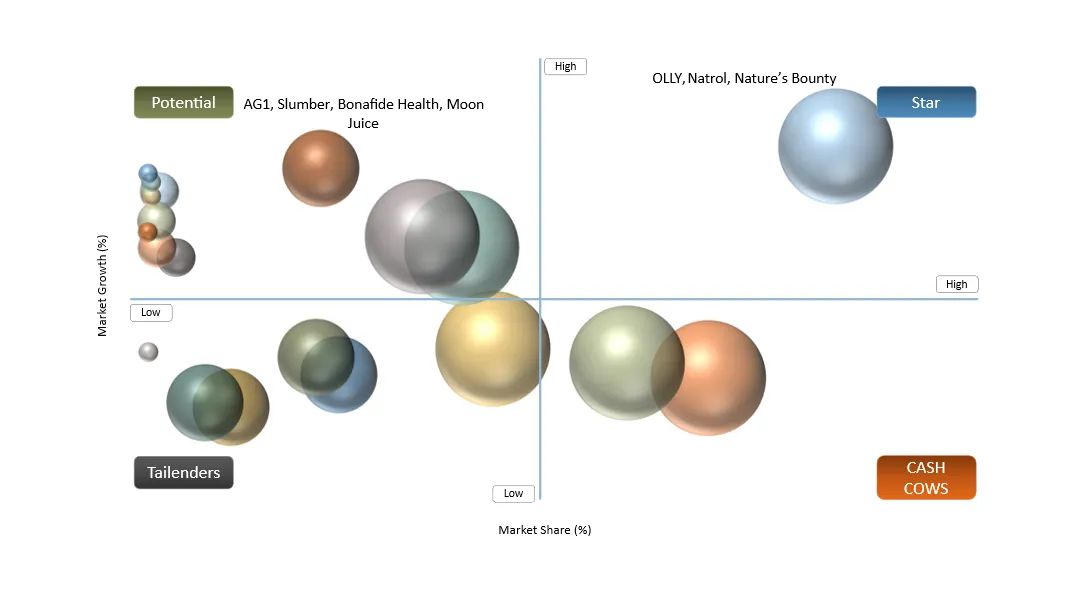
| Stars | OLLY, Natrol, Nature’s Bounty | High consumer recognition, broad distribution and strong participation in a growing category. |
| Potential | AG1, Slumber, Bonafide Health, Moon Juice | Differentiated formats or targeted propositions with high growth potential but lower current share. |
| Cash Cows | NOW Foods, Pharmavite, Life Extension | Established supplement portfolios, trusted channels and recurring sales from mature formats. |
| Tailenders | Small undifferentiated private labels | Limited brand equity, weak evidence and high dependence on price-led marketplace competition. |
OLLY, Natrol and Nature’s Bounty are positioned as Stars because they combine category recognition, broad retail access and established sleep portfolios. Potential players include digitally native brands and specialists focused on women’s health, melatonin-free powders or system-based sleep support. Their future position will depend on retention, evidence and channel expansion. Established supplement companies remain Cash Cows through trusted distribution and portfolio breadth, while undifferentiated private labels face intense price competition and limited consumer loyalty.
Sleep Supplements Market Dynamics
Driver Impact Analysis
| Driver | Growth Impact | Demand Concentration | Impacted Use Case | Strategic Impact |
| Rising sleep awareness | High | Global adult consumers | Nightly and occasional sleep support | Expands category penetration and normalizes sleep as preventive wellness. |
| Melatonin-free innovation | High | Premium and repeat users | Relaxation and maintenance | Creates new product ladders and reduces dependence on one ingredient. |
| E-commerce growth | Medium-High | Digitally engaged consumers | Discovery, bundles and subscriptions | Improves education, personalization and repeat purchase. |
| Life-stage segmentation | Medium | Women and older adults | Menopause and healthy aging | Supports targeted claims, premium pricing and focused communities. |
Driver: Rising Consumer Focus on Sleep Quality and Stress Management
Sleep is increasingly viewed as foundational to productivity, mood, recovery and long-term health. Consumers who previously tolerated short or irregular sleep are adopting evening routines, wearables and supplements. This expands demand beyond people with diagnosed insomnia and creates multiple usage occasions including stressful work periods, travel, shift changes and athletic recovery. Brands that connect supplementation with sleep hygiene and realistic expectations can build trust and repeat use.
Restraint Impact Analysis
| Restraint | Drag on Growth | Primary Impact Area | Impacted Use Case | Strategic Impact |
| Inconsistent evidence | High | Consumer trust | Broad efficacy claims | Increases skepticism and makes differentiation difficult. |
Label and dose variability | High | Safety and compliance | Melatonin and multi-ingredient products | Raises regulatory, retailer and reputational risk. |
Variable individual response | Medium-High | Retention | Nightly use | Increases refunds, switching and subscription churn. |
Competition from behavioral and OTC options | Medium | Category substitution | Chronic sleep difficulty | Limits use among consumers directed toward clinical care or non-supplement solutions. |
Restraint: Inconsistent Evidence and Variable Consumer Response
Sleep supplements often produce different experiences across consumers because sleep is influenced by stress, caffeine, alcohol, schedule, medication, health conditions and expectations. Evidence is also uneven across ingredients and doses. Magnesium has strong consumer visibility, yet authoritative reviews note limited rigorous research for insomnia. Companies must avoid overstating benefits and should invest in formulation-specific studies, transparent dosing and education about when persistent sleep problems require clinical evaluation.
Sleep Supplements Market Segment Analysis
The global sleep supplements market is segmented based on product type, ingredient category, dosage form, sleep need, consumer group, distribution channel, and region.
By Product Type
Melatonin-Free Multi-Ingredient Supplements Will Record the Fastest Growth
Melatonin-based supplements remain the largest segment because of recognition, affordability and broad retail distribution. Melatonin-free multi-ingredient products are expected to grow fastest as consumers seek nightly-use options positioned around relaxation, stress support and reduced morning grogginess. These formulas typically combine magnesium, L-theanine, glycine, saffron, ashwagandha, valerian or apigenin. Functional beverages and personalized stacks will expand from a smaller base as brands create premium evening rituals and subscription models.
By Ingredient Category
Melatonin Will Remain the Largest Ingredient While Magnesium Gains Visibility
Melatonin leads because it has high consumer awareness and is available across many formats and price points. Magnesium is gaining visibility through powders, gummies and social-media trends, although evidence for insomnia remains limited. Botanicals and adaptogens are important in melatonin-free formulas, while amino acids such as glycine and L-theanine support premium multi-ingredient positioning. Ingredient differentiation will increasingly depend on dose transparency, branded extracts, clinical support and tolerability.
By Dosage Form
Gummies Will Lead Mass-Market Demand While Powders Grow Fastest
Gummies combine taste, convenience and strong retail appeal, making them one of the largest formats. Powders and drink mixes are expected to grow fastest because they fit nighttime mocktails, hydration routines and recovery positioning. Capsules and tablets remain important for value, precise dosing and practitioner channels. Liquids and shots address rapid-use and travel occasions, while teas retain a traditional relaxation role.
By Sleep Need
Relaxation and Stress-Related Sleep Support Will Expand Rapidly
Sleep-onset support is the largest need state because it maps directly to consumer understanding of sleep aids. Relaxation and stress-related sleep support will grow rapidly as brands avoid medicalized insomnia claims and position products as part of an evening wind-down routine. Sleep-maintenance products can differentiate through sustained-release ingredients or life-stage positioning. Circadian and jet-lag products remain relevant for travelers and shift workers.
By Consumer Group
Women in Perimenopause and Menopause Will Be a High-Growth Segment
Adults remain the largest consumer group, but women in perimenopause and menopause represent a high-growth segment because hormone-related night waking, temperature disruption and stress create persistent demand. Older adults require careful dosing and interaction guidance. Athletes are adopting sleep products as part of recovery, while shift workers and travelers create specialized opportunities around timing and circadian support.
By Distribution Channel
E-Commerce and Direct-to-Consumer Will Remain the Fastest-Growing Channel
E-commerce leads product discovery, comparison and subscription, particularly for premium or specialized formulas. Direct channels allow brands to provide education, bundles and personalization, but acquisition costs and churn can be high. Pharmacies retain an important trust advantage, while supermarkets and mass merchants provide scale for gummies and melatonin. Practitioner channels remain smaller but support clinically positioned products and higher-value recommendations.
Sleep Supplements Market Geographical Penetration
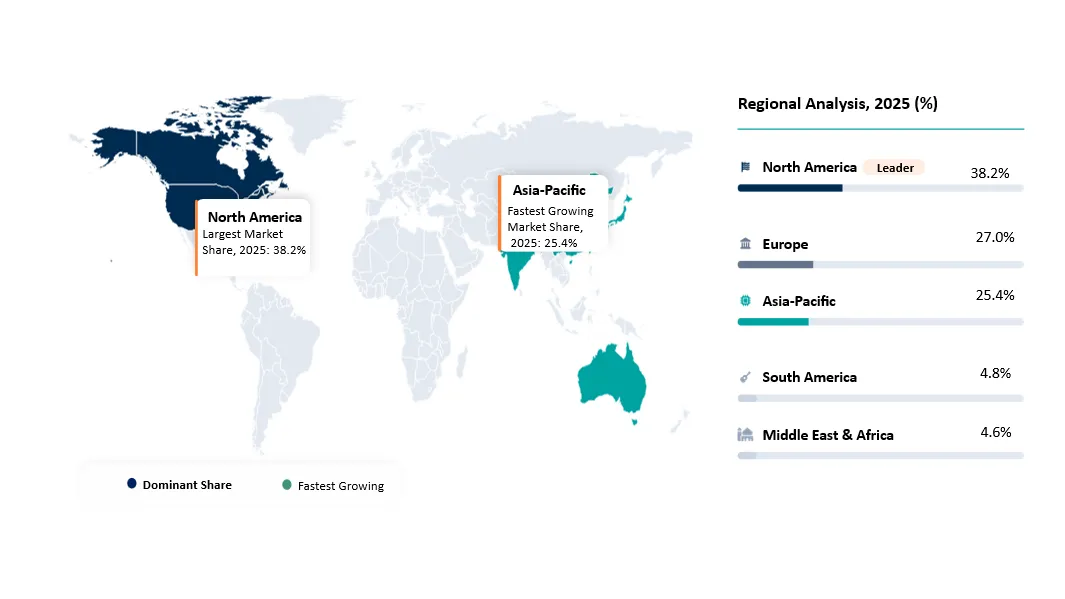
Sleep Supplements Market - Regional Market Share
| Region | 2025 Share | Market Position |
| North America | 38.2% | Largest market |
| Europe | 27.0% | Established botanical and pharmacy demand |
| Asia-Pacific | 25.4% | Fastest-growing region |
| South America | 4.8% | Expanding e-commerce and pharmacy opportunity |
| Middle East and Africa | 4.6% | Selective premium growth |
U.S. Sleep Supplements Market Landscape
The U.S. is the largest national market due to high supplement penetration, broad pharmacy and mass-retail access, rapid e-commerce innovation and strong consumer engagement with sleep tracking. Melatonin remains widespread, while magnesium powders, gummies and melatonin-free blends are expanding. Growth will depend on credible claims, lower-dose strategies, women’s health segmentation and stronger quality differentiation.
Germany Sleep Supplements Market Outlook
Germany benefits from pharmacy-based consumer trust, established herbal traditions and strong demand for magnesium and botanical products. Compliance with EU food-supplement and health-claims rules shapes formulation and communication. Opportunity is strongest for evidence-led products, pharmacist education and premium formulations with transparent sourcing.
Japan Sleep Supplements Market Trends
Japan offers a sophisticated functional-food market with strong interest in stress, fatigue and sleep quality. Local regulatory pathways and functional claims influence product strategy. Consumers favor convenient formats, trusted brands and science-backed ingredients. Partnerships with domestic companies and adaptation to local tastes are important for entry.
China Sleep Supplements Market Outlook
China is an emerging market supported by e-commerce, urban stress and growing premium wellness spending. Cross-border platforms provide access for international brands, but local compliance, ingredient rules and consumer education are critical. Products combining traditional botanical familiarity with modern evidence may be well positioned.
Brazil Sleep Supplements Market Outlook
Brazil has a large pharmacy channel and rising interest in wellness, stress management and sports recovery. Affordability and regulatory compliance remain important. Opportunities include gummies, magnesium products, botanical blends and online subscriptions targeted to urban consumers.
Middle East and Africa Sleep Supplements Market Outlook
Demand is concentrated in Gulf countries, Israel, South Africa and major urban centers. Premium imported products, pharmacy retail and e-commerce support growth, while affordability and fragmented regulation limit broader penetration. Travel, stress and lifestyle-related sleep concerns create opportunities for targeted products.
Sleep Supplements Market Competitive Landscape
- Competition is fragmented across global supplement companies, consumer-health brands, herbal specialists, women’s health companies, sports-nutrition firms and digitally native sleep brands.
- Melatonin products compete heavily on recognition, dose, format and price, while melatonin-free formulas compete on ingredient story, taste, evidence and routine integration.
- Gummies provide mass-market scale, while powders and beverages allow premium positioning and stronger brand experience.
- Pharmacy access supports trust, while e-commerce supports education, personalization, bundles and subscription economics.
- Clinical substantiation, quality testing and conservative claims are becoming more important sources of differentiation.
- Acquisition interest is likely to focus on brands with repeat purchase, diversified channels, women’s health exposure and scalable manufacturing.
Competitive intensity will increase as major wellness companies extend into sleep and specialist brands broaden into stress, recovery and healthy aging. The market remains accessible to new entrants, but sustainable differentiation is difficult because formulations can be copied and digital advertising costs are high. Companies that own trusted communities, proprietary ingredients, pharmacy relationships or differentiated data have stronger defensibility.
Key Companies of the Sleep Supplements Market
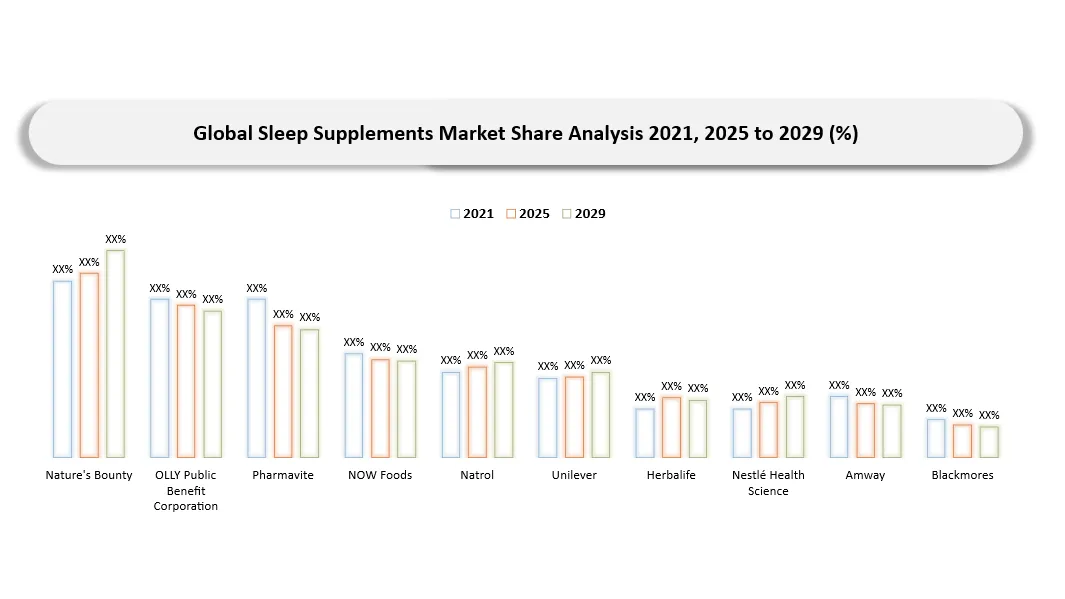
- Nature’s Bounty
- OLLY Public Benefit Corporation
- Pharmavite
- NOW Foods
- Natrol
- HUM Nutrition
- Unilever
- Herbalife
- Life Extension
- Thorne HealthTech
- Gaia Herbs
- Goli Nutrition
- Moon Juice
- AG1
- Slumber
- Bonafide Health
- Nestlé Health Science
- Amway
- Blackmores
- Swisse Wellness
Sleep Supplements Market Major Pain Points
- Inconsistent consumer response and difficulty separating supplement effects from sleep habits.
- Variable evidence across ingredients, doses and formulation combinations.
- Label accuracy, adulteration, contamination and undeclared-ingredient risk.
- High competition and low switching costs in e-commerce marketplaces.
- Morning grogginess, vivid dreams, digestive effects and interaction concerns.
- Regulatory risk from disease-treatment claims or insufficient substantiation.
- Customer acquisition costs and subscription churn for digitally native brands.
- Need for clearer guidance on long-term use, vulnerable populations and persistent sleep problems.
Sleep Supplements Market Recent Developments
- June 2026: Unisom entered the vitamin and mineral supplement category with magnesium and ashwagandha Sleep Support Gummies, marking its first drug-free and melatonin-free supplement.
- February 2026: Bonafide Health launched Noctera, a hormone-free and melatonin-free supplement designed for sleep disruption associated with hormonal changes in women.
- January 2026: Slumber launched Night Lytes, a magnesium-based sleep powder positioned as part of a stackable sleep-wellness system.
- November 2025: LifeWave introduced Cellergize Evening, a nighttime drink supplement positioned around relaxation, recovery and restorative sleep.
- August 2025: Life Time launched LTH Dream, a melatonin-free powder combining multiple forms of magnesium with calming nutrients.
- May 2025: Herbalife India introduced Sleep Enhance, a caffeine-free sleep supplement using a clinically studied saffron extract.
Analyst View / Opinion on Sleep Supplements Market
The Sleep Supplements market will remain structurally attractive because sleep concern is broad, recurring and connected with several adjacent wellness priorities. The largest commercial opportunity lies in products that fit daily routines without creating dependence on aggressive claims. Melatonin will remain important, but category growth will be increasingly distributed across magnesium, botanicals, amino acids, women’s health and functional nighttime beverages.
- Brands should segment by sleep problem rather than relying on broad sleep-support positioning.
- Melatonin-free products provide the clearest near-term innovation path, but evidence and dosing transparency are essential.
- Women’s life-stage sleep support can sustain premium pricing when formulations and education are genuinely targeted.
- Wearable integration can improve engagement but should not be presented as proof of clinical efficacy.
- Pharmacy and practitioner trust will become more valuable as regulatory scrutiny and consumer skepticism increase.
- Long-term winners will combine formulation quality, realistic claims, repeat purchase and channel diversification.
Sleep Supplements Market Target Audience
| Industry | Who Should Buy This Report? | Reason to Buy This Report |
| Supplement Brands | Portfolio, innovation, marketing and strategy teams | Assess segments, ingredients, formats and competitive positioning. |
| Ingredient Suppliers | Botanical, mineral and functional-ingredient companies | Identify high-growth ingredients and formulation partnerships. |
| Retail and Pharmacy | Category managers, buyers and pharmacy leaders | Evaluate assortment, claims, pricing and supplier quality. |
| Contract Manufacturing | Gummy, capsule, powder and beverage manufacturers | Assess capacity needs, product trends and customer opportunities. |
| Digital Health | Wearable, sleep-app and personalization platforms | Identify supplement partnerships and subscription models. |
| Investors and Consulting | Private equity, venture capital and advisors | Evaluate growth, competition, acquisition targets and market risk. |
| Government and Regulators | Food-safety and consumer-protection bodies | Understand claims, quality and market-development issues. |
Why Choose DATAM?
- Data-driven insights combining market sizing, consumer behavior, ingredient trends, channel economics and country-level opportunity.
- Post-purchase analyst consultations for portfolio design, market entry, partner identification and custom modeling.
- Annual updates covering product launches, regulation, acquisitions, ingredient evidence and competitive change.
- Specialized analysis of emerging formats, women’s health, functional beverages and digital personalization.
- Actionable recommendations connecting innovation with claims, manufacturing, retail and repeat-purchase economics.
What DATAM Uniquely Provides
- Ten-year forecasts across product type, ingredient, format, need state, consumer group, channel and region.
- Ingredient-level analysis separating melatonin, magnesium, amino acids, botanicals and multi-ingredient blends.
- Buyer-focused analysis of efficacy perception, grogginess, format preference, trust and repeat purchase.
- Country-level views linking regulation, pharmacy access, e-commerce and consumer wellness spending.
- Strategic recommendations for formulation, partnerships, clinical support, channel entry and acquisition screening.
Questions This Report Answers
- How will the global Sleep Supplements market evolve from 2025 through 2035?
- Which ingredients, formats and sleep needs offer the strongest growth?
- How quickly will melatonin-free products gain share?
- Which consumer groups and channels provide the best commercial opportunities?
- How should brands manage evidence, safety and regulatory claims?
- Which companies are best positioned across mass retail, pharmacy and e-commerce?
- Where are the strongest regional expansion and partnership opportunities?


























































