


Women’s Health Supplements Market Size & Overview
The global Women’s Health Supplements market reached an estimated US$ 62.26 billion in 2025 and is expected to reach US$ 129.60 billion by 2035, growing at a CAGR of 7.6% during 2026-2035. Demand spans foundational multivitamins and minerals, reproductive and menstrual support, prenatal and postnatal nutrition, fertility, menopause, bone health, intimate wellness, sleep, stress, beauty and healthy aging. The category is expanding as women increasingly seek products tailored to life stage and specific health objectives rather than broad one-size-fits-all formulations.
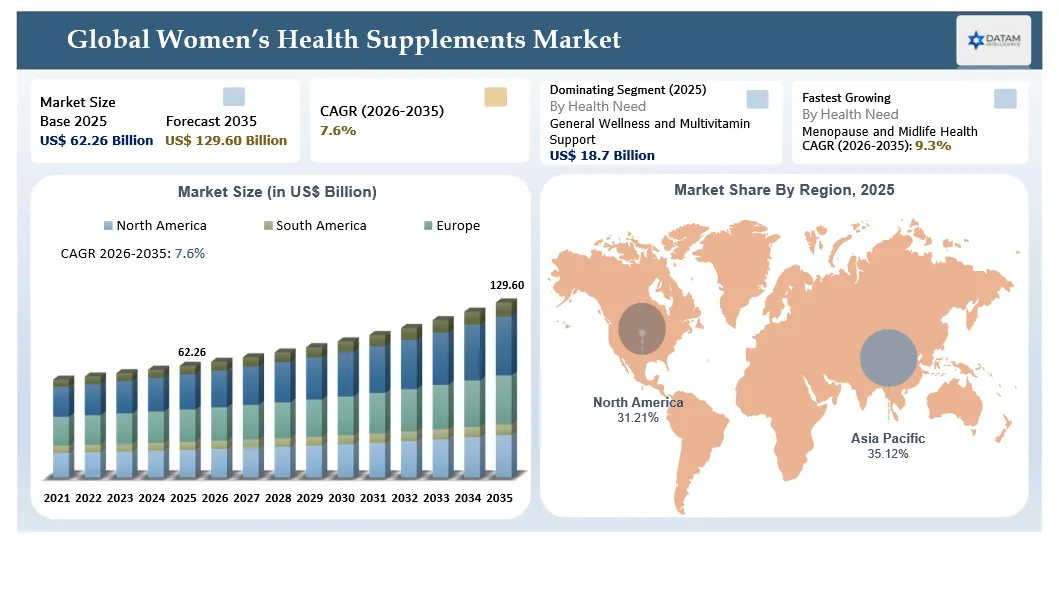
General wellness and multivitamin products remain the largest revenue pool because they reach the broadest consumer base and benefit from habitual daily use. Menopause and midlife formulations are among the fastest-growing subcategories, supported by rising awareness, more visible public discussion and the entry of specialist brands. Prenatal nutrition remains a clinically anchored category with strong practitioner influence, while menstrual, fertility and microbiome products are moving rapidly through e-commerce and direct-to-consumer channels.
North America leads through high supplement penetration, premium pricing, broad retail availability and a mature direct-to-consumer ecosystem. Europe has strong pharmacy and natural-health channels, while Asia-Pacific is expected to record the fastest growth as women’s preventive health spending, e-commerce and urban middle-class purchasing power expand. Competitive advantage increasingly depends on evidence-backed doses, transparent sourcing, clean-label positioning, convenient formats and credible education.
Women’s Health Supplements Market Key Takeaways
- General wellness and multivitamin support accounted for approximately 30.0% of global revenue in 2025, making it the largest health-need segment.
- Multivitamins and minerals held approximately 38.6% of the market in 2025, supported by daily-use behavior and broad retail distribution.
- Tablets and capsules represented about 42.4% of 2025 sales, while gummies and soft chews are projected to expand at a CAGR of 8.5% during 2026–2035.
- Reproductive-age consumers contributed an estimated 34.7% of 2025 demand, driven by sustained use for general wellness, menstrual health, fertility and preconception nutrition.
- North America accounted for approximately 31.21% of the global market in 2025, supported by premium brands, practitioner awareness and high online penetration.
- Asia-Pacific represented approximately 35.12% of global revenue in 2025 and is expected to register the fastest regional CAGR of 7.8% during 2026–2035.
- Menopause and midlife health supplements are projected to grow at a CAGR of 9.3% during 2026–2035, making them the fastest-growing health-need segment.
- Online marketplaces and direct-to-consumer channels together accounted for an estimated 29.6% of 2025 sales and are expected to continue gaining share through subscription models and personalized nutrition offerings.
Women’s Health Supplements Industry Trends and Strategic Insights
- Life-stage positioning is replacing broad gender-based marketing, with brands developing distinct solutions for reproductive years, pregnancy, postpartum, perimenopause and healthy aging.
- Evidence quality is becoming a stronger purchase filter as consumers compare dosage, ingredient form, clinical substantiation and third-party testing.
- Gummies, powders and drink mixes are expanding because they improve adherence and allow brands to combine nutrition with taste and daily rituals.
- Microbiome-focused products are moving beyond digestion into vaginal, urinary, immune and metabolic-health positioning.
- Direct-to-consumer brands are combining supplements with digital education, symptom tracking, telehealth and subscription replenishment.
- Retailers are giving more shelf space to menopause, hormone balance, fertility and intimate wellness as these needs become mainstream consumer-health categories.
Women’s Health Supplements Market Scope
| Metrics | Details |
| 2025 Market Size | US$ 62.26 Billion |
| 2035 Market Forecast | US$ 129.60 Billion |
| CAGR (2026-2035) | 7.6% |
| Largest Market | Asia-Pacific |
| Fastest Growing Market | Asia-Pacific |
| By Health Need | General Wellness, Reproductive Health, Prenatal, Fertility, Menopause, Bone Health, Intimate Health, Sleep and Stress, Beauty, Healthy Aging |
| By Product Type | Multivitamins, Single Nutrients, Botanicals, Probiotics, Omega-3, Protein, Condition-Specific Blends, Personalized Packs |
| By Dosage Form | Tablets, Capsules, Gummies, Powders, Liquids, Softgels, Functional Beverages |
| By Life Stage | Adolescent, Reproductive Age, Pregnancy, Postpartum, Perimenopause, Menopause, Healthy Aging |
| By Distribution Channel | Pharmacy, Mass Retail, Specialty Retail, Online Marketplace, Direct-to-Consumer, Practitioner |
Why does this report matter in 2026?
The year 2026 is an important inflection point because women’s wellness is moving from a collection of isolated supplement niches into a more integrated consumer-health platform. New brands are entering hormonal health, menstrual support, fertility, menopause and healthy aging, while established supplement companies are broadening women-specific portfolios. Retailers are responding with dedicated merchandising, and online channels are enabling smaller brands to reach consumers with detailed education and subscription models.
The market is also facing higher expectations around evidence and transparency. Consumers increasingly distinguish between clinically grounded nutrient support and loosely substantiated hormone or symptom claims. Regulators continue to scrutinize dietary supplement labeling, while quality failures and undeclared ingredients can damage category trust. Companies therefore need product development systems that connect formulation, testing, claims, quality documentation and post-market monitoring.
For investors and strategic buyers, the category offers multiple entry points across branded products, specialty ingredients, contract manufacturing, diagnostics, digital health and practitioner platforms. The strongest opportunities are likely to combine high-repeat purchase behavior with a clearly defined life-stage need, credible evidence and a scalable customer-acquisition model.
Women’s Health Supplements Market White Space & Investment Opportunities
- Perimenopause nutrition remains underdeveloped relative to the size of the population and the diversity of symptoms that influence sleep, mood, energy, body composition and bone health.
- Postpartum recovery offers white space across iron, protein, hydration, lactation support, mood, sleep and micronutrient restoration.
- Women’s microbiome products can expand through clinically differentiated vaginal, urinary and digestive-health formulations.
- Personalized packs can use age, diet, medication, laboratory data and life-stage information to improve relevance and retention.
- Adolescent women’s nutrition is under-served across iron, vitamin D, bone development, menstrual health and sports participation.
- Practitioner-grade women’s supplements can grow through gynecology, fertility clinics, dietitians, menopause specialists and pharmacy counseling.
Women’s Health Supplements Future Market Transformation
The market will increasingly organize around life-stage ecosystems rather than isolated products. A reproductive-health platform may combine a multivitamin, iron, menstrual support, fertility nutrition and microbiome products, while a midlife platform may include sleep, stress, bone, metabolic and intimate-health solutions. Brands that build trust at one life stage can extend customer relationships over many years, reducing acquisition costs and increasing lifetime value.
Personalization will expand through questionnaires, subscriptions, biomarker testing and digital health integration. The most effective models will avoid superficial personalization and instead use clear rules for nutrient adequacy, contraindications and evidence-based recommendations. Retail and practitioner channels will remain important because supplements intersect with medication use, pregnancy, fertility treatment and chronic conditions.
By 2035, category leaders are likely to combine formulation science, transparent sourcing, third-party testing, digital education and strong retail execution. Packaging sustainability, lower-sugar formats and convenient daily regimens will influence product development. Artificial intelligence may accelerate formulation screening and consumer support, but human clinical oversight will remain essential for safety and trust.
Women’s Health Supplements Market Buyer Decision-Making Criteria
Consumers prioritize relevance to a specific health need, ingredient credibility, dosage, safety, taste, format and price. Prenatal and fertility buyers place greater weight on practitioner recommendations and established nutrients, while menopause and hormonal-health buyers often seek symptom-specific benefits and peer validation. Label simplicity and third-party testing are increasingly important because consumers face a crowded marketplace with inconsistent claims.
Retailers evaluate sell-through, repeat purchase, category incrementality, margin, shelf productivity and promotional support. Practitioners focus on evidence, contraindications, ingredient form, dosage and adherence. Investors assess retention, gross margin, customer acquisition cost, channel concentration, regulatory risk and the ability to extend the brand across adjacent life stages.
Women’s Health Supplements Market, Economic & Investment Analysis
The market combines large recurring categories with smaller high-growth niches. Foundational multivitamins and minerals offer scale but face price competition and private-label pressure. Condition-specific products can command higher margins when they solve a clear need and use differentiated ingredients. Direct-to-consumer models can generate strong lifetime value, yet customer acquisition costs, discounting and subscription churn can weaken economics. Omnichannel brands often achieve a better balance by using digital channels for education and data while using retail for reach and trust.
Investment should be evaluated through segment-specific economics. Prenatal nutrition benefits from habitual use and practitioner influence but has established competitors. Menopause products have high growth and strong consumer interest, but claims require careful evidence and compliance. Microbiome products offer formulation differentiation, though strain-level evidence and stability are critical. Gummies can accelerate adoption but add sugar, capacity and formulation constraints. Personalized packs support retention but require operational complexity and credible recommendation logic.
Strategic value is highest for platforms with proprietary or clinically supported ingredients, repeat-purchase products, diversified channels and a clear path across multiple life stages. Ingredient suppliers and contract manufacturers can benefit from the same market growth with lower consumer-marketing exposure. Acquirers should test whether brand growth is driven by durable retention and differentiated products or by short-term paid media. Evidence infrastructure, quality systems and regulatory discipline should be treated as value-creation assets rather than overhead.
Women’s Health Supplements Investment Trends in the Market
- Capital is moving toward menopause and hormonal-health platforms that combine supplements with education, digital tools and community engagement.
- Prenatal and fertility brands are expanding into preconception, postpartum and infant-health adjacencies to increase customer lifetime value.
- Ingredient companies are investing in clinically documented probiotics, mineral forms, botanical extracts and bioavailability technologies designed for women-specific formulations.
- Private-label and contract manufacturers are adding gummy, powder, sachet and low-sugar capabilities to serve faster-growing formats.
- Retailers are building dedicated women’s wellness sets that create acquisition opportunities for specialist brands with proven sell-through.
- Digital personalization and subscription businesses are attracting interest when they demonstrate strong retention, transparent recommendation logic and high-quality manufacturing.
Strategic Indicators for the Women's Health Supplements Market
High Regulation Impact
Dietary supplements can enter the U.S. market without premarket approval in many cases, but brands remain responsible for safety, labeling and compliant claims. Pregnancy, fertility and hormonal-health products face especially high reputational risk because consumers may use them alongside medications or during medically sensitive periods.
High Investment Activity
Investment is active across menopause, fertility, microbiome health, personalized nutrition and premium daily wellness. Capital favors brands with repeat purchase, strong retention and credible differentiation rather than undifferentiated single-product concepts.
Supply Chain Disruption
Botanicals, marine oils, specialty probiotics and mineral forms depend on global suppliers and quality testing. Disruption can affect cost, lead time and product consistency, making supplier qualification and dual sourcing important.
Pricing Volatility
Ingredient costs, gummy capacity, freight and retailer promotions can create margin volatility. Premium brands can protect pricing through evidence, convenience, brand trust and subscription models.
Procurement Pressure
Retailers and pharmacies demand reliable supply, documentation, promotional support and rapid replenishment. Suppliers must balance large retail orders with direct-to-consumer inventory and new product launches.
New Technology Adoption
Encapsulation, delayed release, low-sugar gummies, personalized packs and digital adherence tools are changing product design. Adoption depends on measurable consumer benefit and scalable manufacturing.
Regional Expansion Opportunity
Asia-Pacific offers the strongest growth, while North America remains the largest value pool. Europe provides opportunities through pharmacy and natural-health channels, but claims and ingredient rules vary by country.
Government Policy Support
Public nutrition guidance around folate, iron, calcium, vitamin D and pregnancy supports foundational demand. Policy also shapes permitted claims, maximum levels and quality expectations.
Pricing Intelligence
Entry-level multivitamins compete on affordability, while condition-specific and personalized products command premiums. Pricing should reflect evidence, dosage, format, channel margin and repeat-purchase economics.
AI Impact Analysis of the Women's Health Supplements Market
AI can improve product discovery by matching consumer needs with ingredient and life-stage information, while formulation teams can use computational tools to screen combinations, identify interactions and prioritize evidence. Brands can also use AI to analyze reviews, detect emerging needs and personalize education. These tools can improve conversion and retention when recommendations are transparent and conservative.
Risk remains significant because automated systems may overstate benefits, miss pregnancy or medication contraindications and produce inappropriate health advice. AI-enabled personalization should therefore use clinically reviewed rules, clear escalation pathways and strong privacy controls. The winning use case is decision support around product selection and adherence rather than automated diagnosis or treatment.
Disruption Analysis of Women’s Health Supplements Market
Specialist brands are disrupting large generalist portfolios by focusing on specific needs such as menstrual health, fertility, menopause, vaginal health and postpartum recovery. Their advantage comes from sharper education, community building and rapid product development. Large companies are responding through acquisitions, line extensions and retailer partnerships.
Alternative formats and channels are also changing the market. Gummies, powders, sachets and functional beverages are making supplementation more experiential, while direct-to-consumer subscriptions increase convenience and data collection. Practitioner-linked platforms may become more important as consumers seek reassurance around evidence, safety and interaction with medications.
Women’s Health Supplements Market BCG Matrix: Company Evaluation
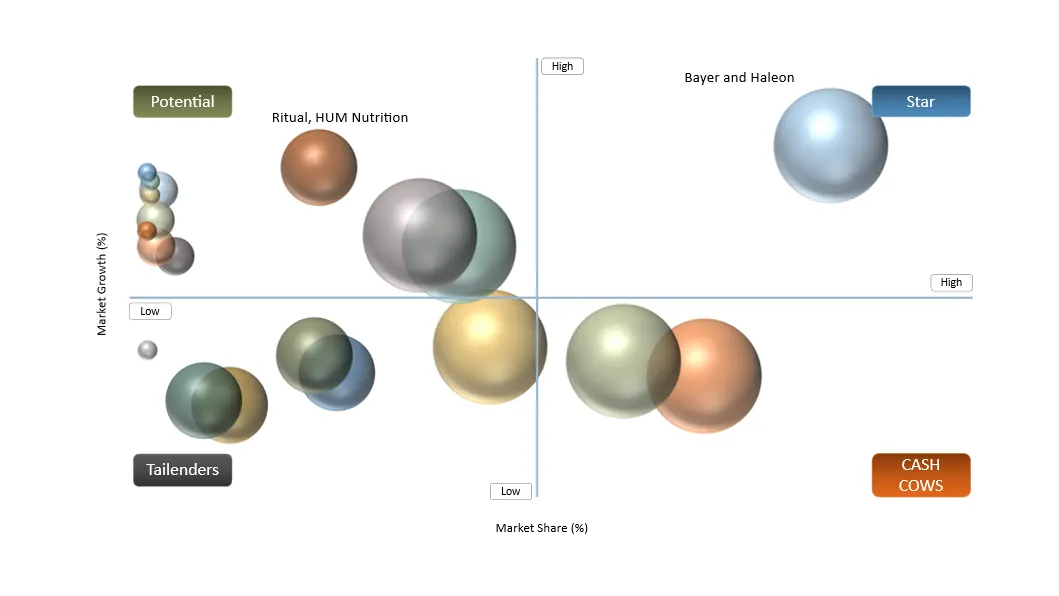
STAR: Bayer and Haleon are positioned as Stars because they combine broad consumer-health distribution, established women’s health brands and strong retail access. Pharmavite and Church & Dwight also hold strong positions through high-recognition vitamin portfolios and pharmacy penetration. Their future growth depends on extending beyond foundational multivitamins into life-stage-specific and premium formulations.
POTENTIAL: Ritual, HUM Nutrition, Thorne, MegaFood and specialist women’s wellness brands represent Potential players. They benefit from premium positioning, transparent ingredients, digital education and rapid category innovation. Their ability to become Stars depends on maintaining retention, broadening channels and converting brand credibility into sustained profitability. Mature mass-market multivitamin lines function as Cash Cows, while small undifferentiated brands with weak evidence and high paid-media dependence remain Tailenders.
Women’s Health Supplements Market Dynamics
Driver Impact Analysis
| Driver | Growth Impact | Demand Concentration | Impacted Use Case | Strategic Impact |
| Life-stage-specific nutrition | High | Global female consumers | Prenatal, menopause, reproductive health | Expands targeted categories and premium pricing. |
| E-commerce and DTC growth | High | Urban and digitally engaged consumers | Subscriptions and education-led products | Reduces entry barriers and supports niche brands. |
| Preventive health awareness | Medium-High | Middle-income and aging consumers | Daily wellness and healthy aging | Increases repeat purchase and category penetration. |
| Format innovation | Medium | Younger consumers | Gummies, powders and beverages | Improves adherence and broadens usage occasions. |
Driver: Life-Stage-Specific Nutrition Creates New Category Depth
Women increasingly expect products to reflect changing nutritional needs across adolescence, reproductive years, pregnancy, postpartum, perimenopause and healthy aging. This shift supports differentiated formulations, clearer merchandising and stronger consumer relevance. Brands can build longer relationships by serving multiple stages, but they need disciplined evidence and careful claims to avoid reducing complex health needs to simplistic marketing.
Restraint Impact Analysis
| Restraint | Drag on Growth | Primary Impact Area | Impacted Use Case | Strategic Impact |
| Inconsistent evidence | High | Consumer trust | Hormone and symptom claims | Raises scrutiny and limits practitioner adoption. |
| Quality variability | High | Brand reputation | Botanicals and complex blends | Increases testing and supplier qualification costs. |
| Regulatory complexity | Medium-High | Market entry | Global launches | Requires country-specific claims and formulation work. |
| Price sensitivity | Medium | Mass market | Premium daily regimens | Can reduce adherence and increase switching. |
Restraint: Evidence and Trust Gaps Limit Category Conversion
Many consumers encounter products with broad claims, proprietary blends and unclear dosing. This can create skepticism and reduce practitioner support, especially in fertility, pregnancy and menopause. Brands need transparent labels, meaningful doses, ingredient traceability and clinically appropriate communication. Strong quality systems and post-market monitoring can become competitive differentiators as the market matures.
Women’s Health Supplements Market Segment Analysis
The global women's health supplements market is segmented based on health need, product type, ingredient category, dosage form, life stage, distribution channel, and region.
By Health Need
General Wellness Will Remain the Largest Segment While Menopause Grows Fastest
General wellness and multivitamin support leads because it reaches women across all adult age groups and benefits from daily use. Menopause and midlife health will grow fastest as awareness rises and brands address sleep, mood, energy, bone and metabolic concerns. Prenatal nutrition remains a high-trust segment, while reproductive and menstrual health is expanding through digital-first brands and condition-specific formulations.
By Product Type
Multivitamins and Minerals Will Retain the Largest Revenue Base
Multivitamins and minerals remain the largest product type due to broad household penetration, pharmacy availability and established consumer understanding. Condition-specific blends and personalized packs will grow faster because they offer clearer benefit positioning and higher repeat-purchase potential. Probiotics and microbiome products are also gaining share through intimate, digestive and urinary-health applications.
By Ingredient Category
Vitamins Will Lead While Probiotics and Specialty Bioactives Accelerate
Vitamins lead through multivitamins, prenatal products and widespread use of vitamin D, folate and B vitamins. Minerals such as iron, calcium, magnesium and zinc remain essential across reproductive and healthy-aging segments. Probiotics and specialty bioactives are expected to grow faster as brands develop strain-specific, life-stage-specific and clinically supported products.
By Dosage Form
Tablets and Capsules Will Lead but Gummies Will Gain Share
Tablets and capsules retain the largest share because they support high nutrient loads, stable formulations and cost-efficient manufacturing. Gummies and soft chews are growing faster among younger consumers and users seeking convenient daily routines. Powders and sachets are gaining adoption in prenatal, hydration, protein and personalized nutrition, while liquids and functional beverages create premium usage occasions.
By Life Stage
Reproductive Age Will Remain Largest While Perimenopause Expands Fastest
Reproductive-age women form the largest consumer group because they purchase general wellness, menstrual, fertility, preconception and beauty products. Perimenopause will record the fastest growth as consumers seek support before traditional menopause products become relevant. Pregnancy and postpartum remain high-value categories with strong practitioner influence and high adherence expectations.
By Distribution Channel
Online and Direct-to-Consumer Channels Will Gain Share
Pharmacies and drugstores remain important for trust, convenience and prenatal or medically sensitive categories. Online marketplaces and direct-to-consumer channels are gaining share through assortment, education, reviews and subscription replenishment. Specialty nutrition retailers and practitioner channels remain valuable for premium products requiring explanation or personalized support.
Women’s Health Supplements Market Geographical Penetration
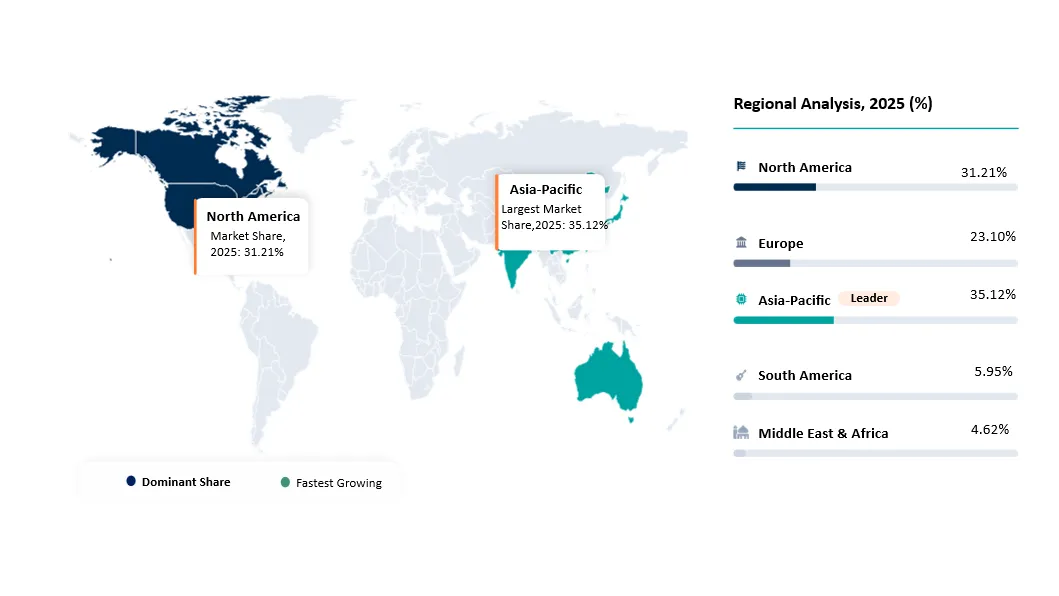
Regional performance differs according to supplement penetration, disposable income, pharmacy structure, regulation, e-commerce adoption and cultural attitudes toward women’s health. Asia-Pacific is the largest market, Europe has strong pharmacy and natural-health channels and North America is the fastest-growing region. South America and Middle East and Africa offer selective opportunities through urban retail, pharmacies and digital commerce.
Europe Women’s Health Supplements Market Trends
Germany is supported by pharmacies, drugstores and a large natural-health consumer base. Botanicals, minerals, menopause and healthy-aging products are important, but health-claim restrictions require conservative communication. Retailer private labels create price pressure.
The UK has strong online retail, pharmacy distribution and public discussion of menopause and reproductive health. Demand is rising for evidence-based, low-sugar and vegan formulations. Advertising scrutiny is important for symptom and hormone claims.
France combines pharmacy credibility with growing e-commerce and natural-health demand. Beauty-from-within, pregnancy, menopause and microbiome products offer opportunity. Products need to align with national and EU ingredient and claim requirements.
Middle East and Africa Women’s Health Supplements Market Outlook
Demand is concentrated in Gulf countries, South Africa and major urban centers. Prenatal, iron, vitamin D, beauty and general wellness are important. Pharmacy partnerships, affordability and culturally appropriate education are central to expansion.
U.S. Women’s Health Supplements Market Landscape
The U.S. leads through high supplement use, premium brands, broad retail distribution and a large direct-to-consumer ecosystem. Menopause, fertility, prenatal, microbiome and personalized nutrition are major growth themes. Retailers increasingly dedicate shelf space to women-specific needs, while consumers expect third-party testing and transparent labeling. Growth will depend on repeat purchase, evidence and disciplined claims.
Japan Women’s Health Supplements Market Trends
Japan has an aging female population, established functional-food culture and strong demand for beauty, fatigue, bone and menopause support. Convenience formats and retailer trust are important. Local formulation, claims and consumer education shape market entry.
China Women’s Health Supplements Market Outlook
China is expanding through cross-border e-commerce, premium maternal nutrition and growing interest in beauty, reproductive health and healthy aging. Domestic brands and digital platforms move quickly, while imported products benefit from quality perception. Regulatory compliance and channel partnerships are critical.
India Women’s Health Supplements Market Trends
India offers growth through urban preventive health, rising e-commerce, anemia awareness, prenatal nutrition and women’s fitness. Price sensitivity remains high, making sachets, smaller packs and pharmacy distribution important. Physician and nutritionist education can improve adoption.
Australia Women’s Health Supplements Market Outlook
Australia has high natural-health participation and strong pharmacy and specialty retail. Menopause, prenatal, iron, probiotics and sports nutrition are important. Export-oriented manufacturers also support regional supply.
Women’s Health Supplements Market Competitive Landscape
- Competition spans multinational consumer-health companies, broad supplement brands, specialist women’s wellness companies, pharmacy private labels and digital-first entrants.
- Large companies benefit from distribution, quality systems and brand recognition, while specialist brands compete through sharper life-stage positioning and community engagement.
- Differentiation increasingly depends on clinical evidence, transparent doses, ingredient sourcing, format convenience and trusted education.
- E-commerce lowers entry barriers but increases paid-media competition and makes retention a central profitability metric.
- Retail expansion remains a major milestone for digital brands because it improves visibility, trust and customer acquisition economics.
- Partnerships with practitioners, ingredient suppliers and contract manufacturers can accelerate product development and strengthen credibility.
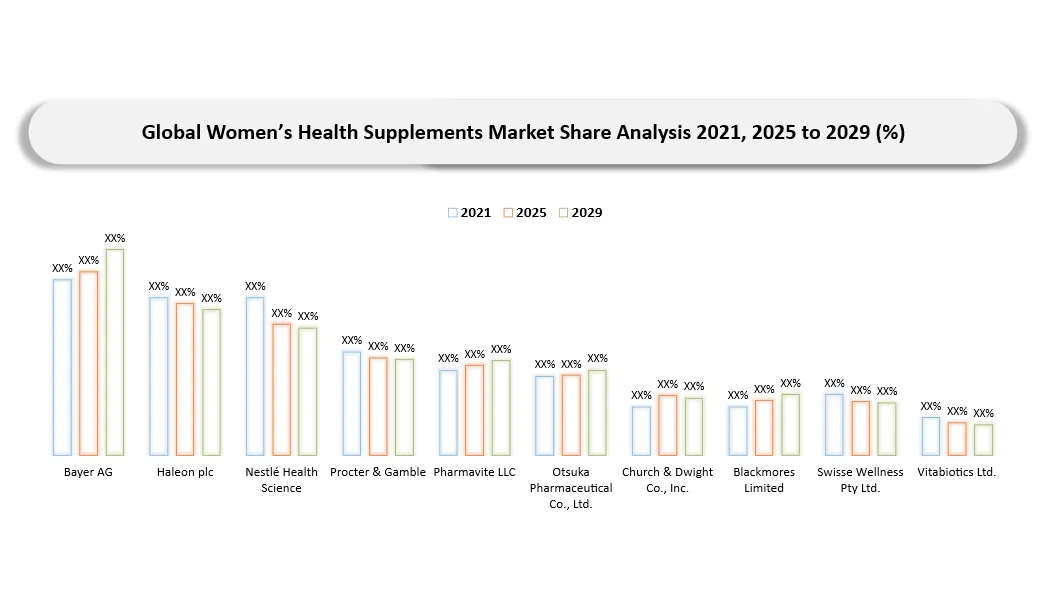
Key Companies in the Women's Health Supplements Market
- Bayer AG
- Haleon plc
- Nestlé Health Science
- Pharmavite LLC
- Procter & Gamble
- Otsuka Pharmaceutical Co., Ltd.
- Church & Dwight Co., Inc.
- GNC Holdings, LLC
- The Honest Company, Inc.
- Ritual
- HUM Nutrition Inc.
- Thorne HealthTech, Inc.
- MegaFood
- Garden of Life
- Nature's Way Products, LLC
- New Chapter, Inc.
- NOW Foods
- Blackmores Limited
- Swisse Wellness Pty Ltd.
- Vitabiotics Ltd.
Women’s Health Supplements Market Major Pain Points
- Inconsistent clinical evidence across complex blends and hormone-related claims.
- Quality variability in botanicals, probiotics and imported ingredients.
- Consumer confusion created by overlapping products and proprietary blends.
- High customer acquisition costs for direct-to-consumer brands.
- Regulatory differences across countries for ingredients, claims and maximum levels.
- Taste, pill burden and adherence challenges in high-dose prenatal and mineral products.
- Price sensitivity and private-label competition in foundational categories.
- Limited integration between supplement use, medication history and practitioner advice.
Women’s Health Supplements Market Recent Developments
- July 2026: Vitamin World launched a new women’s wellness line designed around changing nutritional needs across life stages.
- April 2026: Amulet launched a hormonal-health platform with a daily cycle-support supplement positioned around energy, mood, strength and cognitive performance.
- March 2026: The U.S. FDA announced a public meeting on dietary supplement innovation and the scope of dietary ingredients.
- December 2025: The FDA issued an industry letter addressing use of the DSHEA disclaimer on dietary supplement labeling.
- 2025-2026: Major retailers expanded women’s wellness, menopause, fertility and intimate-health merchandising across stores and e-commerce.
- 2025-2026: Brands increased investment in low-sugar gummies, personalized packs, clinically documented probiotics and life-stage-specific formulations.
Analyst View / Opinion on Women’s Health Supplements Market
The market is entering a more disciplined growth phase. Consumer demand is strong, but broad wellness language is becoming less effective as buyers seek products linked to specific life stages and measurable needs. Companies that combine evidence, quality, education and repeat-purchase convenience will gain share. Menopause, microbiome health, postpartum recovery and personalized nutrition offer the most attractive white spaces, while foundational multivitamins will remain the largest volume pool.
- Life-stage ecosystems can create longer customer relationships than single-condition products.
- Clinical evidence and transparent dosing will become more important as competition increases.
- Retail and practitioner channels can improve trust and reduce reliance on paid digital acquisition.
- Gummies and powders will continue gaining share, but formulation quality and sugar content require attention.
- Asia-Pacific provides the strongest regional growth opportunity, while North America remains the largest profit pool.
- Long-term winners will balance innovation with conservative claims, reliable supply and strong quality systems.
Women’s Health Supplements Market Target Audience
| Industry | Who Should Buy This Report? | Reason to Buy |
| Supplement Brands | Portfolio, innovation, commercial and strategy teams | Prioritize categories, formulations and channels. |
| Ingredient Suppliers | Vitamin, mineral, botanical, probiotic and specialty ingredient companies | Identify high-growth applications and customer opportunities. |
| Manufacturers | Contract manufacturers, packers and dosage-form specialists | Assess capacity demand and format investment. |
| Retail and Pharmacy | Category managers, buyers and private-label teams | Evaluate assortment, growth and merchandising opportunities. |
| Investors and Consulting | Private equity, venture capital, institutions and advisors | Assess market size, growth, competition and acquisition targets. |
| Healthcare Providers | Nutritionists, pharmacists, gynecology and fertility practices | Understand product trends, evidence and patient demand. |
Why Choose DATAM?
- Data-driven forecasts combining consumer penetration, spend, life-stage demand, channel mix and product economics.
- Post-purchase analyst consultations for portfolio strategy, market entry, partner identification and custom modeling.
- Annual updates covering launches, regulation, retail expansion, partnerships and competitive changes.
- Specialized focus on emerging markets and country-level channel dynamics.
- Actionable analysis connecting formulation, evidence, consumer need and commercial execution.
What DATAM Uniquely Provides
- Ten-year forecasts across health need, product type, ingredient, dosage form, life stage, channel and region.
- Life-stage analysis separating reproductive, prenatal, postpartum, perimenopause, menopause and healthy-aging demand.
- Buyer-focused analysis of evidence, quality, pricing, retention and channel economics.
- Country-level views linking consumer behavior, regulation, retail and e-commerce.
- Strategic recommendations for portfolio development, partnerships and market entry.
Questions This Report Answers
- How will the global Women’s Health Supplements market evolve through 2035?
- Which health needs and product types offer the strongest growth?
- How quickly will menopause, microbiome and personalized nutrition categories expand?
- Which ingredients and dosage forms are gaining adoption?
- How are online, direct-to-consumer and pharmacy channels changing competition?
- Which regions offer the strongest growth and profitability?
- How should companies build life-stage portfolios and evidence strategies?


























































