


Ready-to-Drink Coffee Market Size and Overview
The global ready-to-drink coffee market reached US$28.45 billion in 2025 and is expected to reach US$64.6 billion by 2035, growing with a CAGR of 8.55% during the forecast period 2026-2035.
The market is witnessing a gradual shift from conventional canned coffee toward premium, functional and health-oriented beverages. Growing consumer interest in protein-enriched coffee, plant-based alternatives, reduced-sugar formulations and innovative flavors is encouraging manufacturers to diversify their product portfolios. Leading companies, including Starbucks Corporation, Nestlé S.A., The Coca-Cola Company, Suntory Beverage & Food Limited and Danone S.A., are strengthening their competitive positions through product innovation, strategic partnerships, manufacturing investments and expanded retail distribution.
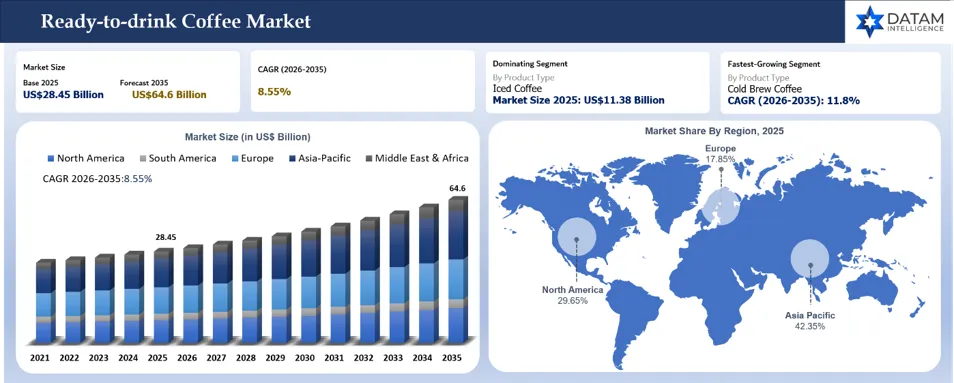
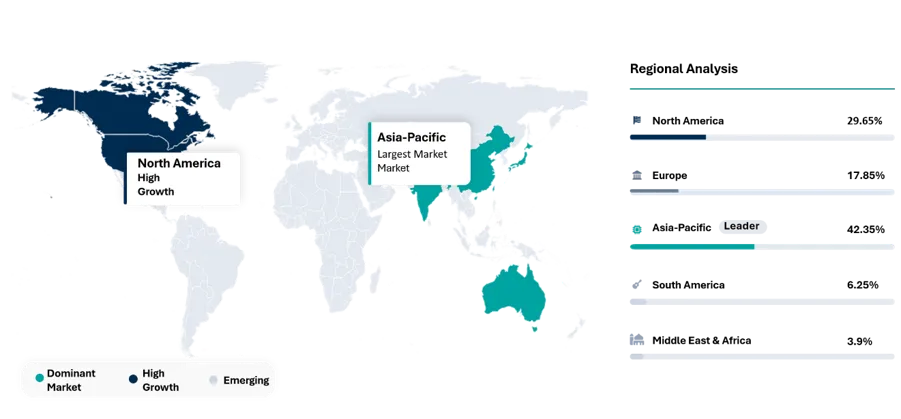
Asia-Pacific represents a major regional market, supported by established canned coffee consumption in Japan, strong convenience retail networks and expanding coffee culture across China, South Korea and India. North America continues to demonstrate strong demand for premium cold brew, flavored iced coffee and functional formulations, while Europe offers opportunities in plant-based beverages, sustainable packaging and premium coffee products.
However, volatility in Arabica and Robusta coffee prices, increasing packaging expenses, intense retail competition and evolving consumer concerns regarding sugar and caffeine consumption present challenges to market growth. Manufacturers are increasingly prioritizing efficient coffee sourcing, advanced processing technologies, product differentiation and sustainable packaging solutions. Looking ahead, functional beverage innovation, premiumization, emerging-market expansion and omnichannel retail strategies are expected to shape the competitive landscape and create attractive commercial opportunities through 2035.
Ready-to-Drink Coffee Market Key Takeaways
- Sustained Market Expansion Through 2035: The global ready-to-drink (RTD) coffee market was valued at US$28.45 billion in 2025 and is projected to reach US$64.60 billion by 2035, registering a CAGR of 8.55% during 2026-2035. Growth is supported by increasing demand for convenient coffee beverages, expanding urban lifestyles, premiumization and rising consumption of cold brew and specialty coffee products.
- Premium Cold Brew and Functional Coffee Gain Strategic Importance: Growing consumer preference for premium cold brew, protein-enriched coffee, reduced-sugar formulations and plant-based alternatives is reshaping product development strategies. Manufacturers are increasingly focusing on differentiated flavors, nutritional benefits and convenient packaging formats to attract health-conscious consumers and strengthen brand positioning across competitive retail markets.
- Retail Distribution Expansion and Product Innovation Emerge as Major Growth Engines: Increasing availability across supermarkets, convenience stores, vending machines, e-commerce platforms and quick-commerce channels is strengthening product accessibility and market penetration. Manufacturers are expanding investments in innovative packaging, shelf-stable processing, single-serve formats and strategic distribution partnerships to capitalize on evolving consumer preferences and emerging consumption occasions.
- Asia-Pacific Maintains Regional Dominance: Asia-Pacific is estimated to account for approximately 42.35% of the global ready-to-drink coffee market in 2025, based on the report's illustrative regional allocation. Established canned coffee consumption in Japan, extensive convenience retail infrastructure and expanding demand for packaged coffee across China, South Korea and India support regional growth. Increasing urbanization, rising disposable incomes and changing beverage preferences are expected to create additional opportunities through 2035.
- Premiumization, Supply Chain Resilience and Functional Innovation Reshape Competitive Strategy: Future competitive differentiation will increasingly depend on coffee bean quality, product formulation, brand positioning, sustainable packaging, manufacturing efficiency and retail distribution capabilities. Leading companies, including Starbucks Corporation, Nestlé S.A., The Coca-Cola Company, Suntory Beverage & Food Limited and Danone S.A., are positioned to benefit from premium product innovation and portfolio diversification. Manufacturers combining resilient sourcing strategies, competitive pricing and differentiated functional beverages are expected to strengthen their market positions through 2035.
Ready-to-Drink Coffee Market Industry Trends and Strategic Insights
- The global ready-to-drink coffee market is transitioning from conventional canned coffee and traditional sweetened beverages toward premium, functional and convenience-oriented coffee formulations. This shift is supported by evolving consumer lifestyles, increasing preference for cold coffee, growing demand for on-the-go consumption and rising interest in healthier beverage alternatives, including reduced-sugar, plant-based and protein-enriched coffee products.
- Leading companies, including Starbucks Corporation, Nestlé S.A., The Coca-Cola Company, Suntory Beverage & Food Limited and Danone S.A., are strengthening their competitive positions through diversified product portfolios, premium cold brew offerings, innovative flavor combinations, strategic distribution partnerships and geographic expansion. Growing consumer demand for specialty coffee experiences in convenient packaged formats is accelerating product innovation and competition across established and emerging markets.
- Consumers are increasingly shifting toward premium iced coffee, cold brew and functional RTD coffee beverages that offer convenience, distinctive flavors and additional nutritional benefits. Plant-based alternatives, protein-enriched formulations, reduced-sugar varieties and differentiated caffeine offerings are gaining importance as manufacturers seek to address evolving health preferences and diversify consumption occasions. Expanding supermarket availability, convenience retail penetration and e-commerce accessibility are further supporting product adoption.
- Commercial differentiation is expected to move beyond traditional coffee flavor and brand recognition toward ingredient quality, nutritional composition, functional benefits, packaging convenience, sustainability and competitive pricing. Innovations in nitrogen-infused coffee, high-protein beverages, dairy-free formulations, recyclable packaging and shelf-stable processing technologies could reshape product positioning, retail strategies and manufacturer investments. Companies offering differentiated products while maintaining affordability and consistent taste are expected to strengthen their competitive positioning.
- Sustainable competitive advantage will increasingly depend on securing reliable coffee bean supplies, improving manufacturing efficiency, optimizing packaging costs and expanding distribution networks across high-growth geographic markets. Asia-Pacific presents significant opportunities through established canned coffee consumption and expanding urban demand, while North America and Europe continue to support premiumization and functional coffee innovation. Manufacturers demonstrating strong product differentiation, effective supply chain management, flexible pricing strategies and responsiveness to changing consumer preferences are likely to capture attractive growth opportunities through 2035.
Ready-to-Drink Coffee Market Scope
| Metrics | Details | |
| 2025 Market Size | US$28.45 Billion | |
| 2035 Projected Market Size | US$64.6 Billion | |
| CAGR (2026-2035) | 8.55% | |
| Largest Market | Asia-Pacific | |
| Fastest Growing Market | North America | |
| By Product Type | Cold Brew Coffee, Iced Coffee, Espresso-Based Coffee, Coffee Latte, Cappuccino, Mocha Coffee, and Other Coffee Types | |
| By Brewing Method | Cold Brew Coffee, Espresso-Brewed Coffee, Conventional Brewed Coffee, and Soluble Coffee-Based Beverages | |
| By Flavor | Unflavored and Flavored | |
| By Sugar Content | No Added Sugar, Sugar-Sweetened, and Non-Sugar-Sweetened | |
| By Packaging Type | Cans, Plastic Bottles, Glass Bottles, Cartons, and Other Packaging Types | |
| By Packaging Size | Below 250 ml, 250-499 ml, 500-999 ml, and 1,000 ml and Above | |
| By Distribution Channel | Supermarkets and Hypermarkets, Convenience Stores, Independent Grocery Stores, Online Retail, Specialty Retail Stores, Vending Machines, Foodservice Outlets, and Other Distribution Channels | |
| By Region | North America | U.S., Canada, Mexico |
| Europe | Germany, UK, France, Spain, Italy, Poland | |
| Asia-Pacific | China, India, Japan, Australia, South Korea, Indonesia, Malaysia, Singapore, Vietnam, Thailand, Philippines, Taiwan | |
| South America | Brazil, Argentina | |
| Middle East and Africa | Israel, Saudi Arabia, UAE, Turkiye, South Africa, Nigeria | |
| Report Insights Covered | Competitive Landscape Analysis, Company Profile Analysis, Market Size, Share, Growth | |
Why does this report matter in 2026?
The global ready-to-drink (RTD) coffee market is undergoing significant transformation in 2026 as consumers increasingly shift toward convenient, premium and functional coffee beverages. Rising demand for cold brew, flavored iced coffee, plant-based alternatives, reduced-sugar formulations and protein-enriched beverages is reshaping product development, purchasing preferences and retail strategies. Growing urbanization, changing lifestyles and expanding on-the-go consumption are further accelerating demand across established and emerging markets.
Competitive intensity is increasing as leading companies, including Starbucks Corporation, Nestlé S.A., The Coca-Cola Company, Suntory Beverage & Food Limited and Danone S.A., strengthen their portfolios through product innovation, strategic partnerships, premiumization and distribution expansion. Growing interest in specialty coffee experiences, functional ingredients and sustainable packaging is creating new opportunities for brand differentiation, market penetration and investment across the global beverage industry.
Volatility in coffee bean prices, increasing packaging costs, evolving sugar regulations and sustainability requirements are further influencing manufacturing strategies, product pricing and profitability. With the global market valued at US$28.45 billion in 2025 and projected to reach US$64.60 billion by 2035, this report provides strategic insights into consumer trends, competitive positioning, product innovation, pricing dynamics, distribution opportunities and regional growth prospects, enabling stakeholders to identify high-potential investment opportunities and develop effective market expansion strategies through 2035.
Ready-to-Drink Coffee Market White Space & Investment Opportunities
- Premium Cold Brew and Specialty Coffee: Invest in premium cold brew, nitrogen-infused coffee and specialty espresso-based beverages to capitalize on growing consumer demand for high-quality coffee experiences, differentiated flavors and convenient ready-to-consume formats.
- Functional and Protein-Enriched RTD Coffee: Develop protein-fortified, vitamin-enriched and functional coffee beverages targeting health-conscious consumers seeking convenient products that combine caffeine consumption with additional nutritional benefits.
- Plant-Based and Dairy-Free Coffee Alternatives: Expand investment in oat milk, almond milk, soy milk and other plant-based coffee formulations to address growing demand for dairy-free beverages, dietary flexibility and differentiated premium coffee products.
- Reduced-Sugar and Health-Oriented Formulations: Introduce unsweetened, reduced-sugar and non-sugar-sweetened RTD coffee products to capture opportunities among consumers seeking lower-calorie beverage alternatives without compromising taste, convenience and coffee quality.
- Sustainable and Innovative Packaging Solutions: Invest in recyclable aluminum cans, lightweight PET bottles, responsibly sourced packaging materials and advanced shelf-stable processing technologies to improve product sustainability, reduce distribution costs and enhance packaging efficiency.
- Emerging Market Expansion: Target high-potential markets across Asia-Pacific, Latin America and the Middle East and Africa through localized flavors, affordable pricing strategies, convenient packaging formats and expanded retail distribution networks.
Ready-to-Drink Coffee Market Future Transformation
Over the next decade, the global ready-to-drink coffee market is expected to transition from conventional packaged coffee beverages toward premium, functional and health-oriented formulations. Growing consumer preference for convenience, specialty coffee experiences, plant-based alternatives and reduced-sugar beverages will accelerate product innovation and portfolio diversification. Manufacturers will increasingly prioritize protein-enriched coffee, nitrogen-infused cold brew, sustainable packaging and advanced processing technologies to improve product differentiation and shelf stability. Market transformation will further accelerate through expanding e-commerce penetration, automated retail distribution, personalized flavor offerings and emerging-market expansion. Companies emphasizing sustainable sourcing, manufacturing efficiency and innovative formulations are expected to strengthen competitive positioning through 2035.
Ready-to-Drink Coffee Market Buyer Decision-Making Criteria
Major Buyer Decision-Making Criteria:
- Product Quality and Coffee Bean Authenticity
- Taste, Flavor Profile and Aroma Consistency
- Retail Price and Value for Money
- Brand Reputation and Consumer Trust
- Caffeine Content and Coffee Strength
- Sugar Content and Nutritional Composition
- Dairy-Based and Plant-Based Ingredient Preferences
- Functional Benefits and Protein Enrichment
- Packaging Convenience and Portability
- Product Shelf Life and Storage Requirements
- Availability Across Retail and Online Channels
- Organic Certification and Ingredient Transparency
- Packaging Sustainability and Recyclability
- Product Freshness and Quality Assurance
- Promotional Offers and Brand Loyalty
- Product Innovation and Flavor Variety
Ready-to-Drink Coffee Market Economic & Investment Analysis
The global ready-to-drink coffee market is attracting increasing investment as demand for convenient, premium and functional coffee beverages expands worldwide. Economic value creation is shifting toward product premiumization, plant-based formulations, protein-enriched beverages and innovative packaging solutions. Manufacturers are prioritizing production efficiency, diversified coffee sourcing and distribution expansion to strengthen profitability amid fluctuating raw material prices and competitive retail pricing.
Investment opportunities are increasingly concentrated in cold brew innovation, sustainable packaging, automated manufacturing and emerging-market expansion. Leading companies, including Starbucks, Nestlé, Coca-Cola and Suntory, are strengthening product portfolios and distribution capabilities. Strategic partnerships, acquisitions and private-label manufacturing are creating additional growth opportunities through 2035.
Ready-to-Drink Coffee Market Investment Trends
- Capital allocation is increasing toward premium ready-to-drink coffee manufacturing, cold brew production, functional beverage innovation and automated processing infrastructure as manufacturers respond to growing demand for convenient, high-quality and differentiated coffee products.
- Investment is accelerating in protein-enriched coffee, plant-based formulations, reduced-sugar beverages and nitrogen-infused cold brew products designed to address evolving consumer preferences, nutritional expectations and premium beverage consumption trends.
- Commercial investment is expanding across sustainable packaging, shelf-stable processing technologies, recyclable aluminum cans and lightweight plastic bottles, creating opportunities for production cost optimization, extended product shelf life and improved environmental performance.
- Funding is increasingly directed toward manufacturing capacity expansion, retail distribution networks, private-label production and e-commerce penetration, particularly across North America, Asia-Pacific and emerging Latin American markets with expanding packaged coffee consumption.
- Strategic investment is growing in diversified coffee bean sourcing, supply chain resilience, energy-efficient manufacturing and packaging innovation to manage raw material price volatility, improve operational efficiency and strengthen long-term profitability.
- Mergers, acquisitions, strategic partnerships and brand licensing activities are expected to favor RTD coffee manufacturers with differentiated product portfolios, established retail distribution capabilities, premium brand positioning and scalable production infrastructure, supporting competitive expansion through 2035.
Strategic Indicators for Global Ready-to-Drink Coffee Market
High Regulation Impact
The global ready-to-drink coffee market operates within a stringent regulatory environment shaped by food safety standards, ingredient labeling requirements, caffeine regulations, packaging sustainability mandates and nutritional disclosure obligations. In the United States, the Food and Drug Administration (FDA) regulates beverage safety, ingredient declarations and labeling practices, while the European Food Safety Authority (EFSA) supports scientific assessments relevant to caffeine consumption and food safety. Regulatory requirements across Asia-Pacific increasingly emphasize product quality, permitted additives and labeling transparency. Growing scrutiny of sugar content, health claims, recyclable packaging and environmental compliance is increasing manufacturers' operational responsibilities. Companies maintaining strong regulatory compliance are better positioned for international expansion.
High Investment Activity
Investment activity in the global ready-to-drink coffee market is increasing as beverage manufacturers prioritize premium product innovation, manufacturing capacity expansion, sustainable packaging and distribution infrastructure. Capital allocation is increasingly directed toward cold brew production, protein-enriched formulations, plant-based alternatives and automated beverage processing technologies. Leading companies, including Nestlé, Starbucks, Coca-Cola and Suntory, are strengthening their competitive positions through portfolio diversification, strategic partnerships and retail expansion. Growing demand for convenient, functional and premium coffee beverages is encouraging investment in emerging markets, contract manufacturing and supply chain optimization. Strategic acquisitions and packaging innovations are expected to create additional commercialization and revenue growth opportunities through 2035.
Regional Expansion Opportunity
Regional expansion opportunities in the global ready-to-drink coffee market are increasing as demand for convenient, premium and functional coffee beverages grows across developed and emerging economies. North America remains a key market, supported by established coffee consumption, strong retail distribution and growing preference for cold brew and specialty beverages. Asia-Pacific, particularly Japan, China, India and South Korea, offers significant growth potential through expanding urbanization, evolving consumer lifestyles and rising packaged coffee consumption. Europe presents opportunities in plant-based and reduced-sugar formulations, while Latin America and the Middle East offer emerging growth prospects through localized flavors, affordable pricing and distribution expansion.
Government Policy Support
Government policies influence the global ready-to-drink coffee market through food safety regulations, nutritional labeling standards, packaging sustainability initiatives and agricultural development programs. In the United States, FDA requirements govern beverage safety, ingredient declarations and labeling compliance, while European Union regulations emphasize food safety, caffeine labeling and packaging waste reduction. Across Asia-Pacific, food safety authorities establish standards for beverage manufacturing, permitted additives and consumer information. Government support for sustainable coffee farming, responsible sourcing and recycling infrastructure can strengthen supply chain resilience and environmental performance. Evolving sugar taxation policies and packaging regulations are expected to influence product reformulation, manufacturing investments and commercialization strategies.
Value-Based Pricing Intelligence
Value-based pricing in the global ready-to-drink coffee market increasingly depends on coffee quality, flavor differentiation, nutritional composition, brand positioning and packaging convenience. Premium pricing opportunities are emerging across cold brew, specialty espresso beverages, organic coffee, plant-based formulations and protein-enriched products. Pricing strategies vary according to ingredient costs, coffee bean origin, packaging size, distribution channels and regional purchasing power. Manufacturers must balance affordability with premium positioning while managing raw material volatility, manufacturing expenses and retailer margins. Companies offering distinctive taste profiles, functional benefits, sustainable packaging and consistent product quality are better positioned to justify price premiums, improve profitability and strengthen consumer loyalty.
AI Impact Analysis of Ready-to-Drink Coffee Market
Artificial intelligence is transforming the global ready-to-drink coffee market through predictive demand forecasting, automated manufacturing, consumer analytics and supply chain optimization. AI-enabled technologies help manufacturers improve production efficiency, inventory management, quality control and product consistency while reducing operational costs. Machine learning supports flavor innovation, ingredient optimization and identification of emerging consumer preferences. AI-powered visual inspection and intelligent production monitoring further enhance packaging quality and manufacturing accuracy. Leading companies, including Starbucks, Nestlé and Coca-Cola, can leverage advanced analytics to strengthen competitive positioning. Future AI adoption is expected to accelerate personalized marketing, retail demand forecasting, dynamic pricing and distribution efficiency through 2035.
Disruption Analysis of Ready-to-Drink Coffee Market
The global ready-to-drink coffee market is experiencing significant disruption as consumer preferences shift toward premium cold brew, functional beverages, plant-based formulations and reduced-sugar alternatives. Emerging specialty coffee brands and private-label manufacturers are intensifying competition with established multinational beverage companies. Innovations in protein-enriched coffee, nitrogen-infused beverages, sustainable packaging and shelf-stable processing are reshaping product development and commercialization strategies. Expanding e-commerce, quick-commerce platforms and automated vending systems are transforming traditional distribution models. Meanwhile, coffee bean price volatility, sustainability requirements and evolving consumer expectations are increasing operational pressures. Companies emphasizing product differentiation, supply chain resilience and manufacturing efficiency will strengthen competitiveness.
Ready-to-Drink Coffee Market BCG Matrix: Company Evaluation
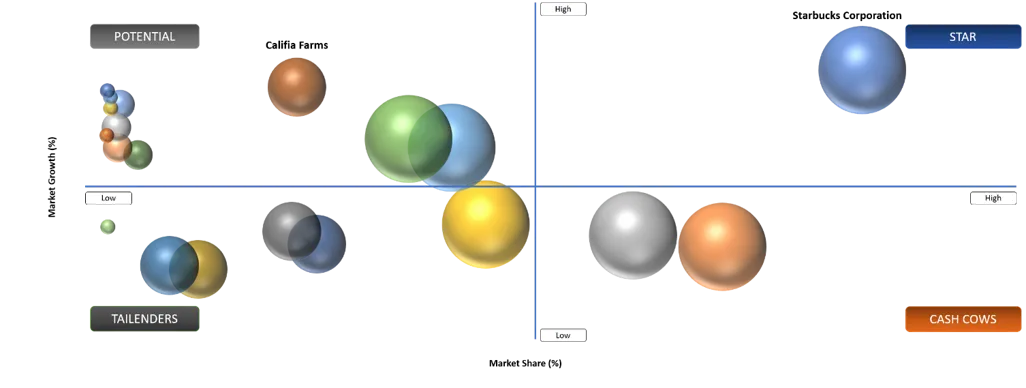
STAR
Starbucks Corporation, Nestlé S.A., Suntory Beverage & Food Limited, The Coca-Cola Company and Danone S.A. are positioned in the Star category based on their established ready-to-drink (RTD) coffee portfolios, extensive distribution networks, strong consumer brand recognition and presence across major regional markets. Starbucks maintains a strong position in premium packaged coffee through its Frappuccino, iced espresso and cold brew offerings, while Nestlé is strengthening its NESCAFÉ RTD portfolio across Southeast Asia, India and the Middle East. Suntory demonstrates established leadership in Japan’s canned coffee category through BOSS Coffee, whereas Coca-Cola leverages Georgia Coffee and Costa Coffee to address diverse consumption preferences. Danone maintains a differentiated position through STōK Cold Brew and International Delight. Competitive differentiation increasingly centers on premiumization, cold brew innovation, low-sugar formulations, plant-based alternatives, packaging convenience and distribution expansion.
POTENTIAL
Califia Farms, LLC, Black Rifle Coffee Company, Emmi AG, Luigi Lavazza S.p.A. and HELL ENERGY Hungary Kft. are positioned in the Potential category based on their differentiated RTD coffee portfolios, targeted consumer positioning and opportunities for geographic and distribution expansion. Califia Farms is strengthening its presence in plant-based iced coffee and cold brew, while Black Rifle Coffee Company is expanding its canned coffee portfolio through high-caffeine espresso beverages and premium cold brew offerings. Emmi benefits from its established Caffè Latte franchise and expertise in refrigerated dairy beverages, whereas Lavazza leverages its premium Italian coffee heritage to develop convenient RTD formats. HELL ENERGY participates through its HELL ICE COFFEE range, targeting affordable, on-the-go consumption. Growth opportunities increasingly center on functional coffee, protein-enriched formulations, plant-based innovation, premium ready-to-drink formats, convenience retail expansion and emerging-market penetration.
Global Ready-to-Drink Coffee Market Dynamics
Driver Impact Analysis
| Driver | Market Growth Impact (%) | Demand Concentration | Impacted Use Case | Strategic Impact |
Rising Demand for Convenient and On-the-Go Coffee Consumption | 35% | North America, Asia-Pacific | Canned Coffee, Bottled Iced Coffee | Expands consumption occasions and retail penetration |
Growing Consumer Preference for Premium and Specialty Coffee | 28% | North America, Europe | Cold Brew, Espresso-Based Coffee | Accelerates premiumization and product differentiation |
Increasing Demand for Functional and Health-Oriented Coffee Beverages | 22% | North America, Europe | Protein-Enriched Coffee, Reduced-Sugar Coffee | Creates opportunities for functional product innovation |
Expansion of Retail Distribution and E-Commerce Channels | 15% | Asia-Pacific, North America | Packaged RTD Coffee, Single-Serve Beverages | Strengthens product accessibility and geographic expansion |
Driver: Rising Demand for Convenient and On-the-Go Coffee Consumption
Rising demand for convenient and on-the-go coffee consumption is a major driver of the global ready-to-drink coffee market, supported by increasingly busy lifestyles, urbanization and changing consumer purchasing preferences. Consumers are increasingly choosing packaged coffee beverages that eliminate preparation time while providing consistent taste, portability and immediate consumption. Growing demand among working professionals, students and younger consumers is strengthening sales across supermarkets, convenience stores, vending machines and online retail platforms. Manufacturers are expanding single-serve packaging, bottled iced coffee and canned coffee portfolios to address evolving consumption needs. This trend is expected to support market expansion through 2035.
Restraint Impact Analysis
| Restraint | Drag on Market Growth (%) | Primary Impact Area | Impacted Use Case | Strategic Impact |
Rising Coffee Bean Prices and Raw Material Cost Volatility | 35% | Global, Particularly North America and Europe | Canned Coffee, Bottled Coffee, Cold Brew | Increases production costs, compresses profit margins and creates pricing pressure |
High Production, Packaging and Cold Chain Distribution Costs | 28% | North America, Europe, Asia-Pacific | Dairy-Based Coffee, Refrigerated RTD Coffee | Raises operational expenses and limits distribution expansion |
Growing Health Concerns Regarding Sugar and Caffeine Consumption | 22% | North America, Europe | Sweetened Iced Coffee, Flavored Coffee, High-Caffeine Beverages | Encourages product reformulation and increases compliance requirements |
Intense Market Competition and Retail Price Sensitivity | 15% | Asia-Pacific, North America, Latin America | Mass-Market RTD Coffee, Private-Label Coffee | Intensifies pricing competition and restricts market entry for emerging brands |
Restraint: Rising Coffee Bean Prices and Raw Material Cost Volatility
Rising coffee bean prices and raw material cost volatility represent significant restraints on the global ready-to-drink coffee market, affecting manufacturing expenses, product pricing and profitability. Fluctuations in Arabica and Robusta coffee prices, driven by adverse weather conditions, supply shortages, agricultural challenges and transportation disruptions, create procurement uncertainty for beverage manufacturers. Increasing costs of dairy ingredients, sweeteners and packaging materials further intensify financial pressures across production operations. Manufacturers may respond through retail price adjustments, alternative sourcing strategies and operational efficiency improvements. However, increasing product prices can reduce affordability, particularly in price-sensitive markets, potentially limiting consumer adoption and overall market expansion through 2035.
Ready-to-Drink Coffee Market Segment Analysis
The global ready-to-drink (RTD) coffee market is segmented based on product type, brewing method, flavor, sugar content, packaging type, packaging size, distribution channel and region.
Growing Consumer Preference for Convenient, Premium and Flavor-Infused Iced Coffee Beverages Strengthening Product Demand Across Global Ready-to-Drink Coffee Markets
The iced coffee segment maintains a prominent position in the global ready-to-drink coffee market, supported by increasing consumer preference for convenient, refreshing and ready-to-consume caffeinated beverages. Rising demand among younger consumers, expanding urban lifestyles and growing availability of flavored coffee formulations are strengthening segment adoption across supermarkets, convenience stores and online retail platforms. Manufacturers are introducing vanilla, caramel, mocha and reduced-sugar iced coffee varieties to address evolving taste preferences and premiumization trends. Additionally, expanding cold coffee consumption across North America, Europe and Asia-Pacific is encouraging product diversification and distribution investments. The segment is estimated to account for approximately 40% of the global market in 2025, based on an illustrative market-sizing assumption.
Ready-to-Drink Coffee Market Geographical Penetration
U.S. Ready-to-Drink Coffee Market Landscape
The United States represents a major market for ready-to-drink coffee, supported by established coffee consumption habits, busy consumer lifestyles and strong retail distribution networks. Increasing preference for premium cold brew, flavored iced coffee, espresso-based beverages and convenient single-serve formats is strengthening market demand. Leading companies, including Starbucks Corporation, Keurig Dr Pepper Inc., Danone S.A. and Black Rifle Coffee Company, are expanding product portfolios through innovative flavors, protein-enriched formulations, reduced-sugar alternatives and differentiated packaging. Growing demand among millennials, Generation Z consumers and working professionals is encouraging manufacturers to invest in functional coffee products and premium beverage positioning. Expanding availability across supermarkets, convenience stores, vending machines and e-commerce platforms further supports market penetration. Additionally, increasing emphasis on sustainable packaging, product transparency and coffee quality is influencing purchasing decisions. Continued product innovation, strategic partnerships and retail expansion are expected to support market growth through 2035.
Japan Ready-to-Drink Coffee Market Outlook
Japan represents one of the most established ready-to-drink coffee markets globally, supported by its deeply rooted canned coffee culture, extensive vending machine infrastructure and strong consumer preference for convenient beverages. Leading manufacturers, including Suntory Beverage & Food Limited, UCC UESHIMA COFFEE CO., LTD., DyDo GROUP HOLDINGS, INC., Asahi Group Holdings, Ltd. and Kirin Holdings Company, Limited, maintain competitive positions through diversified canned coffee portfolios, established distribution networks and continuous flavor innovation. Growing demand for premium black coffee, milk-based formulations, cold brew beverages and reduced-sugar products is encouraging portfolio diversification. Manufacturers are increasingly focusing on packaging convenience, coffee bean quality, differentiated roasting profiles and seasonal product launches to attract consumers. Expanding convenience store availability, automated retail distribution and premium coffee positioning continue to support market stability. However, demographic changes, mature consumption patterns and intense price competition are encouraging manufacturers to prioritize product differentiation, operational efficiency and higher-value beverage offerings through 2035.
Ready-to-Drink Coffee Market Competitive Landscape
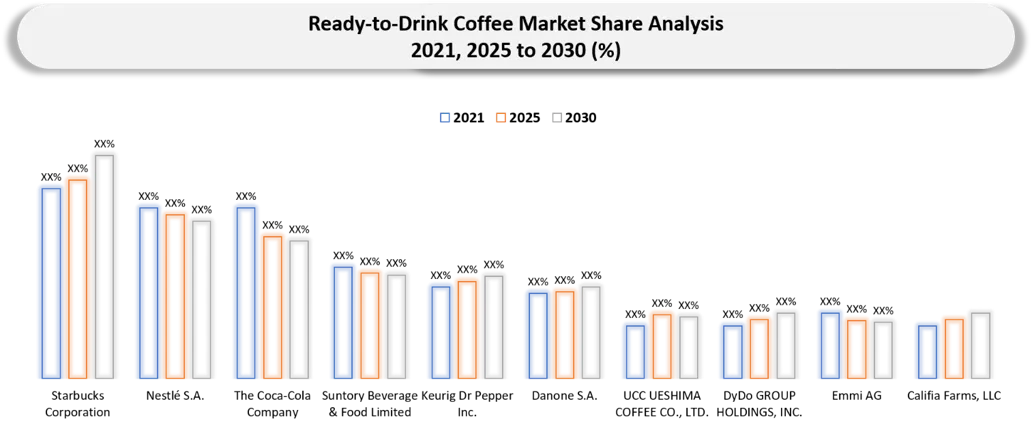
- The global ready-to-drink (RTD) coffee market is moderately fragmented, with competition among multinational beverage companies, established coffee manufacturers and emerging specialty coffee brands. Key players, including Starbucks Corporation, Nestlé S.A., The Coca-Cola Company, Suntory Beverage & Food Limited and Danone S.A., maintain strong competitive positions through extensive distribution networks, diversified product portfolios and established brand recognition. Japanese manufacturers, including UCC UESHIMA COFFEE CO., LTD., DyDo GROUP HOLDINGS, INC. and Asahi Group Holdings, Ltd., strengthen regional competition through canned coffee offerings and vending machine distribution. Meanwhile, Califia Farms, Black Rifle Coffee Company and Emmi AG differentiate through premium cold brew, plant-based formulations and specialty coffee beverages. Competitive strategies increasingly emphasize product innovation, functional and protein-enriched coffee, reduced-sugar formulations, sustainable packaging, strategic partnerships and expansion across convenience retail and e-commerce channels.
Key Companies of Ready-to-Drink Coffee Market
- Starbucks Corporation (United States)
- Nestlé S.A. (Switzerland)
- The Coca-Cola Company (United States)
- Suntory Beverage & Food Limited (Japan)
- Keurig Dr Pepper Inc. (United States)
- Danone S.A. (France)
- UCC UESHIMA COFFEE CO., LTD. (Japan)
- DyDo GROUP HOLDINGS, INC. (Japan)
- Emmi AG (Switzerland)
- Califia Farms, LLC (United States)
- Black Rifle Coffee Company (United States)
- Monster Beverage Corporation (United States)
- Asahi Group Holdings, Ltd. (Japan)
- Kirin Holdings Company, Limited (Japan)
- Luigi Lavazza S.p.A. (Italy)
- JDE Peet's N.V. (Netherlands)
- Arla Foods amba (Denmark)
- HELL ENERGY Hungary Kft. (Hungary)
- Westrock Coffee Company (United States)
- illycaffè S.p.A. (Italy)
Ready-to-Drink Coffee Market Major Pain Points
- High Production and Packaging Costs: Rising prices of coffee beans, dairy ingredients, sweeteners, aluminum cans and PET bottles increase manufacturing expenses, placing pressure on profit margins and retail pricing competitiveness.
- Coffee Bean Price Volatility and Supply Chain Disruptions: Fluctuating Arabica and Robusta coffee prices, adverse weather conditions, transportation disruptions and supply concentration in major producing countries create procurement uncertainty and affect production planning.
- Limited Shelf Life and Cold Chain Requirements: Refrigerated RTD coffee products require temperature-controlled storage, transportation and retail infrastructure, increasing distribution costs, product spoilage risks and operational complexities.
- Intense Competition and Price Sensitivity: Strong competition among multinational beverage manufacturers, regional coffee brands and private-label products increases promotional spending, retail shelf-space competition and pricing pressure, particularly in price-sensitive markets.
- Sugar Content and Health Perception Challenges: Consumer concerns regarding added sugar, calories, artificial ingredients and caffeine consumption create formulation challenges, requiring manufacturers to balance nutritional expectations, taste consistency and affordability.
- Product Stability and Quality Control Complexities: Maintaining consistent flavor, texture, coffee aroma and ingredient stability during processing and storage presents technical challenges, particularly for dairy-based, plant-based and protein-enriched coffee beverages.
- Limited Retail Shelf Space and Distribution Access: Securing shelf placement across supermarkets, convenience stores and specialty retailers involves listing fees, promotional investments and competition with established beverage categories, restricting expansion opportunities for smaller brands.
- Sustainability and Packaging Waste Concerns: Increasing scrutiny of single-use plastic bottles, aluminum cans and multilayer cartons creates pressure to improve packaging recyclability, reduce environmental impacts and comply with evolving packaging regulations.
Ready-to-Drink Coffee Market Recent Developments
- September 2026: Starbucks Corporation and Suntory Beverage & Food Limited introduced Starbucks Coffee Signatures Black and Espresso & Milk bottled-can coffee products in Japan, expanding premium ready-to-drink coffee offerings.
- July 2026: Nestlé announced a CHF 563 million investment in a new NESCAFÉ manufacturing facility in Thailand, supporting production of soluble coffee, coffee mixes and ready-to-drink beverages, with operations expected in 2028.
- May 2026: Starbucks expanded its Coffee & Protein ready-to-drink portfolio, featuring beverages containing 22 grams of protein and 5 grams of prebiotic fiber per bottle, targeting health-conscious consumers.
- February 2026: Keurig Dr Pepper announced the return of La Colombe Draft Latte seasonal flavors, including Strawberry Mocha and S'mores, strengthening its flavored ready-to-drink coffee portfolio.
Analyst View / Opinion on Ready-to-Drink Coffee Market
- The global ready-to-drink coffee market is transitioning from conventional canned coffee beverages toward premium, functional and convenience-oriented formulations, driven by changing consumer lifestyles, increasing preference for cold coffee and growing demand for on-the-go consumption.
- Leading companies, including Starbucks Corporation, Nestlé S.A., The Coca-Cola Company, Suntory Beverage & Food Limited and Danone S.A., are strengthening their competitive positions through cold brew innovation, diversified flavor portfolios, plant-based alternatives, strategic partnerships and expanding retail distribution networks.
- Consumer purchasing decisions will increasingly depend on taste consistency, coffee quality, caffeine content, sugar levels, functional benefits, packaging convenience and price positioning. Growing interest in protein-enriched coffee, reduced-sugar beverages and dairy-free formulations is expected to create opportunities for differentiated product development.
- Asia-Pacific is expected to remain a key consumption center, supported by established canned coffee demand in Japan and South Korea, expanding coffee culture in China and increasing packaged beverage penetration across emerging economies. North America will continue to offer opportunities in premium cold brew, functional coffee and specialty ready-to-drink formats.
- Future competitive advantage will increasingly depend on coffee sourcing efficiency, manufacturing scalability, packaging innovation, retail shelf-space accessibility and supply chain resilience. Companies combining strong brand recognition, competitive pricing and differentiated product portfolios are expected to capture greater growth opportunities through 2035.
Ready-to-Drink Coffee Market Target Audience
| INDUSTRY | WHO SHOULD BUY THIS REPORT? | REASON TO BUY THIS REPORT |
| RTD Coffee Manufacturers | Coffee Manufacturers, Product Strategy Heads, Business Development Teams | Assess market demand, competitive positioning, product innovation trends and geographic expansion opportunities. |
| Coffee Roasters and Processors | Coffee Roasters, Procurement Managers, Coffee Processing Companies | Evaluate coffee sourcing requirements, raw material demand, supply chain dynamics and opportunities in RTD coffee production. |
| Beverage Companies and Brand Owners | Beverage Manufacturers, Brand Managers, Portfolio Strategy Teams | Identify portfolio diversification opportunities, emerging consumer preferences, premiumization trends and competitive differentiation strategies. |
| Dairy and Plant-Based Beverage Manufacturers | Dairy Producers, Plant-Based Beverage Companies, R&D Teams | Evaluate demand for milk-based and dairy-free coffee formulations, ingredient innovation and product development opportunities. |
| Packaging Manufacturers and Suppliers | Can Manufacturers, Bottle Producers, Packaging Suppliers | Assess packaging format demand, material preferences, sustainability requirements and opportunities across RTD coffee applications. |
| Retailers and Distributors | Supermarket Chains, Convenience Store Operators, Beverage Distributors | Understand consumer purchasing patterns, channel performance, product assortment opportunities and regional distribution potential. |
| Ingredient and Flavor Suppliers | Flavor Manufacturers, Sweetener Suppliers, Functional Ingredient Companies | Identify demand for coffee flavors, reduced-sugar formulations, protein enrichment and functional beverage ingredients. |
| Contract Manufacturers and Co-Packers | Beverage Co-Packers, Private-Label Manufacturers, Operations Directors | Evaluate outsourced manufacturing demand, production capacity requirements, private-label opportunities and potential brand partnerships. |
| Investors and Financial Institutions | Private Equity Firms, Venture Capital Investors, Investment Analysts | Identify high-growth opportunities, assess competitive dynamics, evaluate emerging brands and support investment decisions. |
| Consulting and Market Advisory Firms | Strategy Consultants, Market Research Teams, Corporate Advisory Professionals | Support market entry strategies, competitive benchmarking, pricing analysis, commercial due diligence and long-term growth planning. |
Why Choose DATAM?
- Data-Driven Insights: Access granular intelligence covering ready-to-drink coffee market size, product type shares, brewing methods, milk-base preferences, flavor trends, sugar content, packaging formats, distribution channels, competitive positioning and country-level growth opportunities.
- Primary Research Validation: Benefit from insights informed by engagement with RTD coffee manufacturers, beverage industry executives, coffee roasters, ingredient suppliers, packaging manufacturers, retail distributors, category managers and consumer beverage industry specialists.
- Expert Analyst Consultations: Engage with experienced beverage industry analysts to understand emerging consumption trends, premiumization opportunities, competitive strategies, product innovation, pricing dynamics and regional market developments.
- Comprehensive Competitive Intelligence: Evaluate leading RTD coffee manufacturers, brand portfolios, product launches, distribution strategies, strategic partnerships, manufacturing investments and competitive differentiation across established and emerging markets.
- Strategic Growth Opportunity Assessment: Identify high-potential opportunities across cold brew coffee, plant-based formulations, protein-enriched beverages, reduced-sugar products, premium coffee formats and expanding retail and e-commerce distribution networks.
- Customized Market Intelligence: Obtain tailored analysis covering country-level demand, product positioning, pricing benchmarks, packaging economics, consumer preferences, market entry strategies and potential partnership opportunities to support informed business decisions.
What DATAM Uniquely Provides
- Comprehensive Market Segmentation: In-depth segmentation of the ready-to-drink coffee market by product type, milk base, flavor, sugar content, packaging type, packaging size, distribution channel and geography.
- Competitive Intelligence: Detailed analysis of leading RTD coffee manufacturers covering brand portfolios, product innovation, pricing strategies, distribution networks, strategic partnerships, manufacturing capabilities and competitive positioning.
- Consumer Preference and Demand Analysis: Assessment of evolving consumption patterns, premium coffee preferences, convenience-driven purchasing, plant-based alternatives, reduced-sugar formulations and functional coffee adoption.
- Product Innovation and Opportunity Mapping: Identification of emerging opportunities across cold brew, nitro coffee, protein-enriched beverages, specialty flavors, sustainable packaging and premium RTD coffee formulations.
- Supply Chain and Pricing Intelligence: Evaluation of coffee bean sourcing, raw material price volatility, manufacturing economics, packaging costs, retail pricing structures and distribution efficiency.
- Country-Level Growth Assessment: Granular insights into regional consumption patterns, market penetration, competitive intensity, retail channel development and high-potential geographic expansion opportunities.
- Strategic Decision-Making Support: Actionable intelligence for market entry, product portfolio optimization, competitive benchmarking, investment prioritization, partnership identification and long-term business growth strategies.



























































