


Quantum Computing in Drug Discovery Market Forecast
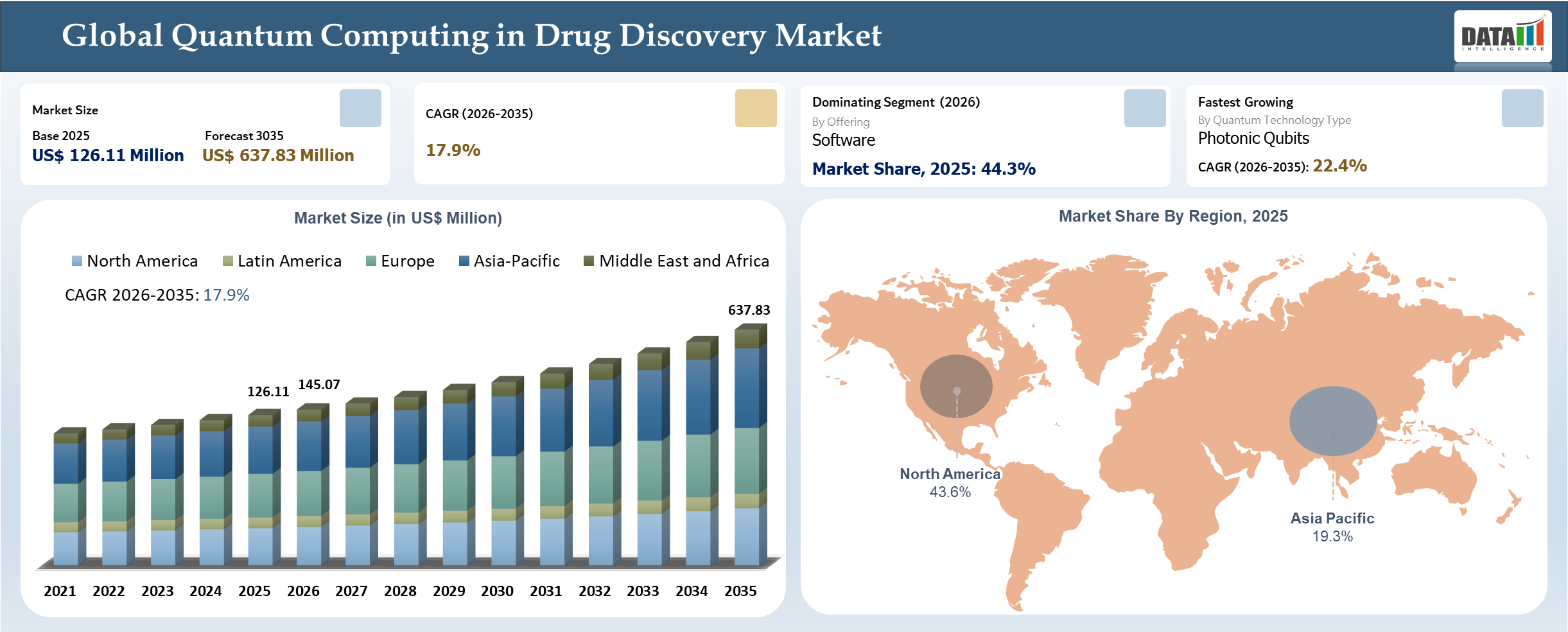
The global quantum computing in drug discovery market reached US$ 126.11 million in 2025 and is expected to reach US$ 637.83 million by 2035, growing with a CAGR of 17.9% during the forecast period 2026-2035. Quantum computing for drug discovery is one of the most promising technologies due to its ability to provide a more precise way to simulate molecules and explore complex chemical spaces that conventional methods cannot achieve. The incorporation of quantum computing into AI applications and quantum/classical hybrids enhances drug target prediction and lead discovery, thus shortening the development process. Several successful validation examples have paved the way for adoption by pharmaceutical companies seeking to optimize research and reduce drug development costs. Going forward, quantum computing will facilitate the shift of drug discovery towards a computation-driven approach.
Quantum Computing in Drug Discovery Industry Trends and Strategic Insights
- AI-powered models enhance pattern detection and predictive power, whereas HPC guarantees scalability for big data. The entire ecosystem facilitates accurate assessment of the interactions between drugs and their targets, thus ensuring high productivity during the initial stage of drug development.
- The cloud-based delivery models provide companies access to quantum computing power whenever they need it without investing much capital into building their infrastructure. It has led to a wider customer base, rapid testing, and scalability deployment.
- Funding initiatives by governments and venture capital have improved research capabilities, helped startups, and expedited innovation cycles. The capital inflow has facilitated the fast-paced development of quantum algorithms and applications.
Quantum Computing in Drug Discovery Market Key Takeaways
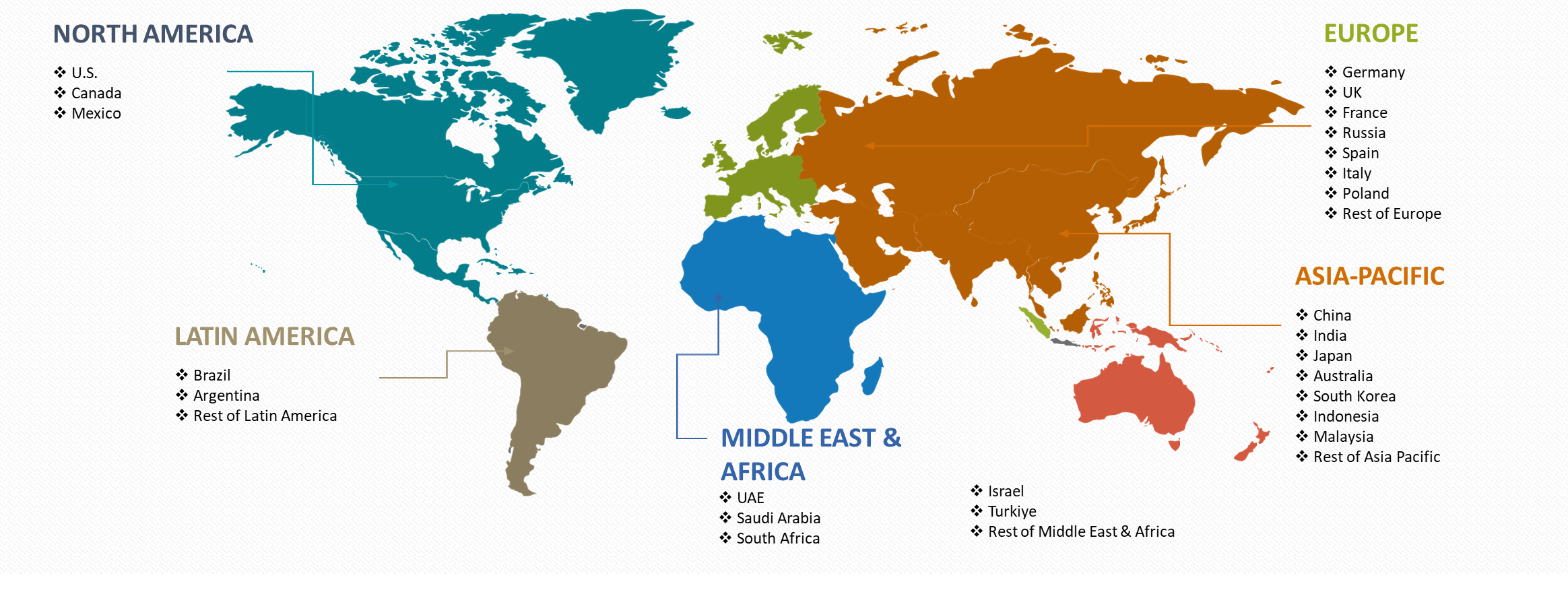
- North America accounts for approximately 40-45% of the global market, driven by strong pharmaceutical R&D investments, government funding, and the presence of leading quantum computing companies.
- Cloud-based deployment contributes over 60% of market revenue, enabling pharmaceutical companies and research institutions to access quantum computing resources without significant infrastructure investments.
- Quantum simulation and molecular modeling applications account for nearly 50% of market demand, driven by the need for faster and more accurate drug-target interaction analysis.
- Pharmaceutical and biotechnology companies represent more than 55% of end-user adoption, leveraging quantum computing to accelerate lead identification, optimization, and preclinical research.
- Hybrid quantum-classical computing platforms are witnessing annual adoption growth exceeding 20%, improving computational efficiency and reducing drug discovery timelines.
- AI-integrated quantum computing solutions are gaining rapid traction, enhancing molecular simulation accuracy, predictive analytics, and drug candidate optimization.
- Strategic collaborations between quantum technology providers, pharmaceutical companies, and research organizations are becoming major competitive differentiators, accelerating commercialization and innovation.
- Asia-Pacific is expected to register the fastest market growth, supported by increasing investments in quantum technologies, expanding pharmaceutical research, and government-backed innovation initiatives.
- Growing investments in Quantum-as-a-Service (QaaS), quantum algorithms, cloud platforms, and precision drug discovery are expected to drive long-term market expansion.
Quantum Computing in Drug Discovery Market Scope
| Metrics | Details | |
| 2025 Market Size | US$ 126.11 Million | |
| 2035 Projected Market Size | US$ 637.83 Million | |
| CAGR (2026-2035) | 17.9% | |
| Largest Market | North America | |
| Fastest Growing Market | Asia-Pacific | |
| By Offering | Hardware, Software and Services | |
| By Quantum Technology Type | Superconducting Qubits, Trapped-Ion Qubits, Photonic Qubits, Quantum Annealing and Topological Qubits | |
| By Drug Discovery Workflow Stage | Target Identification & Validation, Hit Generation/Lead Identification, Lead Optimization and Preclinical Candidate Selection | |
| By Computational Application | Quantum Simulation, Quantum Optimization, Quantum Machine Learning and Quantum Sampling | |
| By Deployment Model | Cloud-Based and On-Premises | |
| By Therapeutic Area | Oncology, Infectious Diseases, Cardiovascular Disorders, Neurological Disorders, Immunological Disorders, Rare & Orphan Diseases, Metabolic & Endocrine Disorders and Others | |
| By End-User | Pharmaceutical Companies, Biopharmaceutical Companies, Contract Research Organizations (CROs), Academic & Research Institutes and Others | |
| By Region | North America | U.S., Canada, Mexico |
| Europe | Germany, UK, France, Spain, Italy, Poland | |
| Asia-Pacific | China, India, Japan, Australia, South Korea, Indonesia, Malaysia | |
| Latin America | Brazil, Argentina | |
| Middle East and Africa | UAE, Saudi Arabia, South Africa, Israel, Turkiye | |
| Report Insights Covered | Competitive Landscape Analysis, Company Profile Analysis, Market Size, Share, Growth | |
Quantum Computing in Drug Discovery Market Disruption Analysis
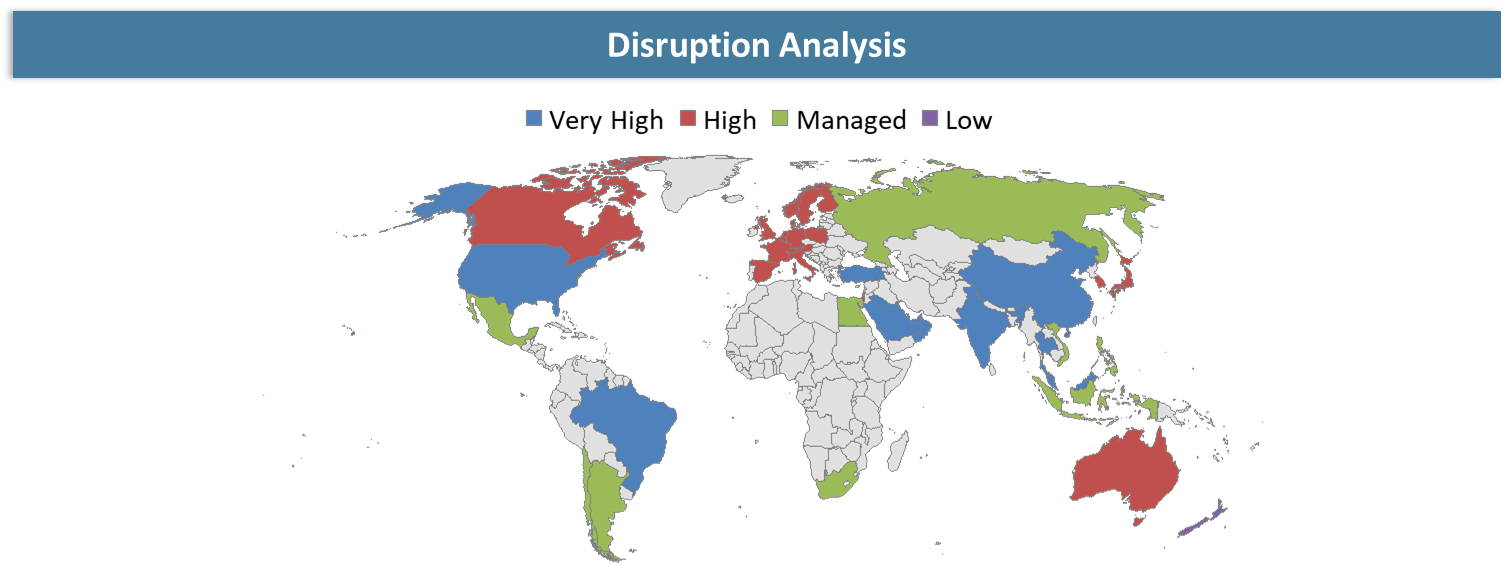
Transition from Empirical Drug Discovery to Predictive Molecular Design
Quantum computing technology is fueling the structural change in moving away from empirical approaches in the discovery of drugs to the application of predictive computational methods. The conventional approach requires the conducting of numerous experiments and screenings in the lab, hence time-consuming and expensive. Molecular modeling using quantum computing technology enables more accurate prediction of drug-target interactions by modeling complex chemical reactions at the level of the electron.
There is less dependence on experimentation, and the process becomes much faster for essential activities like hit identification and lead optimization. More accurate predictions have led to fewer failures in the process and increased efficiency in resource use. The growing use of quantum-classical models allows for the application of the approach, which will play an important role as a disruptive technology in the drug discovery industry.
Quantum Computing in Drug Discovery Market BCG Matrix: Company Evaluation
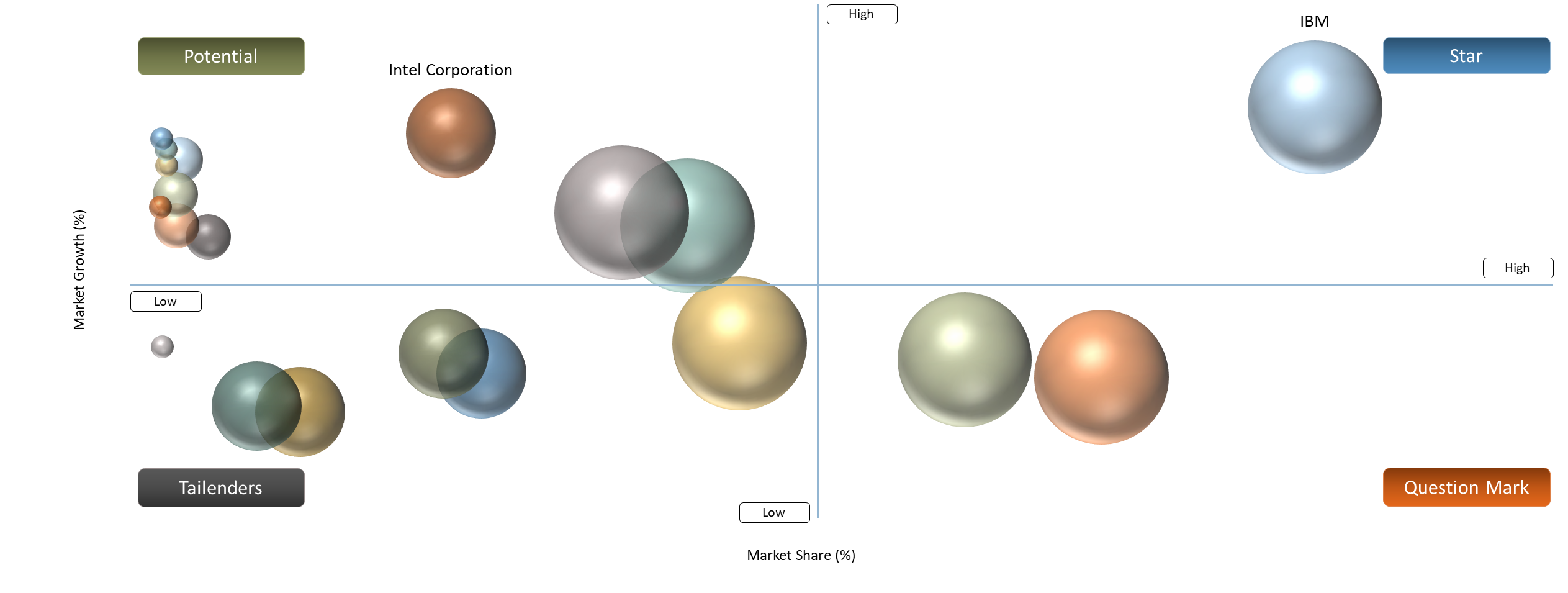
The BCG matrix for quantum computing in drug discovery shows leadership dominance by incumbent technology providers, with companies like IBM and Microsoft ranked as stars owing tolarge market share, highly developed quantum technologies, and cloud computing platforms. Firms such as D-Wave Quantum Inc. and Riggetti Computing have been categorized as Question Mark because they possess good technological capacity, although scaling up is required to enhance their position in the market.
Emerging players such as Xanadu, Zapata Quantum Inc., QuEra Computing Inc., and Qubit Pharmaceuticals are classified under the Potential players, as they are motivated by the development of quantum algorithms and application-based innovations, especially in the area of drug discovery. On the other hand, Intel Corporation, Fujitsu, and Quantum Brilliance Pty Ltd fall under the Tailenders because of their relatively low market penetration.
Quantum Computing in Drug Discovery Market Dynamics
Rising Demand to Reduce Drug Discovery Time and R&D Costs Drives Market Growth
Increasing R&D costs coupled with extended drug development timelines have compelled the pharmaceutical industry to embrace innovative computer-based technologies that increase effectiveness and minimize risks. Quantum computing technology facilitates highly accurate molecular modeling as well as precise predictions regarding drug-receptor interactions, thus greatly contributing to early phase activities such as screening hits and lead optimization.
A shortened time-to-market and optimization of resources are making organizations invest in quantum-powered solutions and collaborations within the pharma domain. Quantum-classical hybrid approaches as well as quantum cloud computing are reducing the hurdles that impede adoption, thereby paving the way for scalability. Computationally driven drug discovery has resulted in commercialization and steady market growth for quantum technologies.
High Implementation Costs and Infrastructure Challenges Limit Adoption
The high cost of implementation and complexity of the necessary infrastructure have proven to be serious obstacles in the application of quantum computing in the drug discovery process. Specialized infrastructures such as cryogenic refrigeration and high precision controls are essential in the operation of quantum computer, thus making its implementation very costly. Additionally, integrating quantum computing technology with conventional HPC and drug discovery systems would also incur higher costs.
Infrastructure issues limit scalability, as the current quantum computers are plagued by stability issues, errors, and the challenge of working within the current R&D environment. Integration within existing processes would require a lot of customization and verification, leading to increased costs and time required for implementation. It explains why most companies are still in the testing phase of implementation.
Quantum Computing in Drug Discovery Market Segmentation Analysis
The global quantum computing in drug discovery market is segmented based on offering, quantum technology type, drug discovery workflow stage, computational application, deployment model, therapeutic area, end user and region.
Cloud-Based Deployment Model Driving Scalable Adoption in Quantum Drug Discovery
Cloud deployment is becoming the leading component of the quantum computing in drug discovery market because of the scalability and cost-effectiveness of its operations. High expenses and complicated technologies involved in quantum computer hardware have made it difficult to deploy quantum computing on premises. Cloud technology emerges as the best platform for quantum computing for pharmaceutical firms and research organizations.
Cloud-based quantum computing facilitates smooth integration of quantum-classical workflows, which makes it possible for end-users to conduct elaborate molecular modeling, optimize drug candidates, and facilitate scientific research without much capital expenditure on infrastructure. Such services increase the efficiency of the quantum market through greater flexibility and shorter time to market. The rising popularity of QaaS solutions is another major contributing factor towards sustained growth in this market segment.
Quantum Computing in Drug Discovery Market Geographical Penetration
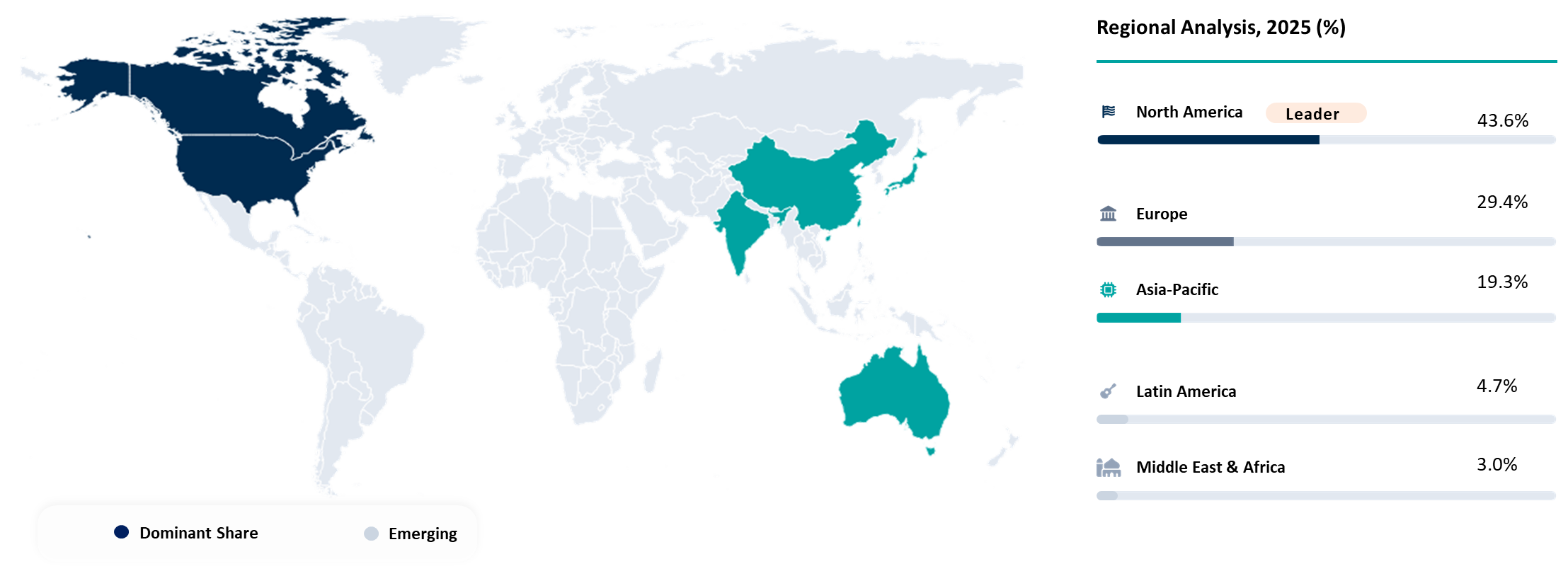
North America Quantum Computing in Drug Discovery Market Led by Advanced Infrastructure and Strategic Collaborations
North America continues to dominate the market for quantum computing in drug discovery due to advanced technological infrastructure, high investments made in pharmaceutical R&D activities, and significant governmental intervention. The region benefits from various national programs such as the United States’ National Quantum Initiative Act, which has spurred the efforts of various government departments, including the NSF, DOE, and NIST, toward quantum computing. Policies coupled with prominent technology providers and biopharmaceutical organizations operating within the region are fostering the adoption of quantum computing in drug discovery processes.
Increase in demand will be fueled by the growing trend towards the use of hybrid quantum/classical computing approaches and quantum computing cloud services, which will enable pharmaceutical firms to take advantage of computational power without large capital investments in the required hardware and facilities. Strategic partnerships between quantum firms, universities, and health organizations have resulted in practical applications of quantum computing in areas such as molecule simulation, lead identification, and reaction modeling.
United States Market Driven by Policy Support, Innovation Leadership, and Industry Adoption
The US leads in regional growth owing to a robust policy environment, research landscape, and high number of quantum-pharmaceutical leaders within the region. The federal government through the National Quantum Initiative Act has invested heavily in quantum information science by developing centers, creating a skilled workforce, and forming collaborations between public institutions and private firms. The Department of Energy laboratories and NSF-funded research projects are already making advances in quantum chemistry and quantum life sciences, including drug discovery technologies.
Quantum computing technology is rapidly gaining acceptance through partnerships between the quantum computing industry players and pharmaceutical firms, leveraging hybrid computing architectures and scalable cloud computing platforms. The presence of advanced high-performance computing hardware and robust venture capital markets also aids in commercializing the technology. Taken together, these elements make the United States the key market for implementing quantum computing in the pharmaceutical industry.
Canada Market Advancing Through Research Excellence and Quantum Innovation Ecosystem
Canada is emerging as a major player in the quantum computing in drug discovery market, owing to high levels of research activities from various academic institutions, along with government-sponsored innovations. National programs like the National Quantum Strategy are contributing towards the development of quantum-based solutions in computing, materials, and life sciences. Major organizations involved in research are developing quantum algorithms for applications in chemistry and drug discovery.
The market also benefits from a growing quantum startup ecosystem in addition to collaborations between academia, industries, and healthcare companies. Canada's focus on photonic quantum computing and the development of algorithms is helping in the advancement of molecular simulation and computational chemistry research. Increased investment and international cooperation are helping Canada become a key player in the quantum drug discovery space in North America.
Quantum Computing in Drug Discovery Market Competitive Landscape
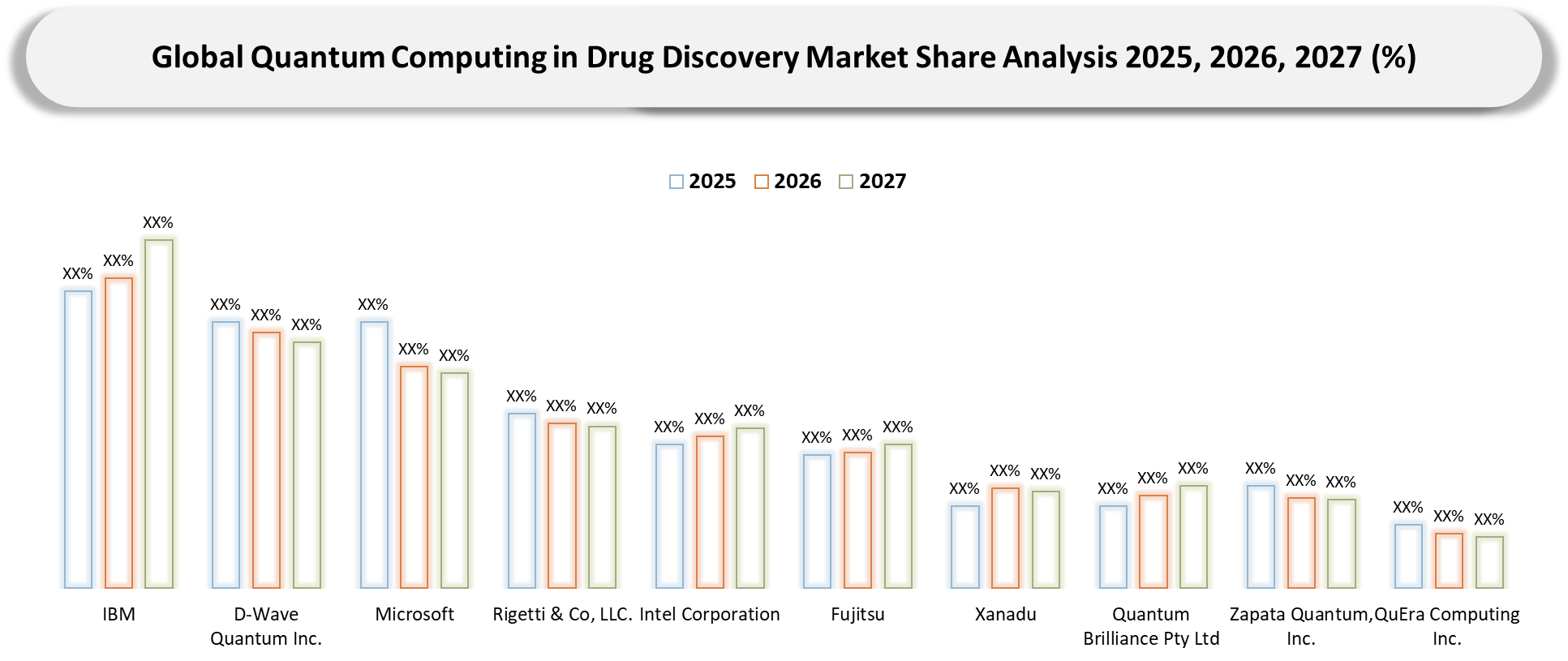
- Quantum computing in drug discovery represents an extremely competitive market that is driven by both technology vendors with well-established experience and innovative firms focusing on specific technologies, which makes the market competitive and dynamic. IBM, Microsoft, D-Wave Quantum Inc., and Rigetti Computing are some of the dominant players that benefit from quantum computers, quantum software, and cloud services. In collaboration with pharmaceutical firms and research organizations, they continue to expand their offerings for molecular simulation, drug development, and lead optimization.
- The players that are emerging in the space include Xanadu, Zapata Quantum Inc., QuEra Computing Inc., Quantum Brilliance Pty Ltd, and Qubit Pharmaceuticals, all of which are investing heavily in innovation within quantum algorithms, photonic and neutral atom-based architecture, and drug discovery applications. The contributions made by Intel Corporation and Fujitsu have been in the development of semiconductor technology as well as high-performance computing. Differentiation within the industry will be based more on hybrid quantum-classical abilities and a solution-specific approach.
- Key players include IBM, D-Wave Quantum Inc., Microsoft, Rigetti & Co, LLC., Intel Corporation, Fujitsu, Xanadu, Quantum Brilliance Pty Ltd, Zapata Quantum, Inc., QuEra Computing Inc. and Qubit Pharmaceuticals.
Key Developments in the Quantum Computing in Drug Discovery Market
- June 2026: IBM expanded its quantum computing roadmap by enhancing quantum hardware and software capabilities to accelerate molecular simulation and AI-driven drug discovery research.
- June 2026: Microsoft strengthened its quantum computing ecosystem by advancing Azure Quantum services and supporting pharmaceutical researchers with hybrid quantum-AI workflows for drug discovery.
- May 2026: D-Wave Quantum Inc. expanded collaborations with life sciences organizations to apply quantum computing for molecular optimization, drug candidate identification, and pharmaceutical research.
- May 2026: QuEra Computing Inc. advanced neutral-atom quantum computing technology through new research initiatives aimed at improving complex molecular simulations for drug discovery.
- April 2026: Rigetti & Co., LLC. continued enhancing its superconducting quantum computing platform to support quantum chemistry simulations and pharmaceutical research applications.
- April 2026: Qubit Pharmaceuticals expanded the use of quantum-powered molecular simulation technologies to accelerate small-molecule drug discovery and lead optimization.
- March 2026: Zapata Quantum, Inc. strengthened collaborations with pharmaceutical companies to develop hybrid quantum-classical algorithms for drug discovery and computational chemistry.
- March 2026: Xanadu advanced its photonic quantum computing platform to improve quantum simulations for molecular modeling and life sciences research.
- March 2026 - The partnership between PsiQuantum and the National Cancer Center Japan aims to enhance the application of quantum technology within oncology and drug discovery. The collaboration is aimed at building quantum algorithms that can tolerate faults, along with clinical applications, which will improve the process towards utility-scale quantum computing.
- August 2025 - QIDO is a cloud platform developed by Mitsui & Co. Ltd. together with Quantum Simulation Technologies Inc. and Quantinuum, which helps improve molecular simulation and reaction analysis through quantum-classical hybrid technology. QIDO can help boost the process of drug discovery through the efficient execution of lead optimization, making quantum computing easier to adopt.
- August 2025 - QuEnAIS launched as a quantum-assisted drug discovery program combining quantum computing, AI, and HPC through a collaborative effort between QunaSys, Cortex Discovery, and Fraunhofer ITWM. The project aims at improving molecular design and ligand binding prediction with a focus on hybrid computer simulation methods and their quantum-based enhancement.
- August 2025 - Polaris Quantum Biotech has introduced QuADD, which is a quantum computing aided drug discovery application based on software as a service (SaaS). It uses quantum annealing by D-Wave Systems for drug design to improve combinatorial optimization and molecule screening in drug discovery.
- June 2025 - IonQ collaborated with AstraZeneca, Amazon Web Services and NVIDIA to demonstrate a quantum-accelerated computational chemistry workflow, achieving over 20x speed improvement in molecular simulation. The initiative validates hybrid quantum-classical approaches for reaction modeling and drug development, strengthening the practical application of quantum computing in accelerating pharmaceutical R&D workflows.
Quantum Computing in Drug Discovery Market Trends and Insights
Hybrid Quantum-Classical Drug Discovery
Hybrid computing is becoming one of the most important practical approaches for quantum drug discovery. Current quantum processors remain constrained by noise, limited qubit resources, and error-correction requirements, making it difficult to execute complete drug-discovery workflows exclusively on quantum hardware.
Researchers are therefore combining quantum processors with classical supercomputers and GPUs. A March 2026 research study highlighted the convergence of high-performance computing, machine learning, and quantum computing for high-fidelity molecular simulation and quantum-chemistry data generation.
Quantum Molecular Simulation
Molecular simulation remains a major application because accurately describing electronic structure and molecular interactions is computationally demanding.
Quantum processors are being investigated for problems involving molecular energies, chemical reactions, protein-ligand interactions, and electronic structures that can be difficult to approximate using conventional approaches. DataM Intelligence estimates that quantum simulation and molecular modeling applications account for nearly half of market demand.
AI and Quantum Computing Convergence
The combination of AI, machine learning, HPC, and quantum computing is becoming increasingly important.
AI can assist with molecular screening, candidate prioritization, data generation, and prediction, while quantum methods can potentially improve selected computational chemistry workloads. This convergence could create new computational workflows in which AI identifies promising molecular candidates and quantum-classical systems investigate their chemical behavior in greater detail.
Cloud-Based Quantum Computing
Cloud deployment is currently the dominant commercialization model because pharmaceutical companies can access quantum processors, simulators, development environments, and specialized software without purchasing or maintaining quantum hardware.
This model also allows R&D teams to experiment with different quantum architectures and algorithms before committing substantial infrastructure investments.
Increasing Pharmaceutical Partnerships
Strategic partnerships between pharmaceutical companies, quantum-computing providers, academic institutions, and specialist software companies are becoming an important route toward commercialization.
These collaborations allow pharmaceutical organizations to gain access to specialized quantum expertise while quantum companies obtain real-world biological and pharmaceutical datasets and use cases.
Larger Biological Simulations
A major 2026 development demonstrated the progress being made in this area. Cleveland Clinic, RIKEN, and IBM reported a simulation involving a 12,635-atom biologically meaningful protein complex, using IBM quantum hardware together with powerful classical supercomputers. The work demonstrates how quantum-centric computing is being applied to increasingly complex biological systems, although it should not be interpreted as proof that quantum computers have already achieved broad commercial quantum advantage in drug discovery.
Quantum Computing in Drug Discovery Market Value Chain Analysis
The Quantum Computing in Drug Discovery value chain begins with quantum hardware development, including processors, qubits, control systems, cryogenic infrastructure where required, and supporting electronics.
The next layer consists of quantum software, algorithms, development environments, simulators, and middleware that translate pharmaceutical problems into quantum-compatible computational workloads.
The third stage involves cloud platforms and Quantum-as-a-Service providers, which make quantum resources accessible to pharmaceutical companies, biotechnology companies, CROs, and academic institutions.
Drug-discovery organizations then integrate quantum capabilities with HPC, GPUs, AI, molecular-dynamics platforms, cheminformatics systems, and existing computational chemistry workflows.
The application layer includes molecular simulation, drug-target interaction modeling, molecular property prediction, candidate screening, and lead optimization.
The final value-creation stage involves pharmaceutical and biotechnology companies using computational outputs to support research prioritization, candidate selection, preclinical development, and ultimately drug-development decisions.
Why Choose DataM?
- Technological Innovations: Explores advancements in quantum computing technologies, including hybrid quantum-classical architectures, quantum algorithms for molecular simulation, AI integration, and cloud-based quantum platforms that are improving computational accuracy, accelerating drug discovery workflows, and reducing R&D timelines.
- Product Performance & Market Positioning: Evaluates how different quantum platforms and solution providers perform across drug discovery applications such as target identification, lead optimization, and molecular modeling. The analysis compares simulation accuracy, scalability, integration capabilities, and ease of deployment, highlighting key differentiators among leading providers.
- Real-World Evidence: Highlights practical implementations of quantum computing in drug discovery, including use cases in molecular simulation, reaction pathway analysis, and drug candidate optimization. Demonstrates measurable outcomes such as reduced computational time, improved prediction accuracy, and enhanced R&D efficiency.
- Market Updates & Industry Changes: Tracks key developments such as platform launches, strategic collaborations, advancements in quantum hardware and algorithms, expansion of cloud-based quantum services, and increasing government funding initiatives across major regions including North America, Europe, and Asia-Pacific.
- Competitive Strategies: Analyzes how leading players are strengthening their market position through partnerships with pharmaceutical companies, development of proprietary quantum algorithms, expansion of cloud ecosystems, and integration of AI and HPC capabilities to enhance solution offerings.
- Pricing & Market Access: Explains pricing models including subscription-based quantum-as-a-service (QaaS), licensing of quantum software platforms, and customized enterprise solutions. Reviews accessibility through cloud platforms, partnerships, and ecosystem integration strategies that support broader adoption.
- Market Entry & Expansion: Identifies growth opportunities driven by increasing pharmaceutical R&D demand, advancements in computational chemistry, and expanding quantum ecosystems. Outlines strategies for companies to scale through partnerships, technology integration, and expansion into emerging markets with strong research and innovation capabilities.
Target Audience
- Pharmaceutical & Biopharmaceutical Companies: Large pharma and biotech firms leveraging quantum computing for molecular simulation, target identification, lead optimization, and accelerating drug development pipelines.
- Contract Research Organizations (CROs): Service providers integrating quantum-enabled computational models to enhance drug discovery services, reduce timelines, and improve success rates for clients.
- Quantum Computing Technology Providers: Companies developing quantum hardware, software platforms, and hybrid quantum-classical solutions targeting life sciences and drug discovery applications.
- Cloud & High-Performance Computing Providers: Organizations offering quantum-as-a-service (QaaS), cloud-based quantum platforms, and HPC infrastructure to enable scalable access for pharmaceutical research.
- Academic & Research Institutions: Universities and research labs conducting advanced studies in quantum chemistry, molecular modeling, and computational biology, contributing to innovation and early-stage development.
- Investors & Private Equity Firms: Investment groups focusing on deep-tech, quantum computing, and life sciences startups, tracking growth opportunities in quantum-enabled drug discovery.
- Government & Regulatory Bodies: National agencies and policymakers supporting quantum technology development, funding research initiatives, and establishing regulatory frameworks for advanced drug discovery technologies.


























































