


Global Pulmonary Arterial Hypertension Market Overview
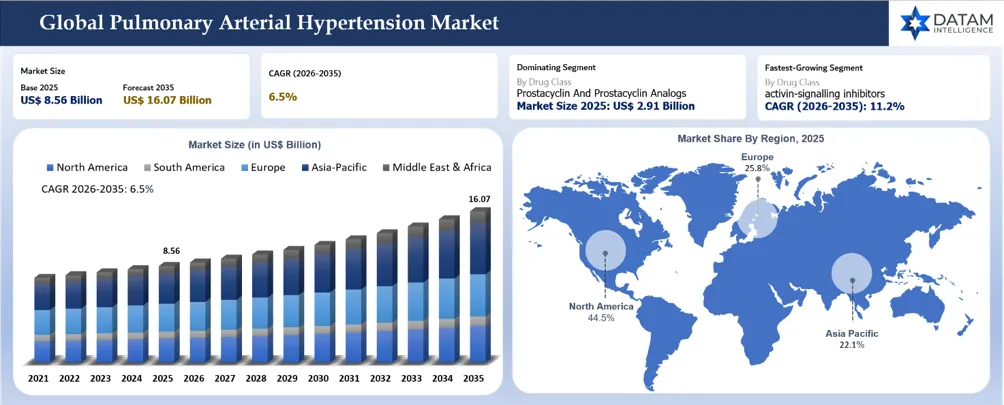
The global pulmonary arterial hypertension market reached US$8.56 billion in 2025 and is expected to reach US$16.07 billion by 2035, growing with a CAGR of 6.5% during the forecast period 2026-2035.
Market expansion is supported by improving disease recognition, wider referral to specialist centres, increasing use of combination therapy and growing access to advanced PAH treatments. Treatment demand remains concentrated across three established pathways: endothelin, nitric oxide and prostacyclin. Prostacyclin and prostacyclin analogs constitute the leading drug class, reflecting their central role in managing intermediate- and high-risk patients and the availability of oral, inhaled, subcutaneous and intravenous formulations. However, diagnostic delays, limited access to right-heart catheterization and unequal availability of specialist care continue to restrict treatment initiation, particularly across emerging markets.
Activin signalling inhibitors represent the market’s principal growth vector by moving treatment beyond conventional vasodilation toward modulation of pulmonary vascular remodelling. The commercial uptake of sotatercept is accelerating its integration with background therapies, potentially improving clinical outcomes while increasing revenue per treated patient. Consequently, activin signalling inhibitors and other emerging therapies are expected to record an analyst-estimated 11.5% CAGR during 2026–2035.
The next value-creation cycle will centre on earlier treatment escalation, optimized combination regimens, convenient administration and therapies capable of reducing hospitalization and clinical worsening. Competitive advantage will increasingly depend on long-term outcome evidence, specialist-network engagement, reimbursement access and geographic launch execution. Companies that integrate differentiated therapies with patient-support programs, risk-based treatment algorithms and real-world evidence will be best positioned to reshape PAH treatment sequencing and capture premium market value.
Global Pulmonary Arterial Hypertension Market Key Takeaways
- Sustained Market Expansion Through 2035: The global pulmonary arterial hypertension market reached US$8.56 billion in 2025 and is projected to reach US$16.07 billion by 2035, registering a CAGR of approximately 6.5% during 2026-2035.
- Prostacyclin Therapies Maintain Market Leadership: Prostacyclin and prostacyclin analogs represented the leading drug class in 2025, supported by their established role in managing intermediate- and high-risk PAH patients and the availability of oral, inhaled, intravenous and subcutaneous formulations.
- Activin Signalling Inhibitors Become the Primary Growth Engine: Activin signalling inhibitors and other drugs are expected to record the fastest growth, at an analyst-estimated CAGR of approximately 11.2% during 2026-2035. Growth will be driven by WINREVAIR uptake and the transition from conventional vasodilation-focused treatment toward therapies targeting pulmonary vascular remodelling.
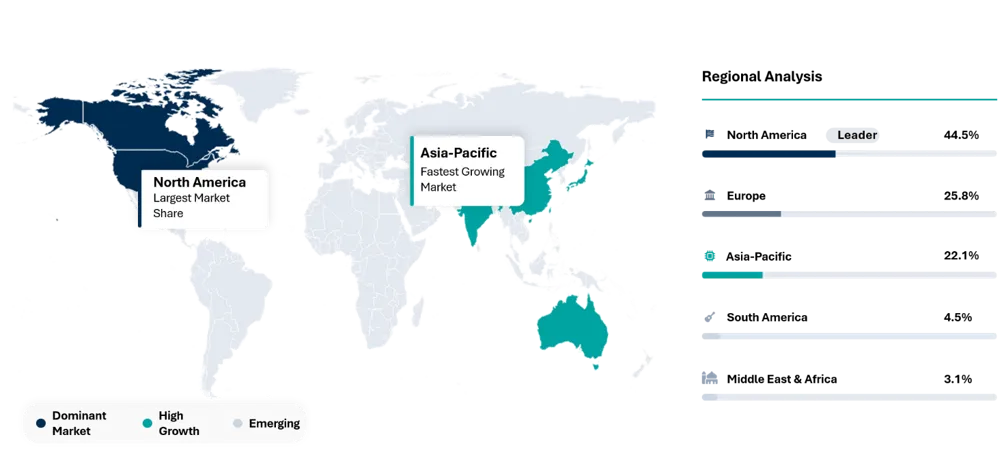
- North America Maintains Regional Dominance: North America accounted for an estimated 44.5% of the global market in 2025, equivalent to approximately US$3.81 billion. Its leadership is supported by established PAH specialist centres, high treatment expenditure, broad access to advanced therapies, favourable specialty-drug reimbursement and rapid adoption of combination-treatment strategies.
- Combination Therapy Reshapes Competitive Strategy: Future market leadership will depend on integrating activin-pathway therapies with established endothelin, nitric oxide and prostacyclin-pathway agents. Companies demonstrating reduced clinical worsening, convenient administration, broader reimbursement coverage and effective engagement with PAH specialist networks will be best positioned to capture market share.
Global Pulmonary Arterial Hypertension Market Scope
| Metrics | Details | |
| 2025 Market Size | US$8.56 Billion | |
| 2035 Projected Market Size | US$16.07 Billion | |
| CAGR (2026-2035) | 6.5% | |
| Largest Market | North America | |
| Fastest Growing Market | Asia-Pacific | |
| By Drug Class | Prostacyclin And Prostacyclin Analogs, Calcium Channel Blockers, Phosphodiesterase-5 Inhibitors, Endothelin Receptor Antagonists, Others | |
| By Route Of Administration | Oral, Subcutaneous And Intravenous, Inhalation | |
| By Distribution Channel | Hospital Pharmacies, Retail Pharmacies, Online Pharmacies | |
| By Region | North America | U.S., Canada, Mexico |
| Europe | Germany, UK, France, Spain, Italy, Poland | |
| Asia-Pacific | China, India, Japan, Australia, South Korea, Indonesia, Malaysia, Singapore, Vietnam, Thailand, Philippines, Taiwan | |
| South America | Brazil, Argentina | |
| Middle East and Africa | Israel, Saudi Arabia, UAE, Turkiye, South Africa, Nigeria | |
| Report Insights Covered | Competitive Landscape Analysis, Company Profile Analysis, Market Size, Share, Growth | |
Global Pulmonary Arterial Hypertension Market White Space & Investment Opportunities
- Earlier Diagnosis and Risk Stratification: Invest in PAH-specific biomarkers, AI-assisted echocardiography, remote cardiopulmonary monitoring and streamlined referral pathways. Earlier identification of pulmonary vascular dysfunction can reduce diagnostic delay, accelerate right-heart catheterization and enable treatment before substantial right-ventricular deterioration occurs.
- Disease-Modifying Therapies Beyond Vasodilation: Advance therapies targeting pulmonary vascular remodelling, inflammation, fibrosis and endothelial dysfunction. The emergence of activin signalling inhibitors validates opportunities to complement endothelin, nitric oxide and prostacyclin-pathway therapies with treatments addressing underlying disease biology.
- Convenient Prostacyclin Delivery Platforms: Develop longer-acting formulations, implantable or wearable delivery systems, dry-powder inhalers and simplified subcutaneous therapies. Reducing infusion complexity, catheter-related complications and treatment burden could expand prostacyclin use among eligible intermediate- and high-risk patients.
- Evidence-Based Combination and Treatment Sequencing: Generate comparative evidence defining when activin signalling inhibitors, endothelin receptor antagonists, PDE-5 inhibitors, soluble guanylate cyclase stimulators and prostacyclin-pathway agents should be initiated or escalated according to risk status, functional class and treatment response.
- Right-Ventricular Protection and High-Risk PAH Therapies: Invest in therapies directly supporting right-ventricular function and addressing patients with rapidly progressive, treatment-resistant or connective tissue disease-associated PAH. This population continues to experience substantial hospitalization and mortality despite multi-pathway combination therapy.
- Geographic Access and Outcome-Based Reimbursement: Expand right-heart catheterization capacity, specialist PAH networks and access to advanced therapies across underserved markets. Real-world evidence connecting treatment with reduced clinical worsening, hospitalization and transplantation requirements will be increasingly important for securing reimbursement and demonstrating long-term economic value.
Global Pulmonary Arterial Hypertension Market Buyer Decision-Making Criteria
Major Buyer Decision-Making Criteria:
- Reduction in Clinical Worsening and Mortality Risk
- Improvement in Exercise Capacity and Six-Minute Walk Distance
- Improvement in WHO Functional Class
- Effectiveness Across Low-, Intermediate- and High-Risk PAH
- Suitability for Newly Diagnosed and Previously Treated Patients
- Effectiveness Across PAH Etiologies, Including Idiopathic, Heritable and Connective Tissue Disease-Associated PAH
- Impact on Pulmonary Vascular Resistance and Right-Ventricular Function
- Safety, Tolerability and Long-Term Clinical Evidence
- Compatibility with Existing Combination-Therapy Regimens
- Route of Administration, Dosing Frequency and Treatment Burden
- Need for Intravenous Access, Infusion Pumps or Specialist Administration
- Monitoring Requirements and Adverse-Event Management
- Reduction in PAH-Related Hospitalization and Transplantation Risk
- Improvement in Symptoms, Functional Capacity and Quality of Life
- Pricing, Reimbursement and Overall Treatment Cost
- Guideline Positioning, Regulatory Approval and Physician Experience
- Supply Reliability, Geographic Availability and Patient-Support Services
Global Pulmonary Arterial Hypertension Market BCG Matrix: Company Evaluation

STAR
Johnson & Johnson, United Therapeutics Corporation, Merck & Co., Inc., Bayer AG and Liquidia Corporation are positioned in the Star category based on their approved PAH therapies, specialist commercialization infrastructure and influence on treatment selection. Johnson & Johnson maintains a comprehensive portfolio through Opsumit, Uptravi and Opsynvi, covering endothelin, prostacyclin and nitric-oxide pathways. United Therapeutics competes across multiple delivery routes through Remodulin, Orenitram, Tyvaso and Tyvaso DPI, providing strong positioning across different disease stages and patient requirements.
Merck has strengthened its competitive position through Winrevair, an activin-signalling inhibitor that expands treatment beyond conventional vasodilator mechanisms. Bayer remains established through Adempas, while Liquidia is building commercial momentum with Yutrepia, its inhaled treprostinil powder. Continued Star positioning will depend on label expansion, combination-therapy adoption, geographic approvals, reimbursement access, treatment persistence and evidence demonstrating reduced clinical-worsening risk.
POTENTIAL
Insmed Incorporated, Gossamer Bio, Inc., Chiesi Farmaceutici S.p.A., Cereno Scientific AB and GSK plc are positioned in the Potential category because of their involvement in emerging inhaled therapies and disease-modifying mechanisms. Insmed is advancing treprostinil palmitil inhalation powder as a potentially convenient, once-daily prostanoid therapy. Gossamer Bio and Chiesi are jointly developing seralutinib, an inhaled treatment targeting PDGFR, CSF1R and c-KIT pathways involved in pulmonary vascular remodelling.
Cereno Scientific is developing CS1 as an oral add-on therapy targeting vascular remodelling, fibrosis and inflammation. GSK strengthened its pipeline through the acquisition of 35Pharma and its activin-signalling inhibitor HS235. Progression toward the Star category will depend on successful clinical outcomes, regulatory approvals, differentiated safety, durable improvements in pulmonary vascular resistance, convenient administration, manufacturing scalability, reimbursement acceptance and effective commercialization through specialist pulmonary-hypertension centres.
Global Pulmonary Arterial Hypertension Market Dynamics
Driver Impact Analysis
| Driver | Market Growth Impact (%) | Demand Concentration | Impacted Use Case | Strategic Impact |
Expansion of Activin Signalling Inhibitors Beyond Conventional Vasodilator Therapy | 17.2% | High across the United States and Europe; emerging adoption across Japan and other developed markets | Add-on treatment for intermediate-risk and high-risk patients inadequately controlled with established background therapy | Establishes a disease-modifying treatment pathway, increases treatment value per patient and supports premium combination regimens |
Earlier Use of Risk-Based Dual and Triple Combination Therapy | 14.8% | Strongest across specialized PAH centres in North America and Europe; increasing across Asia Pacific | Initial and sequential combinations targeting endothelin, nitric oxide, prostacyclin and activin-signalling pathways | Expands therapy utilization per patient, accelerates treatment escalation and strengthens demand for complementary drug classes |
Commercial Expansion of Oral and Inhaled Prostacyclin Therapies | 12.6% | Concentrated in the United States; expanding across Europe, Japan and selected Asia Pacific markets | Long-term prostacyclin treatment for patients requiring escalation without continuous intravenous or subcutaneous infusion | Reduces administration burden, broadens prostacyclin eligibility and supports outpatient and home-based disease management |
Increasing Diagnosis Through Specialized Referral Networks and Right-Heart Catheterization | 9.4% | Mature across North America and Western Europe; highest incremental opportunity across Asia Pacific, Latin America and the Middle East | Earlier confirmation and treatment of idiopathic, heritable and associated PAH before progression to advanced functional classes | Expands the diagnosed and treatment-eligible population, reduces diagnostic delays and generates earlier lifetime demand for PAH therapies |
Driver: Expansion of Activin Signalling Inhibitors Beyond Conventional Vasodilator Therapy
The expansion of activin signalling inhibitors is reshaping pulmonary arterial hypertension treatment by addressing vascular remodelling rather than relying exclusively on vasodilation. Conventional endothelin receptor antagonists, phosphodiesterase inhibitors and prostacyclin therapies improve pulmonary blood flow but may not adequately control the cellular proliferation driving disease progression. Merck’s Winrevair introduced a differentiated mechanism that rebalances signalling within the transforming growth factor beta superfamily. Its use alongside background therapy supports improvements in exercise capacity and functional status while reducing clinical-worsening risk, strengthening demand for multimodal treatment among intermediate-risk and high-risk patients.
Commercial adoption of activin-targeted therapy is expected to increase treatment value per patient and encourage earlier escalation beyond traditional dual or triple vasodilator combinations. The mechanism is also stimulating pipeline investment, including GSK’s HS235, which is being developed with enhanced selectivity and the potential for improved tolerability. Competition will increasingly focus on bleeding risk, haemoglobin elevation, dosing convenience, patient-selection criteria and compatibility with established therapies. Successful geographic expansion, reimbursement and real-world evidence could establish activin signalling inhibitors as a foundational fourth therapeutic pathway, supporting sustained market growth and changing treatment sequencing across specialized PAH centres.
Restraint Impact Analysis
| Restraint | Drag on Market Growth (%) | Primary Impact Area | Impacted Use Case | Strategic Impact |
Persistent Diagnostic Delay and Limited Access to Right-Heart Catheterization | 16.3% | Patient identification, treatment initiation and specialist referral | Patients with unexplained dyspnoea initially managed for asthma, chronic lung disease or general heart failure without PAH confirmation | Reduces the diagnosed and treatment-eligible population, delays initiation of PAH-specific therapy and limits lifetime treatment duration |
High Lifetime Cost of Multidrug and Disease-Modifying Treatment | 14.7% | Reimbursement, formulary access and therapy escalation | Patients requiring dual or triple background therapy combined with premium activin-signalling or prostacyclin treatments | Increases payer scrutiny, prior-authorization requirements and treatment sequencing restrictions, particularly in cost-sensitive healthcare systems |
Safety Monitoring and Administration Burden Across Advanced Therapies | 12.1% | Treatment persistence, patient eligibility and adherence | Patients receiving parenteral prostacyclins, inhaled therapies or activin-signalling inhibitors requiring laboratory and clinical monitoring | Limits adoption among elderly and comorbid patients, increases specialist workload and may cause discontinuation or delayed escalation |
Uneven Access to Specialized PAH Centres and Specialty Distribution Networks | 9.8% | Geographic treatment availability and continuity of care | Patients in emerging markets, rural areas and countries with limited pulmonary-hypertension expertise or specialty-pharmacy infrastructure | Concentrates advanced therapy use in developed markets, restricts geographic commercialization and creates disparities in diagnosis, reimbursement and long-term follow-up |
Restraint: Persistent Diagnostic Delay and Limited Access to Right-Heart Catheterization
Persistent diagnostic delay remains a major restraint because early PAH symptoms, including exertional breathlessness, fatigue, dizziness and chest discomfort, overlap with asthma, chronic obstructive pulmonary disease, interstitial lung disease and left-sided heart failure. Patients may undergo repeated consultations and non-definitive testing before referral to a pulmonary-hypertension specialist. Echocardiography supports initial screening but cannot independently confirm PAH. Definitive diagnosis requires right-heart catheterization to measure pulmonary pressures, pulmonary vascular resistance and cardiac output while excluding alternative forms of pulmonary hypertension. Limited catheterization capacity therefore slows accurate disease classification and treatment initiation.
Access challenges are particularly significant in rural areas, emerging economies and healthcare systems with few specialist centres, trained cardiologists or standardized referral pathways. Delayed confirmation allows vascular remodelling and right-ventricular dysfunction to progress, meaning patients may enter treatment at a higher functional class with poorer outcomes. Commercially, this reduces the diagnosed and treatment-eligible population, shortens lifetime therapy duration and limits the adoption of combination and disease-modifying treatments. Expanding specialist networks, standardized diagnostic algorithms, referral education, teleconsultation and catheterization capacity will be essential to convert suspected cases into confirmed patients and unlock underserved regional demand.
Pulmonary Arterial Hypertension Market Segment Analysis
The global pulmonary arterial hypertension market is segmented based on drug class, route of administration, distribution channel, and region.
Drug Class:The prostacyclin and prostacyclin analogs segment is dominating the pulmonary arterial hypertension market with a 35.17% share in 2024
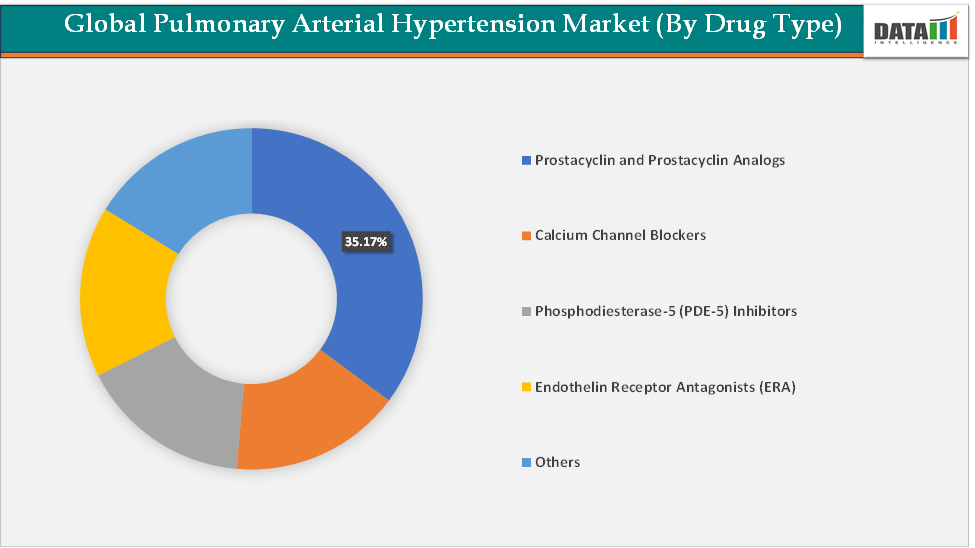
The prostacyclin and prostacyclin analogs segment is dominating the market because these therapies remain the gold standard for patients with advanced or rapidly progressing disease, offering the most significant improvements in survival and quality of life. Prostacyclin is a potent vasodilator and inhibitor of platelet aggregation, directly countering the pathophysiology of PAH. The first approved therapy, epoprostenol (Flolan, Veletri), set the benchmark by demonstrating substantial survival benefits, even though it required continuous intravenous infusion with complex catheter systems.
Building on this, newer analogs such as treprostinil (Remodulin for IV/SC, Tyvaso for inhalation, and Tyvaso DPI for dry powder inhalation) have expanded administration options, making treatment more convenient and reducing infection risks associated with IV delivery. Similarly, iloprost (Ventavis) offers inhalation therapy for patients unable to tolerate systemic side effects, while selexipag (Uptravi), an oral prostacyclin receptor agonist, represents a breakthrough by providing prostacyclin pathway targeting in a patient-friendly tablet form. These advancements not only improve adherence but also expand use into earlier stages of the disease.
The clinical superiority of prostacyclin therapies in improving exercise capacity, hemodynamics, and long-term outcomes has ensured their central role in treatment guidelines worldwide. Moreover, the continued innovation in formulations, such as the approval of Tyvaso DPI in 2022, the first dry powder inhaler for PAH, has boosted adoption by improving ease of use. Because these drugs provide unmatched efficacy in reducing disease progression and mortality, especially in severe cases, the prostacyclin and prostacyclin analogs segment holds the largest share in the PAH market and continues to lead despite competition from ERAs, PDE-5 inhibitors, and newer therapies.
Global Pulmonary Arterial Hypertension Market Geographical Penetration
U.S. Pulmonary Arterial Hypertension Market Landscape
The U.S. pulmonary arterial hypertension market is characterized by concentrated specialist care, high therapy expenditure and rapid adoption of differentiated treatments. Approximately 45,000 patients were diagnosed and treated for PAH in the United States in 2025, although delayed referral and disease misclassification continue to restrict the addressable population. Treatment is increasingly guided by risk status and combines endothelin receptor antagonists, phosphodiesterase inhibitors, soluble guanylate cyclase stimulators and prostacyclin-pathway therapies. The introduction of Winrevair has expanded the market beyond conventional vasodilation toward activin-signalling modulation, supporting earlier escalation for patients inadequately controlled with background therapy.
Competition is led by Johnson & Johnson, United Therapeutics, Merck, Bayer and Liquidia, supported by specialty pharmacies and dedicated PAH treatment centres. Commercial differentiation increasingly depends on clinical-worsening reduction, administration convenience, monitoring requirements and payer access. In August 2026, the FDA accepted United Therapeutics’ NDA for once-daily oral ralinepag. Its 687-patient Phase III ADVANCE OUTCOMES study reported a 55% reduction in clinical-worsening risk versus placebo. Future expansion will depend on improved diagnosis, broader reimbursement for multidrug regimens and increased use of oral, inhaled and disease-modifying therapies.
Japan Pulmonary Arterial Hypertension Market Outlook
Japan’s pulmonary arterial hypertension market is characterized by centralized specialist care, government-supported rare-disease coverage and strong adoption of combination therapy. The national rare-disease database reports 4,682 certified PAH patients, although the treated population may be higher because certification data do not capture every diagnosed patient. Demand is concentrated in university hospitals and specialist cardiovascular centres with access to right-heart catheterization and advanced treatment monitoring. Established therapies include endothelin receptor antagonists, phosphodiesterase inhibitors, soluble guanylate cyclase stimulators and oral, inhaled or parenteral prostacyclin-pathway medicines. Domestic companies such as Nippon Shinyaku and Toray maintain important positions alongside multinational manufacturers.
The competitive outlook changed materially on June 24, 2025, when Japan approved Airwin, the local brand of sotatercept, for PAH. Its activin-signalling mechanism introduces a vascular-remodelling approach beyond conventional vasodilation and supports use alongside background therapy. Japanese clinical development included 46 PAH patients, strengthening locally relevant evidence for efficacy and safety assessment. Growth through 2026 and beyond will depend on specialist uptake, reimbursement positioning, laboratory-monitoring capacity and appropriate selection of patients with persistent intermediate or high risk despite combination therapy.
Global Pulmonary Arterial Hypertension Market Competitive Landscape
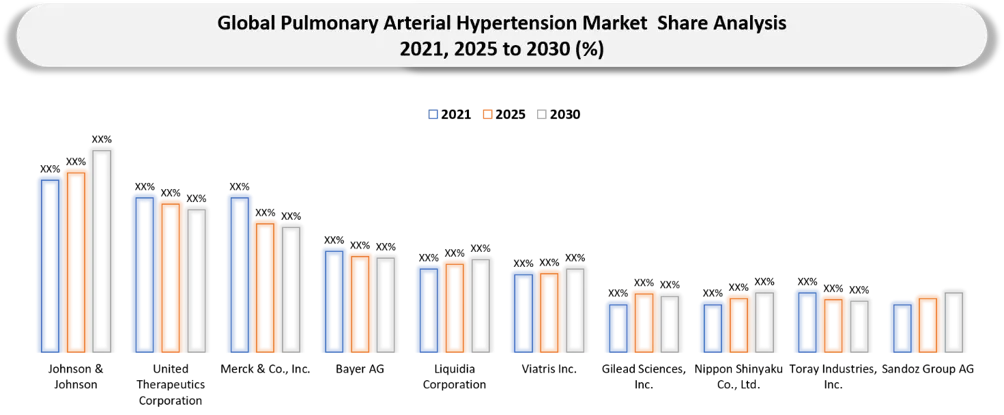
- The global pulmonary arterial hypertension market is moderately consolidated, with Johnson & Johnson, United Therapeutics Corporation, Merck & Co., Inc. and Bayer AG controlling a substantial share through differentiated branded therapies. Johnson & Johnson maintains a broad portfolio comprising Opsumit, Uptravi and Opsynvi, while United Therapeutics competes across oral, inhaled and parenteral delivery through Orenitram, Tyvaso and Remodulin. Merck has strengthened competition with Winrevair, which targets activin signalling and introduces a disease-modifying approach beyond traditional vasodilator pathways. Bayer remains established through Adempas, while Liquidia is building commercial presence with Yutrepia. Generic manufacturers compete primarily through lower-cost versions of sildenafil, tadalafil, bosentan, ambrisentan, epoprostenol and treprostinil.
- Competition is increasingly shifting from single-pathway vasodilation toward combination therapy, vascular-remodelling mechanisms and convenient drug-delivery systems. Companies are differentiating through improved dosing frequency, inhalation technologies, reduced treatment burden and clinical evidence covering exercise capacity, functional class and clinical-worsening risk. Insmed, Gossamer Bio, Chiesi, Cereno Scientific and GSK are advancing investigational therapies intended to address persistent disease progression. Future leadership will depend on regulatory execution, global reimbursement access, combination positioning, safety differentiation and successful penetration of specialized pulmonary-hypertension treatment centres.
Key Companies of Pulmonary Arterial Hypertension Market
- Johnson & Johnson (United States)
- United Therapeutics Corporation (United States)
- Merck & Co., Inc. (United States)
- Bayer AG (Germany)
- Liquidia Corporation (United States)
- Viatris Inc. (United States)
- Gilead Sciences, Inc. (United States)
- Nippon Shinyaku Co., Ltd. (Japan)
- Toray Industries, Inc. (Japan)
- Sandoz Group AG (Switzerland)
- Teva Pharmaceutical Industries Ltd. (Israel)
- Dr. Reddy’s Laboratories Limited (India)
- Lupin Limited (India)
- Sun Pharmaceutical Industries Limited (India)
- Zydus Lifesciences Limited (India)
- Aurobindo Pharma Limited (India)
- Insmed Incorporated (United States)
- Gossamer Bio, Inc. (United States)
- Chiesi Farmaceutici S.p.A. (Italy)
- GSK plc (United Kingdom)
Global Pulmonary Arterial Hypertension Market Recent Developments
- In August 2026, United Therapeutics Corporation announced that the U.S. FDA accepted its New Drug Application for ralinepag, an investigational once-daily oral prostacyclin receptor agonist for PAH. The application is supported by the Phase III ADVANCE OUTCOMES study involving 687 patients, in which ralinepag reduced the risk of clinical worsening by 55% compared with placebo. The FDA assigned a target action date of June 24, 2027.
- In August 2026, United Therapeutics presented additional ADVANCE OUTCOMES analyses at the European Society of Cardiology Congress and European Respiratory Society Congress. The analyses indicated that ralinepag supported clinical improvement in lower-risk patients and reduced clinical worsening across PAH patient subgroups, including patients receiving established background therapies.
- In July 2026, Gossamer Bio announced a planned September 2026 NDA submission for seralutinib in PAH following a pre-NDA Type B meeting with the FDA. The FDA reportedly treated the statistical significance and treatment-effect magnitude observed in the Phase III PROSERA study as review considerations rather than filing barriers.
- In July 2026, Gossamer Bio reacquired worldwide development and commercial rights to seralutinib from Chiesi Farmaceutici. Termination of the previous collaboration returned global control over development, manufacturing, pricing, commercialization and lifecycle strategy to Gossamer Bio ahead of the proposed regulatory submission.
- In September 2026, updated European Respiratory Society clinical-practice guidelines were published, providing evidence-based recommendations for PAH diagnosis, risk assessment and treatment. The update reinforces structured risk-based management and the growing role of combination and disease-modifying treatment approaches.
What DATAM Uniquely Provides
- In-depth segmentation of the pulmonary arterial hypertension market by drug class, route of administration, distribution channel and region, including detailed assessment of prostacyclin analogs, PDE-5 inhibitors, endothelin receptor antagonists, calcium channel blockers and emerging activin signalling inhibitors.
- Competitive analysis of leading PAH companies covering approved product portfolios, reduction in clinical worsening, exercise-capacity improvement, WHO functional-class improvement, safety, mechanism of action, dosing convenience, pipeline maturity and commercialization strategy.
- Comprehensive assessment of diagnosed and treatment-eligible populations, including idiopathic, heritable, drug-induced and connective tissue disease-associated PAH patients, categorized by risk status, WHO functional class, treatment history, comorbidities and access to specialist care.
- Actionable intelligence on pharmaceutical pricing, reimbursement, regulatory pathways, diagnostic practices, right-heart catheterization access, treatment sequencing, combination therapy, patient-support programs, market-access barriers, licensing activity, strategic partnerships and investment opportunities.
- Analyst forecasts identifying high-growth drug classes, commercially attractive patient groups, regional expansion opportunities and emerging competitive threats across prostacyclin-pathway agents, endothelin receptor antagonists, PDE-5 inhibitors, soluble guanylate cyclase stimulators, activin signalling inhibitors and next-generation vascular-remodelling therapies.




























































