


Idiopathic Pulmonary Fibrosis Market Size and Overview
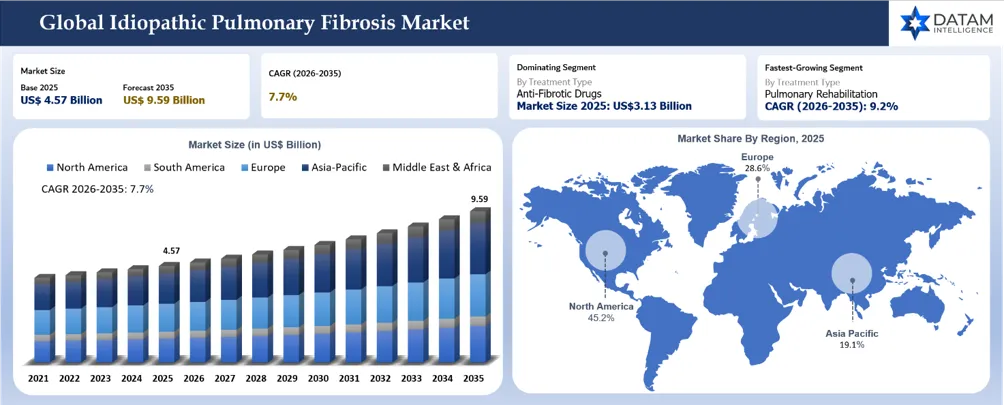
The global idiopathic pulmonary fibrosis market reached US$4.57 billion in 2025 and is expected to reach US$9.59 billion by 2035, growing with a CAGR of 7.7% during the forecast period 2026-2035.
Market growth is being shaped by ageing populations, improving disease awareness, wider use of high-resolution computed tomography and expanding access to multidisciplinary interstitial lung disease centres. However, delayed diagnosis, symptom overlap with other respiratory and cardiovascular disorders and limited specialist availability continue to restrict early treatment. Anti-fibrotic drugs remain the market’s revenue foundation, supported by long-term use of nintedanib and pirfenidone and the introduction of nerandomilast as a differentiated treatment option.
Therapeutic innovation represents the market’s principal growth vector. Development activity is shifting toward inhaled therapies, next-generation antifibrotics and disease-modifying candidates targeting TNIK, Hedgehog, lysophosphatidic acid, angiotensin II and other fibrosis-related pathways. Nebulized treprostinil, deupirfenidone, rentosertib, taladegib, buloxibutid and inhaled pirfenidone could expand physician choice and support combination approaches. Competitive advantage will increasingly depend on forced vital capacity preservation, manageable safety, improved treatment persistence and compatibility with background antifibrotic therapy.
The next value-creation cycle will centre on therapies capable of moving beyond slowing progression toward stabilising or potentially reversing fibrosis. Sustainable leadership will require clinically meaningful outcomes, convenient administration, scalable manufacturing and broad reimbursement. Companies integrating drug development with quantitative imaging, predictive biomarkers, real-world evidence and specialist-centre engagement will be better positioned to reshape treatment pathways and capture market share.
Idiopathic Pulmonary Fibrosis Market Key Takeaways
- Sustained Market Expansion Through 2035: The global idiopathic pulmonary fibrosis market reached US$4.57 billion in 2025 and is projected to reach US$9.59 billion by 2035, registering a CAGR of 7.7% during 2026-2035.
- Anti-Fibrotic Drugs Maintain Market Leadership: Anti-fibrotic drugs accounted for an estimated 68.5% market share in 2025, equivalent to approximately US$3.13 billion, supported by long-term use of nintedanib, pirfenidone and nerandomilast.
- Pulmonary Rehabilitation Emerges as the Fastest-Growing Treatment Segment: Pulmonary rehabilitation is expected to record a CAGR of approximately 9.2% through 2035, driven by growing emphasis on exercise capacity, symptom management and multidisciplinary care.
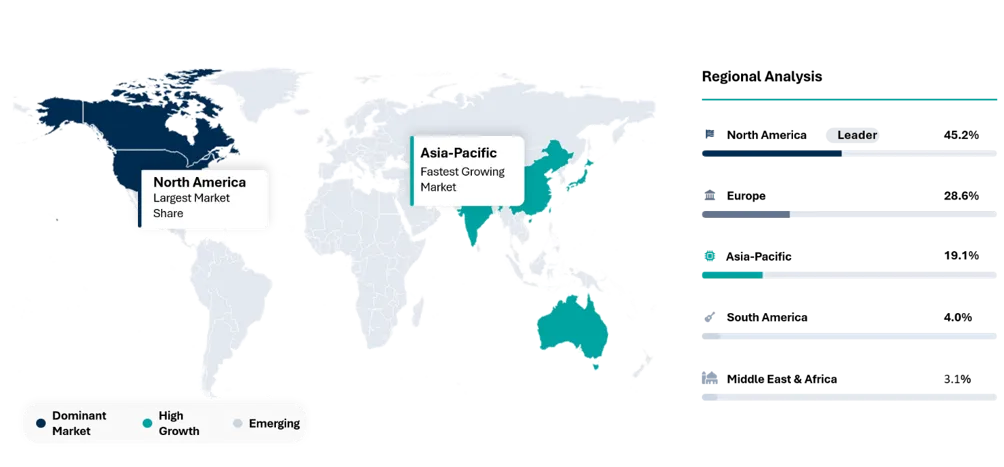
- North America Maintains Regional Dominance: North America accounted for an estimated 45.2% of the global market in 2025, equivalent to approximately US$2.07 billion, supported by advanced diagnostic infrastructure, favourable reimbursement and rapid therapeutic adoption.
- Next-Generation Therapies Reshape Competitive Strategy: Future leadership will depend on inhaled antifibrotics, disease-modifying mechanisms, combination strategies and improved tolerability. Companies demonstrating sustained forced vital capacity benefits, treatment persistence and broad reimbursement access will be positioned to capture market share.
Idiopathic Pulmonary Fibrosis Market Scope
| Metrics | Details | |
| 2025 Market Size | US$4.57 Billion | |
| 2035 Projected Market Size | US$9.59 Billion | |
| CAGR (2026-2035) | 7.7% | |
| Largest Market | North America | |
| Fastest Growing Market | Asia-Pacific | |
| By Treatment Type | Anti-Fibrotic Drugs, Oxygen Therapy, Pulmonary Rehabilitation, Lung Transplantation, and Others | |
| By End-user | Hospitals, Specialty Clinics, Homecare Settings, and Others | |
| By Region | North America | U.S., Canada, Mexico |
| Europe | Germany, UK, France, Spain, Italy, Poland | |
| Asia-Pacific | China, India, Japan, Australia, South Korea, Indonesia, Malaysia, Singapore, Vietnam, Thailand, Philippines, Taiwan | |
| South America | Brazil, Argentina | |
| Middle East and Africa | Israel, Saudi Arabia, UAE, Turkiye, South Africa, Nigeria | |
| Report Insights Covered | Competitive Landscape Analysis, Company Profile Analysis, Market Size, Share, Growth | |
Idiopathic Pulmonary Fibrosis Market White Space & Investment Opportunities
- Earlier Detection and Progression-Risk Stratification: Invest in blood-based biomarkers, genomic risk panels, quantitative lung imaging, artificial intelligence-enabled high-resolution computed tomography and digital respiratory monitoring. Identifying IPF before substantial lung-function deterioration could expand the treatment-eligible population and improve the effectiveness of early antifibrotic intervention.
- Disease-Modifying and Fibrosis-Reversing Therapies: Develop therapies capable of addressing epithelial injury, fibroblast activation, extracellular-matrix deposition and abnormal wound healing. Candidates targeting TNIK, Hedgehog signalling, lysophosphatidic acid, integrins and other fibrosis-related pathways could move treatment beyond slowing decline toward stabilising or potentially reversing lung fibrosis.
- Better-Tolerated Next-Generation Antifibrotics: Invest in therapies that preserve antifibrotic efficacy while reducing gastrointestinal, hepatic and photosensitivity-related treatment burdens. Deuterated compounds, selective pathway inhibitors and optimised formulations could improve adherence, treatment persistence and lifetime value per patient.
- Inhaled and Lung-Targeted Drug-Delivery Platforms: Advance inhaled pirfenidone, nintedanib, treprostinil and novel locally delivered therapies that concentrate treatment within lung tissue while limiting systemic exposure. Successful platforms could establish differentiated premium segments and improve suitability for combination treatment.
- Combination-Treatment and Sequencing Evidence: Generate comparative evidence defining how pirfenidone, nintedanib, nerandomilast and emerging therapies should be combined or sequenced according to disease progression, tolerability, lung-function decline and comorbidity profile. Clear treatment algorithms will support physician adoption and reimbursement.
- Geographic Access and Outcome-Based Reimbursement: Expand multidisciplinary diagnosis, specialist interstitial lung disease services and antifibrotic reimbursement across underserved markets. Real-world evidence linking earlier treatment with reduced acute exacerbations, slower forced vital capacity decline, improved quality of life and lower hospitalization costs could support broader payer coverage.
Idiopathic Pulmonary Fibrosis Market Buyer Decision-Making Criteria
Major Buyer Decision-Making Criteria:
- Reduction in Forced Vital Capacity Decline
- Prevention of Disease Progression and Acute Exacerbations
- Overall Survival and Transplant-Free Survival Outcomes
- Effectiveness Across Mild, Moderate and Advanced IPF
- Suitability for Newly Diagnosed and Previously Treated Patients
- Compatibility With Existing Background Antifibrotic Therapy
- Safety, Tolerability and Long-Term Clinical Evidence
- Gastrointestinal, Hepatic and Photosensitivity-Related Adverse Effects
- Treatment Discontinuation, Dose Reduction and Persistence Rates
- Route of Administration, Dosing Convenience and Treatment Burden
- Effectiveness in Patients Intolerant or Unresponsive to Existing Antifibrotics
- Monitoring Requirements and Drug–Drug Interaction Profile
- Improvement in Dyspnoea, Exercise Capacity and Quality of Life
- Hospitalization and Acute-Exacerbation Management Requirements
- Pricing, Reimbursement and Overall Lifetime Treatment Cost
- Guideline Positioning, Regulatory Approval and Physician Experience
- Availability Through Specialist Interstitial Lung Disease Centres
- Manufacturing Reliability, Geographic Availability and Patient-Support Services
Idiopathic Pulmonary Fibrosis Market BCG Matrix: Company Evaluation
STAR
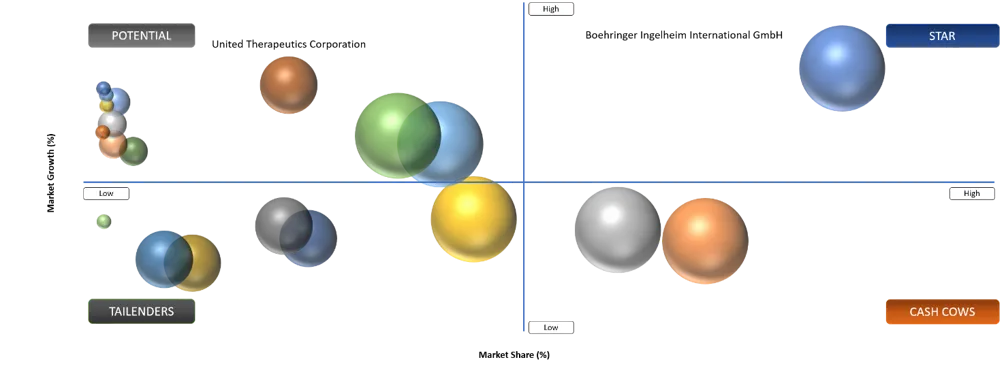
Boehringer Ingelheim International GmbH and F. Hoffmann-La Roche Ltd are positioned in the Star category based on their approved idiopathic pulmonary fibrosis therapies, established respiratory commercialization capabilities and strong influence on global treatment practices. Boehringer Ingelheim maintains market leadership through OFEV, a tyrosine kinase inhibitor, and JASCAYD, a phosphodiesterase 4B inhibitor approved for treating adults with idiopathic pulmonary fibrosis. Roche competes through Esbriet, an established antifibrotic therapy used to slow deterioration in lung function.
Their positions are supported by extensive clinical evidence, broad geographic availability, established relationships with interstitial lung disease centers and mature reimbursement infrastructure. Future leadership will depend on lifecycle management, label expansion, combination-treatment evidence, treatment persistence and real-world demonstration of reduced disease progression. Companies capable of improving tolerability, maintaining lung function and extending treatment duration will retain stronger commercial positioning as generic competition increases.
POTENTIAL
United Therapeutics Corporation, Bristol Myers Squibb Company, PureTech Health plc, Avalyn Pharma Inc., Vicore Pharma Holding AB, Endeavor BioMedicines, Inc., Eli Lilly and Company, Insilico Medicine and Arrowhead Pharmaceuticals, Inc. are positioned in the Potential category because of their involvement in emerging antifibrotic mechanisms, inhaled therapies and disease-modifying platforms.
United Therapeutics is advancing inhaled treprostinil, while Bristol Myers Squibb is developing admilparant. PureTech Health is progressing deupirfenidone, and Avalyn Pharma is evaluating inhaled pirfenidone and nintedanib formulations. Vicore Pharma is developing buloxibutid, Endeavor BioMedicines is advancing taladegib, Eli Lilly is associated with MTX-463, Insilico Medicine is progressing rentosertib and Arrowhead Pharmaceuticals is developing ARO-MMP7. Advancement toward the Star category will depend on late-stage clinical success, regulatory approval, sustained forced vital capacity benefits, manageable safety, differentiated administration, scalable manufacturing, reimbursement and effective commercialization partnerships.
Idiopathic Pulmonary Fibrosis Market Dynamics
Driver Impact Analysis
| Driver | Market Growth Impact (%) | Demand Concentration | Impacted Use Case | Strategic Impact |
Expansion Beyond Conventional Pirfenidone and Nintedanib Therapy | 24.8% | High across North America, Europe and Japan; gradually increasing across developed Asia Pacific | First-line treatment, add-on therapy and switching among patients experiencing inadequate response or intolerance | New treatment mechanisms expand physician choice, reduce dependence on two established antifibrotic classes and increase the addressable treated population |
Growing Identification of IPF Through HRCT and Multidisciplinary Diagnosis | 21.6% | Concentrated in countries with established interstitial lung disease centres and specialist pulmonology networks | Earlier confirmation of suspected IPF and differentiation from other interstitial lung diseases | Earlier diagnosis increases treatment-eligible patient volumes, extends therapy duration and supports greater utilization of antifibrotic medicines |
Advancement of Inhaled and Disease-Modifying Treatment Candidates | 19.4% | Strongest in the United States and Europe, with expanding clinical activity in China and other Asian markets | Direct lung delivery, combination treatment and management of progressive disease despite background therapy | Inhaled treprostinil, inhaled antifibrotics, TNIK inhibitors and fibrosis-targeting agents could create differentiated premium treatment segments |
Increasing Treatment Initiation and Persistence Through Improved Tolerability | 17.8% | High among diagnosed but untreated patients and patients discontinuing existing oral antifibrotics | Long-term maintenance therapy for patients affected by gastrointestinal, hepatic or photosensitivity-related treatment burdens | Better-tolerated formulations and next-generation therapies can reduce discontinuation, improve adherence and increase lifetime revenue per treated patient |
Driver: Expansion Beyond Conventional Pirfenidone and Nintedanib Therapy
The expansion of treatment options beyond pirfenidone and nintedanib is becoming a major driver of the global idiopathic pulmonary fibrosis market. Although these established antifibrotic therapies can slow lung-function decline, treatment uptake and persistence remain constrained by gastrointestinal adverse effects, hepatic monitoring requirements, photosensitivity and variable clinical response. The approval of JASCAYD, a phosphodiesterase 4B inhibitor, introduced a differentiated mechanism and expanded physician choice. It also created opportunities for treatment switching, combination strategies and intervention among patients unable to tolerate existing therapies.
The competitive pipeline is further widening through inhaled formulations and disease-modifying candidates targeting fibrosis-related pathways. United Therapeutics’ nebulized Tyvaso could establish an inhaled antifibrotic category if approved for IPF, while deupirfenidone, rentosertib, taladegib, buloxibutid and inhaled pirfenidone are advancing alternative approaches. These developments could increase the proportion of diagnosed patients receiving therapy, improve treatment duration and support premium pricing for differentiated clinical benefits. Commercial success will depend on demonstrating superior forced vital capacity preservation, manageable safety, compatibility with background antifibrotics and convincing evidence of improved patient outcomes.
Restraint Impact Analysis
| Restraint | Drag on Market Growth (%) | Primary Impact Area | Impacted Use Case | Strategic Impact |
Delayed and Inconsistent Diagnosis Across Non-Specialist Care Pathways | 19.6% | Patient identification, treatment eligibility and therapy initiation | Patients initially misclassified with chronic obstructive pulmonary disease, heart failure or other interstitial lung diseases | Delayed referral to specialist centres shortens the treatment window, reduces eligible patient volumes and limits early antifibrotic intervention |
Treatment Discontinuation Caused by Antifibrotic Tolerability Burden | 18.4% | Treatment adherence, persistence and lifetime patient value | Long-term use of pirfenidone and nintedanib among patients experiencing gastrointestinal, hepatic or photosensitivity-related adverse effects | Dose reduction, treatment interruption and discontinuation constrain prescription durability and create demand for better-tolerated formulations |
High Lifetime Treatment Costs and Restrictive Reimbursement Requirements | 16.9% | Market access, affordability and geographic penetration | Chronic antifibrotic treatment in underinsured populations and cost-sensitive healthcare systems | Prior authorization, reimbursement restrictions and patient cost-sharing slow adoption, particularly across emerging and lower-income markets |
Clinical-Trial Failure Risk From IPF Heterogeneity and Endpoint Complexity | 15.7% | Pipeline productivity, investment returns and commercialization timelines | Development of disease-modifying therapies assessed through forced vital capacity and progression-related endpoints | Variable disease progression, trial duration and patient-selection challenges increase development costs, delay approvals and discourage smaller biotechnology companies |
Restraint: Delayed and Inconsistent Diagnosis Across Non-Specialist Care Pathways
Delayed and inconsistent diagnosis represents a significant constraint on the global idiopathic pulmonary fibrosis market because early symptoms often resemble chronic obstructive pulmonary disease, asthma, heart failure or other interstitial lung diseases. Patients may undergo repeated primary-care consultations before receiving high-resolution computed tomography and specialist evaluation. Limited access to multidisciplinary diagnostic teams, experienced thoracic radiologists and interstitial lung disease centres further increases variation in diagnostic accuracy, particularly across emerging markets and underserved regions. Consequently, patients frequently enter specialist pathways after substantial and irreversible lung-function deterioration.
This diagnostic delay directly reduces the commercially addressable treatment population and shortens the period during which antifibrotic therapy can deliver measurable benefits. Uncertain usual interstitial pneumonia patterns may also postpone treatment initiation while physicians pursue additional imaging, bronchoscopy or lung biopsy. For pharmaceutical companies, inconsistent diagnosis creates uneven therapy adoption, complicates patient forecasting and increases dependence on specialist centres. Addressing this restraint requires physician education, standardized referral protocols, wider multidisciplinary review, artificial intelligence-supported imaging and stronger primary-care awareness. Earlier identification would increase treatment eligibility, extend therapy duration and improve clinical outcomes.
Market Segment Analysis
The idiopathic pulmonary fibrosis market is segmented based on treatment type, end-user, and region.
The anti-fibrotic drugs segment from the treatment type is expected to hold 87.19% of the market share in 2025 in the idiopathic pulmonary fibrosis market
Currently, Pirfenidone and Nintedanib are the only two FDA-approved antifibrotic therapies specifically for idiopathic pulmonary fibrosis. Both drugs have demonstrated significant efficacy in clinical trials, reducing the decline in lung function by approximately 30–50%, making them the preferred treatment options worldwide. Since their approvals (Pirfenidone in 2014 and Nintedanib in 2014), these drugs have rapidly penetrated major markets such as North America and Europe. For instance, Nintedanib (Ofev) global sales reached nearly USD 3,795.36 million in 2023, reflecting strong market demand.
Before these antifibrotics, IPF management was largely limited to supportive care like oxygen therapy or lung transplantation. The lack of effective alternatives means the anti-fibrotic segment captures a large share of treatment expenditure. The anti-fibrotic drugs segment dominates the IPF market due to the proven clinical benefits of Pirfenidone and Nintedanib, strong guideline backing, limited alternative treatments, and growing patient populations. These factors combine to make antifibrotics the cornerstone of IPF therapy and the largest revenue-generating segment in the market.
Idiopathic Pulmonary Fibrosis Market Geographical Penetration
U.S. Idiopathic Pulmonary Fibrosis Market Landscape
The U.S. idiopathic pulmonary fibrosis market is entering a new competitive phase as treatment moves beyond conventional pirfenidone and nintedanib therapy. United Therapeutics estimates that at least 100,000 people are living with IPF in the country, supporting a substantial pool requiring long-term antifibrotic management. In October 2025, the FDA approved Boehringer Ingelheim’s JASCAYD for adults with IPF, representing the first new U.S. treatment option in more than a decade. This approval broadens physician choice and strengthens competition around mechanism differentiation, tolerability, treatment persistence and use alongside existing antifibrotics.
Market development is increasingly shaped by specialist interstitial lung disease centres, earlier high-resolution computed tomography diagnosis and late-stage pipeline assets. In September 2026, the FDA accepted United Therapeutics’ supplemental application for nebulized Tyvaso, with review completion anticipated in April 2027. Combined TETON-1 and TETON-2 analyses demonstrated a 111.8 mL treatment difference in absolute forced vital capacity at Week 52. If approved, Tyvaso could create the first inhaled antifibrotic category and intensify competition across delivery route, efficacy and combination positioning.
Japan Idiopathic Pulmonary Fibrosis Market Outlook
Japan represents an important Asia Pacific IPF market, supported by its ageing population, universal health coverage, advanced high-resolution computed tomography infrastructure and established respiratory-specialist network. Demand remains concentrated across university hospitals and specialist interstitial lung disease centres, where multidisciplinary assessment guides diagnosis and antifibrotic initiation. However, diagnostic delays continue to restrict early treatment. A 2025 Japanese real-world study reported that IPF patients experienced an average 14.1 months from initial symptoms to medical consultation, followed by another 7.1 months from consultation to diagnosis. These delays create significant opportunities for referral standardisation, primary-care education and imaging-supported diagnosis.
The competitive landscape is expanding beyond established pirfenidone and nintedanib treatment. In May 2026, Japan’s Ministry of Health, Labour and Welfare approved Boehringer Ingelheim’s JASCAYD for adults with IPF and progressive pulmonary fibrosis, introducing a differentiated phosphodiesterase 4B inhibitor. The approval is expected to strengthen treatment switching, combination positioning and therapy initiation among patients unable to tolerate conventional antifibrotics. Future growth will depend on reimbursement access, post-marketing evidence, earlier diagnosis, improved persistence and adoption of inhaled and disease-modifying pipeline therapies.
Idiopathic Pulmonary Fibrosis Market Competitive Landscape
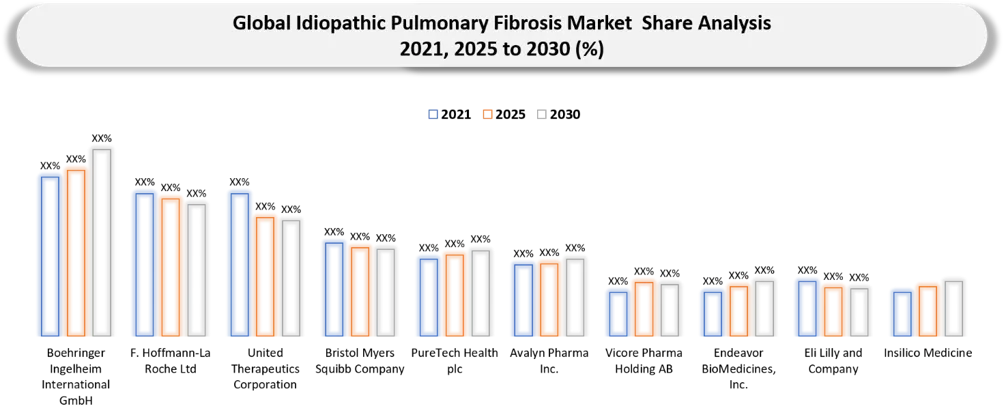
- The global idiopathic pulmonary fibrosis market remains commercially concentrated, with Boehringer Ingelheim and Roche holding established positions through OFEV, JASCAYD and Esbriet. Boehringer Ingelheim’s portfolio expansion with nerandomilast strengthens its competitive advantage and introduces a differentiated treatment option beyond conventional antifibrotic therapy. Competition from generic pirfenidone and nintedanib manufacturers, including Cipla, Dr. Reddy’s Laboratories and Sun Pharmaceutical Industries, is increasing pricing pressure in accessible markets. Consequently, established companies compete through clinical evidence, expanded geographic coverage, physician engagement, reimbursement support, treatment persistence programs and lifecycle management rather than price alone.
- The development pipeline is broadening competition through novel mechanisms, combination strategies and improved delivery approaches. United Therapeutics, Bristol Myers Squibb, PureTech Health, Avalyn Pharma, Vicore Pharma, Endeavor BioMedicines, Eli Lilly, Insilico Medicine and Arrowhead Pharmaceuticals are pursuing candidates targeting fibrosis progression, lung-function preservation and treatment tolerability. Inhaled therapies from Avalyn Pharma could reduce systemic exposure, while RNA interference, antibody and pathway-specific candidates may enable more targeted disease modification. Strategic licensing, clinical collaborations and regulatory designations will remain important competitive levers. Long-term leadership will depend on demonstrating superior forced vital capacity outcomes, manageable safety, convenient administration and meaningful benefits alongside existing antifibrotic therapies.
Key Companies of Idiopathic Pulmonary Fibrosis Market
- Boehringer Ingelheim International GmbH (Germany)
- F. Hoffmann-La Roche Ltd (Switzerland)
- United Therapeutics Corporation (United States)
- Bristol Myers Squibb Company (United States)
- PureTech Health plc (United States)
- Avalyn Pharma Inc. (United States)
- Vicore Pharma Holding AB (Sweden)
- Endeavor BioMedicines, Inc. (United States)
- Eli Lilly and Company (United States)
- Insilico Medicine (United States)
- Rein Therapeutics, Inc. (United States)
- Arrowhead Pharmaceuticals, Inc. (United States)
- Alentis Therapeutics AG (Switzerland)
- AbbVie Inc. (United States)
- Tvardi Therapeutics, Inc. (United States)
- Mabwell Bioscience Co., Ltd. (China)
- Trevi Therapeutics, Inc. (United States)
- Cipla Limited (India)
- Dr. Reddy’s Laboratories Limited (India)
- Sun Pharmaceutical Industries Limited (India)
Idiopathic Pulmonary Fibrosis Market Recent Developments
- September 2026: Insilico Medicine dosed the first patient in the Phase III GENESIS-IPF-3 trial of rentosertib, an AI-designed TNIK inhibitor. The 52-week study is expected to enrol 320 patients across 47 Chinese centres and will assess annual forced vital capacity decline. The milestone validates artificial intelligence-enabled drug discovery as an emerging competitive pathway in IPF therapeutics.
- September 2026: Endeavor BioMedicines presented a quantitative imaging analysis of its Phase IIa taladegib trial at the European Respiratory Society Congress. Taladegib produced a mean 204 mL improvement in lung volume, compared with a 60 mL decline for placebo, and reduced total disease extent by 2.9%. The findings strengthen the candidate’s disease-modification proposition, although confirmation in larger prospective trials remains necessary.
- September 2026: The U.S. FDA accepted United Therapeutics’ supplemental New Drug Application for nebulized Tyvaso to treat IPF, with review completion anticipated in late April 2027. Pooled Phase III TETON-1 and TETON-2 results demonstrated a 111.8 mL treatment difference in absolute forced vital capacity at Week 52. Approval could establish the first inhaled antifibrotic option and materially expand competition beyond oral therapies.
- August 2026: The U.S. FDA granted Fast Track designation to Rein Therapeutics’ inhaled LTI-03 for IPF. The company continued enrolment in its Phase II RENEW trial and expected initial data during the second half of 2026. The designation could accelerate regulatory interactions while supporting investor and partnering interest in locally delivered, potentially disease-modifying IPF treatments.
- July 2026: PureTech-founded Celea Therapeutics dosed the first patient in the global Phase III SURPASS-IPF study of deupirfenidone. The approximately 1,100-patient trial directly compares deupirfenidone with pirfenidone across more than 30 countries, making it the first industry-sponsored head-to-head Phase III trial in IPF. Its active-comparator design could generate commercially meaningful differentiation on efficacy and tolerability.
- July 2026: Rein Therapeutics expanded the Phase II RENEW trial across all five planned countries following the activation of German sites. Germany joined the United States, United Kingdom, Australia and Poland, increasing patient access and geographic diversity. The expansion improves the programme’s operational readiness and could strengthen the external validity of forthcoming LTI-03 clinical results.
What DATAM Uniquely Provides
- In-depth segmentation of the idiopathic pulmonary fibrosis market by treatment type, drug class, mechanism of action, route of administration, disease severity, treatment status, patient age, care setting, distribution channel and region.
- Competitive analysis of leading IPF companies covering forced vital capacity outcomes, disease-progression reduction, acute-exacerbation prevention, treatment persistence, safety, tolerability, mechanism of action, dosing convenience, pipeline maturity and commercialization strategy.
- Comprehensive assessment of diagnosed and treatment-eligible populations, including newly diagnosed patients, previously treated patients, patients intolerant or unresponsive to existing antifibrotics, rapidly progressing patients, advanced IPF populations, comorbidities, transplant eligibility, unmet clinical needs and regional access dynamics.
- Actionable intelligence on pharmaceutical pricing, reimbursement, regulatory pathways, biomarker development, quantitative lung imaging, treatment-response assessment, combination strategies, patient-support programs, market-access barriers, licensing activity, strategic partnerships and investment opportunities.
- Analyst forecasts highlighting high-growth treatment categories, commercially attractive patient populations, regional expansion opportunities and emerging competitive threats across conventional antifibrotics, phosphodiesterase 4B inhibitors, inhaled therapies, TNIK inhibitors, Hedgehog-pathway inhibitors, antibody therapies, RNA interference platforms, pulmonary rehabilitation and lung-targeted drug-delivery technologies.




























































