


Probiotics and Gut Health Market Size
The probiotics and gut health market size reached US$ 8.15 billion in 2025 and is expected to reach US$ 20.50 billion by 2035, growing with a CAGR of 9.46% during the forecast period 2026-2035.
The global probiotics and gut health market is witnessing robust growth, propelled by increasing consumer awareness regarding the link between gut microbiota and overall health, including immunity and mental well-being. According to a survey report by the International Food Information Council, 51% of participants prioritize probiotics for gut health support. Demand for functional foods, dietary supplements, and fermented beverages continues to rise, supported by scientific validation and shifting health preferences.
Industry players are investing in research and development to create targeted, condition-specific formulations that address digestive, metabolic, and cognitive health concerns. For instance, in March 2025, US-based supplement brand Nature Made launched a new line of probiotic, prebiotic, and fiber supplements to support daily gut and immune health. Designed to meet growing demand for effective, easy-to-use digestive solutions, the products feature research-backed strains and address a variety of gut health needs.
Key Takeaways
- The market is expected to add more than US$ 12 billion in incremental revenue opportunities between 2025 and 2035, highlighting long-term commercial potential.
- Consumer adoption is increasingly influenced by clinically supported health claims, creating competitive advantages for brands investing in scientific validation.
- Lactobacillus-based products continue to dominate ingredient innovation pipelines due to strong clinical evidence and broad application flexibility.
- Personalized probiotics and microbiome-driven nutrition programs are emerging as premium pricing opportunities within the broader gut health ecosystem.
- Regulatory scrutiny around probiotic health claims is becoming more stringent, requiring manufacturers to strengthen compliance strategies and substantiation frameworks.
- Retail expansion through supermarkets, pharmacies, e-commerce platforms, and direct-to-consumer channels is broadening product accessibility and improving category penetration.
- Sustainability-focused packaging and clean-label product development are increasingly influencing purchasing decisions, particularly among health-conscious consumers.
Probiotics and Gut Health Market Trend
Key trends in the probiotics and gut health market include personalized nutrition, with products tailored to individual microbiome profiles gaining traction. There is a strong shift toward plant-based and dairy-free probiotic formulations to meet evolving consumer preferences. Scientific validation and clinically backed claims are becoming critical for market differentiation. Digital health platforms and at-home gut testing kits are integrating with probiotic offerings to enhance consumer engagement. Additionally, sustainability and clean-label ingredients are influencing product development and brand positioning.
For more details on this report - Request for Sample
Market Scope
| Metric | Details |
| Market Size (2025) | US$ 8.15 Billion |
| Market Size (2035) | US$ 20.50 Billion |
| CAGR (2026-2035) | 9.46% |
| Historic Years | 2023-2024 |
| Base Year | 2025 |
| Forecast Period | 2026-2035 |
| Segments Covered | Product, Ingredient, Form, End User, Region |
| Leading Region | North America |
| Fastest Growing Region | Asia-Pacific |
Probiotics and Gut Health Market Dynamics
Rising Prevalence of Digestive Disorders
There has been a growing awareness among consumers about the importance of gut health and its impact on overall well-being. According to the National Institute of Health, digestive diseases affect between 60 to 70 million people in the United States, highlighting the widespread prevalence of gastrointestinal health issues. The rise in gut health-related concerns, such as IBS, indigestion, and other gastrointestinal disorders, is prompting consumers to turn to probiotic supplements and foods.
As awareness of the importance of gut health grows, brands are emphasizing personalized solutions, which is accelerating the demand for customized probiotics and gut health products. For instance, in June 2024, MicrobioTx, an India-based gut health startup, launched India's first hyper-personalized probiotic on World Microbiome Day 2024. The Personal Probiotics blend is tailored to individual gut profiles, combining prebiotics and probiotics for optimal gut health. Additionally, the company introduced GutChat, a free chatbot focused on gut health.
Regulatory and Compliance Issues
Regulatory challenges and compliance issues are significant restraints for the global probiotics and gut health market. Different countries have varying regulations on the classification of probiotics, often leading to confusion and delays in product launches. In October 2023, the US Food and Drug Administration (FDA) issued warnings regarding probiotic products marketed for use in hospitalized preterm infants. These products are being illegally sold to treat or prevent diseases in this vulnerable population, raising significant safety concerns.
In some regions, stringent testing requirements for probiotics' safety and efficacy can lead to high development costs. The lack of standardized guidelines for health claims can make it difficult for companies to market their products effectively. This inconsistency in regulations also increases the risk of non-compliance, which could result in product recalls or fines.
Why Consumer Demand Continues to Accelerate
Digestive disorders remain one of the most common health concerns globally. According to data cited in the source content, digestive diseases affect between 60 and 70 million people in the United States alone. This growing health burden is encouraging consumers to adopt preventive nutrition strategies, including probiotics, fermented foods, and microbiome-support supplements.
The market is also benefiting from increasing awareness of the gut-brain axis, where consumers associate digestive wellness with cognitive performance, mood regulation, and immune resilience. As a result, probiotics are moving beyond traditional digestive health positioning and entering broader wellness categories.
A survey by the International Food Information Council indicates that 51% of respondents prioritize probiotics for gut health support, reflecting strong consumer demand trends and growing category acceptance.
Ingredient Innovation Driving Product Differentiation
One of the most important Probiotics and Gut Health growth drivers is the industry's transition toward targeted and condition-specific formulations.
Manufacturers are increasingly developing products tailored to digestive health, metabolic health, immune support, women's health, and cognitive wellness. Personalized nutrition strategies are becoming a major area of investment as companies seek to differentiate products through microbiome-based recommendations.
MicrobioTx's launch of India's hyper-personalized probiotic platform demonstrates how manufacturers are moving toward customized formulations built around individual gut profiles. This shift is expected to support premium pricing and stronger consumer engagement throughout the forecast period.
Regulatory Claims Analysis and Commercial Challenges
While market opportunities remain significant, regulatory complexity continues to influence commercialization strategies.
Different countries maintain varying definitions and regulatory classifications for probiotics, creating challenges for international product launches. Regulatory authorities increasingly require stronger clinical evidence to support health claims related to disease prevention or treatment.
The FDA warning issued in October 2023 regarding probiotic products marketed for hospitalized preterm infants highlighted the growing importance of safety validation and regulatory compliance. Manufacturers must balance marketing claims with scientific substantiation to minimize legal and reputational risks.
For companies operating globally, regulatory claims analysis has become a critical component of product development, labeling, and market entry planning.
Pricing and Adoption Trends
Pricing within the probiotics and gut health market varies significantly based on formulation complexity, ingredient strain specificity, delivery format, and clinical validation.
Premium products featuring patented strains, personalized formulations, and scientifically validated claims generally command higher margins. At the same time, increasing competition is expanding access to affordable probiotic products through mass retail and private-label offerings.
Consumer adoption trends indicate growing demand for:
- Multi-strain probiotic blends
- Synbiotic formulations combining probiotics and prebiotics
- Plant-based probiotic products
- Dairy-free functional beverages
- Immune-support formulations
- Women's health probiotics
- Personalized microbiome solutions
Market Opportunity Assessment
Opportunities for Supplement Manufacturers
The strongest opportunities exist in clinically supported probiotic supplements addressing specific health concerns such as IBS, digestive discomfort, immune health, and women's wellness. Companies capable of demonstrating measurable outcomes through clinical research are likely to gain market share.
Opportunities for Functional Food Producers
Food manufacturers can capitalize on growing demand for probiotic-enriched beverages, fermented dairy products, dairy alternatives, and functional snacks. Consumer preference for convenient wellness solutions continues to support food-based probiotic consumption.
Opportunities for Digital Health Companies
Integration of at-home microbiome testing, digital health platforms, and personalized nutrition recommendations creates new recurring revenue opportunities. Brands combining diagnostics with customized supplementation may achieve stronger customer retention.
Opportunities Across Emerging Markets
Countries across Asia-Pacific, Latin America, and the Middle East are witnessing rising health awareness and increasing disposable incomes, creating favorable conditions for market expansion.
Segmentation Analysis
Segmented by Product (Probiotic Foods & Beverages, Dietary Supplements, Animal Feed Probiotics), by Ingredient (Lactobacillus, Bifidobacterium, Streptococcus, Others), by Form (Capsules, Tablets, Powders, Liquid, Others), by End User (Humans and Animals), and by Region - Share, Trends, and Forecast to 2035.
By Product
Dietary supplements represent a major growth segment due to convenience, dosage accuracy, and growing consumer trust in evidence-based nutritional products. Functional foods and beverages continue to expand as consumers increasingly seek everyday wellness solutions integrated into their regular diets.
Animal feed probiotics are also gaining attention as livestock producers focus on gut health management, feed efficiency, and antibiotic reduction strategies.
By Ingredient
Lactobacillus maintains a leading position within the probiotics and gut health market due to its extensive clinical validation and broad consumer acceptance. The strain supports digestive health, immune function, and microbiome balance, making it a preferred ingredient across supplements, beverages, and fermented foods.
Yakult Danone India's expansion through Lactobacillus casei Shirota-based products highlights ongoing investment in ingredient innovation and product portfolio diversification.
Bifidobacterium and Streptococcus strains are increasingly incorporated into multi-strain formulations designed to address broader health outcomes.
By Form
Capsules remain one of the most widely adopted delivery formats due to dosage consistency and shelf-life stability. Tablets and powders continue gaining popularity among supplement users seeking portability and convenience.
Liquid formulations are particularly attractive in functional beverages, fermented dairy products, and pediatric applications where ease of consumption influences purchasing decisions.
By End User
Human health applications account for the largest market share due to growing consumer awareness and increasing prevalence of digestive disorders. Animal probiotics continue to gain traction in livestock and companion animal health markets as producers focus on productivity and disease prevention.
Regional Analysis
North America
North America remains the largest regional market, supported by strong consumer awareness, advanced healthcare infrastructure, and widespread adoption of preventive healthcare practices.
The region benefits from a mature dietary supplement industry, significant investment in microbiome research, and strong retail distribution networks. Major product launches from companies such as KeVita demonstrate continued innovation and category expansion.
Growing interest in personalized nutrition and functional wellness products is expected to sustain long-term demand.
Europe
Europe maintains a substantial market position driven by increasing consumer interest in digestive wellness, clean-label ingredients, and scientifically supported health products.
The region's established functional food sector and strong emphasis on quality standards support continued growth. Consumer preference for natural and sustainable health solutions aligns closely with emerging probiotic product trends.
Asia-Pacific
Asia-Pacific is expected to record the fastest growth throughout the forecast period. Rising disposable incomes, expanding middle-class populations, and increasing awareness of preventive healthcare are supporting category adoption.
Countries such as India, China, Japan, and South Korea are witnessing growing demand for functional foods, dietary supplements, and personalized nutrition solutions. Regional innovation in microbiome-based products is also accelerating market development.
Probiotics and Gut Health Market Players
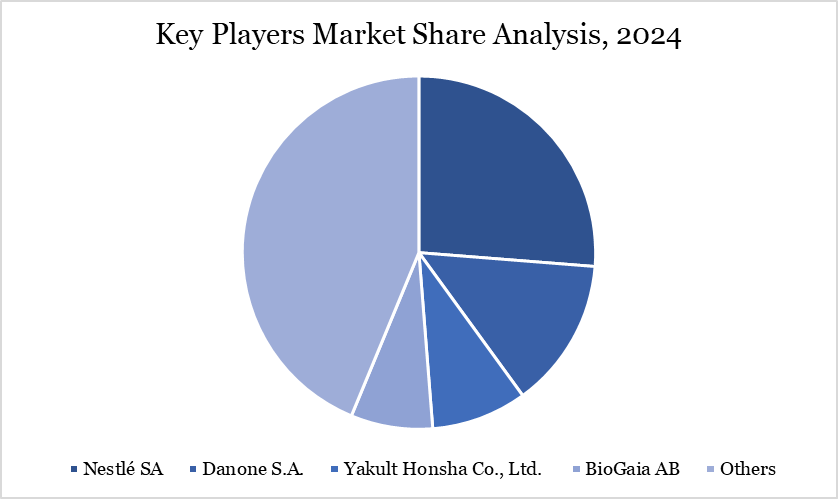
The major global players in the market include Nestlé SA, Danone S.A., Yakult Honsha Co., Ltd., BioGaia AB, Procter & Gamble, Now Foods, DSM-Firmenich, Kemin Industries, Chr. Hansen Holding A/S, Evonik Industries and others.
Key Developments
April 2026: The United States increased investments in microbiome research and digestive health innovation, supporting development of advanced probiotic products and personalized gut health solutions for preventive healthcare and wellness applications.
March 2026: Japan strengthened functional food and nutraceutical initiatives, driving demand for probiotic ingredients and gut health products designed to support digestive wellness, immunity, and healthy aging.
February 2026: Yakult Honsha Co., Ltd. expanded research and development activities focused on probiotic strains and microbiome science, strengthening its portfolio of gut health products across global markets.
January 2026: Healthcare organizations and nutrition companies increased investments in microbiome-based health solutions, supporting growing consumer demand for digestive health, immune support, and preventive wellness products.
December 2025: Probiotic manufacturers accelerated development of next-generation formulations incorporating clinically studied bacterial strains, enhancing efficacy and targeted health benefits.
November 2025: Danone S.A. strengthened its digestive health portfolio through innovation in probiotic dairy products and functional nutrition solutions aimed at supporting gut microbiome balance.
October 2025: Industry participants expanded production capabilities for probiotic supplements, functional foods, and beverages to meet rising global demand for gut health products.
September 2025: India increased investments in nutraceutical manufacturing and digestive health awareness programs, supporting growth in probiotic consumption and functional food adoption.
July 2025: Nestlé Health Science advanced microbiome research initiatives and expanded development of probiotic-based nutritional products targeting digestive and immune health.
May 2025: Companies increased investments in personalized nutrition platforms and microbiome testing technologies, enabling more tailored probiotic recommendations and gut health management strategies.
March 2025: Strategic collaborations between biotechnology firms, academic institutions, and nutrition companies accelerated research into microbiome science and the development of innovative probiotic formulations.
January 2025: Governments across North America, Europe, and Asia-Pacific supported research into nutrition, preventive healthcare, and microbiome science, contributing to long-term growth and innovation in the probiotics and gut health market.
Why Choose DataM?
- Data-Driven Insights: Dive into detailed analyses with granular insights such as pricing, market shares and value chain evaluations, enriched by interviews with industry leaders and disruptors.
- Post-Purchase Support and Expert Analyst Consultations: As a valued client, gain direct access to our expert analysts for personalized advice and strategic guidance, tailored to your specific needs and challenges.
- White Papers and Case Studies: Benefit quarterly from our in-depth studies related to your purchased titles, tailored to refine your operational and marketing strategies for maximum impact.
- Annual Updates on Purchased Reports: As an existing customer, enjoy the privilege of annual updates to your reports, ensuring you stay abreast of the latest market insights and technological advancements. Terms and conditions apply.
- Specialized Focus on Emerging Markets: DataM differentiates itself by delivering in-depth, specialized insights specifically for emerging markets, rather than offering generalized geographic overviews. This approach equips our clients with a nuanced understanding and actionable intelligence that are essential for navigating and succeeding in high-growth regions.
- Value of DataM Reports: Our reports offer specialized insights tailored to the latest trends and specific business inquiries. This personalized approach provides a deeper, strategic perspective, ensuring you receive the precise information necessary to make informed decisions. These insights complement and go beyond what is typically available in generic databases.
Target Audience
- Manufacturers/ Buyers
- Industry Investors/Investment Bankers
- Research Professionals
- Emerging Companies



























































