


Multispecific Antibodies Market Size
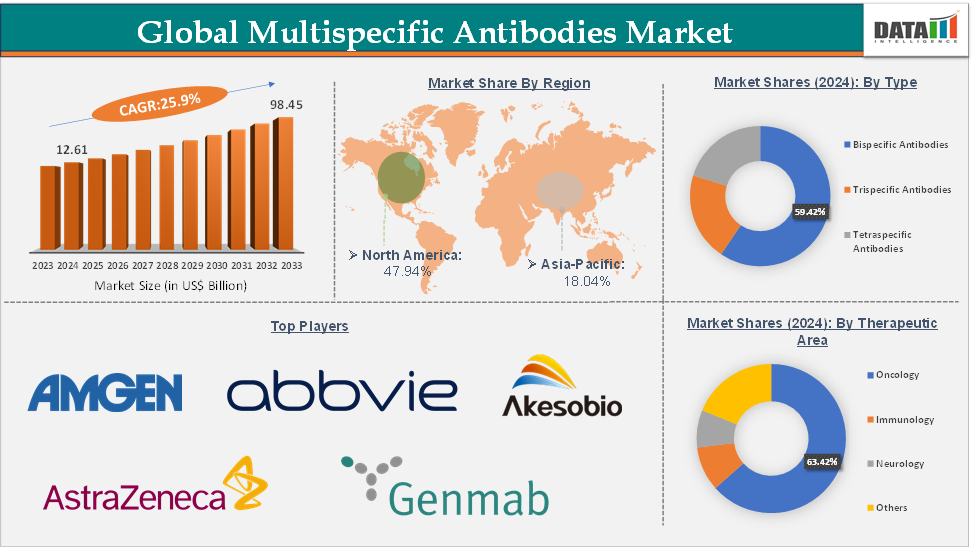
The multispecific antibodies market reached US$ 15.87 billion in 2025 and is expected to reach US$ 125.11 billion by 2035, growing at a CAGR of 25.9% during the forecast period 2026-2035.
The multispecific antibodies market is rapidly evolving as a transformative segment within the biopharmaceutical industry, driven by the growing need for innovative therapies that can simultaneously engage multiple targets. Unlike traditional monoclonal antibodies, multispecific antibodies are engineered to bind two or more antigens or epitopes, providing enhanced therapeutic efficacy, improved safety profiles, and the potential to overcome resistance mechanisms seen in complex diseases, especially cancer.
Companies that can navigate the technical complexities and safety challenges while delivering differentiated and cost-effective therapies will lead this dynamic market. The integration of multispecific antibodies into combination regimens and personalized treatment paradigms will further enhance their value proposition and adoption globally.
Multispecific Antibodies Market Key Takeaways
- The market reached USD 15.87 billion in 2025 and is projected to exceed USD 125 billion by 2035 based on CAGR calculations.
- Oncology remains the largest revenue contributor, accounting for 63.42% of therapeutic area revenue in 2024.
- North America represented 47.94% of the global market in 2024, supported by strong biotechnology innovation and regulatory leadership.
- Asia-Pacific accounted for 18.04% of market share and is expected to record the fastest expansion due to healthcare investments and increasing disease burden.
- More than 700 multispecific antibody candidates are currently under development, demonstrating a highly active innovation pipeline.
- Regulatory approvals continue to increase globally, improving physician confidence and accelerating commercialization of advanced multispecific platforms.
Multispecific Antibodies Market Scope
| Metrics | Details |
| Market Size (2025) | USD 15.87 Billion |
| Market Size (2035) | USD 125.11 Billion |
| CAGR (2026-2035) | 25.90% |
| Historic Years | 2023-2024 |
| Base Year | 2025 |
| Forecast Period | 2026-2035 |
| Segments Covered | Type, Therapeutic Area, End User, Region |
| Leading Region | North America |
| Fastest Growing Region | Asia-Pacific |
Multispecific Antibodies Market Executive Summary
Multispecific Antibodies Market Dynamics
Drivers:
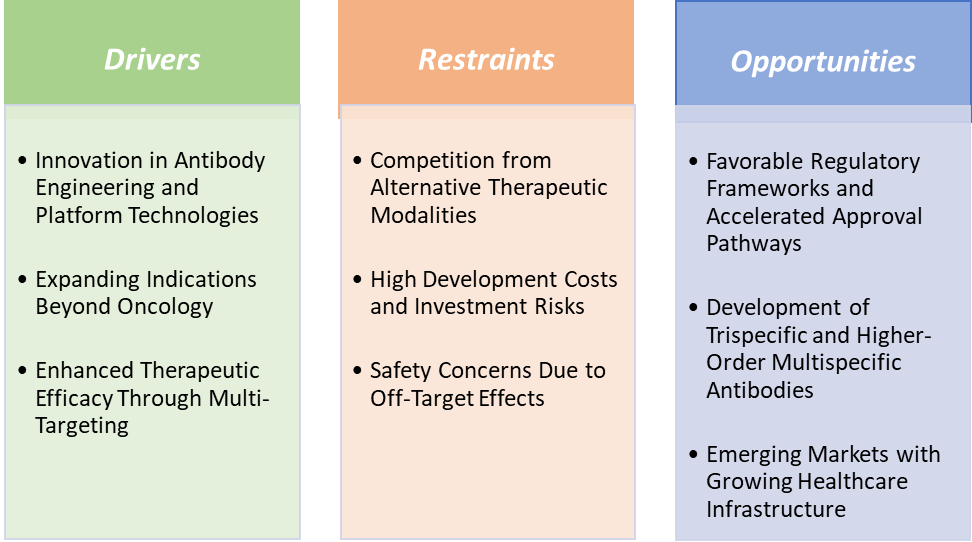
Innovation in antibody engineering and platform technologies is significantly driving the multispecific antibodies market growth
The multispecific antibodies market’s rapid expansion is largely fueled by breakthroughs in antibody engineering and innovative platform technologies that enable precise design, enhanced efficacy, and improved safety of multispecific formats. BiTE (Bispecific T-cell Engager) by Amgen is a pioneering platform that led to the approval of Blincyto (blinatumomab), the first bispecific antibody for cancer, targeting CD19 on B-cells and CD3 on T-cells. Blincyto’s commercial success validates the platform’s clinical and commercial potential.
DuoBody Technology by Genmab is a platform that allows efficient generation of bispecific antibodies with controlled assembly and superior stability. Products like Epcoritamab (CD3xCD20) are showing promising clinical results in non-Hodgkin lymphoma, with ongoing phase 3 trials expected to boost market uptake.
DART (Dual-Affinity Re-Targeting) by Macrogenics enables the generation of bispecifics with enhanced binding affinity and half-life. The platform’s versatility is helping Macrogenics advance multiple candidates in oncology and immuno-oncology. These technologies accelerate development, expand therapeutic scope, and increase success rates, translating into market adoption and growth.
Expanding indications beyond oncology is also driving the multispecific antibodies market growth
While oncology remains the primary focus, multispecific antibodies are increasingly being developed for autoimmune diseases, infectious diseases, and rare genetic disorders. This expansion diversifies market opportunities, reducing dependence on oncology and tapping into large patient populations with unmet medical needs.
Multispecific antibodies targeting multiple immune checkpoints or inflammatory mediators can offer improved efficacy and safety profiles in diseases like rheumatoid arthritis, psoriasis, and multiple sclerosis. This area is expected to grow rapidly due to the chronic nature of these diseases and increasing prevalence globally.
Multispecific antibodies provide targeted approaches for diseases with complex pathophysiology involving multiple molecular pathways. For instance, bispecific antibodies targeting coagulation factors are being explored for hemophilia. These indications offer high-value niche markets with potential for premium pricing.
Restraints:
Competition from alternative therapeutic modalities is hampering the growth of the multispecific antibodies market
CAR-T (Chimeric Antigen Receptor T-cell) therapies have revolutionized cancer treatment by enabling patients’ T-cells to directly target and kill tumor cells. Products like Kymriah (Novartis) and Yescarta (Gilead) have shown remarkable efficacy in hematologic cancers, capturing significant market share. The CAR-T therapies are creating stiff competition for multispecific antibodies, especially in oncology. CAR-T’s potential for durable remission makes it a preferred option for some patients, limiting the adoption of multispecific antibodies.
ADCs combine monoclonal antibodies with potent cytotoxic drugs, delivering targeted killing of cancer cells. Approved ADCs like Kadcyla (Roche) and Enhertu (AstraZeneca) have gained widespread acceptance due to their efficacy and improved safety profiles. ADCs often compete with multispecific antibodies for similar indications, particularly in breast and hematologic cancers, posing a challenge for multispecific antibodies to differentiate and justify premium pricing.
Small-molecule kinase inhibitors remain cost-effective and widely used for various cancers. Immune checkpoint inhibitors dominate immuno-oncology with broad indications and clinical benefits. These therapies’ established presence and reimbursement advantages limit multispecific antibodies’ market penetration, especially where they are well-tolerated and effective.
Opportunities:
Emerging markets with growing healthcare infrastructure create a market opportunity for the multispecific antibodies market
Emerging economies such as China, India, Brazil, and Southeast Asian countries are heavily investing in modernizing healthcare infrastructure, building advanced hospitals, improving diagnostic capabilities, and expanding healthcare access. Improved infrastructure enables the adoption of complex biologics like multispecific antibodies, which require specialized handling and administration.
These regions are witnessing rapid increases in cancer incidence, autoimmune diseases, and infectious diseases due to aging populations, urbanization, and lifestyle changes. Government initiatives, insurance expansions, and patient assistance programs are improving affordability and access to advanced therapies. Pharmaceutical companies are partnering with local firms to offer cost-effective distribution and localized manufacturing, enhancing market penetration.
Multinational companies like Amgen, Genmab, and Regeneron are collaborating with regional biotech firms and contract manufacturers to overcome regulatory and logistical challenges. Local production reduces costs and delivery times, making multispecific antibodies more accessible in emerging markets.
For more details on this report, Request for Sample
Multispecific Antibodies Market, Segment Analysis
The global multispecific antibodies market is segmented based on type, therapeutic area, end-user, and region.
Oncology from the therapeutic area segment is expected to hold 63.42% of the market share in 2025 in the multispecific antibodies market
Cancer remains a leading cause of mortality worldwide, with complex tumor biology and resistance to standard therapies driving demand for innovative treatments. Multispecific antibodies can simultaneously target multiple tumor antigens or engage immune effector cells, offering superior efficacy over conventional monoclonal antibodies. This capability addresses tumor heterogeneity and immune evasion, critical challenges in oncology.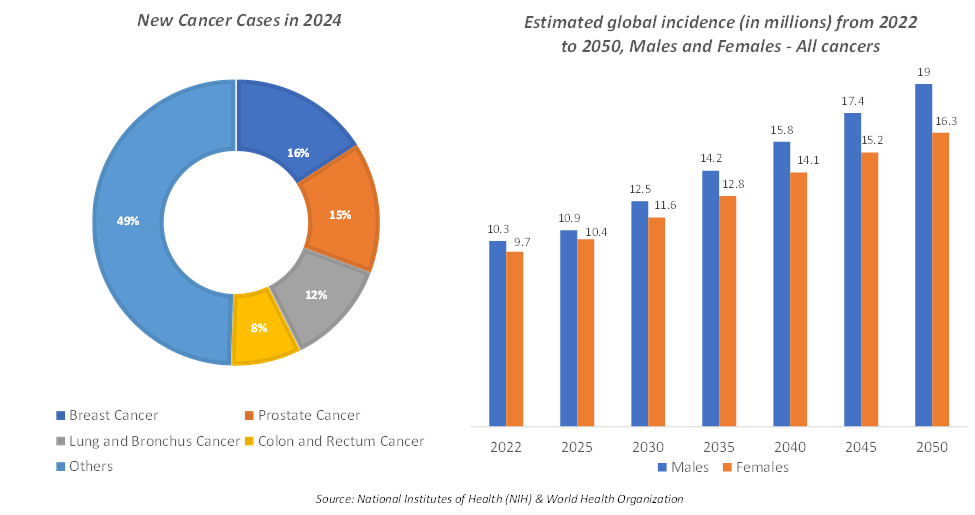
The majority of multispecific antibodies under clinical development or already approved are designed for oncology indications. Blinatumomab (Blincyto) by Amgen, a bispecific T-cell engager targeting CD19 and CD3, was the first FDA-approved bispecific antibody for treating acute lymphoblastic leukemia (ALL). Genmab’s Epcoritamab, a CD3xCD20 bispecific antibody, is in late-stage clinical trials for non-Hodgkin lymphoma with promising results. The oncology segment accounts for the largest share of the multispecific antibodies market, estimated at over 60-70% of market revenue in 2024.
Multispecific Antibodies Market, Geographical Analysis
North America is expected to dominate the global multispecific antibodies market with a 47.94% share in 2025
North America, particularly the U.S., hosts leading biotechnology and pharmaceutical companies pioneering multispecific antibody research and development. Industry leaders like Amgen, Genmab, Macrogenics, Xencor, and Regeneron are based in or have significant operations in the region, driving product innovation and commercialization through various clinical trials, which is driving the growth of the market in the region.
For instance, in June 2025, Genmab A/S announced new results from the Phase 1b/2 EPCORE NHL-2 trial Arm 10 (NCT04663347), evaluating epcoritamab, a T-cell engaging bispecific antibody administered subcutaneously, in combination with rituximab, ifosfamide, carboplatin, and etoposide (R-ICE) in adult patients with relapsed/refractory diffuse large B-cell lymphoma (R/R DLBCL) who are eligible for autologous stem cell transplantation (ASCT). Results demonstrated an overall response rate (ORR) of 87 percent, a complete response (CR) rate of 65 percent, and a partial response (PR) of 23 percent.
The U.S. reports high incidence rates of cancers, fueling demand for innovative multispecific antibody therapies. Early approvals of key multispecific antibodies, such as Blinatumomab (Amgen), have spurred clinical adoption and commercial success in North America.
Asia-Pacific is growing at the fastest pace in the multispecific antibodies market holding 18.04% of the market share
The Asia-Pacific region’s fastest growth in the multispecific antibodies market is driven by increasing disease burden, expanding healthcare infrastructure, supportive regulatory reforms, and vibrant local biopharma innovation. These factors combine to create a dynamic market with accelerating adoption and development of multispecific antibody therapies. APAC is experiencing a sharp rise in cancer cases and autoimmune disorders due to population growth, aging demographics, and lifestyle changes. For instance, China and India together account for over 35% of global cancer cases, driving strong demand for advanced therapies like multispecific antibodies, which drives the market growth in the region.
Multispecific Antibodies Market Competitive Landscape
Top companies in the multispecific antibodies market include Amgen Inc., AbbVie Inc., Akeso Biopharma Co., Ltd., AstraZeneca, Johnson & Johnson Services, Inc., Merck & Co., Inc., Regeneron Pharmaceuticals Inc., Genmab A/S, Xencor, and Merus, among others.
Multispecific Antibodies Market Key Developments
February 2026: Across North America, Europe, and Asia Pacific, rising demand for targeted therapy and increasing prevalence of cancer and chronic diseases significantly accelerated adoption of multispecific antibodies, particularly in oncology and immunology applications.
January 2026: Globally, advancements in antibody engineering enabled development of bispecific, trispecific, and tetraspecific formats, improving therapeutic efficacy by targeting multiple antigens or pathways simultaneously.
December 2025: Leading companies such as Amgen, AstraZeneca, Genentech, Regeneron, and Roche expanded investments in multispecific antibody pipelines, strengthening innovation through collaborations and next-generation biologics development.
November 2025: Increasing regulatory approvals of bispecific antibodies, with over 18 approved globally, marked a major milestone, reflecting growing clinical acceptance and commercialization of multispecific platforms.
October 2025: Rising focus on clinical trials, with more than 700 multispecific antibodies in development, accelerated innovation across oncology, autoimmune, and neurological disorders.
September 2025: haskey regions including the United States, China, India, Germany, and Japan, increasing R&D investments, strategic partnerships, and expanding biopharmaceutical infrastructure significantly supported market growth.
The market is rapidly evolving toward precision immunotherapy, where advanced multispecific antibody formats, AI-driven drug design, and expanding clinical pipelines are transforming treatment approaches for complex and multi-pathway diseases.
Report Benefits
This report provides strategic intelligence for:
- Pharmaceutical manufacturers evaluating pipeline expansion and commercialization strategies.
- Biotechnology companies developing antibody engineering technologies.
- Investors assessing long-term biologics growth opportunities.
- Healthcare providers monitoring emerging precision immunotherapy treatments.
- Procurement teams evaluating future biologic adoption.
- Corporate strategy teams benchmarking competitive positioning and regional investment opportunities.
Target Audience
- Biopharmaceutical Companies
- Biotechnology Developers
- Contract Development and Manufacturing Organizations
- Pharmaceutical Investors
- Hospital Networks
- Oncology Centers
- Clinical Research Organizations
- Academic Research Institutes
- Government Healthcare Agencies
- Regulatory Authorities
- Venture Capital Firms
- Healthcare Procurement Teams
Conclusion
Multispecific antibodies are becoming an increasingly important component of precision medicine, supported by continuous advances in antibody engineering, expanding clinical evidence, and broader therapeutic applications beyond oncology. Strong pipeline activity, increasing regulatory approvals, and growing investment from established pharmaceutical companies indicate sustained commercial momentum through 2035.
Success within this market will depend on technological differentiation, efficient manufacturing, clinical validation across multiple indications, and the ability to compete effectively with alternative immunotherapies such as CAR-T therapies and antibody-drug conjugates. Organizations that combine innovative platform technologies with strategic partnerships, scalable production capabilities, and global commercialization strategies will be best positioned to capture long-term value as multispecific antibodies become a larger segment of the global biologics industry.




























































