


Electronic Waste Recycling Market Size
Global Electronic Waste Recycling Market reached US$ 44.61 billion in 2025 and is expected to reach US$ 76.92 billion by 2035, growing with a CAGR of 5.6% during the forecast period 2026-2035.
The global electronic waste (e-waste) recycling market is experiencing significant growth, driven by the escalating consumption of electronic devices and the need for sustainable disposal solutions. Rapid technological advances are shortening device lifespans and increasing e-waste generation.
Electronic Waste Recycling Market Trends
Adoption of Advanced Recycling Technologies
The e-waste recycling industry is increasingly embracing innovative technologies to enhance the efficiency and effectiveness of material recovery. For instance, the UK's Royal Mint has implemented a pioneering process to extract precious metals from circuit boards at room temperature, eliminating the need for incineration and reducing environmental impact. This facility is designed to process 4,000 tons of circuit boards annually, recovering significant quantities of gold, silver, copper and palladium.
Expansion of Producer Responsibility Regulations
Governments worldwide are expanding Extended Producer Responsibility (EPR) regulations, mandating manufacturers to manage the end-of-life disposal of their products. In California, for example, recent legislation requires e-waste recyclers to submit payment claims for battery-embedded products by January 1, 2025. Such policies are incentivizing companies to design products with recycling in mind and invest in sustainable disposal methods.
For more details on this report, Request for Sample
Electronic Waste Recycling Market Key Takeaways
- The market generated US$ 44.61 billion in 2025 and is projected to exceed US$ 76 billion by 2035, highlighting sustained demand for recycling infrastructure.
- Mobile computing devices remain the largest source of recyclable electronic waste due to rapid replacement cycles and growing consumer electronics adoption.
- Expansion of Extended Producer Responsibility (EPR) regulations is encouraging manufacturers to invest in sustainable end-of-life product management.
- Recovery of valuable materials, including gold, silver, copper, palladium, and rare earth elements, is improving the commercial viability of electronic waste recycling.
- North America maintains market leadership through strong regulatory support, mature recycling infrastructure, and active corporate participation.
- Advanced recovery technologies that improve metal extraction efficiency while lowering environmental impact are becoming major competitive differentiators.
Electronic Waste Recycling Market Scope
| Metrics | Details |
| Market Size (2025) | US$ 44.61 Billion |
| Forecast Market Size (2035) | US$ 76.92 Billion |
| CAGR | 5.6% (2026-2033) |
| Historic Years | 2023-2024 |
| Base Year | 2025 |
| Forecast Period | 2026-2035 |
| Segments Covered | Material, Source, Technology, Application and Region |
| Leading Region | North America |
| Fastest Growing Region | Asia-Pacific |
Electronic Waste Recycling Market Dynamics
Driver: Increasing Consumption of Electronic Devices
The proliferation of electronic devices across the globe is a significant driver for the e-waste recycling market. As technology becomes more integral to daily life, the volume of obsolete and discarded electronics continues to rise. This surge in e-waste necessitates efficient recycling solutions to recover valuable materials and mitigate environmental hazards.
According to the Global E-waste Statistics Partnership, approximately 53.6 million metric tonnes of e-waste were generated worldwide, with projections indicating a continual increase. The recovery of precious metals such as gold, silver and copper from e-waste not only conserves natural resources but also offers economic incentives, further propelling market growth.
Restraint: High Cost of Recycling Processes
Despite the benefits, the e-waste recycling market faces challenges due to the high costs associated with recycling processes. Advanced technologies required for efficient material recovery involve substantial investment and the complex composition of electronic devices makes recycling labor-intensive and expensive. Additionally, inadequate infrastructure and lack of standardized regulations in certain regions hinder the establishment of effective recycling systems. These factors can deter investment and slow down the adoption of recycling initiatives, posing a restraint to market expansion.
Segmentation Analysis
Segmented by Material, by Source, by Technology, by Application, and by Region - Share, Trends, and Forecast to 2035.
Among source categories, mobile computing devices represent the largest share of the electronic waste recycling market. Smartphones, tablets, laptops, and portable electronic devices are replaced more frequently than many other electronic products, generating substantial recyclable volumes each year.
These devices contain valuable precious metals, including gold, silver, copper, and rare earth elements, making them commercially attractive for recycling companies. Increasing adoption of trade-in programs, refurbishment initiatives, and design-for-disassembly strategies is further supporting higher material recovery rates while extending product lifecycles.
Across technology segments, continuous improvements in automated sorting, material separation, and precious metal extraction are enabling recyclers to maximize recovery efficiency while minimizing environmental impact.
Electronic Waste Recycling Market Regional Analysis
North America Electronic Waste Recycling Market
North America accounts for the largest share of the global electronic waste recycling market. High ownership of electronic devices, established recycling infrastructure, and comprehensive environmental regulations support consistent market expansion.
Several U.S. states have implemented Extended Producer Responsibility legislation that requires manufacturers to finance electronic waste collection and recycling activities. Collaboration among government agencies, private recyclers, and nonprofit organizations continues to strengthen collection efficiency and recycling capacity throughout the region.
Europe Electronic Waste Recycling Market
Europe continues to benefit from ambitious circular economy policies and stringent waste management regulations. Countries including Germany, France, and the Netherlands are investing heavily in electronic waste collection systems and advanced material recovery facilities.
Growing emphasis on recovering strategic metals from discarded electronics supports regional sustainability objectives while reducing dependence on imported raw materials.
Asia-Pacific Electronic Waste Recycling Market
Asia-Pacific is expected to experience strong growth due to rapid urbanization, expanding consumer electronics markets, increasing manufacturing activity, and rising government investments in formal recycling infrastructure.
China is strengthening electronic waste processing capacity through regulatory reforms, while Japan continues to expand urban mining initiatives focused on recovering precious metals and rare earth materials. India is also increasing investments in organized collection networks and environmentally responsible recycling facilities.
Key Developments
August 2026: Europe continued strengthening electronic waste recycling as the region sought to recover critical raw materials from discarded electronics. Europe currently recycles 42.8% of generated e-waste, while new initiatives are increasingly focusing on component reuse and recovery of rare earth elements.
July 2026: North America increased its focus on domestic e-waste recycling and critical-mineral recovery. The U.S. introduced measures targeting exports of e-waste containing materials such as tungsten and lithium, encouraging greater domestic processing capacity.
June 2026: Asia-Pacific continued representing a major e-waste generation and recycling region, with countries investing in collection infrastructure, formal recycling facilities, and recovery of valuable metals. Asia generated almost 30 billion kg of e-waste in 2022, nearly half of the global total.
May 2026: Recycling companies increasingly focused on automated sorting, advanced metal recovery, hydrometallurgical processing, component reuse, and precious-metal extraction to improve recovery efficiency and increase the economic value of discarded electronics.
April 2026: Sims Lifecycle Services expanded electronic waste recycling operations across North America and Europe, enhancing recovery capabilities for valuable metals, plastics, and critical materials from discarded electronic devices.
March 2026: Umicore strengthened investments in advanced e-waste processing technologies, improving the recovery of precious metals and supporting circular economy initiatives within the electronics and battery industries.
February 2026: ERI (Electronic Recyclers International) expanded its certified electronics recycling infrastructure, focusing on secure data destruction, asset recovery, and responsible disposal of end-of-life electronic equipment.
January 2026: The United States increased investments in e-waste collection and recycling programs, supporting sustainable management of discarded consumer electronics, IT equipment, and industrial electronic devices.
December 2025: Veolia enhanced its electronic waste recycling capabilities through advanced material recovery technologies, improving resource efficiency and reducing landfill disposal of electronic products.
November 2025: Japan accelerated development of urban mining and electronics recycling initiatives, focusing on recovering rare earth elements, precious metals, and strategic materials from end-of-life electronics.
October 2025: Waste Management Inc. expanded electronic waste collection and recycling services, supporting growing demand for responsible disposal and resource recovery solutions across commercial and residential sectors.
September 2025: China strengthened regulations and investments in electronic waste processing infrastructure, increasing recycling capacity and improving recovery rates for valuable materials from consumer electronics.
July 2025: Stena Recycling expanded advanced recycling operations for electronic waste across Europe, supporting sustainable material recovery and circular economy objectives within the electronics value chain.
May 2025: Europe increased investments in e-waste management and recycling systems across Germany, France, and the Netherlands, encouraging higher collection rates and efficient recovery of critical raw materials.
March 2025: Boliden AB enhanced precious metal recovery technologies from electronic scrap, improving recycling efficiency and supporting sustainable sourcing of materials used in electronics manufacturing.
January 2025: India accelerated investments in formal electronic waste recycling infrastructure and collection networks, supporting environmentally responsible disposal practices and strengthening the domestic circular economy ecosystem.
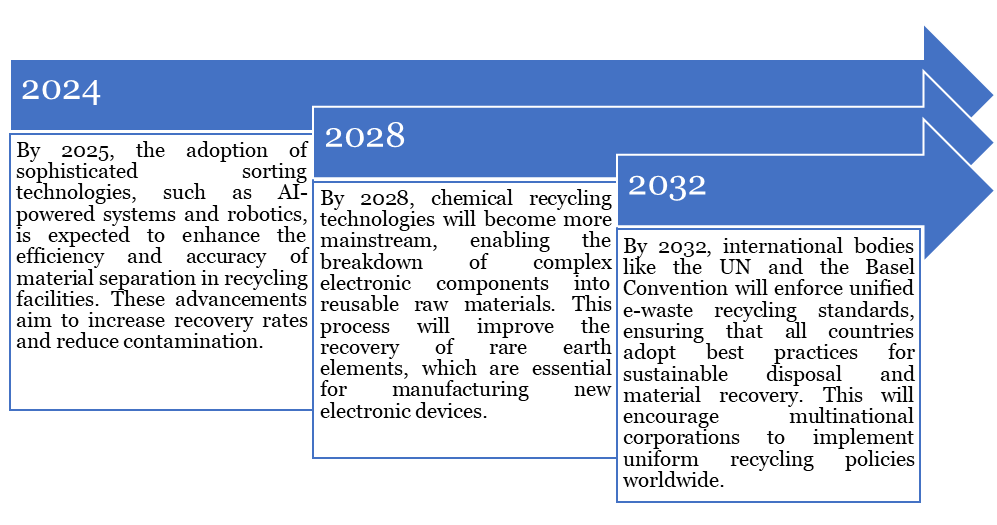
Technology Roadmap
The global Electronic Waste Recycling market is expected to evolve significantly over the coming years, driven by advancements in network infrastructure, the expansion of IoT and the increasing adoption of artificial intelligence (AI) at the edge. Government initiatives, regulatory frameworks and private sector investments are set to accelerate AI adoption in cybersecurity across multiple industries.
Technology Roadmap of Electronic Waste Recycling
Major Global Players
The major Global players in the market include Aurubis AG, Boliden Group, Desco Electronic Recyclers, EcoCentric, ENVIRO-HUB HOLDINGS LTD., ERI, Greentec, Kuusakoski, MRITECHNOLOGIES, Namo eWaste Management Ltd.
Why Choose DataM?
- Data-Driven Insights: Dive into detailed analyses with granular insights such as pricing, market shares, and value chain evaluations, enriched by interviews with industry leaders and disruptors.
- Post-Purchase Support and Expert Analyst Consultations: As a valued client, gain direct access to our expert analysts for personalized advice and strategic guidance, tailored to your specific needs and challenges.
- White Papers and Case Studies: Benefit quarterly from our in-depth studies related to your purchased titles, tailored to refine your operational and marketing strategies for maximum impact.
- Annual Updates on Purchased Reports: As an existing customer, enjoy the privilege of annual updates to your reports, ensuring you stay abreast of the latest market insights and technological advancements. Terms and conditions apply.
- Specialized Focus on Emerging Markets: DataM differentiates itself by delivering in-depth, specialized insights specifically for emerging markets, rather than offering generalized geographic overviews. This approach equips our clients with a nuanced understanding and actionable intelligence that are essential for navigating and succeeding in high-growth regions.
- Value of DataM Reports: Our reports offer specialized insights tailored to the latest trends and specific business inquiries. This personalized approach provides a deeper, strategic perspective, ensuring you receive the precise information necessary to make informed decisions. These insights complement and go beyond what is typically available in generic databases.
Target Audience
- Manufacturers and Buyers
- Industry Investors and Investment Bankers
- Research Professionals
- Emerging Companies
Conclusion
The electronic waste recycling market is becoming increasingly important as governments, manufacturers, and consumers prioritize sustainable resource management and circular economy initiatives. Rising electronic device consumption, stronger environmental regulations, and growing demand for critical raw material recovery will continue to support market expansion through 2035. Organizations investing in advanced recycling technologies, efficient recovery processes, and integrated collection networks will be better positioned to capitalize on evolving regulatory requirements and increasing global demand for responsible electronic waste management.




























































