


Rare Earth Elements Market Overview
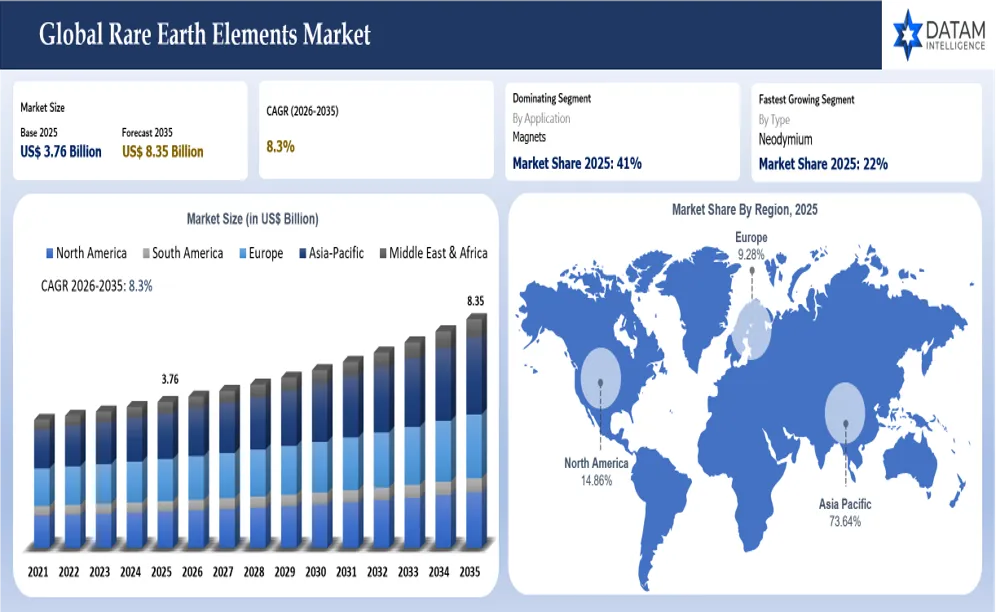
The global Rare Earth Elements Market reached US$ 3.76 billion in 2025 and is expected to reach US$ 8.35 billion by 2035, growing with a CAGR of 8.3% during the forecast period 2026-2035.
The market for Rare Earth Elements globally is fueled by increasing demand for high-quality rare earth elements that have applications in permanent magnets, catalysts, metal alloys, glass and ceramics, polishing compounds and electronics. Neodymium, praseodymium, dysprosium and terbium are especially significant in the manufacture of NdFeB permanent magnets that are used in electric vehicles, wind turbine generators and robotics among others.
The concentration in the supply chain is impacting market dynamics and China continues to dominate rare earth mining, separation, refining and permanent magnets production. On the other hand, there is an increased investment in mining and processing outside China, non-rare earth heavy mining, recycling and mine to magnet integrated supply chains in North America, Australia, Europe and Asia. These trends are enhancing diversification in the supply chain and will help sustain long-term demand for rare earth elements.
Rare Earth Elements Market Key Takeaways
- Permanent Magnets represented the largest application segment in 2025, accounting for approximately 41.8% of total market demand, driven by increasing adoption in electric vehicles, wind turbines, industrial automation and robotics.
- Neodymium and Praseodymium (NdPr) remain the most commercially significant rare earth elements, owing to their essential role in high-performance permanent magnets used in EV traction motors, wind-energy systems and advanced industrial equipment.
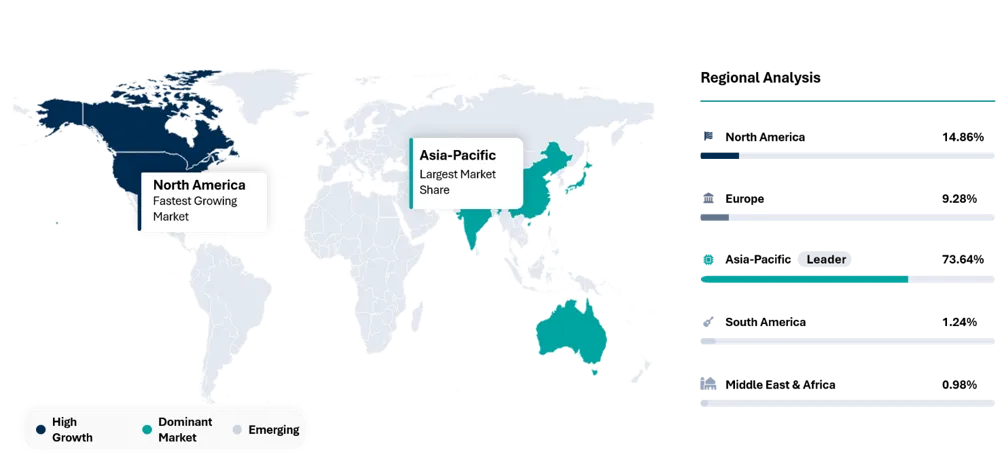
- Asia-Pacific dominated the global Rare Earth Elements Market in 2025, accounting for approximately 73.64% market share, supported by its extensive rare earth mining and processing capabilities and strong concentration of EV, electronics, permanent-magnet and renewable-energy manufacturing.
- Rare earth recycling is emerging as an important secondary supply source, with increasing efforts to recover neodymium, praseodymium, dysprosium and terbium from end-of-life EV motors, wind-turbine generators, hard-disk drives and permanent magnets.
- Supply-chain diversification is becoming a major strategic priority, with governments and companies increasing investments in rare earth mining, separation, refining, recycling and permanent-magnet manufacturing to reduce dependence on concentrated supply sources and strengthen long-term supply security.
Rare Earth Elements Market Scope
| Metrics | Details | |
| 2025 Market Size | US$ 3.76 Billion | |
| 2035 Projected Market Size | US$ 8.35 Billion | |
| CAGR (2026-2035) | 8.3% | |
| Largest Market | Asia-Pacific | |
| Fastest Growing Market | Asia-Pacific | |
| By Type | Metals and Compounds | |
| By Source | Bastnäsite, Loparite, Monazite, Rare-earth Laterite, Xenotime and Others | |
| By Application | Magnets, Catalyst, Metal Alloys, Polishing, Ceramics/Glass, Additives and Others | |
| By End-User | Industrial, Automotive, Glass, Fluorescent Lighting, Electronics and Others | |
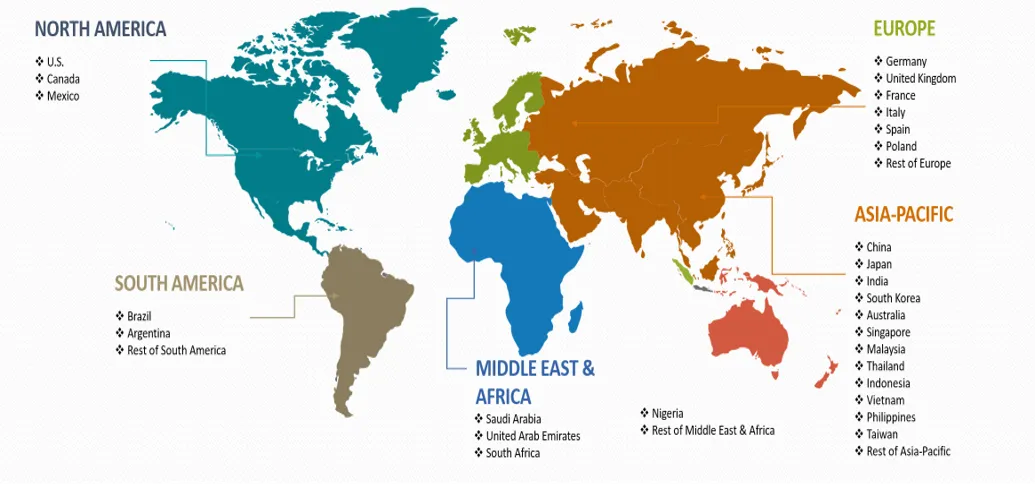
| By Region | North America | U.S., Canada, Mexico |
| Europe | Germany, UK, Russia, France, Spain, Italy, Poland | |
| Asia-Pacific | China, India, Japan, Australia, South Korea, Indonesia, Malaysia, Singapore, Vietnam, Thailand, Philippines, Taiwan | |
| South America | Brazil, Argentina | |
| Middle East and Africa | UAE, Saudi Arabia, South Africa, Israel, Turkiye, Nigeria | |
| Report Insights Covered | Competitive Landscape Analysis, Company Profile Analysis, Market Size, Share, Growth | |
Rare Earth Elements Market White Space & Investment Opportunities
- Non-China rare earth separation and refining capacity: The development of plants that can refine neodymium, praseodymium, dysprosium and terbium is a major whitespace opportunity since manufacturers will be looking for alternative supplies of rare earth materials for manufacturing magnets.
- Heavy rare earth development: Opportunities to develop dysprosium and terbium supply present major whitespaces as these two metals are essential for increasing the temperature performance of the NdFeB magnets that are used in electric vehicle motors and wind turbine generators.
- Rare earth magnet recycling: Technologies and systems that recycle rare earth elements from electric vehicle (EV) motors, wind turbines’ generators, hard drives and other end-of-life products can provide an important secondary source of magnet materials.
- Integrated mine-to-magnet supply chains: Firms operating within the entire value chain from rare earth mining to NdFeB magnet manufacturing can add more value to their operations while minimizing the risk associated with supply interruptions along each stage of the value chain.
- India-based rare earth processing and magnet manufacturing: There are opportunities for firms developing their own capacity for rare earth processing, refining, alloying and magnet manufacturing due to India’s efforts in securing supply chains for EVs, renewable energy, electronics and other strategic sectors.
Rare Earth Elements Market Buyer Decision-Making Criteria
The pricing consideration alone does not guide the choice of suppliers for the buyers of Rare Earth Elements as there are several considerations related to the purity of the elements and their grade uniformity, reliability of supply, ability of processing and traceability of material. The presence of the neodymium, praseodymium, dysprosium and terbium is especially significant for the makers of permanent magnets since even small variations in their composition can affect the efficiency of the magnet production process. Buyers also assess suppliers on the basis of their capacity to supply consistent quantities through long-term contracts, especially of magnet grade rare earth metals.
Major decision-making criteria:
- Rare earth element purity and grade
- NdPr, dysprosium and terbium content
- Chemical composition consistency
- Supply availability and volume capacity
- Long-term supply contract reliability
- Price competitiveness and pricing stability
- Processing and separation capabilities
- Product specification and quality consistency
- Geographic diversification of supply
- Traceability and origin of materials
- Environmental and responsible-mining compliance
- Regulatory and export-control compliance
- Delivery reliability and logistics infrastructure
- Technical support and customization capability
- Supplier reputation and financial stability
Rare Earth Elements Market BCG Matrix: Company Evaluation
STAR
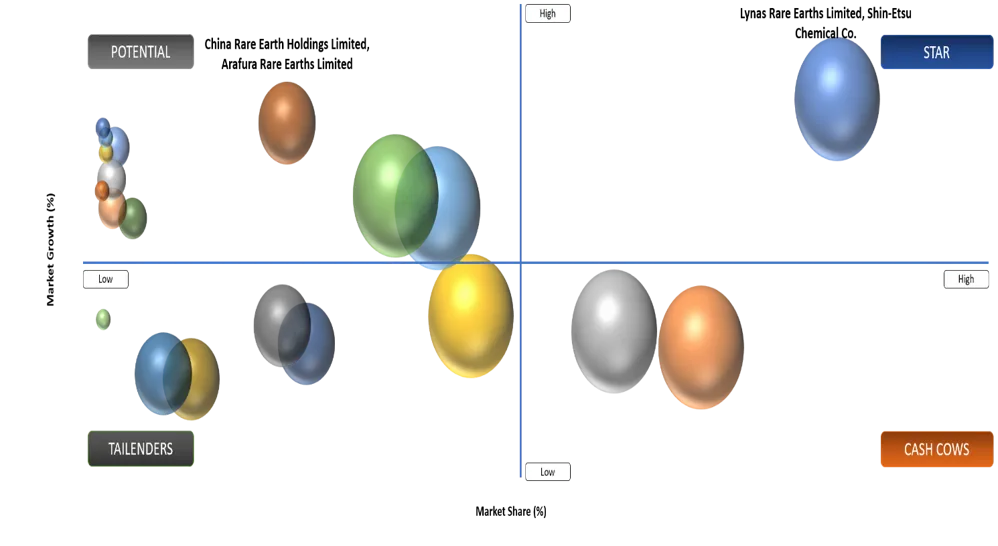
Star companies will be able to capitalize on the high demand for magnet-grade rare earth elements by increasing their mining, separation, refining and other downstream processes. Strategic position of Lynas Rare Earths Limited, Shin-Etsu Chemical Co., Ltd. and Iluka Resources Limited includes rare earth mining, refining, separated products and permanent magnet related businesses. The involvement of these companies in NdPr, heavy rare earths, permanent magnets, EVs, renewable energy and advanced manufacturing will drive their growth prospects as customers will be looking for diversified and secured rare earth sources.
POTENTIAL
The Potential category consists of China Rare Earth Holdings Limited, Arafura Rare Earths Limited, Avalon Advanced Materials Inc., Canada Rare Earth Corporation, Eutectix LLC, Rare Element Resources Ltd. and Alkane Resources Ltd. These companies have potential for growth through projects involving rare earth resources development, processing, refinement, technological advancements and alternate supply chain. Future market potential of these companies will be dependent on various criteria such as financing of projects, approval of regulatory bodies, large scale processing, development of resources, technological advancement and conversion of resources to rare earth product.
Rare Earth Elements Market Dynamics
Driver Impact Analysis
| Driver | Market Growth Impact (%) | Demand Concentration | Impacted Use Case | Strategic Impact |
Rising adoption of EVs and high-performance electric motors | 28% | Neodymium, Praseodymium | EV traction motors | Accelerates demand for magnet-grade NdPr and secure rare earth supply |
Expansion of wind power generation | 18% | Neodymium, Praseodymium, Dysprosium, Terbium | Wind-turbine generators | Supports demand for high-performance permanent magnets |
Growth in robotics and industrial automation | 13% | Neodymium, Dysprosium, Terbium | Servo motors and actuators | Increases demand for compact, high-strength rare earth magnets |
Supply-chain diversification away from China | 21% | Dysprosium, Terbium, Neodymium, Praseodymium | Rare earth refining and magnet production | Drives investment in non-Chinese mining, processing, recycling and magnet capacity |
Driver: Rising Demand for Rare Earth Permanent Magnets
The rising penetration of electric cars, wind turbine, robotics, automation and energy-efficient electric motors is one of the significant factors influencing the growth of the Rare Earth Elements Market. The use of neodymium and praseodymium for manufacturing high efficiency neodymium-iron-boron magnets and dysprosium and terbium for ensuring the performance of these magnets even in high temperatures makes this application sector highly dependent on the rare earth elements. Consequently, the increasing demand for smaller and lighter motors is resulting in the growing consumption of magnet-grade rare earth elements.
Restraint Impact Analysis
| Restraint | Drag on Market Growth (%) | Primary Impact Area | Impacted Use Case | Strategic Impact |
High concentration of mining and processing capacity in China | 24% | Supply security | Permanent magnets | Encourages development of alternative mining, separation and refining capacity |
Volatility in rare earth prices | 18% | Procurement costs | Magnet manufacturing | Increases long-term contracting and inventory-management requirements |
Complex and costly separation and refining processes | 16% | Processing economics | NdPr and heavy rare earth production | Creates barriers to new processing facilities and favors technologically advanced producers |
Environmental and regulatory challenges associated with mining | 14% | Project development | Rare earth extraction | Extends permitting timelines and increases compliance and project-development costs |
Restraint: High Concentration of Rare Earth Processing Capacity
The concentration of rare earth mining, separation, refining and permanent magnet manufacturing within China continues to pose a serious bottleneck for the Global Rare Earth Elements Market. Being heavily dependent on a small number of manufacturing and processing plants makes producers vulnerable to export regulations, trading restrictions, supply shortages and volatile prices, especially when it comes to the magnet-dependent elements of neodymium, praseodymium, dysprosium and terbium. Alternative sources of supply prove difficult to find because rare earth separation and refinement require expensive plant installations, special equipment, environmental considerations and long development periods.
Rare Earth Elements Market Segmentation Analysis
The global rare earth elements market is segmented based on type, source, application, end-user and region.
The metal in rare earth elements type drives the market growth
It is anticipated that the metals sector will control the market. The light elements (lanthanum through samarium) and the heavier elements make up rare earth metals (europium to lutetium). These are more expensive and less frequent. Rare earth compounds commonly glow under UV light, making identification simpler. In addition, when rare piles of earth combine with water or mild acids, hydrogen gas is produced. Rechargeable batteries for computers, cell phones and other portable electronics are made with rare earth metals. Additionally, these are utilized in numerous industries, such as automotive, glass and ceramic goods.
Rare Earth Elements Market Geographical Penetration
U.S. Rare Earth Elements Market Landscape
Market for Rare Earth Elements in the United States will develop domestic competencies in areas such as mining, separation, refining, metal alloy fabrication and manufacture of NdFeB magnets in order to decrease dependence on foreign rare earth elements. The drivers for market growth include the use of electric vehicles, wind power generators, defense technology, aerospace industry, semiconductor fabrication and advanced electronics. Magnet-related rare earth elements such as neodymium, praseodymium, dysprosium and terbium will continue to be an important component of domestic supply chain development. Market expansion is helped by investing in domestic processing plants, rare earth element separation, recycling and alliances with friendly nations.
Japan Rare Earth Elements Market Outlook
Rare Earth Elements Market in Japan is affected by its excessive dependence on rare earth imports and concern about ensuring a stable supply of rare earths to make permanent magnets for electric vehicles, robotics, electronics and high-tech manufacturing. The Japanese companies are paying more and more attention to long-term contracts, investments in overseas raw materials, rare earth recovery and development of technologies that reduce the consumption of heavy rare earths, such as dysprosium and terbium. The strengths of Japan’s rare earth industry in the field of production and processing of permanent magnets, along with diversification from Chinese suppliers, make it an important downstream market for rare earth elements.
Rare Earth Elements Market Competitive Landscape
- Chinese producers enjoy the most competitive advantage in terms of their integrated capabilities covering mining, separation, refining, alloys and manufacturing of permanent magnets within a well-developed processing and manufacturing network domestically.
- Lynas Rare Earths leads as the biggest producer not from China with its integrated operations in mining and separation as well as expansion in NdPr and heavy rare earth oxide production.
- Iluka Resources and Arafura Rare Earths are working to strengthen the supply chain away from China through projects and expansion in production of rare earths.
- Downstream processing and capabilities in magnet and material manufacturing have emerged as significant competitive differentiators for firms operating in rare earth separation, alloys, magnetic powders and specialty materials sectors.
- Diversification of supply chains has led to increased competition, especially in rare earth separation, recycling, refining in domestic environments and mine-to-magnet production process as nations and producers try to lessen their dependency on China for their supplies.
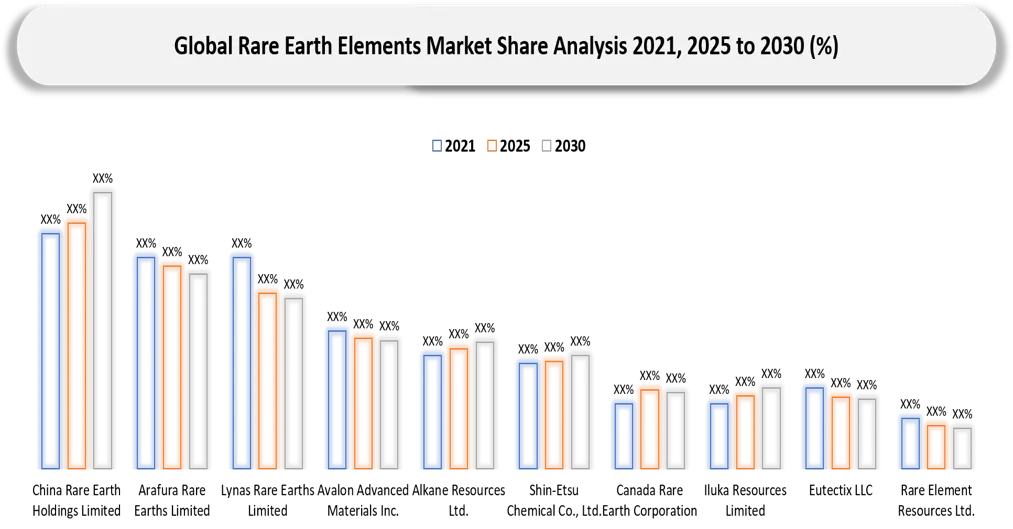
Key Companies of Rare Earth Elements Market
- China Rare Earth Holdings Limited
- Arafura Rare Earths Limited
- Lynas Rare Earths Limited
- Avalon Advanced Materials Inc.
- Alkane Resources Ltd.
- Shin-Etsu Chemical Co., Ltd.
- Canada Rare Earth Corporation
- Iluka Resources Limited
- Eutectix LLC
- Rare Element Resources Ltd.
Rare Earth Elements Market Recent Developments
- September 2026: Fastmarkets stated that the export controls expected in November 2026 will impact rare earth refining, recycling, magnet production, technology, equipment and raw materials outside of China. This particular development is especially important with regards to NdPr, dysprosium and terbium supply chains.
- August 2026 - Avalon Advanced Materials Inc.: Avalon took steps towards the development of their Nechalacho Rare Earth Project, which includes resource evaluation and seeking support from the Canadian government to carry out engineering, process validation and demonstration. This is pertinent to the market because it would help in developing a North American rare earth source.
- July 2026 - Lynas Rare Earths Limited: Lynas collaborated with JS Link to establish a 3,000 tonnes per year NdFeB permanent magnet plant in Kuantan, Malaysia. Lynas would be investing about A$50 million in JS Link and providing rare earth material to the plant through a long-term agreement.
- June 2026 - Shin-Etsu Chemical Co., Ltd.: Shin-Etsu announced that it would construct a rare earth refining plant in Fukui, Japan, thereby enhancing its capacity to refine rare earths and obtain materials for its rare earth magnet operation. The project will be awarded government subsidies of US$113 million.
- June 2026 - Iluka Resources Limited: Iluka obtained access to an A$1.65 billion loan from the Australian Government to fund the construction of its Eneabba Rare Earths Refinery in Western Australia. The plant will be involved in the production of Nd, Pr, Dy, Tb and other rare earth oxides.
What DATAM Uniquely Provides
- Element-level market intelligence: Element-level assessment of rare earth elements such as neodymium, praseodymium, dysprosium, terbium, cerium and lanthanum to help determine demand trends, opportunities and market dynamics for particular elements.
- Mine-to-magnet value chain analysis: Detailed examination of rare earth value chain, including mining & extraction, separation, refining, alloys and manufacture of permanent magnets.
- Application-oriented demand analysis: Evaluation of rare earths demand by application including electric vehicle motors, wind turbine generators, robotics, electronics, catalysts, glass polishing, metallurgy, ceramics and others instead of aggregate market demand.
- Supply-chain diversification and concentration analysis: Analysis of China’s role in the rare earth mining and processing industry as well as the emergence of production and processing facilities in Australia, the United States, Japan, India and other places.
- Project and company opportunity benchmarking: Benchmarking of rare earth projects/companies on the basis of resources, processing, stage of development of the project, recycling capacity and magnet grade rare earth demand.




























































