


Global CMOS Image Sensor Market Size
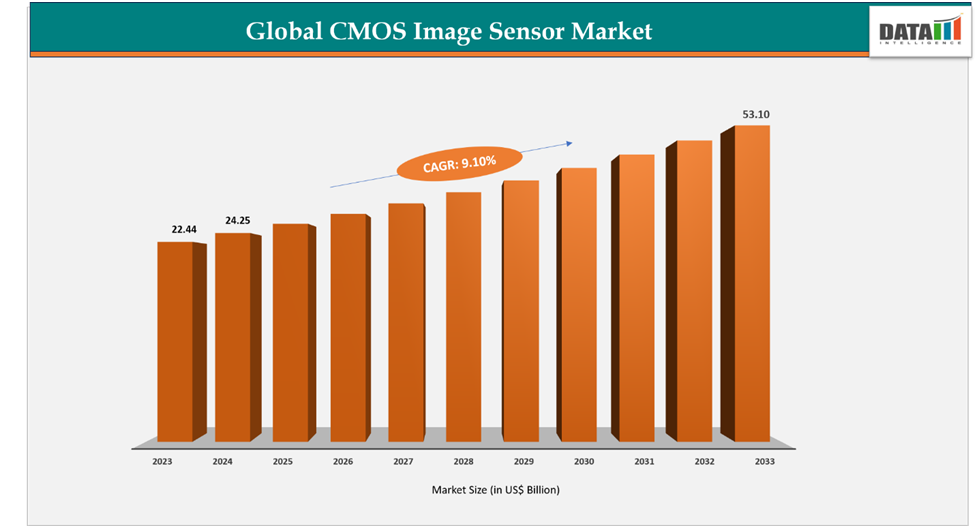
The CMOS Image Sensor Market is estimated to reach USD 26.46 Billion in 2025 and is projected to grow to USD 63.20 Billion by 2035, registering strong growth at a CAGR of 9.10% during the forecast period from 2026 to 2035.
The global CMOS image sensor market is expanding steadily, driven by increasing applications in defense, offshore energy, oceanographic research, and environmental monitoring. These drones, also known as Unmanned Underwater Vehicles (UUVs), are becoming vital tools for naval surveillance, subsea inspections, and maritime security. Growth is further supported by technological advancements in autonomy, AI-based navigation, and energy-efficient propulsion systems, alongside rising investments in maritime robotics. Industry dynamics are also being reshaped by strategic collaborations, defense contracts, and partnerships between naval forces and commercial suppliers.
The US remains a dominant player in the CMOS image sensor market, propelled by strong defense demand and technological innovations. Companies are increasingly acquiring specialized imaging solution providers to strengthen their market position and product offerings. For instance, Photonics Management Corp. (Bridgewater, New Jersey, US), a subsidiary of Hamamatsu Photonics K.K. (Hamamatsu City, Japan), acquired the stock of BAE Systems Imaging Solutions, Inc., a subsidiary of BAE Systems, Inc. (Falls Church, Virginia, US). In recognition of its historical roots beginning in 1920 as the Fairchild Aerial Camera Corporation, the company will return to the name first used in 2001, Fairchild Imaging. Such acquisitions highlight the US market’s focus on strengthening imaging capabilities for defense, aerospace, and advanced surveillance applications.
Japan is also establishing a significant presence in the CMOS image sensor market, driven by increased investments in production capacity and imaging technology innovation. For instance, Sony Corp announced plans to invest ~US$ 997 million to expand production of image sensors as part of its strategy to increase revenue from digital imaging. This investment underscores Japan’s commitment to maintaining leadership in high-performance sensor technology, supporting applications in defense, consumer electronics, and industrial imaging.
Market Scope
| Metrics | Details | |
| CAGR | 9.10% | |
| Market Size Available for Years | 2024-2035 | |
| Estimation Forecast Period | 2026-2035 | |
| Revenue Units | Value (US $Bn) | |
| Segments Covered | Technology | Front-Illuminated (FI-CMOS), Backside-Illuminated (BSI-CMOS), Stacked CMOS Sensors |
| Resolution | Up to 5 MP, 5 MP to 16 MP, Above 16 MP | |
| Application | Consumer Electronics, Aerospace & Defense, Automotive, Industrial, Healthcare, Others | |
| Regions Covered | North America, Europe, Asia-Pacific, South America, and the Middle East & Africa | |
Key Takeaways
- The market is expected to create nearly US$ 37 billion in additional revenue opportunities between 2025 and 2035, driven by growing demand for advanced imaging technologies across multiple industries.
- Consumer electronics remain the largest application segment, supported by increasing integration of high-resolution image sensors in smartphones, tablets, laptops, wearables, and smart home devices.
- The automotive industry is emerging as one of the fastest-growing end-user segments as CMOS image sensors become essential components in ADAS, autonomous driving systems, driver monitoring systems, and intelligent vehicle safety technologies.
- Demand for high-resolution and multi-camera smartphone systems continues to drive sensor innovation, encouraging manufacturers to develop advanced imaging solutions with improved low-light performance and power efficiency.
- Artificial intelligence-enabled imaging capabilities are accelerating adoption across smartphones, surveillance systems, industrial automation, healthcare imaging, and smart city infrastructure.
- The growing deployment of machine vision systems in manufacturing environments is creating new opportunities for CMOS image sensor manufacturers as industries adopt automation and quality inspection technologies.
- Increasing adoption of smart surveillance systems and security cameras is contributing significantly to market growth, particularly in urban infrastructure and commercial applications.
- The healthcare sector is expanding its use of CMOS image sensors in diagnostic imaging equipment, endoscopy systems, medical wearables, and digital healthcare devices.
- Advancements in stacked sensor architectures, backside illumination (BSI) technology, and high dynamic range imaging are improving sensor performance and expanding application possibilities.
- The rise of Internet of Things (IoT) devices is creating additional demand for compact, energy-efficient image sensors capable of supporting intelligent connected systems.
- Asia-Pacific continues to represent the largest manufacturing and consumption hub for CMOS image sensors due to its strong electronics manufacturing ecosystem and expanding technology sector.
Analyst Viewpoint
The CMOS Image Sensor Market continues to benefit from the rapid digitalization of consumer electronics, automotive technologies, industrial automation, and healthcare applications. Image sensors have become critical components in modern electronic devices, enabling advanced imaging, computer vision, artificial intelligence, and machine learning capabilities.
The market is experiencing a significant shift toward higher-resolution sensors, AI-enabled imaging, and intelligent vision systems. Manufacturers are increasingly focusing on improving image quality, reducing power consumption, and enhancing sensor performance under challenging operating conditions.
Looking ahead, autonomous vehicles, machine vision systems, smart cities, augmented reality devices, and next-generation consumer electronics are expected to create substantial growth opportunities. Companies that successfully combine sensor innovation with AI-powered imaging capabilities are likely to strengthen their competitive position in the market.
Key Market Trends & Insights
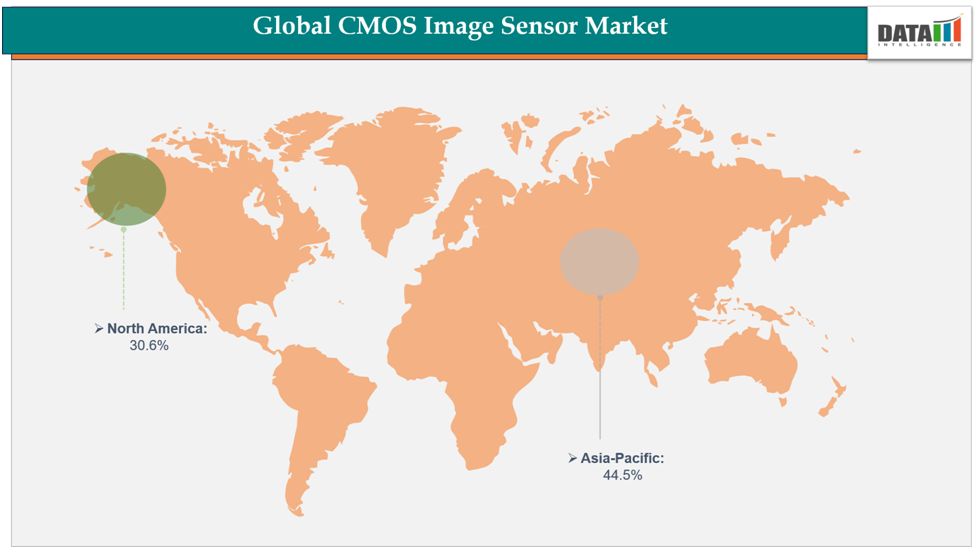
Asia-Pacific held approximately 45.9% of the global CMOS image sensor market in 2024 and is projected to maintain its leadership throughout the forecast period. The region’s dominance is driven by robust growth in consumer electronics, automotive imaging, and industrial applications. For instance, Samsung Electronics has expanded its image sensor production capacity in South Korea to meet increasing global demand for advanced smartphone cameras and automotive vision systems, reflecting the region’s strong manufacturing base and technological expertise..
North America is expected to be the fastest-growing region, propelled by rising investments in automotive ADAS systems, industrial automation, and defense applications. In 2024, Teledyne e2v (a US-based imaging solutions provider) launched a new series of high-performance CMOS sensors optimized for aerospace and defense surveillance, underscoring North America’s focus on next-generation imaging technologies. Strategic partnerships and continuous R&D in sensor design are accelerating market adoption across the region.
The Consumer Electronics segment remains the dominant product category, driven by high demand for smartphone cameras, digital imaging devices, and wearable electronics. Its widespread use across commercial and industrial sectors emphasizes the pivotal role of CMOS sensors in delivering high-resolution imaging, enabling advanced AI-powered applications, and fostering innovation across diverse industries.
Latest Industry Intelligence & Future Growth Catalysts (2026)
AI-Powered Imaging Is Driving Sensor Innovation
Artificial intelligence is increasingly being integrated directly into imaging systems, enabling real-time object recognition, scene optimization, facial recognition, and intelligent image processing.
Automotive Vision Systems Continue to Expand
The rapid development of autonomous driving technologies and advanced driver-assistance systems is significantly increasing demand for high-performance image sensors capable of supporting vehicle perception systems.
Machine Vision Adoption Is Accelerating
Industrial automation and smart manufacturing initiatives are creating strong demand for image sensors used in quality control, robotics, predictive maintenance, and automated inspection systems.
Smart Surveillance Remains a Key Growth Driver
Governments and enterprises are investing heavily in intelligent surveillance systems, creating sustained demand for advanced CMOS image sensors with enhanced resolution and low-light capabilities.
Healthcare Imaging Applications Are Expanding
The increasing use of digital diagnostics, minimally invasive surgical devices, and medical imaging equipment is opening new opportunities for high-performance image sensor technologies.
AR and VR Devices Are Creating New Demand
Immersive technologies are driving adoption of compact and high-speed image sensors that support gesture recognition, eye tracking, spatial awareness, and real-time environmental mapping.
Edge AI and IoT Growth Supports Sensor Deployment
Connected devices increasingly require intelligent imaging capabilities, making CMOS image sensors essential components within next-generation IoT ecosystems.
Drivers & Restraints
Driver: Rising Demand in Consumer Electronics
The global CMOS image sensor market is increasingly fueled by strong demand in consumer electronics. Manufacturers are focusing on delivering high-resolution, energy-efficient, and compact sensors that power smartphones, digital cameras, AR/VR devices, and other smart gadgets. These sensors are essential for enhancing image quality, enabling AI-driven photography, and supporting next-generation consumer applications.
For instance, in 2024, Vivo expanded its collaboration with ZEISS as part of a new imaging strategy, demonstrating how growing consumer expectations for superior camera performance are driving the growth of the CMOS image sensor market and reinforcing its importance in mobile imaging technology.
Restraint: High Manufacturing Costs
Despite strong demand, the CMOS image sensor market faces challenges due to high production costs. Advanced sensors especially those with higher resolutions, back-illuminated architectures, or AI capabilities require sophisticated semiconductor fabrication, expensive materials, and precise quality control processes.
For instance, developing next-generation sensors involves significant R&D investment, state-of-the-art cleanroom facilities, and advanced lithography equipment. These high manufacturing expenses continue to pose a barrier to widespread adoption and sustained market growth.
For more details on this report - Request for Sample
Segmentation Analysis
The global CMOS image sensor market is segmented based on technology, resolution, application and region.
Application: The Consumer Electronics segment accounts for an estimated 28.4% of the global CMOS image sensor market.
The consumer electronics segment represents a major portion of the global CMOS image sensor market, driven by rising demand for high-resolution cameras in smartphones, smart glasses, AR/VR devices, and other connected gadgets. Growth is fueled by consumers’ preference for advanced imaging, compact form factors, low power consumption, and AI-enabled functionalities that enhance photography, video recording, and interactive experiences.
Key players are focusing on developing CMOS sensors that combine performance, efficiency, and miniaturization to meet the requirements of next-generation devices. For instance, Smart Sens (Shanghai) Electronic Technology Co., Ltd. recently introduced the 12-megapixel SC1200IOT CMOS image sensor for AI glasses. Leveraging Smart Sens’ SmartClarity-3 platform and patented SFC Pixel technology, the sensor offers high sensitivity, low noise, compact size, and low power consumption, fully supporting the imaging needs of lightweight, high-quality AI glasses.
The widespread adoption of advanced CMOS sensors in consumer electronics enhances user experience while driving innovation in wearable technology, mobile imaging, and AR/VR applications. As consumer demand for superior imaging performance grows, this segment is expected to remain a key driver of the global CMOS image sensor market, prompting further development of energy-efficient, compact, and AI-enabled sensor solutions.

Geographical Analysis
The Asia-Pacific CMOS image sensor market was valued at 44.9%market share in 2024
Asia-Pacific accounted for a substantial share of the global CMOS image sensor market in 2024 and is expected to remain the dominant region throughout the forecast period. Growth is primarily driven by increasing demand for automotive, consumer electronics, and industrial imaging applications, as well as significant investments in research and technological development.
For instance, Sony Semiconductor Solutions Corporation (SSS) announced the upcoming release of the ISX038 CMOS image sensor for automotive cameras, the industry’s first product capable of simultaneously processing and outputting RAW and YUV images. This innovation reflects the region’s leadership in high-performance imaging technologies and underscores the adoption of advanced CMOS sensors in automotive safety, driver-assistance systems, and smart mobility solutions.
Government initiatives, industrial adoption, and strong presence of leading semiconductor companies are expected to continue driving Asia-Pacific’s market share, making it the fastest-growing region in the global CMOS image sensor market.
The North America CMOS image sensor market was valued at 30.6% market share in 2024
Asia-Pacific is projected to be the fastest-growing region, driven by rising investments in defense, consumer electronics, and industrial applications, alongside expanding adoption of high-performance imaging technologies in mobile devices and cameras.
For instance, ESS Technology Inc., a US-based consumer-chip manufacturer, entered the CMOS imaging sensor market by acquiring Pictos Technologies Inc. for US$27 million in cash. This acquisition gives ESS a strong foothold in the market for CMOS imaging sensors used in still cameras, cellular phones, and related modules, positioning North America as a hub for innovation and commercialization in the CMOS imaging sector.
Robust R&D capabilities, strategic acquisitions, and strong demand for imaging solutions across consumer electronics and defense applications continue to reinforce North America’s leadership in the global CMOS image sensor market.
Market Opportunities and Investment Hotspots
The most attractive opportunities within the CMOS Image Sensor Market are emerging from automotive vision systems, AI-enabled imaging platforms, industrial machine vision, and healthcare imaging applications. These segments are expected to generate significant long-term demand for advanced sensor technologies.
Automotive applications represent a particularly promising investment area as vehicles increasingly rely on multiple cameras for navigation, safety, and autonomous driving functions. Demand for image sensors in driver monitoring systems, surround-view cameras, and autonomous vehicle perception systems is expected to accelerate substantially.
Industrial automation is another high-growth opportunity, with manufacturers investing in machine vision systems to improve productivity, quality control, and operational efficiency. Smart factories and Industry 4.0 initiatives are further supporting sensor adoption.
Healthcare imaging technologies, smart surveillance infrastructure, AR/VR devices, and edge AI systems are also emerging as strategic investment hotspots capable of generating significant value throughout the forecast period.
Competitive Landscape
The major players in the CMOS image sensor market include Sony Semiconductor Solutions Corporation, ams-OSRAM AG, STMicroelectronics, Samsung, Tokyo Electron Limited, OMNIVISION, Semiconductor Components Industries, LLC, Canon U.S.A., Inc, Panasonic Corporation of North America., Hamamatsu Photonics K.K.
Sony Semiconductor Solutions Corporation: Sony Semiconductor Solutions Corporation is a global leader in CMOS image sensor technology, renowned for its innovation in digital imaging and sensing solutions. The company designs and manufactures high-performance CMOS sensors for applications in consumer electronics, automotive, industrial, and healthcare sectors.
Recent Developments 2026:
- June 2026 - Sony and Samsung advancing next-generation image sensor technologies
Sony Semiconductor Solutions Corporation and Samsung expanded development of high-resolution CMOS image sensors featuring improved low-light performance, faster processing speeds, and enhanced AI-enabled imaging capabilities for smartphones, automotive systems, and industrial applications. - May 2026 - OMNIVISION and STMicroelectronics strengthening automotive imaging solutions
OMNIVISION and STMicroelectronics advanced CMOS image sensors designed for advanced driver assistance systems (ADAS), autonomous vehicles, and machine vision applications, focusing on improved safety and real-time image processing. - April 2026 - ams-OSRAM and Hamamatsu Photonics enhancing sensing and detection capabilities
ams-OSRAM AG and Hamamatsu Photonics K.K. expanded sensor innovations for medical imaging, industrial inspection, and scientific instrumentation, emphasizing higher sensitivity and precision detection performance. - April-June 2026 - Growing demand for AI-enabled imaging and machine vision systems
Companies including Canon U.S.A., Inc., Panasonic Corporation, Tokyo Electron Limited, and Semiconductor Components Industries, LLC (onsemi) increased investments in advanced imaging technologies supporting consumer electronics, automotive electronics, surveillance systems, and industrial automation.
Why Buy This Report?
- This report provides comprehensive intelligence on one of the most important enabling technologies within the global electronics ecosystem. It helps decision-makers understand market dynamics, technology evolution, competitive positioning, and future investment opportunities.
- The study supports strategic planning, product development, market expansion, partnership evaluation, and investment decision-making by delivering actionable insights across the global CMOS image sensor industry.
The global CMOS image sensor market report delivers a detailed analysis with 62 key tables, more than 55visually impactful figures, and 195 pages of expert insights, providing a complete view of the market landscape.
Suggestions For Related Reports
For more CMOS image sensor-related reports, please click here



























































