


Advance Recycling and Circularity Market Size
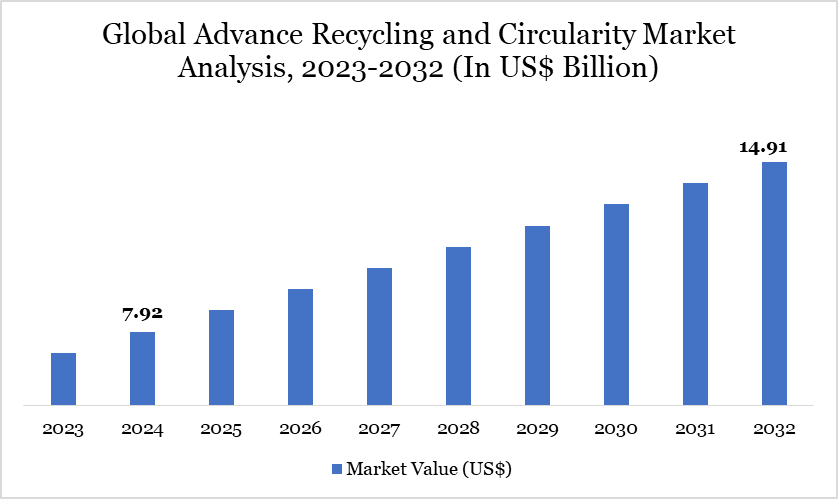
The Advance Recycling and Circularity Market will reach US$ 9.28 billion in 2026, up from US$ 8.57 billion in 2025, and is projected to reach US$ 18.96 billion by 2035, registering steady growth at a CAGR of 8.23% during the forecast period from 2026 to 2035.
The advanced recycling and circularity market is experiencing significant growth, propelled by governmental initiatives and corporate investments aimed at sustainable waste management. In the US, ExxonMobil has committed US$ 200 million to expand its advanced recycling capabilities in Baytown and Beaumont, Texas, with the goal of processing over 1 billion pounds of plastic annually.
The initiative, in partnership with Cyclyx, seeks to enhance plastic recyclability and establish Jefferson County as a regional recycling hub. Similarly, India's circular economy is projected to reach a market value of US$ 2 trillion by 2050, creating approximately 10 million jobs, as per statements from the Union Environment Minister.
Advance Recycling and Circularity Market Trend
A notable trend in the Advanced Recycling and Circularity Market is the increasing emphasis on reuse models over traditional recycling. While less than 9% of plastic waste is successfully recycled, reuse strategies have demonstrated the potential to reduce packaging production and emissions by up to 90% and 80%, respectively. This shift is driven by the recognition that recycling alone is insufficient to address the plastic waste crisis, prompting a move towards business models that prioritize reuse to achieve a more sustainable and circular economy.
For more details on this report, Request for Sample
Advance Recycling and Circularity Market Scope
| Metrics | Details |
| By Technology | Cracking, Gasification, Depolymerization, Microwave Processing, Mechanical Recycling, Composting & Anaerobic Digestion, Others |
| By Material | Plastics, Metals, Textiles, Composites, Others |
| By Product | Naphtha, Heavy Gas Oil, Recycled Plastics, Secondary Metals, Recycled Construction Materials, Others |
| By Business Model | Circular Products, Closed-loop Recycling Services, Reverse Logistics, Material Recovery Services, Refurbishment and Remanufacturing, Others |
| By End-User | Food & Beverage Packaging, Non-Food Packaging, Consumer Electronics, Construction and Building Materials, Automotive and Transportation, Agriculture and Food Processing, Waste Management Services, Others |
| By Region | North America, South America, Europe, Asia-Pacific and Middle East and Africa |
| Report Insights Covered | Competitive Landscape Analysis, Company Profile Analysis, Market Size, Share, Growth |
Key Takeaways
- North America accounts for approximately 38-42% of the global market share, driven by strong governmental support, corporate investments in advanced recycling technologies, and expanding circular economy initiatives.
- Cracking technologies, particularly pyrolysis, contribute over 20% of the total market revenue, owing to their efficiency in converting mixed plastic waste into valuable feedstocks such as naphtha and heavy gas oil.
- Plastic materials account for more than 45% of market demand, supported by increasing regulations on plastic waste management and growing investments in chemical recycling technologies.
- Packaging applications collectively represent over 40% of end-user adoption, driven by rising demand for sustainable packaging materials and closed-loop recycling systems.
- AI-enabled waste sorting and robotic recycling systems are witnessing annual adoption growth exceeding 15%, improving material recovery rates and operational efficiencies across recycling facilities.
- Reuse and circular business models have demonstrated the potential to reduce packaging production by up to 90% and associated emissions by nearly 80%, accelerating the transition toward sustainable resource management practices.
- Asia-Pacific is expected to register the fastest market growth, supported by increasing circular economy investments, rapid industrialization, and supportive government policies promoting sustainable waste management.
- Strategic collaborations among recycling technology providers, chemical companies, packaging manufacturers, and governments are accelerating commercialization efforts worldwide.
- Growing investments in advanced recycling technologies, reverse logistics, material recovery services, and sustainable product innovation are expected to drive long-term market expansion.
Advance Recycling and Circularity Market Dynamics
Integration of AI and Robotics in Waste Sorting and Recycling Processes
The integration of artificial intelligence (AI) and robotics in waste sorting and recycling processes is significantly advancing the Advanced Recycling and Circularity Market. AI-powered robots can sort waste materials at a speed of 80 items per minute, achieving sorting accuracies up to 98%, thereby enhancing recycling efficiency and reducing contamination rates.
In India, companies like Recykal are deploying AI-driven systems such as Google's CircularNet CV, which ensures over 90% accuracy in sorting recyclables at collection centers, leading to better material identification and reduced contamination across recycling streams. These technological advancements not only improve the quality of recyclables but also contribute to a more sustainable recycling ecosystem by minimizing waste sent to landfills and maximizing the value extracted from recyclables.
High Capital Investment Requirements for Chemical Recycling Facilities
High capital investment requirements for chemical recycling facilities are a significant restraint in the advancement of the recycling and circularity market. For instance, in India, establishing a chemical recycling plant with a capacity of 1 tonne per day entails an investment of approximately US$ 0.65 million, highlighting the substantial financial barrier to entry.
Similarly, in the US, the Environmental Protection Agency (EPA) estimates that modernizing the national recycling infrastructure would require an investment ranging from US$ 36.5 to 43.4 billion, encompassing improvements in collection, sorting, and processing systems. These high upfront costs can deter investment and slow the adoption of advanced recycling technologies.
Advance Recycling and Circularity Market Segment Analysis
The global advance recycling and circularity market is segmented based on technology, material, product, business model, end-user and region.
Cracking Segment Driving Advance Recycling and Circularity Market
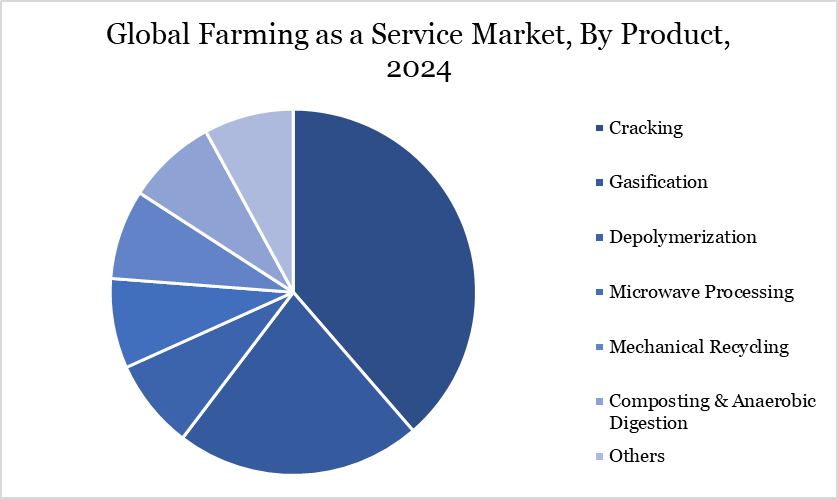
Cracking technology, particularly pyrolysis, is significantly propelling the advanced recycling and circularity market by converting complex plastic waste into valuable resources. In 2024, the pyrolysis/cracking segment is projected to dominate the global advanced recycling technologies market with over 20% share, attributed to its efficiency in breaking down diverse waste materials through high-temperature processes. This method is especially effective for processing mixed polyolefin plastic waste and multi-material packaging, which are traditionally challenging to recycle.
Advance Recycling and Circularity Market Geographical Share
Demand for Advance Recycling and Circularity in North America
The demand for advanced recycling and circularity solutions in North America is intensifying, driven by significant governmental initiatives and corporate investments. In the US, ExxonMobil has committed US$ 200 million to expand its advanced recycling capabilities in Baytown and Beaumont, Texas, aiming to process over US$ 1 billion pounds of plastic annually. This investment includes a partnership with Cyclyx to enhance plastic recyclability and establish Jefferson County as a regional recycling hub.
In Canada, the federal government recognizes the potential of a circular economy to reduce carbon pollution by 1.8 million tonnes and create approximately 42,000 jobs by 2030. However, the country's recycling infrastructure requires substantial investment. To address this, the government is supporting pilot and demonstration projects aimed at commercializing modern recycling technologies. These efforts underscore a growing commitment in North America to advance recycling systems and promote sustainable resource management.
Technological Analysis
The global advanced recycling and circularity market is undergoing significant technological advancements, driven by governmental initiatives aimed at sustainable waste management. In the US, the Environmental Protection Agency (EPA) has emphasized the importance of a circular economy, promoting strategies that minimize waste and make the most of resources. India's Ministry of Environment, Forest & Climate Change has implemented the Plastic Waste Management Rules (2016) and banned certain single-use plastics in 2022, encouraging the adoption of eco-friendly products and energy-efficient practices.
The European Union has also been proactive, with the European Commission's Circular Economy Action Plan aiming to make sustainable products the norm in the EU, focusing on sectors like electronics, batteries, and plastics. These governmental policies are fostering innovation in recycling technologies, such as chemical recycling and waste-to-energy processes, enhancing the efficiency and effectiveness of recycling systems worldwide.
Investment Opportunity Analysis
The Advance Recycling and Circularity Market presents substantial investment opportunities as governments and industries increasingly prioritize sustainable resource utilization and waste reduction initiatives. Rising demand for circular economy solutions across packaging, automotive, consumer electronics, and construction industries is driving investments in advanced recycling technologies, including pyrolysis, gasification, depolymerization, and AI-enabled waste management systems. Companies are expanding investments in closed-loop recycling infrastructure, reverse logistics platforms, and material recovery services to improve sustainability performance and regulatory compliance. Strategic investments in circular business models and sustainable manufacturing practices are expected to strengthen the market's long-term growth potential.
Market Drivers, Restraints, Opportunities, and Challenges (DROC Analysis)
The Advance Recycling and Circularity Market is driven by increasing governmental initiatives supporting circular economy adoption, growing corporate sustainability commitments, and rising consumer demand for environmentally responsible products. Advanced recycling technologies provide effective solutions for managing complex waste streams while reducing dependence on virgin materials. However, high capital investments, infrastructure limitations, technological scalability challenges, and regulatory uncertainties remain significant barriers to market growth. Emerging opportunities include chemical recycling innovations, digital waste management platforms, sustainable packaging solutions, and expanding adoption of reuse-based business models across industries.
Advance Recycling and Circularity Market Major Players
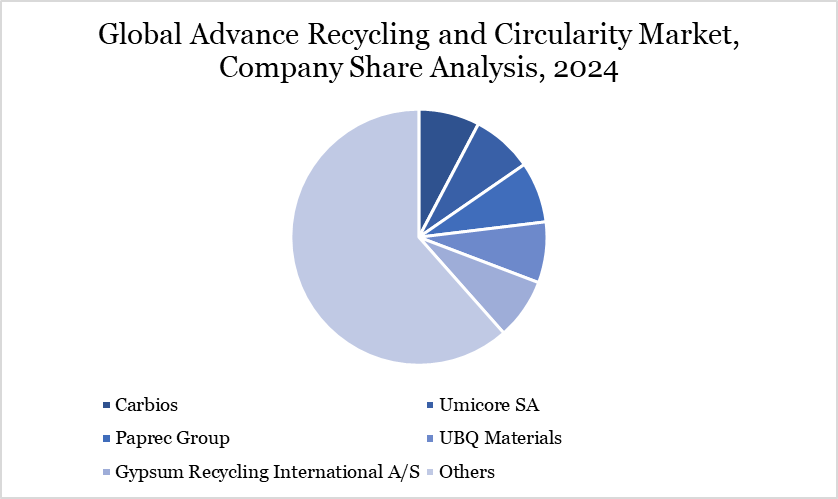
The major global players in the market include ExxonMobil Corporation, Carbios, Umicore SA, Paprec Group, UBQ Materials, Gypsum Recycling International A/S, Recover Textile Systems, S.L., Agilyx Corporation, BASF SE, and Honeywell International Inc.
Key Developments
- June 2026: ExxonMobil Corporation continued expanding its advanced recycling capabilities at its Baytown facility, supporting its goal of scaling certified-circular plastic production and increasing global plastic waste processing capacity.
- June 2026: BASF SE strengthened its ChemCycling™ initiatives by expanding collaborations across the plastics value chain to increase the use of recycled feedstocks in high-performance materials and packaging applications.
- May 2026: Carbios advanced the commercialization of its enzymatic recycling technology for PET plastics through ongoing industrial-scale deployment initiatives supporting circular packaging solutions.
- May 2026: Honeywell International Inc. continued expanding its UpCycle Process Technology portfolio to enable the recycling of mixed and hard-to-recycle plastic waste into high-quality recycled polymers.
- April 2026: Umicore SA strengthened its circular materials strategy by advancing battery material recycling technologies and increasing investments in sustainable resource recovery solutions for the energy transition.
- April 2026: Paprec Group expanded its waste management and recycling operations across Europe to improve material recovery rates and support circular economy initiatives in industrial and municipal sectors.
- March 2026: UBQ Materials continued scaling its waste conversion technology that transforms unsorted household waste into sustainable thermoplastic materials for industrial applications.
- March 2026: Agilyx Corporation advanced chemical recycling technologies for post-consumer plastics through strategic collaborations focused on improving circularity across the plastics value chain.
- February 2026: Recover Textile Systems, S.L. expanded its portfolio of recycled cotton fiber solutions to support sustainable textile manufacturing and circular fashion initiatives worldwide.
- In February 2025, the Global Impact Coalition (GIC), a CEO-led platform originally incubated at the World Economic Forum, launched an automotive plastics circularity pilot along with seven global companies in the chemical and recycling industries-BASF, Covestro, LyondellBasell, Mitsubishi Chemical Group, SABIC, SUEZ and Syensqo-to address the challenge of recycling plastics from end-of-life vehicles (ELVs).
- In November 2024, ExxonMobil invested more than US$ 200 million to expand its advanced recycling operations at its sites in Baytown and Beaumont, Texas. The new operations are expected to start up in 2026 and can help increase advanced recycling rates and divert plastic from landfills. The company plans to build additional units to reach a global recycling capacity of 1 billion pounds per year by 2027.
Why Choose DataM?
- Data-Driven Insights: Dive into detailed analyses with granular insights such as pricing, market shares and value chain evaluations, enriched by interviews with industry leaders and disruptors.
- Post-Purchase Support and Expert Analyst Consultations: As a valued client, gain direct access to our expert analysts for personalized advice and strategic guidance, tailored to your specific needs and challenges.
- White Papers and Case Studies: Benefit quarterly from our in-depth studies related to your purchased titles, tailored to refine your operational and marketing strategies for maximum impact.
- Annual Updates on Purchased Reports: As an existing customer, enjoy the privilege of annual updates to your reports, ensuring you stay abreast of the latest market insights and technological advancements. Terms and conditions apply.
- Specialized Focus on Emerging Markets: DataM differentiates itself by delivering in-depth, specialized insights specifically for emerging markets, rather than offering generalized geographic overviews. This approach equips our clients with a nuanced understanding and actionable intelligence that are essential for navigating and succeeding in high-growth regions.
- Value of DataM Reports: Our reports offer specialized insights tailored to the latest trends and specific business inquiries. This personalized approach provides a deeper, strategic perspective, ensuring you receive the precise information necessary to make informed decisions. These insights complement and go beyond what is typically available in generic databases.
Who Should Buy This Report?
This report is designed for recycling technology companies, chemical manufacturers, packaging companies, waste management service providers, consumer goods manufacturers, automotive companies, construction material suppliers, government agencies, sustainability consultants, circular economy solution providers, research institutions, universities, institutional investors, private equity firms, environmental organizations, and market intelligence companies. It provides valuable insights for stakeholders seeking to identify growth opportunities, strengthen sustainability strategies, evaluate investment prospects, and make informed business decisions across the circular economy ecosystem.
Why Should You Buy This Report?
This report provides comprehensive market size estimates and forecasts through 2032, helping organizations identify high-growth opportunities across advanced recycling technologies, circular business models, sustainable packaging solutions, and material recovery systems. It delivers detailed analysis of market drivers, restraints, opportunities, and challenges, along with regional and country-level trends supporting strategic planning. The report offers competitive intelligence covering company strategies, partnerships, investments, technological developments, and regulatory initiatives. It also analyzes emerging technologies including chemical recycling, AI-enabled waste sorting systems, digital circular economy platforms, reverse logistics solutions, and sustainable material innovations. Additionally, it supports investment planning, business expansion, competitive benchmarking, and market entry strategies while helping organizations capitalize on the rapidly evolving global advance recycling and circularity industry.
Target Audience 2026
- Manufacturers/ Buyers
- Industry Investors/Investment Bankers
- Research Professionals
- Emerging Companies




























































