


Packaging Polymer Prices Rise Again in August 2026 as Market Pressures Intensify
Global packaging manufacturers are facing renewed cost pressures as polymer prices move higher in August 2026, driven by a combination of constrained supply, fluctuating crude oil markets, higher petrochemical feedstock costs, and improving demand across food, beverage, consumer goods, and industrial packaging sectors.
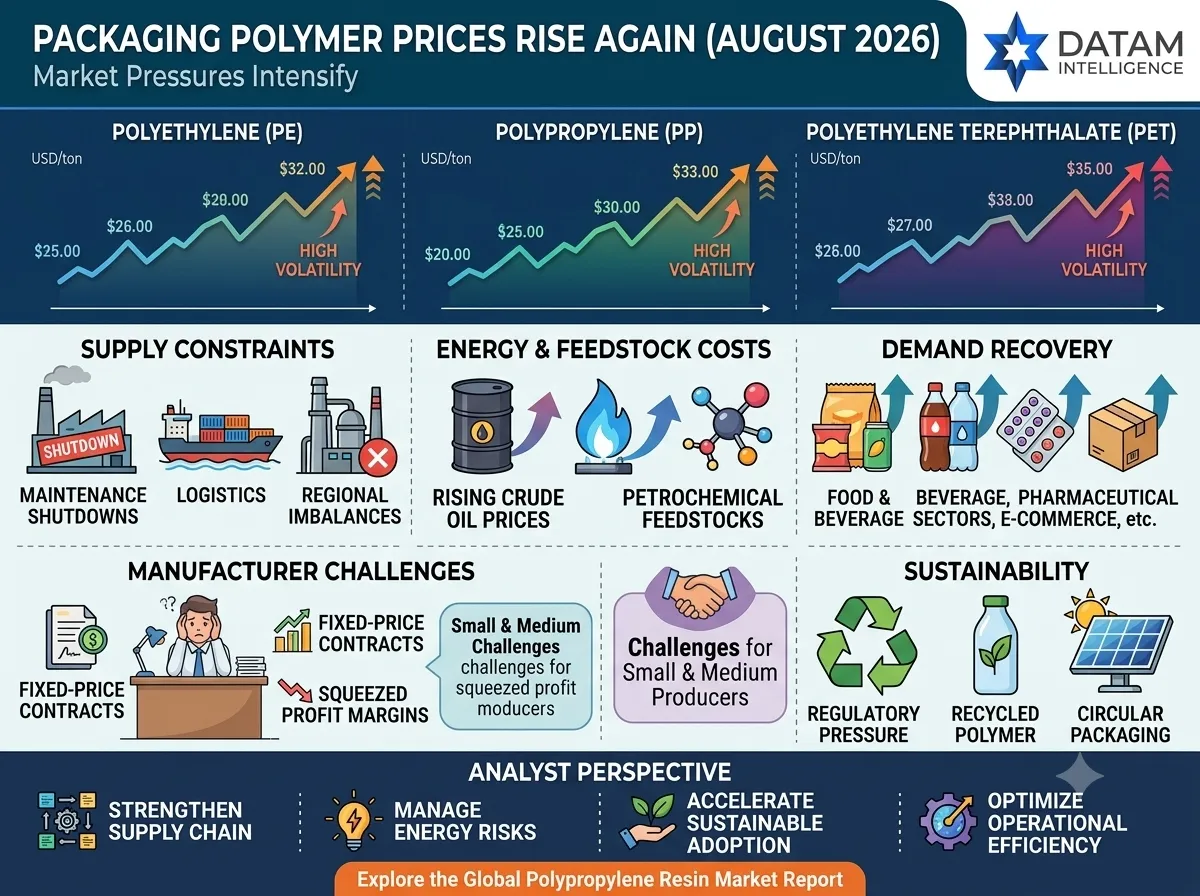
The latest market developments indicate that key packaging polymers, including polyethylene (PE), polypropylene (PP), and polyethylene terephthalate (PET), are experiencing increased price volatility as producers adjust output levels while buyers rebuild inventories.
Explore the Global Polypropylene Resin Market Report to gain comprehensive insights into market trends, growth opportunities, competitive dynamics, and key factors shaping the future of the polypropylene resin industry.
Supply Constraints Remain a Major Price Driver
One of the primary factors supporting polymer price increases is tighter global supply availability. Maintenance shutdowns, production adjustments, logistics disruptions, and regional supply imbalances have created additional pressure on resin markets.
Packaging converters and manufacturers are increasingly focusing on supply security as fluctuations in polymer availability continue affecting production planning and cost management.
Rising Energy and Feedstock Costs Impact Polymer Production
Polymer production remains highly dependent on petrochemical feedstocks, particularly crude oil and natural gas derivatives. Changes in energy prices directly influence production economics for major resins used in packaging applications.
Higher feedstock costs have increased operating expenses for polymer producers, contributing to upward price adjustments across packaging resin markets.
Demand Recovery Supports Market Momentum
Demand for plastic packaging continues to expand across multiple industries, including:
- Food and beverage packaging
- Pharmaceutical packaging
- Personal care products
- E-commerce packaging
- Industrial packaging solutions
As global manufacturing activity improves, buyers are increasing resin procurement to secure future requirements, adding further support to polymer pricing.
Packaging Manufacturers Face Margin Challenges
Rising polymer prices are creating challenges for packaging converters, particularly companies operating under fixed-price contracts.
Manufacturers are responding through:
- Strategic inventory management
- Alternative material sourcing
- Increased recycled polymer adoption
- Contract renegotiations
- Process efficiency improvements
Small and medium-sized packaging producers are expected to face greater pressure due to limited purchasing power and reduced ability to absorb raw material cost increases.
Sustainability Regulations Influence Polymer Market Dynamics
The packaging polymer industry is also undergoing structural transformation due to increasing sustainability requirements.
Regulatory developments, including stricter packaging waste management policies, are accelerating demand for recycled polymers, bio-based materials, and circular packaging solutions.
Companies are balancing cost pressures with investments in sustainable packaging technologies to meet evolving environmental standards.
Market Outlook: Polymer Prices Expected to Remain Volatile
Industry analysts expect packaging polymer markets to remain highly sensitive to:
- Crude oil price movements
- Petrochemical capacity changes
- Global trade conditions
- Packaging demand growth
- Recycling infrastructure development
While short-term pricing remains uncertain, long-term demand fundamentals remain positive due to continued growth in flexible packaging, food safety requirements, and lightweight packaging solutions.
Analyst Perspective
The renewed increase in packaging polymer prices in August 2026 highlights a significant shift in the global packaging and polymer industry, where companies are balancing cost pressures, supply chain challenges, and sustainability priorities. Market participants are closely monitoring raw material availability, production economics, and evolving demand patterns to strengthen their strategic decision-making.
Key industry implications include:
- Strengthening Supply Chain Resilience: Packaging manufacturers are focusing on supplier diversification, strategic inventory planning, and long-term procurement agreements to reduce exposure to polymer price volatility.
- Managing Feedstock and Energy Risks: Fluctuations in crude oil, natural gas, and petrochemical feedstock costs will continue to influence polymer production expenses and pricing trends.
- Accelerating Sustainable Polymer Adoption: Growing regulatory pressure and environmental commitments are driving investments in recycled polymers, circular materials, and low-carbon packaging solutions.
- Optimizing Operational Efficiency: Companies are adopting advanced manufacturing processes, waste reduction strategies, and material optimization techniques to protect margins amid rising raw material costs.
- Preparing for Long-Term Market Evolution: While short-term polymer pricing remains uncertain, continued demand growth from food packaging, consumer goods, healthcare, and e-commerce sectors is expected to support long-term market opportunities.
Overall, companies that integrate flexible sourcing strategies, sustainability initiatives, and data-driven market intelligence will be better positioned to navigate ongoing volatility and capitalize on emerging growth opportunities within the global packaging polymer market.
News source: https://www.chemanalyst.com/NewsAndDeals/NewsDetails/why-are-packaging-polymer-prices-rising-again-in-august-2026-43346