


Mitsubishi Motors is advancing its manufacturing strategy by entering the humanoid robotics sector through a collaboration aimed at developing and deploying AI-powered humanoid robots inside automotive production facilities.
The initiative represents a major shift toward next-generation smart factories, where artificial intelligence, robotics, and human-machine collaboration are expected to redefine automotive manufacturing operations. Mitsubishi Motors has partnered with Tokyo University-originated robotics startup Highlanders, Inc. to explore humanoid robot development and manufacturing capabilities.
The companies plan to utilize Mitsubishi Motors’ manufacturing expertise, including mass-production engineering, quality control, factory operations, and mechatronics technologies, while combining it with Highlanders’ humanoid robotics and physical AI capabilities.
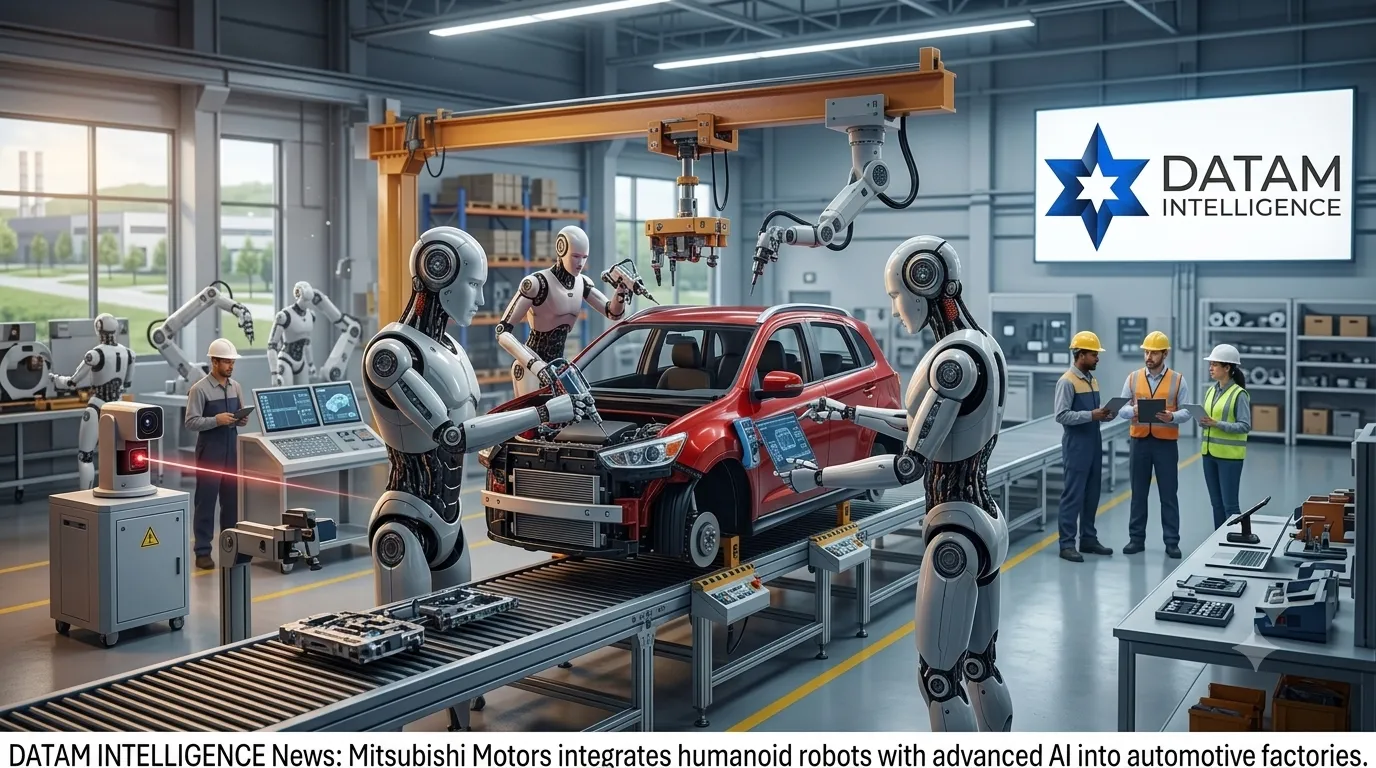
Humanoid Robots to Support Future Automotive Manufacturing
Unlike traditional industrial robots designed for specific repetitive tasks, humanoid robots are being developed as flexible automation platforms capable of operating in environments designed for human workers.
Mitsubishi Motors intends to introduce humanoid robots within its manufacturing facilities to collect operational data, improve robotic performance, and evaluate future industrial applications.
This approach reflects a broader industry movement toward physical AI, where intelligent machines can perceive surroundings, learn from real-world environments, and perform complex manufacturing activities.
For automotive manufacturers facing workforce shortages, increasing production complexity, and demand for flexible production systems, humanoid robots could become a strategic solution for improving efficiency and operational resilience.
Partnership Targets Humanoid Robot Mass Production
The collaboration also explores the possibility of producing Highlanders’ humanoid robots at Mitsubishi Motors’ Kyoto manufacturing facility.
The companies are evaluating production readiness using available manufacturing infrastructure, with plans to accelerate industrial-scale humanoid robot production.
This partnership is significant because it connects an established automotive manufacturer’s production expertise with emerging AI robotics technology, creating a potential blueprint for future humanoid robot manufacturing ecosystems.
Impact on the Global Industrial Robotics Market
The automotive sector has historically been one of the largest adopters of automation technology. The integration of humanoid robots represents the next evolution of factory automation beyond conventional robotic arms and fixed automation systems.
Industry leaders are increasingly exploring humanoid robotics to address:
- Labor shortages in manufacturing environments
- Flexible production requirements
- Higher levels of factory automation
- Safer handling of repetitive or physically demanding tasks
- Data-driven manufacturing optimization
The rise of humanoid robots is also accelerating competition among global technology companies developing AI-powered industrial automation platforms.
Analyst Perspective: Why This Development Matters
Mitsubishi Motors’ move highlights a strategic transition from traditional automation toward intelligent manufacturing ecosystems.
The automotive industry is moving toward factories where robots are not only programmed machines but adaptive systems capable of learning and collaborating with human workers.
For manufacturers, humanoid robots could provide:
- Greater production flexibility
- Faster factory modernization
- Reduced dependency on manual labor availability
- Improved operational scalability
However, widespread adoption will depend on factors including safety standards, cost efficiency, AI reliability, maintenance requirements, and integration with existing manufacturing systems.
Key Industry Insights
Mitsubishi Motors’ development of humanoid robots for automotive factories represents a significant step toward the future of AI-powered smart manufacturing. By combining its automotive mass-production expertise with advanced humanoid robotics capabilities, the company aims to create more flexible, intelligent, and efficient factory automation solutions.
The initiative reflects a broader industrial shift toward physical AI, where robots can interact with real-world environments, learn from operational data, and collaborate with human workers. As manufacturers face increasing demands for productivity, operational efficiency, and workforce optimization, humanoid robots are emerging as a potential technology to transform traditional production systems.
Key Industry Takeaways:
- Advancing AI-powered manufacturing: Mitsubishi Motors’ humanoid robot initiative demonstrates the growing adoption of artificial intelligence and robotics in automotive production environments.
- Enabling human-robot collaboration: Unlike traditional automation systems designed for fixed tasks, humanoid robots are being developed to work alongside human employees and support more flexible manufacturing operations.
- Improving factory efficiency and productivity: AI-driven robots can help optimize repetitive processes, collect operational insights, and enhance overall production performance.
- Addressing manufacturing workforce challenges: Humanoid robots could help companies manage labor shortages by supporting physically demanding and repetitive factory activities.
- Accelerating Industry 4.0 transformation: The integration of robotics, AI, and smart factory technologies highlights the ongoing evolution toward connected and autonomous manufacturing ecosystems.
- Creating new opportunities for industrial robotics: Mitsubishi Motors’ initiative signals increasing opportunities for robotics companies, automotive manufacturers, and technology providers to develop next-generation automation solutions.
Why is Mitsubishi Motors developing humanoid robots?
Mitsubishi Motors is developing humanoid robots to improve automotive factory automation, address manufacturing workforce challenges, and create flexible production systems powered by AI robotics technology.
How will humanoid robots impact automotive factories?
Humanoid robots can help automotive manufacturers automate complex tasks, improve production flexibility, collect operational data, and support safer collaboration between humans and machines.
News source: https://asia.nikkei.com/business/technology/mitsubishi-motors-to-make-humanoid-robots-for-its-own-auto-factories