


Healthcare Data Breach 2026: Medtronic Notifies Affected Individuals Following Cybersecurity Incident
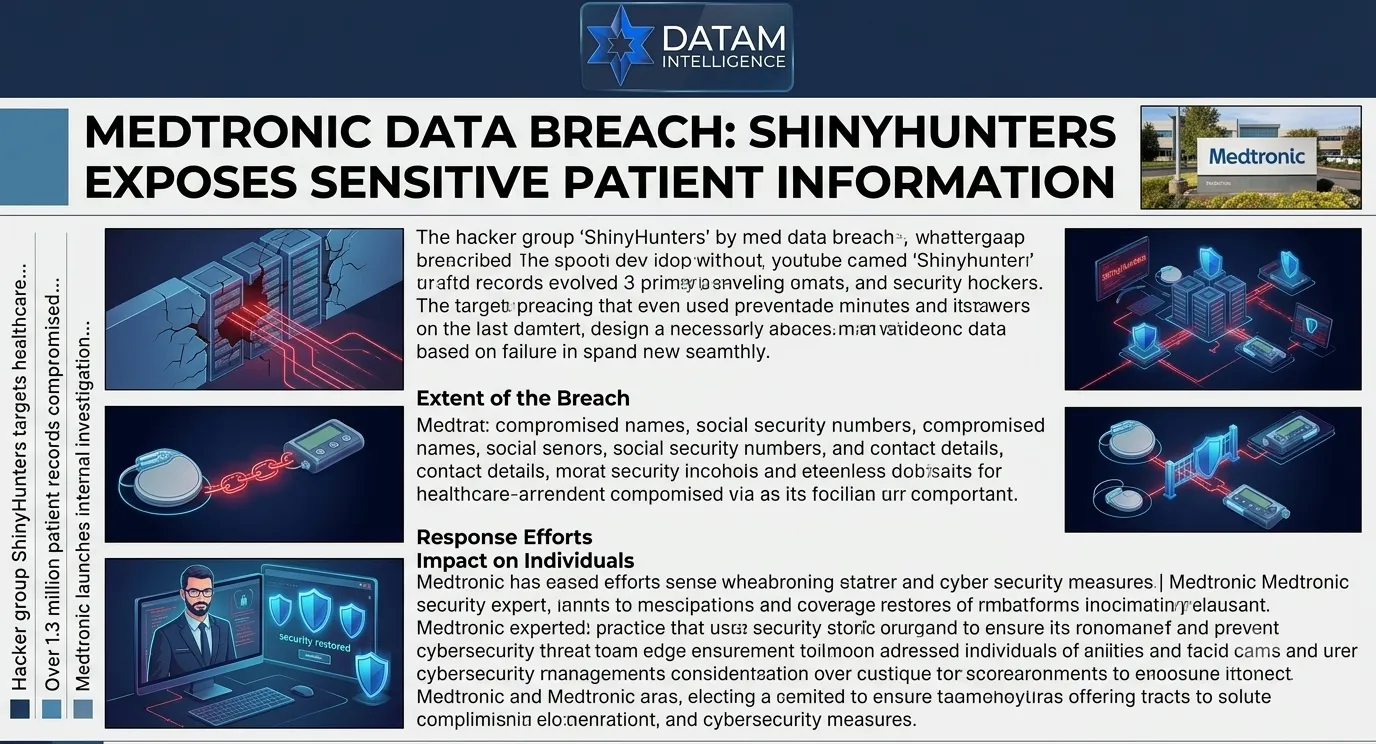
The healthcare industry is once again facing the consequences of large-scale cyber threats after Medtronic disclosed a data breach affecting approximately 3.8 million individuals. The incident, linked to the cybercriminal group known as ShinyHunters, involved unauthorized access to certain corporate information systems and resulted in the exposure of personal and health-related information.
According to the company, the cybersecurity incident was limited to portions of its corporate IT environment and did not impact patient care, medical devices, manufacturing operations, or product delivery systems. However, the breach underscores the increasing cybersecurity challenges confronting healthcare organizations, medical technology companies, and other entities responsible for managing sensitive personal information.
Explore health care cybersecurity market analysis report.
What Happened in the Medtronic Cyberattack?
Medtronic stated that unauthorized access to certain corporate systems occurred between April 13 and April 19, 2026. The company identified suspicious activity during the intrusion period and launched an immediate investigation with the assistance of external cybersecurity specialists.
Following a forensic review, investigators determined that threat actors had accessed data stored within parts of Medtronic's corporate network. The company subsequently initiated notification procedures and began informing affected individuals in accordance with applicable regulatory requirements.
The cybercriminal group ShinyHunters later claimed responsibility for the attack and alleged that millions of records had been exfiltrated from company systems. While threat actors publicly claimed to possess a significantly larger dataset, Medtronic has not confirmed those assertions and continues to evaluate the scope of the incident through its ongoing investigation.
What Information Was Potentially Exposed?
Based on the company's findings, the compromised information may vary by individual but could include:
- Full names
- Contact information
- Dates of birth
- Government-issued identification details
- Limited health-related information
Medtronic stated that there is currently no evidence indicating that the affected data has been broadly distributed or publicly released. As a precautionary measure, the company is providing notifications and offering support services designed to help affected individuals monitor potential misuse of their information.
Why Healthcare Organizations Remain Prime Targets for Cybercriminals
The Medtronic incident reflects a broader trend across the healthcare sector, where threat actors increasingly target corporate networks containing large volumes of patient, customer, employee, and business data.
Healthcare records remain among the most valuable categories of information on underground cybercrime marketplaces due to their potential use in identity theft, insurance fraud, financial scams, and sophisticated phishing campaigns. Unlike payment card information, healthcare-related records often contain extensive personal details that can be exploited over extended periods.
As healthcare organizations continue to expand digital services, cloud infrastructure, connected devices, and data-sharing ecosystems, the potential attack surface available to cybercriminals continues to grow.
Impact of the Medtronic Data Breach on Healthcare Cybersecurity
Although Medtronic confirmed that operational healthcare systems were not affected, the incident highlights how cybercriminals increasingly focus on corporate environments rather than directly targeting clinical infrastructure.
Security experts note that attackers frequently prioritize systems containing valuable personal information because such data can support extortion attempts, financial fraud, and future cyber operations.
The incident also demonstrates the importance of maintaining visibility across enterprise networks and implementing layered security controls capable of detecting suspicious activity before significant data exposure occurs.
How Healthcare Organizations Are Strengthening Cyber Resilience
In response to the growing frequency of healthcare cyberattacks and data breaches, organizations across the healthcare and life sciences sectors are increasing investments in cybersecurity initiatives, including:
- Zero Trust security architectures
- Identity and access management solutions
- Continuous threat monitoring and detection
- Multi-factor authentication programs
- Third-party risk management frameworks
- Data loss prevention technologies
- Security awareness training
- Incident response and recovery planning
Industry leaders increasingly view cybersecurity as a business resilience requirement rather than solely an IT responsibility.
Healthcare Compliance and Data Privacy Considerations
Large-scale healthcare data breaches often carry significant regulatory and compliance implications. Organizations that collect and process sensitive personal information must navigate a complex landscape of privacy regulations, reporting obligations, and stakeholder expectations.
Beyond potential legal and financial consequences, data breaches can affect customer trust, brand reputation, and investor confidence. As a result, healthcare organizations are placing greater emphasis on governance, risk management, and cybersecurity accountability at the executive and board levels.
Analyst Perspective: Healthcare Cybersecurity Becomes a Board-Level Priority
The Medtronic incident reinforces a growing industry reality: cybersecurity has evolved from a technical issue into a strategic business concern.
Healthcare organizations are increasingly expected to secure not only clinical systems and connected medical technologies but also the extensive digital ecosystems that support patient engagement, business operations, supply chains, and corporate functions.
The breach is likely to accelerate industry investments in threat intelligence, cyber resilience programs, identity-centric security models, and enterprise-wide data protection strategies. Organizations that fail to modernize cybersecurity capabilities may face heightened operational, regulatory, and reputational risks as threat activity continues to evolve.
Future Outlook for Healthcare Data Protection and Cyber Resilience
As Medtronic continues its investigation and notification efforts, the incident serves as another reminder of the cybersecurity challenges facing the global healthcare sector.
Threat actors continue to refine data theft and extortion techniques, making proactive security measures increasingly important for healthcare providers, medical device manufacturers, pharmaceutical companies, and health technology organizations.
While patient care systems were reportedly unaffected, the incident highlights the importance of securing every environment that stores, processes, or transmits sensitive information. For healthcare organizations worldwide, maintaining patient trust now requires comprehensive protection across both clinical and corporate digital infrastructures.
News source: https://securityboulevard.com/2026/07/medtronic-notifies-customers-impacted-by-shinyhunters-data-breach/