


The rapid commercialization of humanoid robots is creating a new growth opportunity for automotive lightweight material manufacturers, as robotics companies increasingly require high-strength, low-weight materials to improve mobility, energy efficiency and operational performance.
Traditionally developed for electric vehicles (EVs), lightweight materials such as aluminum alloys, magnesium alloys and composite materials are now gaining attention in the humanoid robotics supply chain. Industry experts suggest that automotive material technologies could accelerate robot development by providing proven solutions for structural components, frames, housings and motion systems.
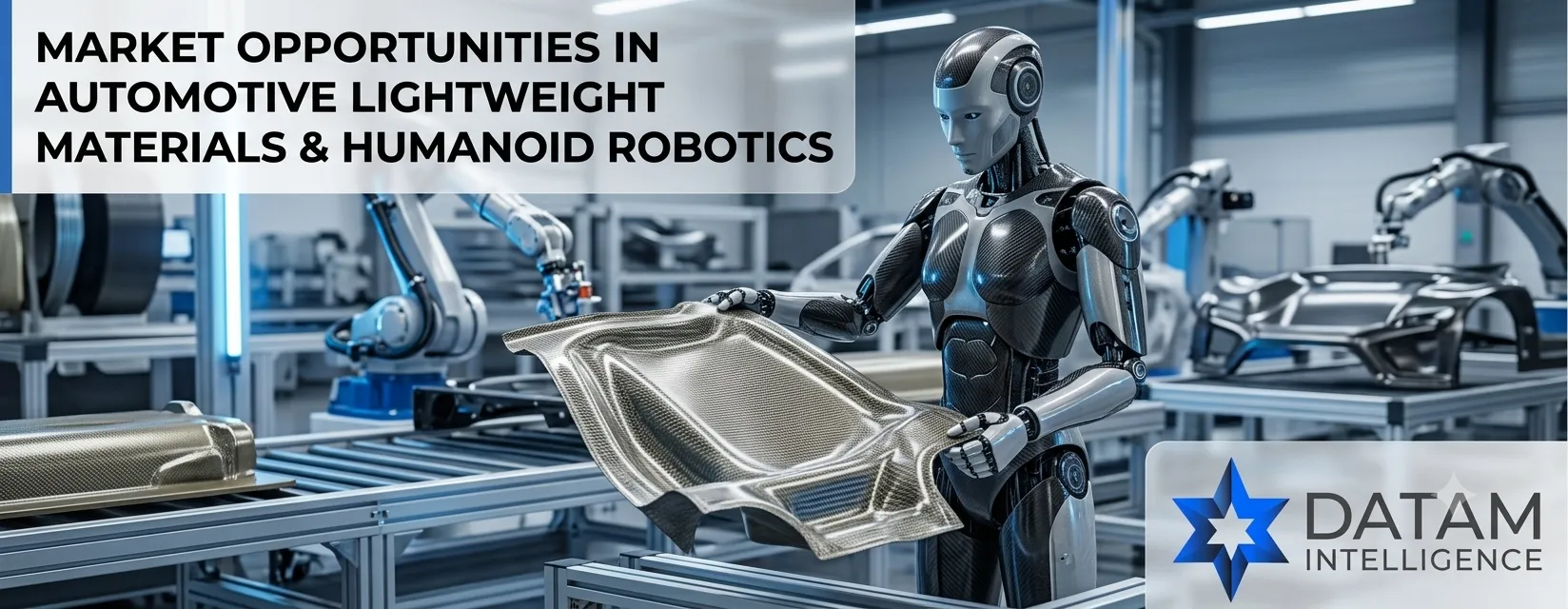
Automotive Lightweighting Technologies Move Into Humanoid Robotics
Humanoid robots require similar engineering priorities as modern electric vehicles: weight reduction, structural durability, energy efficiency and manufacturing scalability.
Unlike stationary industrial robots, humanoid robots must continuously balance movement, carrying capability and battery consumption. Reducing robot weight directly improves:
- Battery operating time
- Motion flexibility
- Actuator efficiency
- Manufacturing costs
- Transportation and deployment efficiency
This creates opportunities for automotive suppliers with expertise in lightweight design, precision casting, alloy development and advanced manufacturing processes.
Aluminum and Magnesium Alloys Become Strategic Materials
Aluminum alloys are expected to play an important role in humanoid robot structures due to their lightweight characteristics, corrosion resistance and established automotive supply chains.
Magnesium alloys are also attracting attention because of their lower density, vibration damping capability and potential application in robot frames, joints and actuator components.
Material suppliers already serving EV manufacturers may have a competitive advantage because many manufacturing processes—including die casting, extrusion, precision machining and surface treatment—can be adapted for robotics applications.
New Opportunities for Automotive Material Suppliers
The expansion of humanoid robots creates several emerging business opportunities:
1. Robot Structural Components
Advanced lightweight metals could be used in:
- Robot skeleton structures
- Arm and leg components
- Joint housings
- Protective covers
- Internal support frames
2. Advanced Manufacturing Solutions
Automotive suppliers specializing in:
- High-pressure die casting
- Lightweight alloy development
- Composite manufacturing
- Precision engineering
could become key partners in future humanoid robot production.
3. Cross-Industry Technology Transfer
The automotive industry's decades of experience in lightweight vehicle development provides a foundation for robotics manufacturers seeking scalable production methods.
Companies developing EV platforms, battery systems and intelligent manufacturing processes may increasingly participate in the humanoid robot ecosystem.
Humanoid Robot Supply Chain Becomes the Next Industrial Opportunity
The humanoid robotics market industry is moving from prototype development toward commercial deployment, increasing demand for specialized suppliers across mechanical, electronic and material categories.
For automotive material companies, humanoid robots represent a potential extension market beyond vehicles. The ability to provide lightweight, durable and cost-efficient materials could become a critical competitive advantage as robot manufacturers move toward mass production.
Future Outlook
As artificial intelligence, robotics and advanced manufacturing continue to converge, lightweight materials will become a strategic technology area supporting the next generation of intelligent machines.
Automotive material suppliers that invest early in robotics-specific applications, certification capabilities and partnerships with robot manufacturers may capture emerging opportunities in the humanoid robotics value chain.
Q1. Why do humanoid robots need lightweight materials?
Humanoid robots require lightweight materials to improve mobility, reduce energy consumption, extend battery life and increase operational efficiency.
Q2. Which materials are used in humanoid robot manufacturing?
Common materials include aluminum alloys, magnesium alloys, titanium alloys, carbon fiber composites and advanced engineering plastics.
Q3. Can automotive suppliers enter the humanoid robotics market?
Yes. Automotive suppliers already have expertise in lightweight structures, precision manufacturing and advanced materials that can be adapted for robotics applications.
Q4. How will humanoid robots impact the lightweight materials market?
The growth of humanoid robots could create additional demand for advanced materials beyond automotive applications, expanding opportunities for alloy producers and component manufacturers.
News source: https://news.metal.com/newscontent/104002127-humanoid-robots-have-arrivedwhat-new-opportunities-are-there-for-automotive-lightweight-materials-iron-humanoid-robot-ma