


Next-Generation EV Batteries Accelerate as Industry Pursues Higher Performance
Battery technology remains the cornerstone of electric vehicle competitiveness, with manufacturers racing to deliver longer driving ranges, faster charging capabilities and lower production costs. As global EV adoption continues to grow, battery innovation is becoming a defining factor for automakers seeking differentiation in an increasingly competitive market. Global EV battery deployment reached record levels in recent years, reflecting strong demand across passenger and commercial vehicle segments.
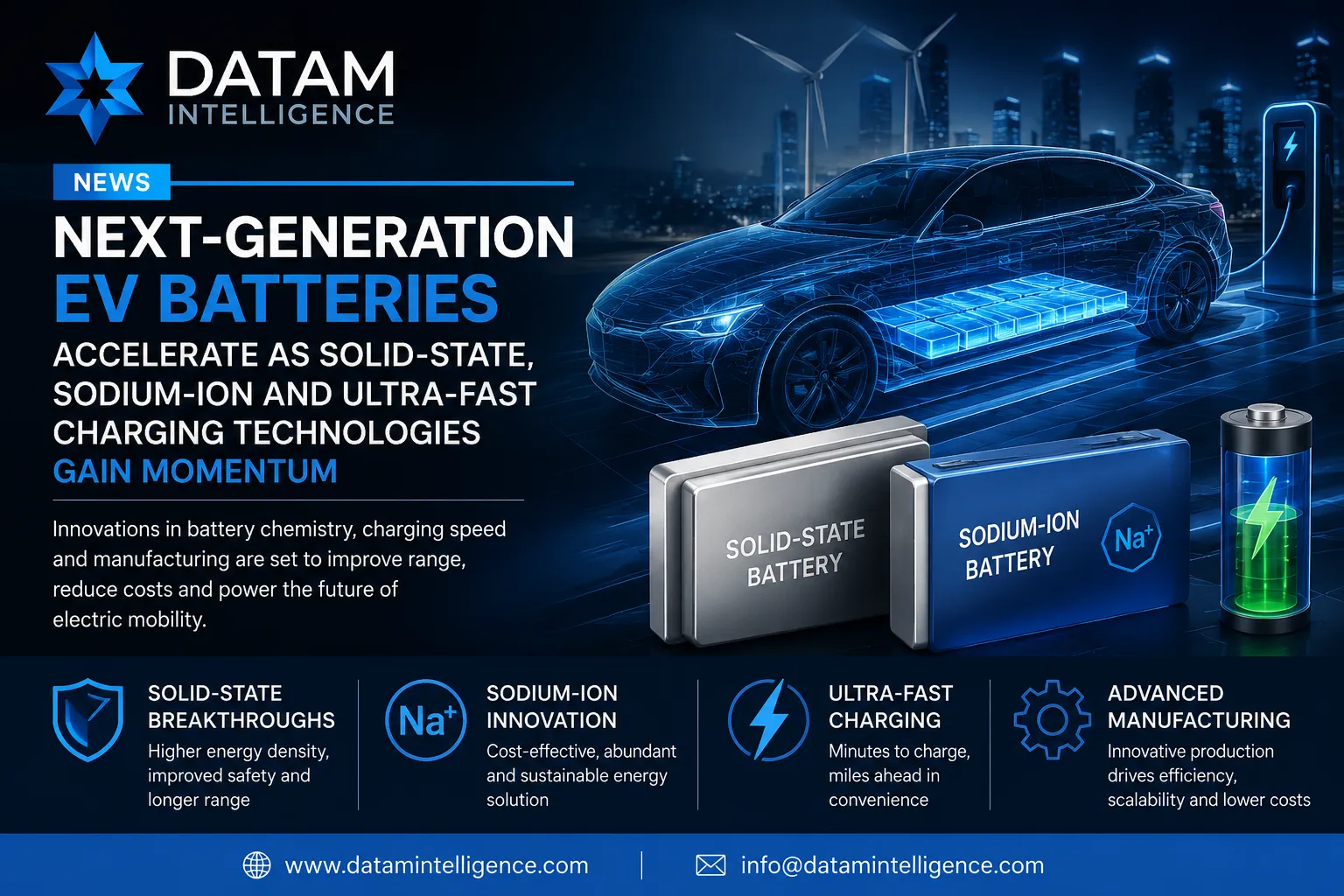
Solid-State Batteries Move Closer to Commercial Reality
Among the most closely watched technologies are solid-state batteries, which replace conventional liquid electrolytes with solid materials. The technology promises improved safety, greater energy density and significantly faster charging performance. Several automotive and battery companies are expanding partnerships to accelerate development and manufacturing readiness, reflecting growing confidence that solid-state batteries could play a major role in future EV platforms. Industry experts believe successful commercialization could substantially enhance vehicle range while reducing overall battery weight.
Sodium-Ion Batteries Gain Industry Attention
Sodium-ion batteries are emerging as an attractive alternative to lithium-based chemistries, particularly for cost-sensitive applications. Unlike lithium-ion batteries, sodium-ion technology relies on more abundant raw materials, helping reduce supply chain risks and dependence on critical minerals. Recent industry initiatives indicate growing investment in sodium-ion production capabilities, with companies positioning the technology as a complementary solution for both mobility and energy storage markets. The chemistry's affordability and sustainability advantages could support broader electrification efforts globally.
Ultra-Fast Charging Becomes a Key Competitive Differentiator
Charging speed remains one of the most important considerations for EV buyers. Battery manufacturers are increasingly focused on ultra-fast charging technologies capable of dramatically reducing charging times. Recent advancements suggest next-generation batteries may enable charging performance that approaches the convenience of traditional refueling, helping address consumer concerns around range anxiety and charging infrastructure limitations. Faster charging capabilities are expected to play a critical role in accelerating mainstream EV adoption.
Advanced Manufacturing Unlocks New Possibilities
Beyond chemistry improvements, manufacturers are exploring innovative production methods to improve battery efficiency and reduce costs. Emerging approaches, including additive manufacturing and 3D printing technologies, are enabling new battery designs that maximize space utilization and energy performance. Industry observers believe advanced manufacturing could help accelerate commercialization timelines while supporting more customized battery architectures for future mobility applications.
Market Outlook
The next decade is expected to bring substantial transformation across the battery value chain as technological innovation, manufacturing scale and sustainability priorities converge. As EV sales continue to expand globally, investment in battery research and production infrastructure is likely to intensify. Companies that successfully commercialize safer, lower-cost and higher-performing battery technologies could gain significant competitive advantages in the rapidly evolving electric mobility market.
Next-generation EV battery technologies are advancing rapidly as automakers and battery manufacturers invest in solid-state batteries, sodium-ion chemistry, ultra-fast charging systems and innovative manufacturing methods. These technologies aim to improve driving range, charging speed, safety, sustainability and affordability while reducing reliance on critical raw materials. As global EV adoption grows, battery innovation is expected to become a major driver of competitive advantage across the automotive industry.
What are the most important EV battery technologies emerging today?
The most important emerging EV battery technologies include solid-state batteries, sodium-ion batteries, ultra-fast charging battery systems and advanced battery manufacturing techniques. These innovations are designed to increase energy density, reduce charging times, improve safety, lower costs and strengthen battery supply chains, supporting the next phase of electric vehicle adoption.
News source: https://www.autonews.com/ev/an-battery-technology-developments-0621/