


For decades, three forces dictated the global isocyanates market: scale, feedstock costs, polyurethane demand and manufacturing efficiencies. This business paradigm was synonymous with growth by expanding production volume, building more regional production capabilities, and controlling costs in the insulation, coatings, furniture, refrigeration and automotive segments. This has led to a market that is in rapid flux. BASF's introduction of biomass-balanced isocyanates into the low carbon systems market in 2026 represents an inflection point in the isocyanates sector. While on the surface it looks like a mere sustainability initiative; on deeper examination, it has vast implications for the industry. The move suggests a new model for the isocyanates sector is being born from a focus on bulk chemical manufacturing to a shift to low carbon infrastructure.
What does this Low Carbon Disruption mean for the industry?
Energy efficient infrastructure and industrial carbonization have been identified as a critical driver in global manufacturing. Historically, insulation systems were driven by performance vs cost. In the current market, demands on infrastructure are being transformed. Governments, developers, refrigeration operators and industrial manufacturers alike are placing high value on the reduction of embodied carbon, management of life cycle emissions and sustainability targets in addition to their traditional performance demands. This is causing a transformation of how materials are viewed and assessed within the marketplace.
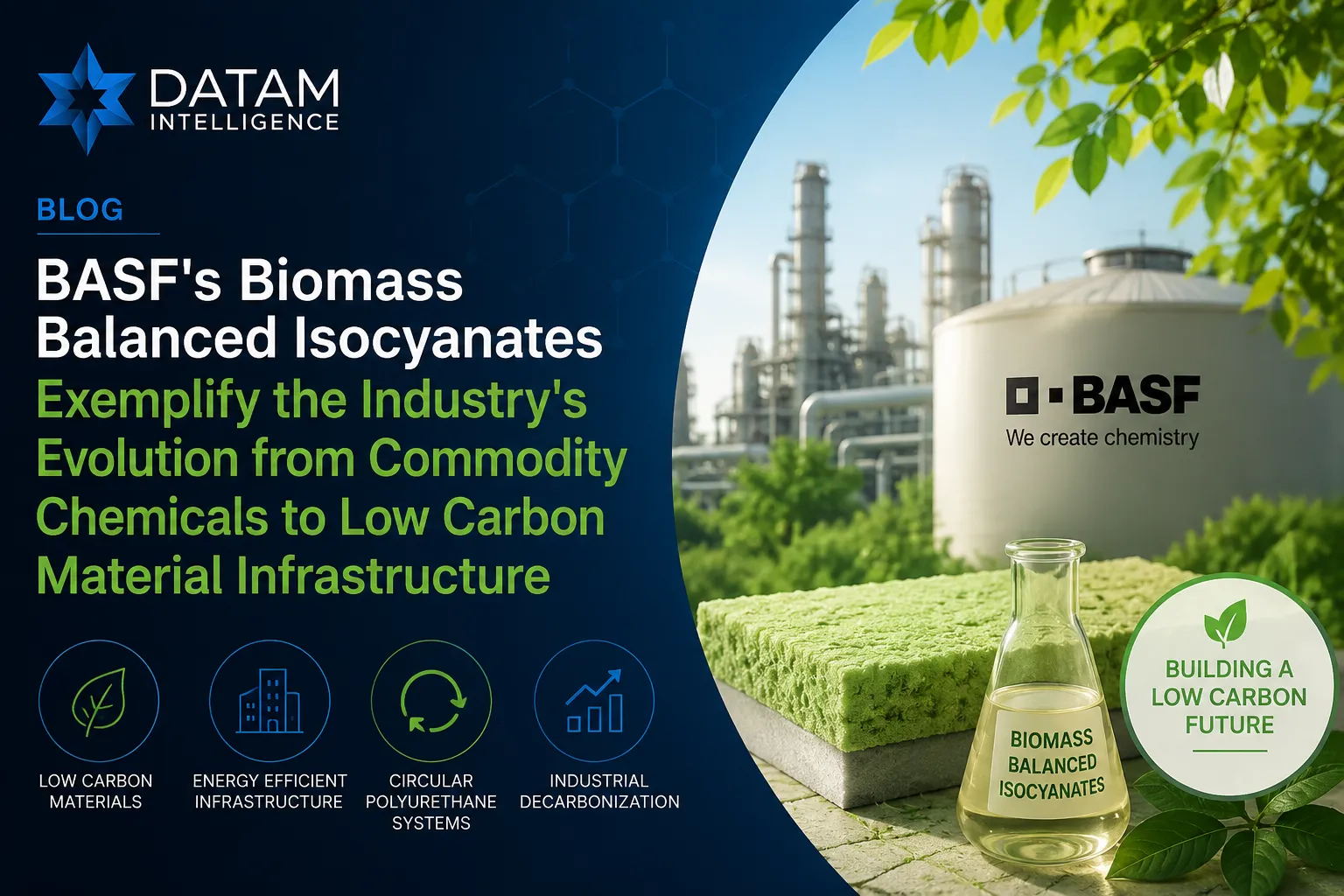
BASF's biomass balanced isocyanates are intended to address this new demand landscape. The company introduced its Elastospray biomass balanced solutions for spray polyurethane foam insulation which significantly reduce the carbon footprints of these materials by incorporating renewable feedstocks into existing manufacturing processes. DataM analysis sees this as not just a new product offering, but rather as an indicator of a significant change in market direction. The message is clear. isocyanates are no longer just industrial chemical inputs, but strategic materials for energy efficient infrastructure, industrial decarbonization and long-term sustainability.
Low Carbon Insulation is Emerging as a Key Industry Priority
The construction and infrastructure sector globally is going through a significant transformation in terms of regulatory and operational practices. Buildings account for a substantial amount of global energy consumption and greenhouse gas emissions. Because of this, there is an increasing emphasis on stringent energy efficient regulations and carbon reduction targets are being adopted across key global markets. This trend is creating a strong market demand for advanced polyurethane insulation systems.
Polyurethane based materials, which are produced using isocyanates, offer high performance regarding insulation properties. They provide some of the highest thermal insulation characteristics for application in commercial buildings, refrigeration systems, industrial facilities and the cold chain infrastructure. Traditional polyurethane production methods however have faced scrutiny regarding life cycle emissions and their reliance on fossil feedstocks. Biomass balanced isocyanates can become significant here. By blending renewable feedstocks into the established chemical production system without compromising on industrial scale capability, BASF is positioned to drive low carbon isocyanates as key enablers in an energy efficient economy.
Infrastructure developers are increasingly shifting their criteria away from purely upfront cost and moving towards a more holistic evaluation method that incorporates carbon footprint, sustainability compliance, life cycle emissions, thermal efficiency and the potential for long-term operational savings. This is changing the landscape of competition within the isocyanate market.
The Isocyanate Industry is Quietly Embarking on a Sustainability Transition
The introduction of biomass balanced isocyanates by BASF is clear evidence that a broad shift is occurring within the polyurethane and advanced materials sectors. While historically, production capacity and feedstock integration have defined market leadership in the polyurethane value chain, 2026 will mark the beginning of competition driven by sustainable performance, circular manufacturing capabilities and the innovation of low carbon materials.
This shift can be seen reflected in a variety of important developments. Covestro and Fraunhofer UMSICHT have ramped up their activities developing smart pyrolysis infrastructure to turn polyurethane waste streams into future MDI inputs. Their stated goal is to decrease carbon intensity and foster circular material systems. Huntsman Corporation is also accelerating its efforts to develop advanced polyurethane systems specifically designed for lightweight mobility, energy-efficient insulation, and industrial sustainability.
These ongoing developments illustrate an important market reality in the isocyanate landscape. The companies with the largest commodity production scales in 2026 will no longer be positioned as the dominant players. Strategic placement within sustainable material innovation and low carbon industrial infrastructure is becoming extremely important. But, with the EU’s REACH reforms being delayed in favour of continuing with current regulations, there still remain question marks on how companies will adapt to this change and take advantage of the easing of potential regulations surrounding the isocyanate market.
Electrification and Energy Efficiency are Accelerating the Shift
The isocyanate Market is also seeing rapid expansion of electric vehicles and energy intensive infrastructure. Electric vehicle manufacturers require advanced polyurethane materials to be used in lightweight components, thermal management systems, battery insulation, coatings and structural parts. Refrigeration systems, semiconductor facilities, data centers and pharmaceutical cold-chain infrastructure similarly depend heavily on high-performance insulation systems for energy efficient operation.
This creates strong demand for advanced polyurethane systems. However, the demand will be influenced not only by functionality but also by performance driven by sustainability. Moving beyond simple commodity expansion to focus on low carbon insulation systems, recyclable polyurethane materials and renewable feedstocks will be a major focus area for companies. Procurement decisions will become influenced by the need to find materials and suppliers that can facilitate decarbonization efforts and that perform optimally in terms of thermal and operational efficiency.
Isocyanate Market Strategic Focus for the Next Decade
Sustainability compliance will emerge as a core competitive requirement, shifting from being an advantage related to brand image, to becoming a fundamental requirement to participate in the market. Stricter carbon accounting, embodied emissions reporting and life cycle assessment standards will likely become increasingly stringent.
Circular polyurethane ecosystems will experience substantial growth as the industry looks to implement recycling infrastructure, feedstock recovery systems and incorporate renewable raw material inputs to promote long-term competitive viability. Advanced insulation systems will become strategically important as governments continue to emphasize the importance of energy efficient buildings, cold chain infrastructure and industrial decarbonization policies.
Lightweight materials and thermal management solutions for electric vehicles and advanced manufacturing applications will continue to stimulate demand for high-value polyurethane systems. Investors will likely move toward favoring investments in specialty and sustainability oriented chemical innovation over traditional commodity chemical investments.
Future Timeline: The Isocyanate Market's Potential Transformation
- 2026-2027: Low carbon material transition is in full swing. As balanced biomass and low carbon polyurethane systems reach critical mass, the market will see investment increases into renewable feedstocks, sustainable insulation and carbon reduction technology.
- Late 2020s: Sustainable regulations will shape the purchasing habits with increased rigor in embodied carbon and energy efficiency rules in the construction and industrial sectors making low carbon insulation systems and sustainable polyurethane materials top of the list for infrastructure developers.
- Early 2030s: Circular polyurethane systems will achieve widespread success in the market with a major buildout of recycling infrastructure and feedstock recovery systems. Advanced recovery for PU waste streams should become viable on commercial scales in large industrial markets.
- Mid 2030s: Demand growth for specialty materials driven by electrification. EV production, battery manufacturing, advanced refrigeration infrastructure and semiconductor facilities, and other energy intensive applications should continue to drive demand growth for lightweight and thermal-management PU systems.
- Late 2030s: The isocyanate market is significantly transformed, with low carbon production, circular manufacturing and sustainable materials innovation being the cornerstone of competitive advantage. Companies which led early into renewable feedstocks, sustainable insulation and advanced PU systems will be at the forefront of growth.
The Bigger Reality Beyond a Single Product Launch
BASF's biomass balanced isocyanates are not merely another sustainable chemical product; they represent the starting point for a monumental industrial shift. The isocyanate market, traditionally operated as a commodity chemical industry governed by scale and feedstock economies for decades, will in 2026 begin to morph into something profoundly different.
Market value will increasingly be awarded to companies enabling energy efficiency, industrial decarbonization, low carbon infrastructure and superior thermal performance all at once. This evolving landscape will redefine the future of not just the isocyanate market, but economics of a significant portion of the industrial materials industry as well.
Related Reports
For readers interested in BASF's biomass-balanced isocyanates, low-carbon materials, polyurethane innovation, and sustainable infrastructure, the following DataM Intelligence reports are highly relevant:
- Isocyanate Market – Share, Size, Outlook, and Opportunity Analysis
Covers market trends, demand drivers, competitive landscape, and growth opportunities across MDI, TDI, coatings, adhesives, and insulation applications. - MDI, TDI and Polyurethane Market
Provides detailed analysis of methylene diphenyl diisocyanate (MDI), toluene diisocyanate (TDI), polyurethane demand, sustainability trends, and future growth outlook. - Polyurethane Market
Examines global polyurethane market growth, key end-use industries, insulation applications, and emerging sustainability opportunities. - Spray Polyurethane Foam Market
Relevant to BASF's Elastospray biomass-balanced solutions, focusing on energy-efficient buildings, insulation technologies, and construction sector demand. - Polyurethane Foam Market
Covers rigid and flexible polyurethane foams used in construction, refrigeration, cold-chain infrastructure, and industrial insulation. - One Component Polyurethane Foam Market
Analyzes growing demand for advanced insulation materials in construction and infrastructure applications.