


Market Size
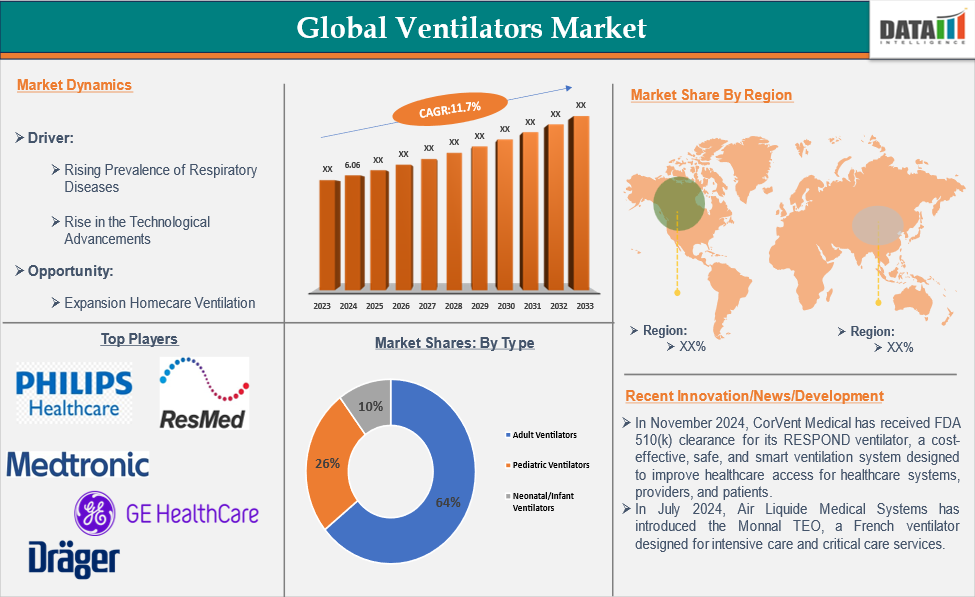
Global Ventilators Market reached US$ 6.77 billion in 2025 and is expected to reach US$ 22.46 billion by 2035, growing at a CAGR of 11.7% during the forecast period 2026-2035.
The global ventilators market is vital in respiratory care, providing life-saving support to patients with conditions like COPD, pneumonia and ARDS. It is segmented based on mobility, type, interface, and end-users, with intensive care and portable ventilators being key categories. Leading companies like Philips Healthcare, Medtronic and GE Healthcare dominate the market while emerging players like SCHILLER Healthcare and Ventis Medical Inc. introduce innovative solutions. The market continues to expand due to technological advancements, rising respiratory diseases, and the growing demand for non-invasive ventilation.
Executive Summary
Source:- DataM Intelligence
For more details on this report – Request for Sample
Market Dynamics: Drivers & Restraints
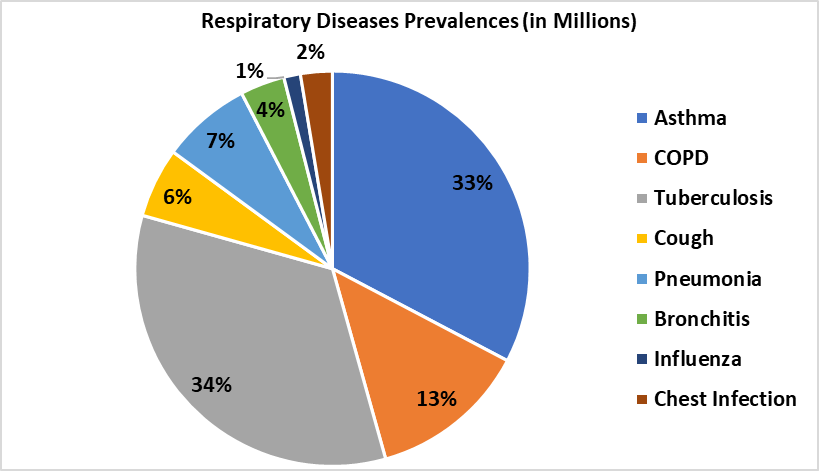
The ventilators market is experiencing steady growth due to the rising prevalence of chronic respiratory diseases such as COPD, asthma, pneumonia, and acute respiratory distress syndrome (ARDS), along with the increasing geriatric population vulnerable to respiratory complications. Growing ICU admissions, expansion of healthcare infrastructure, and rising demand for emergency and home-based respiratory support systems are significantly driving market demand. Technological advancements including AI-enabled ventilation systems, portable ventilators, non-invasive ventilation modes, smart monitoring capabilities, and improved connectivity features are further accelerating market expansion. In addition, increased government investments in critical care preparedness and the long-term impact of the COVID-19 pandemic have strengthened awareness regarding ventilator availability across hospitals and emergency healthcare settings.
However, the market faces challenges including the high cost of advanced ventilator systems, expensive maintenance requirements, and the need for skilled healthcare professionals to operate sophisticated equipment. Many low- and middle-income countries continue to face limitations related to ICU infrastructure, stable power supply, and access to trained respiratory therapists, which restricts widespread adoption. Concerns regarding ventilator-associated infections, regulatory compliance, cybersecurity risks in connected devices, and reimbursement limitations for home mechanical ventilation also act as major restraints for market growth. Despite these challenges, increasing adoption of portable and homecare ventilators, rising healthcare expenditure in emerging economies, and continuous innovation in compact, energy-efficient, and AI-integrated respiratory devices are expected to create substantial growth opportunities for the ventilators market over the coming years.
Source:- DataM Intelligence
Stringent Regulatory Environment and Compliance Requirements
The ventilators market faces challenges due to strict regulatory frameworks, extensive testing, clinical trials, and certification processes, which can delay time-to-market and increase costs. Manufacturers must adapt to evolving standards, which can hinder innovation and complicate product launches, restraining market growth.
Market Segment Analysis
The global ventilators market is segmented based on type, mobility, interface, end user and region.
Type:
The adult ventilators in the type segment are expected to dominate the ventilators market with the highest market share
Adult ventilators are mechanical devices used to provide respiratory support to adults with breathing difficulties or respiratory failure. They deliver controlled oxygen and remove carbon dioxide, ensuring adequate gas exchange in the lungs. Commonly used in ICUs, emergency rooms, and home care for conditions like COPD, ARDS, and post-surgical recovery.
The adult ventilator market is fueled by rising respiratory diseases like COPD, ARDS, and pneumonia, as well as the geriatric population's increased susceptibility to respiratory illnesses. Moreover, product launches, technological advancements like AI integration, and the development of portable and home-use ventilators are driving market growth. The increasing number of ICU admissions, awareness of critical care infrastructure, and government initiatives to strengthen healthcare systems, particularly after the COVID-19 pandemic, are also driving market expansion.
For instance, in February 2024, Getinge launched its Sewo-c mechanical ventilator in India, designed to cater to the diverse respiratory needs of both pediatric and adult patients. The launch is a significant step towards making advanced healthcare solutions accessible and affordable for hospitals across India.
Market Geographical Share
North America is expected to hold a significant position in the ventilators market with the highest market share
North America is experiencing significant growth in the ventilator market due to its advanced healthcare infrastructure, significant medical technology investment, and high demand for respiratory care solutions. Government initiatives and reimbursement policies support advanced ventilator systems, especially in critical care settings. The COVID-19 pandemic has accelerated investments in intensive care infrastructure, emphasizing the need for reliable ventilator support.
The presence of major players in the region is focusing on product launches with advancements, driving the market growth in the region. For instance, in October 2024, Nihon Kohden America, a global medical technology leader, introduced the NKV-440 Ventilator System, previously available through OrangeMed, to a wider range of healthcare providers.
Major Global Players
The major global players in the ventilators market include Philips Healthcare, ResMed Inc., Medtronic plc, GE Healthcare, Drägerwerk AG & Co. KGaA, Hamilton Medical AG, Fisher & Paykel Healthcare Corporation Limited, Getinge AB, Vyaire Medical and AgVa Healthcare among others.
Key Developments
February 2026: Growing adoption of portable ventilators across North America and Europe accelerated demand for home healthcare and emergency respiratory support solutions.
January 2026: Increasing investments in ICU infrastructure in Asia-Pacific and Middle East & Africa strengthened deployment of advanced ventilator systems in hospitals and critical care centers.
December 2025: Rising integration of AI-enabled systems across Europe and North America improved patient monitoring, ventilation accuracy, and clinical decision-making capabilities.
November 2025: Expansion of home healthcare services in North America and Asia-Pacific enhanced adoption of compact and user-friendly ventilators for long-term respiratory care.
October 2025: Increasing prevalence of COPD, asthma, pneumonia, and respiratory disorders in Asia-Pacific and North America boosted demand for effective ventilator systems globally.
September 2025: Growing advancements in non-invasive ventilation technologies across Europe and North America improved patient comfort and reduced complications associated with invasive respiratory support.
August 2025: Rising focus on neonatal care in Asia-Pacific and Latin America encouraged adoption of specialized ventilators for premature infants and pediatric respiratory support.
July 2025: Increasing government funding and healthcare modernization initiatives in Middle East & Africa and Asia-Pacific accelerated procurement of advanced mechanical ventilators and respiratory care equipment.
| Metrics | Details | |
| CAGR (%) | 11.7% | |
| Market Size Available for Years | 2023-2035 | |
| Estimation Forecast Period | 2026-2035 | |
| Revenue Units | Value (US$ Bn) | |
| Volume (Units) | ||
| Segments Covered | Type | Adult Ventilators, Pediatric Ventilators, Neonatal/Infant Ventilators |
| Mobility | Intensive Care Ventilators, Portable/Transportable Ventilators | |
| Interface | Invasive Ventilation, Non-Invasive Ventilation | |
| End User | Hospitals & Clinics, Home Care Settings, Ambulatory Care Centers, Emergency Medical Services (EMS) | |
| Regions Covered | North America, Europe, Asia-Pacific, South America and Middle East & Africa | |
Why Purchase the Report?
- Technological Innovations: Reviews ongoing clinical trials, product pipelines, and forecasts upcoming advancements in medical devices and pharmaceuticals.
- Product Performance & Market Positioning: Analyzes product performance, market positioning, and growth potential to optimize strategies.
- Real-World Evidence: Integrates patient feedback and data into product development for improved outcomes.
- Physician Preferences & Health System Impact: Examines healthcare provider behaviors and the impact of health system mergers on adoption strategies.
- Market Updates & Industry Changes: Covers recent regulatory changes, new policies, and emerging technologies.
- Competitive Strategies: Analyzes competitor strategies, market share, and emerging players.
- Pricing & Market Access: Reviews pricing models, reimbursement trends, and market access strategies.
- Market Entry & Expansion: Identifies optimal strategies for entering new markets and partnerships.
- Regional Growth & Investment: Highlights high-growth regions and investment opportunities.
- Supply Chain Optimization: Assesses supply chain risks and distribution strategies for efficient product delivery.
- Sustainability & Regulatory Impact: Focuses on eco-friendly practices and evolving regulations in healthcare.
- Post-market Surveillance: Uses post-market data to enhance product safety and access.
- Pharmacoeconomics & Value-Based Pricing: Analyzes the shift to value-based pricing and data-driven decision-making in R&D.
Target Audience
- Manufacturers: Pharmaceutical, Medical Device, Biotech Companies, Contract Manufacturers, Distributors, Hospitals.
- Regulatory & Policy: Compliance Officers, Government, Health Economists, Market Access Specialists.
- Type & Innovation: AI/Robotics Providers, R&D Professionals, Clinical Trial Managers, Pharmacovigilance Experts.
- Investors: Healthcare Investors, Venture Fund Investors, Pharma Marketing & Sales.
- Consulting & Advisory: Healthcare Consultants, Industry Associations, Analysts.
- Supply Chain: Distribution and Supply Chain Managers.
- Consumers & Advocacy: Patients, Advocacy Groups, Insurance Companies.
- Academic & Research: Academic Institutions.
The global ventilators market report delivers a detailed analysis with 61 key tables, more than 59 visually impactful figures, and 220 pages of expert insights, providing a complete view of the market landscape.




























































