


Synbiotic Supplements Market Overview
Rowing consumer interest in personal well-being is driving demand for functional foods and beverages enriched with prebiotics and probiotics. This shift reflects broader changes in dietary habits and lifestyle choices, which are increasing reliance on nutritional supplements. The incorporation of these bioactive ingredients into everyday food products is supporting market expansion.
Simultaneously, more consumers are recognizing the value of synbiotic products that combine prebiotics and probiotics. Their perceived benefits such as supporting digestive balance, reinforcing immune defenses, and promoting general wellness are prompting broader and more consistent use across varied demographic groups.
Market Size and Future Outlook
- 2025 Market Size: US$ 986.09 million
- 2033 Projected Market Size: US$ 1,717.22 million
- CAGR (2025-2032):7.18%
- Largest Market: North America
Fastest Market: Asia Pacific
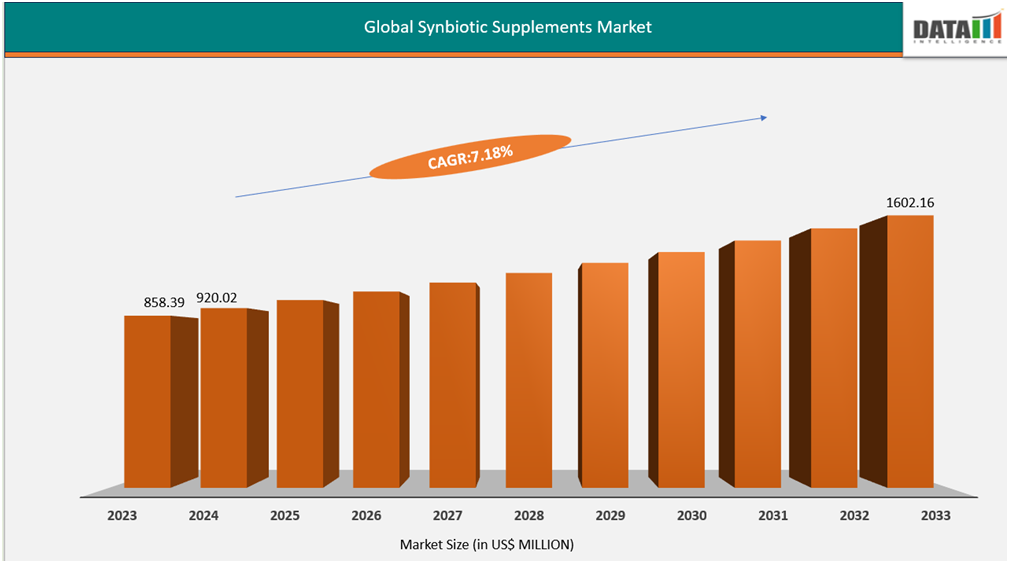
Source : DataM Intelligence Email : [email protected]
Key Takeaways
- The increasing consumer focus on digestive wellness, immune health, and microbiome balance is emerging as a key industry trend, with synbiotic supplement manufacturers developing scientifically formulated combinations of probiotics and prebiotics to deliver enhanced gut health benefits and improved functional efficacy.
- Asia-Pacific maintains a leading position in the global synbiotic supplements market, supported by rising health awareness, growing consumption of functional foods and dietary supplements, expanding middle-class populations, and increasing adoption of preventive healthcare across countries such as China, Japan, South Korea, and India.
- North America is projected to witness significant growth, driven by strong consumer demand for clinically supported nutritional supplements, expanding awareness of the gut microbiome's role in overall health, a well-established dietary supplements industry, and continuous innovation in personalized nutrition solutions.
- The increasing prevalence of digestive disorders, lifestyle-related health concerns, and weakened immunity is becoming a major factor accelerating the adoption of synbiotic supplements among consumers seeking preventive and long-term wellness solutions.
- Growing scientific research highlighting the synergistic benefits of combining probiotics with prebiotics is strengthening consumer confidence and encouraging product innovation across capsules, powders, gummies, sachets, and functional beverage formulations.
- Industry participants are increasingly prioritizing clinically validated formulations, clean-label ingredients, strain-specific research, regulatory compliance, and evidence-based product differentiation to strengthen their competitive positioning in the rapidly evolving synbiotic supplements market.
- Rising investments in microbiome research, personalized nutrition, functional foods, and next-generation dietary supplement technologies are creating significant opportunities for synbiotic supplement manufacturers, ingredient suppliers, and healthcare nutrition companies worldwide.
Synbiotic Supplements Market Scope
| Metrics | Details |
| By Age Group | Adults, Geriatric Population, Children & Infants.
|
By Product Type
| Food and Beverage, Dietary Supplements, Animal Feed, Others. |
| By Application | Digestive Health, Immune Support, Mental & Metabolic Health, Skin Health, Prenatal& Perinatal Support, Others |
| By Region | North America, South America, Europe, Asia-Pacific, Middle East and Africa |
| Report Insights Covered | Competitive Landscape Analysis, Company Profile Analysis, Market Size, Share, Growth |
Synbiotic Supplements Market Dynamics
synbiotic Surge Driven by Gut Health Awareness
Awareness around gut health has grown significantly, with more individuals recognizing its impact on digestion, immune function, and mental clarity. This growing understanding, shaped by scientific findings and reinforced by healthcare voices and wellness communities, is encouraging people to explore synbiotic supplements. These products, which blend probiotics and prebiotics, are gaining traction as consumers look for ways to support a healthier microbiome.
For instance, in 2024, UK-based Clasado Biosciences unveiled a new functional beverage featuring a blend of prebiotics and probiotics at Vitafoods Europe in Geneva, aiming to support gut health through microbiome-targeted nutrition.
Regulatory Fragmentation Slows Expansion of Global Market
Although interest in synbiotic supplements is rising worldwide, expanding their reach across borders remains challenging. Regulatory systems differ from country to country, with each applying its own rules for microbial strains, permitted health claims, and labeling requirements. These inconsistencies complicate international product launches, often leading to longer approval timelines and higher compliance costs. As a result, many innovative formulations struggle to reach consumers, particularly in developing regions where regulatory clarity is still evolving.
Synbiotic Supplements Market Segmentation Analysis
The global synbiotic supplements market is segmented based on product type, application, end user and region.
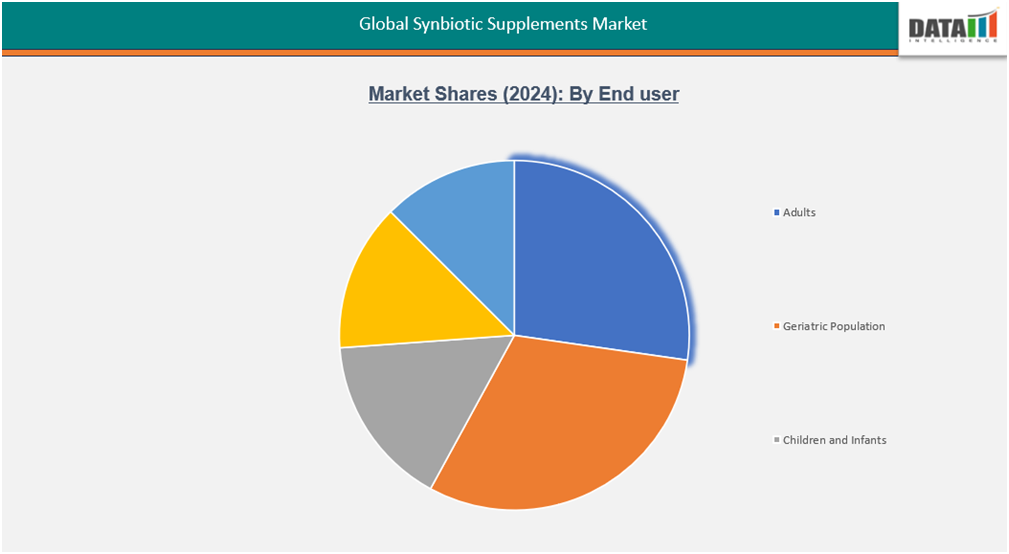
Growing Consumer Focus on Preventive Healthcare Drives the Adults Segment
The adults segment is expected to account for a significant share of the global synbiotic supplements market, driven by increasing awareness of gut microbiome health and the rising adoption of preventive nutrition. Adults are increasingly incorporating synbiotic supplements into their daily wellness routines to support digestive health, strengthen immune function, and improve overall well-being. Sedentary lifestyles, changing dietary habits, and the growing prevalence of digestive disorders have further accelerated demand for clinically supported synbiotic formulations among the adult population. Manufacturers are also expanding their product portfolios with convenient formats such as capsules, powders, gummies, and functional beverages to cater to evolving consumer preferences.
Supporting this trend, leading nutrition and probiotic manufacturers continue to invest in research, product innovation, and strategic partnerships to develop scientifically validated synbiotic formulations targeting digestive and immune health. These initiatives are strengthening product accessibility and reinforcing consumer confidence in synbiotic supplementation across global markets.
Increasing Demand for Personalized Gut Health Solutions Accelerates the Dietary Supplements Segment
The dietary supplements segment is anticipated to witness the fastest growth during the forecast period owing to increasing consumer preference for convenient and targeted nutritional products. Rising awareness regarding the synergistic benefits of combining probiotics with prebiotics, coupled with growing interest in personalized nutrition, is driving the adoption of synbiotic dietary supplements. The expansion of e-commerce platforms, wider availability through pharmacies and health stores, and continuous innovation in formulation technologies are further supporting segment growth.
In response to this growing demand, industry participants are introducing advanced synbiotic supplements containing clinically researched probiotic strains and specialized prebiotic ingredients designed to support digestive health, immune function, metabolic wellness, and overall microbiome balance. Continuous investments in product development and scientific research are expected to further strengthen the long-term growth prospects of the dietary supplements segment.
Synbiotic Supplements Regional Market Insights
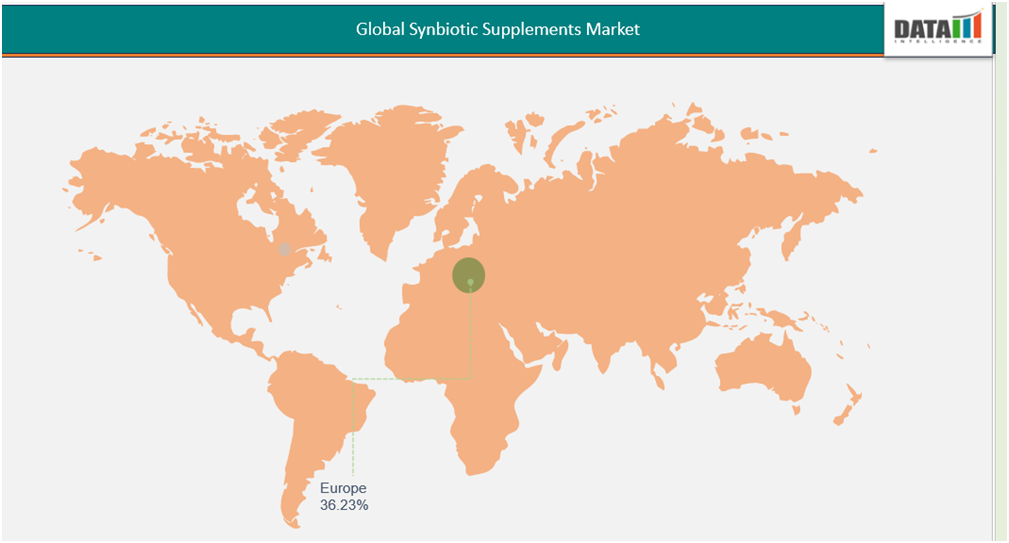
Europe Leads Global synbiotic Market Growth
Europe’s strong focus on health and wellness is driving demand for synbiotic products that support gut health. Strict food safety regulations build consumer trust, while widespread availability across supermarkets, pharmacies, and health stores ensures easy access. Cultural preferences for natural and organic options further boost their popularity.
U.K synbiotic Supplements Market Insights
UK synbiotic Market is gaining momentum as more consumers seek functional foods that support digestive health and overall wellness. Products combining probiotics and prebiotics are becoming increasingly visible in health stores, pharmacies, and online platforms. This growth is supported by rising public awareness of gut-related issues, especially post-pandemic, and a shift toward preventive nutrition.
For instance,in April 2024, the UK’s Food Standards Agency and the Government Office for Science convened a roundtable focused on microbiome research. The session explored how dietary components like prebiotics and probiotics contribute to gut health, while also highlighting areas where further scientific investigation is needed to strengthen nutritional strategies.
Germany synbiotic Supplements Market Insights
Germany’s synbiotic Market is expanding steadily, driven by growing consumer interest in digestive health and functional nutrition. Products that combine probiotics and prebiotics are gaining visibility across retail shelves, particularly in health food stores and pharmacies. German manufacturers are responding with innovations in food and beverage formats, offering options that cater to wellness-focused lifestyles.
For instance, marked the launch of SymbioLifeSatylia in Germany, following an exclusive marketing and distribution agreement between TargEDys and SymbioPharm. Featuring the next-generation probiotic Hafnia alvei HA4597, this strategic collaboration strengthens Germany’s position as a key growth market for synbiotic innovation.
Asia Pacific synbiotic Boom Driven by Income Growth and Wellness Awareness
Asia Pacific region is expected to see rapid expansion in the synbiotic sector, driven by rising income levels in countries like India and China. As people become more health-conscious, interest in nutritional supplements is growing. Social media platforms are shaping consumer habits, with fitness influencers playing a key role in promoting wellness trends. Increased familiarity with prebiotics and probiotics is also fueling demand, as many individuals turn to synbiotic products to aid digestion and address weight-related concerns.
China synbiotic Supplements Industry Growth
China’s synbiotic market is expanding rapidly as more consumers recognize the value of combining probiotics and prebiotics for digestive and immune support. With growing interest in wellness and preventive health, these products are becoming a preferred choice among individuals seeking natural ways to enhance gut function and overall resilience.
For instance, Bayer partnered with Jiangnan University in China to introduce probiotic formulations aimed at enhancing gut health and addressing digestive issues such as constipation and diarrhea. The collaboration is expected to contribute to growing interest in synbiotic solutions across the Chinese market.
India synbiotic Supplements Industry Growth
India’s synbiotic sector is attracting investor interest as demand for health-focused food and drink options continues to rise. With more consumers prioritizing gut health and overall wellness, products that combine probiotics and prebiotics are gaining traction. This shift is prompting manufacturers to diversify offerings and explore new formulations, signaling strong potential for growth and innovation in the market.
India’s Food Safety and Standards Authority (FSSAI) has introduced guidelines covering how synbiotic products are made, labelled, and marketed, aiming to protect consumers and ensure clear product information. Alongside this, the Make in India initiative is encouraging local production of synbiotic goods, helping reduce dependence on foreign imports and strengthening domestic industry participation in the health and nutrition space.
Synbiotic Supplements Market Sustainability Analysis
synbiotic supplements show strong sustainability potential through plant-based ingredients, eco-friendly packaging, and support for non-invasive health solutions. Seniors and children benefit socially, while companies improve transparency and align with global regulations to meet rising consumer expectations. Companies are also investing in transparent labeling and responsible marketing, aligning with evolving regulatory standards and consumer expectations. As demand grows, sustainability remains a key consideration in how these products are developed and delivered.
Synbiotic Supplements Market Competitive Landscape
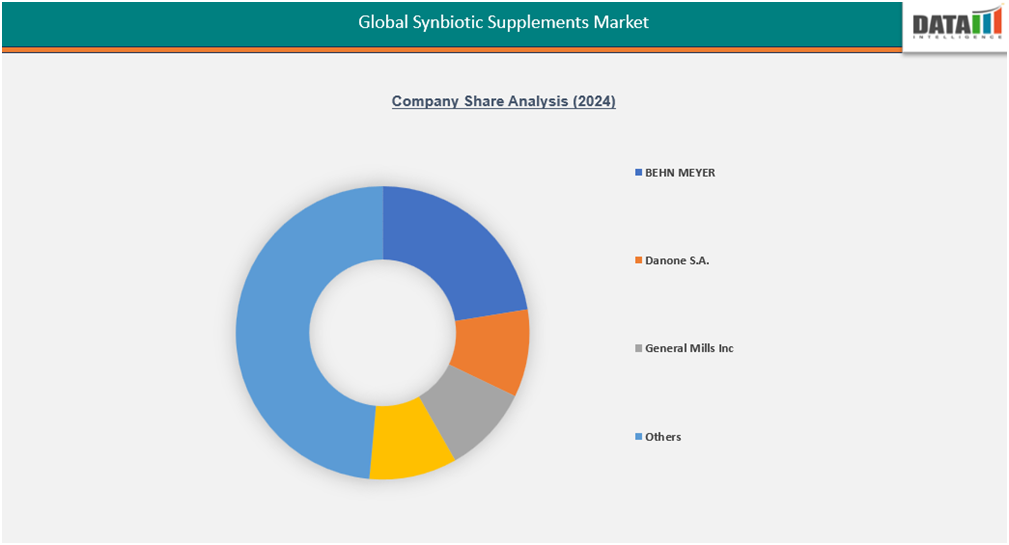
- The global synbiotic supplements market is highly competitive, driven by a mix of global and regional players striving for technological efficiency and cost leadership.
- Key players include, Behn Meyer Deutschland Holding AG & Co. KG, Chobani Global Holdings LLC, Chr. Hansen Holding A/S, Danone S.A., General Mills Inc., H&H Group, Pfizer Inc., Probiotical S.p.A., Sabinsa Corporation, Yakult Honsha Co. Ltd.
Key Developments of the Synbiotic Supplements Market
June 2026: Clasado Biosciences expanded the commercial reach of its Bimuno® GOS prebiotic through a strategic distribution partnership with Prokopton in France, strengthening opportunities for next-generation synbiotic supplement development across dietary supplements, food and beverage applications. The collaboration supports broader formulation innovation in the European gut health market.
- December 2025: Clasado Biosciences highlighted 2025 as a milestone year for prebiotic innovation, reporting significant growth in scientific validation and commercial adoption of Bimuno® GOS. The company emphasized increasing integration of clinically supported prebiotic ingredients into advanced synbiotic formulations and expanding health-focused product innovation.
- October 2025: NutriLeads introduced WECARROT®, a daily gut and immune health supplement formulated with its Benicaros® precision prebiotic, reinforcing innovation in microbiome-targeted nutrition. The launch reflects continued advancement toward scientifically validated prebiotic and synbiotic supplement solutions for global consumers.
Why Choose DataM?
- Technological Innovations: Explores advancements in synbiotic supplement formulations, including the integration of clinically studied probiotic strains with targeted prebiotic ingredients, microencapsulation technologies for enhanced microbial stability, delayed-release delivery systems, shelf-stable formulations, and precision microbiome-based product development designed to improve gut health, digestive function, and overall wellness.
- Product Performance & Market Positioning: Evaluates how manufacturers differentiate synbiotic supplements based on probiotic strain composition, prebiotic source, colony-forming unit (CFU) count, ingredient quality, formulation stability, clinical evidence, shelf life, dosage formats, and targeted health benefits such as digestive health, immune support, metabolic wellness, and microbiome balance.
- Real-World Evidence: Highlights the growing adoption of synbiotic supplements among consumers seeking digestive health support, immune function enhancement, microbiome balance, and general wellness across dietary supplement, functional food, and clinical nutrition applications, supported by increasing awareness of the gut microbiome's role in overall health.
- Market Updates & Industry Changes: Tracks key developments including new synbiotic product launches, formulation innovations, microbiome-focused research, expansion of manufacturing capabilities, strategic partnerships, regulatory developments, and investments in clinically validated probiotic and prebiotic ingredients across North America, Europe, Asia-Pacific, and other emerging markets.
- Competitive Strategies: Analyzes how leading companies strengthen their market position through clinically supported formulations, proprietary probiotic strains, innovative delivery technologies, product portfolio expansion, strategic collaborations, acquisitions, investments in microbiome research, and expansion into functional nutrition and personalized wellness markets.
- Pricing & Market Access: Explains pricing variations based on probiotic strain selection, CFU concentration, prebiotic ingredients, formulation complexity, clinical validation, dosage form, packaging, and brand positioning, along with market access through pharmacies, health and wellness retailers, supermarkets, specialty nutrition stores, e-commerce platforms, direct-to-consumer channels, and healthcare practitioners.
- Market Entry & Expansion: Identifies growth opportunities driven by increasing consumer awareness of gut health, rising demand for preventive healthcare, expanding functional nutrition markets, growing interest in microbiome science, and increasing consumption of dietary supplements, while outlining strategies such as product innovation, clinical validation, regional expansion, digital health partnerships, and consumer education initiatives.
Target Audience
- Dietary Supplement Manufacturers
- Probiotic & Prebiotic Ingredient Suppliers
- Functional Food & Beverage Companies
- Contract Development & Manufacturing Organizations (CDMOs)
- Nutraceutical Companies
- Pharmaceutical & Consumer Healthcare Companies



























































