


Stem Cell Therapy Market Size
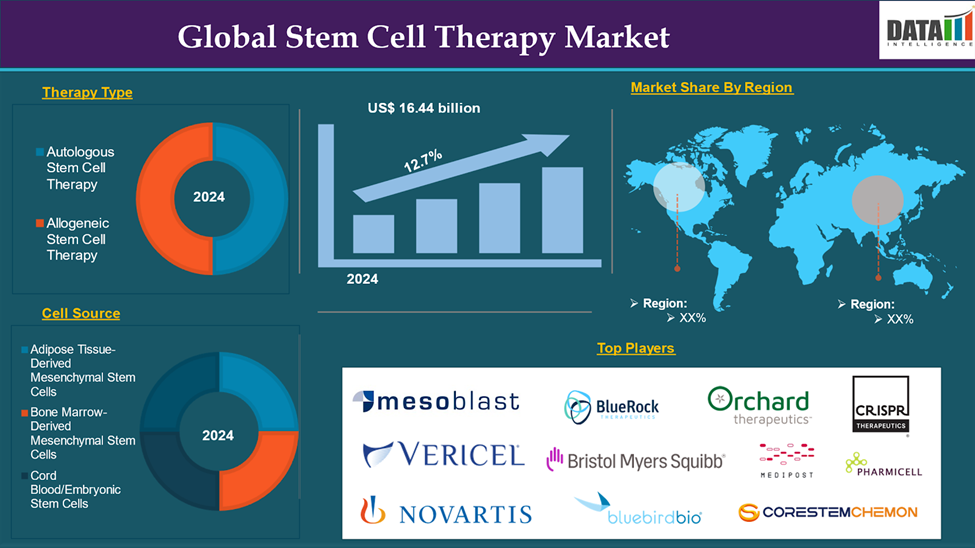
The Global Stem Cell Therapy Market reached US$ 18.52 billion in 2025 and is expected to reach US$ 52.71 billion by 2033, growing at a CAGR of 12.7% during the forecast period 2026-2033.
Stem cell therapy is a medical treatment that employs stem cells to prevent, treat, or manage a variety of diseases and conditions. Stem cells are unique, undifferentiated cells capable of self-renewal and differentiation into specialized cell types, such as muscle, nerve, or blood cells. The primary goal of stem cell therapy is to harness the regenerative properties of these cells to repair or replace damaged tissues, thereby improving health outcomes for patients with conditions that currently have limited treatment options.
Types of stem cells include autologous stem cells which are harvested from the patient's own body and allogeneic stem cells which are sourced from a donor. Stem cell therapy represents a promising frontier in regenerative medicine, aiming to leverage the unique properties of stem cells to address complex health challenges and enhance patient quality of life. As research progresses, this innovative approach holds the potential for significant advancements in treating a variety of conditions that currently lack effective therapies. These factors have driven the global stem cell therapy market expansion.
Stem Cell Therapy Market Key Takeaways
- The market is forecast to expand from US$ 18.52 billion in 2025 to US$ 52.71 billion by 2033, demonstrating strong commercial momentum driven by regenerative medicine innovation.
- Allogeneic stem cell therapy continues to dominate due to its scalable manufacturing model and ready-to-use availability compared to patient-specific therapies.
- Regulatory pathways such as the FDA's Regenerative Medicine Advanced Therapy (RMAT) designation are shortening development timelines for innovative regenerative therapies.
- Increasing investments in gene editing, tissue engineering, and clinical-grade manufacturing infrastructure are strengthening future commercialization opportunities.
- Asia-Pacific represents the fastest-growing regional market owing to expanding healthcare infrastructure, increasing clinical research activities, and growing awareness of regenerative medicine.
- Growing prevalence of chronic diseases and age-related disorders continues to create sustained long-term demand for stem cell-based therapeutics.
Stem Cell Therapy Market Scope
| Metrics | Details |
| Market Size (2025) | US$ 18.52 Billion |
| Forecast Value (2033) | US$ 52.71 Billion |
| CAGR (2026-2033) | 12.70% |
| Historic Years | 2022-2023 |
| Base Year | 2025 |
| Forecast Period | 2026-2033 |
| Revenue Units | US$ Billion |
| Therapy Types Covered | Autologous Stem Cell Therapy, Allogeneic Stem Cell Therapy |
| Cell Sources Covered | Adipose Tissue-Derived MSCs, Bone Marrow-Derived MSCs, Cord Blood/Embryonic Stem Cells, Others |
| Therapeutic Applications | Musculoskeletal Disorders, Neurological Disorders, Autoimmune Diseases, Cardiovascular Diseases, Wounds & Surgeries, Inflammatory Disorders, Others |
| Leading Region | North America |
| Fastest Growing Region | Asia-Pacific |
Executive Summary
For more details on this report – Request for Sample
Stem Cell Therapy Market Dynamics: Drivers & Restraints
Advancements in Regenerative Medicine
Advancements in regenerative medicine are a crucial driver of growth in the global stem cell therapy market, the ongoing evolution and integration of innovative techniques and technologies aimed at enhancing patient outcomes. This field focuses on repairing, replacing, or regenerating damaged tissues and organs, frequently utilizing stem cells due to their unique regenerative properties.
Recent research has significantly improved our understanding of stem cell biology, including their differentiation capabilities and intrinsic repair mechanisms. This knowledge is essential for developing effective therapies that can leverage the regenerative potential of stem cells to treat chronic diseases and injuries that traditional pharmaceuticals cannot adequately address.
Advances in gene editing technologies, such as CRISPR, alongside innovations in tissue engineering, have enhanced the ability to manipulate stem cells for therapeutic purposes. The development of three-dimensional organoids and scaffolds allows for more effective tissue regeneration by mimicking natural tissue environments. These advancements enable personalized medicine approaches, where treatments can be tailored to individual patient needs.
Furthermore, key players in the industry's technological advancements and innovations would drive this global stem cell therapy market growth. For instance, in July 2024, STEMCELL Technologies introduced the CellPore Transfection System, an innovative technology aimed at advancing cell engineering research and the creation of innovative cell therapies for various diseases. This system signifies a major advancement in cellular delivery methods.
High Treatment Costs
High treatment costs are a significant constraint in the global stem cell therapy market, affecting patient access and overall market growth. The financial burden associated with stem cell therapies can discourage both patients and healthcare providers from pursuing these innovative treatments, despite their potential benefits.
According to the DVC, stem data stated that the costs associated with stem cell therapies can vary widely, ranging from $5,000 to USD 50,000, depending on various factors. This variability can deter patients and healthcare providers from pursuing these innovative treatments, despite their potential benefits. Stem cell therapies often involve intricate procedures that require specialized equipment and highly trained personnel.
The costs associated with harvesting, processing, and administering stem cells can be substantial. For instance, basic joint injections may cost up to $1,000, while more complex treatments can exceed $100,000, depending on the specifics of the therapy. Thus, the above factors could be limiting the global stem cell therapy market's potential growth.
Stem Cell Therapy Market Segment Analysis
The global stem cell therapy market is segmented based on therapy type, cell source, therapeutic application, and region.
Therapy Type:
The allogeneic stem cell therapy segment is expected to dominate the global stem cell therapy market share
The allogeneic stem cell therapy segment holds a major portion of the global stem cell therapy market share and is expected to continue to hold a significant portion of the global stem cell therapy market share during the forecast period.
Allogeneic stem cell therapy is a critical segment of the global stem cell therapy market, involving the use of stem cells obtained from a donor to treat various medical conditions, particularly blood disorders and cancers. This approach differs from autologous stem cell therapy, where the patient’s cells are utilized. Allogeneic stem cell therapy relies on stem cells sourced from a donor, which can be either a related individual (such as a sibling) or an unrelated person. The ideal donor typically has a compatible tissue type, defined by human leukocyte antigens (HLAs). If no suitable family member is available, donors can be identified through bone marrow registries.
The allogeneic segment of stem cell therapy is gaining popularity due to its scalability and "off-the-shelf" availability. Unlike autologous therapies that require time-consuming cell collection and processing from individual patients, allogeneic therapies can be prepared in advance from healthy donors and stored for immediate use. This aspect significantly enhances accessibility for patients in urgent need of treatment.
Stem Cell Therapy Market Geographical Share
North America is expected to hold a significant position in the global stem cell therapy market share
North America holds a substantial position in the global stem cell therapy market and is expected to hold most of the market share. The rise in chronic conditions, including cancer, cardiovascular diseases, and musculoskeletal disorders, significantly boosts the demand for stem cell therapies.
Furthermore, advancements in manufacturing and preservation technologies are enhancing the viability and application of stem cell therapies. The Regenerative Medicine Advanced Therapy (RMAT) designation is an important regulatory framework established by the FDA as part of the 21st Century Cures Act. This designation is designed to accelerate the development and review processes for regenerative medicine therapies, including stem cell therapies, that are intended to treat serious or life-threatening conditions.
Also, in November 2024, GIOSTAR (Global Institute of Stem Cell Therapy and Research) announced that it had received FDA clearance for its Investigational New Drug (IND) application, allowing the company to begin a Phase 2 clinical trial for its innovative stem cell therapy targeting Type II diabetes. This therapy, known as DT2-SCT, utilizes autologous mesenchymal stem cells sourced from the patient's visceral tissues to mitigate the systemic effects of diabetes. Thus, the above factors are consolidating the region's position as a dominant force in the global stem cell therapy market.
Asia Pacific is growing at the fastest pace in the global stem cell therapy market share
Asia Pacific holds the fastest pace in the global stem cell therapy market and is expected to hold most of the market share.
The region's large and aging population contributes to an increased prevalence of age-related diseases such as diabetes, cardiovascular diseases, and neurodegenerative disorders. This demographic shift drives the demand for regenerative therapies that can improve health outcomes in older adults. The growing incidence of chronic diseases, including diabetes, cardiovascular diseases, and Alzheimer’s disease, significantly boosts the demand for stem cell therapies as potential treatments that can alleviate symptoms or reverse disease progression.
There is a rising need for advanced medical therapies, particularly those utilizing stem cells to address complex health issues. This demand is primarily fueled by the necessity for effective treatments for chronic diseases and conditions that currently lack sufficient therapeutic options.
As public understanding of the benefits and potential of stem cell therapies expands, more patients and healthcare providers are recognizing these treatments as viable options for managing various health conditions. The Asia-Pacific region has sophisticated medical facilities and technology that support the development and application of stem cell therapies. Countries like China and India are making substantial investments in healthcare infrastructure, enhancing research and clinical applications.
Furthermore, major players in the industry have key initiatives and awareness programs that would drive this global stem cell therapy market growth. For instance, in July 2024, Bioserve India introduced a new line of advanced stem cell products designed to enhance scientific research and drug development in the Indian market. This launch is part of a comprehensive strategy aimed at fostering progress in regenerative medicine and therapeutic discovery, underscoring the increasing significance of stem cell technology across various medical disciplines.
Emerging Market Opportunities
Growing investment in personalized medicine creates substantial opportunities for biotechnology developers, contract manufacturing organizations, research institutes, and healthcare providers.
The continued expansion of clinical-grade stem cell banking, automated manufacturing platforms, cryopreservation technologies, and large-scale GMP production facilities is expected to improve supply efficiency while reducing manufacturing complexity.
Companies developing universal donor cell platforms, gene-edited stem cells, induced pluripotent stem cell (iPSC) technologies, and immune-modulating therapies are expected to benefit from increasing research funding and strategic partnerships over the coming years.
Stem Cell Therapy Market Major Players
The major global players in the stem cell therapy market include Mesoblast Ltd, Lineage Cell Therapeutics, Inc., BlueRock Therapeutics LP, Orchard Therapeutics plc., Vericel Corporation., CRISPR Therapeutics AG, Fate Therapeutics, Inc., Novartis AG, Bristol Myers Squibb (Juno Therapeutics, Inc.), Bluebird bio, Inc., MEDIPOST Co., Ltd., ANTEROGEN.CO., LTD., CORESTEMCHEMON Inc., PHARMICELL Co., Ltd, and JCR Pharmaceuticals Co., Ltd. among others.
Stem Cell Therapy Market Recent Industry Developments
- March 2026 – Expansion of CAR-T and stem cell–derived immunotherapies in oncology and autoimmune diseases
Next-generation therapies are combining stem cell engineering with CAR-T approaches, showing promising results in cancer and autoimmune disorders by enabling immune “reset” mechanisms. - March 2026 – Japan leads global adoption of induced pluripotent stem cell (iPSC) therapies
Japan has advanced regulatory approvals for iPSC-based regenerative treatments, including cardiac and neurological applications, marking a major milestone in clinical stem cell commercialization. - February 2026 – Mesenchymal stem cell (MSC) therapies gain traction in regenerative and anti-inflammatory applications
MSCs are being widely studied for tissue repair, immune modulation, and treatment of inflammatory diseases, including kidney, liver, and cardiovascular disorders. - February 2026 – Lineage Cell Therapeutics and Mesoblast expand clinical pipelines
Companies such as Mesoblast Ltd and Lineage Cell Therapeutics, Inc. are advancing programs in orthopedics, spinal cord injury, and retinal diseases using differentiated cell therapy platforms. - January 2026 – BlueRock Therapeutics and CRISPR-based stem cell programs advance in neurology
Cell therapy approaches combining gene editing and stem cell differentiation are progressing in neurological diseases such as Parkinson’s and retinal degeneration. - January 2026 – Growth in stem cell banking and manufacturing infrastructure
Clinical-grade stem cell banking, GMP manufacturing, and biorepository systems are expanding to support large-scale regenerative medicine trials.
Why Purchase the Report?
- Pipeline & Innovations: Reviews ongoing clinical trials, and product pipelines, and forecasts upcoming advancements in medical devices and pharmaceuticals.
- Product Performance & Market Positioning: Analyzes product performance, market positioning, and growth potential to optimize strategies.
- Real-World Evidence: Integrates patient feedback and data into product development for improved outcomes.
- Physician Preferences & Health System Impact: Examines healthcare provider behaviors and the impact of health system mergers on adoption strategies.
- Market Updates & Industry Changes: Covers recent regulatory changes, new policies, and emerging technologies.
- Competitive Strategies: Analyzes competitor strategies, market share, and emerging players.
- Pricing & Market Access: Reviews pricing models, reimbursement trends, and market access strategies.
- Market Entry & Expansion: Identifies optimal strategies for entering new markets and partnerships.
- Regional Growth & Investment: Highlights high-growth regions and investment opportunities.
- Supply Chain Optimization: Assesses supply chain risks and distribution strategies for efficient product delivery.
- Sustainability & Regulatory Impact: Focuses on eco-friendly practices and evolving regulations in healthcare.
- Post-market Surveillance: Uses post-market data to enhance product safety and access.
- Pharmacoeconomics & Value-Based Pricing: Analyzes the shift to value-based pricing and data-driven decision-making in R&D.
The global stem cell therapy market report delivers a detailed analysis with 60+ key tables, more than 50 visually impactful figures, and 176 pages of expert insights, providing a complete view of the market landscape.
Impact Analysis
Continued regulatory support, expanding GMP manufacturing capacity, improvements in cell preservation technologies, and integration of gene editing into regenerative medicine are significantly improving commercialization prospects for stem cell therapies.
However, reimbursement limitations, complex manufacturing processes, stringent regulatory requirements, and high treatment costs continue to influence adoption rates across both developed and emerging healthcare markets.
Report Benefits
The report enables pharmaceutical companies, biotechnology firms, healthcare providers, investors, and strategic decision-makers to evaluate emerging regenerative medicine opportunities, monitor competitive developments, understand evolving clinical pipelines, assess regional investment potential, optimize commercialization strategies, and identify high-growth therapeutic applications through 2033.
Target Audience
- Pharmaceutical Companies
- Biotechnology Companies
- Medical Device Manufacturers
- Hospitals and Specialty Clinics
- Contract Manufacturing Organizations
- Clinical Research Organizations
- Healthcare Investors
- Venture Capital Firms
- Regulatory Authorities
- Government Healthcare Agencies
- Market Access Specialists
- Research Institutions
- Distribution and Supply Chain Managers
- Healthcare Consultants
- Industry Analysts
Conclusion
Stem cell therapy is transitioning from experimental regenerative science toward broader clinical commercialization as advances in cell engineering, gene editing, tissue regeneration, and manufacturing technologies improve treatment accessibility and therapeutic outcomes. Strong regulatory support, expanding clinical evidence, and increasing investments from biotechnology companies continue to strengthen long-term market prospects.
While affordability, reimbursement, and manufacturing complexity remain important commercialization challenges, organizations capable of scaling production, advancing differentiated therapeutic platforms, and successfully navigating regulatory pathways will be well positioned to capitalize on the market's projected growth through 2033. For investors, healthcare providers, and life sciences companies, the stem cell therapy market represents one of the most strategically significant opportunities within regenerative medicine.





























































