


Protein Isolate Market Size and Overview
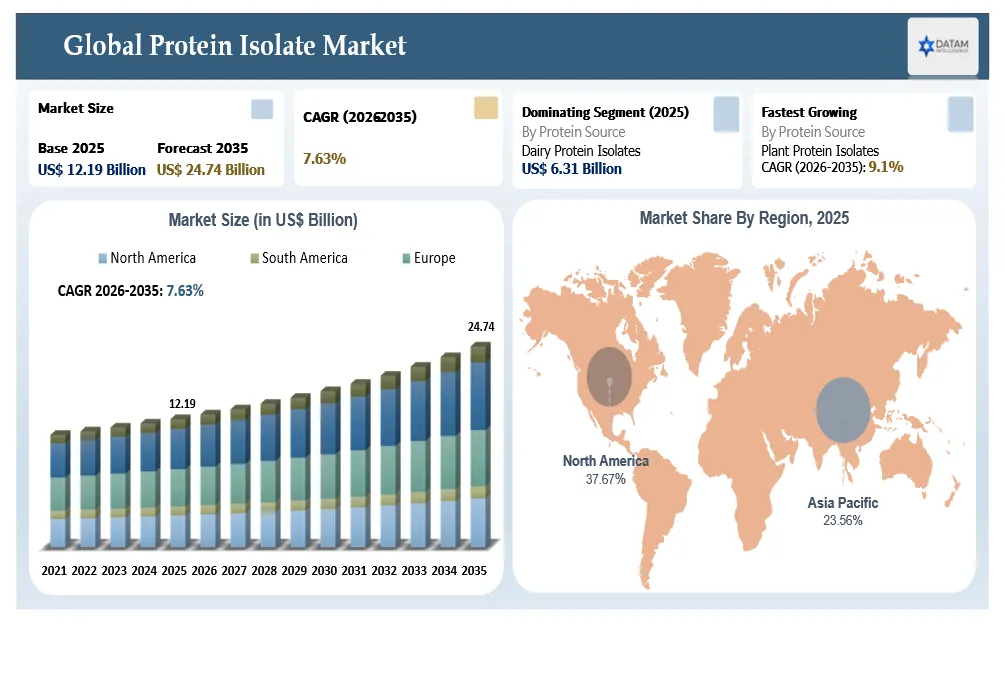
The global protein isolate market reached US$ 12.19 billion in 2025 and is expected to reach US$ 24.74 billion by 2035, growing with a CAGR of 7.63% during the forecast period 2026-2035.
The rapid development of high-protein food and beverage formulations is influencing the market development, with a strong emphasis on RTD protein drinks, sports nutrition products, meal replacement products, protein enhanced snacks and specialty nutrition. At the same time, protein isolators are being more frequently used by manufacturers who wish to obtain high protein concentration and ensure minimal fats and carbohydrates in their product as well as achieve the necessary level of solubility, texture, taste and heat stability. According to International Food Information Council’s 2025 Food & Health Survey, 70% of consumers in the U.S. reported efforts to include protein into their diets in average, which is higher than the percentage of consumers who reported about their attempts to eat protein in 2022.
From the supply perspective, specialized capacities of separation, filtration and drying are becoming more crucial, with a particular focus on the production of high-purity whey isolates. According to Nutraceutical Business Review, the stocks of whey protein in the United States have decreased by half between 2023 and 2026, with whey protein prices tripling during that period. Prominent manufacturers are also committed to production as they sign forward contracts, which limits the spot availability for the newcomers in the market. As a result, manufacturers are encouraged to increase production capacities as well as consider other products, e.g. pea protein, soy protein, potato protein, etc.
Protein Isolate Market Key Takeaways
- Dairy Protein Isolates constituted nearly 51.8% of the total market for Protein Isolates worldwide by 2025, with the global limit of approximately US$6.31 billion arising from the high demand for whey and milk protein isolates across the segments of sports nutrition, functional beverages and high-protein foods.
- Plant Protein Isolates are expected to grow at a CAGR rate of 9.1% for the 2026-2035 period, which will be driven by the growing acceptance of pea, soy, rice and other plant isolates within dairy substitutes, dietary supplements as well as functional food and beverages.
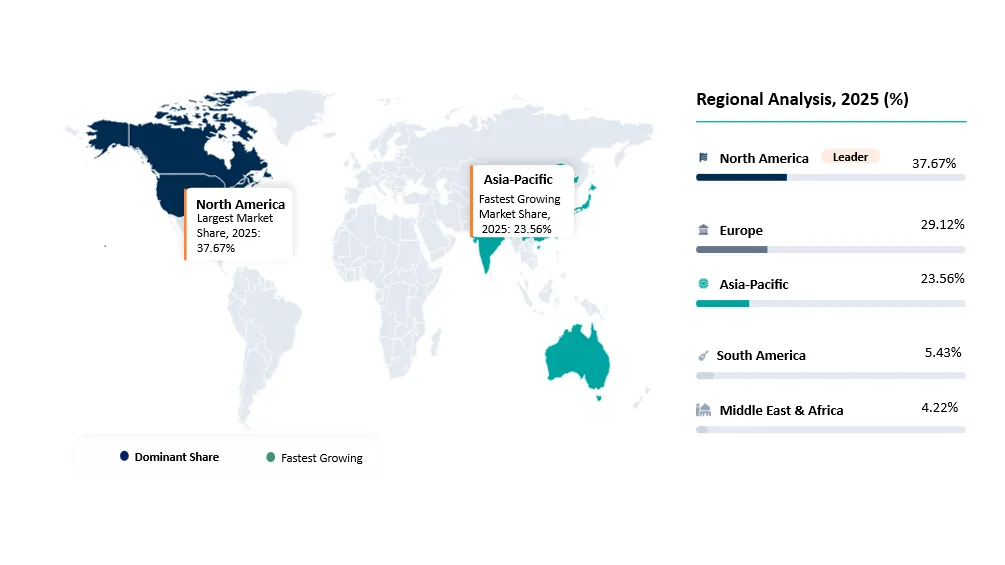
- In terms of regions, North America accounted for the largest share of the worldwide Protein Isolate Market with 37.67% in 2025 attracted by established protein processing facilities, large sports nutrition consumption and the common use of fortified protein products.
- The use of advanced technologies such as microfiltration, ultrafiltration and multistage processing has become important due to the rising need for pure protein isolates with better protein yield, solubility and consistency in processing.
- Application diversification has opened up new areas of protein isolates' use in clinical nutrition, infant nutrition, meal replacement and regular food items, thus reducing dependency of the market on its sports nutrition applications.
Protein Isolate Industry Trends and Strategic Insights
- Whey Isolate Capacity Is Becoming a Supply-Side Priority: The growth in demand for pure whey isolates is pressuring the supply of protein from dairy sources, driving manufacturers to invest in increased whey processing capacity and securing milk supply sources through contracts.
- Pea and Soy Isolates Are Expanding Into Mainstream Food Applications: Protein isolates from plant sources are not only being used in meat alternatives but also for other food products like protein drinks, bakery products, snack foods, dairy products and meal replacement bars.
- High-Solubility Isolates Are Gaining Importance in Ready-to-Drink Products: As protein beverages grow in popularity, there is an increase in demand for isolates that can easily be dispersed, do not settle, are flavorless and remain stable in beverages.
- Protein Fortification Is Shifting Toward Everyday Food Products: The food industry is progressively relying on protein isolates to boost the protein content of cereals, baked foods, snacks, beverages and convenience foods, creating a need for protein isolates that retain taste and performance characteristics at elevated inclusion rates.
- Functional Performance Is Becoming a Key Supplier Differentiator: The competition for protein isolates is moving away from protein purity and onto solubility, digestibility, taste, emulsifying, textural, heat tolerance and formulating attributes, giving suppliers with unique manufacturing processes an edge.
Protein Isolate Market Scope
| Metrics | Details | |
| 2025 Market Size | US$ 12.19 Billion | |
| 2035 Projected Market Size | US$ 24.74 Billion | |
| CAGR (2026-2035) | 7.63% | |
| Largest Market | North America | |
| Fastest Growing Market | Asia-Pacific | |
| By Protein Source | Dairy Protein Isolates, Plant Protein Isolates, Egg Protein Isolate and Other Protein Isolates | |
| By Form | Powder and Liquid | |
| By Protein Purity | 80–89%, 90–94% and 95% & Above | |
| By Processing Technology | Microfiltration, Ultrafiltration, Ion Exchange, Precipitation, Multi-Stage Processing and Other Technologies | |
| By Application | Sports Nutrition, Dietary Supplements & Nutraceuticals, Food & Beverages, Clinical & Medical Nutrition, Infant Nutrition, Animal Nutrition and Other Applications | |
| By End-User | Food & Beverage Manufacturers, Sports Nutrition Manufacturers, Dietary Supplement Manufacturers, Nutraceutical Companies, Pharmaceutical & Clinical Nutrition Companies, Infant Nutrition Manufacturers and Animal Feed Manufacturers | |
| By Distribution Channel | Direct/B2B Sales, Distributors & Wholesalers, Supermarkets & Hypermarkets, Specialty Stores, Health Food Stores, E-Commerce and Other Channels | |
| By Region | North America | U.S., Canada, Mexico |
| Europe | Germany, UK, Russia, France, Spain, Italy, Poland | |
| Asia-Pacific | China, India, Japan, Australia, South Korea, Indonesia, Malaysia, Singapore, Vietnam, Thailand, Philippines, Taiwan | |
| South America | Brazil, Argentina | |
| Middle East and Africa | UAE, Saudi Arabia, South Africa, Israel, Turkiye, Nigeria | |
| Report Insights Covered | Competitive Landscape Analysis, Company Profile Analysis, Market Size, Share, Growth | |
Why does this report matter in 2026?
It is very crucial to highlight that the protein isolate market will be of particular importance in 2026 due to the growing use of proteins which goes far beyond sports nutrition towards beverages, snacks, food fortification and even meal options. In such a way, there is an increasing need for isolates which could provide the required protein levels while keeping the taste, texture, solubility and stability of formulations. Moreover, the attention to various protein sources becomes more apparent among both consumers and food companies.
The market is also facing an important stage of transition in terms of supply and development of products. The limited supply of whey is driving suppliers to look for alternatives in protein supply, whereas developments in processing are centered around enhancing the functionality and sensory aspects of plant protein isolates. This is impacting the choice of ingredients and suppliers. This makes the report highly relevant in 2026 as it provides insights into areas of demand, proteins that can be used and the changing dynamics of competition due to supply and functionality issues.
Protein Isolate Market White Space & Investment Opportunities
- High-Functionality Plant Protein Isolates: Opportunity to produce isolates of peas, soy, rice and other sources with increased solubility, bland taste, stability and functionality for advanced beverages and foods.
- Whey Isolate Processing Capacity: Scarcity of whey is creating opportunity in investing in equipment for whey processing such as filtration, purification and drying processes where there are well-established facilities for dairy processing.
- Protein Fortification of Mainstream Foods: There is huge space left untapped in incorporating protein isolates in foods like breads, breakfast cereals, snack foods, beverages and meal replacement foods.
- Alternative and Diversified Protein Sources: There are investment prospects with pea, soy, milk, rice and blend isolates, which would lessen the dependency on whey and provide more flexibility to the producers due to shortage of whey.
- Application-Specific Protein Systems: Research opportunities are opening up with the development of customized isolates and blends tailored for particular applications such as clear beverages, heat stable products, low viscosity beverages, clinical nutrition and protein fortified products.
Protein Isolate Future Market Transformation
Protein isolate market is expected to shift from high-protein standard ingredients to customized protein systems based on certain food and beverage needs. Protein isolates will have increased differentiation not on the basis of protein purity but also solubility, emulsion, foam formation, gelling properties, heat stability, flavor and digestibility. Innovations in extraction methods, fermentation, ultrasonication, high-pressure processing and other types of modifications are opening up possibilities to enhance the functionality of pea, soy and other plant-based protein isolates.
Further stages in this transformation will see increased diversity in protein sources, as well as improved precision in ingredient formulation. Manufacturers will create isolates and blends designed for use in clear beverages, high protein bars, dairy alternatives, clinical nutrition and heat-treated products, while also reducing variation between batches. Newer processing technologies will also allow for improved valorization of byproducts from plant-based processing, as well as extraction of further protein fractions. This will benefit those companies who integrate protein sourcing, processing technologies, sensory enhancement and formulation for specific applications, rather than relying solely on high protein concentration.
Protein Isolate Market Buyer Decision-Making Criteria
Buyers of protein isolates usually assess suppliers and their products in more than just protein content terms. This is because the performance of the isolate in the respective application will determine if it is practicable in the given formulation. Thus, in regards to whey and other isolates based on pea, soy, rice, etc., various factors should be considered, such as the performance of the ingredient in the food system, batch-to-batch variability, sensory properties, nutritional characteristics, reliability of supply and overall cost of the formulation.
Major Buyer Decision-Making Criteria
- Protein Purity & Nutrition: Protein content, amino acid profile, digestibility and nutrition.
- Solubility & Dispersion: Solubility with no sediments, especially in RTD drinks and powdered drinks.
- Taste & Flavor: Unflavored and minimal off-flavor, especially for pea, soy and other isolates.
- Functionality: Emulsification, foaming, gelling, water-binding and heat stability depending on the application.
- Consistency From Batch to Batch: Consistent protein composition, particles, color, taste and functionality.
- Raw-Material & Availability: Secure supply of whey, soy, pea, milk, or other proteins and delivery reliability.
- Processing Compatability: Processability under the customer's specific pH, temperature, shear, drying and mixing conditions.
- Functional Cost of the Protein: The total cost of the formula rather than just the cost per kilogram of the protein itself.
- Certifications & Compliance: Food safety, traceability, allergen control, compliance and related certifications.
- Technical Support from Supplier: Formulation assistance, application testing, customization and problem solving.
Protein Isolate Market Economic & Investment Analysis
The economic prospects of the protein isolate market are becoming more dependent on the cost of and access to protein sources, processing facilities, energy-intensive purification process and ability to convert raw material to value-added functional ingredients. The supply situation of Whey Isolates is even more unique since whey supply is determined by cheese production and extra filtration and drying capacity needs to be added to create high purity isolates. This means that supply elasticity is lower than demand elasticity and makes this market situation more critical. At present the supply situation proves that there is already significant pressure from demand side of whey.
In terms of investment potential, there are opportunities arising from whey-processing facilities, plant-protein production processes, improved separation processes, functionalities of ingredients and diversified sources of protein. In making investment decisions, one needs to consider the anticipated demand and other aspects such as feedstocks security, yield processes, plant efficiency, energy consumption, purity, functionalities and multi-application capabilities. The increasing emphasis being placed on pea-protein functionality provides opportunity for the development of processing technologies that will deal with the flavor, solubility and heat stability challenges.
Protein Isolate Investment Trends in the Market
- Whey-Isolate Processing Capacity Expansion: Investments are being made in filtration, purification and drying equipment, as whey scarcity means that high-quality isolate production capacity is now a strategic chokepoint.
- Dedicated Pea-Protein Isolate Facilities: Further investment in production of isolates from peas is generating increased capacity for this plant-based protein ingredient.
- Integrated Protein Supply Chains: Manufacturers are seeking to control their production capacity in terms of feedstock acquisition, extraction, processing and ingredient production.
- Functional-Performance Technology: Increasing amounts of investment have been channeled towards processing technologies that increase the solubility, taste, dispersion, emulsion, texture and heat stability of the ingredients.
- Diversification Into Specialized Protein Ingredients: Manufacturers are shifting from conventional protein isolates to specific proteins, fractions of proteins, blends of proteins and even customized proteins which can be applied in various high value-added nutrition, beverages and food products.
Strategic Indicators For the Protein Isolate Market
High Regulation Impact
There are substantial regulations that apply to protein isolates, since they are consumed as food, nutrients and as an ingredient in dietary supplements and hence there is need for ingredient identification, purity, labeling, etc., for market entry. Milk and whey protein isolates need special attention for milk allergens, while soy protein isolates need special attention to comply with soy allergen regulations in appropriate jurisdictions. Regulations get increasingly complex for new sources of proteins, modified proteins, novel processes, etc. and in such situations the company needs proper testing and validation to ensure its market entry.
High Investment Activity
Activities of investments in the protein isolate market are becoming more focused on building processing capacity for specialized processing and ensuring supply of high-quality proteins. The shortage of whey and rising costs of WPI are causing companies to invest in filtration, purification, drying, powder processing and facility upgrading, as well as building new capacity for different types of protein isolates. For instance, Actus Nutrition recently upgraded its Wisconsin production facility by adding 40 million pounds per year capacity of whey powder in 2026 due to an increase in demand for dairy ingredients.
Supply Chain Disruption
Supply Chain Disruption is being experienced by the protein isolate market due to the fact that the demand for high purity whey protein ingredients is growing at a much faster pace than the processing capability to handle such ingredients is growing. Whey availability is linked to cheese production whereas the processing of whey into high purity protein isolates needs further filtering and drying facilities, resulting in a constraint in the supply chain between the availability of raw materials and the availability of protein isolates. In 2026, low stock levels along with limited availability of WPI will intensify buying challenges.
Pricing Volatility
There has been heavy price volatility in the protein isolate market, especially for whey protein isolate (WPI) because of scarcity and high demand, thus putting pricing pressure on whey protein ingredients. According to USDA, WPI prices were priced at approximately US$14/lb in early June 2026, while WPC 80% prices stood between US$12-13/lb. USDA has noted that there have been tight supplies and no spot loads available. This has direct implications on the cost of raw material acquisition and formulation economics.
Procurement Pressure
In the protein isolate market, there is growing pressure from the procurement perspective as consumers struggle to get a steady supply of isolates that have high purity amid reduced availability, longer planning horizon and ingredient cost changes. There is difficulty in securing rapidly growing quantities of whey isolates as a result of limited sources for these proteins. Procurement will be characterized by long-term contracts for supply, having more than one supplier, early purchases and flexibility in terms of formulation of protein sources such as whey, soy, pea and others.
New Technology Adoption
Protein isolate market technology is now shifting towards the manipulation of protein structure in order to enhance performance. Novel technologies such as pulsed-electric-field processing, high energy microfluidization, pH-modulated manipulation, ultrasonication and many other physicochemical manipulations are being studied for whey, soy, pea and other proteins with an aim of improving solubility, dispersion, emulsifying, foaming, heat stability and performance qualities. A study conducted in 2026 showed that pulsed electric field processing of WPI resulted in improved solubility and emulsifying performance while high energy microfluidization significantly enhanced solubility of soy protein isolate and formed stable emulsions. Such technologies would open new areas of use of isolates in RTD drinks, dairy alternatives, fortified products and other formulas.
Regional Expansion Opportunity
The Protein isolate market presents ample regional expansion opportunities via localized production and application development, especially in the Asia-Pacific region. There is large-scale production of applications involving soy and whey proteins in China, while India provides ample opportunities for cost-effective whey and plant protein applications. Meanwhile, Japan has a preference for high-end isolates for use in functional foods and nutrition. The focus is more on localized production and application development as opposed to just exporting of the protein isolates to cater to local cost considerations and formulating needs.
Government Policy Support
The government incentives being provided for food processing facilities, value addition in agricultural ingredients and protein ingredients research are setting up a conducive atmosphere for the Protein isolate market. The Production Linked Incentive Scheme for Food Processing Industry (PLISFPI) in India is promoting investments and value addition in food processing sector, whereas the U.S. Department of Agriculture has funded specific research to improve pulse protein isolation and its properties related to solubility, emulsification, foaming, gelling and food utilization. Such initiatives may indirectly help in improving protein isolate development for other plant proteins such as pea, lentil, chickpeas, etc.
Pricing Intelligence
Intelligence in pricing within the protein isolate market now involves a better knowledge of the value difference between different protein grades, specifications, contracts and availability than just simply knowing the prices. The USDA has quoted the dry whey price as US$0.6396/lb for May 2026, but the higher protein whey streams earn premium prices as they aim to produce WPC and WPI. This makes a situation where buyers must evaluate the costs based on per-unit usable protein, purity levels, performance, minimum purchase requirements, whether there is a contractual or spot purchase and transportation costs. Thus, intelligent pricing allows companies to make the decision of whether they should pay extra money for the WPI based on its high protein content and formulation performance.
| HS Code | Reporter | Trade Flow | 2025 Trade Value | Interpretation |
3504.00 (Peptones & Other Protein Substances) | United States | Export | ~US$2.10 Billion | Strong export activity in protein substances and related ingredients used in food, nutrition and industrial applications. |
3504.00 (Peptones & Other Protein Substances) | China | Export | ~US$1.45 Billion | Significant export capacity for protein substances and processed protein ingredients serving global food and nutrition markets. |
2106.10 (Protein Concentrates & Textured Protein Substances) | European Union | Import | ~US$1.25 Billion | High import demand for protein concentrates and textured protein ingredients used in food, sports nutrition and dietary supplements. |
2106.10 (Protein Concentrates & Textured Protein Substances) | India | Import | ~US$380 Million | Growing imports supported by sports nutrition, nutraceutical and protein-fortified food applications. |
AI Impact Analysis of the Protein Isolate Market
There is a growing trend in the protein isolate market where AI is becoming more influential with regards to protein formulation, processing, quality control and product development. Machine learning models can be used for whey, pea, soy and other proteins to understand their compositions and functional characteristics to develop a formula for better solubility, texture, emulsification, taste, nutritional values and price, which would help manufacturers to reduce trial and error when developing new products. AI could be applied to optimize process parameters for filtration, concentration, drying and blending processes to achieve protein quality consistency and higher yields. In the area of quality control, AI-powered analytical and sensing systems could be applied to detect any inconsistencies, contamination and deviations in the manufacturing process. Such application is especially important in the situation when manufacturers are facing sensory and functional limitations of plant isolates and cost pressure on premium whey isolates.
Disruption Analysis of Protein Isolate Market
There exists a supply-side disruption in the protein isolates market due to the rising demand for high-purity protein which has been outpacing the available capacity to produce whey-based proteins. Whey availability is inherently tied to cheese production and therefore expanding supply at a fast pace is not feasible. Moreover, the market environment in 2026 has witnessed considerable pressure on pricing and availability of whey-derived ingredients. This has led to an increased reliance on a range of sources such as whey, milk, soy, pea and other protein isolates.
A second disruption is taking shape in the form of innovative proteins based on function and application needs. The existing isolates are increasingly being modified for difficult applications like high-protein RTD beverages, clinical nutrition and food fortification applications, where heat stability, low viscosity, solubility and lack of flavor become important. Recent innovations include heat-stable whey isolates that help sustain their functionality despite high-heat processes. On the other hand, improvements in the processing of plant proteins are being made to overcome the functional and sensory disadvantages of pea and soy isolates.
Protein Isolate Market BCG Matrix: Company Evaluation
STAR
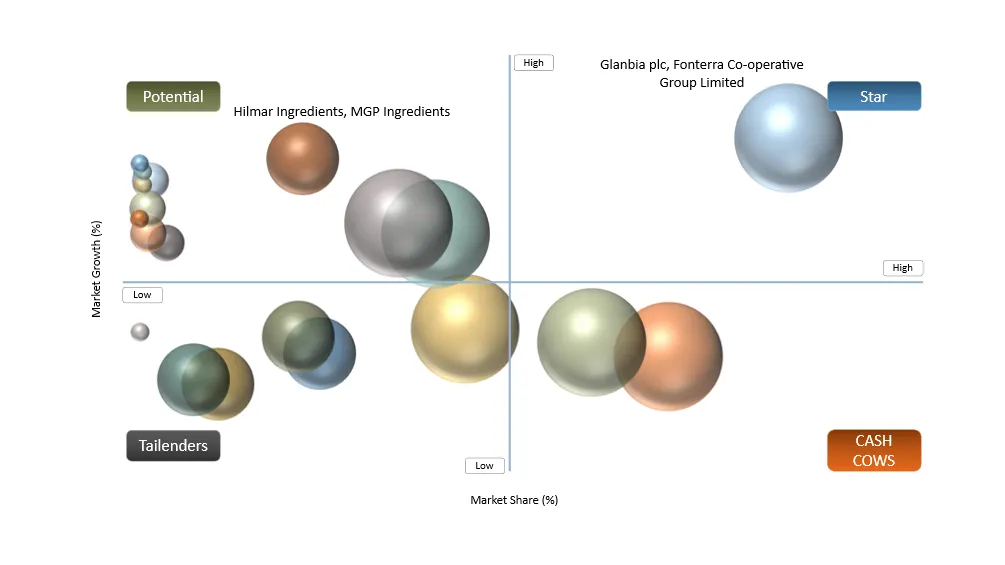
Glanbia plc, Fonterra Co-operative Group Limited, Roquette Frères and ADM could be considered Stars due to their existing scale of operations in the protein ingredient industry, solid market presence, wide customer network and exposure to increasing applications for whey proteins and plant protein isolates. In particular, Glanbia has a solid market position in whey protein isolates; Fonterra has its strengths in an integrated supply chain for dairy proteins; Roquette Frères has strengths in plant protein isolates and pea protein isolates and ADM has strengths in both soy protein isolates and plant proteins as well as in food ingredient distribution.
POTENTIAL
Hilmar Ingredients, MGP Ingredients, Axiom Foods, Cosucra Groupe Warcoing and Emsland Group could be classified as Potential because they have unique protein competencies and opportunities to grow in terms of increased market penetration, production capacity expansion and development of higher functionality isolates. In particular, Hilmar is mainly involved in the whey protein sector, while MGP, Axiom, Cosucra and Emsland are more exposed to plant protein ingredients. The key opportunity is in the scale-up of specialized production, expansion into new regions and development of isolates for specific applications.
Protein Isolate Market Dynamics
Driver Impact Analysis
| Driver | Market Growth Impact (%) | Demand Concentration | Impacted Use Case | Strategic Impact |
Rising demand for high-protein foods and beverages | 24% | Sports nutrition, functional foods | Expand high-protein product portfolios and application-specific formulations | Rising demand for high-protein foods and beverages |
Growth of plant-based nutrition | 21% | Plant-based foods, vegan nutrition | Increase pea, soy, rice and other plant protein isolate capacity | Growth of plant-based nutrition |
Expansion of sports and active nutrition | 19% | Sports supplements, fitness consumers | Develop high-purity, fast-dissolving and performance-focused isolates | Expansion of sports and active nutrition |
Increasing protein fortification across mainstream foods | 16% | Bakery, snacks, beverages, meal replacements | Improve taste, solubility, texture and formulation compatibility | Increasing protein fortification across mainstream foods |
Driver: Rising Demand for High-Protein Foods and Beverages
Increasing consumer preference for protein-based nutrition products has been one of the key factors in fueling the growth of the protein isolate market, as protein consumption has increasingly moved from being used for specialist sports nutrition applications to more general food and drink applications. According to the 2025 Protein Profile published by Cargill, 61% of consumers have upped their protein intake in 2024 from 48% in 2019 and 57% of consumers who check nutritional information on the package look for protein. Such a trend has led to an increasing incorporation of protein isolates in protein powders, drinks, bars, snacks, baked goods, meal replacement foods, plant-based drinks and proteins and nutritionally enhanced foods. In order to incorporate higher protein contents in foods while retaining acceptable flavor, texture, solubility and stability, protein isolates such as pure whey, pea, soy, milk proteins and other types of isolates have become critical components in formulating new products.
Restraint Impact Analysis
| Restraint | Drag on Market Growth (%) | Primary Impact Area | Impacted Use Case | Strategic Impact |
| High production and processing costs | 24% | Product pricing and margins | Improve processing efficiency and scale production | High production and processing costs |
| Raw material price volatility | 21% | Input costs and supply stability | Diversify sourcing and establish long-term supplier agreements | Raw material price volatility |
| Taste, texture and solubility challenges | 18% | Consumer acceptance | Invest in formulation, flavor masking and functional improvements | Taste, texture and solubility challenges |
| Supply-chain and regulatory complexities | 15% | International trade and market access | Strengthen regional sourcing and regulatory compliance | Supply-chain and regulatory complexities |
Restraint: High Raw Material Costs and Supply Constraints
High volatility of raw materials is one of the key limitations in the protein isolate market, specifically for isolates made from whey due to the reliance on dairy and cheese manufacturing supply chain. For instance, in 2026, the prices for whey protein concentrates were high in the U.S. due to high demand, low stocks and little availability of spot products, while industry reports suggest that prices for whey isolates have gone up as well. Due to the additional requirements of processing of protein isolates through filtration, purification and drying steps, high input costs could result in higher final product prices as well. It would put pressure on company's margin, making protein isolates more expensive for price-sensitive consumers and food producers.
Protein Isolate Market Segmentation Analysis
The global protein isolate market is segmented based on the Protein Source, Form, Protein Purity, Processing Technology, Application, End-User, Distribution Channel, Segment 8, Segment 9 and region.
By Protein Source
Dairy Protein Isolates continue to lead market demand
The Dairy Protein Isolates segment comprised 51.8% of the worldwide Protein Isolate Market in 2025, which was equivalent to roughly US$6.31 billion. This particular segment is able to retain the top spot due to whey and milk protein isolates' high protein content, excellent amino acid profiles and proven functionality in sports nutrition, dietary supplements, ready-to-drink (RTD) beverages, food fortification applications and meal replacement products.
By Protein Source
Plant Protein Isolates are gaining strong market momentum
Plant Protein Isolates are projected to have a CAGR of around 9.1% during 2026-2035, outperforming the CAGR of the entire market, which stands at 7.63%. The growth is fueled by the increased adoption of protein isolates from peas, soybeans, rice, potatoes and wheat in milk alternatives, functional beverages, sports nutrition and food with added protein content. Manufacturers are paying increasing attention to enhancing the taste, solubility, texture and stability of isolates, thus expanding the applicability of plant isolates beyond plant-based products.
Protein Isolate Market Geographical Penetration
U.S. Protein Isolate Market Landscape
The U.S. protein isolate market displays strong demand for whey isolate and other protein isolates of high purity and this is evident from the various applications in areas like sports nutrition, dietary supplements, ready-to-drink beverages, protein bars and conventional fortified food products. The size of the whey protein ingredients market in the U.S. was about US$0.98 billion in 2025, reflecting the country’s long-established demand for dairy-based proteins. However, on the other hand, the supply of whey isolate has also become a strategic issue, as the USDA has reported prices for whey protein isolate at US$12-$13 per pound in May 2026 with demand being higher than the supply. The high protein consumption rate along with the growing plant-based formulations and limited availability of whey isolate emphasizes the importance of local processing capacity in the U.S. protein isolate market.
Japan Protein Isolate Market Outlook
The Japan protein isolate market is driven by the existing demand for whey protein isolate in applications ranging from sports nutrition, dietary supplements, functional foods and clinical nutrition. WPI made up 55.32% of Japan’s whey protein market share in 2025, indicating the popularity of highly concentrated protein with low levels of lactose. The demand is not limited to sports nutrition and is spreading further into ready-to-drink beverages, bakery products with protein content, meal replacements and aging nutrition, especially considering the increasing number of older people in Japan that drives the demand for muscle-maintenance products.
China Protein Isolate Market Trends
In the China’s Protein isolate market, soy protein has taken the pole position due to the presence of soybean processing infrastructure and its wide application in food and beverages. Soy protein comprised 56.05% share of China’s plant-based protein in 2025, whereas pea protein is growing to be the fastest-growing protein, with a CAGR of 9.02% until 2031. Plant protein isolates are finding applications in meat substitutes, dairy substitutes, sports nutrition, protein bars and other forms of fortification, while developments in pea protein isolation process have provided opportunities for companies to expand from just using soy. The multi-sourced protein trend and the huge base of food processing industry in China will make soy and pea isolate capacity, function and cost drivers of the country’s market.
India Protein Isolate Market Analysis
India Protein isolate market is experiencing a rapid rise, owing to a change in trend from sports-based protein supplementation towards regular protein nutrition consumption. Whey protein isolate is witnessing significant adoption within the segment of whey, due to the factors such as rising awareness about fitness, growing demand for purity and low lactose protein products and rising consumer tendency towards high-end nutrition products. Additionally, growing popularity of online retailing and availability of single serving packaging of protein products are making the product more available. The major factors restraining the growth of the market include high price sensitivity, lack of product credibility and dependence upon import of whey ingredient.
Protein Isolate Market Competitive Landscape
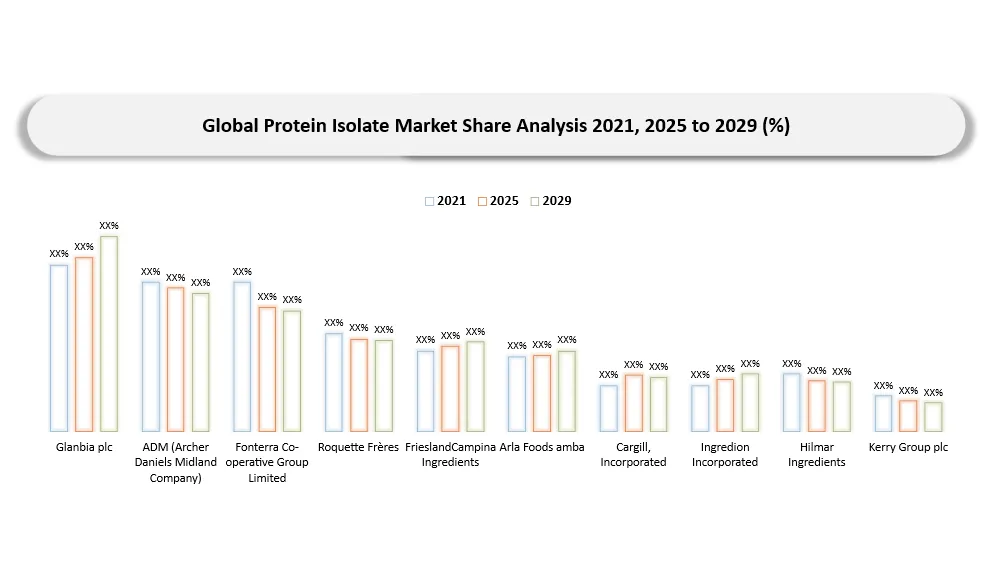
- The competitive landscape is segmented by protein specialization, where Glanbia, Fonterra, FrieslandCampina, Arla and Hilmar are whey and dairy isolate specialists, while Roquette, ADM, Cosucra, Emsland and Axiom specialize in plant protein. Processing capacity is a competitive advantage factor especially for whey isolates due to limited processing capacity, which prevents rapid response to increased demand from suppliers.
- Functionality is becoming as important as purity for proteins and supplier competes on protein solubility, dispersion, emulsification, heat stability, neutral flavor and performance in RTD beverages, sports nutrition and fortification.
- Differences between plant-isolate suppliers are mainly being realized on the basis of their sensory performance, especially in terms of eliminating beany and vegetable tones and optimizing texture and formulating capability.
- The integration of sources and diversified protein profiles have resulted in better competitive positioning, enabling the large suppliers to provide whey, milk, soy, pea and other isolates and enabling the manufacturer to source from different protein streams when constrained.
Key Companies of Protein Isolate Market
- ADM (Archer Daniels Midland Company) (United States)
- Cargill, Incorporated (United States)
- Glanbia plc (Ireland)
- Roquette Frères (France)
- Ingredion Incorporated (United States)
- Fonterra Co-operative Group Limited (New Zealand)
- FrieslandCampina Ingredients (Netherlands)
- Arla Foods amba (Denmark)
- Agropur Cooperative (Canada)
- Axiom Foods, Inc. (United States)
- Fuji Oil Holdings Inc. (Japan)
- Cosucra Groupe Warcoing SA (Belgium)
- Emsland Group (Germany)
- MGP Ingredients, Inc. (United States)
- Hilmar Ingredients (United States)
- Burcon NutraScience Corporation (Canada)
- Kerry Group plc (Ireland)
- International Flavors & Fragrances Inc. (IFF) (United States)
- Bunge Global SA (United States)
- Idaho Milk Products (United States)
Protein Isolate Market Major Pain Points
- Whey Supply Shortages and Price Volatility: With increasing demand for whey protein, supply shortages and high ingredient prices have been created for isolate manufacturers.
- Limited Isolate-Processing Capacity: High purity of isolate requires filtration, separation, concentration and drying of the whey protein which limits the production capacity of suppliers to meet increasing demand.
- Plant-Protein Taste and Texture Challenges: Pea, soybean and other plant-based isolates may result in unwanted taste and texture, necessitating further flavor concealing and development efforts to arrive at a consumer-friendly product.
- Solubility and Formulation Limitations: Solubility is a potential constraint in plant proteins because of their sensitivity to pH, ionic strength, extraction processes and drying processes.
- High Cost of Premium Isolates: High-purity isolates can be more expensive than concentrates due to higher purity demands, processing costs and pressures on raw materials. The current market conditions in the whey market are increasing these pressures.
Protein Isolate Market Recent Developments
- May 2026: ADM launched 8 new plant-based protein ingredients in North America and Europe, including ProFam 883, a high-solubility soy protein isolate for use in protein beverages and powders; and ProFam 894, which targets Greek yogurt alternatives, yogurt drinks and dairy alternatives.
- February 2026: Roquette launches NUTRALYS Pea 850F, an innovative pea protein isolate that boasts a cleaner taste profile to lower vegetal off-notes in plant-based formulations such as protein beverages and nutritional applications.
- June 2025: Burcon NutraScience enters into a strategic alliance with Re ProMan LLC centered on the Galesburg protein production facility; also moves forward with commercial production of PurateinC canola, PeazazzC pea and Solatein sunflower proteins.
- March 2026: FrieslandCampina Ingredients expanded the company’s plant at Borculo in the Netherlands, resulting in doubled production capacity of whey protein isolate (WPI) and milk fat globule membrane (MFGM).
- 2026: Arla Foods Ingredients expanded its efforts in GLP-1 companion nutrition with Lacprodan BLG-100 with the development of small, high-protein solutions designed to meet the protein and muscle nutrition requirements of people using GLP-1 drugs.
Analyst View / Opinion on Protein Isolate Market
- Whey Isolate Will Remain the Premium Protein Benchmark: The whey isolate category will continue to hold a strong position due to the history of use in sports nutrition and good protein purity and formulation. Nevertheless, a shortage of whey and processing issues may limit capacity expansion and increase costs.
- Plant Protein Isolates Will Gain Share in Mainstream Applications: Pea and soy isolates have been developed as viable options to dairy proteins, especially in the case of drinks, meat substitutes, snacks, baked goods and food replacements. This is set to broaden the market beyond sports nutrition.
- Functionality Will Become More Important Than Protein Content Alone: The suppliers which can bring advances in solubility, flavor, texture, dispersibility, heat stability and digestibility properties will gain more competitive advantage.
- Processing Capacity Will Become a Key Competitive Advantage: With the shortage of whey proteins currently observed, it is clear that demand can outpace investments in processing facilities for these proteins. Firms that have capabilities in both sourcing and processing of isolates will be better equipped to access supply and maintain profit margins.
- The Market Will Progressively Diversify Beyond Sports Nutrition: Sports nutrition will continue to be a key area of demand. However, the rising level of protein consumption is causing the use of isolates to expand into conventional drinks, snacks, cereals, baked goods and fortified foods. This trend will work in favor of suppliers who are able to provide their customers with affordable isolates that show good sensory and formulation performance.
Protein Isolate Market Target Audience
| INDUSTRY | WHO SHOULD BUY THIS REPORT? | REASON TO BUY THIS REPORT |
| Protein Ingredient Manufacturers | Protein isolate producers and ingredient manufacturers | Assess market size, source-wise demand, capacity expansion opportunities and competitive positioning. |
| Sports Nutrition | Sports nutrition and supplement companies | Identify demand trends for whey, soy, pea and other isolates across powders, shakes, bars and recovery products. |
| Food & Beverage | Food and beverage manufacturers | Evaluate protein fortification opportunities across beverages, bakery, snacks, dairy alternatives and functional foods. |
| Plant-Based Food | Plant-based food and meat-alternative manufacturers | Analyze growth opportunities for pea, soy, rice and other plant protein isolates. |
| Dairy & Whey Processing | Dairy processors and whey ingredient manufacturers | Understand whey and milk protein isolate demand, pricing dynamics and application growth. |
| Nutraceuticals & Dietary Supplements | Nutraceutical and dietary supplement companies | Identify high-growth applications and consumer demand for protein-enriched nutritional products. |
| Investors & Private Equity | Investors, private equity firms and venture capital funds | Evaluate market attractiveness, growth opportunities, competitive intensity and investment potential. |
| Raw Material Suppliers | Agricultural, dairy and protein raw-material suppliers | Assess downstream demand and identify opportunities for supply agreements and capacity expansion. |
| Distributors & Traders | Protein ingredient distributors, importers and exporters | Identify high-demand markets, trade opportunities and attractive regional markets. |
| Protein Ingredient Manufacturers | Protein isolate producers and ingredient manufacturers | Assess market size, source-wise demand, capacity expansion opportunities and competitive positioning. |
Why Choose DATAM?
- Data-Driven insights: Dive into detailed analyses with granular insights such as pricing, market shares and value chain evaluations, enriched by interviews with industry leaders and disruptors.
- Post-Purchase Support and Expert Analyst Consultations: As a valued client, gain direct access to our expert analysts for personalized advice and strategic guidance, tailored to your specific needs and challenges.
- White Papers and Case Studies: Benefit quarterly from our in-depth studies related to your purchased titles, tailored to refine your operational and marketing strategies for maximum impact.
- Annual Updates on Purchased Reports: As an existing customer, enjoy the privilege of annual updates to your reports, ensuring you stay abreast of the latest market insights and technological advancements. Terms and conditions apply.
- Specialized Focus on Emerging Markets: DataM differentiates itself by delivering in-depth, specialized insights specifically for emerging markets, rather than offering generalized geographic overviews. The approach equips our clients with a nuanced understanding and actionable intelligence that are essential for navigating and succeeding in high-growth regions.
- Value of DataM Reports: Our reports offer specialized insights tailored to the latest trends and specific business inquiries. The personalized approach provides a deeper, strategic perspective, ensuring you receive the precise information necessary to make informed decisions. The insights complement and go beyond what is typically available in generic databases.
What DATAM Uniquely Provides
- Protein Source-Level Opportunity Mapping: Examines whey, soy, pea, milk, rice, egg, potato and wheat isolates to identify dominant sources, fastest-growing sources and emerging substitution opportunities.
- Application-Level Demand Intelligence: Examines isolate demand for sports nutrition, dietary supplements, functional food & beverages, plant-based products, clinical nutrition and meal replacement products, noting changes in demand.
- Supply & Cost Pressure Analysis: Examines whey supply, dairy processing, price of raw materials, plant protein sources and process cost impacts on price and margin.
- Functionality-Based Competitive Benchmarking: Measures isolates according to their characteristics like purity, solubility, taste, texture, digestibility, thermal stability and others for the understanding of their influence upon supplier selection.
- Regional & Trade Opportunity Assessment: Considers regional demand, trade flows, expansion of applications, preferred sources and competitors’ presence in order to highlight the most promising markets for capacity increase, export activities or entry into a market.


























































