


Peptide Drug Conjugate Market Overview
The global Peptide Drug Conjugate market reached an estimated US$ 4.53 billion in 2025 and is expected to reach US$ 25.90 billion by 2035, growing at a CAGR of 19.0% during 2026-2035. The market combines established peptide receptor radionuclide therapies with a rapidly developing pipeline of cytotoxic peptide conjugates, peptide-oligonucleotide conjugates, and multifunctional targeted-delivery systems. Commercial growth is currently concentrated in oncology, where peptides can bind overexpressed receptors and deliver radionuclides, or highly potent payloads with greater selectivity than conventional systemic treatment.
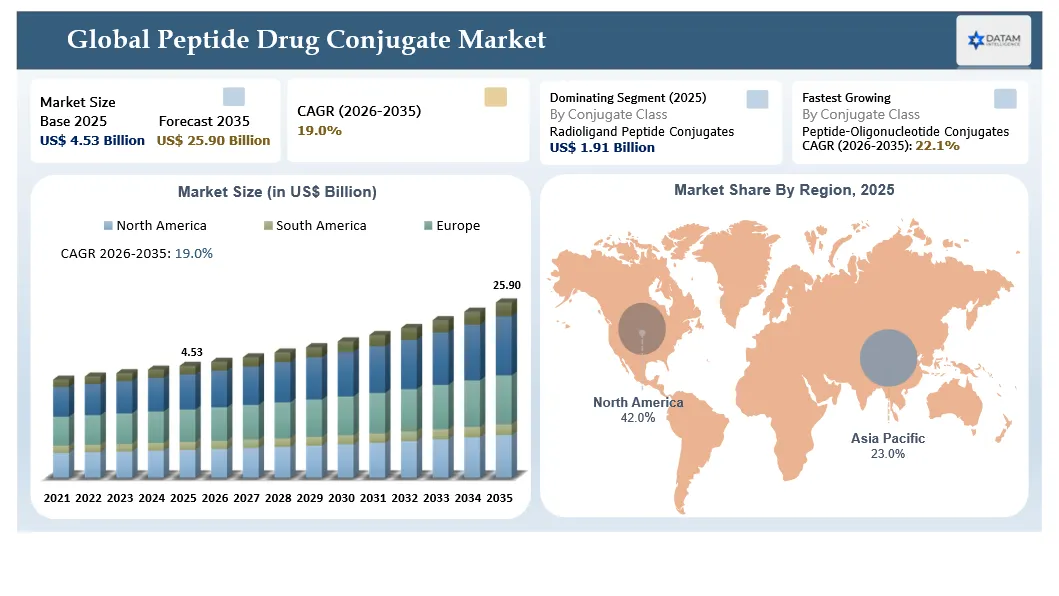
Radioligand peptide conjugates represent the largest commercial class because approved products have validated receptor-targeted delivery, treatment-center workflows and reimbursement. Cytotoxic peptide-drug conjugates are attracting renewed investment as developers improve linker stability, tumor penetration and payload release. Peptide-oligonucleotide conjugates are expanding the market into neuromuscular, ophthalmic and genetic diseases by improving intracellular delivery of antisense or RNA-based payloads. These formats create different manufacturing and regulatory requirements, but all depend on target specificity, peptide stability, linker performance and a reproducible therapeutic window.
North America leads through approvals, clinical development, specialty treatment centers and financing. Europe has strong radiopharmaceutical infrastructure and peptide manufacturing. Asia-Pacific is expected to grow fastest as China, Japan, South Korea and Australia expand precision oncology, isotope production and clinical trials. Market growth through 2035 will depend on broader target validation, dependable isotope supply, scalable conjugation, companion diagnostics and evidence that peptide conjugates can improve efficacy while reducing off-target toxicity.
Market Snapshot
| Metric | Details |
| 2025 Market Size | US$ 4.53 Billion |
| 2035 Projected Market Size | US$ 25.90 Billion |
| CAGR (2026-2035) | 19.0% |
| Largest Class | Radioligand Peptide Conjugates |
| Fastest-Growing Class | Peptide-Oligonucleotide Conjugates |
| Largest Region | North America |
| Fastest-Growing Region | Asia-Pacific |
Peptide Drug Conjugate Pipeline Analysis
| Drug / Program | Company | Target / Indication | Conjugate Format | Development Status | Strategic Relevance |
| Pluvicto | Novartis | PSMA-positive metastatic prostate cancer | PSMA-targeted lutetium-177 radioligand | Marketed / label expansion | Commercial validation of small peptide-based targeted radioligand therapy. |
| Lutathera | Novartis / Advanced Accelerator Applications | Somatostatin receptor-positive GEP-NETs | DOTATATE-lutetium-177 conjugate | Marketed | Established treatment-center, dosimetry and reimbursement model. |
| CBX-12 | Cybrexa Therapeutics | Advanced solid tumors | pH-low insertion peptide linked to exatecan | Phase I/II | Tests tumor-acidity targeting and intracellular payload release. |
| PQ203 | PureQore / sponsor-led program | Advanced solid tumors including TNBC | Peptide-drug conjugate | Phase I | Once-weekly intravenous first-in-human program. |
TH1902 / sudocetaxel zendusortide | Theratechnologies | Sortilin-expressing solid tumors | Sortilin-targeting peptide-docetaxel conjugate | Clinical development / strategic review | Illustrates receptor-targeted taxane delivery and translation risk. |
| PEN-221 | Tarveda Therapeutics | SSTR2-expressing tumors | Somatostatin analog-DM1 conjugate | Clinical development history | Early clinical proof point for miniature peptide-drug conjugates. |
Folate-TRPV6 peptide exatecan conjugate | Coherent Biopharma | Esophageal cancer and small-cell lung cancer | Dual-target peptide-exatecan conjugate | Clinical / orphan-designated | Combines folate and TRPV6 targeting with topoisomerase payload. |
| PGN-EDO51 | PepGen | Duchenne muscular dystrophy exon 51 | Enhanced delivery peptide-oligonucleotide conjugate | Clinical development | Expands PDC economics beyond oncology into neuromuscular disease. |
| PYC-001 | PYC Therapeutics | OPA1-associated vision loss | Cell-penetrating peptide-oligonucleotide conjugate | Clinical development | Targets intracellular RNA delivery in ophthalmology. |
Bicycle toxin conjugates | Bicycle Therapeutics | Multiple solid-tumor antigens | Bicyclic peptide-toxin conjugates | Clinical and preclinical portfolio | Platform approach with rapid tissue penetration and modular payloads. |
Peptide Drug Conjugate Market Key Takeaways
- Radioligand peptide conjugates form the largest revenue base because approved products have established clinical workflows and reimbursement.
- Oncology dominates commercial value, but peptide-oligonucleotide conjugates are opening neuromuscular, ophthalmic and genetic-disease opportunities.
- North America leads through product sales, capital availability, clinical trials and treatment-center infrastructure.
- Asia-Pacific is expected to grow fastest as local companies expand peptide chemistry, radiopharmaceutical development and precision-oncology capacity.
- Linker stability and payload release remain central determinants of therapeutic index and clinical translation.
- Isotope production, specialized manufacturing and hospital handling capacity create supply bottlenecks for radioligand products.
- Platform companies that can reuse targeting peptides, linkers and manufacturing across multiple payloads may generate stronger portfolio economics.
- Future leadership will depend on target validation, companion diagnostics, scalable chemistry, safety, treatment-center activation and evidence of meaningful clinical benefit.
Peptide Drug Conjugate Industry Trends and Strategic Insights
- Radiopharmaceutical developers are broadening beyond PSMA and somatostatin receptors toward new tumor antigens and alpha-emitting payloads.
- Cytotoxic PDC programs are using tumor-acidity, receptor density and protease activity to improve selectivity and payload release.
- Peptide-oligonucleotide conjugates are becoming a major delivery strategy for tissues that remain difficult to reach with unconjugated antisense medicines.
- AI-enabled design is being applied to peptide sequence optimization, linker selection, payload matching and structure-activity prediction.
- Companies are integrating diagnostics with therapeutics to confirm receptor expression and direct patients to treatment.
- CDMOs are investing in end-to-end peptide synthesis, conjugation, high-potency handling, isotope integration and sterile fill-finish.
- Partnerships between small platform companies and larger oncology or rare-disease companies are increasing because clinical execution requires specialized infrastructure.
- Competition is shifting from proof of targeting toward durability, dosing convenience, manufacturing reliability and comparative clinical benefit.
Peptide Drug Conjugate Market Scope
| Metrics | Details |
| By Conjugate Class | Radioligand, Cytotoxic, Peptide-Oligonucleotide, Peptide-Protein and Multifunctional Conjugates |
| By Targeting Peptide | Somatostatin, PSMA, Integrin, GRPR, Folate/Transporter and Other Receptor-Targeting Peptides |
| By Payload | Radionuclides, Cytotoxic Small Molecules, Oligonucleotides, Immune Modulators and Proteins |
| By Linker | Cleavable, Non-Cleavable, Enzyme-Responsive, pH/Redox-Responsive and Self-Immolative |
| By Therapeutic Area | Oncology, Neuromuscular and Genetic Disorders, Ophthalmology, Inflammatory Diseases and Others |
| By Route | Intravenous, Subcutaneous, Intrathecal and Other Routes |
| By Stage | Marketed, Phase III/Registration, Phase I/II and Preclinical/Discovery |
Why does this report matter in 2026?
The year 2026 marks an inflection point because peptide conjugates are moving from a niche radiopharmaceutical category toward a broader targeted-delivery platform. Marketed radioligand products continue to expand use and indications, while newer cytotoxic and oligonucleotide conjugates are producing clinical data that will determine whether the modality can compete with antibody-drug conjugates, unconjugated radioligands and advanced nucleic-acid delivery systems. At the same time, manufacturing capacity, isotope supply and treatment-center availability are becoming strategic constraints rather than background operational issues.
The report matters because the market contains several distinct business models. A marketed radioligand franchise depends on isotope procurement, certified sites and patient scheduling. A cytotoxic conjugate depends on peptide selectivity, linker chemistry and high-potency manufacturing. A peptide-oligonucleotide program depends on tissue delivery, intracellular release and chronic dosing. Separating these categories avoids overstating a single uniform market and helps investors, developers and suppliers identify where value is created.
Decisions made in 2026 on target selection, licensing, manufacturing investment, diagnostic partnerships and clinical-site activation will shape leadership through 2035. Companies that secure scarce isotope or conjugation capacity, build modular platforms and generate clear pharmacodynamic evidence can create defensible positions before the market becomes more crowded.
Peptide Drug Conjugate Market White Space & Investment Opportunities
- Alpha-emitting peptide radioligands for tumors with high receptor density and limited treatment options.
- Dual-target or bispecific peptides that improve tumor selectivity and address heterogeneous receptor expression.
- Peptide-oligonucleotide delivery into muscle, retina, liver and central nervous system tissues.
- Companion diagnostics and imaging agents that quantify target expression before treatment.
- Modular linker-payload platforms that can be reused across several peptide targets.
- Regional isotope production and radiopharmacy capacity in underserved treatment markets.
- Oral, subcutaneous or depot formulations that reduce dependence on hospital infusion.
- AI-guided peptide and linker design to shorten optimization cycles and improve developability.
Peptide Drug Conjugate Future Market Transformation
The market will evolve from a small number of receptor-specific products into a portfolio of modular delivery platforms. Radioligands will remain the largest near-term category, but cytotoxic and oligonucleotide conjugates will contribute a growing share as clinical validation improves. Product design will increasingly combine target-binding peptides, optimized linkers, payload selection and diagnostic biomarkers as an integrated system rather than independent components.
Manufacturing will become more vertically coordinated. Developers will secure peptide synthesis, isotope production, high-potency conjugation, analytical testing and fill-finish through internal investment or long-term partnerships. Digital scheduling and distributed radiopharmacy models will improve patient access for short-lived products. In nucleic-acid conjugates, scalable solid-phase synthesis and consistent conjugation will become central to cost and supply.
By 2035, leading companies are likely to manage families of conjugates across multiple targets and payloads. Commercial differentiation will depend on treatment outcomes, convenience, manufacturing reliability and the ability to identify eligible patients. Platform ownership, clinical evidence and supply-chain control will carry more value than broad discovery portfolios without delivery proof.
Peptide Drug Conjugate Market Buyer Decision-Making Criteria
Clinicians prioritize objective response, durability, safety, patient eligibility and practical treatment delivery. Nuclear-medicine providers also evaluate isotope availability, dosimetry, radiation-safety requirements and scheduling. For cytotoxic or oligonucleotide conjugates, buyers assess target expression, pharmacokinetics, off-target exposure, dosing frequency and evidence that the conjugate improves outcomes over the unconjugated payload.
Payers evaluate survival, functional benefit, treatment-line positioning, diagnostic costs and total episode economics. Hospitals consider infrastructure, staff training, waste handling, infusion time and reimbursement predictability. Partners and investors focus on target validation, linker and payload ownership, manufacturing readiness, patent protection and whether a platform can support more than one asset.
Peptide Drug Conjugate Market Economic & Investment Analysis
The market is attractive because it combines premium oncology economics with platform reuse. Approved radioligands demonstrate that a peptide-targeted construct can support multibillion-dollar commercial value when the target, diagnostic pathway and treatment infrastructure are aligned. Pipeline assets can create value through licensing before approval, particularly when early data show target engagement, favorable distribution and a wider therapeutic window than conventional treatment.
Investment requirements differ sharply by class. Radioligands require isotope access, specialized production, release testing and treatment-site networks. Cytotoxic conjugates require peptide synthesis, linker-payload chemistry, high-potency containment and sterile manufacturing. Peptide-oligonucleotide conjugates require scalable synthesis and repeated dosing support. Investors should therefore separate molecular risk from infrastructure risk and model capital needs through launch rather than focusing only on discovery milestones.
Probability-adjusted valuation is essential because many PDC programs remain early stage. Forecasts should apply filters for target prevalence, biomarker positivity, treatment eligibility, dose intensity, manufacturing capacity and reimbursement. The most valuable assets will combine clinical differentiation with a realistic supply model. Platform companies may command strategic premiums when a single chemistry system can support multiple indications, but only after delivery and safety are demonstrated in humans.
Peptide Drug Conjugate Investment Trends in the Market
- Capital is concentrating in radioligand platforms with validated targets, alpha-emitter potential and scalable isotope access.
- Large pharmaceutical companies are using acquisitions and licensing to secure targeted-delivery platforms and specialist teams.
- Peptide-oligonucleotide developers are attracting investment because improved tissue delivery can unlock existing antisense payloads.
- CDMOs are expanding peptide synthesis, high-potency conjugation and radiopharmaceutical fill-finish capacity.
- Diagnostic partnerships are becoming part of asset investment because target confirmation can improve trial efficiency and commercial adoption.
- AI and computational chemistry platforms are receiving funding to optimize peptide-linker-payload combinations.
Strategic Indicators for Peptide Drug Conjugate Market
High Regulation Impact
Peptide conjugates combine drug, biologic, radionuclide or oligonucleotide considerations. Sponsors must characterize peptide identity, impurities, linker stability, payload release, immunogenicity and pharmacology. Radiopharmaceuticals add radiation safety and site requirements, while nucleic-acid conjugates require long-term tissue and class-specific monitoring.
High Investment Activity
Investment is increasing across radioligands, peptide-oligonucleotide conjugates and modular cytotoxic platforms. Capital favors programs with human target-engagement data, validated biomarkers and scalable manufacturing.
Supply Chain Disruption
Short-lived isotopes, high-potency payloads, specialized resins and sterile capacity can constrain supply. Companies are securing dual sourcing, regional radiopharmacy networks and long-term manufacturing agreements.
Pricing Volatility
Pricing varies between diagnostic doses, repeated radioligand cycles, chronic oligonucleotide treatment and one-time or limited-course cytotoxic regimens. Value evidence must reflect survival, avoided hospitalization and treatment sequencing.
Procurement Pressure
Hospitals require predictable isotope delivery, clear reimbursement, trained staff and manageable scheduling. Supply reliability can influence product selection as strongly as acquisition price.
New Technology Adoption
Improved peptide libraries, bicyclic formats, cleavable linkers, alpha emitters, AI design and intracellular delivery are expanding the addressable market.
Regional Expansion Opportunity
Asia-Pacific offers growth through clinical trials, peptide manufacturing and nuclear-medicine investment. Regional launch requires local isotope, regulatory and hospital partnerships.
Government Policy Support
Orphan incentives, cancer programs and nuclear-medicine investment support development, but radiation and manufacturing rules can slow capacity expansion.
Pricing Intelligence
Commercial models should distinguish dose price, companion diagnostics, treatment-center costs, patient travel and manufacturing yield. Transparent total-cost models improve payer discussions.
AI Impact Analysis of the Peptide Drug Conjugate Market
AI can accelerate peptide sequence design, receptor-binding prediction, linker selection, payload matching and developability assessment. Multi-level models can compare peptide, linker and payload features to predict activity and prioritize combinations before synthesis. AI can also support image-based target quantification, patient selection, dosimetry and trial-site forecasting.
Adoption will depend on curated data, explain ability and experimental validation. Conjugate activity depends on several interacting variables that are not fully captured by sequence alone. Companies that connect computational models with high-throughput synthesis, imaging and pharmacokinetic data will gain the greatest advantage.
Disruption Analysis of Peptide Drug Conjugate Market
Peptide conjugates are disrupting targeted therapy by combining antibody-like selectivity with smaller molecular size, rapid tissue penetration and flexible chemistry. They can reach targets or tissues that are difficult for antibodies and can be manufactured through synthetic processes. Their shorter circulation can reduce background exposure, although it may also require repeated dosing or careful payload design.
Radioligands are changing oncology care by linking imaging, biomarker confirmation and treatment. Peptide-oligonucleotide conjugates are disrupting nucleic-acid delivery by improving tissue uptake without viral vectors. These advances may shift value from standalone drugs toward integrated diagnostic, delivery and manufacturing platforms.
Peptide Drug Conjugate Market BCG Matrix: Company Evaluation
| Category | Representative Companies / Platforms | Strategic Interpretation |
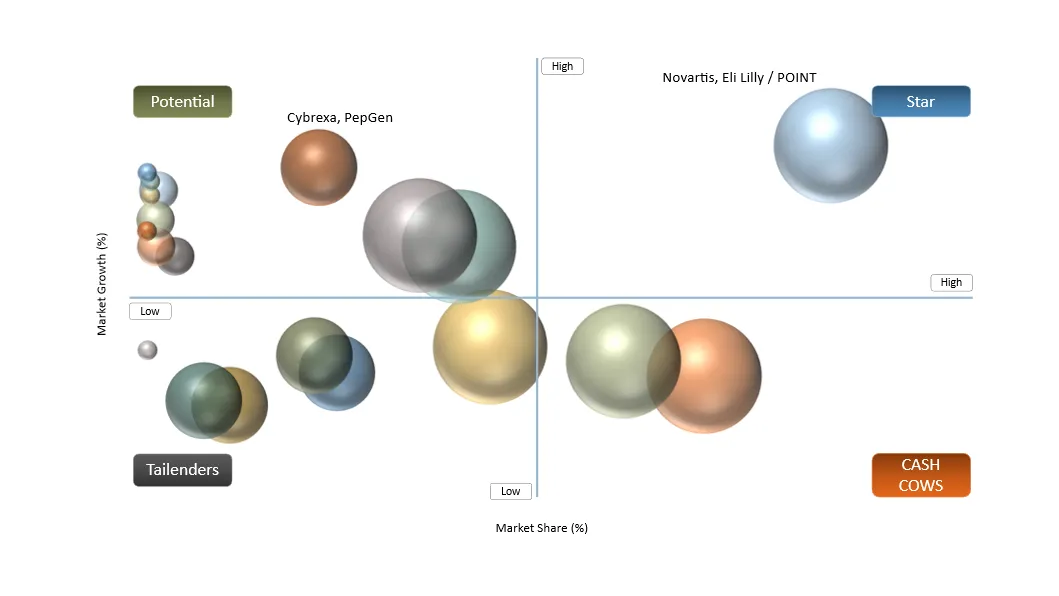
| Stars | Novartis, Eli Lilly / POINT, Bicycle Therapeutics | Commercial scale or strong pipeline momentum in high-growth targeted-delivery markets. |
| Potential | Cybrexa, PepGen, PYC Therapeutics, Coherent Biopharma | High-growth platforms with clinical proof still developing. |
| Cash Cows | Established radiopharmaceutical and peptide manufacturing franchises | Generate recurring revenue from validated products or manufacturing contracts. |
| Tailenders | Single-asset early programs without differentiated targets or secured supply | Face financing, translation and partnership risk. |
Peptide Drug Conjugate Market Dynamics
Driver Impact Analysis
| Driver | Growth Impact | Demand Concentration | Impacted Use Case | Strategic Impact |
| Expansion of radioligand therapy | High | Oncology centers | PSMA and SSTR treatment | Validates targeted peptide delivery and treatment infrastructure. |
| Advances in peptide engineering | High | Platform developers | Higher affinity and stability | Broadens target range and improves therapeutic index. |
| Oligonucleotide delivery need | Medium-High | Rare disease | Muscle and ocular delivery | Creates non-oncology growth. |
| Companion diagnostics | Medium | Precision medicine | Target confirmation | Improves patient selection and payer confidence. |
Driver: Expansion of Targeted Radiopharmaceutical Therapy
Commercial success in PSMA-positive prostate cancer and somatostatin receptor-positive neuroendocrine tumors has validated the peptide-conjugate model. These products demonstrate that a small targeting ligand can identify eligible patients, deliver a potent payload and support premium reimbursement. Their growth stimulates investment in new receptors, isotopes, imaging agents and treatment-center capacity.
Restraint Impact Analysis
| Restraint | Drag on Growth | Primary Impact Area | Impacted Use Case | Strategic Impact |
| Complex manufacturing and isotope supply | High | Commercial scaling | Radioligands | Can limit doses despite clinical demand. |
| Linker and payload toxicity | High | Clinical development | Cytotoxic PDCs | Reduces therapeutic window and raises failure risk. |
| Rapid clearance and variable uptake | Medium-High | Pharmacology | All classes | May require optimization or repeated dosing. |
| Limited validated targets | Medium | Pipeline breadth | New indications | Concentrates competition in a few receptors. |
Restraint: Complex Manufacturing and Clinical Translation
PDCs require control of peptide purity, conjugation ratio, linker stability, payload potency and release. Radioligands add isotope half-life and logistics, while oligonucleotide conjugates add large-scale synthesis and tissue-distribution challenges. A strong targeting concept can fail if the conjugate does not remain stable in circulation or release its payload inside the intended cell. Development therefore requires integrated chemistry, pharmacology and manufacturing rather than target discovery alone.
Peptide Drug Conjugate Market Segment Analysis
The global peptide drug conjugate market is segmented by conjugate class, targeting peptide, payload type, linker technology, therapeutic area, route of administration, development stage, and region.
By Conjugate Class
Radioligand Peptide Conjugates Will Retain the Largest Revenue Base
Radioligand peptide conjugates will remain the largest class through the near term because marketed products have established clinical use, diagnostic selection and reimbursement. Cytotoxic PDCs offer strong long-term potential but remain dependent on clinical proof. Peptide-oligonucleotide conjugates are expected to record the fastest growth from a smaller base as delivery into muscle, retina and other tissues improves.
By Targeting Peptide
PSMA and Somatostatin Receptor-Targeting Peptides Will Lead Commercial Value
PSMA and somatostatin receptor ligands dominate commercial value because receptor expression can be imaged and linked to approved treatment pathways. Integrin, GRPR, folate and transporter-targeting peptides create future opportunity across broader solid tumors. Competitive value will depend on receptor density, internalization, normal-tissue expression and diagnostic feasibility.
By Payload Type
Radionuclides Will Remain the Largest Payload Category
Radionuclides lead through approved products and integrated diagnostic-therapeutic workflows. Cytotoxic payloads are expected to expand as linker control and tumor selectivity improve. Oligonucleotide payloads provide the fastest-growing non-oncology opportunity because peptide delivery can improve tissue uptake and intracellular access.
By Linker Technology
Cleavable and Environment-Responsive Linkers Will Gain Strategic Importance
Cleavable linkers lead because they can release payloads after internalization or exposure to tumor-specific enzymes, acidity or redox conditions. Non-cleavable linkers offer stability but require effective degradation or processing. Linker selection will increasingly be optimized together with peptide and payload rather than as a separate component.
By Therapeutic Area
Oncology Will Remain Dominant While Genetic Disorders Grow Fastest
Oncology dominates due to target overexpression, high unmet need and premium treatment economics. Neuromuscular and genetic disorders are expected to grow fastest as enhanced-delivery peptides improve oligonucleotide transport. Ophthalmology offers attractive localized delivery, while inflammatory disease remains earlier stage.
By Route of Administration
Intravenous Administration Will Remain the Largest Route
Intravenous delivery leads because marketed radioligands and many cytotoxic conjugates require controlled hospital administration. Subcutaneous delivery may gain share for chronic peptide-oligonucleotide treatment and lower-acuity regimens. Intrathecal administration will remain specialized for central nervous system delivery.
By Development Stage
Marketed Products Will Generate Revenue While Phase I/II Programs Drive Strategic Value
Marketed radioligand products generate most current revenue. Phase I/II programs account for a large share of strategic pipeline value because many cytotoxic and oligonucleotide conjugates are still proving delivery and therapeutic index. Registration-stage growth will depend on successful expansion of existing radioligands and advancement of new targets.
Peptide Drug Conjugate Market Geographical Penetration
| Region | 2025 Share | Strategic Position |
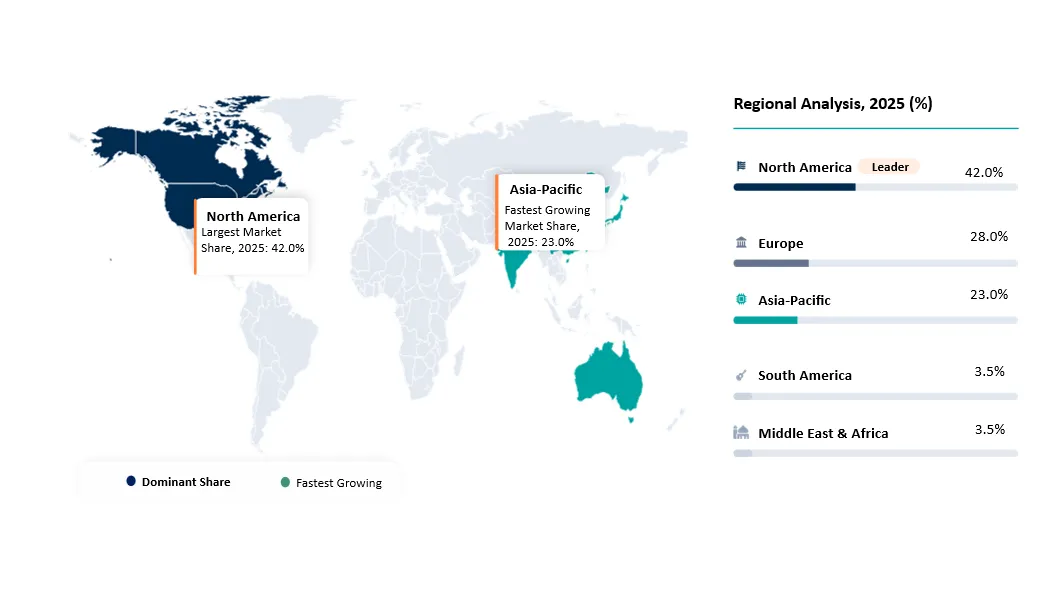
| North America | 42.0% | Largest market |
| Europe | 28.0% | Strong radiopharmaceutical and peptide manufacturing base |
| Asia-Pacific | 23.0% | Fastest-growing region |
| South America | 3.5% | Emerging access and clinical-research market |
| Middle East and Africa | 3.5% | Selective nuclear-medicine expansion |
Europe Market Outlook
Germany combines high radiopharmaceutical utilization, research hospitals and peptide manufacturing. It remains important for dosimetry, clinical trials and early adoption of targeted radionuclide therapy. The UK has strong oncology research, radiochemistry and biotechnology. Growth is linked to trial access, NHS reimbursement and manufacturing partnerships.
France offers established nuclear-medicine infrastructure and pharmaceutical development. National oncology networks can support new receptor-targeted programs. Italy and Spain have meaningful neuroendocrine tumor and prostate cancer treatment capacity. Growth depends on site expansion and reimbursement consistency.
Asia-Pacific Market Outlook
China is the fastest-growing major market through domestic peptide chemistry, oncology trials and radiopharmaceutical investment. Local companies are advancing dual-target and cytotoxic conjugates. India offers peptide synthesis, API manufacturing and a large oncology population. Commercial adoption will depend on affordability and specialized hospital capacity.
South Korea is investing in peptide manufacturing, biotechnology and nuclear medicine. It can become a regional production and licensing hub. Australia is important for early-phase oncology trials, radiopharmaceutical research and rare-disease development.
U.S. Market Outlook
The U.S. is the largest national market through commercial radioligand uptake, specialist oncology centers, clinical trials and venture financing. Expansion in prostate cancer, neuroendocrine tumors, rare disease delivery and alpha emitters supports demand. Capacity constraints, reimbursement and treatment scheduling remain important.
Japan Market Outlook
Japan provides strong peptide discovery, precision oncology and radiopharmaceutical capabilities. Partnerships with domestic pharmaceutical companies can accelerate target validation and regional commercialization.
Regional Strategic Trends
- North America is integrating radioligand launches with diagnostics, site certification and patient scheduling.
- Europe is strengthening isotope, peptide and radiopharmacy manufacturing while managing country-level reimbursement differences.
- Asia-Pacific is developing local platforms and expanding early clinical trials for new targets.
- South America is focusing on access partnerships and centralized treatment hubs.
- Middle East and Africa is investing selectively in precision oncology centers and isotope logistics.
Peptide Drug Conjugate Market Competitive Landscape
- Competition is led by companies with marketed radioligand products, validated peptide platforms or differentiated intracellular-delivery technology.
- Novartis holds the strongest commercial position through approved radioligand franchises and continued indication expansion.
- Large pharmaceutical companies are acquiring radiopharmaceutical and targeted-delivery platforms to accelerate entry.
- Bicycle and other peptide-platform developers compete through target breadth, small-molecule-like pharmacology and modular payload attachment.
- Peptide-oligonucleotide companies differentiate through tissue uptake, intracellular delivery and repeat-dose tolerability.
- Manufacturing partners can gain durable value through integrated peptide synthesis, conjugation, isotope handling and sterile fill-finish.
Key Companies of Peptide Drug Conjugate Market
- Novartis
- Eli Lilly and Company
- Bicycle Therapeutics
- Cybrexa Therapeutics
- PepGen
- PYC Therapeutics
- Oncopeptides
- Tarveda Therapeutics
- Coherent Biopharma
- Theratechnologies
- Ipsen
- RadioMedix
- RayzeBio / Bristol Myers Squibb
- Fusion Pharmaceuticals / AstraZeneca
- PeptiDream
- PolyPeptide Group
- Bachem
- CordenPharma
Peptide Drug Conjugate Market Major Pain Points
- Limited number of clinically validated peptide targets.
- Linker instability and premature payload release.
- Rapid clearance or insufficient tumor retention.
- Isotope shortages and short shelf life.
- High-potency manufacturing and analytical complexity.
- Treatment-center capacity and patient scheduling constraints.
- Small trials and biomarker-defined populations.
- Uncertain translation from preclinical selectivity to human benefit.
Peptide Drug Conjugate Market Recent Developments
- July 2026: A Phase I study record for PQ203 described first-in-human weekly intravenous dosing in advanced solid tumors, including triple-negative breast cancer.
- May 2026: The FDA approved pivekimab sunirine for BPDCN, reinforcing broader market confidence in targeted conjugate oncology even though the product is antibody based rather than peptide based.
- March 2026: Clinical and regulatory activity continued around peptide-oligonucleotide conjugates for Duchenne muscular dystrophy and OPA1-associated vision loss.
- June 2026: Companies expanded AI-enabled design of peptide-linker-payload combinations and activity prediction.
- April 2026: Radiopharmaceutical developers and large pharmaceutical companies continued investing in isotope supply, manufacturing and new receptor targets.
Partner Identification Priorities
The most valuable partners differ by conjugate class. Radioligand developers need isotope producers, radiopharmacies, imaging networks and certified treatment centers. Cytotoxic PDC companies need linker-payload expertise, high-potency CDMOs and biomarker laboratories. Peptide-oligonucleotide companies need tissue-delivery specialists, rare-disease networks and large-scale nucleic-acid manufacturing. Partnership selection should be based on technical gap closure, geographic reach and control of critical supply rather than corporate size alone.
Competitive Differentiation
Competitive differentiation will move beyond target novelty. Companies will be compared on receptor selectivity, internalization, tissue penetration, payload potency, dosing frequency, safety and manufacturability. A new PDC must explain why its smaller size, clearance profile or delivery mechanism creates an advantage over an antibody-drug conjugate or conventional therapy. Comparative evidence, practical dosing and reliable supply will become increasingly important as several products address the same target.
Strategic Market Outlook to 2035
Through 2035, the market is expected to remain commercially concentrated in a small number of validated targets while the pipeline diversifies rapidly. Radioligands will provide scale, peptide-oligonucleotide conjugates will expand the modality into new tissues and cytotoxic PDCs will deliver selective clinical successes. Consolidation is likely as large pharmaceutical companies acquire platforms with human proof and secure manufacturing. Standalone discovery companies without clinical delivery data or supply control will face greater financing pressure.
Analyst View / Opinion on Peptide Drug Conjugate Market
The market has entered a durable expansion phase because commercial radioligands validate the underlying targeting model, while new conjugate classes broaden the addressable opportunity. The strongest near-term revenue will remain concentrated in oncology and radiopharmaceuticals. The largest strategic upside lies in peptide platforms that solve delivery problems for cytotoxic and oligonucleotide payloads.
- Target selection and patient identification are as important as payload potency.
- Manufacturing capacity should be secured before pivotal development, especially for isotopes and high-potency conjugation.
- Platform valuation should reflect human delivery data and reuse across multiple assets.
- Peptide-oligonucleotide conjugates can become a major growth engine beyond oncology.
- Companion diagnostics and treatment-center networks will create durable commercial barriers.
- Long-term winners will combine differentiated biology, scalable chemistry and reliable supply.
Peptide Drug Conjugate Market Target Audience
| Industry | Who Should Buy This Report? | Reason to Buy |
| Pharma and Biotechnology | Oncology, rare-disease, radiopharmaceutical and business-development teams | Assess pipeline, targets, licensing and launch opportunities. |
| CDMOs and Suppliers | Peptide manufacturers, linker-payload suppliers, isotope producers and fill-finish providers | Identify capacity needs and customer opportunities. |
| Hospitals and Nuclear Medicine | Oncology centers, radiopharmacies and treatment networks | Understand workflow, capacity and product adoption. |
| Investors and Consulting | Venture capital, private equity, institutional investors and advisors | Evaluate pipeline risk, platform value and market timing. |
| Diagnostics | Imaging, biomarker and companion-diagnostic companies | Assess target-expression and patient-selection opportunities. |
| Government and Payers | Health authorities, reimbursement bodies and cancer programs | Understand access, infrastructure and economic impact. |
Why Choose DATAM?
- Data-driven forecasts combining product revenue, patient eligibility, pipeline probability and regional treatment capacity.
- Post-purchase analyst consultations for licensing, target prioritization, manufacturing and market-entry questions.
- Annual updates covering approvals, trial results, partnerships, acquisitions and supply investments.
- Specialized analysis of emerging markets, radiopharmaceutical infrastructure and peptide manufacturing.
- Actionable insights linking molecular design with commercial delivery and patient access.
What DATAM Uniquely Provides
- Ten-year forecasts across conjugate class, peptide target, payload, linker, therapeutic area, route, stage and region.
- Pipeline analysis covering marketed radioligands, cytotoxic PDCs and peptide-oligonucleotide conjugates.
- Buyer-focused assessment of diagnostics, treatment sites, manufacturing and reimbursement.
- Country-level views connecting clinical capacity, peptide production, isotope access and launch readiness.
- Strategic recommendations for licensing, partner identification, manufacturing and market entry.
Questions This Report Answers
- How will the global Peptide Drug Conjugate market evolve through 2035?
- Which conjugate classes and payloads offer the strongest growth?
- How will radioligand success influence cytotoxic and oligonucleotide PDC development?
- Which targets, linkers and delivery technologies are gaining importance?
- Where are the main manufacturing and isotope bottlenecks?
- Which regions offer the best balance of clinical demand, capacity and growth?
- How should companies prioritize partnerships and platform investment?


























































