


Oncology Biosimilars Market Size and Forecast
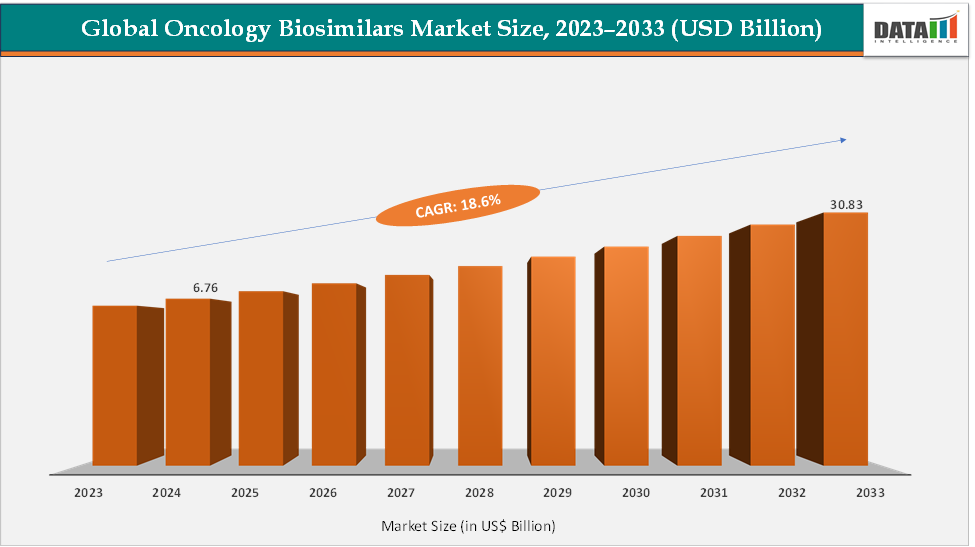
The Oncology Biosimilars Market will reach US$ 8.02 billion in 2026, up from US$ 6.76 billion in 2025, and is projected to reach US$ 50.02 billion by 2035, registering robust growth at a CAGR of 18.6% during the forecast period from 2026 to 2035.
The market growth is driven by patent expiries of key biologics like trastuzumab, bevacizumab, rituximab, and pegfilgrastim, leading to wider adoption of lower-cost biosimilars. Recent approvals, such as Henlius’s Hercessi (trastuzumab) and Biocon’s bevacizumab biosimilar, highlight increasing competition and regulatory momentum. Major players including Amgen and other major players, are expanding pipelines and partnerships. With strong uptake in Europe and Asia-Pacific and growing U.S. adoption, oncology biosimilars are reshaping cancer-care affordability and accessibility worldwide.
Oncology Biosimilars Market Key Takeaways
- North America accounts for approximately 40-45% of the global market, driven by favorable regulatory pathways, strong biosimilar adoption, and increasing healthcare cost-containment initiatives.
- Monoclonal antibodies (mAbs) contribute nearly 60-65% of total market revenue, owing to their widespread use in the treatment of breast cancer, colorectal cancer, lung cancer, and hematological malignancies.
- Hospital pharmacies account for more than 65% of oncology biosimilar distribution, supported by increasing institutional procurement and reimbursement coverage.
- More than 50% of blockbuster oncology biologics are expected to lose patent exclusivity by 2030, creating significant opportunities for biosimilar manufacturers and investors.
- Demand for oncology biosimilars in breast cancer, lung cancer, and colorectal cancer therapies is growing at over 20% annually, driven by increasing cancer incidence and wider patient access.
- Advanced biologics manufacturing, single-use bioprocessing, continuous manufacturing, and AI-enabled quality control technologies are witnessing annual adoption growth exceeding 15%, improving production efficiency and reducing manufacturing costs.
- Emerging markets across Asia-Pacific, Latin America, and the Middle East are witnessing rapid biosimilar adoption, supported by healthcare expansion and rising demand for affordable cancer treatments.
- Strategic partnerships, biosimilar pipeline expansion, and manufacturing capacity investments are becoming key competitive differentiators among leading pharmaceutical companies.
- Growing investments in biologics manufacturing, oncology drug development, healthcare accessibility, and regulatory harmonization are expected to accelerate long-term market growth.
- The major market players in the oncology biosimilars market are Celltrion USA, Inc., Amgen Inc., Pfizer Inc., Biocon Biologics Limited, Teva Pharmaceuticals USA, Inc., Organon group of companies, Accord BioPharma, and Sandoz Inc., among others
Oncology Biosimilars Market Scope
| Metrics | Details | |
| CAGR | 18.6% | |
| Market Size Available for Years | 2022-2033 | |
| Estimation Forecast Period | 2025-2033 | |
| Revenue Units | Value (US$ Bn) | |
| Segments Covered | Product Type | Monoclonal Antibodies (mAbs), Recombinant Proteins, Granulocyte Colony-Stimulating Factor (G-CSF), Erythropoiesis-Stimulating Agents, and Others |
| Indication | Breast Cancer, Lung Cancer, Colorectal Cancer, Cervical Cancer, Blood Cancer, and Others | |
| Route of Administration | Oral and Injectable | |
| Regions Covered | North America, Europe, Asia-Pacific, South America and the Middle East & Africa | |
Oncology Biosimilars Market Dynamics
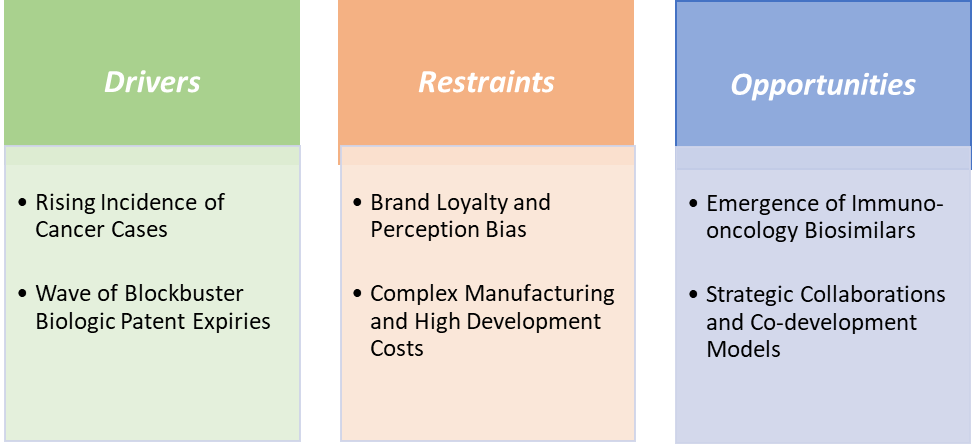
Drivers: Rising incidence of cancer cases is significantly driving the oncology biosimilars market growth
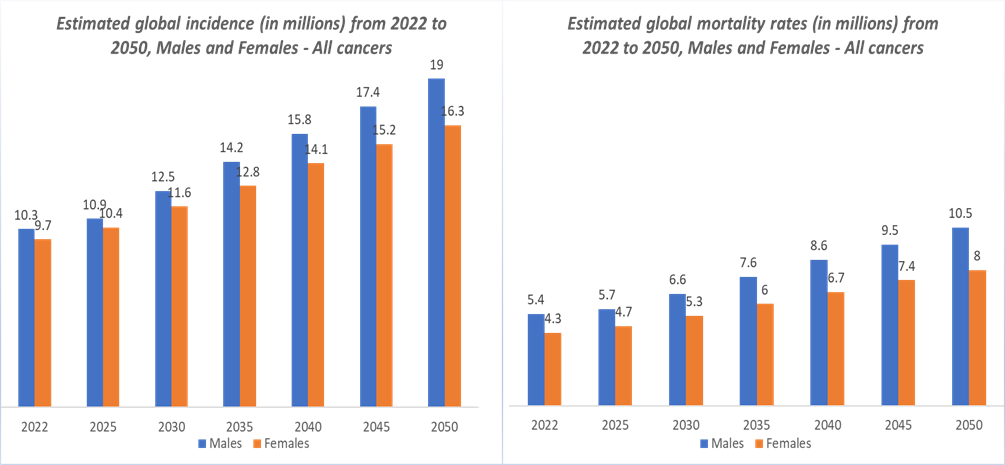
The rising global incidence of cancer is one of the strongest catalysts driving the oncology biosimilars market. According to the National Institute of Health, cancer is among the leading causes of death worldwide. In 2022, there were almost 20 million new cases and 9.7 million cancer-related deaths worldwide. By 2040, the number of new cancer cases per year is expected to rise to 29.9 million and the number of cancer-related deaths to 15.3 million. According to the International Agency for Research on Cancer, in 2025, cancer incidence cases are projected to reach 21.3 million, and in 2030, the cases are estimated to reach 24.1 million.
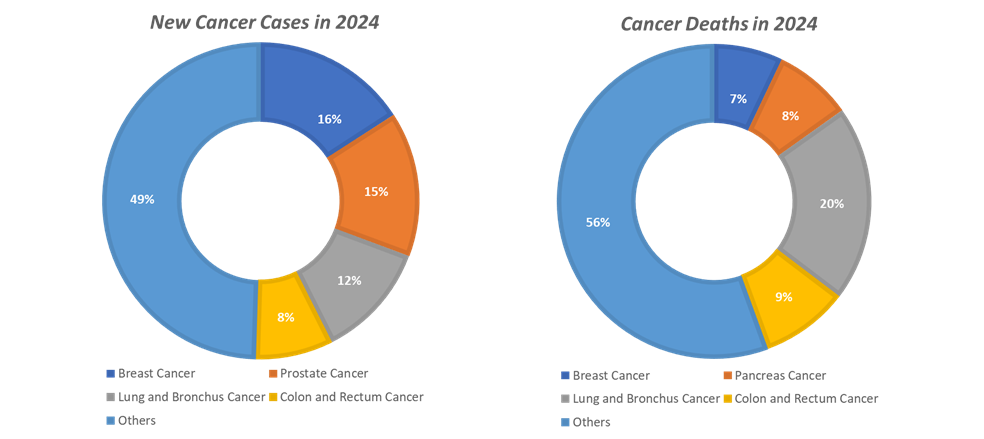
This escalation is fueled by population growth, aging demographics, and lifestyle-related risk factors such as smoking, obesity, and poor diet. As cancer prevalence climbs, the demand for biologic therapies, key treatments for breast, lung, colorectal, and hematologic cancers continues to rise, intensifying healthcare costs worldwide. Oncology biosimilars provide a vital solution by offering clinically equivalent yet cost-effective alternatives to high-priced biologics like trastuzumab, bevacizumab, and rituximab. With national health systems and payers under pressure to expand treatment access, biosimilars are being rapidly adopted to meet growing patient volumes without compromising care quality. Consequently, the increasing global cancer burden directly expands the addressable market for oncology biosimilars, fueling both volume growth and policy-driven adoption across developed and emerging economies.
List of biosimilars approved by US Food and Drug Administration for cancer treatment:
| Biologic Medicine | Biosimilars |
| bevacizumab (Avastin) | Mvasi Zirabev Alymsys Vegzelma Avzivi |
| rituximab (Rituxan) | Truxima Ruxience Riabni |
| trastuzumab (Herceptin) | Ogivri Herzuma Ontruzant Trazimera Kanjinti Hercessi |
| filgrastim (Neupogen) | Zarxio Nivestym Releuko Nypozi |
| pegfilgrastim (Neulasta) | Fulphila Udenyca Ziextenzo Nyvepria Fylnetra Stimufend |
| epoetin alfa (Epogen or Procrit) | Retacrit |
| denosumab (Xgeva) | Wyost Osenvelt |
Restraints: Brand loyalty and perception bias are hampering the growth of the market
Brand loyalty and perception bias remain major barriers to the growth of the oncology biosimilars market. Many oncologists and patients continue to trust well-established originator biologics such as Herceptin (trastuzumab), Avastin (bevacizumab), and Rituxan (rituximab) due to their long clinical track records and proven efficacy. Despite regulatory confirmation of equivalence, biosimilars often face skepticism regarding potential differences in safety, immunogenicity, or long-term outcomes.
Originator companies reinforce this loyalty through strong marketing, physician-education programs, and patient-assistance schemes that discourage switching. In markets with limited awareness or weak substitution policies, this perception bias delays adoption even after biosimilar approval. As a result, brand inertia and physician hesitancy continue to limit market penetration and slow the realization of biosimilars’ full cost-saving and accessibility potential in oncology.
For more details on this report - Request for Sample
Oncology Biosimilars Market Trends and Insights
Increasing Patent Expirations of Oncology Biologics
Patent and exclusivity expirations of major oncology biologics are creating a strong pipeline opportunity for biosimilar developers. Therapies based on trastuzumab, bevacizumab, rituximab, and other established biologics have already created important biosimilar markets.
As additional biologics approach loss of exclusivity, pharmaceutical companies are increasingly preparing biosimilar portfolios well in advance to secure regulatory approvals, manufacturing capacity, payer contracts, and physician acceptance.
Growing Adoption of Monoclonal Antibody Biosimilars
Monoclonal antibodies remain at the center of oncology biosimilar development. DataM Intelligence identifies monoclonal antibodies as the leading product category, representing approximately 40.32% of the market in 2024.
Trastuzumab, bevacizumab, and rituximab biosimilars have become important examples of how biosimilar competition can expand treatment options across breast cancer, colorectal cancer, lung cancer, and hematological malignancies.
Increasing Focus on Affordable Cancer Treatment
Rising oncology treatment costs are encouraging hospitals, insurers, governments, and healthcare systems to consider lower-cost biologic alternatives.
Biosimilars can improve access by introducing additional suppliers and increasing competition after reference biologics lose exclusivity. Payer policies, hospital procurement practices, formulary positioning, and physician confidence are therefore becoming increasingly important determinants of market penetration.
Expansion of Biosimilar Manufacturing
Biosimilar production requires sophisticated biological manufacturing capabilities, analytical testing, quality control, and highly controlled processes.
Manufacturers are investing in advanced bioprocessing, single-use technologies, automation, and manufacturing capacity to support larger oncology portfolios. These investments can improve production flexibility and help companies compete on cost and supply reliability.
Increasing Regulatory Simplification
Regulatory authorities are increasingly examining ways to make biosimilar development more efficient without compromising scientific standards.
In March 2026, the FDA proposed changes intended to reduce certain testing requirements and potentially lower development costs. The agency also proposed allowing greater use of appropriate data from biosimilars approved outside the U.S.
These developments could make the U.S. market more attractive to biosimilar developers and potentially accelerate future oncology biosimilar launches.
Oncology Biosimilars Market, Segment Analysis
The global oncology biosimilars market is segmented based on product type, indication, route of administration, and region.
Product Type: The monoclonal antibodies (mAbs) segment is dominating and fastest-growing in the oncology biosimilars market with a 40.32% share in 2024
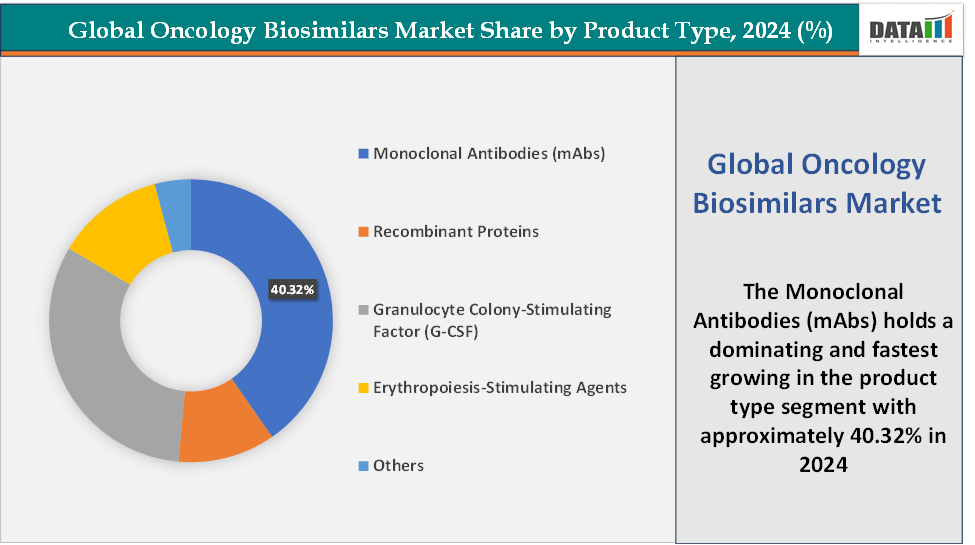
The monoclonal antibodies (mAbs) segment is both the dominant and fastest-growing category in the oncology biosimilars market. This leadership stems from the pivotal role mAbs play in treating major cancers such as breast, lung, colorectal, and lymphoma, where biologics like trastuzumab (Herceptin), bevacizumab (Avastin), and rituximab (Rituxan) are cornerstone therapies. The expiry of patents for these drugs has created multi-billion-dollar opportunities for biosimilars, leading to a surge of approvals and launches worldwide.
Products include Ogivri (trastuzumab-dkst), Kanjinti (trastuzumab-anns), Mvasi (bevacizumab-awwb), and Truxima (rituximab-abbs), each driving adoption across major markets. Recent developments further highlight the segment’s momentum. For instance, in April 2025, Biocon Biologics Ltd (BBL), a subsidiary of Biocon Ltd announced that the U.S. Food and Drug Administration (U.S. FDA) has approved Jobevne (bevacizumab-nwgd), a biosimilar Bevacizumab for intravenous use. JOBEVNE, a recombinant humanized monoclonal antibody used to treat several different types of cancer, is a biosimilar to the reference product Avastin (bevacizumab). JOBEVNE is a vascular endothelial growth factor (VEGF) inhibitor that binds with VEGF and blocks the interaction with its receptors to prevent angiogenesis combating cancer by restricting blood supply to the tumor.
Oncology Biosimilars Market, Geographical Analysis
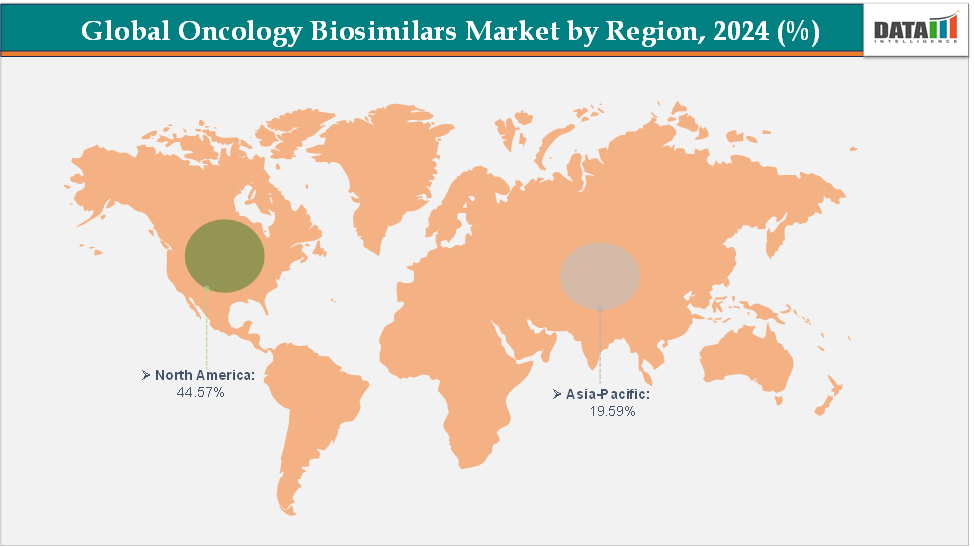
North America is expected to dominate the global oncology biosimilars market with a 44.57% in 2024
North America is expected to dominate the global oncology biosimilars market owing to its advanced regulatory framework, high biologic drug usage, and strong presence of leading pharmaceutical companies.
US Oncology Biosimilars Market Trends
The U.S. Food and Drug Administration (FDA) has approved over 63 biosimilars as of late 2024, establishing one of the world’s most mature and transparent biosimilar pathways under the Biologics Price Competition and Innovation Act (BPCIA). The region accounts for largest share of global oncology biosimilars revenue, supported by high cancer prevalence, substantial healthcare spending, and payer-driven efforts to reduce oncology treatment costs.
Major FDA approvals such as Hercessi (trastuzumab-strf) in 2024 and Jobevne (bevacizumab-nwgd) in 2025 underscore the region’s accelerating product pipeline and commercial uptake. The US also benefits from a robust network of oncology clinics and infusion centers that enable rapid adoption once pricing and formulary access are secured. With top players like Amgen, Pfizer, Viatris, and Sandoz headquartered in the region and continuously expanding their biosimilar portfolios, North America is positioned to remain the largest and fastest-evolving market for oncology biosimilars, driven by both policy incentives and growing demand for affordable cancer therapies.
The Asia Pacific region is the fastest-growing region in the global oncology biosimilars market, with a CAGR of 18.7% in 2024
The Asia-Pacific region is the fastest-growing market for oncology biosimilars, propelled by its massive cancer burden, improving healthcare infrastructure, and strong government support for affordable biologics. According to the WHO and GLOBOCAN, Asia-Pacific accounts for nearly 50% of global new cancer cases and over 60% of cancer-related deaths, with countries like China, India, and Japan witnessing sharp increases in breast, lung, and colorectal cancers. This rising prevalence, coupled with the high cost of biologic therapies, has accelerated demand for cost-effective biosimilars.
Leading regional players such as Biocon Biologics (India), Alkem, and Celltrion (South Korea) are spearheading biosimilar innovation and launches, further boosting the growth of the market in the region. For instance, in September 2025, Alkem Laboratories launched a biosimilar product in India for the treatment of breast cancer. The company has introduced Pertuza injection 420mg/14mL, a pertuzumab biosimilar, for the treatment of HER2-positive breast cancer. Alkem's Pertuza is an affordable, indigenously-developed and manufactured biosimilar of pertuzumab.
Europe Oncology Biosimilars Market Trends
The oncology biosimilars market in Europe is witnessing robust growth, driven by the region’s high cancer prevalence, supportive regulatory landscape, and growing emphasis on cost-effective care. With rising new cancer cases, the demand for affordable biologic therapies continues to surge. The European Medicines Agency (EMA) has established one of the most advanced biosimilar approval frameworks globally, enabling faster market entry and broader access.
Countries like Germany, France, Italy, and the U.K. have adopted substitution and tender-based procurement systems that significantly boost biosimilar uptake. Major product launches such as multiple trastuzumab, bevacizumab, and rituximab biosimilars, and the first denosumab biosimilar approved by the European Commission in 2024 are expanding therapeutic options and reducing treatment costs. Backed by high biologic utilization, payer-driven cost containment, and a mature regulatory framework, Europe stands as a global leader and growth engine for oncology biosimilars in the coming decade.
Oncology Biosimilars Market Competitive Landscape
Top companies in the oncology biosimilars market include Celltrion USA, Inc., Amgen Inc., Pfizer Inc., Biocon Biologics Limited, Teva Pharmaceuticals USA, Inc., Organon group of companies, Accord BioPharma, and Sandoz Inc., among others.
Recent developments in Oncology Biosimilars Market
- June 2026: Sandoz Inc. expanded the availability of its oncology biosimilar portfolio across key international markets, strengthening patient access to cost-effective cancer treatments.
- June 2026: Celltrion USA, Inc. received additional regulatory approvals for its oncology biosimilars in multiple global markets, supporting broader commercialization and patient access.
- May 2026: Biocon Biologics Limited expanded the global commercialization of its oncology biosimilars through strategic partnerships and regulatory approvals, reinforcing its presence in oncology care.
- May 2026: Amgen Inc. continued expanding its oncology biosimilar portfolio by increasing supply and market access initiatives for biosimilar cancer therapies across major healthcare markets.
- April 2026: Pfizer Inc. strengthened its oncology biosimilars business by advancing commercialization strategies and expanding patient access programs for biosimilar oncology medicines.
- April 2026: Organon broadened the commercialization of oncology biosimilars through its biosimilars portfolio, focusing on improving access to affordable biologic cancer treatments in emerging markets.
- March 2026: Accord BioPharma expanded its oncology biosimilar offerings in the U.S. through commercial initiatives aimed at increasing access to high-quality biosimilar therapies for oncology patients.
- February 2026: Teva Pharmaceuticals USA, Inc. continued strengthening its biosimilars portfolio through strategic collaborations and commercialization efforts focused on oncology and specialty medicines.
Oncology Biosimilars Market Regulatory Landscape
The oncology biosimilars market is strongly influenced by regulatory requirements governing biosimilarity, analytical comparability, immunogenicity, pharmacokinetics, clinical evidence, manufacturing quality, interchangeability, and post-marketing surveillance.
In the United States, biosimilars are regulated through the Biologics Price Competition and Innovation Act (BPCIA) and the FDA's abbreviated biologics licensing pathway.
A significant regulatory development occurred in 2026, when the FDA proposed measures to streamline biosimilar development, including greater flexibility regarding certain pharmacokinetic and comparative studies where scientifically justified. The proposal could reduce development time and costs for suitable products.
In Europe, the European Medicines Agency and national authorities have established a mature biosimilar framework emphasizing analytical comparability, quality, safety, and efficacy.
Across emerging markets, regulatory harmonization is becoming increasingly important because consistent requirements can reduce duplication and facilitate multinational biosimilar launches.
Oncology Biosimilars Market Value Chain Analysis
The Oncology Biosimilars value chain begins with reference-product analysis and target selection, where manufacturers evaluate biologics approaching patent or regulatory exclusivity expiry.
The next stage involves cell-line development, process development, analytical characterization, formulation, and scale-up. Manufacturers must establish processes capable of producing a highly comparable biological product with consistent quality.
This is followed by preclinical and clinical development, regulatory submission, manufacturing validation, and approval.
Once approved, products move through commercial manufacturing, quality control, packaging, distribution, hospital procurement, specialty pharmacies, infusion centers, and oncology clinics.
Payers and healthcare systems influence adoption through reimbursement, formulary placement, tendering, substitution policies, and pricing negotiations.
The final stage involves pharmacovigilance, post-marketing monitoring, real-world evidence generation, and lifecycle management, which increasingly influence long-term product positioning.
Why Choose DataM?
- Technological Innovations: DataM explores advancements across intelligent biosimilar manufacturing technologies, artificial intelligence-assisted biologics development capabilities, advanced analytical characterization platforms, and next-generation pharmaceutical innovations that are enabling organizations worldwide to improve manufacturing efficiencies and treatment accessibility outcomes across modern oncology ecosystems.
- Product Performance & Market Positioning: The report evaluates how leading market participants deliver oncology biosimilar solutions based on critical performance parameters such as therapeutic equivalence capabilities, manufacturing consistency characteristics, regulatory compliance metrics, commercialization efficiencies, and healthcare affordability considerations, highlighting how organizations differentiate through technological innovation and biopharmaceutical excellence across global applications.
- Real-World Evidence: DataM highlights the adoption of oncology biosimilars across hospital oncology centers, specialized cancer treatment facilities, and global healthcare systems worldwide. Biosimilars targeting trastuzumab, bevacizumab, rituximab, and pegfilgrastim continue demonstrating significant commercialization opportunities while improving treatment accessibility and reducing healthcare expenditures across multiple oncology indications globally.
- Market Updates & Industry Changes: The report tracks key developments including biosimilar approval initiatives, strategic commercialization partnerships, intelligent manufacturing innovations, regulatory advancements supporting biosimilar adoption, and increasing investments across North America, Europe, and Asia-Pacific strengthening global oncology treatment ecosystems.
- Competitive Strategies: DataM analyzes how leading organizations expand through biosimilar pipeline innovations, strategic licensing agreements, intelligent manufacturing technologies, product portfolio diversification initiatives, and regional commercialization programs designed to address increasing demand for affordable oncology therapeutics worldwide.
- Pricing & Market Access: The report explains pricing variations based on therapeutic indications, manufacturing complexities, regulatory considerations, and commercialization strategies, along with market access opportunities through hospital systems, specialty pharmacies, oncology treatment providers, and pharmaceutical distribution networks supporting global commercialization initiatives.
- Market Entry & Expansion: DataM identifies attractive growth opportunities driven by increasing investments supporting affordable cancer care initiatives, accelerating adoption of biosimilar technologies, expanding oncology treatment applications, and growing demand for intelligent biopharmaceutical manufacturing capabilities globally. The report further outlines strategic approaches involving regional expansion initiatives, technology differentiation strategies, customized commercialization models, and collaborative business frameworks designed to support successful market entry and long-term business expansion across emerging and established oncology biosimilar markets.
Target Audience
The report is strategically developed for stakeholders operating across the global oncology therapeutics, biopharmaceutical manufacturing, healthcare delivery, and intelligent pharmaceutical technology ecosystem. It provides actionable market intelligence for biosimilar manufacturers, oncology treatment providers, pharmaceutical companies, hospital systems, biologics developers, and intelligent manufacturing technology organizations seeking to strengthen their competitive positioning within rapidly evolving healthcare markets. Furthermore, government organizations, regulatory agencies, academic institutions, investment firms, biotechnology laboratories, and strategic business leaders can utilize the report to evaluate emerging technological innovations, sustainability initiatives, commercialization trends, and future growth opportunities shaping the Oncology Biosimilars Market through 2035.
The global oncology biosimilars market report delivers a detailed analysis with 56 key tables, more than 54 visually impactful figures, and 159 pages of expert insights, providing a complete view of the market landscape.
Suggestions for Related Report
For more pharmaceuticals-related reports, please click here


























































