


Oil and Gas Cloud Application Market Size
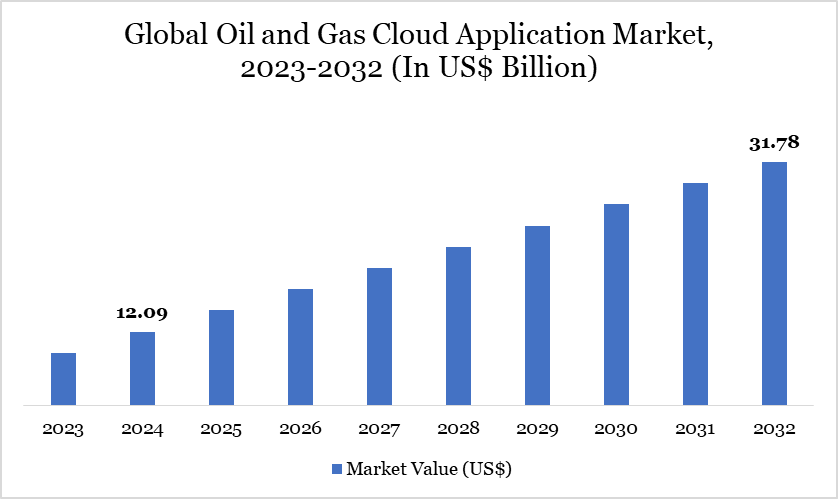
The Oil and Gas Cloud Application Market will reach US$ 15.39 billion in 2026, up from US$ 13.64 billion in 2025, and is projected to reach US$ 45.74 billion by 2035, registering strong growth at a CAGR of 12.84% during the forecast period from 2026 to 2035.
The global oil and gas cloud applications market is experiencing robust growth, driven by the industry's pursuit of digital transformation, operational efficiency, and enhanced data management. The market's growth is also supported by the increasing use of private clouds for data encryption, enhancing cybersecurity measures within the industry.
Moreover, the adoption of cloud applications facilitates better compliance with regulatory standards, disaster recovery, and the modernization of legacy systems. By enabling remote asset management and real-time data processing, cloud technologies are proving essential in navigating the complexities of the oil and gas industry.
Oil and Gas Cloud Application Market Trend
Oil and gas companies are increasingly integrating artificial intelligence (AI) and machine learning (ML) into their cloud platforms to optimize operations and reduce downtime. These technologies enable predictive maintenance by analyzing equipment data to detect anomalies and forecast potential failures.
For instance, BP uses cloud-based AI systems to predict maintenance needs in its upstream operations, significantly lowering operational costs and improving safety. Real-time data processing through cloud applications is becoming essential for decision-making in the oil and gas industry. Companies are using cloud platforms to collect and analyze data from remote sensors and field equipment, allowing faster and more informed responses.
For more details on this report - Request for Sample
Key Takeaways
- North America accounts for approximately 38-42% of the global market share, driven by increasing digital transformation initiatives, substantial investments in cloud infrastructure, and widespread adoption of data-driven oilfield operations.
- Cloud-based software solutions contribute over 65% of total market revenue, owing to their ability to improve operational efficiency, real-time data management, and predictive analytics capabilities across upstream, midstream, and downstream operations.
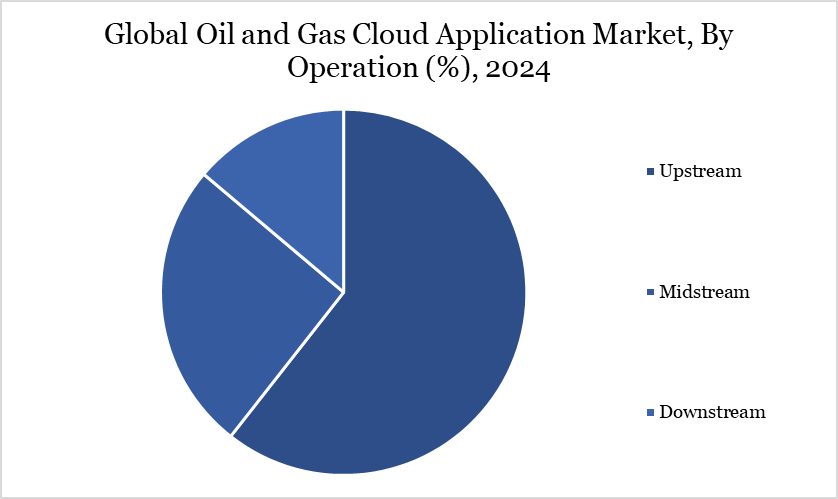
- Upstream operations account for nearly 45% of total market demand, supported by growing adoption of cloud-enabled exploration, drilling optimization, and reservoir management applications.
- Hybrid cloud deployment models collectively represent more than 50% of market adoption, leveraging enhanced data security, operational flexibility, and scalability requirements across oil and gas enterprises.
- AI-powered cloud analytics platforms are witnessing annual adoption growth exceeding 18%, driven by increasing demand for predictive maintenance, asset performance management, and operational intelligence solutions.
- Remote operations management and industrial IoT-integrated cloud applications are experiencing adoption growth of over 15% annually, supporting improved workforce productivity and reduced operational downtime.
- Asia-Pacific is expected to register the fastest market growth, supported by increasing investments in digital oilfield technologies, expanding energy infrastructure, and government-led digitalization initiatives.
- Strategic collaborations among cloud service providers, energy companies, and industrial technology firms are accelerating cloud application deployment and innovation globally.
- Growing investments in AI-enabled analytics, cybersecurity solutions, industrial cloud platforms, and digital twin technologies are expected to drive long-term market expansion.
Oil and Gas Cloud Application Market Scope
Metrics | Details |
By Component | Solutions, Services |
By Operation | Upstream, Midstream, Downstream |
By Deployment | Private Cloud, Public Cloud, Hybrid |
By Region | North America, South America, Europe, Asia-Pacific, Middle East and Africa |
Report Insights Covered | Competitive Landscape Analysis, Company Profile Analysis, Market Size, Share, Growth |
Investment Opportunity Analysis
The Oil and Gas Cloud Application Market presents substantial investment opportunities as energy companies increasingly prioritize digital transformation, operational efficiency, and data-driven decision-making capabilities. Rising adoption of cloud-native platforms across exploration, production, transportation, and refining operations is accelerating investments in AI-enabled analytics, industrial IoT solutions, and cybersecurity technologies. Companies are investing in hybrid cloud infrastructures, digital twins, and predictive maintenance platforms to improve asset utilization and reduce operational costs. Strategic investments by energy companies, cloud service providers, and industrial technology developers are expected to strengthen the market's long-term growth potential across both conventional and emerging energy applications.
Market Drivers, Restraints, Opportunities, and Challenges (DROC Analysis)
The Oil and Gas Cloud Application Market is driven by increasing digitalization initiatives, growing demand for real-time operational intelligence, and expanding adoption of cloud computing technologies across the energy sector. Cloud applications offer significant advantages in data integration, remote asset monitoring, predictive maintenance, and enterprise-wide collaboration capabilities. However, cybersecurity concerns, high migration costs, legacy infrastructure limitations, and regulatory compliance requirements remain significant market challenges. Emerging opportunities include AI-enabled cloud platforms, digital twin technologies, edge computing integration, and autonomous oilfield management solutions designed to enhance operational performance and sustainability outcomes.
Technology Landscape & Future Trends
Technological advancements are transforming the Oil and Gas Cloud Application Market through AI-powered analytics platforms, industrial IoT integration, hybrid cloud architectures, and digital twin technologies. Companies are increasingly developing intelligent cloud ecosystems capable of supporting predictive maintenance, reservoir modeling, supply chain optimization, and remote operations management. Future trends include autonomous energy operations, cloud-native industrial applications, advanced cybersecurity frameworks, real-time operational intelligence platforms, and generative AI-enabled decision support systems designed to improve productivity and resource optimization across oil and gas value chains.
Oil and Gas Cloud Application Market Dynamics
Rising Scalability and Innovation
Cloud solutions for oil and gas are essential for enterprises as they provide scalable resources, cost efficiency and increased flexibility. It enables organizations to store, manage, and analyze data remotely, resulting in decreased hardware expenses and enhanced cooperation. Moreover, cloud computing facilitates accelerated innovation, allowing organizations to swiftly implement new apps and services without substantial initial expenditure.
Cloud computing is utilized in the oil and gas sector to optimize operations, augment decision-making, and refine data management. It facilitates real-time data processing, enhancing asset management and predictive maintenance. Cloud solutions enhance collaboration among multinational teams, optimize supply chain processes and offer the scalability required to manage substantial volumes of seismic and geological data. This results in enhanced efficiency in exploration, production, and distribution operations within the industry.
Operational Efficiency and Innovation
Oil and gas enterprises implementing cloud computing have substantial obstacles concerning data security. The shift to cloud-based solutions presents vulnerabilities that may expose important operational data to cyber-attacks, resulting in potential breaches and illegal access. Integrating cloud computing with pre-existing on-premises systems and other technologies can be intricate.
Oil and gas industries frequently utilize legacy systems and achieving seamless connectivity with the cloud may pose technological difficulties. The oil and gas sector frequently functions in isolated and inhospitable locations where communication is restricted. Cloud computing needs dependable internet connections for real-time data processing, which can be challenging to attain in these areas.
Oil and Gas Cloud Application Market Segment Analysis
The global oil and gas cloud application market is segmented based on component, operation, deployment and region.
Techniques, Technology, and Resource Assessment in the Upstream Sector
Oil and gas exploration constitutes a crucial component of the upstream sector. Petroleum exploration necessitates very advanced techniques, and the technology utilized in this field is evolving swiftly. Exploration typically commences in regions with significant resource potential, often attributable to the local geology and established adjacent petroleum resources.
In a high-potential region, additional investigation is conducted to define a resource. The geophysical and geochemical analysis is conducted with techniques such as induced polarization (IP) surveys, drilling and assaying and electrical currents, among others. The objective during the exploration phase is to identify and assess the potential of a resource.
Exploratory wells are drilled in areas that exhibit potential for resource hosting to assess the resource. In the oil and gas industry, test drilling is a crucial element of the exploration phase. Should the exploratory well prove successful, the subsequent action is to develop wells and extract the resource. Upstream companies also manage the wells that extract crude oil or natural gas from the subsurface.
Oil and Gas Cloud Application Market Geographical Share
Digital Transformation, Data Privacy and Sustainability Initiatives in Europe
Europe possesses the biggest market share owing to the increasing demand for oil and gas cloud applications and the escalating necessity for digital transformation among both large and small enterprises. The UK, because to its early adoption of cloud technology, dominates the European market, trailed by Denmark, Italy and Spain.
The region anticipates utilizing cloud computing technology to decrease expenses and improve operational efficiency. The area possesses enormous oil and gas deposits, especially in the Norwegian belt and the North Sea. Equinor, a Norwegian global energy firm, exemplifies a European oil and gas company that has implemented cloud technologies. Cloud-based data analytics and machine learning were employed to enhance drilling operations in the North Sea.
Equinor improved drilling precision, minimized downtime, and achieved cost savings by employing cloud technology to analyze real-time drilling data from distant sites. Moreover, Europe enforces stringent data privacy regulations, including the General Data Protection Regulation (GDPR). Oil and gas companies operating in Europe were required to ensure that their cloud solutions adhered to these regulations, leading to the extensive implementation of secure and compliant cloud services. European oil and gas corporations were also apprehensive about environmental sustainability.
Technological Analysis
The oil and gas cloud application market are being reshaped by the integration of advanced technologies such as artificial intelligence (AI), machine learning (ML), the Internet of Things (IoT), big data analytics, and edge computing. These technologies are enabling oil and gas companies to shift from reactive to predictive operations.
AI and ML, for instance, are used extensively for predictive maintenance and exploration analytics—helping identify equipment failures before they occur and reducing non-productive time. IoT sensors embedded in drilling equipment, pipelines, and storage tanks generate massive volumes of real-time operational data, which is then processed through cloud platforms to enhance asset visibility and efficiency.
Oil and Gas Cloud Application Market Major Players
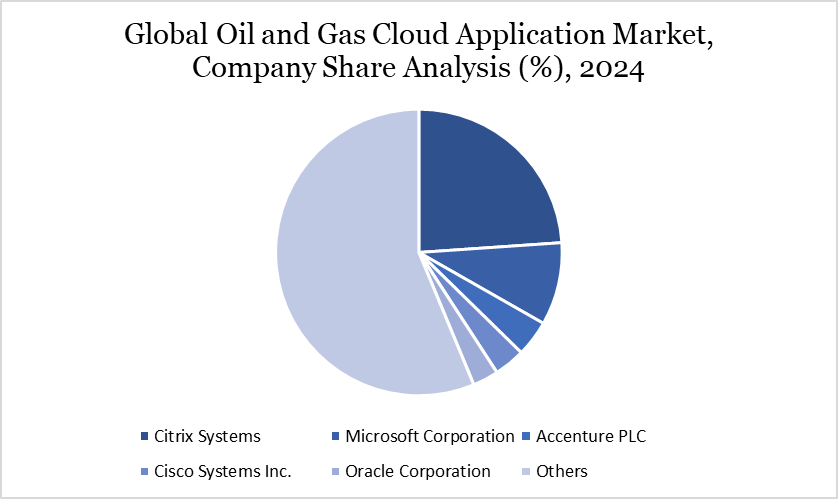
The major global players in the market include Citrix Systems, Microsoft Corporation, Accenture PLC, Cisco Systems Inc, Oracle Corporation, SAP SE, Capgemini S.A., Hewlett-Packard Company, IBM Corporation, Yokogawa Company and among others.
Key Developments
- June 2026: SAP SE expanded its cloud-based solutions for the oil, gas, and energy industry by enhancing AI-enabled enterprise applications focused on asset management, sustainability reporting, and operational efficiency.
- June 2026: IBM Corporation strengthened its hybrid cloud portfolio by introducing new AI-powered cloud capabilities designed to improve enterprise data management and digital transformation across energy and industrial sectors.
- May 2026: Microsoft Corporation continued expanding Azure cloud services with enhanced AI and data platform capabilities that support digital oilfield operations, predictive maintenance, and energy sector cloud adoption.
- May 2026: Accenture PLC advanced its cloud transformation initiatives for oil and gas companies by expanding SAP and AI-enabled digital solutions that improve operational agility and enterprise performance.
- April 2026: Oracle Corporation strengthened its cloud infrastructure and enterprise application portfolio by expanding cloud ERP capabilities that support industrial and energy sector digital transformation initiatives.
- April 2026: Cisco Systems, Inc. continued investing in secure cloud networking and industrial connectivity solutions to support digital operations across energy infrastructure and oil and gas facilities.
- March 2026: Capgemini SE expanded its cloud consulting and digital engineering services, helping oil and gas companies accelerate cloud migration, data modernization, and AI adoption initiatives.
- March 2026: Yokogawa Electric Corporation enhanced its cloud-based industrial automation solutions by strengthening digital platforms for remote asset monitoring and process optimization in the energy sector.
- February 2026: Hewlett-Packard Company (HPE) continued advancing its hybrid cloud and edge computing portfolio to support real-time industrial data processing and operational intelligence across energy applications.
In 2023, Microsoft and Oracle enhanced their partnership to offer Oracle Database Services on Oracle Cloud Infrastructure within Microsoft Azure.
In 2023, Cisco announced the launch of Cisco Secure Application (formerly known as Security Insights for Cloud Native Application Observability) on the Cisco Full-Stack Observability Platform, enabling organizations to integrate application and security teams for the secure development and deployment of modern applications.
In 2023, KBC, a Yokogawa Company, introduced the KBC Acuity Industrial Cloud Suite, a novel cloud distribution platform for its software and solutions. This product aims to consolidate KBC's diverse portfolio of technology and services to tackle difficulties including energy transition, process optimization, value chain optimization and asset management. It concentrates on process industries including oil and gas, petrochemicals and refining.
Why Choose DataM?
Data-Driven Insights: Dive into detailed analyses with granular insights such as pricing, market shares and value chain evaluations, enriched by interviews with industry leaders and disruptors.
Post-Purchase Support and Expert Analyst Consultations: As a valued client, gain direct access to our expert analysts for personalized advice and strategic guidance, tailored to your specific needs and challenges.
White Papers and Case Studies: Benefit quarterly from our in-depth studies related to your purchased titles, tailored to refine your operational and marketing strategies for maximum impact.
Annual Updates on Purchased Reports: As an existing customer, enjoy the privilege of annual updates to your reports, ensuring you stay abreast of the latest market insights and technological advancements. Terms and conditions apply.
Specialized Focus on Emerging Markets: DataM differentiates itself by delivering in-depth, specialized insights specifically for emerging markets, rather than offering generalized geographic overviews. This approach equips our clients with a nuanced understanding and actionable intelligence that are essential for navigating and succeeding in high-growth regions.
Value of DataM Reports: Our reports offer specialized insights tailored to the latest trends and specific business inquiries. This personalized approach provides a deeper, strategic perspective, ensuring you receive the precise information necessary to make informed decisions. These insights complement and go beyond what is typically available in generic databases.
Who Should Buy This Report?
This report is designed for oil and gas companies, cloud service providers, industrial software developers, energy technology firms, digital transformation consultants, industrial IoT solution providers, cybersecurity companies, engineering and construction firms, system integrators, government energy agencies, research institutions, universities, institutional investors, private equity firms, management consulting companies, and market intelligence organizations. It provides valuable insights for stakeholders seeking to identify growth opportunities, strengthen digital transformation strategies, evaluate investment prospects, and make informed business decisions across the global oil and gas cloud applications ecosystem.
Why Should You Buy This Report?
This report provides comprehensive market size estimates and forecasts through 2035, helping organizations identify high-growth opportunities across cloud-native industrial applications, AI-powered analytics platforms, digital twin technologies, and industrial IoT-enabled solutions. It delivers detailed analysis of market drivers, restraints, opportunities, and challenges, along with regional and country-level trends supporting strategic planning. The report offers competitive intelligence covering company strategies, partnerships, acquisitions, technological developments, capacity expansions, and regulatory initiatives. It also analyzes emerging technologies including hybrid cloud architectures, predictive maintenance platforms, remote operations management systems, and advanced cybersecurity solutions for industrial environments. Additionally, it supports investment planning, business expansion, competitive benchmarking, and market entry strategies while helping organizations capitalize on the rapidly evolving global oil and gas cloud application industry.
Target Audience 2026
Manufacturers/ Buyers
Industry Investors/Investment Bankers
Research Professionals
Emerging Companies



























































