


Multiple Myeloma Market Size and Overview
The global multiple myeloma market reached US$23.55 billion in 2025 and is expected to reach US$40.88 billion by 2035, growing with a CAGR of 5.6% during the forecast period 2026-2035.
Market growth is being shaped by rising disease incidence, improved diagnosis, longer patient survival and the increasing use of multiple treatment lines. Earlier adoption of anti-CD38-based quadruplet regimens is expanding first-line treatment value, while maintenance therapy extends treatment duration. However, repeated relapse, treatment resistance and unequal access to advanced therapies continue to influence clinical outcomes and regional revenue concentration.
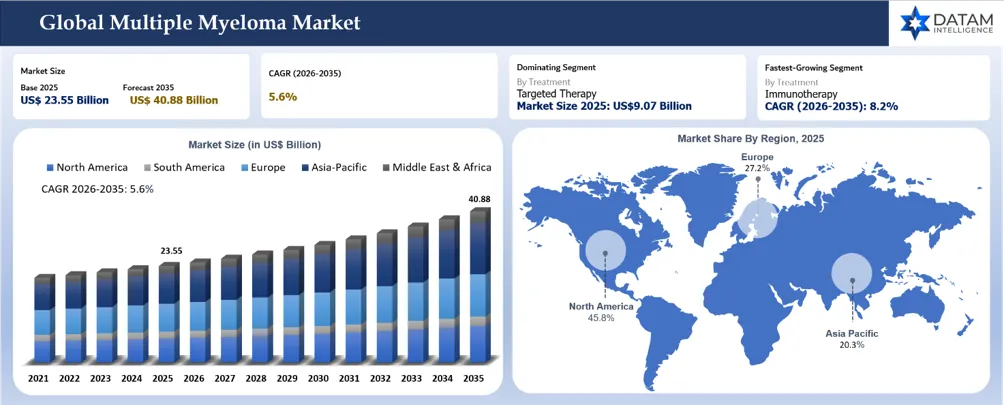
Targeted therapies remain the market’s revenue foundation, supported by proteasome inhibitors, immunomodulatory agents and monoclonal antibodies. Immunotherapy represents the principal growth vector, driven by CAR-T cell therapies, BCMA-targeted bispecific antibodies and emerging GPRC5D-directed treatments. Competitive advantage will increasingly depend on moving these therapies into earlier lines, producing durable responses and establishing effective treatment sequences following BCMA-directed therapy failure.
The next value-creation cycle will center on all-oral combinations, next-generation cereblon modulators, dual-targeting antibodies, off-the-shelf cellular therapies and treatments for high-risk disease. Sustainable leadership will require clinically meaningful progression-free and overall-survival benefits, manageable infection and cytokine-release risks, scalable manufacturing and broader reimbursement. Companies integrating differentiated clinical evidence with community-oncology access, biomarker-led patient selection and disciplined lifecycle management will be best positioned to capture premium market value.
Multiple Myeloma Market Key Takeaways
- Sustained Market Expansion Through 2035: The global multiple myeloma market was valued at US$23.55 billion in 2025 and is projected to reach US$40.88 billion by 2035, registering a 5.6% CAGR during 2026-2035.
- Targeted Therapy Maintains Market Leadership: Targeted therapy represented an estimated 38.5% of the market in 2025, equivalent to approximately US$9.07 billion. Leadership is supported by the broad utilization of proteasome inhibitors, immunomodulatory agents and other biomarker-directed therapies across treatment lines.
- Immunotherapy Emerges as the Primary Growth Engine: Immunotherapy is expected to be the fastest-growing treatment segment, with an estimated 8.2% CAGR during 2026-2035, driven by earlier-line adoption of anti-CD38 antibodies and expanding use of CAR-T and bispecific-antibody therapies.
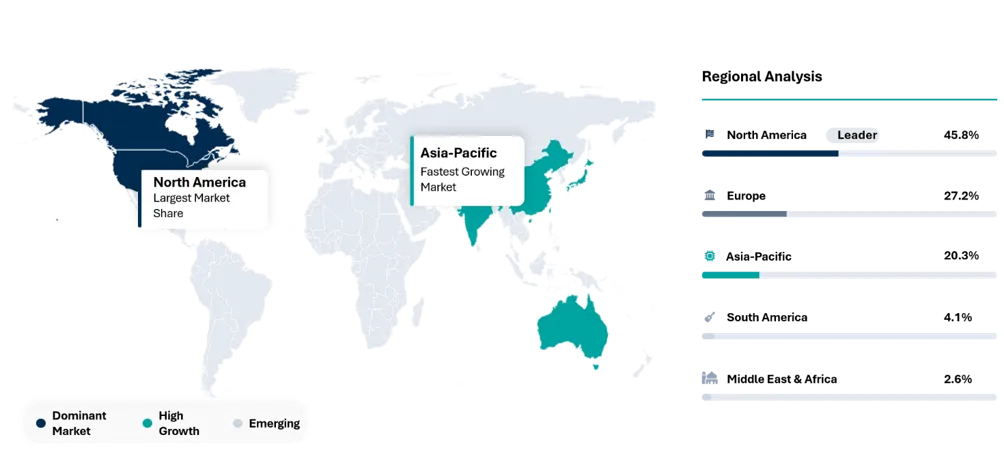
- North America Retains Regional Dominance: North America accounted for an estimated 45.8% of global revenue in 2025, representing approximately US$10.79 billion. Its leadership reflects strong treatment access, high oncology expenditure and rapid adoption of premium therapies.
- Treatment Sequencing Reshapes Competitive Strategy: Future market leadership will depend on moving advanced therapies into earlier treatment lines, addressing post-BCMA relapse and demonstrating durable survival benefits. Companies combining differentiated clinical evidence with scalable manufacturing, broad reimbursement and effective toxicity management will be best positioned to capture market share.
Multiple Myeloma Market Scope
| Metrics | Details | |
| 2025 Market Size | US$23.55 Billion | |
| 2035 Projected Market Size | US$40.88 Billion | |
| CAGR (2026-2035) | 5.6% | |
| Largest Market | North America | |
| Fastest Growing Market | Asia-Pacific | |
| By Type | Smoldering (Indolent) Multiple Myeloma, Active (Symptomatic) Multiple Myeloma | |
| By End-user | Chemotherapy, Immunotherapy, Radiation, Stem Cell Transplant, Targeted Therapy | |
| By End-user | Hospitals, Cancer Centers, Others | |
| By Region | North America | U.S., Canada, Mexico |
| Europe | Germany, UK, France, Spain, Italy, Poland | |
| Asia-Pacific | China, India, Japan, Australia, South Korea, Indonesia, Malaysia, Singapore, Vietnam, Thailand, Philippines, Taiwan | |
| South America | Brazil, Argentina | |
| Middle East and Africa | Israel, Saudi Arabia, UAE, Turkiye, South Africa, Nigeria | |
| Report Insights Covered | Competitive Landscape Analysis, Company Profile Analysis, Market Size, Share, Growth | |
Multiple Myeloma Market White Space & Investment Opportunities
- Earlier Detection and Risk Stratification: Invest in high-sensitivity monoclonal protein testing, minimal residual disease assessment, circulating tumor DNA and multi-omics platforms. Improved identification of high-risk smoldering multiple myeloma could enable timely intervention before end-organ damage while avoiding unnecessary treatment of lower-risk patients.
- Therapies for High-Risk and Refractory Disease: Develop treatments addressing extramedullary disease, plasma-cell leukemia and high-risk cytogenetic abnormalities, including del(17p), gain(1q) and t(4;14). These populations continue to experience shorter response duration despite advances in first-line combination therapy.
- Post-BCMA Treatment Innovation: Advance GPRC5D, FcRH5 and dual-targeting therapies for patients relapsing after BCMA-directed CAR-T cells, bispecific antibodies or antibody-drug conjugates. Opportunities include sequential immunotherapies, multi-antigen CAR-T platforms and treatments capable of overcoming antigen loss and T-cell exhaustion.
- Accessible and Scalable Immunotherapy Platforms: Invest in off-the-shelf cellular therapies, outpatient-compatible bispecific antibodies and simplified dosing models. Reducing manufacturing lead times, hospitalization requirements and specialist-center dependence could expand advanced-therapy adoption beyond major academic institutions.
- Treatment-Sequencing and Combination Evidence: Generate comparative and real-world evidence defining the optimal sequencing of anti-CD38 antibodies, proteasome inhibitors, immunomodulatory agents, CAR-T therapies, bispecific antibodies and next-generation cereblon modulators according to treatment line, cytogenetic risk, frailty and previous exposure.
- Geographic Access and Outcome-Based Reimbursement: Expand diagnostic capacity, specialist access and reimbursement for premium regimens across underserved markets. Investment in regional manufacturing, treatment-center certification and outcomes-linked payment models could reduce access disparities while connecting reimbursement to response durability, hospitalization avoidance and quality-of-life improvement.
Multiple Myeloma Market Buyer Decision-Making Criteria
Major Buyer Decision-Making Criteria:
- Overall Survival and Durability of Response
- Progression-Free Survival and Minimal Residual Disease Negativity
- Overall Response Rate and Complete Response Rate
- Effectiveness by Treatment Line and Cytogenetic Risk
- Suitability for Newly Diagnosed, Relapsed and Refractory Multiple Myeloma
- Effectiveness in High-Risk and Extramedullary Disease
- Prior Exposure and Refractoriness to Proteasome Inhibitors, Immunomodulatory Agents and Anti-CD38 Antibodies
- Eligibility for BCMA-Directed and GPRC5D-Directed Therapies
- Effectiveness Following Prior CAR-T or Bispecific-Antibody Treatment
- Safety, Tolerability and Long-Term Clinical Evidence
- Infection, Cytopenia, Neurotoxicity and Cytokine-Release Syndrome Risk
- Route of Administration, Dosing Frequency and Treatment Burden
- Hospitalization, Monitoring and Adverse-Event Management Requirements
- Manufacturing Lead Time and Treatment-Center Availability for CAR-T Therapy
- Improvement in Symptoms, Functional Status and Quality of Life
- Pricing, Reimbursement and Total Treatment Cost
- Guideline Positioning, Regulatory Approval and Physician Experience
- Compatibility with Existing Combination and Maintenance Regimens
- Manufacturing Reliability, Geographic Availability and Patient-Support Services
Multiple Myeloma Market BCG Matrix: Company Evaluation
STAR
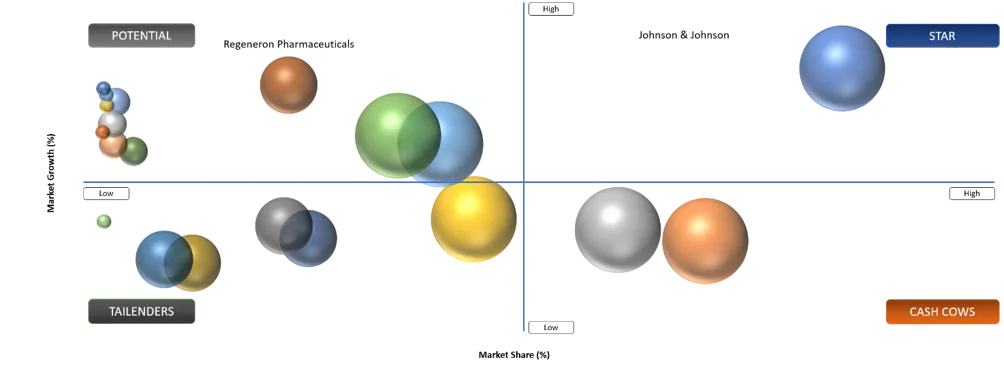
Johnson & Johnson, Bristol-Myers Squibb Company, Sanofi, GSK plc and Pfizer Inc. are positioned in the Star category based on their approved multiple myeloma therapies, strong commercialization capabilities and growing influence across treatment lines. Johnson & Johnson maintains a leading position through Darzalex, Tecvayli, Talvey and Carvykti, covering monoclonal antibodies, bispecific antibodies and CAR-T cell therapy. Bristol-Myers Squibb competes through Abecma, Empliciti, Pomalyst, Revlimid and its emerging CELMoD portfolio, supporting broad participation across established and next-generation treatment classes.
Sanofi strengthens its position through Sarclisa-based combinations, while GSK competes through Blenrep and Pfizer through Elrexfio. These companies benefit from established hematology networks, global regulatory capabilities and combination-development programs. Future leadership will depend on moving therapies into earlier treatment lines, improving response durability, reducing treatment burden and supporting broader outpatient administration. Companies that demonstrate superior survival, manageable safety, scalable manufacturing and favorable reimbursement will retain stronger commercial positioning.
POTENTIAL
Regeneron Pharmaceuticals, AbbVie, Arcellx, Genmab, BeOne Medicines, IASO Biotechnology and CARsgen Therapeutics are positioned in the Potential category because of their involvement in emerging bispecific antibodies, targeted therapies and next-generation CAR-T platforms for relapsed or refractory multiple myeloma.
Regeneron is advancing linvoseltamab, while AbbVie is developing etentamig and ISB 2001 across BCMA-directed and multispecific approaches. Arcellx is progressing anitocabtagene autoleucel in collaboration with Gilead Sciences. Genmab is evaluating HexaBody-CD38, while BeOne Medicines is investigating sonrotoclax-based combinations. IASO Biotechnology and CARsgen Therapeutics are expanding their cell-therapy portfolios through equecabtagene autoleucel and zevorcabtagene autoleucel, respectively. Progression toward the Star category will depend on pivotal-trial success, multinational regulatory approvals, durable clinical responses, manageable toxicity, manufacturing scalability and commercialization partnerships. Differentiation in patients previously exposed to BCMA-directed therapy will be especially important.
Multiple Myeloma Market Dynamics
Driver Impact Analysis
| Driver | Market Growth Impact (%) | Demand Concentration | Impacted Use Case | Strategic Impact |
Earlier-Line Migration of Anti-CD38-Based Quadruplet Regimens | 17.2% | High across North America and Europe; increasing across Japan and developed Asia Pacific markets | Newly diagnosed transplant-eligible and transplant-ineligible multiple myeloma | Expands eligible patient volumes and treatment duration while strengthening demand for Darzalex and Sarclisa-based multidrug regimens. |
Expansion of CAR-T and Bispecific Antibodies Beyond Late-Line Treatment | 15.6% | Concentrated in the United States, major European countries, Japan and China | Early relapsed or refractory multiple myeloma following one to three previous treatment lines | Earlier use of Carvykti, Abecma, Tecvayli, Talvey and Elrexfio expands addressable populations and increases treatment value per patient. |
Growing Treated-Prevalent Population from Improved Patient Survival | 13.8% | Highest in countries with aging populations and established hematology-oncology infrastructure | Long-term disease management, maintenance treatment and sequential relapse therapy | Longer survival generates recurring demand across maintenance regimens, subsequent treatment lines, supportive therapies and disease-monitoring services. |
Therapeutic Diversification Following BCMA-Directed Treatment Failure | 11.9% | Initially concentrated in specialist treatment centers; gradually expanding into regional oncology networks | Quadruple-class-exposed and post-BCMA relapsed or refractory multiple myeloma | Accelerates demand for GPRC5D therapies, CELMoDs, dual-targeted combinations and next-generation CAR-T platforms addressing resistance and antigen escape. |
Driver: Earlier-Line Migration of Anti-CD38-Based Quadruplet Regimens
The movement of anti-CD38 antibodies into first-line quadruplet regimens is becoming a major growth driver for the global multiple myeloma market. Treatment protocols increasingly combine daratumumab or isatuximab with a proteasome inhibitor, an immunomodulatory agent and dexamethasone for newly diagnosed patients. These combinations can generate deeper responses, increase minimal residual disease negativity and extend progression-free survival compared with conventional triplet regimens. Their adoption expands the commercially addressable population for anti-CD38 therapies beyond relapsed or refractory disease while increasing treatment intensity and pharmaceutical expenditure per patient. Uptake is strongest across the United States and major European markets, supported by guideline inclusion, specialist familiarity and reimbursement coverage.
Commercial competition is consequently shifting from late-line positioning toward front-line regimen ownership and long-term treatment sequencing. Johnson & Johnson benefits through Darzalex-based regimens, while Sanofi is expanding Sarclisa combinations across transplant-eligible and transplant-ineligible populations. Market leadership will depend on demonstrating survival benefits, manageable toxicity, convenient subcutaneous administration and compatibility with maintenance therapy. However, higher regimen costs, infection risks and access disparities may constrain adoption in price-sensitive markets. Companies supporting biomarker monitoring, outpatient delivery and evidence-based sequencing will be better positioned to capture sustained growth.
Restraint Impact Analysis
| Restraint | Drag on Market Growth (%) | Primary Impact Area | Impacted Use Case | Strategic Impact |
High Cost and Uneven Reimbursement of CAR-T, Bispecific Antibodies and Quadruplet Regimens | 16.8% | Treatment affordability, payer approval and geographic access | Patients eligible for advanced immunotherapies and prolonged multidrug treatment | Restricts adoption outside well-funded healthcare systems, increases prior-authorization requirements and concentrates premium therapies in major treatment centres. |
CAR-T Manufacturing Bottlenecks and Extended Vein-to-Vein Timelines | 14.7% | Manufacturing capacity, patient scheduling and treatment-centre throughput | Rapidly progressing relapsed or refractory patients awaiting autologous CAR-T therapy | Delays treatment initiation, increases dependence on bridging therapy and limits the number of patients who can receive personalized cell therapy. |
Infection, Cytopenia and Immune-Mediated Toxicity Burden of Advanced Therapies | 12.9% | Patient eligibility, clinical monitoring and treatment continuity | Elderly, frail, immunocompromised and heavily pretreated multiple myeloma patients | Increases hospitalization, supportive-care expenditure and treatment interruptions while limiting adoption in community oncology settings lacking specialized monitoring capabilities. |
Treatment-Sequencing Uncertainty Following BCMA-Directed Therapy | 10.8% | Clinical decision-making, post-relapse management and evidence generation | Patients relapsing after BCMA-directed CAR-T, antibody-drug conjugates or bispecific antibodies | Limited comparative evidence and potential cross-resistance complicate therapy selection, reducing confidence in subsequent BCMA reuse and increasing demand for alternative targets. |
Restraint: High Cost and Uneven Reimbursement of CAR-T, Bispecific Antibodies and Quadruplet Regimens
The high cost of advanced multiple myeloma therapies remains a major constraint on equitable market expansion. CAR-T treatments require individualized manufacturing, specialist centres, lymphodepleting chemotherapy, hospitalization and intensive toxicity monitoring, creating substantial costs beyond the therapy’s acquisition price. Bispecific antibodies can require step-up dosing, infection management and continued administration, while anti-CD38-based quadruplet regimens combine several premium medicines over extended treatment periods. These cumulative expenses increase budget pressure for public health systems, commercial insurers and patients, particularly where reimbursement frameworks have not evolved alongside rapidly changing treatment standards.
Uneven coverage produces significant differences in adoption across countries, institutions and patient groups. Payers may restrict access through previous-treatment requirements, specialist authorization, centre accreditation or outcomes-based eligibility criteria. These controls can delay therapy until later disease stages, reducing potential clinical benefits and limiting commercial uptake. Manufacturers must therefore support value-based agreements, real-world evidence generation and health-economic models demonstrating reduced progression, hospitalization and subsequent treatment costs. Companies offering flexible pricing, patient-assistance programs and scalable outpatient administration will be better positioned to broaden access. Without reimbursement reform, advanced therapies will remain concentrated in high-income markets and leading academic centres.
Multiple Myeloma Market Segment Analysis
The global multiple myeloma market is segmented based on type, treatment, end-user, and region.
By Type:
Immunotherapy segment is expected to dominate the global multiple myeloma market share
Immunotherapy segment holds a major portion of the multiple myeloma market share. Additionally, the increased investment in research and development by pharmaceutical companies is fostering innovation in this area. As more advanced therapies enter the market, they are expected to attract significant attention from healthcare providers and patients
Several ongoing research and developments for multiple myeloma and the increasing preference by the patients are expected to hold the segment in the dominant position. For instance, in August 2023, Janssen Pharmaceutical Companies of Johnson & Johnson announced received the U.S. Food and Drug Administration (FDA) accelerated approval of TALVEY (talquetamab-tgvs), a first-in-class bispecific antibody for the treatment of adult patients with relapsed or refractory multiple myeloma who have received at least four prior lines of therapy, including a proteasome inhibitor, an immunomodulatory agent, and an anti-CD38 antibody.
Multiple Myeloma Market Geographical Penetration
U.S. Multiple Myeloma Market Landscape
The U.S. multiple myeloma market is characterized by high treatment intensity, rapid adoption of novel immunotherapies and expanding use of premium combinations in earlier treatment lines. According to the American Cancer Society, approximately 36,000 new cases and 10,850 deaths are expected in the United States in 2026. This sustained disease burden, combined with longer patient survival and repeated relapse cycles, supports recurring demand across induction, transplantation, maintenance and subsequent-line treatment. Anti-CD38 antibodies increasingly anchor first-line regimens, while CAR-T therapies, bispecific antibodies and antibody-drug conjugates are reshaping relapsed or refractory disease management.
Commercial competition is led by Johnson & Johnson, Bristol-Myers Squibb, Sanofi, Pfizer, GSK and Amgen, supported by extensive hematology networks and strong payer-engagement capabilities. Growth is shifting toward earlier-line CAR-T and bispecific combinations, subcutaneous administration and therapies addressing relapse after BCMA exposure. However, high acquisition costs, manufacturing constraints, infection risks and uneven access outside specialist centres remain material barriers. Future market leadership will depend on demonstrating durable survival, manageable toxicity, shorter administration times, scalable manufacturing and favorable reimbursement across Medicare and commercial insurance populations.
Japan Multiple Myeloma Market Outlook
Japan’s multiple myeloma market is positioned for steady expansion, supported by population aging, improving diagnosis and earlier adoption of advanced combination regimens. Japan’s National Cancer Center projected approximately 8,100 new multiple myeloma cases and 4,400 associated deaths in 2025, demonstrating a clinically meaningful disease burden. Demand is concentrated among older patients, increasing the importance of tolerable regimens, subcutaneous formulations and outpatient delivery. Anti-CD38 antibodies, proteasome inhibitors and immunomodulatory agents remain central to treatment, while CAR-T therapies and bispecific antibodies are progressively extending options for relapsed or refractory disease.
Market growth will be shaped by earlier-line regulatory expansion and improved administration convenience. Japan approved subcutaneous Sarclisa in 2026 for newly diagnosed and relapsed or refractory disease, while Carvykti’s indication was expanded to patients receiving at least one previous therapy. These developments shift advanced immunotherapies closer to earlier relapse and broaden eligible populations. Nevertheless, CAR-T manufacturing capacity, accredited-centre availability, infection management and reimbursement scrutiny may constrain uptake. Commercial success will depend on demonstrating durable outcomes in Japanese patients, reducing hospital resource requirements and supporting treatment access beyond leading urban academic centres.
Multiple Myeloma Market Competitive Landscape
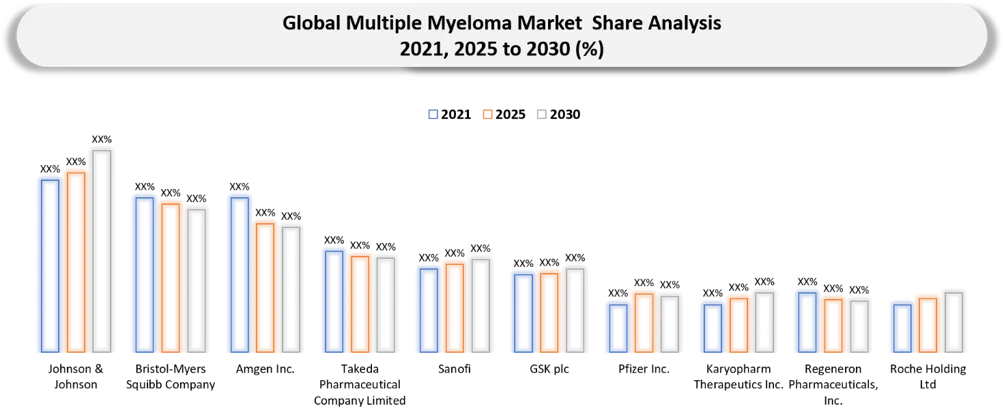
- The global multiple myeloma market is highly competitive, with established pharmaceutical companies competing through differentiated mechanisms, earlier-line treatment expansion, combination regimens and geographic commercialization. Johnson & Johnson, Bristol-Myers Squibb, Amgen, Takeda, Sanofi, GSK and Pfizer maintain strong positions through monoclonal antibodies, proteasome inhibitors, immunomodulatory agents, antibody-drug conjugates, bispecific antibodies and CAR-T therapies. Competition increasingly focuses on deeper responses, prolonged progression-free survival, convenient administration and effectiveness among heavily pretreated patients. Johnson & Johnson has developed a broad portfolio spanning Darzalex, Tecvayli, Talvey and Carvykti, while Bristol-Myers Squibb competes through Abecma, Empliciti, Pomalyst and its emerging CELMoD portfolio.
- Emerging biotechnology companies are reshaping competition by advancing next-generation cell therapies and targeted immunotherapies. Legend Biotech, Arcellx, Genmab, Regeneron, AbbVie, BeOne Medicines, IASO Biotechnology and CARsgen Therapeutics are developing candidates targeting BCMA, GPRC5D, CD38 and additional plasma-cell antigens. Strategic collaborations, licensing agreements and co-development partnerships are increasingly important for accessing manufacturing capacity and accelerating global commercialization. Future leadership will depend on treatment durability, safety management, outpatient feasibility, scalable manufacturing, sequencing flexibility and reimbursement access. Companies capable of moving differentiated therapies into earlier treatment lines while addressing relapse after BCMA-directed treatment are positioned to capture expanding opportunities.
Key Companies of Multiple Myeloma Market
- Johnson & Johnson (United States)
- Bristol-Myers Squibb Company (United States)
- Amgen Inc. (United States)
- Takeda Pharmaceutical Company Limited (Japan)
- Sanofi (France)
- GSK plc (United Kingdom)
- Pfizer Inc. (United States)
- Karyopharm Therapeutics Inc. (United States)
- Regeneron Pharmaceuticals, Inc. (United States)
- Roche Holding Ltd (Switzerland)
- AbbVie Inc. (United States)
- Legend Biotech Corporation (United States)
- Arcellx, Inc. (United States)
- Gilead Sciences, Inc. (United States)
- Genmab A/S (Denmark)
- BeOne Medicines Ltd. (Switzerland)
- Oncopeptides AB (Sweden)
- Antengene Corporation Limited (China)
- IASO Biotechnology Co., Ltd. (China)
- CARsgen Therapeutics Holdings Limited (China)
Multiple Myeloma Market Recent Developments
- September 2026: Johnson & Johnson announced more than 35 multiple myeloma abstracts for the 2026 International Myeloma Society Annual Meeting. The presentations cover Darzalex, Tecvayli, Talvey, Carvykti and investigational trispecific antibody ramantamig across different treatment lines.
- September 2026: Bristol-Myers Squibb reported positive topline results from the registrational Phase II QUINTESSENTIAL trial of arlocabtagene autoleucel. The GPRC5D-directed CAR-T therapy met its response endpoints in heavily pretreated patients, including those previously exposed to BCMA-directed treatment.
- August 2026: The U.S. FDA granted accelerated approval to Bristol-Myers Squibb’s Zenbexus, or iberdomide, combined with daratumumab, hyaluronidase and dexamethasone. Zenbexus became the first FDA-approved CELMoD therapy for multiple myeloma.
- July 2026: Japan expanded the approved indication for Johnson & Johnson and Legend Biotech’s Carvykti to include patients with relapsed or refractory multiple myeloma who received at least one prior therapy. The expansion moves the BCMA-directed CAR-T therapy into earlier treatment lines.
- July 2026: Johnson & Johnson reported positive Phase III MonumenTAL-6 results for Tecvayli combined with Talvey. The dual BCMA and GPRC5D-targeting regimen reduced the risk of disease progression or death by 89% compared with investigator-selected standard therapy.
- July 2026: The U.S. FDA approved Sanofi’s subcutaneous Sarclisa Escena across the existing indications of intravenous Sarclisa. The product became the first anticancer treatment approved for delivery through an on-body injector, supporting shorter and more flexible administration.
- June 2026: Japan approved Sanofi’s subcutaneous Sarclisa formulation in combination with established regimens for newly diagnosed and relapsed or refractory multiple myeloma. The approval was supported by the Phase III IRAKLIA study demonstrating non-inferiority to intravenous Sarclisa.
What DATAM Uniquely Provides
- In-depth segmentation of the multiple myeloma market by disease type, treatment type, drug class, mechanism of action, route of administration, treatment line, patient age group, care setting, distribution channel and region.
- Competitive analysis of leading multiple myeloma companies covering overall survival, progression-free survival, minimal residual disease negativity, response depth, response durability, safety, target differentiation, dosing convenience, pipeline maturity and commercialization strategy.
- Comprehensive assessment of newly diagnosed, transplant-eligible, transplant-ineligible, relapsed and refractory patient populations, including high-risk cytogenetic, extramedullary, triple-class-exposed, triple-class-refractory and post-BCMA-treated patients, alongside frailty, comorbidity and regional-access dynamics.
- Actionable intelligence on pharmaceutical pricing, reimbursement, regulatory pathways, treatment-response assessment, minimal residual disease testing, therapy sequencing, manufacturing capacity, treatment-center readiness, patient-support programs, licensing activity, strategic partnerships and investment opportunities.
- Analyst forecasts identifying high-growth drug classes, commercially attractive patient populations, regional expansion opportunities and emerging competitive threats across proteasome inhibitors, immunomodulatory agents, anti-CD38 antibodies, CAR-T therapies, bispecific antibodies, antibody-drug conjugates, cereblon modulators and next-generation targeted treatments.



























































