


Oncology Therapy Market Size and Forecast 2035
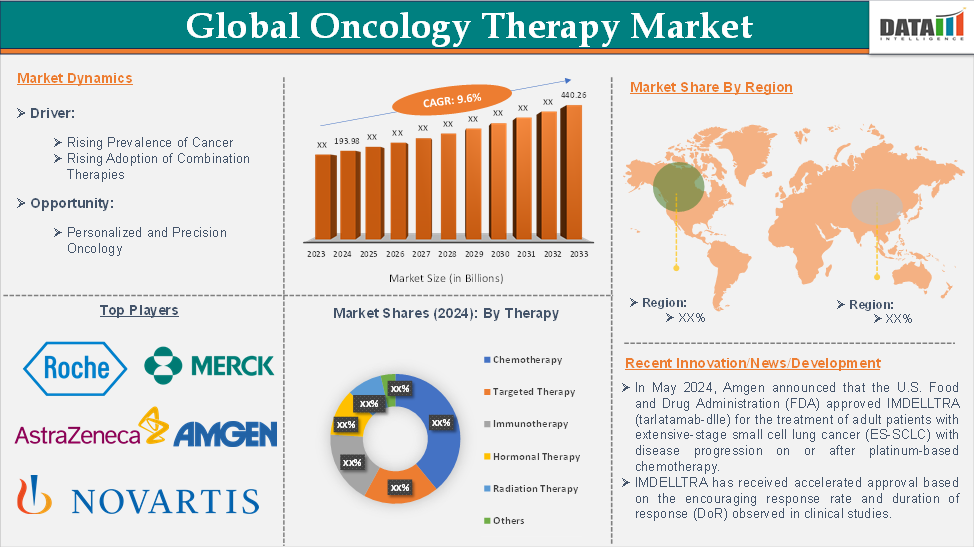
The global oncology therapy market reached USD 212.6 billion in 2025 and is forecast to reach USD 531.7 billion by 2035, expanding at a CAGR of 9.6% during 2026–2035. DataM Intelligence's existing market analysis records a 2025 value of USD 212.6 billion and identifies increasing cancer incidence, targeted therapy, immunotherapy and personalized medicine as central growth factors.
Cancer treatment is moving beyond broad cytotoxic approaches toward therapies selected according to tumor biology, molecular mutations, protein expression and immune characteristics. Targeted kinase inhibitors, immune checkpoint inhibitors, antibody-drug conjugates, bispecific antibodies, CAR-T cell therapies, radioligand therapies and other precision treatments are steadily increasing their share of global oncology expenditure.
The underlying patient population continues to expand. IARC and the American Cancer Society estimate that 20.6 million people were diagnosed with cancer worldwide in 2024 and 9.8 million died from the disease. Global annual incidence is projected to rise to 34.4 million cases by 2050.
Oncology Therapy Market Definition
Oncology therapy refers to pharmaceutical, biological, cellular and radiation-based interventions used to destroy cancer cells, inhibit tumor growth, prevent recurrence or extend survival in patients with solid tumors and hematological malignancies.
The market includes chemotherapy, targeted anticancer medicines, immunotherapies, hormonal treatments, radiotherapy-related therapeutic approaches and emerging oncology modalities covered within the report's therapy segmentation.
Standalone diagnostic procedures, cancer screening, imaging equipment, surgical equipment and supportive-care medicines without a primary antineoplastic function are excluded from the core market estimate.
The therapeutic boundary is becoming more complex as oncology shifts toward integrated treatment pathways. Biomarker testing, liquid biopsy and molecular profiling increasingly determine therapy selection even though diagnostic revenue itself falls outside the core oncology therapy market.
Key Highlights From This Report
2025 Market Size: USD 212.6 Billion
2035 Forecast Market Size: USD 531.7 Billion
CAGR, 2026–2035: 9.6%
Largest Region: North America – 42.4% share in 2025
Fastest-Growing Region: Asia-Pacific
Leading Therapy: Targeted Therapy – 35.4% share
Leading Application: Breast Cancer – 16.4% share
White-Space Opportunity: Precision Therapies Are Moving into Earlier Disease
One of the most valuable opportunities through 2035 is the migration of high-value oncology therapies from late-stage or heavily pretreated disease into first-line, neoadjuvant, adjuvant and maintenance settings.
This transition substantially increases addressable treatment populations and potentially lengthens treatment duration.
FDA approvals during 2026 demonstrate the direction of travel. In May, Enhertu received two additional HER2-positive early breast cancer indications. In June, sacituzumab govitecan received first-line triple-negative breast cancer indications, while palbociclib-based therapy expanded into maintenance treatment of HR-positive, HER2-positive metastatic breast cancer.
Precision treatment is also entering earlier prostate cancer. On July 31, 2026, the FDA approved Novartis' Pluvicto in combination with androgen-receptor pathway inhibitor therapy for PSMA-positive metastatic androgen pathway modulation-naïve or -sensitive prostate cancer. This pushes radioligand therapy further upstream in the treatment sequence.
Bladder cancer offers another example of how treatment selection is changing. In May 2026, the FDA approved atezolizumab for adjuvant treatment of patients with muscle-invasive bladder cancer who have circulating tumor DNA molecular residual disease, making molecular residual disease a direct treatment-selection factor.
The commercial consequence is important: oncology companies are no longer competing solely for small refractory populations. Successful precision therapies can move progressively into larger patient pools as evidence accumulates.
Oncology Therapy Market Key Takeaways
- The global market is forecast to expand from USD 212.6 billion in 2025 to USD 531.7 billion in 2035, representing more than USD 319 billion in incremental market value.
- Targeted therapy is estimated to lead the market with 35.4% of 2025 revenue, while immunotherapy represents around 27.8%.
- Breast cancer remains the largest modeled application at 16.4% of market revenue, closely followed by lung cancer.
- North America accounts for an estimated 42.4% of global oncology therapy revenue, supported primarily by the United States.
- Asia-Pacific has the largest cancer-volume base and is expected to record the fastest therapy-market growth through 2035. WHO reported that Asia accounted for 50.7% of global cancer cases in 2024.
- Antibody-drug conjugates, radioligand therapies, bispecific antibodies, cellular therapies, oncolytic viruses and targeted protein degradation are expanding the range of commercially relevant treatment modalities.
- Biomarker testing increasingly determines treatment eligibility, converting oncology from a tumor-site-centered market toward a molecularly segmented commercial landscape.
- Pricing, toxicity, healthcare infrastructure and unequal access remain important constraints, particularly outside high-income oncology markets.
Oncology Therapy Industry Trends and Strategic Insights
Antibody-Drug Conjugates Are Expanding Across Tumor Types
Antibody-drug conjugates, or ADCs, are becoming one of the fastest-moving areas of oncology drug development.
ADCs combine a tumor-targeting antibody with a cytotoxic payload, potentially concentrating therapeutic activity in cells expressing a specific antigen. Established targets include HER2, TROP2 and folate receptor alpha, while new development programs are exploring B7-H4, HER3, c-Met and other tumor-associated proteins.
Regulatory activity illustrates the momentum.
In May 2026, the FDA approved datopotamab deruxtecan for unresectable or metastatic triple-negative breast cancer in eligible patients. During the same month, Enhertu received two additional early HER2-positive breast cancer indications, while pivekimab sunirine received approval for blastic plasmacytoid dendritic cell neoplasm.
ADCs are therefore evolving from late-stage niche therapies toward broader components of mainstream oncology.
Immunotherapy Is Moving Beyond Metastatic Disease
Checkpoint inhibitors such as pembrolizumab, nivolumab, durvalumab and atezolizumab established immunotherapy as a major commercial oncology category.
The next phase involves moving immune-based treatment into earlier disease and combining it with chemotherapy, targeted treatment, ADCs and other modalities.
Merck reported USD 31.68 billion in worldwide Keytruda and Keytruda Qlex sales during 2025, up 7% year over year, illustrating the commercial scale already achieved by checkpoint inhibition. Growth was supported by uptake across earlier-stage and metastatic cancer indications.
New immune approaches are also appearing.
On August 6, 2026, the FDA granted accelerated approval to Tudriqev, a genetically modified oncolytic viral therapy, in combination with nivolumab for advanced cutaneous melanoma after progression on PD-1-based treatment.
The approval adds oncolytic virotherapy to the expanding set of immune-oncology mechanisms with commercial potential.
Radioligand Therapy Is Becoming a Mainstream Oncology Modality
Radioligand therapy links a radioactive isotope with a targeting molecule designed to deliver radiation to tumor cells expressing a specific biomarker.
The approach is increasingly important in prostate cancer and neuroendocrine tumors.
The July 2026 U.S. expansion of Pluvicto into PSMA-positive metastatic hormone-sensitive disease demonstrates how radioligand therapy is moving beyond later-line settings.
This expansion has strategic implications beyond the drug itself. Radioligand therapy requires specialized manufacturing, isotope supply, nuclear-medicine infrastructure, PET imaging and carefully coordinated treatment logistics.
As a result, radiopharmaceutical oncology is creating a distinctive ecosystem in which manufacturing capacity can become as strategically important as clinical differentiation.
Bispecific Antibodies Are Broadening Immune Engagement
Bispecific antibodies can bind two different targets simultaneously, allowing developers to redirect immune cells toward malignant cells or target multiple biological pathways.
The modality has become particularly relevant in hematological malignancies.
The FDA's March 2026 approval of teclistamab in combination with daratumumab for previously treated multiple myeloma illustrates the continued movement of bispecific-based strategies into broader treatment sequences.
Bispecifics may compete with CAR-T therapy in selected hematological cancers because they offer off-the-shelf availability rather than requiring individualized cell manufacturing.
Cell Therapy Continues to Move Earlier
CAR-T therapy has established durable commercial relevance across several B-cell malignancies and multiple myeloma.
The broader cellular-therapy field is also expanding.
In June 2026, the FDA approved Tregzi, an allogeneic regulatory T-cell-based immunotherapy used with matched-donor hematopoietic stem-cell transplantation in adults with hematologic malignancies.
Continued innovation in allogeneic CAR-T, T-cell receptor therapy, tumor-infiltrating lymphocytes and other engineered cellular products could reduce manufacturing time and broaden eligible populations.
Targeted Protein Degradation Opens a New Drug Class
Traditional targeted medicines generally inhibit the activity of a disease-driving protein. Targeted protein degraders are designed instead to cause the unwanted protein to be removed from the cell.
The FDA approved vepdegestrant in May 2026 for eligible ESR1-mutated, ER-positive/HER2-negative advanced or metastatic breast cancer, describing it as a heterobifunctional protein degrader.
This development creates another precision-oncology modality with potential applications beyond breast cancer.
ctDNA Is Starting to Determine Who Gets Treated
Liquid biopsy and circulating tumor DNA are moving beyond recurrence monitoring.
The May 2026 FDA approval of atezolizumab as adjuvant treatment for muscle-invasive bladder cancer specifically in patients with ctDNA-detected molecular residual disease represents an important change in treatment selection.
The commercial opportunity is substantial because molecular residual disease could identify patients who need additional therapy after surgery while potentially sparing others from unnecessary treatment.
Over the forecast period, ctDNA-driven oncology could influence adjuvant treatment decisions in colorectal, breast, lung, and other cancers.
Oncology Therapy Market Scope
| Metrics | Details |
| Historical Years | 2023–2024 |
| Base Year | 2025 |
| 2025 Market Size | USD 212.6 Billion |
| Forecast Period | 2026–2035 |
| 2035 Forecast Size | USD 531.7 Billion |
| CAGR | 9.60% |
| Largest Region | North America |
| Fastest-Growing Region | Asia-Pacific |
| Therapy | Chemotherapy, Targeted Therapy, Immunotherapy, Hormonal Therapy, Radiation Therapy, Others |
| Application | Breast, Lung, Blood, Prostate, Colorectal, Stomach, Liver, Esophageal, Cervical, Ovarian, Bladder, Head & Neck, Melanoma, Pancreatic, Kidney Cancer, Others |
| End User | Hospitals, Cancer Research Centers, Specialty Clinics, Others |
| North America | U.S., Canada, Mexico |
| Europe | Germany, UK, France, Italy, Spain, Rest of Europe |
| Asia-Pacific | China, Japan, India, South Korea, Australia, Rest of Asia-Pacific |
| Latin America | Brazil, Argentina, Rest of Latin America |
| Middle East & Africa | Saudi Arabia, UAE, South Africa, Israel, Türkiye, Rest of MEA |
| Revenue Units | USD Billion |
| Report Insights | Market Size, Forecast, Therapy Share, Cancer-Type Share, Regional Analysis, Country Analysis, Pipeline, Competitive Positioning, Regulatory Trends |
Oncology Therapy Market Disruption Analysis
Oncology is shifting from one cancer, one treatment pathway toward increasingly fragmented treatment populations defined by genomic alterations, protein expression and disease stage.
An advanced lung cancer patient may now be classified according to EGFR, ALK, ROS1, RET, MET, KRAS, HER2, NTRK and other alterations before therapy is selected.
Breast cancer has moved beyond hormone receptor and HER2 status into increasingly granular treatment groups involving PIK3CA, ESR1, BRCA and other biomarkers.
FDA's July 2026 approval of zidesamtinib for ROS1-positive non-small-cell lung cancer and its approval of gedatolisib-based therapy for a defined HR-positive/HER2-negative breast cancer population are recent examples.
The market is also shifting from organ-based drug development toward tumor-agnostic therapy.
The FDA has approved multiple treatments across solid tumors according to specific molecular characteristics rather than anatomical origin, including NTRK- and RET-directed approaches. In July 2026, selpercatinib received traditional FDA approval for eligible RET fusion-positive locally advanced or metastatic solid tumors.
A second disruption is occurring in administration.
Companies are introducing subcutaneous formulations of established intravenous oncology medicines to reduce infusion time and increase treatment capacity. FDA approved subcutaneous isatuximab for multiple-myeloma indications in July 2026, following additional subcutaneous oncology formulations in prior periods.
The implication through 2035 is that competitive advantage will increasingly depend on five capabilities: identifying the correct molecular population, generating evidence in earlier treatment lines, simplifying administration, combining complementary mechanisms and demonstrating value relative to rising treatment costs.
Oncology Therapy Market Dynamics
Rising Cancer Incidence Expands the Treatment Population
Cancer incidence remains the most fundamental volume driver.
The latest IARC estimates indicate 20.6 million new cancer cases in 2024, with annual incidence projected to increase to 34.4 million cases by 2050, a rise of about 67%.
Population aging plays an important role because cancer incidence rises strongly with age. Population growth and changing exposure to cancer risk factors will add further cases.
The increase will not translate uniformly into therapy revenue because access varies considerably between countries. Nevertheless, a larger diagnosed population creates long-term demand for chemotherapy, targeted therapy, immunotherapy, radiotherapy and newer modalities.
Precision Medicine Increases Treatment Value Per Patient
The oncology market is expanding not simply because more patients require treatment.
Treatment itself has become more complex.
Modern patients may receive genomic profiling followed by targeted treatment, combination therapy, maintenance therapy and additional treatment after recurrence. Some medicines continue for months or years when effective.
This increases the commercial value associated with individual treatment pathways.
The scale of major oncology franchises demonstrates this effect. Merck's Keytruda franchise generated USD 31.68 billion in 2025, while AstraZeneca reported USD 25.6 billion in total oncology revenue during 2025, representing 15% annual growth.
Expanding Regulatory Approvals Accelerate Market Growth
Oncology remains one of the most active areas of pharmaceutical regulation and drug development.
FDA's current oncology approvals include new ADCs, kinase inhibitors, cellular therapies, immunotherapies, combination regimens and biomarker-selected medicines across breast, lung, bladder, prostate, blood and other cancers.
The breadth of approvals means market growth is distributed across multiple modalities rather than being dependent on one therapeutic class.
High Treatment Cost Remains a Major Restraint
Precision oncology has improved outcomes for many patient groups, but the cost of treatment has also increased.
Checkpoint inhibitors, ADCs, CAR-T therapies, bispecific antibodies and radioligand therapies can require substantial healthcare expenditure.
Commercial access therefore depends on reimbursement, health-technology assessment, payer negotiations and evidence that improved outcomes justify treatment cost.
Cost pressure should become more important as premium therapies move into earlier-stage populations, where eligible patient numbers are considerably larger.
Toxicity Still Limits Treatment Duration and Eligibility
Greater precision does not eliminate toxicity.
Chemotherapy is associated with myelosuppression, neuropathy, gastrointestinal toxicity and other adverse events.
Checkpoint inhibitors can cause immune-related toxicities affecting multiple organs.
ADCs combine target-specific delivery with cytotoxic payloads and may cause hematologic, pulmonary, ocular or other treatment-specific adverse events.
CAR-T and other cellular therapies can require specialist monitoring for cytokine-release syndrome and neurological toxicity.
Safety profile therefore remains a major factor in clinical differentiation.
Patent Expirations and Biosimilars Will Reshape Market Value
Several established oncology biologics and small molecules face increasing competition from biosimilars and generics.
This creates two opposing effects.
Lower prices can improve patient access and expand treatment volume, particularly outside high-income markets.
At the same time, loss of exclusivity can reduce revenue from mature therapies and increase pressure on manufacturers to generate replacement growth through new modalities, combinations and indications.
Oncology Therapy Market Segment Analysis
Targeted Therapy Leads the Oncology Therapy Market
Targeted therapy is estimated to account for 35.4% of the global oncology therapy market in 2025, representing about USD 75.3 billion in revenue. This makes it the largest therapy segment by commercial value.
The segment includes kinase inhibitors, monoclonal antibodies, antibody-drug conjugates, PARP inhibitors and other therapies designed around specific molecular or cellular targets.
Its leadership reflects increasing biomarker testing across breast, lung, colorectal, prostate, ovarian and hematologic cancers.
Targeted therapy's commercial position is being reinforced by increasingly narrow molecular populations. The FDA's 2026 oncology approvals include treatments selected according to ROS1, RET, HER2, PTEN, ESR1, BRAF and other tumor characteristics.
The category should continue expanding through 2035 as broader genomic testing identifies more actionable tumor biology.
Immunotherapy Holds 27.8% of Market Revenue
Immunotherapy is estimated to account for 27.8% of global oncology therapy revenue in 2025, equivalent to around USD 59.1 billion.
Checkpoint inhibitors remain the largest commercial component, but the category now extends into bispecific antibodies, cellular immunotherapy, cancer vaccines, T-cell engagers and oncolytic viruses.
Keytruda alone generated USD 31.68 billion during 2025, highlighting the extraordinary scale that successful multi-indication immunotherapy products can achieve.
The segment should retain strong growth as immunotherapy moves into earlier-stage cancers and combination regimens.
Chemotherapy Maintains an Estimated 18.9% Share
Chemotherapy represents 18.9% of the global market in 2025, corresponding to roughly USD 40.2 billion.
Its relative share has declined as precision treatments expand, but chemotherapy remains fundamental to cancer care.
Cytotoxic agents are routinely used in breast, lung, colorectal, ovarian, pancreatic and hematological cancers and frequently form the backbone of combinations involving immunotherapy, targeted treatment and ADCs.
Future growth is expected to be slower than targeted therapy and immunotherapy, yet chemotherapy will remain clinically relevant through 2035 because many newly approved therapies are added to rather than substituted for established cytotoxic regimens.
Hormonal Therapy Accounts for 8.5%
Hormonal therapy represents an estimated 8.5% of oncology therapy revenue in 2025, USD 18.1 billion.
Breast and prostate cancer account for most demand.
The category is becoming more sophisticated as endocrine therapy is combined with CDK4/6 inhibitors, PI3K/AKT pathway treatments, androgen-receptor inhibitors and emerging estrogen-receptor-directed therapies.
FDA's May 2026 approval of vepdegestrant for ESR1-mutated breast cancer demonstrates how molecular selection is extending even into historically established hormone-driven treatment pathways.
Radiation Therapy Holds 5.3%
Radiation-related oncology therapy is estimated to account for 5.3% of global market value in 2025, equal to roughly USD 11.3 billion within the report's covered therapeutic framework.
Traditional external-beam radiation remains important across curative, adjuvant and palliative treatment.
At the same time, radiation is becoming more biologically targeted through radiopharmaceutical and radioligand approaches.
The expansion of Pluvicto into earlier prostate cancer in July 2026 illustrates how radionuclide-based therapy is becoming part of mainstream precision oncology rather than remaining a highly specialized late-line option.
Breast Cancer Is the Largest Application Segment
Breast cancer is estimated to account for 16.4% of oncology therapy revenue in 2025, representing nearly USD 34.9 billion.
The segment's leadership is supported by a large diagnosed population and an unusually diverse therapeutic portfolio spanning endocrine therapy, HER2-directed agents, CDK4/6 inhibitors, PI3K/AKT pathway drugs, PARP inhibitors, ADCs and immunotherapy.
The current DataM Intelligence market page also identifies breast cancer as the leading application.
Recent FDA approvals continue to widen the market, particularly across HER2-positive and triple-negative disease. Enhertu received additional early-stage indications in May 2026, while Trodelvy expanded into first-line triple-negative breast cancer in June.
Lung Cancer Accounts for 15.5%
Lung cancer represents an estimated 15.5% of market revenue, equivalent to around USD 33.0 billion in 2025.
WHO's latest global cancer data identify lung cancer as the world's most frequently diagnosed cancer, with 2.6 million cases in the latest estimates.
Treatment has become highly segmented through EGFR, ALK, ROS1, RET, MET, KRAS, HER2 and other molecular targets in addition to PD-1/PD-L1-directed immunotherapy.
The FDA's July 2026 approval of zidesamtinib for ROS1-positive NSCLC and February expansion of zongertinib for HER2-mutated NSCLC demonstrate the continuing commercial fragmentation of the disease.
Blood Cancer Holds 14.3%
Blood cancers, including leukemia, lymphoma and multiple myeloma, are estimated to account for 14.3% of oncology therapy revenue in 2025, or roughly USD 30.4 billion.
The segment has become a major innovation center for CAR-T therapy, bispecific antibodies, BTK inhibitors, BCL-2 inhibitors and targeted antibodies.
Recent FDA approvals include teclistamab plus daratumumab for multiple myeloma, acalabrutinib with venetoclax for CLL/SLL, sonrotoclax for mantle-cell lymphoma and Tregzi within allogeneic transplantation for hematologic malignancies.
Prostate Cancer Represents 10.1%
Prostate cancer accounts for an estimated 10.1% of global oncology therapy revenue in 2025, USD 21.5 billion.
The market spans androgen-deprivation therapy, androgen-receptor pathway inhibitors, PARP inhibitors, chemotherapy and increasingly radioligand therapy.
The expansion of Pluvicto and biomarker-directed combinations such as capivasertib for PTEN-deficient disease indicate that prostate cancer is moving toward increasingly molecularly differentiated treatment.
Colorectal Cancer Accounts for 8.7%
Colorectal cancer represents an estimated 8.7% of the market, or USD 18.5 billion in 2025.
Treatment includes chemotherapy, VEGF-targeted therapy, EGFR-directed antibodies, checkpoint inhibition in selected molecular populations, and mutation-specific treatment.
In February 2026, the FDA granted traditional approval to encorafenib-based treatment for BRAF V600E-mutated metastatic colorectal cancer, reinforcing the role of molecular profiling in this disease.
The remaining market is distributed across stomach, liver, esophageal, cervical, ovarian, bladder, head and neck, melanoma, pancreatic, kidney and other malignancies.
Hospitals Remain the Largest End User
Hospitals are estimated to account for 57.9% of oncology therapy revenue in 2025, representing about USD 123.1 billion.
Their dominance reflects the complexity of intravenous systemic therapy, radiotherapy, cellular therapy, surgical oncology and management of treatment-related adverse events.
Comprehensive cancer and research centers account for 24.6%, or around USD 52.3 billion. These centers are particularly important for CAR-T, early-access medicines, clinical trials and highly specialized treatments.
Specialty clinics represent 12.0%, or USD 25.5 billion, supported by outpatient chemotherapy, immunotherapy and oral oncology management. Other settings account for the remaining 5.5%.
All therapy, application and end-user shares above are DataM Intelligence modeled estimates for the 2025 market and are intended to provide quantitative market direction.
Oncology Therapy Market Geographical Analysis
North America Holds 42.4% of the Global Market
North America is estimated to account for 42.4% of global oncology therapy revenue in 2025, equivalent to about USD 90.1 billion, making it the world's largest regional market.
This position is consistent with DataM Intelligence's historical regional data, which showed North American oncology therapy revenue at USD 75.64 billion in 2023.
The region benefits from high pharmaceutical expenditure, rapid adoption of premium oncology drugs, extensive genomic testing, large clinical-trial networks and early access to newly approved therapies.
The United States accounts for 37.8% of the global market, representing an estimated USD 80.4 billion in 2025. The underlying treatment population remains large: SEER projects 2.11 million new cancer cases in the United States during 2026.
The U.S. is also the principal commercialization market for many new oncology medicines. FDA approvals during 2026 span ADCs, checkpoint inhibitors, radioligands, kinase inhibitors, protein degraders, bispecifics, oncolytic viral therapy and cellular treatments.
Canada is estimated to account for 3.3% of global market revenue, equivalent to around USD 7.0 billion in 2025. Universal healthcare, advanced cancer centers and access to precision medicine support demand, although reimbursement assessment can moderate the speed of adoption compared with the U.S.
Mexico contributes an estimated 1.3% of the global market, USD 2.8 billion. Oncology demand is expanding, but access to newer premium therapies remains more concentrated in private hospitals and large metropolitan cancer centers.
Europe Represents 25.8% of Global Revenue
Europe is estimated to account for 25.8% of the global oncology therapy market in 2025, equivalent to around USD 54.9 billion.
The region combines high cancer incidence with extensive public healthcare infrastructure and comparatively mature access to oncology medicines.
WHO's 2026 cancer assessment highlights Europe's disproportionate cancer burden: the region accounted for around 21% of global cancer cases and 20% of cancer deaths in 2024 despite representing only about 9% of the world's population.
Germany is estimated to be Europe's largest individual oncology therapy market, representing around 5.1% of global revenue, or USD 10.8 billion in 2025. Its position reflects a large patient population, broad health insurance coverage and strong adoption of innovative pharmaceutical therapies.
The United Kingdom accounts for an estimated 4.4% of global revenue, equivalent to roughly USD 9.4 billion. NHS reimbursement and NICE health-technology assessment strongly influence product adoption, particularly for high-cost oncology drugs and advanced therapy medicinal products.
France represents 3.9% of global oncology therapy revenue, or around USD 8.3 billion. Strong public reimbursement, comprehensive cancer centers and national molecular-testing initiatives support precision oncology adoption.
Italy contributes 2.6%, or USD 5.5 billion, while Spain represents 2.2%, equal to USD 4.7 billion.
European growth will remain strong through 2035 but is likely to trail Asia-Pacific because of slower population growth, greater payer price control and a comparatively mature oncology treatment base.
Asia-Pacific Is the Fastest-Growing Oncology Therapy Market
Asia-Pacific is estimated to account for 23.7% of global oncology therapy revenue in 2025, equivalent to around USD 50.4 billion.
The region offers the largest long-term volume opportunity.
WHO reported that Asia accounted for 50.7% of worldwide cancer cases and 56.5% of cancer deaths in 2024, far above its current share of global oncology therapy revenue.
The difference between disease burden and pharmaceutical revenue indicates substantial unrealized treatment potential.
China is estimated to represent 7.2% of global oncology therapy revenue in 2025, equivalent to about USD 15.3 billion. Expanding health insurance coverage, domestic biotechnology innovation and increased regulatory approval of novel medicines are supporting market growth.
The Chinese oncology landscape is also changing through the emergence of domestic antibody-drug conjugates, bispecific antibodies, cell therapies and targeted small molecules. International pharmaceutical companies are increasingly establishing partnerships with Chinese biotechnology developers to access these pipelines.
Japan represents 4.8% of global market revenue, equal to around USD 10.2 billion. Its aging population, universal healthcare system and sophisticated oncology infrastructure support high treatment utilization, although national price revisions can affect pharmaceutical revenue.
India accounts for an estimated 3.6% of global oncology therapy revenue, USD 7.7 billion in 2025. Its commercial share remains well below its cancer-patient share, creating significant long-term potential.
Expansion of private oncology hospital chains, molecular diagnostics, biosimilars and domestically manufactured oncology medicines is increasing treatment access in India. Affordability remains the largest limiting factor for premium immunotherapies, ADCs and cellular therapies.
South Korea represents 2.1% of global market revenue, or USD 4.5 billion, supported by sophisticated hospital infrastructure and a strong domestic biopharmaceutical industry.
Australia accounts for an estimated 1.5%, USD 3.2 billion. Government reimbursement and participation in international oncology trials support adoption of innovative treatment, though its relatively small population limits absolute market size.
Asia-Pacific is expected to increase its global revenue share through 2035 as treatment access begins to close part of the gap between cancer incidence and current oncology expenditure.
Latin America Represents 4.8% of the Global Market
Latin America is estimated to account for 4.8% of global oncology therapy revenue in 2025, equivalent to about USD 10.2 billion.
Brazil represents more than half of the regional market, with an estimated 2.6% global share, corresponding to USD 5.5 billion.
Brazil's large population, public SUS health system and substantial private healthcare sector create a sizeable cancer-treatment market. However, differences between public and private access can produce considerable variation in the availability of newly launched medicines.
Argentina represents 0.7% of global market revenue, while the remaining Latin American countries collectively account for 1.5%.
Biosimilars and lower-cost targeted therapies should be particularly important in this region because affordability remains a significant barrier to premium oncology drug penetration.
Middle East & Africa Represents 3.3%
The Middle East and Africa account for an estimated 3.3% of global oncology therapy revenue in 2025, USD 7.0 billion.
The region contains some of the widest differences in oncology access globally.
Saudi Arabia and the UAE are investing heavily in tertiary healthcare, precision medicine and specialist cancer centers. Saudi Arabia is estimated to represent 0.8% of global oncology therapy revenue, while the UAE contributes around 0.5%.
South Africa holds an estimated 0.6% global share and remains one of Sub-Saharan Africa's most developed oncology markets.
Israel accounts for 0.5%, supported by advanced healthcare infrastructure and a strong biotechnology and clinical-research ecosystem.
Across much of Africa, market growth is constrained by delayed diagnosis, specialist shortages, limited radiotherapy infrastructure and restricted access to expensive medicines.
The underlying long-term opportunity is considerable, however, because rising cancer incidence and broader national cancer-control programs will progressively increase diagnosed and treated populations.
Regional and country market shares are DataM Intelligence modeled 2025 estimates designed to add quantitative depth to the published market framework.
Competitive Landscape
The global oncology therapy market remains highly competitive, but commercial value is concentrated among companies capable of maintaining multiple blockbuster franchises while continually replacing mature products with new indications and technologies.
Merck & Co. remains a central immuno-oncology player through Keytruda. Keytruda and Keytruda Qlex generated USD 31.68 billion in 2025 sales, with growth driven by use across earlier-stage and metastatic cancers.
AstraZeneca has built a broad oncology portfolio spanning Tagrisso, Imfinzi, Lynparza, Enhertu, Calquence, Truqap and other products. The company's oncology revenue reached USD 25.6 billion in 2025, growing 15% year over year.
Johnson & Johnson holds strong positions in multiple myeloma and prostate cancer through products including Darzalex, Carvykti, Tecvayli, Erleada and Akeega.
Roche/Genentech remains important across HER2-positive breast cancer, lymphoma, lung cancer and immuno-oncology through franchises including Perjeta, Phesgo, Tecentriq and Polivy.
Novartis is increasingly differentiated through radioligand therapy, particularly Pluvicto, alongside targeted medicines such as Kisqali and Scemblix. The July 2026 expansion of Pluvicto further strengthens its position in precision prostate-cancer therapy.
Bristol Myers Squibb remains a major immuno-oncology and cell-therapy player through Opdivo, Yervoy, Breyanzi and other hematology assets.
Pfizer expanded its oncology presence materially through the acquisition of Seagen, adding ADC expertise and products such as Padcev and Tivdak to its existing oncology portfolio.
Daiichi Sankyo has emerged as an important ADC innovator through Enhertu and Datroway and collaborations with larger global pharmaceutical companies.
Other notable companies include AbbVie, Amgen, Gilead Sciences, Eli Lilly, GSK, Sanofi, Astellas Pharma, BeiGene/BeOne Medicines, Boehringer Ingelheim and Bayer.
Company Positioning
Immuno-Oncology Leaders: Merck, Bristol Myers Squibb, AstraZeneca and Roche have established broad checkpoint-inhibitor franchises across multiple tumor types.
Precision Oncology Leaders: AstraZeneca, Novartis, Johnson & Johnson, Roche, Eli Lilly and Pfizer combine biomarker-driven medicines with increasingly broad companion-diagnostic strategies.
ADC Leaders: Daiichi Sankyo, AstraZeneca, Gilead, AbbVie and Pfizer/Seagen hold prominent positions in the rapidly expanding antibody-drug conjugate category.
Cell Therapy Leaders: Johnson & Johnson/Legend, Bristol Myers Squibb, Gilead/Kite and Novartis remain important commercial participants, while emerging biotechnology companies continue developing next-generation cellular platforms.
Radioligand Therapy Leaders: Novartis has established a leading commercial position, while several pharmaceutical and nuclear-medicine companies are expanding pipelines and manufacturing capacity.
Recent Oncology Therapy Market Developments
August 6, 2026: FDA granted accelerated approval to Tudriqev, a genetically modified oncolytic viral therapy, in combination with nivolumab for selected patients with advanced melanoma after PD-1 therapy.
July 31, 2026: FDA approved Pluvicto in combination with androgen-receptor pathway inhibitor therapy for PSMA-positive metastatic androgen pathway modulation-naïve or -sensitive prostate cancer.
July 22, 2026: FDA approved zidesamtinib for previously treated ROS1-positive locally advanced or metastatic NSCLC.
July 14, 2026: FDA approved gedatolisib-based treatment for HR-positive/HER2-negative advanced or metastatic breast cancer without a detected PIK3CA mutation and granted traditional approval to selpercatinib for eligible RET fusion-positive solid tumors.
June 30, 2026: FDA approved Tregzi, an allogeneic regulatory T-cell-based immunotherapy used with matched-donor hematopoietic stem-cell transplantation for adults with hematological malignancies.
June 24, 2026: FDA expanded sacituzumab govitecan into first-line triple-negative breast cancer and approved palbociclib-based maintenance treatment for HR-positive/HER2-positive advanced breast cancer.
May 22, 2026: FDA approved Datroway for eligible unresectable or metastatic triple-negative breast cancer.
May 15, 2026: FDA approved additional Enhertu indications in HER2-positive early breast cancer and approved atezolizumab for ctDNA-MRD-positive muscle-invasive bladder cancer after surgery.
May 1, 2026: FDA approved vepdegestrant for eligible ESR1-mutated, ER-positive/HER2-negative advanced or metastatic breast cancer, adding targeted protein degradation to the commercial treatment landscape.
Oncology Therapy Procurement and Treatment Selection Criteria
Oncology procurement is shifting from simple formulary selection toward increasingly complex value assessment.
Clinical efficacy remains the primary consideration, but buyers also evaluate biomarker-defined eligible populations, overall and progression-free survival, adverse-event burden, treatment duration and administration requirements.
Companion diagnostic availability has become critical because therapies targeting EGFR, HER2, ALK, ROS1, RET, BRAF, BRCA, FRα, PD-L1, ESR1 and numerous other biomarkers cannot be used appropriately without reliable testing.
Total treatment cost includes more than drug acquisition. Infusion-chair time, supportive treatment, hospitalization, toxicity management, biomarker testing and repeated monitoring can substantially change overall cost of care.
Administration convenience is gaining importance. Subcutaneous formulations can reduce infusion time and help hospitals treat more patients using existing facilities.
Supply-chain capability is particularly important for CAR-T and radioligand therapies because manufacturing and delivery are more complicated than conventional pharmaceuticals.
Real-world evidence is becoming more relevant as payers seek confirmation that high-cost therapies deliver similar benefit outside controlled clinical trials.
Oncology Therapy Strategic Opportunity Areas Through 2035
Earlier-Line ADCs
ADCs are moving from heavily pretreated disease toward first-line, neoadjuvant and adjuvant settings, substantially increasing potential patient numbers.
Biomarker-Defined Therapy
NGS and liquid biopsy are identifying progressively smaller molecular subgroups that can support high-value precision medicines.
Molecular Residual Disease
ctDNA-based MRD could become an important commercial gateway for adjuvant oncology therapy, helping identify patients most likely to benefit after surgery.
Radioligand Therapy
The combination of molecular imaging and targeted radionuclide treatment provides one of the most distinctive new oncology platforms.
Solid-Tumor Cell Therapy
Cell therapy remains commercially concentrated in hematological malignancies. Effective, scalable products for common solid tumors would open a much larger addressable market.
Allogeneic Cell Therapy
Off-the-shelf cellular approaches could reduce production time and manufacturing complexity relative to personalized autologous products.
Emerging Markets
Asia contains more than half of global cancer cases but accounts for substantially less than half of oncology therapy revenue.
That gap creates a significant long-term opportunity for companies able to combine innovation with sustainable local pricing, manufacturing and reimbursement strategies.
Why Choose DataM Intelligence?
DataM Intelligence provides a commercial view of oncology therapy that connects global cancer burden with treatment innovation, market access and competitive positioning.
The report quantifies the market across therapy type, cancer indication, end user, region and major country markets while distinguishing reported industry data from modeled market estimates.
Its treatment analysis covers established chemotherapy and hormonal therapy alongside immunotherapy, targeted oncology, ADCs, cellular therapy, radioligands, bispecific antibodies and emerging precision modalities.
The report tracks regulatory activity to identify how therapies migrate from refractory disease into larger first-line, neoadjuvant, adjuvant and maintenance populations.
Regional analysis compares cancer burden with treatment expenditure, highlighting markets where unmet clinical need substantially exceeds current commercial penetration.
Competitive intelligence evaluates established pharmaceutical leaders and emerging biotechnology companies according to portfolio strength, modality exposure, clinical development and geographic reach.
Target Audience
Pharmaceutical and biotechnology companies, oncology drug developers, hospitals, comprehensive cancer centers, specialty clinics, contract research organizations, companion-diagnostic companies, genomic-testing providers, radiopharmaceutical companies, healthcare payers, oncology distributors, investors, venture-capital firms, licensing and business-development teams, government cancer programs and academic research institutes.





























































