


Global Longevity Ingredients Market Overview
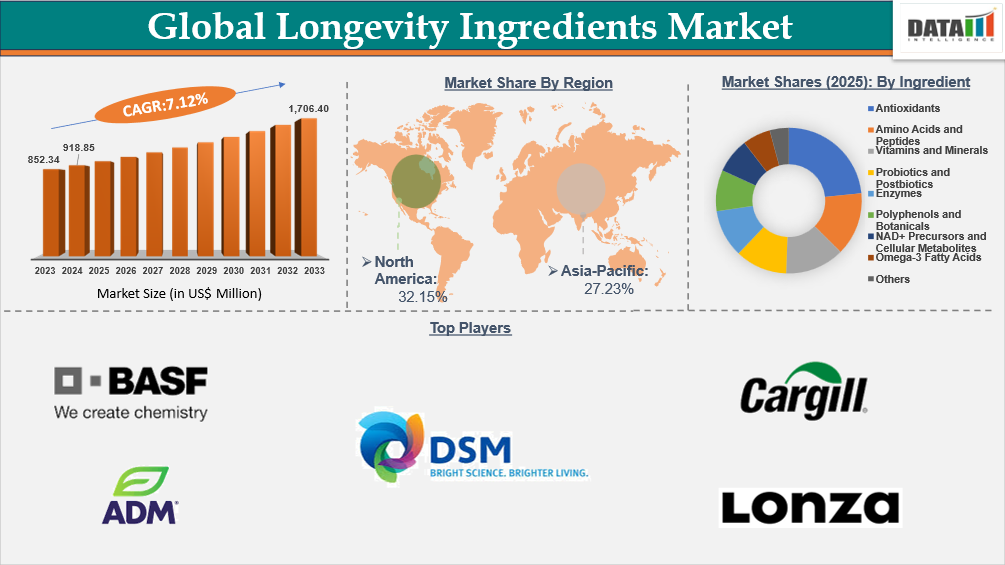
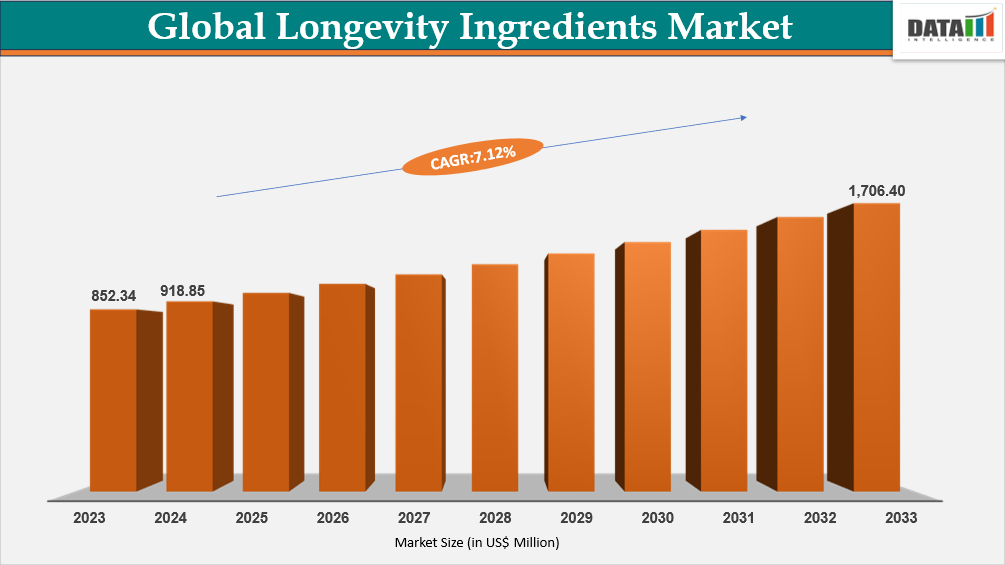
Global Longevity Ingredients Market reached US$ 984.27 million in 2025 and is expected to reach US$ 1,706.40 million by 2033, growing with a CAGR of 7.12% during the forecast period 2026-2033. The global longevity ingredients market is expanding as rising preventive healthcare adoption, aging demographics, and growing consumer demand for science-backed nutrition drive the need for ingredients that support cellular health, metabolic resilience, and healthy aging. Manufacturers are increasingly focusing on high-efficacy bioactives such as antioxidants, NAD⁺ precursors, peptides, probiotics, and adaptogens that can deliver measurable longevity benefits in daily-use formats.
Ingredient suppliers and supplement manufacturers are responding with targeted launches and partnerships. For instance, in recent years, companies such as Roquette, Innobio, and BioAro have introduced advanced delivery systems and clinically positioned longevity formulations, emphasizing improved bioavailability, clean-label sourcing, and multi-functional health benefits. The developments highlight how longevity ingredients are becoming a strategic pillar within nutraceutical, functional food, and preventive health portfolios rather than niche add-on.
Longevity Ingredients Industry Trends and Strategic Insights
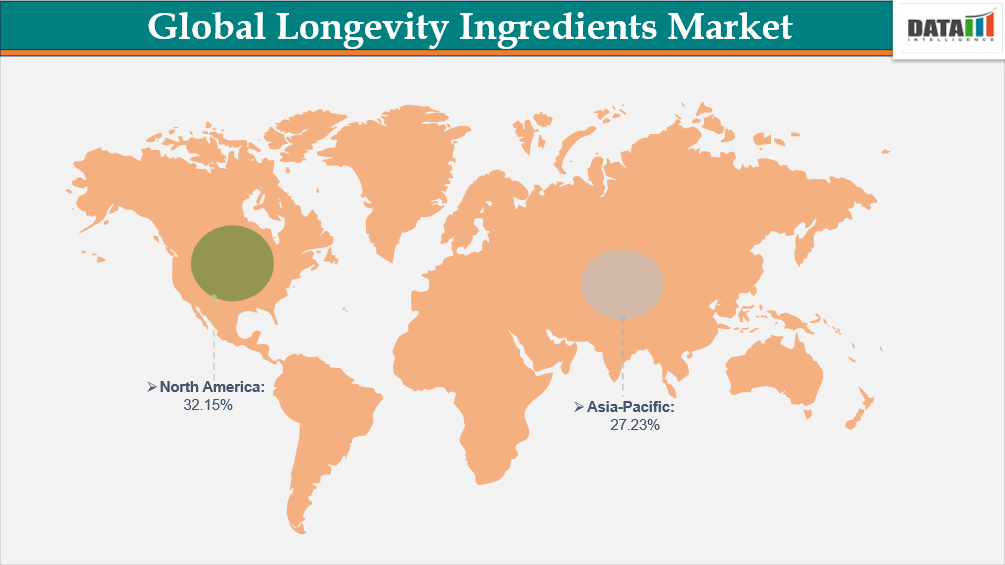
- Asia-Pacific is the fastest-growing region in the longevity ingredients market, capturing a share of 27.23% in 2025.
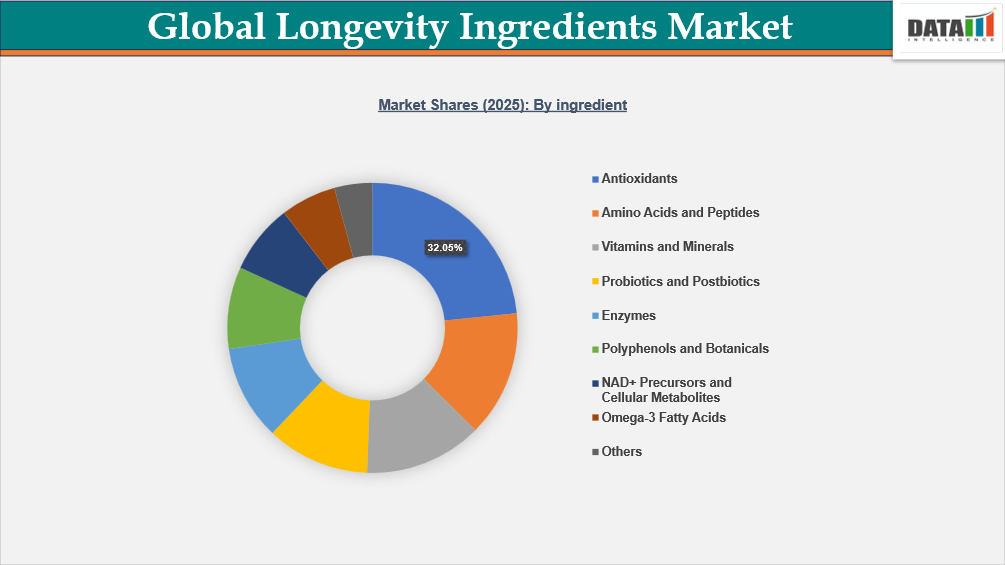
- By ingredient, the antioxidants are projected to be the largest market, holding a significant share of about 32.05% in 2025.
Global Longevity Ingredients Market Size and Future Outlook
- 2025 Market Size: US$ 984.27 Million
- 2033 Projected Market Size: US$ 1,706.40 Million
- CAGR (2026-2033): 7.12%
- Largest Market: North America
- Fastest Market: Asia-Pacific
Market Scope
| Metrics | Details |
| By Ingredient | Antioxidants, Amino Acids and peptides, Vitamins and Minerals, Probiotics and Postbiotics, Enzymes, Polyphenols and Botanicals, NAD⁺ Precursors and Cellular Metabolites, Omega-3 Fatty Acids, Others |
| By Form | Capsules, Tablets, Soft-gels, Powders, Gummies, Liquid |
| By Source | Plant-Based, Animal-Based, Microbial or Fermented Sources, Synthetic or Semi-Synthetic Ingredients |
| By Application | Dietary Supplements, Functional Foods and Beverages, Pharmaceuticals, Cosmeceuticals, Medical Nutrition, Sports and Performance Nutrition, Others |
| By Region | North America, South America, Europe, Asia-Pacific, Middle East and Africa |
| Report Insights Covered | Competitive Landscape Analysis, Company Profile Analysis, Market Size, Share, Growth |
Market Dynamics
Growing Prevalence of Chronic Diseases
The growing burden of chronic diseases is driving demand for longevity-focused nutritional ingredients. Conditions such as hypertension and diabetes are increasing due to aging populations, sedentary lifestyles, poor diets, and rising stress. In India alone, 11.1 million people were diagnosed with hypertension and 6.4 million with diabetes in the first half of 2025, underscoring the expanding health challenge.
Globally, adult diabetes prevalence has risen from around 4.0% in earlier years to a projected 5.4% by 2025, making it one of the fastest-growing chronic conditions. The trend is accelerating a shift toward preventive and long-term health management, strengthening demand for nutritional ingredients that support metabolic health, inflammation management, and healthy aging. Overall, the rising prevalence of chronic diseases is reinforcing preventive nutrition as a priority, positioning longevity-focused ingredients as essential tools for long-term health and healthy aging.
Supply Chain Complexity for High-Purity Longevity Actives
The production and distribution of high-purity longevity ingredients pose significant supply-chain challenges that can restrain market growth. Many longevity actives require stringent purity standards to ensure safety and efficacy. The ingredients often demand controlled stability conditions and specialized cold-chain logistics. Such requirements substantially increase manufacturing and transportation costs.
In addition, they limit the number of qualified raw-material sources and processing suppliers. The constraints create barriers to large-scale and cost-efficient commercialization. The challenges are particularly pronounced in functional food and beverage applications, where cost sensitivity and shelf-life stability are critical. As a result, scalability is reduced, product launches are delayed, and mass-market adoption of longevity ingredients remains constrained.
Segmentation Analysis
The global longevity ingredients market is segmented based on ingredient, form, source, application, and region.
Strong Antioxidant Positioning Driving Carotenoids Adoption in Longevity Formulations
Carotenoids hold a leading position in the longevity ingredients market due to their proven benefits in eye health, skin aging, and cellular protection. Strong consumer awareness of lutein, lycopene, beta-carotene, and astaxanthin, supported by extensive clinical validation, has driven their widespread adoption in preventive and anti-aging supplement formulations among aging populations. The natural antioxidant positioning aligns well with long-term health and healthy aging trends, reinforcing manufacturer and consumer confidence.
Advancements in lipid-soluble delivery systems and encapsulation technologies further enhance carotenoids’ bioavailability and functional performance. For instance, in 2025, China-based nutraceutical ingredient manufacturer INNOBIO launched a lutein ester powder using patented Caroblast microencapsulation technology to improve stability and absorption. Overall, strong clinical backing, technological innovation, and rising demand for effective antioxidant solutions continue to support carotenoids’ sustained growth in longevity formulations.
Preference for High-Absorption Delivery Formats Driving Soft-gels Dominance in Dietary Supplements
Soft-gels dominate dietary supplement dosage forms due to their strong compatibility with fat-soluble longevity ingredients such as carotenoids, omega-3s, vitamin D, and CoQ10. Their superior bioavailability, easy swallowing, and premium positioning drive high consumer preference, especially in mature markets like North America.
To meet growing demand, manufacturers are expanding soft-gel production capacity. For example, in 2025, U.S.-based Robinson Pharma enhanced its manufacturing infrastructure, increasing output to 30 high-throughput soft-gel machines. Therefore, absorption efficiency and scalability continue to support soft-gels’ leadership in longevity-focused supplements.
Geographical Penetration
High Supplement Penetration and Preventive Health Culture Anchoring North American Leadership
North America remains the leading region in the global longevity ingredients market, driven by strong consumer adoption of dietary supplements. Around 68% of U.S. adults report regular supplement use, reflecting a deeply rooted preventive health and wellness culture. The high penetration supports sustained demand for longevity-focused, science-backed nutritional solutions.
Major companies continue to expand their portfolios through innovation and targeted product launches. For instance, in 2025, Nature’s Bounty, a U.S.-based nutritional supplements company, launched new products focused on women’s health, healthy longevity, and digestive wellbeing. Overall, strong distribution networks, clinical positioning, and age-specific offerings continue to reinforce North America’s market leadership.
U.S. Longevity Ingredients Market Insights
The U.S. continues to be the primary growth engine for longevity ingredients, supported by high dietary supplement penetration and a strong preventive health mindset. Consumers aged 40 and above are increasingly investing in solutions for cellular health, digestion, cognition, and metabolic balance, driving demand for antioxidants, probiotics, peptides, botanicals, and NAD⁺ precursors.
To address this demand, ingredient suppliers and brands are accelerating innovation and portfolio expansion. For example, in 2025, Lonza Capsugel, a U.S.-based capsule solutions provider, launched its USDA-certified Organicaps plant-based pullulan capsule at SupplySide Global. Therefore, rising preference for certified, high-performance delivery systems continues to reinforce the U.S. as a key hub for longevity-focused formulations.
Canada Longevity Ingredients Industry Growth
Canada’s longevity ingredients market is expanding steadily, driven by rising adoption of natural health products and a robust regulatory framework focused on quality, safety, and clean-label formulations. Strong consumer trust in preventive health, immunity, digestive wellness, and healthy aging supplements continues to support demand, particularly among aging and health-conscious populations.
Product innovation is reinforcing this growth momentum. For instance, in 2025, BioAro Inc., a Canada-based biotechnology and precision health company, launched its patent-pending nutraceutical Longevity, formulated with NMN, resveratrol, CoQ10, curcumin, and vitamins D and B12. Overall, continued innovation, regulatory clarity, and global expansion plans are strengthening Canada’s role in the longevity ingredients landscape.
Rapid Aging Demographics and Rising Health Awareness Accelerating Asia-Pacific Expansion
Asia-Pacific is the fastest-growing region in the global longevity ingredients market, driven by rapidly aging populations and increasing health awareness across Japan, South Korea, China, and Southeast Asia. Strong investments in preventive healthcare, nutrition science, and microbiome research are fostering collaboration between global players and regional innovators to advance longevity-focused and personalized health solutions.
Strategic partnerships are accelerating innovation across the region. For instance, in 2025, U.S.-based Amway expanded its collaboration with South Korea-based HEM Pharma to scale microbiome and personalized probiotic development across markets, including Japan, Thailand, Malaysia, Taiwan, and the U.S. Thus, demographic shifts, scientific investment, and cross-border partnerships continue to propel Asia-Pacific’s rapid growth in longevity ingredients.
Japan Longevity Ingredients Market Insights
Japan represents the most mature longevity ingredients market in Asia-Pacific, driven by the world’s fastest-aging population and a deeply rooted preventive health culture. With nearly one-third of its population aged 65 and above, demand remains strong for supplements supporting healthy aging, gut health, cognitive function, mobility, and metabolic balance.
Japanese companies are also extending longevity innovations beyond domestic markets. For example, in 2025, Suntory Wellness launched VISTRA Sesamin Night Time in Thailand in partnership with NBD Healthcare. Overall, demographic pressure and export-oriented innovation continue to reinforce Japan’s leadership in longevity-focused ingredients.
China Longevity Ingredients Industry Growth
China is rapidly emerging as the fastest-scaling longevity ingredients market in Asia-Pacific, driven by population aging, rising disposable incomes, and growing health awareness among middle-aged and elderly consumers. The increasing prevalence of lifestyle-related chronic diseases is accelerating the shift toward preventive healthcare, boosting demand for dietary supplements, functional foods, and traditional botanical ingredients.
Strategic partnerships are playing a key role in market expansion. For instance, in 2025, UK-based ProBiotix Health entered an exclusive long-term supply and co-branding agreement with Kemin China Group to commercialize its cardiometabolic probiotic strain LPLDL across China, Hong Kong, and Macau. Therefore, such collaborations are strengthening China’s ecosystem for microbiome-driven and functional longevity ingredients.
Regulatory Analysis
The longevity ingredients market is governed by strict food safety, quality, and health-claim regulations across major regions. In the U.S., longevity ingredients used in dietary supplements are regulated under the Dietary Supplement Health and Education Act (DSHEA), with oversight by the FDA. Manufacturers must comply with current Good Manufacturing Practices (cGMPs) and ensure ingredient safety, while health claims are limited to structure-function statements, increasing compliance and documentation requirements.
Heightened FDA scrutiny on novel longevity actives such as NAD⁺ precursors and bioactive peptides has raised the need for safety dossiers and post-market surveillance. European Food Safety Authority (EFSA) strictly controlling permitted health claims. Many longevity-focused ingredients face delayed approvals, restricting marketing flexibility and increasing R&D and regulatory costs.
Competitive Landscape
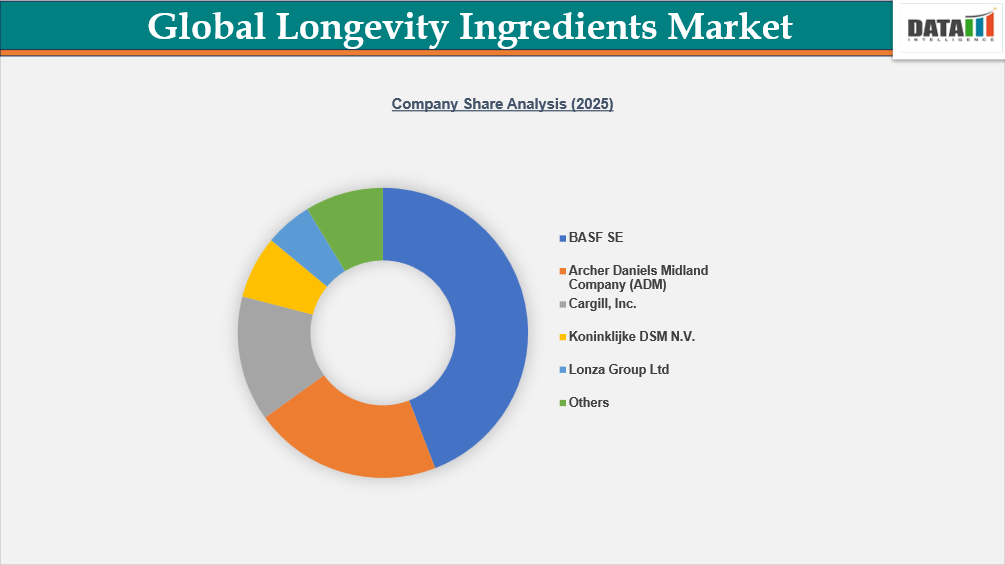
- The global longevity ingredient market is characterized by a competitive landscape that includes both established and regional players.
- Key players include BASF SE, Archer Daniels Midland Company (ADM), Cargill, Inc., Koninklijke DSM N.V., Lonza Group Ltd., Glanbia Nutritionals, Tate & Lyle PLC, Ajinomoto Co., Inc., Evonik Industries AG, and Balchem Corporation.
Key Developments
- In 2025, Life Extension, a leading U.S. health and wellness brand, expanded its healthy aging product portfolio with the launch of FLORASSIST Probiotic Youthful Gut, a science-based probiotic and postbiotic formula designed to support a balanced microbiome, healthy inflammatory response, and other markers of aging, demonstrating a commitment to microbiome-focused longevity solutions in response to rising consumer health awareness.
- In 2025, Gotvoom Inc., a U.S.-based nutritional marketing and distribution company, in partnership with China-focused biotech innovator Abinopharm, Inc., launched an advanced AbinoNutra 5-in-1 NAD⁺ Longevity Dietary Supplement featuring FDA-GRAS-recognized Dr.Ergo L-Ergothioneine and clinically supported actives to support skin health, cognition, sleep, and cellular aging, reflecting growing industry emphasis on multifunctional, science-backed longevity formulations.
Why Choose DataM?
- Data-Driven Insights: Dive into detailed analyses with granular insights such as pricing, market shares, and value chain evaluations, enriched by interviews with industry leaders and disruptors.
- Post-Purchase Support and Expert Analyst Consultations: As a valued client, gain direct access to our expert analysts for personalized advice and strategic guidance, tailored to your specific needs and challenges.
- White Papers and Case Studies: Benefit quarterly from our in-depth studies related to your purchased titles, tailored to refine your operational and marketing strategies for maximum impact.
- Annual Updates on Purchased Reports: As an existing customer, enjoy the privilege of annual updates to your reports, ensuring you stay abreast of the latest market insights and technological advancements. Terms and conditions apply.
- Specialized Focus on Emerging Markets: DataM differentiates itself by delivering in-depth, specialized insights specifically for emerging markets, rather than offering generalized geographic overviews. The approach equips our clients with a nuanced understanding and actionable intelligence that are essential for navigating and succeeding in high-growth regions.
- Value of DataM Reports: Our reports offer specialized insights tailored to the latest trends and specific business inquiries. The personalized approach provides a deeper, strategic perspective, ensuring you receive the precise information necessary to make informed decisions. The insights complement and go beyond what is typically available in generic databases.
Target Audience 2026
- Manufacturers/ Buyers
- Industry Investors/Investment Bankers
- Research Professionals
- Emerging Companies


























































