


Japan CRISPR-Cas9 Gene Editing Market Size
Japan’s biotechnology landscape is undergoing a structural transition, where precision medicine, regenerative therapies, and genome-level intervention are becoming central to national healthcare strategy. At the core of this transformation is CRISPR-Cas9 gene editing, a technology increasingly embedded into oncology research, rare disease treatment pipelines, and advanced drug discovery workflows.
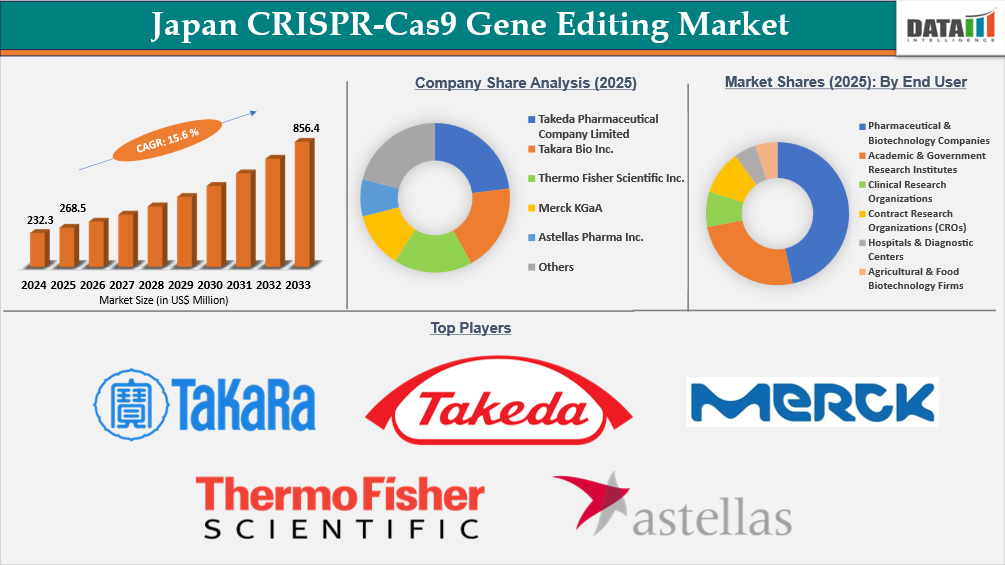
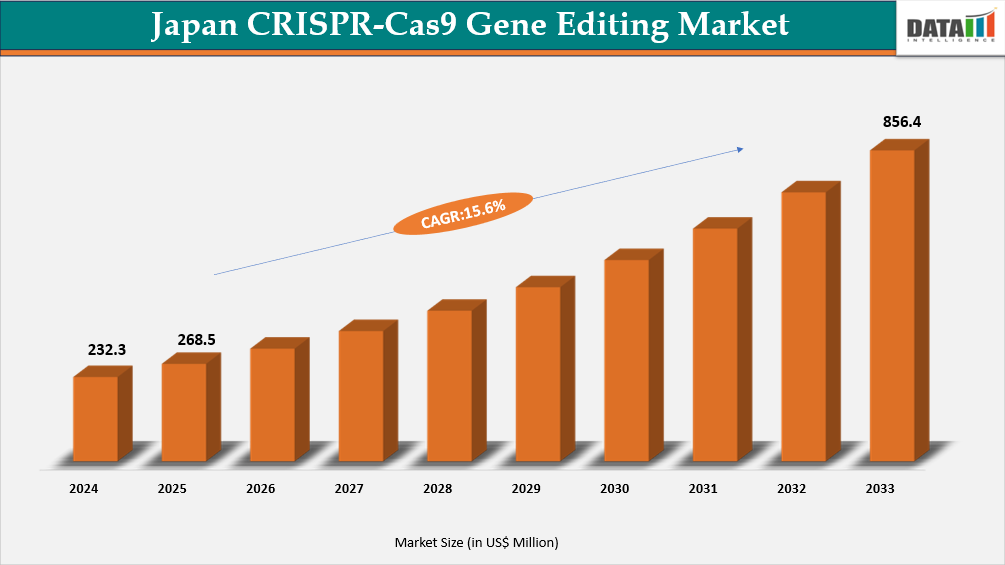
The Japan CRISPR-Cas9 Gene Editing market was valued at USD 232.3 million in 2024 and increased to USD 268.5 million in 2025. Based on CAGR-adjusted calculations, the market stood at approximately USD 201.03 million in 2023. The market is projected to reach USD 856.4 million by 2033, growing at a CAGR of 15.6% (2026-2033).
This growth reflects Japan’s strategic emphasis on genomic medicine, supported by government-backed research programs, strong pharmaceutical R&D ecosystems, and increasing clinical translation of gene-based therapies. Investment timing is becoming particularly important as Japan accelerates regulatory approvals for regenerative medicine and expands funding for biotech startups focused on genome editing platforms.
For pharmaceutical companies, biotech developers, and global life sciences suppliers, Japan represents a high-value but highly structured innovation market where clinical validation, regulatory alignment, and academic collaboration define competitive success.
Key Takeaways
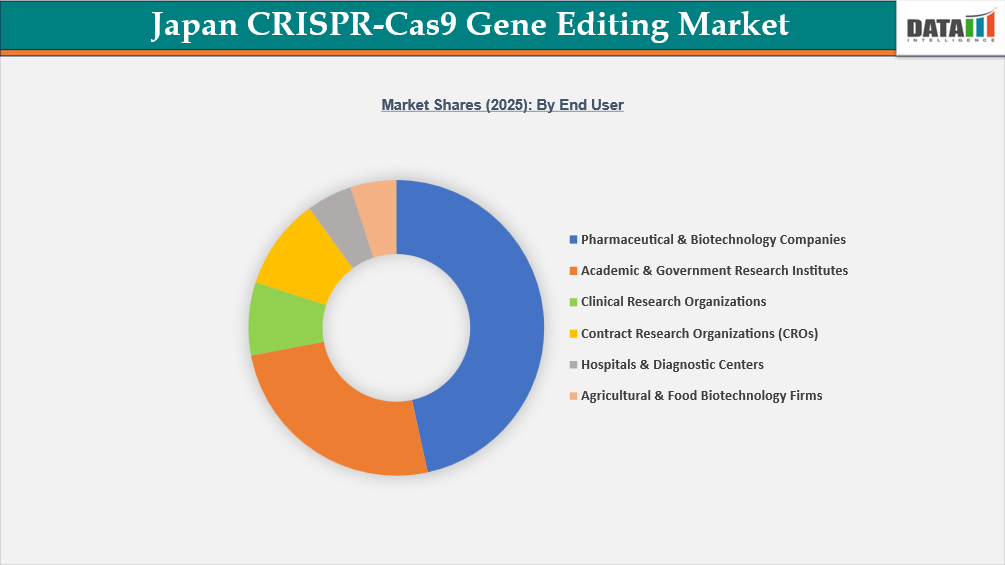
- Pharmaceutical and biotechnology companies account for 46.6% of total end-user share, highlighting strong commercialization-led demand.
- Government-backed programs through AMED and MHLW are significantly reducing translational barriers for gene-based therapies.
- Oncology, rare genetic disorders, and regenerative medicine represent the primary clinical application clusters driving CRISPR adoption.
- Academic-industry collaboration remains a critical success factor, with universities acting as early-stage innovation engines.
- Regulatory acceleration pathways for regenerative medicine are improving time-to-market for CRISPR-based therapies.
- Ethical concerns and patent complexity continue to act as structural barriers, influencing investment pacing and partnership strategies.
Market Scope
| Metric | Details |
| Market Size (2025) | USD 268.5 Million |
| Market Size (2033) | USD 856.4 Million |
| CAGR (2026-2033) | 15.60% |
| Historic Years | 2023-2024 |
| Base Year | 2025 |
| Forecast Period | 2026-2033 |
| Segments Covered | Product, Technology, End User, Application, Delivery Method, Disease Area |
| Leading End User | Pharmaceutical & Biotechnology Companies |
| Key Growth Region | Japan |
Market Dynamics
National Precision Medicine Strategy Driving Genomic Adoption
Japan’s healthcare system is increasingly centered on precision medicine frameworks designed to improve treatment outcomes in oncology, hematology, and inherited disease management. National funding initiatives are supporting large-scale genome sequencing programs and biobank infrastructure development.
CRISPR-Cas9 is becoming a core tool in this ecosystem, particularly for target validation, functional genomics, and ex vivo therapeutic development. Public investment is reducing early-stage research risk, enabling faster movement from laboratory discovery to clinical trials.
Pharmaceutical-Led Commercialization of Gene Editing
Unlike early academic research environments, Japan’s CRISPR adoption is heavily driven by pharmaceutical and biotechnology companies that are actively integrating genome editing into drug development pipelines.
These companies are focused on:
- Oncology drug target identification
- Rare disease therapy development
- Regenerative medicine applications
- Cell and gene therapy platforms
This commercialization-heavy structure creates a more predictable demand base for CRISPR reagents, delivery systems, and sequencing validation tools.
Regulatory Acceleration and Clinical Translation Pathways
Japan’s regulatory environment is relatively supportive of regenerative medicine compared to many global markets. Accelerated approval pathways and structured safety evaluation frameworks are enabling faster clinical translation of gene-editing therapies.
This reduces development cycle uncertainty for biotech firms and encourages higher capital allocation toward CRISPR-based programs, particularly in late-stage clinical development.
Ethical and Patent Complexity as Adoption Constraints
Despite strong growth momentum, ethical considerations around genome editing and complex intellectual property landscapes remain key constraints.
Companies must navigate:
- Off-target mutation risk concerns
- Gene editing ethics in human applications
- Fragmented CRISPR patent ownership
- Licensing complexity for commercial applications
These factors influence partnership structures and slow down some commercialization pathways, particularly for smaller biotech entrants.
Substitute and Alternative Technology Pressure
While CRISPR-Cas9 dominates genome editing, alternative platforms such as TALENs and emerging base editing technologies are gradually gaining traction in specific therapeutic niches.
However, CRISPR remains the preferred platform due to its efficiency, scalability, and established research ecosystem in Japan.
Market Opportunities
Japan’s CRISPR ecosystem presents differentiated opportunities across clinical, industrial, and research-driven segments.
For pharmaceutical companies, the primary opportunity lies in expanding CRISPR-enabled drug pipelines, particularly in oncology and rare diseases where traditional treatments have limited effectiveness.
Biotechnology startups benefit from AMED-backed funding programs that reduce early-stage capital constraints, making Japan a favorable environment for translational genomics ventures.
For global life sciences suppliers, demand is increasing for high-precision reagents, guide RNA libraries, and sequencing validation tools that support CRISPR workflows.
Academic institutions and research hospitals continue to serve as critical innovation anchors, creating long-term collaboration pipelines with commercial players.
Segmentation Analysis
Segmented by Product, by Technology, by End User (Pharmaceutical & Biotechnology Companies, Academic & Research Institutes, Others), by Application (Oncology, Rare Diseases, Regenerative Medicine, Drug Discovery), and by Region - Japan Market Share, Trends, and Forecast to 2033.
By End User
Pharmaceutical and biotechnology companies dominate the market due to their direct involvement in clinical development and commercialization of gene therapies.
These organizations invest in proprietary CRISPR platforms, licensing agreements, and joint development partnerships with universities. Their role extends beyond research into full-scale therapeutic pipeline development, making them the primary revenue contributors.
Academic and research institutions remain essential upstream contributors, focusing on discovery science, early validation, and experimental gene function studies.
Regional Market Structure
Tokyo and Kansai Research Corridors
Japan’s CRISPR ecosystem is concentrated around major biomedical clusters, particularly in Tokyo and the Kansai region, where leading universities, research hospitals, and pharmaceutical headquarters are located.
These hubs enable strong collaboration between academia and industry, accelerating translational research in gene therapy.
National Funding and Infrastructure Expansion
Government programs led by AMED and MHLW are strengthening national capabilities in genomic sequencing, biobanking, and cell therapy manufacturing.
This infrastructure development is critical for scaling clinical trials and enabling commercialization of CRISPR-based therapies within Japan.
Competitive Landscape and Company Strategy
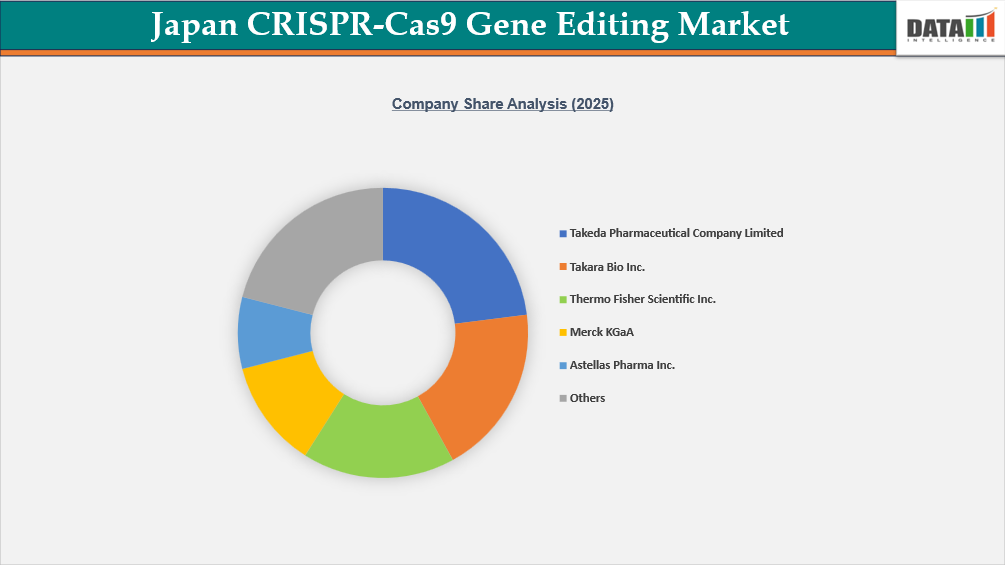
The competitive environment is shaped by pharmaceutical leaders, biotechnology innovators, and global life sciences suppliers.
Key companies include:
- Takeda Pharmaceutical Company Limited
- Daiichi Sankyo Company Limited
- Astellas Pharma Inc.
- Takara Bio Inc.
- Sumitomo Chemical Co., Ltd.
- Thermo Fisher Scientific Inc.
- Merck KGaA
- GenScript
- DH Life Sciences, LLC
- Illumina, Inc.
Japanese pharmaceutical companies are primarily focused on integrating CRISPR into therapeutic pipelines, especially in oncology and rare diseases. Their strategy emphasizes long-term clinical validation, regulatory alignment, and collaboration with academic institutions.
Global suppliers focus on enabling infrastructure, providing CRISPR reagents, gene editing kits, and sequencing platforms essential for validation workflows.
Competitive differentiation is increasingly defined by:
- Depth of clinical partnerships
- Intellectual property positioning
- Delivery system innovation
- Ability to support regulatory-grade validation workflows
Recent Developments
- May 2026 – Astellas Pharma Inc. advances in vivo gene editing pipeline for rare disease therapeutics in Japan
Astellas continued progressing its gene therapy and genome editing pipeline, focusing on CRISPR-based in vivo approaches for rare genetic disorders, strengthening its position in Japan’s growing precision medicine and gene editing ecosystem. - April 2026 – Takara Bio Inc. enhances CRISPR genome editing toolkits for research and clinical applications
Takara Bio expanded its CRISPR-Cas9 reagent portfolio, improving genome editing efficiency, guide RNA design, and cell engineering workflows widely used in Japanese academic and pharmaceutical research. - March 2026 – Sumitomo Chemical Co., Ltd. expands life sciences and biotechnology investment strategy
Sumitomo Chemical increased focus on biotechnology and healthcare innovation, supporting upstream research and development efforts in gene editing technologies and molecular biology platforms. - February 2026 – Merck KGaA advances gene editing reagents and CRISPR research platforms for Japanese biotech sector
Merck expanded CRISPR-related reagent offerings and genomic research tools supporting Japan’s growing demand for advanced gene editing technologies in drug discovery and cell therapy development.
What Sets This Japan CRISPR-Cas9 Gene Editing Market Intelligence Report Apart
- Latest Data & Forecasts – Comprehensive and up-to-date market intelligence with forecasts through 2033, segmented by product, technology, end user, application, delivery method, and disease area, with detailed Japan-level analysis.
- Regulatory Intelligence – In-depth assessment of Japan’s gene editing and regenerative medicine regulatory framework, including oversight by the Pharmaceuticals and Medical Devices Agency and the Ministry of Health, Labour and Welfare, clinical trial approval pathways, genome editing safety guidelines, patent landscape considerations, and post-marketing surveillance requirements.
- Competitive Benchmarking – Structured benchmarking of leading Japanese and global genome editing companies based on platform technology, pipeline strength, partnerships, manufacturing capabilities, and clinical differentiation within Japan.
- Actionable Strategies & Cost Dynamics – Strategic insights into commercialization pathways, government funding support, licensing trends, IP positioning, manufacturing scale-up challenges, and cost structures for ex vivo and in vivo gene editing therapies, supported by expert perspectives from biotech leaders and regulatory advisors in Japan.


























































