


Isoflavones Market Size
The global Isoflavones market reached an estimated US$ 1.68 billion in 2025 and is expected to reach US$ 3.15 billion by 2035, growing with a CAGR of 6.5% during the forecast period 2026-2035. The market includes standardized soy and botanical isoflavone extracts, aglycone-rich ingredients, fermented preparations and finished formulations used in dietary supplements, functional foods, beverages, pharmaceuticals, cosmetics and animal nutrition.
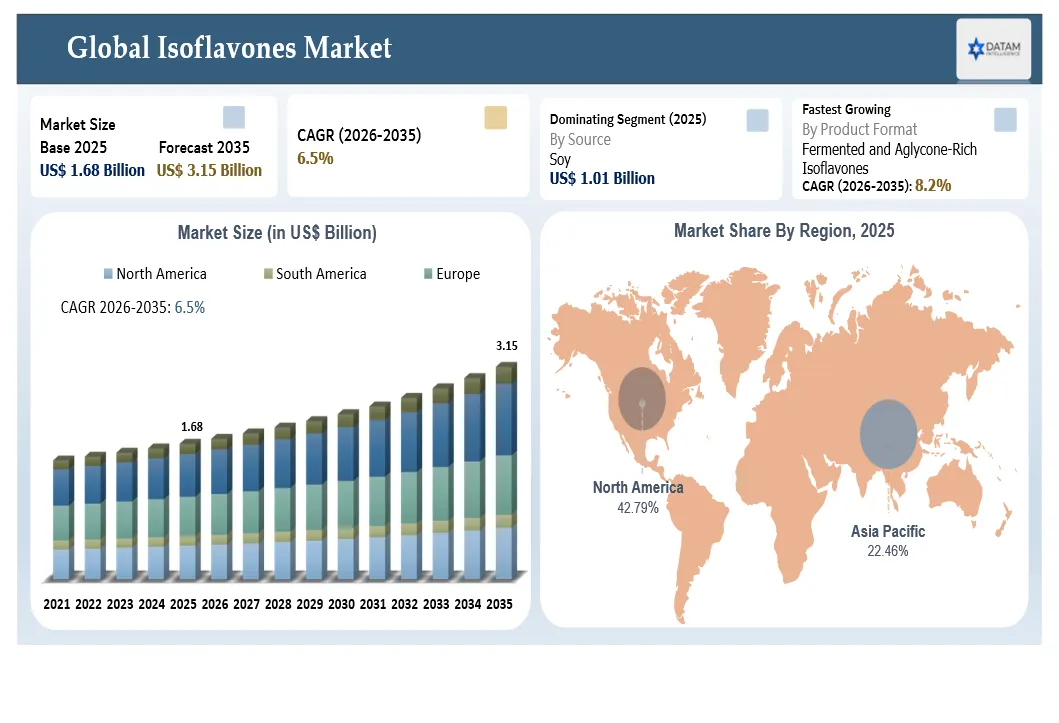
Soy remains the principal commercial source because it offers established extraction infrastructure, a broad evidence base and high concentrations of genistein, daidzein and glycitein. Red clover is a differentiated source for biochanin A and formononetin, particularly in menopause formulations positioned as soy-free alternatives. Demand is shifting from generic concentrates toward standardized, traceable and clinically supported ingredients with improved dispersibility, sensory performance and bioavailability.
Growth is supported by rising attention to menopause, healthy ageing, bone health, cardiovascular wellness and plant-based nutrition. At the same time, the category faces scientific and commercial complexity because efficacy varies by formulation, dose, metabolic phenotype and population. Buyers increasingly require precise active profiles, validated analytical methods, allergen disclosure, non-GMO options, solvent-residue control and regulatory documentation.
| Metric | Details |
| 2025 Market Size | US$ 1.68 Billion |
| 2035 Projected Market Size | US$ 3.15 Billion |
| CAGR (2026-2035) | 6.5% |
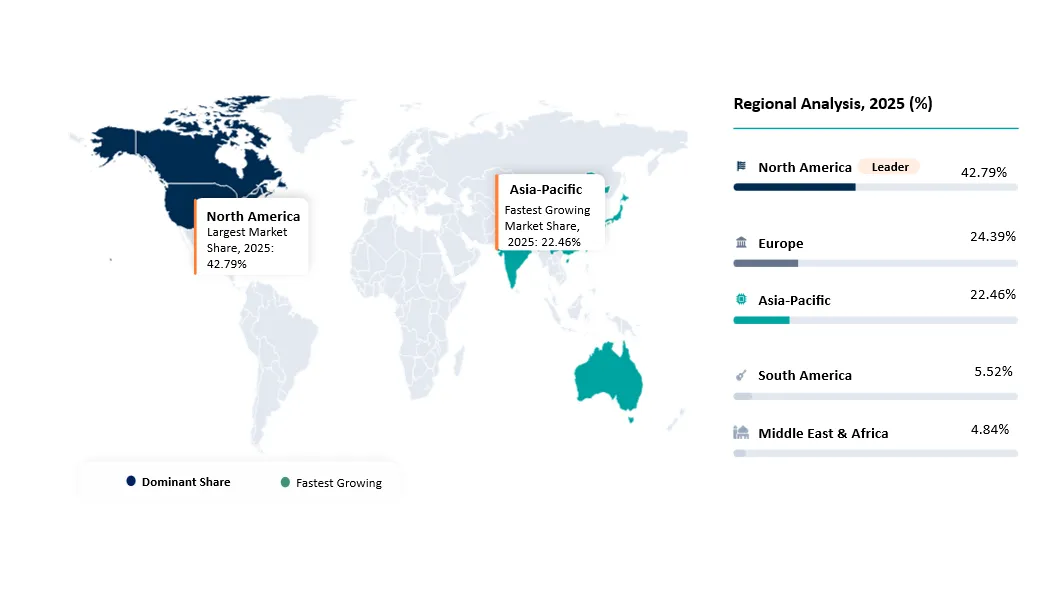
| Largest Market | Asia-Pacific |
| Fastest Growing Market | North America |
| Dominating Source | Soy |
| Fastest Growing Product Format | Fermented and Aglycone-Rich Isoflavones |
| Page Count | Approximately 280 pages in full study |
Isoflavones Market Key Strategic Takeaways
- Soy-derived ingredients account for the largest commercial share because of established supply, standardized active profiles and broad use in supplements and functional foods.
- Menopause and women’s-health applications represent the largest demand pool, supported by consumer awareness and product innovation in non-hormonal wellness.
- Asia-Pacific leads through traditional soy consumption, ingredient manufacturing and growing nutraceutical industries, while North America records strong growth in menopause and healthy-ageing products.
- Aglycone-rich and fermented extracts are gaining attention because formulators seek improved bioavailability, lower dose volume and product differentiation.
- Clinical substantiation, source traceability and analytical standardization are becoming more important than simple concentration claims.
- Soy-free red clover and multi-botanical formulations are expanding choice for consumers concerned about allergens or soy positioning.
Isoflavones Industry Trends and Strategic Insights
- Ingredient suppliers are moving from commodity soy extracts toward branded, standardized and application-specific systems.
- Menopause care is becoming a broader wellness platform that combines isoflavones with minerals, vitamins, probiotics, botanicals and digital coaching.
- Fermentation and enzymatic conversion are being used to increase aglycone content and improve consistency.
- Clean-label, non-GMO, identity-preserved and low-residue sourcing are influencing procurement decisions.
- Evidence communication is becoming more cautious, with brands emphasizing general wellness and structure-function positioning rather than disease claims.
- Personalized nutrition creates opportunities to segment products by age, symptom profile, dietary pattern and equol-production status.
Isoflavones Market Scope
| Metrics | Details |
| By Source | Soy, Red Clover, Kudzu, Chickpea and Other Legumes, Others |
| By Compound Type | Genistein, Daidzein, Glycitein, Biochanin A, Formononetin, Mixed Isoflavone Complexes |
| By Form | Powder, Granules, Liquid, Capsules and Tablets, Others |
| By Grade | Food, Nutraceutical, Pharmaceutical and Cosmetic Grade |
| By Extraction Process | Solvent, Fermentation/Enzymatic, Supercritical Fluid, Membrane/Chromatographic, Others |
| By Application | Menopause, Bone Health, Cardiovascular Health, Healthy Ageing, Sports Nutrition, Personal Care, Functional Foods, Animal Nutrition |
| By End Use | Dietary Supplements, Food and Beverages, Pharmaceuticals, Cosmetics, Animal Feed, Research |
| By Distribution Channel | Direct Sales, Distributors, Online B2B, Retail and E-Commerce |
| Report Insights Covered | Market Size, Share, Growth, Pricing, Supply Chain, Competitive Landscape and Country-Level Opportunity |
Why does this report matter in 2026?
The year 2026 is an important planning point for the Isoflavones market because women’s-health investment, menopause awareness and healthy-ageing demand are rising at the same time that regulators and consumers are asking for clearer evidence and safer product communication. Suppliers must decide whether to compete through scale, source differentiation, branded clinical evidence, formulation technology or direct-to-consumer partnerships.
The report matters because isoflavones are not one uniform ingredient class. Commercial value differs by botanical source, active profile, aglycone content, dosage form, allergen status, extraction method and evidence package. The study separates high-volume soy concentrates from premium red-clover, fermentation-derived and high-purity ingredients, helping buyers and investors identify where margins and adoption are strongest.
Isoflavones Market White Space & Investment Opportunities
- Aglycone-rich and fermentation-derived ingredients with documented bioavailability.
- Soy-free menopause formulations based on red clover or mixed botanical systems.
- Personalized products linked to symptom severity, age, diet and microbiome-related equol production.
- Water-dispersible formats for beverages, gummies, stick packs and functional nutrition.
- Clinically supported combinations for bone, sleep, mood and cardiometabolic wellness.
- Traceable non-GMO and low-carbon ingredient supply chains for premium brands.
Isoflavones Future Market Transformation
The market is expected to shift from generic phytoestrogen concentrates toward evidence-led, application-specific ingredient systems. Suppliers will increasingly combine standardized actives with formulation support, stability data, sensory optimization and permissible claim guidance. Fermentation and enzymatic conversion will support higher aglycone content, while encapsulation and dispersion technologies will expand use in beverages, gummies and functional foods.
By 2035, the strongest platforms are likely to connect ingredient identity, clinical substantiation, digital consumer education and transparent sourcing. Menopause will remain the largest commercial application, but growth will broaden into healthy ageing, bone preservation, cardiovascular wellness and skin health. Companies that build trust through analytical quality and conservative evidence communication will be better positioned than suppliers competing only on price.
Isoflavones Market Buyer Decision-Making Criteria
Buyers assess total isoflavone concentration, genistein-to-daidzein ratio, aglycone percentage, source identity, batch consistency, residual solvents, microbiological quality, heavy metals, pesticide residues, allergen status and regulatory documentation. Application performance matters because a high-assay ingredient can still fail if it has poor dispersibility, strong taste, color instability or inadequate shelf life.
Commercial selection also depends on supplier reliability, minimum order quantity, technical support, clinical evidence, trademark options, certification and price stability. Large brands prefer suppliers that can support global compliance and provide validated methods, while smaller brands value flexible order sizes and formulation assistance.
Isoflavones Market Economic & Investment Analysis
The category offers moderate growth with premium opportunities in branded and clinically supported ingredients. Raw-material economics depend on soybean and botanical availability, extraction yield, purification intensity and quality requirements. High-purity genistein and aglycone-rich formats command substantial premiums over standardized mixed extracts because they require additional processing and tighter analytical control.
Investment attractiveness is strongest where companies own differentiated technology, proprietary evidence, customer relationships or source advantages. Generic extraction capacity is exposed to price competition, while branded ingredients can support higher margins through clinical substantiation, formulation support and exclusivity. Investors should evaluate claim defensibility, regulatory exposure, customer concentration and reproducibility across harvests and regions.
Isoflavones Investment Trends in the Market
- Capital is moving toward fermentation, enzymatic conversion and high-purity purification.
- Ingredient companies are investing in women’s-health applications and menopause-focused innovation.
- Brands are funding clinical studies and real-world consumer research to support differentiation.
- Supply-chain investment favors identity-preserved, non-GMO and traceable soy.
- Contract manufacturers are adding gummies, softgels, sachets and beverage-compatible delivery formats.
Strategic Indicators For Isoflavones Market
High Regulation Impact
Food, supplement and pharmaceutical rules differ by country. Claims, maximum doses, novel-food status, allergen labeling and safety documentation shape market access.
High Investment Activity
Women’s health and healthy ageing are attracting investment in branded ingredients, finished products and direct-to-consumer platforms.
Supply Chain Disruption
Soybean variability, botanical harvests, solvent availability, logistics and geopolitical trade conditions can affect lead times and cost.
Pricing Volatility
Commodity extracts face price pressure, while high-purity, non-GMO, fermented and clinically supported ingredients command premiums.
Procurement Pressure
Buyers require stronger testing, traceability, allergen control, documentation and dependable delivery.
New Technology Adoption
Fermentation, enzymatic conversion, membrane purification, encapsulation and advanced analytics are improving consistency and application performance.
Regional Expansion Opportunity
North America and Europe offer premium menopause demand, while Asia-Pacific combines established consumption and manufacturing scale.
Government Policy Support
Healthy-ageing, preventive nutrition and women’s-health initiatives can support awareness, but regulators remain cautious about therapeutic claims.
Pricing Intelligence
Price is determined by assay, active profile, source, purity, certification, formulation performance and order volume.
AI Impact Analysis of Isoflavones Market
AI can support formulation optimization, literature screening, consumer segmentation, demand forecasting and quality control. Machine-learning models can connect extraction conditions with active profiles and help predict stability in different dosage forms. In commercial planning, AI can identify emerging menopause and healthy-ageing claims, monitor product launches and improve regional demand forecasting.
Adoption requires careful governance because health-related recommendations and claim generation can create regulatory risk. AI should support, rather than replace, analytical validation, clinical interpretation and professional review.
Disruption Analysis of Isoflavones Market
The market is being disrupted by personalized women’s health, microbiome science, soy-free positioning and new delivery formats. Consumers increasingly compare isoflavones with black cohosh, herbal blends, hormone therapy, probiotics and digital menopause platforms. This broadens competition beyond ingredient suppliers and forces companies to demonstrate where isoflavones fit within a larger care journey.
Isoflavones Market BCG Matrix: Company Evaluation
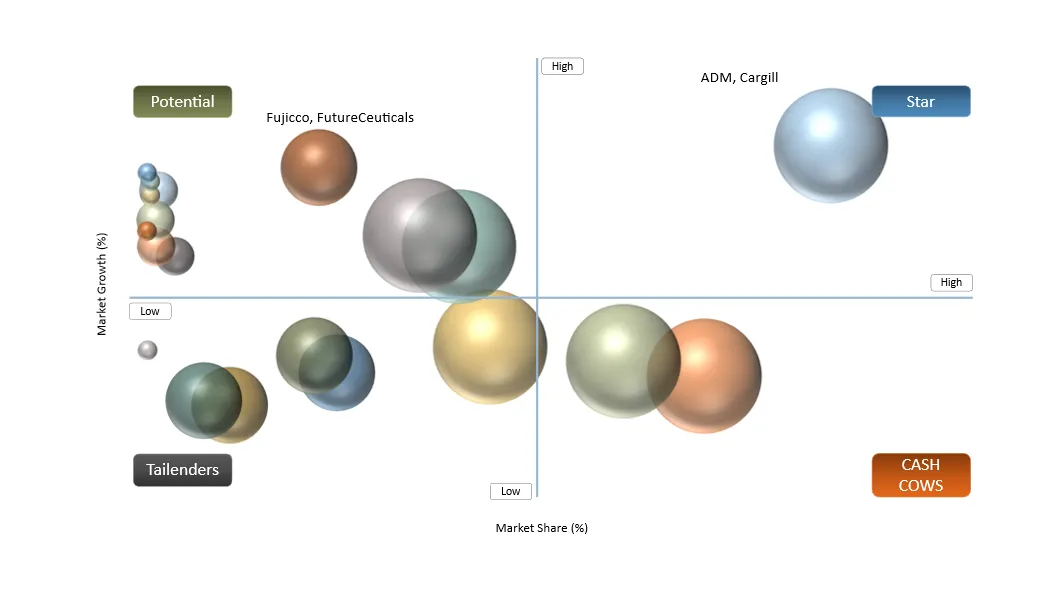
STAR
ADM, Cargill and dsm-firmenich are positioned as Stars because they combine global sourcing, formulation capability, quality systems and customer reach. Their ability to integrate isoflavones into broader nutrition portfolios supports cross-selling and resilience.
POTENTIAL
Fujicco, FutureCeuticals, MartinBauer and specialist Asian botanical extractors represent Potential players. Their growth depends on branded evidence, premium formats, supply reliability and entry into global women’s-health and functional-food channels.
Isoflavones Market Dynamics
Driver Impact Analysis
| Driver | Market Growth Impact | Demand Concentration | Impacted Use Case | Strategic Impact |
| Rising menopause awareness | High | North America and Europe | Women’s-health supplements | Expands branded formulations and clinician education |
| Healthy-ageing and bone-health demand | High | Global ageing populations | Bone and mobility products | Supports long-term preventive nutrition positioning |
| Growth of functional foods | Medium-High | Asia-Pacific and urban markets | Beverages, dairy alternatives and snacks | Creates demand for dispersible and sensory-optimized formats |
| Plant-based wellness adoption | Medium | Global | Clean-label supplements | Supports natural-source and non-GMO positioning |
Driver: Rising Demand for Menopause and Healthy-Ageing Solutions
Menopause has moved from a niche supplement category into a broader consumer-health market. Greater awareness, workplace discussion and product innovation are increasing demand for non-hormonal options. Isoflavones benefit from long-standing familiarity, but suppliers must support products with clear dosage, safety and evidence communication.
Restraint Impact Analysis
| Restraint | Drag on Growth | Primary Impact Area | Impacted Use Case | Strategic Impact |
| Variable clinical outcomes | High | Consumer trust and claims | Menopause and chronic wellness | Increases need for formulation-specific evidence |
| Soy allergy and phytoestrogen concerns | Medium-High | Consumer acceptance | Soy-derived products | Supports allergen disclosure and soy-free alternatives |
| Batch variability and standardization | Medium | Manufacturing quality | Botanical extracts | Encourages validated analytics and supplier qualification |
| Regulatory differences | Medium | Market access | Global launches | Requires country-specific claims and compliance |
Restraint: Variable Evidence and Consumer Concerns
Research outcomes vary by source, dose, active profile, treatment duration and population. Consumers may also confuse phytoestrogens with pharmaceutical estrogen. Companies must avoid overstatement, explain product differences and provide transparent safety information. Poorly substantiated claims can damage the entire category.
Isoflavones Market Segmentation Analysis
The global Isoflavones market is segmented based on Source, Compound Type, Form, Grade, Extraction Process, Application, end-use industry, distribution channel, and region.
By Source
Soy Will Continue to Lead Commercial Demand
Soy accounts for the largest share because of established global supply, scalable extraction and the broadest evidence base. Red clover is expected to grow faster in premium menopause products and soy-free formulations. Kudzu and other legumes remain niche sources, often used in specialty botanical blends.
By Compound Type
Mixed Isoflavone Complexes Lead, While Genistein Gains Premium Value
Mixed complexes dominate volume because they reflect naturally occurring profiles and are economical for supplements and foods. Purified genistein commands premium value in research, pharmaceutical and high-specification applications. Biochanin A and formononetin support red-clover differentiation.
By Form
Powder Remains the Largest Form
Powder offers storage stability, transport efficiency and compatibility with capsules, tablets, blends and dry foods. Liquid and water-dispersible formats will grow through beverages and shots, while finished capsules and tablets represent downstream value capture.
By Grade
Nutraceutical Grade Holds the Largest Share
Nutraceutical-grade ingredients combine standardized actives with supplement-quality testing. Pharmaceutical grade remains smaller but commands higher prices, while food and cosmetic grades depend on application-specific purity and documentation.
By Extraction Process
Fermentation-Assisted Extraction Will Grow Fastest
Conventional solvent extraction remains dominant, but fermentation and enzymatic conversion are gaining attention for higher aglycone content and improved bioavailability. Advanced purification supports high-purity genistein and research-grade ingredients.
By Application
Menopause and Women’s Health Remains the Largest Application
Menopause products lead because isoflavones are widely recognized as non-hormonal wellness ingredients. Bone, cardiovascular and healthy-ageing applications provide adjacent growth, while skin and functional-food uses expand the category beyond capsules.
By End Use Industry
Dietary Supplements Dominate Commercial Revenue
Supplements lead through concentrated dosing and consumer familiarity. Functional foods and beverages are expected to grow as dispersibility and taste improve. Pharmaceutical use remains selective and evidence-intensive.
By Distribution Channel
Direct Sales Leads Ingredient Procurement
Large supplement and food manufacturers prefer direct contracts for quality, documentation and pricing. Distributors remain essential for smaller buyers, while online B2B platforms increase access to standardized extracts but raise supplier-verification needs.
Isoflavones Market Geographical Penetration
U.S. Isoflavones Market Landscape
The U.S. is a major premium market for menopause, healthy-ageing and bone-health supplements. Demand is supported by an established dietary-supplement channel, direct-to-consumer brands and broad consumer interest in non-hormonal wellness. Growth depends on conservative claims, allergen labeling, clinical substantiation and retail education.
Germany Isoflavone Market Outlook
Germany has a mature botanical and pharmacy-based supplement market. Buyers value standardized extracts, quality documentation and evidence. Competition from herbal menopause products is strong, creating demand for differentiated formulations and pharmacy credibility.
Japan Isoflavones Market Trends
Japan combines traditional soy consumption with sophisticated functional-food and healthy-ageing markets. Ingredient innovation focuses on fermented soy, aglycone profiles, beverages and foods with specific health positioning. Domestic companies benefit from consumer familiarity and strong quality expectations.
China Isoflavones Market Outlook
China is an important manufacturing and consumption base with extensive soybean and botanical extraction capacity. Domestic nutraceutical growth and export demand support scale, while international customers require stronger traceability, analytical consistency and compliance documentation.
India Isoflavones Market Outlook
India is an emerging market for women’s-health supplements and botanical extracts. Growth is supported by expanding nutraceutical retail, contract manufacturing and export-oriented ingredient production. Price sensitivity remains important, but premium urban consumers are adopting menopause and healthy-ageing products.
Brazil Isoflavones Market Outlook
Brazil offers opportunities through pharmacy retail, women’s health and functional nutrition. Local regulatory requirements, import costs and formulation preferences shape market entry. Partnerships with established supplement brands and distributors can accelerate adoption.
Middle East and Africa Isoflavones Market Outlook
Demand is concentrated in Gulf markets, South Africa and selected urban centers. Opportunities exist in women’s health, bone health and premium supplements, but consumer awareness and regulatory pathways vary widely. Distributor quality and localized education are critical.
Isoflavones Market Competitive Landscape
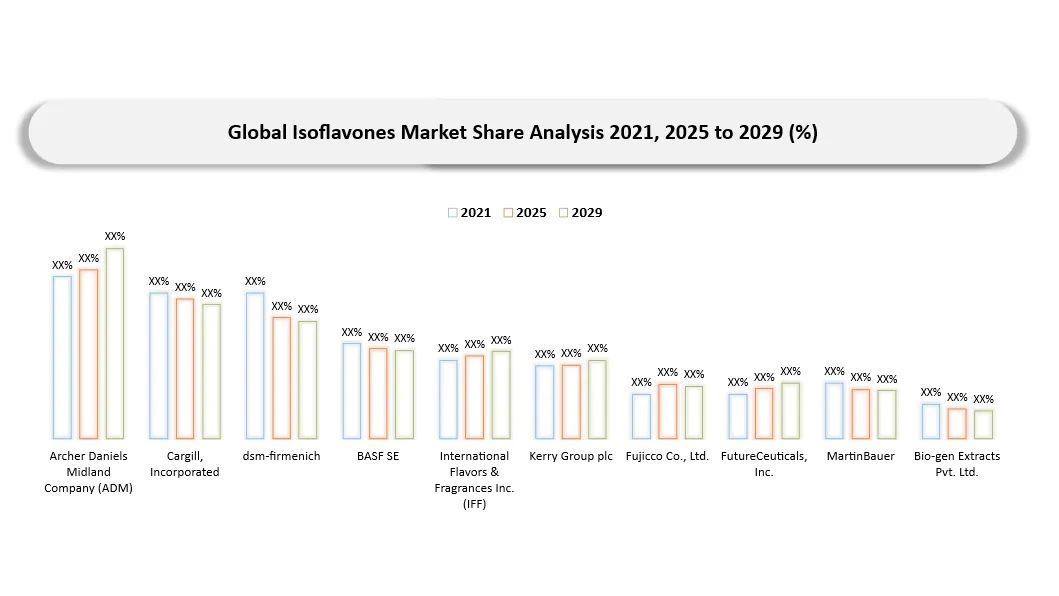
- Competition combines large nutrition ingredient companies, botanical extract specialists, Asian manufacturers, contract manufacturers and finished-product brands.
- Large companies compete through global quality systems, formulation support and customer access, while specialists compete through source differentiation, assay, purity and flexible order sizes.
- The premium segment is increasingly defined by branded evidence, aglycone content, fermentation, non-GMO sourcing and application support.
- Price competition remains intense in generic soy extract, making supplier qualification and traceability important for buyers.
- Partnerships with menopause brands, contract manufacturers, research organizations and pharmacy channels are important routes to market.
Isoflavones Market Key Companies
- Archer Daniels Midland Company
- Cargill, Incorporated
- dsm-firmenich
- BASF SE
- International Flavors & Fragrances Inc.
- Kerry Group plc
- Fujicco Co., Ltd.
- FutureCeuticals, Inc.
- MartinBauer
- Bio-gen Extracts Pvt. Ltd.
- Shaanxi Huike Botanical Development Co., Ltd.
- Xi’an Sost Biotech Co., Ltd.
- Hunan Nutramax Inc.
- Shanghai Freemen, LLC
- Nutra Green Biotechnology Co., Ltd.
Isoflavones Market Company Profiles
Archer Daniels Midland Company
ADM participates through global soy processing, nutrition ingredients and formulation capabilities. Its competitive strength is integrated sourcing, scale, customer relationships and the ability to support food, beverage and supplement applications. The company is positioned to serve customers seeking consistent supply, non-GMO options and broad technical support.
Cargill, Incorporated
Cargill combines agricultural sourcing, soy processing, food ingredient expertise and global distribution. Its relevance comes from supply-chain control and the ability to support functional foods and nutrition products. Competitive execution depends on translating commodity scale into standardized, premium health ingredients.
dsm-firmenich
dsm-firmenich is relevant through health, nutrition and care capabilities, premix systems and global customer access. It can integrate isoflavones into broader women’s-health, healthy-ageing and personalized-nutrition solutions. Its strength lies in formulation, evidence and multi-ingredient systems.
BASF SE
BASF brings nutrition, pharmaceutical and personal-care expertise, quality systems and global regulatory capabilities. Its role is strongest in high-specification applications and partnerships that require technical support and reliable documentation.
International Flavors & Fragrances Inc.
IFF combines botanical, food, health and sensory capabilities. It can support isoflavone applications where taste masking, flavor, texture and consumer experience are as important as active concentration.
Kerry Group plc
Kerry is positioned through taste, nutrition and functional ingredient systems. It can help brands incorporate isoflavones into beverages, powders, bars and supplements while managing flavor and application performance.
Fujicco Co., Ltd.
Fujicco has strong relevance in soy foods, fermented ingredients and Japanese healthy-ageing applications. Its familiarity with soy bioactives and consumer products provides a platform for differentiated isoflavone solutions.
FutureCeuticals, Inc.
FutureCeuticals is a specialist nutraceutical ingredient company with experience in branded botanical and plant-based ingredients. Its competitive position depends on clinical substantiation, formulation support and customer-facing branded concepts.
MartinBauer
MartinBauer is a major botanical ingredient supplier with global sourcing, extraction and application expertise. It is well positioned for red clover, mixed botanical systems and tea or beverage applications.
Bio-gen Extracts Pvt. Ltd.
Bio-gen Extracts is relevant through standardized botanical extracts, contract development and export-oriented nutraceutical manufacturing. Growth depends on certifications, analytical consistency and access to global supplement brands.
Shaanxi Huike Botanical Development Co., Ltd.
Shaanxi Huike Botanical Development is a specialist Chinese botanical extractor serving international ingredient markets. It competes through product breadth, pricing and flexible supply, with quality documentation central to global expansion.
Xi’an Sost Biotech Co., Ltd.
Xi’an Sost Biotech supplies botanical extracts and high-purity actives. Its opportunity lies in customized assays, smaller minimum orders and export markets, while buyer qualification and traceability remain decisive.
Hunan Nutramax Inc.
Hunan Nutramax participates in botanical extraction and nutraceutical ingredients. It can benefit from demand for standardized soy and red-clover extracts, provided it sustains global quality, documentation and delivery standards.
Shanghai Freemen, LLC
Shanghai Freemen connects ingredient sourcing, distribution and technical support across global markets. Its value is in supplier qualification, logistics and access to specialized Asian botanical ingredients.
Nutra Green Biotechnology Co., Ltd.
Nutra Green Biotechnology is positioned as a specialist botanical extract producer. Growth opportunities include standardized isoflavones, customized active profiles and partnerships with contract manufacturers and private-label brands.
Isoflavones Market Major Pain Points
- Inconsistent clinical results across formulations and populations.
- Consumer confusion about phytoestrogens and hormone-related safety.
- Soy allergen labeling and demand for soy-free alternatives.
- Variability in active profile, aglycone content and botanical raw materials.
- Price pressure in generic extracts and limited differentiation.
- Taste, color and dispersibility challenges in foods and beverages.
- Different regulatory and claim requirements across countries.
- Need for long-term safety and formulation-specific evidence.
Isoflavones Market Recent Developments
- 2026: Women’s-health brands continued expanding menopause portfolios with non-hormonal, multi-ingredient products that combine phytoestrogens with vitamins, minerals and botanicals.
- 2025: Ingredient suppliers increased emphasis on fermented and aglycone-rich soy extracts designed for improved absorption and lower-dose formulations.
- 2025: Functional-food developers expanded interest in isoflavone-compatible beverages, gummies and plant-based nutrition products, increasing demand for dispersible and sensory-optimized formats.
- 2024: The U.S. National Center for Complementary and Integrative Health reiterated that soy isoflavone supplements may provide modest relief for menopausal hot flashes, while emphasizing variability in evidence and uncertainty around long-term use.
- 2024-2026: Buyers increased requirements for non-GMO traceability, residual-solvent control, allergen documentation and validated active-isoflavone methods.
Analyst View / Opinion on Isoflavones Market
- The Isoflavones market is expected to record steady growth rather than explosive expansion because consumer demand is strong but clinical interpretation remains nuanced.
- Menopause and women’s health will remain the principal commercial engine, while bone health, healthy ageing and functional foods create adjacent demand.
- Premium growth will come from standardized, branded and bioavailability-enhanced ingredients rather than undifferentiated extract volume.
- Asia-Pacific will remain central to supply and consumption, while North America and Europe provide high-value opportunities for evidence-led formulations.
- Companies that combine analytical quality, conservative claims, formulation support and transparent sourcing will outperform suppliers focused only on assay and price.
Isoflavone Market Target Audience
| Industry | Who Should Buy This Report? | Reason to Buy This Report |
| Nutraceuticals | Ingredient suppliers, supplement brands, contract manufacturers | Assess demand, pricing, formulations and source opportunities. |
| Food and Beverages | Functional-food companies, beverage formulators, plant-based brands | Evaluate application formats, sensory needs and regulatory considerations. |
| Pharmaceuticals | Women’s-health teams, OTC companies, clinical developers | Understand evidence, high-purity ingredients and market positioning. |
| Cosmetics | Skin-care formulators and active-ingredient suppliers | Assess phytoestrogen and healthy-ageing opportunities. |
| Retail and E-Commerce | Pharmacies, wellness retailers, digital brands | Identify consumer segments and category growth. |
| Investors and Consulting | Private equity, venture capital, strategy teams | Evaluate market size, competition, risks and acquisition targets. |
Why Choose DATAM?
- Data-driven insights combining market sizing, ingredient economics, application trends and buyer interviews.
- Post-purchase analyst consultations for portfolio strategy, sourcing, market entry and customization.
- Annual updates covering product launches, clinical evidence, regulatory changes and competitive developments.
- Specialized focus on emerging markets and country-level differences rather than generalized regional summaries.
- Actionable analysis that connects ingredient technology with claims, channels and consumer demand.
What DATAM Uniquely Provides
- Ten-year forecasts across eight segmentation dimensions and five regions.
- Source-specific analysis separating soy, red clover and emerging botanical alternatives.
- Buyer-focused evaluation of assay, aglycone content, dispersibility, traceability and evidence.
- Country-level views linking women’s-health demand, regulation, supplement channels and manufacturing capacity.
- Strategic recommendations for branded ingredients, partnerships, application development and market entry.



























































